Search results
Search for "sol–gel" in Full Text gives 201 result(s) in Beilstein Journal of Nanotechnology. Showing first 200.
The longstanding challenge of the nanocrystallization of 1,3,5-trinitroperhydro-1,3,5-triazine (RDX)
Beilstein J. Nanotechnol. 2017, 8, 452–466, doi:10.3762/bjnano.8.49
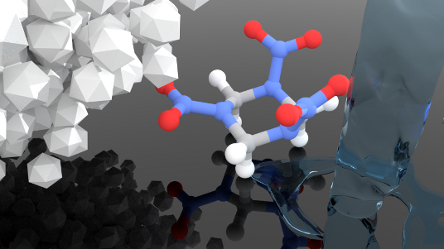
- diameter of 70 to 100 nm. However, the nanoparticles produced from this elegant solution exhibit an undesired rod-like morphology. Sol–gel Energetic materials processed by the sol–gel method are desensitized by being embedded in a matrix, usually a silica one. Developed by Gash et al. [23] and Tillotson et
- nanocomposites using a technique similar to sol–gel [30]. The matrix is the NC itself solidified by micrometer-sized AP crystals and cross-linked with toluene diisocyanate (TDI) and dibutyltin dilaurate (DBTDL), whereas RDX is dissolved in acetone inside that template. The gel and the crystallization of RDX is


Tailoring bifunctional hybrid organic–inorganic nanoadsorbents by the choice of functional layer composition probed by adsorption of Cu2+ ions
Beilstein J. Nanotechnol. 2017, 8, 334–347, doi:10.3762/bjnano.8.36

- was optimized controlling the synthesis conditions, such as concentrations of reactants, basicity of the medium, and the process temperature. Keywords: copper(II) ions; methyl groups; N- and F-containing functional groups; silica nanospheres; sol–gel processes; sorption; surface chemistry


Functionalized TiO2 nanoparticles by single-step hydrothermal synthesis: the role of the silane coupling agents
Beilstein J. Nanotechnol. 2017, 8, 304–312, doi:10.3762/bjnano.8.33
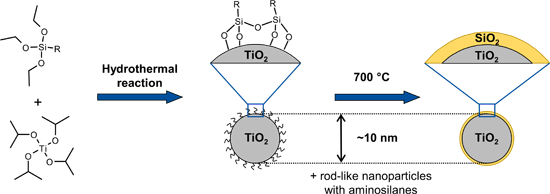
- a dark red powder was obtained for 4-tert-butylcatechol and dopamine surface functionalized samples, respectively. More recently, Gao and Cui reported a sol–gel method in which TiO2 nanoparticles functionalized with chlorinated alcohols through hydrogen bonding were produced [21]. However, sol–gel
- synthesis often leads to poorly crystalline particles [22]. Hydrothermal synthesis [23] is simple and cost efficient [24] and allows for improved crystallinity compared to sol–gel methods [22] giving improved TiO2 characteristics for applications such as photocatalysis and solar cell applications [2][25][26



Template-controlled piezoactivity of ZnO thin films grown via a bioinspired approach
Beilstein J. Nanotechnol. 2017, 8, 296–303, doi:10.3762/bjnano.8.32
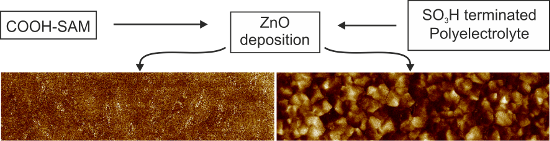
- high mechanical deformation [13]. Growth of such oriented films was achieved via technically sophisticated methods under harsh reaction conditions [14][15][16][17]. For example radio-frequency magnetron sputtering [14][17], pulsed laser deposition [16] or sol–gel methods followed by annealing [15] were
- the films due to their (002) texture. This also reflects in the value obtained for deff of 3.2 pm V−1 (d33 = 6.4 pm V−1). This value is in the range or higher than the one of other oriented, ZnO thin films prepared by RF magnetron sputtering (2–13 pm V−1) [14] or sol–gel process (5 pm V−1) [15]. Since


Photocatalysis applications of some hybrid polymeric composites incorporating TiO2 nanoparticles and their combinations with SiO2/Fe2O3
Beilstein J. Nanotechnol. 2017, 8, 272–286, doi:10.3762/bjnano.8.30
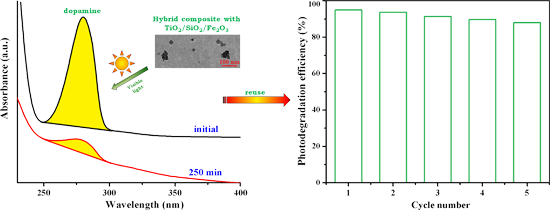
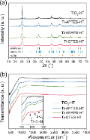
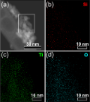
- physicochemical characterization of nanoparticles Titania nanoparticles (TiO2) and titania nanoparticles mixed with Si–O–Si (TiO2/SiO2), γ-Fe2O3 (TiO2/Fe2O3) or Si–O–Si and γ-Fe2O3 (TiO2/SiO2/Fe2O3) were obtained by the sol–gel method, using titanium isopropoxide as precursor. The crystalline structures of the
- further purification. Nanoparticles preparation Synthesis of nanocrystalline TiO2 For the preparation of TiO2 nanoparticles through the sol–gel method, a literature pathway was employed [49], keeping the molar ratio of TTIP, glacial acetic acid and water at 1:10:350. Thus, 9.3 mL (31.5 mmol) TTIP were


Nanocrystalline ZrO2 and Pt-doped ZrO2 catalysts for low-temperature CO oxidation
Beilstein J. Nanotechnol. 2017, 8, 264–271, doi:10.3762/bjnano.8.29
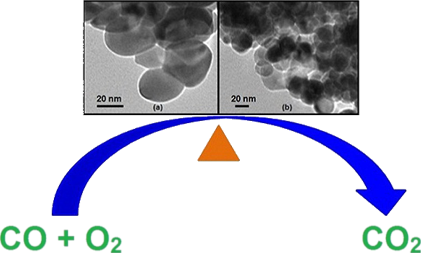
- nanoparticles such as sol–gel [21], precipitation [22], combustion [23], hydrothermal synthesis [24], solvothermal synthesis [25], reverse micelles [26], chemical vapor synthesis [27], aerosol pyrolysis [28], and sonochemical synthesis [29]. Dongare et al. [30] described the synthesis of ZrO2 by a sol–gel


Sensitive detection of hydrocarbon gases using electrochemically Pd-modified ZnO chemiresistors
Beilstein J. Nanotechnol. 2017, 8, 82–90, doi:10.3762/bjnano.8.9
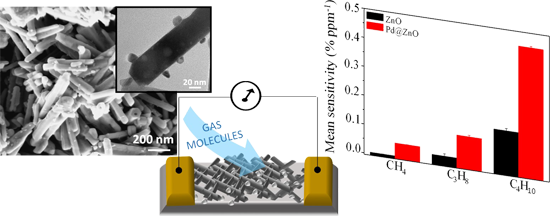
- ], directly deposited on the surface of sol–gel pre-synthesized ZnO nanostructures. Further post-annealing at 550 °C to obtain ZnO NRs is necessary [45]. The prepared hybrid Pd@ZnO nanostructures are proposed as active layer in chemiresistive gas sensors for the detection of pollutant HCs. The effect of the
- contrary, high selectivity towards NO2 gas detection was obtained by using pristine ZnO chemiresistors. Experimental Sol–gel synthesis of ZnO ZnO nanostructures were prepared via a sol–gel process following the procedure reported in [45]. The subsequent washing of the obtained gel led to the complete


Fundamental properties of high-quality carbon nanofoam: from low to high density
Beilstein J. Nanotechnol. 2016, 7, 2065–2073, doi:10.3762/bjnano.7.197
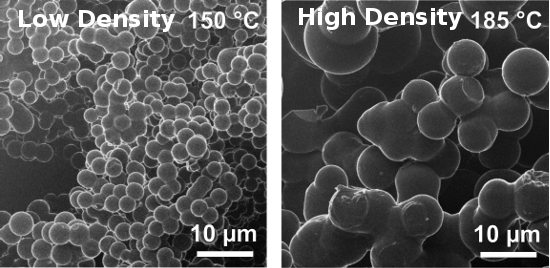
- nanowires have been produced [9]. A few studies of semiconductor and insulator nanofoams have also been reported. A sol–gel process was used to produce silicon nanofoam and acousto-optic characteristics were probed [10]. Silica nanofoam was used as a support material for highly active single- and dual-site


Nanostructured SnO2–ZnO composite gas sensors for selective detection of carbon monoxide
Beilstein J. Nanotechnol. 2016, 7, 2045–2056, doi:10.3762/bjnano.7.195
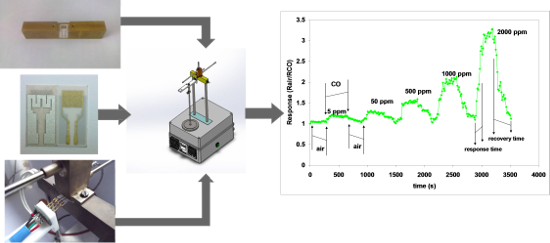
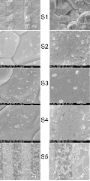
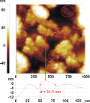
- prepared and deposited on a miniaturized porous alumina transducer using the sol–gel and dip coating method. The transducer, developed by our research group, contains Au interdigital electrodes on one side and a Pt heater on the other side. The sensing films were characterized using SEM and AFM techniques
- compared to its response to CO2, CH4, and C3H8, thus the sensor is considered to be selective for CO under these test conditions. Keywords: composite thin film sensor; dip coating; low detection limit; miniaturized alumina transducer; selective CO detection; sol–gel; Introduction For the past decade, the
- ., screen printing) or complicated wet preparation routes that require the use of special solvents and templates [23]. Usually the sol–gel technique combined in our case with dip coating is a low temperature process; it requires less energy consumption and causes less pollution – all features that make it




Organoclay hybrid materials as precursors of porous ZnO/silica-clay heterostructures for photocatalytic applications
Beilstein J. Nanotechnol. 2016, 7, 1971–1982, doi:10.3762/bjnano.7.188
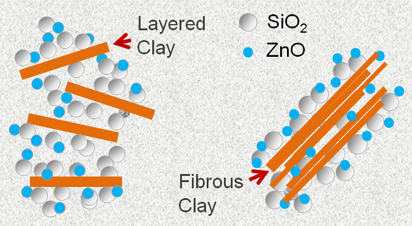
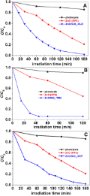
- the organic–inorganic interface [17]. In general, this sol–gel procedure leads to heterostructured clay-based materials with enhanced textural properties compared to the ones of pristine silicates [14]. The simultaneous use of silicon and metal-alkoxide precursors gives rise, for instance, to the
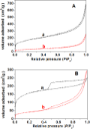
- . Tetramethoxyorthosilicate (TMOS) from Fluka (>98 %) was used here as silica precursor. Sample preparations ZnO (NP) synthesis was achieved as reported by Akkari et al. [22]. In a first step, SiO2-clay organo-heterostructures (Figure 1) were synthesized by a heterocoagulation reaction involving a sol–gel process with the
- ). This suspension was stirred at 50 °C to homogenize the system and then stoichiometric amounts of water and isopropanol (H2O/isopropanol/TMOS 4:2:1 molar ratio) is added to start the hydrolysis of TMOS. After the sol–gel transition the system was dried overnight at 50 °C. The final ZnO/SiO2-clay





Functionalized platinum nanoparticles with surface charge trigged by pH: synthesis, characterization and stability studies
Beilstein J. Nanotechnol. 2016, 7, 1822–1828, doi:10.3762/bjnano.7.175
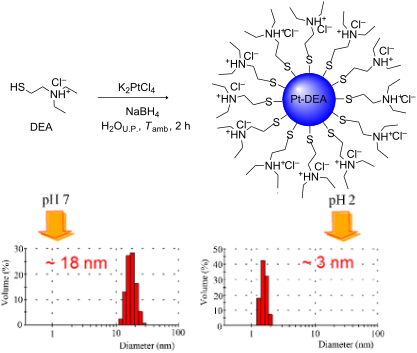
- solvothermal techniques are well favored for the synthesis of PtNPs, together with sol–gel methods [17]. They give rise to colloidal suspensions although a fine control of the size, dispersity and the surface functionalization is quite difficult to reach. Poly(N-vinyl-2-pyrrolidone) (PVP) has been used as a


In situ formation of reduced graphene oxide structures in ceria by combined sol–gel and solvothermal processing
Beilstein J. Nanotechnol. 2016, 7, 1815–1821, doi:10.3762/bjnano.7.174
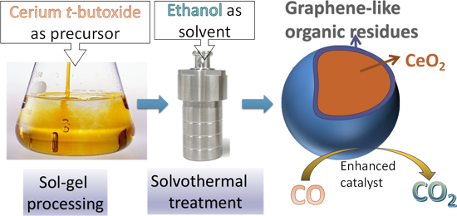
- –gel processing, by which the rGO structures and the catalytic activity were enhanced. Keywords: ceria; CO oxidation; graphene oxide; sol–gel processing; Introduction Ceria (CeO2) has been widely studied as catalyst or catalyst support for redox reactions owing to its high oxygen storage and release
- -synthesized ceria particles followed by reduction to reduced graphene oxide (rGO) [1][2][3][4][5][6][7][8][9][10][11][12][13][14][15][16]. In a previous study, we have synthesized CeO2 [17] from cerium tert-butoxide by combined sol–gel and solvothermal processing. The kind of post-synthesis treatment of the
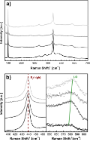
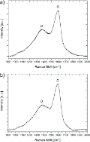
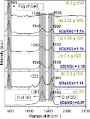
- , varying proportions of pre-synthesized graphene oxide (GO) were introduced into the ceria gel to investigate its dispersion and its effect on structure and properties of the sol–gel ceria. Raman spectra showed that the D-bands of all rGO–CeO2 composites were shifted to lower values (Figure 1), indicating




Nanostructured TiO2-based gas sensors with enhanced sensitivity to reducing gases
Beilstein J. Nanotechnol. 2016, 7, 1718–1726, doi:10.3762/bjnano.7.164
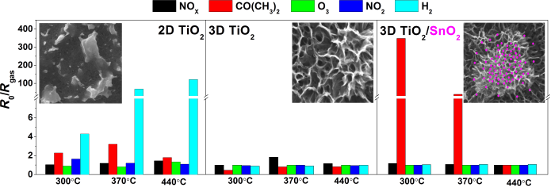
- stoichiometry of the oxygen-to-titanium content ratio play a major role in the electrical properties of TiO2 [17]. Different ways in which TiO2 can be prepared include sol–gel process [18][19][20], flame spray synthesis [21], hydrothermal process [22], electrospinning methods [23], chemical and physical vapor


Influence of hydrothermal synthesis parameters on the properties of hydroxyapatite nanoparticles
Beilstein J. Nanotechnol. 2016, 7, 1586–1601, doi:10.3762/bjnano.7.153
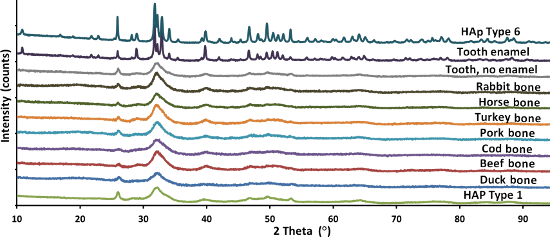
- chemistry techniques, such as direct precipitation from aqueous solutions, electrochemical deposition [23], sol–gel processes [24] and hydrothermal synthesis [25][26][27] (Table 1). In the majority of cases, the synthesized powder is a stoichiometric hydroxyapatite, and oftentimes contains additional phases


Nanostructured germanium deposited on heated substrates with enhanced photoelectric properties
Beilstein J. Nanotechnol. 2016, 7, 1492–1500, doi:10.3762/bjnano.7.142
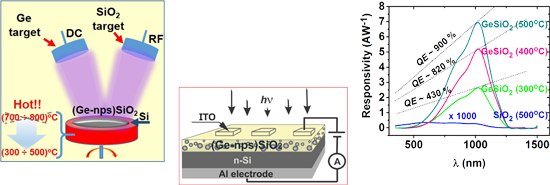
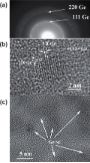
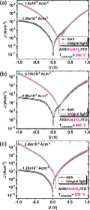
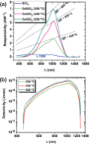
- [18] and biosensors [19]. To produce high-quality Ge particles packed into different matrices, various approaches are reported in scientific papers such as pulsed laser deposition [20][21], sol–gel [22], evaporation under vacuum [23], chemical vapor deposition [24], microwave-assisted heating [25




Polystyrene-block-poly(ethylene oxide) copolymers as templates for stacked, spherical large-mesopore silica coatings: dependence of silica pore size on the PS/PEO ratio
Beilstein J. Nanotechnol. 2016, 7, 1454–1460, doi:10.3762/bjnano.7.137
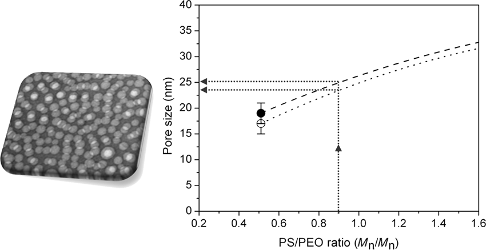
- narrow pore size distribution and high porosity have been obtained by a sol–gel reaction of a silicon oxide precursor (TEOS) and using polystyrene-block-poly(ethylene oxide) (PS-b-PEO) copolymers as templates in an acidic environment. PS-b-PEO copolymers with different molecular weight and composition
- ; mesoporous silica; soft templating; sol–gel; Introduction Mesoporous materials with large, tunable porosity are currently being investigated as selective molecular sieves, finding potential applications in many fields such as catalysis, encapsulation of proteins, filtration and separation of large molecules
- , membrane technology, drug delivery, dosing, adsorption, sensing, among many others [1][2][3][4][5]. Different approaches have been applied in order to obtain porous materials characterized by a controlled porous architecture. A sol–gel process, carried out in combination with a templating method and spin


Microwave synthesis of high-quality and uniform 4 nm ZnFe2O4 nanocrystals for application in energy storage and nanomagnetics
Beilstein J. Nanotechnol. 2016, 7, 1350–1360, doi:10.3762/bjnano.7.126
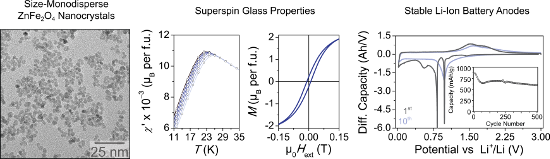
- narrow size distribution hold promise for many applications in different areas ranging from biomedicine to electronics and energy storage. Herein, the microwave-assisted sol–gel synthesis and thorough characterization of size-monodisperse zinc ferrite nanoparticles of spherical shape is reported. X-ray
- good material characteristics, it is remarkable that the microwave-based synthetic route is simple, easily reproducible and scalable. Keywords: 1-phenylethanol route; lithium-ion battery; nanomagnetism; nanoparticles; nonaqueous sol–gel synthesis; zinc ferrite; Introduction Spinel ferrites of the
- reported in the literature, including hydrothermal, mechanochemical and sol–gel routes (to name but a few) [15][16][17][18][19], and in particular solution-phase approaches seem promising with respect to exercising control over size and shape [20][21]. As an example, the preparation of uniform 4–8 nm


Influence of synthesis conditions on microstructure and phase transformations of annealed Sr2FeMoO6−x nanopowders formed by the citrate–gel method
Beilstein J. Nanotechnol. 2016, 7, 1202–1207, doi:10.3762/bjnano.7.111
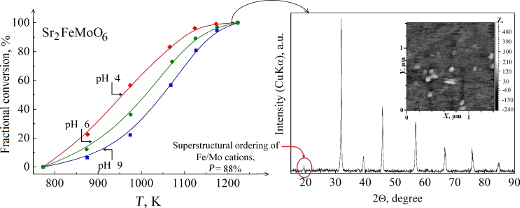
- nm and a superstructural ordering of iron and molybdenum cations of 88%. Keywords: magnetic materials; microstructure; nanoparticles; phase transformation; sol–gel preparation; Introduction Due to their unique and extremely important magneto-transport and magnetic properties [1][2], metal oxide
- atmosphere with predetermined anionic and cationic defectiveness, is problematic [9]. This is due to several factors: the phase purity within the sample, cation and anion vacancies, sample microstructure, chemical composition and thickness of the grain boundaries [10][11][12][13]. Sol–gel technology is a
- relatively new, but very promising method to synthesize nanoscale, double perovskite materials at relatively low temperatures and in a shorter time [3][4][14]. However, despite numerous articles devoted to this subject [3][7][8][15][16], the optimization of a sol–gel-based synthesis procedure to obtain

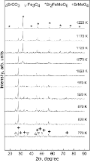


Fast diffusion of silver in TiO2 nanotube arrays
Beilstein J. Nanotechnol. 2016, 7, 1129–1140, doi:10.3762/bjnano.7.105
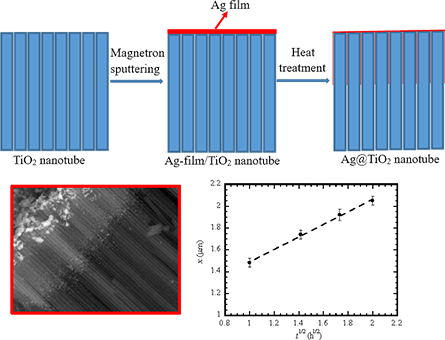
- -dimensional structures. To increase the electric performance of TiO2, TiO2-based materials have been developed by incorporating metal nanoparticles in TiO2 nanotube arrays, using electrochemical deposition [21], irradiation of microwave [22], reduction [23], and sol–gel process [24], which involve the use of


Photocurrent generation in carbon nanotube/cubic-phase HfO2 nanoparticle hybrid nanocomposites
Beilstein J. Nanotechnol. 2016, 7, 1075–1085, doi:10.3762/bjnano.7.101
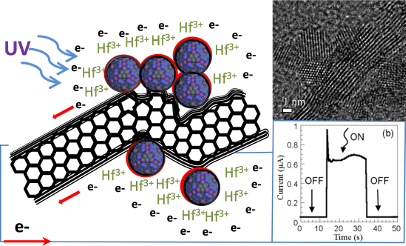
- dimensionality of nanoparticles; among established methods ensuring control of both size and shape is the nonaqueous sol–gel route [18][19]. In our previous studies, a strong photoluminescence in the visible range was observed from HfO2 nanoparticles under below-bandgap excitation [20][21] and attributed to
- reaction by-products typical of nonaqueous sol–gel routes using precursors that do not contain hydrate species. Here, the amine species capping acts not only as a surfactant but also as a shape and size controlling agent during growth of the NP. Since our MWCNTs were not acid treated, the particles are


Selective photocatalytic reduction of CO2 to methanol in CuO-loaded NaTaO3 nanocubes in isopropanol
Beilstein J. Nanotechnol. 2016, 7, 776–783, doi:10.3762/bjnano.7.69
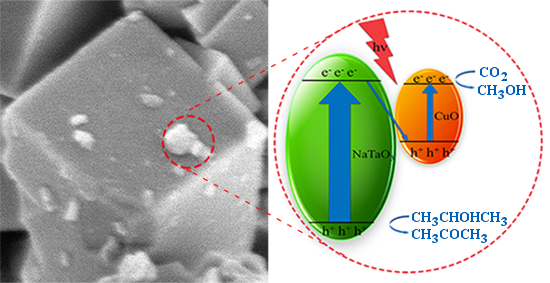
- activity. Jeffrey C. S. Wu et al. [18] prepared NiO-loaded InTaO4 photocatalysts by a sol–gel method and carried out the photocatalytic reduction of CO2 in a self-made optical fiber reactor filled with 0.2 mol/L NaOH solution. The formation rate of methanol was 11.1 μmol/(g·h) under halogen lamp


Microwave solvothermal synthesis and characterization of manganese-doped ZnO nanoparticles
Beilstein J. Nanotechnol. 2016, 7, 721–732, doi:10.3762/bjnano.7.64
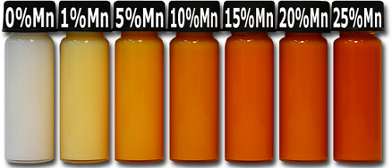
- ], combustion [52], sol–gel [7][31][33][53][54], spin coating [19][20], pulsed laser deposition [26], reactions in the solid state [35][55], thermal evaporation [56], and thermal evaporation vapour-phase deposition [30]. However, two of the most promising methods, which are still being developed are


Bacteriorhodopsin–ZnO hybrid as a potential sensing element for low-temperature detection of ethanol vapour
Beilstein J. Nanotechnol. 2016, 7, 501–510, doi:10.3762/bjnano.7.44
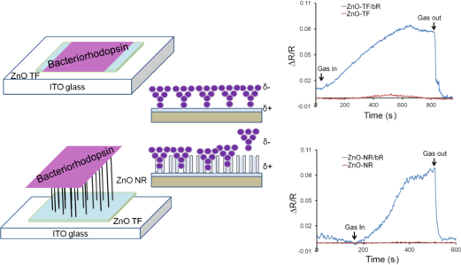
- in 2-propanol reduced with monoethanolamine) was prepared using the sol–gel method and was spin-coated, layer-by-layer, to form the ZnO-TF. Further, the ZnO-TF was annealed (400 °C) for an hour in order to obtain a uniform size distribution of the ZnO grains [34]. The resulting average thickness and


Evaluation of gas-sensing properties of ZnO nanostructures electrochemically doped with Au nanophases
Beilstein J. Nanotechnol. 2016, 7, 22–31, doi:10.3762/bjnano.7.3
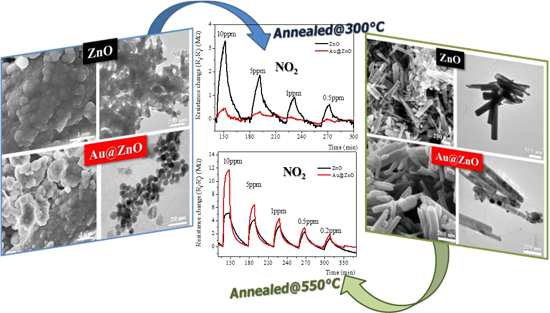
- stabilized gold nanoparticles (Au NPs) directly on the surface of nanostructured ZnO powders, previously synthesized through a sol–gel process. The effect of thermal annealing temperatures (300 and 550 °C) on chemical, morphological, and structural properties of pristine and Au-doped ZnO nancomposites (Au
- and time-consuming; furthermore, metal nanoparticles prepared in these way can undergo undesired clustering, thus lowering their catalytic activity [41]. In this contribution, sol–gel pre-synthesized and dried ZnO powder was directly functionalized with Au NPs of controlled size and loading by means
- Sol–gel synthesis of ZnO ZnO nanostructures were prepared through a sol–gel process. An aqueous solution of ZnCl2 (0.1 M) was heated to 60 °C for 1 h in a water-bath under continuous stirring. Ammonia solution (0.1 M) was then added drop-wise until a dense gel was formed at pH 9 [43]. The gel was




A single-source precursor route to anisotropic halogen-doped zinc oxide particles as a promising candidate for new transparent conducting oxide materials
Beilstein J. Nanotechnol. 2015, 6, 2161–2172, doi:10.3762/bjnano.6.222
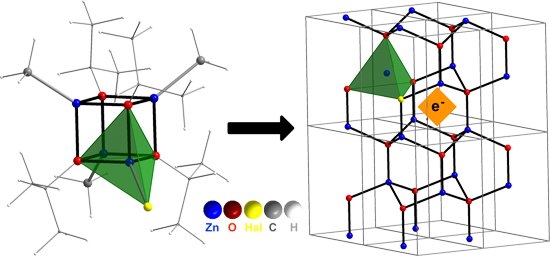
- routes in the liquid phase are commonly applied [35][36][37]. Whereas, bottom-up techniques such as the sol–gel process for metal oxides [38][39] work perfectly for the generation of an entire zoo of nanostructures, to realize at the same time intentional doping of those nanostructures is extremely
- not reactive enough, or they contain irremovable water, which leads to an undesired reaction of the heterocubane precursor to ZnO via sol–gel chemistry [66][67]. Elemental fluorine and anhydrous HF have not been tested yet, because of security issues handling these compounds. Materials synthesis and