


Search results
Search for "solvent" in Full Text gives 672 result(s) in Beilstein Journal of Nanotechnology. Showing first 200.
Two-step single-reactor synthesis of oleic acid- or undecylenic acid-stabilized magnetic nanoparticles by thermal decomposition
Beilstein J. Nanotechnol. 2023, 14, 11–22, doi:10.3762/bjnano.14.2
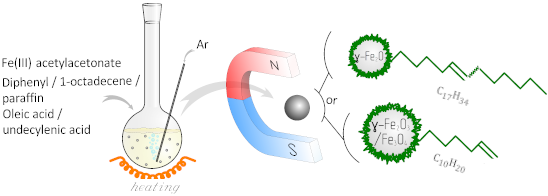
- obtained in a solvent with a high boiling point via displacement reaction of acetylacetone with a higher acid from Fe(III) acetylacetonate during its elimination from the reaction mixture under vacuum conditions. Magnetic nanoparticles (NPM) were characterized in terms of morphology, hydrodynamic diameter
- 250–320 °C in the presence of oleic acid and a solvent with a high boiling point [22]. We found no publications about the two-step single-reactor synthesis of iron oxide NPM by thermal decomposition in which Fe(III) acetylacetonate can be used as starting compound for the synthesis of alkanoates
- followed by their thermolysis in solution. This work aims to develop the synthesis of NPM dispersions by thermolysis of Fe(III) oleate or Fe(III) undecylate in a high-boiling-point solvent. Iron oxide nanoparticle dispersions were obtained via two-stage single-reactor synthesis with Fe(III) acetylacetonate


Induced electric conductivity in organic polymers
Beilstein J. Nanotechnol. 2022, 13, 1551–1557, doi:10.3762/bjnano.13.128
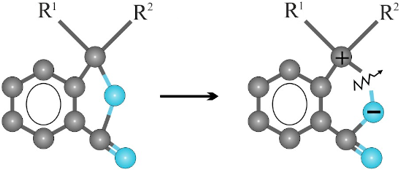
- amount of solvent until complete dissolution, then the solvent was added in the required amount, and the solution was kept for another day in the dark. For fabrication of films of various thicknesses, solutions of polymers in cyclohexanone with concentrations of 0.1–15 wt % were used. The polymer
- solution of specified concentration was applied onto the dielectric substrate fixed on a centrifuge holder. The rotation speed was typically 2000 rpm. The resulting polymer film was dried in air for about 45–60 min at room temperature. Then the final drying was carried out to remove solvent residues at a



Orally administered docetaxel-loaded chitosan-decorated cationic PLGA nanoparticles for intestinal tumors: formulation, comprehensive in vitro characterization, and release kinetics
Beilstein J. Nanotechnol. 2022, 13, 1393–1407, doi:10.3762/bjnano.13.115
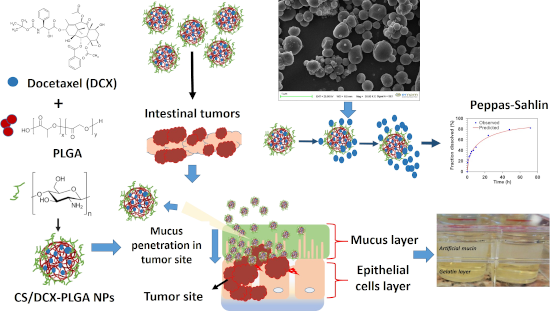
- appears to be the primary problem and requires the addition of a co-solvent and/or a surfactant (ethanol/polysorbate 80) to the formulations [32][36]. However, results such as acute hypersensitivity reactions and decreased clinical efficacy have been reported due to auxiliary components such as Cremophor


Recent trends in Bi-based nanomaterials: challenges, fabrication, enhancement techniques, and environmental applications
Beilstein J. Nanotechnol. 2022, 13, 1316–1336, doi:10.3762/bjnano.13.109
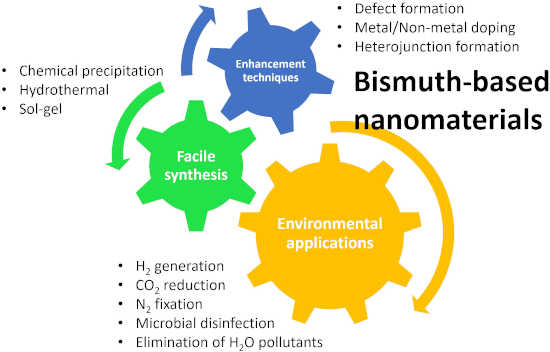
- manufacturing time and the batch nature of production. For the hydrothermal technique, there is a danger of nanoparticle leakage, primarily in water, and the risk of toxic solvent emissions. Su et al. [54] reported the first hydrothermal fabrication of Bi5O7Br. Bi5O7Br rods of 50 μm length and 2 μm width were




Studies of probe tip materials by atomic force microscopy: a review
Beilstein J. Nanotechnol. 2022, 13, 1256–1267, doi:10.3762/bjnano.13.104
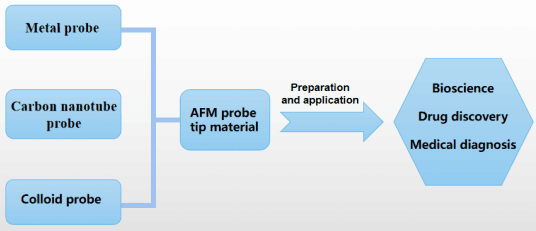
- stabilize carbon nanotube fibers. Slattery et al. [41] prepared carbon nanotube probes by solvent evaporation or dielectrophoresis, the first time a solvent evaporation method was used. From the 13 probes produced using these methods, the CNT-modified nanomaterials showed very high aspect ratios and good
- ethanol solvent. The colloidal particles in the suspension can self-assemble into two- and three-dimensional colloidal crystals of various shapes under certain conditions. In the process of self-assembly, such fibrous colloidal crystals are small in size and usually micrometer in length due to the weak
Microneedle-based ocular drug delivery systems – recent advances and challenges
Beilstein J. Nanotechnol. 2022, 13, 1167–1184, doi:10.3762/bjnano.13.98
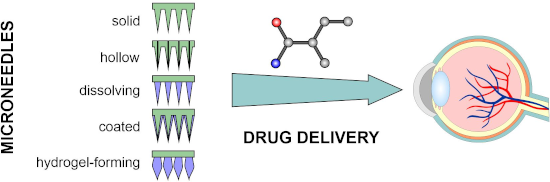
- techniques can be also used to prepare molds for the micromolding method. Micromolding, also known as solvent casting, is quite popular due to cost-effectiveness and simplicity. This method uses a mold usually made of silicone. The prepared mold is filled with a polymer solution or mixture. Then, air voids
- coated the microneedle matrix with a mixture of the drug with PVP and ethanol. Then, after evaporation of the solvent and solidification of the polymer with the drug, demolding was performed. In vivo studies on an animal model (rat) showed rapid in vitro drug release with 93% accumulative release at 2 h


Recent advances in green carbon dots (2015–2022): synthesis, metal ion sensing, and biological applications
Beilstein J. Nanotechnol. 2022, 13, 1068–1107, doi:10.3762/bjnano.13.93
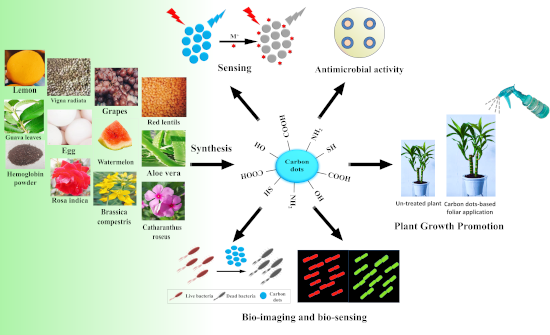
- –31G diffused and polarized basis sets. An excellent agreement was found between theoretical data and experimental results [73]. An ultrasonic-assisted solvent extraction approach was employed to synthesize CDs from rice fried Codonopsis pilosula (CP). The CP-CDs possess good sensitivity and
- solvent casting process after the ACMCDs were supported by silver nanoparticles, employing them as both a reducing agent and a template. The nanocomposite antibacterial film is anticipated to have a lot of potential applications such as food packaging, water purification, and disinfecting sanitary




Design of a biomimetic, small-scale artificial leaf surface for the study of environmental interactions
Beilstein J. Nanotechnol. 2022, 13, 944–957, doi:10.3762/bjnano.13.83
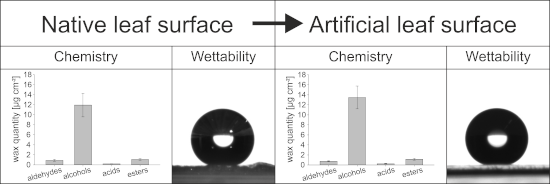
- of structures that often do not correspond to the original wax type [20][42]. Due to the ring-shaped accumulation and the resulting pattern, this effect is called the “coffee drop effect” [47][48]. This undesirable effect can be avoided by the solvent-free process of physical vapor deposition (PVD
- (ROTILABO type 113A, 110 mm diameter, Carl Roth GmbH und Co. KG, Karlsruhe, Germany). The filtrate was finally dried under a fume hood until the solvent was completely evaporated. The recrystallization of wax structures on clean glass (cover glass, 18 × 18 mm) was carried out by PVD, resulting in a wax
Optimizing PMMA solutions to suppress contamination in the transfer of CVD graphene for batch production
Beilstein J. Nanotechnol. 2022, 13, 796–806, doi:10.3762/bjnano.13.70
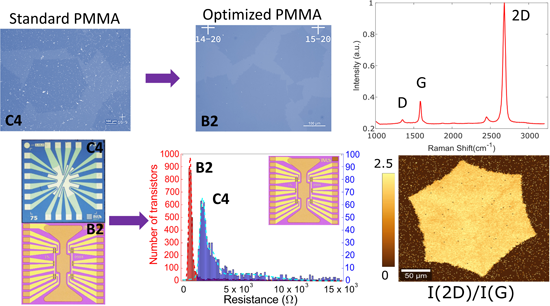
- average molecular weight (AMW) and weight concentration in anisole, to be deposited by spin coating. Optical microscopy and Raman spectroscopy showed that the amount of PMMA residues on transferred graphene is proportional to the AMW and concentration in the solvent. At the same time, the mechanical




Efficient liquid exfoliation of KP15 nanowires aided by Hansen's empirical theory
Beilstein J. Nanotechnol. 2022, 13, 788–795, doi:10.3762/bjnano.13.69
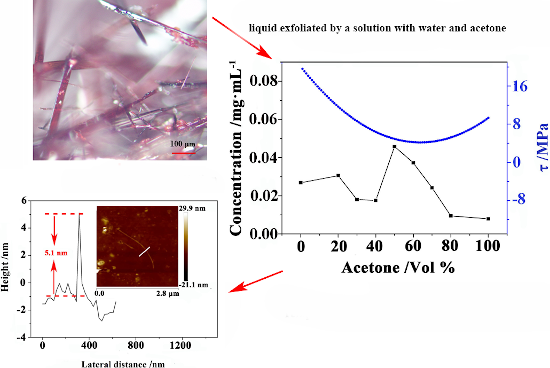
- -red KP15 bulks were finally obtained. Liquid exfoliation For the liquid-exfoliation process, 1 mg of KP15 was mixed in 20 mL of solvent and ultrasonically processed at a power of 80 W in an ice bath for 6 h, followed by centrifugation at 2000 rpm for 20 min. For the samples with predetermined
- ; δP is the intermolecular polar force; δA,D, δA,P, δA,H are the Hansen solubility parameters (HSPs) of the solute; and δB,D, δB,P, δB,H are the HSPs of the solvent. Therefore, to get a high concentration of KP15 in dispersion, the HSPs of the solvent for the exfoliation of KP15 should be close to
- those of KP15. A weighted average method was used to calculate the HSPs of KP15. The concentration of KP15 was used as a weight factor for each suspension. This way, the HSPs of KP15 can be expressed according to Equation 2 [19]. where δi,sol are the HSPs of the solvent and C is the concentration of the


Gelatin nanoparticles with tunable mechanical properties: effect of crosslinking time and loading
Beilstein J. Nanotechnol. 2022, 13, 778–787, doi:10.3762/bjnano.13.68
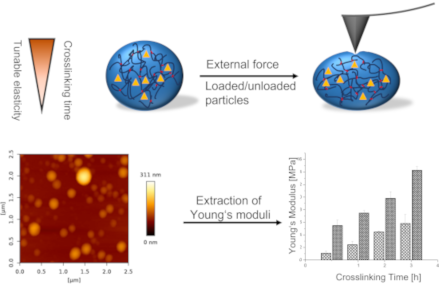
- 3000 HPLC System (Thermo Fisher Scientific, Waltham, MA, USA) with a quaternary pump, a column oven, a LichroSphere® 100 RP 18 column (Merck KGaA, Darmstadt, Germany), and a UV–vis detector. The mobile phase consisted of solvent A: 10% acetonitrile, 90% MiIli-Q® water and 0.1% trifluoro acetic acid and


Recent advances in nanoarchitectures of monocrystalline coordination polymers through confined assembly
Beilstein J. Nanotechnol. 2022, 13, 763–777, doi:10.3762/bjnano.13.67
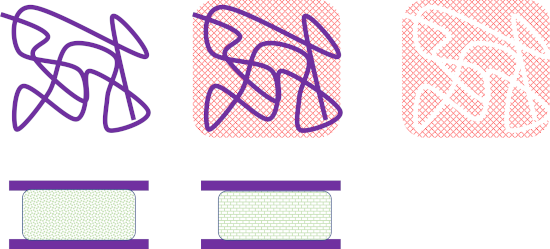
- temperature. In some parts of the photonic balls, the particles were attached tightly. However, even in this case, voids still could not be avoided. Monocrystalline coordination polymers were also dispersed in a solvent containing a polydimethylsiloxane (Figure 7b) [139]. The mixed solution was cast at liquid
- –liquid or air–liquid interfaces. After evaporation of the solvent, the monocrystalline coordination polymers were packed by the condensed polymer, forming free-standing films. The coordination polymers could also be grown on 1D polyimide fibers first [140]. Then, the 1D fibers could self-assemble into
- of solvent continuously arranged the particles. However, due to a non-uniform distribution of the suspension on the surface and the difference in local evaporation and flow condition, cracks could form between micrometer-sized domains (Figure 7c) [141]. The crack propagation and periodicity could be




Hierarchical Bi2WO6/TiO2-nanotube composites derived from natural cellulose for visible-light photocatalytic treatment of pollutants
Beilstein J. Nanotechnol. 2022, 13, 745–762, doi:10.3762/bjnano.13.66
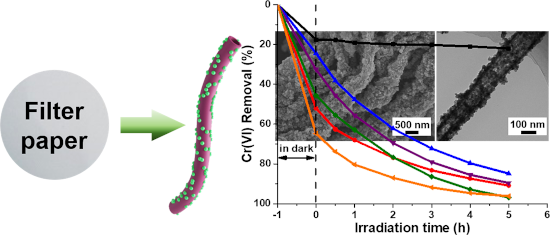
- ultrasonically dispersed in ethanol (1.0 mL) with the addition of a PVDF solution (100.0 μL, 10.0 mg·mL−1, using N-methylpyrrolidone as the solvent), which was then spin-coated on a conducting indium tin oxide (ITO) glass, followed by the calcination process at 100 °C for 24 h, giving the relevant working


Design and selection of peptides to block the SARS-CoV-2 receptor binding domain by molecular docking
Beilstein J. Nanotechnol. 2022, 13, 699–711, doi:10.3762/bjnano.13.62
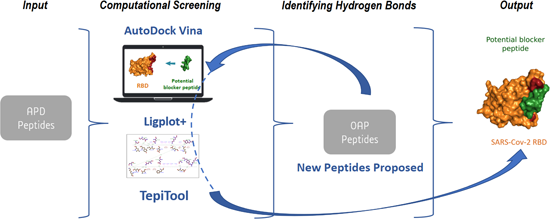
- the solvent-accessible surface area of SARS-CoV-2 RBD and the peptides that were docked to it. The surface area of the RBD–ligand complex was also calculated. The following equation was established to calculate the contact area between the RBD and each ligand analyzed: where Ac is the contact area of



Reliable fabrication of transparent conducting films by cascade centrifugation and Langmuir–Blodgett deposition of electrochemically exfoliated graphene
Beilstein J. Nanotechnol. 2022, 13, 666–674, doi:10.3762/bjnano.13.58
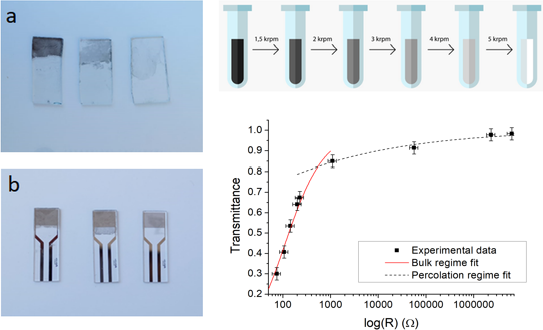
- of 3, 4, and 5 krpm, further diluting the solutions in different volumes of solvent, we reliably and consistently obtained films of tunable thickness. We show that there is a limit to how thin these films can be, which is imposed by the percolation threshold. The percolation threshold is
- then break up the bulk 2D materials into mono- and few-layer nanosheets [15][16]. The choice of solvent for LPE is made based on surface energy considerations, compatible solvents include NMP, dimethylformamide (DMF), N,N-dimethylacetamide (DMA), γ-butyrolactone (GBL), 1,3-dimethyl-2-imidazolidinone
- of solution-processed 2D materials [24][25]. The flake size can either be controlled during exfoliation or selected after exfoliation. Processing parameters that control flake size during exfoliation include the choice and concentration of solvent [25], a process control alternating sonication with


Antibacterial activity of a berberine nanoformulation
Beilstein J. Nanotechnol. 2022, 13, 641–652, doi:10.3762/bjnano.13.56
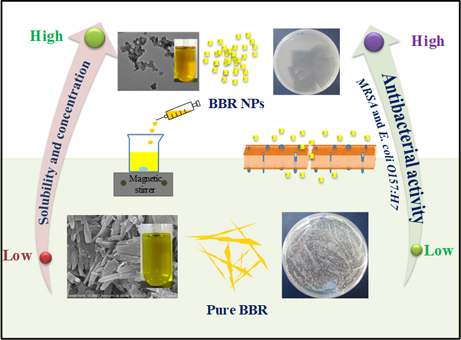
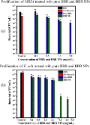
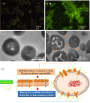
- the preparation of berberine (BBR) in nanoformulation to enhance its solubility and increase its antibacterial effectiveness against hospital-acquired infections. BBR nanoparticles (BBR NPs) were formed by antisolvent precipitation (ASP) using glycerol as a safe organic solvent. UV–vis absorption
- BBR NPs Solvent molecules strongly affect the formation of crystalline structures and the stabilization of crystal lattices [35]. To the best of our knowledge, in most published papers regarding the synthesis of BBR NPs via the ASP method ethanol or methanol were used as solvents. This study is the
- first to report that glycerol can serve as an effective green solvent for BBR NP formation. Being non-toxic, renewable, and biodegradable, and having a suitable dielectric constant to dissolve various compounds such as BBR, glycerol is a promising candidate to replace toxic organic solvents. The effect



Sodium doping in brookite TiO2 enhances its photocatalytic activity
Beilstein J. Nanotechnol. 2022, 13, 599–609, doi:10.3762/bjnano.13.52
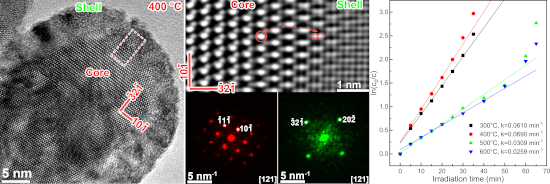
- and solvents were used without further purification. Hydrothermal synthesis of the Na-doping brookite In a typical synthesis procedure, 1.27 g of oxalic acid dihydrate was dissolved into 50 mL of N,N-dimethylformamide (DMF) solvent to obtain a colorless and transparent solution under vigorous stirring


Ciprofloxacin-loaded dissolving polymeric microneedles as a potential therapeutic for the treatment of S. aureus skin infections
Beilstein J. Nanotechnol. 2022, 13, 517–527, doi:10.3762/bjnano.13.43
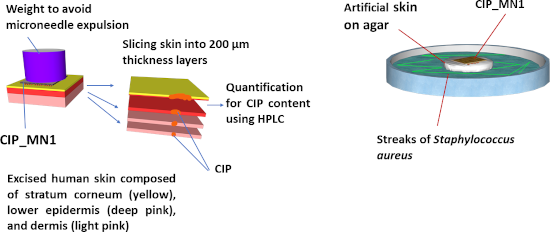
- and skin The analysis of ciprofloxacin was adopted from the United States Pharmacopoeia (USP) and was performed using HPLC (Shimadzu HPLC, model LC-2030C PLUS 3D). The system included an integrated solvent and degasser, an analytical pump, a thermostatic autosampler, a UV detector, and a thermostatic


Design and characterization of polymeric microneedles containing extracts of Brazilian green propolis
Beilstein J. Nanotechnol. 2022, 13, 503–516, doi:10.3762/bjnano.13.42
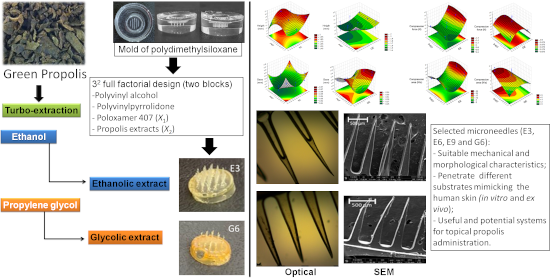
- alcoholic extracts is inappropriate. Propylene glycol can be used as solvent, extractant, and preservative in a variety of pharmaceutical, cosmetic, and food formulations. It is compatible with several cosmetic and pharmaceutical bases, in addition to having an antiseptic capacity similar to that of ethanol
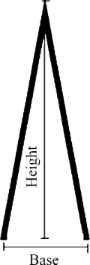
- 0.33 ± 0.01 mm in width of the base. The MNs containing GE were 1.56 ± 0.15 mm in height and 0.30 ± 0.02 mm in width of the base with smaller proportions due to the solvent affecting the formation of structures. There is a decrease of 10% and 22% in MN height, when EE and GE, respectively, are compared
- with the depth of the master mold. This is related to solvent evaporation as described in the literature for other biopolymeric MNs prepared by solvent casting [37][38]. The above sizes allow the MNs to rupture the stratum corneum but not reach the blood vessels, creating ducts that facilitate the flow


The role of sulfonate groups and hydrogen bonding in the proton conductivity of two coordination networks
Beilstein J. Nanotechnol. 2022, 13, 437–443, doi:10.3762/bjnano.13.36
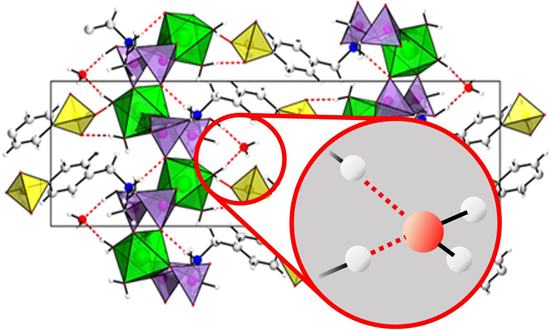
- File 1, Figure S1) and magnesium chloride hexahydrate (MgCl2⋅6H2O) or lead acetate hydrate (Pb(OAc)3·H2O), respectively, under solvothermal reaction conditions, employing mixtures of water and ethanol as solvent. In the case of [Mg (H2O)2(H3L)]·H2O, sodium hydroxide was used as an additive [13


Alcohol-perturbed self-assembly of the tobacco mosaic virus coat protein
Beilstein J. Nanotechnol. 2022, 13, 355–362, doi:10.3762/bjnano.13.30
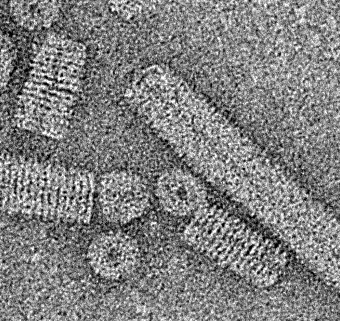
- of virus particles. The present work focuses on the effect of common alcohols as cosolvents on the TMV-cp assembly from disks to helical rods. Alcohol cosolvents exert a variety of effects on solvent and protein structure. At low concentrations, single alcohol molecules remain dispersed and have a
- eventually, alcohol becomes the bulk phase with small water clusters [34][35]. These changes in solvent structure reduce the solvent permittivity and change solute pKa and hydration number [36][37]. Additionally, alcohol–protein interactions can replace protein–protein interactions, altering the protein
- that the hydrophobic alcohol molecules interact favourably with the hydrophobic regions on the faces of TMV-cp disks, thereby preventing the protein–protein contacts necessary for helical-rod formation and stabilizing the disk structure. Disks stack mainly through a solvent network, rather than direct


Interfacial nanoarchitectonics for ZIF-8 membranes with enhanced gas separation
Beilstein J. Nanotechnol. 2022, 13, 313–324, doi:10.3762/bjnano.13.26
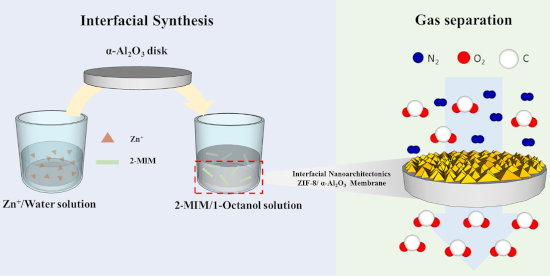
- , the interfacial synthesis method confines the coordination of the MOF to the solvent interface, which ensures good control over MOF nucleation and growth processes [37][38]. Consequently, it is a promising approach to synthesize a defect-free MOF film. In comparison, the counter-diffusion method
- -methylimidazole/1-octanol solution were prepared to optimize the ZIF-8 membrane structure. Since 1-octanol is immiscible with water, ZIF-8 formation can be confined to the interface between water and the organic solvent. Prior to ZIF-8 crystal growth, the pretreated α-Al2O3 disk was immersed into the zinc nitrate
- dispersion, while the counter-diffusion synthesis, using water as the solvent, offered less control over ZIF-8 formation. The film was about 1.5 μm thick, on top of the surface of α-Al2O3 disk rather than embedded into the disk (Figure 7b). Compared to the immiscible solvents in interfacial synthesis, the


Systematic studies into uniform synthetic protein nanoparticles
Beilstein J. Nanotechnol. 2022, 13, 274–283, doi:10.3762/bjnano.13.22
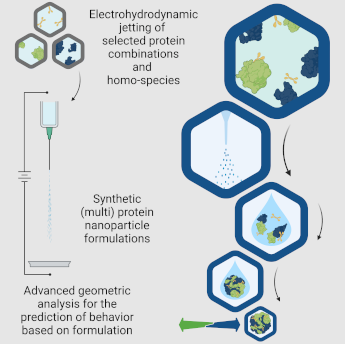
- jet to the substrate, the solvent system evaporates, and the resulting particles are deposited on the substrate. To date, SPNPs have displayed a broad spectrum of sizes, swelling factors, elasticities, and mesh sizes [27]. Here, we improve on these recent efforts by elucidating the role of blended
- , NHS-PEG-NHS, was added to the jetting solution at 10% w/wprotein. Application of a bias (voltage) between the needle and collection tray resulted in a field that distorts the solution meniscus into a Taylor cone. The charged solution was accelerated downward to form droplets. Rapid solvent evaporation
- cone, directed to a grounded substrate positioned below the cone. The ejected material dissociated into nanodroplets. After rapid solvent evaporation and solidification of non-volatile components, solid nanoparticles were deposited on the substrate. The reaction between lysine groups and NHS ester


Effects of drug concentration and PLGA addition on the properties of electrospun ampicillin trihydrate-loaded PLA nanofibers
Beilstein J. Nanotechnol. 2022, 13, 245–254, doi:10.3762/bjnano.13.19
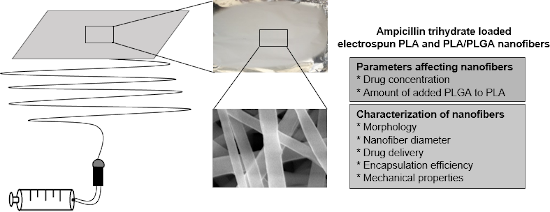
- produce ampicillin trihydrate-loaded poly(lactic acid) (PLA) and PLA/poly(lactic-co-glycolic acid) (PLA/PLGA) polymeric nanofibers via electrospinning using 1,1,1,3,3,3-hexafluoro-2-propanol (HFIP) as the solvent for local application in tissue engineering. The effects of ampicillin trihydrate
- critical component of the bacterial cell walls [9]. 1,1,1,3,3,3-Hexafluoro-2-propanol (HFIP) was used as solvent in the study. It is preferred due to its sufficiently low surface tension, sufficiently high dielectric constant, and volatility [10]. The aim of this study was to produce and characterize
- focused on drug-free or hydrophilic drug-loaded PLA/PLGA nanofibers produced with different polymers and solvent systems than those in the current study [8][11]. The current study is important since the effects of PLA/PLGA ratios on nanofiber morphology, nanofiber diameter, in vitro drug release, and


Surfactant-free syntheses and pair distribution function analysis of osmium nanoparticles
Beilstein J. Nanotechnol. 2022, 13, 230–235, doi:10.3762/bjnano.13.17
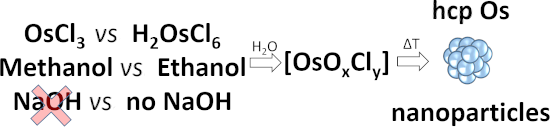
- effect of the precursor (OsCl3 or H2OsCl6), precursor concentration (up to 100 mM), solvent (methanol or ethanol), presence or absence of a base (NaOH), and addition of water (0 to 100 vol %) on the resulting nanomaterials is discussed. It is found that no base is required to obtain Os nanoparticles as
- [22]. It only requires a monoalcohol as solvent and reducing agent [25], a base, and a metal precursor to obtain size-controlled NPs [26][27]. This approach leads to catalysts that are more active than those prepared, for example, in polyols [28][29]. Here we investigate whether this simple synthetic
- influence of the precursors: OsCl3 and H2OsCl6, the nature of the solvent/reducing agent: methanol and ethanol, the absence or presence of a base (NaOH), and the effect of adding water at: 0, 10, 25, 50, 66, 75 or 100 vol %. Table S1, Supporting Information File 1, gives an overview of the different





