Search results
Search for "sputtering" in Full Text gives 398 result(s) in Beilstein Journal of Nanotechnology. Showing first 200.
Excitonic and electronic transitions in Me–Sb2Se3 structures
Beilstein J. Nanotechnol. 2020, 11, 1045–1053, doi:10.3762/bjnano.11.89
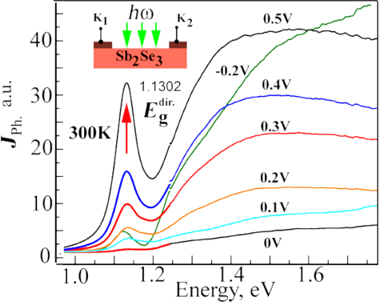
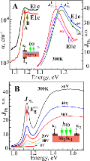
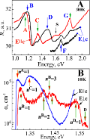
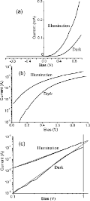
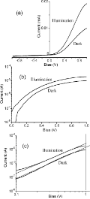
- (In–Sb2Se3) contacts, the structures were obtained by either thermal sputtering under vacuum or electrochemical deposition onto the cleaved faces of single crystals (Figure 3A). Current–voltage characteristics suggest that the contacts have an ohmic behavior. The impedance has a frequency dependence
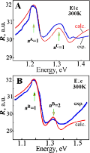
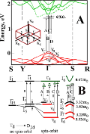
- structures and the excitonic band symmetries in the Brillouin zone center for crystals with an orthorhombic symmetry (Pnma). The In–Sb2Se3 structures were generated either by thermal sputtering under vacuum or by electrochemical deposition. The photoconductivity spectra at different applied voltages were


Gas-sensing features of nanostructured tellurium thin films
Beilstein J. Nanotechnol. 2020, 11, 1010–1018, doi:10.3762/bjnano.11.85
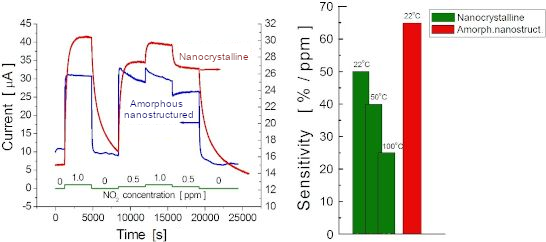
- , nanotubes or nanowires from the gas phase under vacuum or argon atmosphere. On the other hand, nanostructuring can be performed mechanically as indicated by the possibility of growth of nanocrystalline gas sensors via rf sputtering (13.6 MHz) of Te in an ultra-high-purity argon atmosphere [24]. The main
- grown using either the thermal vacuum evaporation of pure Te [17][18][19][20] or its sputtering under a pure argon atmosphere [24] onto glass, Al2O3 or sapphire substrates. It was shown that the film morphology as well as the gas sensitivity is controlled by several factors, such as the nature and


Band tail state related photoluminescence and photoresponse of ZnMgO solid solution nanostructured films
Beilstein J. Nanotechnol. 2020, 11, 899–910, doi:10.3762/bjnano.11.75
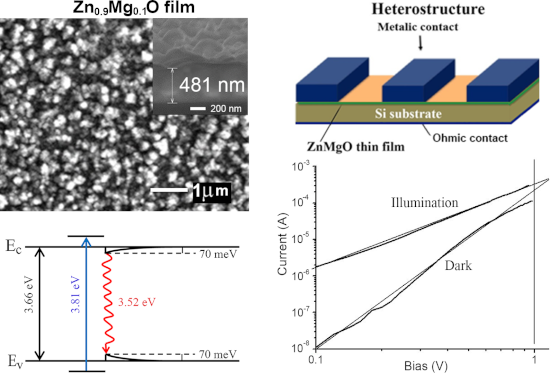
- radio-frequency plasma-assisted molecular beam epitaxy (RF-MBE) [2][7][10][11], DC [12][13] and RF [1][3][6] magnetron sputtering, pulsed laser deposition (PLD) [14][15], plasma-enhanced atomic layer deposition (PE-ALD) [16], chemical vapor deposition (CVD) [17], metal–organic chemical vapor deposition
- –0.78 for Zn1−xMgxO thin films grown by reactive DC magnetron co-sputtering [12]. It was shown that this investigation technique is highly sensitive for the detection of embedded structural inhomogeneities, and it was found that the phase segregation occurs in the range of x = 0.35–0.65 with coexistence

Epitaxial growth and superconducting properties of thin-film PdFe/VN and VN/PdFe bilayers on MgO(001) substrates
Beilstein J. Nanotechnol. 2020, 11, 807–813, doi:10.3762/bjnano.11.65
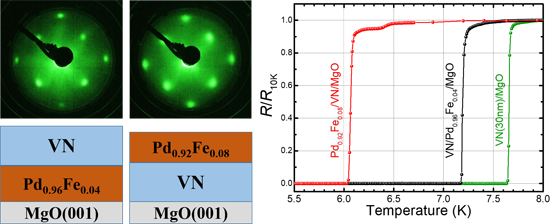
- ) and Fe (99.97% purity, ChemPur GmbH, Germany) were co-evaporated from the pre-calibrated high-temperature effusion cells to obtain the desired Pd1−xFex composition. Vanadium nitride layers were synthesized by using reactive DC magnetron sputtering (MS) in the UHV chamber with a base pressure of p ≤ 5
- −xFex were taken at each deposition step using low-energy electron diffraction (LEED) and X-ray photoelectron spectroscopy (XPS). Finally, all structures were capped with 10 nm layer of undoped Si by magnetron sputtering to prevent sample deterioration. Thus, a VN film and stacks of Pd0.96Fe0.04/VN and
- sputtering. The obtained 30 nm thick VN films exhibit a sharp superconducting transition with Tc = 7.7 K and ΔTc = 25 mK. The heteroepitaxial Pd0.96Fe0.04/VN and VN/Pd0.92Fe0.08 structures reveal a superconductor–ferromagnet proximity suppression of the transition temperature to Tc = 6.1 K. This is, however


A set of empirical equations describing the observed colours of metal–anodic aluminium oxide–Al nanostructures
Beilstein J. Nanotechnol. 2020, 11, 798–806, doi:10.3762/bjnano.11.64
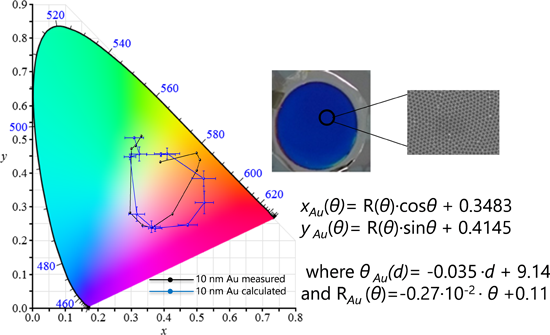
- .11.64 Abstract Structural colours have received a lot of attention regarding the reproduction of the vivid colours found in nature. In this study, metal–anodic aluminium oxide (AAO)–Al nanostructures were deposited using a two-step anodization and sputtering process to produce self-ordered anodic
- circle. Conclusion 8 nm Cr–AAO–Al and 10/17.5/25 nm Au–AAO–Al nanostructures were fabricated by combining sputtering deposition and a two-step anodization process. The AAO films with different thicknesses (from 209 ± 12 nm to 380 ± 15 nm) were anodized and the CIE Yxy values were obtained via reflectance
- Alliance-Concept DP 650 DC magnetron sputtering equipment. 25, 17.5 and 10 nm thin films of gold were deposited on top of the AAO films using a Leica EM ACE600 sputtering equipment. The Au layers were deposited using a sputtering pressure and intensity of 5 × 10⁻² mbar and 30 mA, respectively, and the Cr


Effect of Ag loading position on the photocatalytic performance of TiO2 nanocolumn arrays
Beilstein J. Nanotechnol. 2020, 11, 717–728, doi:10.3762/bjnano.11.59
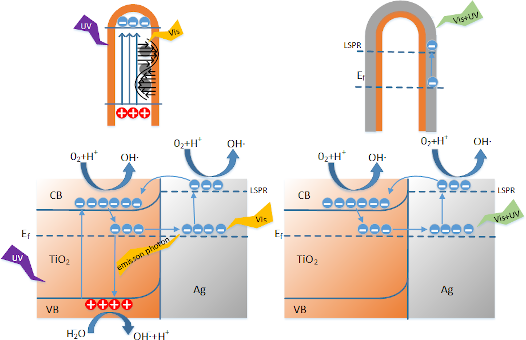
- photolithography and the template method by Sung et al. [30]. In this case, Ag particles were loaded on the outside of the nanocolumns by magnetron sputtering, and the catalysis was carried out at a sputtering time of 30 min. Besides, Jani et al. [31] studied the preparation of TiO2 nanotube arrays by anodization


Structural optical and electrical properties of a transparent conductive ITO/Al–Ag/ITO multilayer contact
Beilstein J. Nanotechnol. 2020, 11, 695–702, doi:10.3762/bjnano.11.57
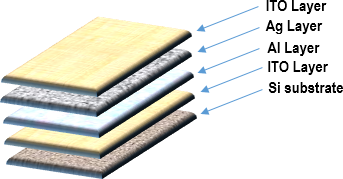
- pure ITO layer (as reference) were prepared by RF and DC sputtering. The microstructural, optical and electrical properties of the ITO/Al–Ag/ITO (IAAI) films were investigated before and after annealing at 400 °C. X-ray diffraction measurements show that the insertion of the Al–Ag intermediate bilayer
- × 10−3 Ω−1). These highly conductive and transparent ITO films with Al–Ag interlayer can be a promising contact for low-resistance optoelectronics devices. Keywords: annealing; DC sputtering; figure of merit; indium tin oxide (ITO); multilayer structure; RF sputtering; Introduction Transparent
- overcome by adding a thin layer of Al, Au, Pd, or Cr to the Ag film to improve the adhesion [4][25][26]. Optical and electrical properties of ITO films are enhanced by post-deposition annealing especially at high temperatures [7]. Gulen et al. [27] exposed pure ITO films deposited by sputtering to heat


Evolution of Ag nanostructures created from thin films: UV–vis absorption and its theoretical predictions
Beilstein J. Nanotechnol. 2020, 11, 494–507, doi:10.3762/bjnano.11.40
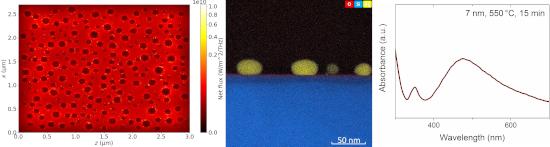
- thickness) were deposited using a table-top dc magnetron sputtering coater (EM SCD 500, Leica) in pure Ar plasma (argon, Air Products 99.999%). The Ag target was of 99.99% purity, the rate of layer deposition was about 0.4 nm·s−1, and the incident power was in the range of 30–40 W. The layer thickness was




Atomic-resolution imaging of rutile TiO2(110)-(1 × 2) reconstructed surface by non-contact atomic force microscopy
Beilstein J. Nanotechnol. 2020, 11, 443–449, doi:10.3762/bjnano.11.35
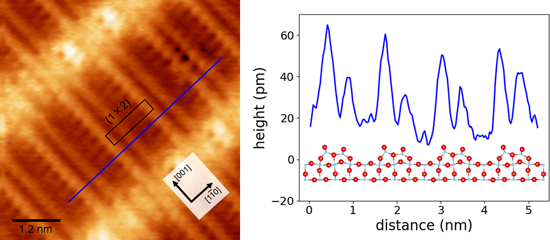
- .) were used. A rutile TiO2(110)-(1 × 2) reconstructed surface was prepared by iterating a surface cleaning process of Ar+ sputtering (2 keV, Ar partial pressure of 3.0 × 10⁻⁴ Pa, ion current of ca. 1.1 µA, 10 min) and annealing (substrate temperature of ca. 1000 °C, 30 min). STM and NC-AFM imaging was
- performed using Pt-coated Si cantilevers (Budget Sensors, ElectriTAP190G). All cantilevers were cleaned by Ar+ sputtering (0.6 keV, Ar partial pressure of 1.0 × 10⁻⁵ Pa, ion current of 0.05 µA, 5 min) before scanning. STM imaging was performed in constant-current mode without cantilever oscillation. NC-AFM


Formation of nanoripples on ZnO flat substrates and nanorods by gas cluster ion bombardment
Beilstein J. Nanotechnol. 2020, 11, 383–390, doi:10.3762/bjnano.11.29
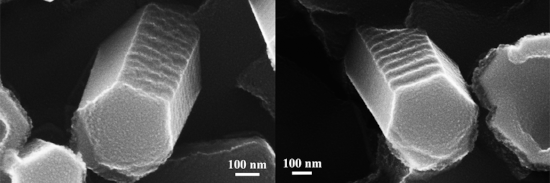
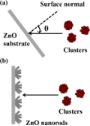
- was discovered by Navez et al. [7] and studied in details by Carter and co-workers [8]. Later, a theoretical explanation of the ripple formation was given by Bradley and Harper (BH) and Bradley and Shipman (BS) using Sigmund’s sputtering theory [9][10]. These models consider both erosion of the
- material than atomic beams, the high energy density when a cluster interacts with a surface, and nonlinear sputtering effects [13]. One of the most prominent properties of cluster beams is the smoothing effect on moderately rough surfaces [14]. The smoothing effect takes place at normal incidence of the
- lower than that for monoatomic beams [1][8][15]. The fast ripple formation by cluster irradiation can be a result of the more effective sputtering (excavation) processes by cluster ions described above. An influence of the accelerating voltage on the ripple formation is also revealed. Experiments have



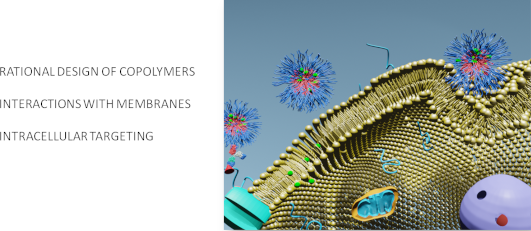
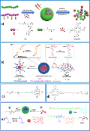
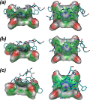
Rational design of block copolymer self-assemblies in photodynamic therapy
Beilstein J. Nanotechnol. 2020, 11, 180–212, doi:10.3762/bjnano.11.15






Advanced hybrid nanomaterials
Beilstein J. Nanotechnol. 2019, 10, 2563–2567, doi:10.3762/bjnano.10.247

- electronic devices” [29]. A combination of deposition techniques was used, chemical vapor deposition for parylene and RF-magnetron sputtering for silver nanoparticles. The content and size of the latter influences the dielectric characteristics of the resulting hybrid films. Such devices may find application
Multiwalled carbon nanotube based aromatic volatile organic compound sensor: sensitivity enhancement through 1-hexadecanethiol functionalisation
Beilstein J. Nanotechnol. 2019, 10, 2364–2373, doi:10.3762/bjnano.10.227
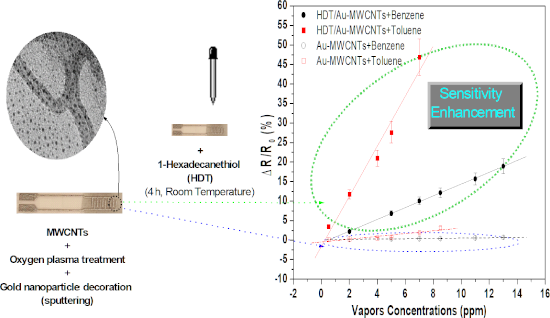
- substrates. They were then decorated with gold nanoparticles via a sputtering technique with a Sputtering ATC Orion 8-HV-AJA International machine [19]. This technique consists of bombarding the surface of a gold disc by a plasma beam, enabling the nanoparticles to cling to the walls of the MWCNTs under the
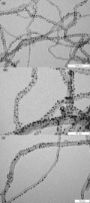
- characterisation Transmission electron microscopy characterisation In order to carry out high-resolution transmission electron microscope characterisation, MWCNTs were deposited onto a silicon substrate. Then, a sputtering process was conducted to deposit the Au nanoparticles. Afterwards, Au-decorated MWCNTs were
- distribution. We must point out though, that as the sputtering deposition technique only applies to the most exposed surfaces, a shadowing effect is also observed. This effect is generally observed for porous substrates, where sputtering only reaches the outermost surface and the topmost areas of the pore




Integration of sharp silicon nitride tips into high-speed SU8 cantilevers in a batch fabrication process
Beilstein J. Nanotechnol. 2019, 10, 2357–2363, doi:10.3762/bjnano.10.226
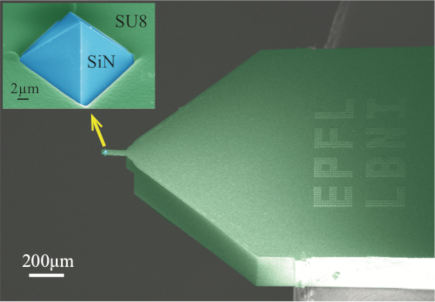
- separate the SU8 cantilevers from the wafer. The silicon oxide layer on the tips is then stripped using buffered hydrofluoric acid. The process is completed by titanium–gold (5–20 nm) sputtering on the chip-body side of the cantilevers. This layer serves as the reflective metal coating required for the


Synthesis of highly active ETS-10-based titanosilicate for heterogeneously catalyzed transesterification of triglycerides
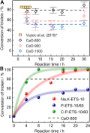
Beilstein J. Nanotechnol. 2019, 10, 2039–2061, doi:10.3762/bjnano.10.200








Facile synthesis of carbon nanotube-supported NiO//Fe2O3 for all-solid-state supercapacitors
Beilstein J. Nanotechnol. 2019, 10, 1923–1932, doi:10.3762/bjnano.10.188
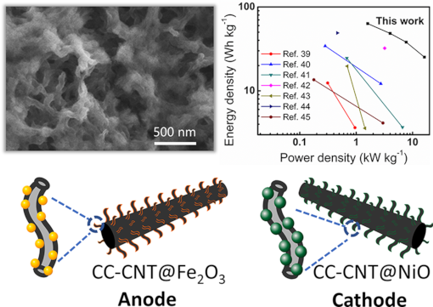
- . deposited iron oxide on CNTs by atomic layer deposition (ALD) and the obtained CNTs@Fe2O3 presented a specific capacitance of 580.6 F·g−1 at 5 A·g−1 [21]. Zhang et al. used magnetron sputtering to prepare sandwich-like CNT@Fe2O3@C structures, and the composite exhibited a specific capacitance of 787.5 F·g−1


Oblique angle deposition of nickel thin films by high-power impulse magnetron sputtering
Beilstein J. Nanotechnol. 2019, 10, 1914–1921, doi:10.3762/bjnano.10.186
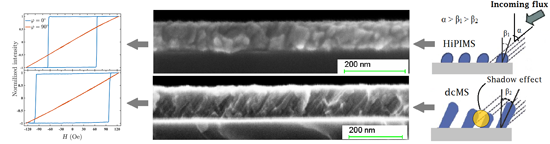
- -100 44, Stockholm, Sweden 10.3762/bjnano.10.186 Abstract Background: Oblique angle deposition is known for yielding the growth of columnar grains that are tilted in the direction of the deposition flux. Using this technique combined with high-power impulse magnetron sputtering (HiPIMS) can induce
- unique properties in ferromagnetic thin films. Earlier we have explored the properties of polycrystalline and epitaxially deposited permalloy thin films deposited under 35° tilt using HiPIMS and compared it with films deposited by dc magnetron sputtering (dcMS). The films prepared by HiPIMS present lower
- properties for some important technological applications in addition to the ability to fill high aspect ratio trenches and coating on cutting tools with complex geometries. Keywords: glancing angle deposition (GLAD); high-power impulse magnetron sputtering (HiPIMS); oblique angle deposition; magnetron


Fabrication and characterization of Si1−xGex nanocrystals in as-grown and annealed structures: a comparative study
Beilstein J. Nanotechnol. 2019, 10, 1873–1882, doi:10.3762/bjnano.10.182
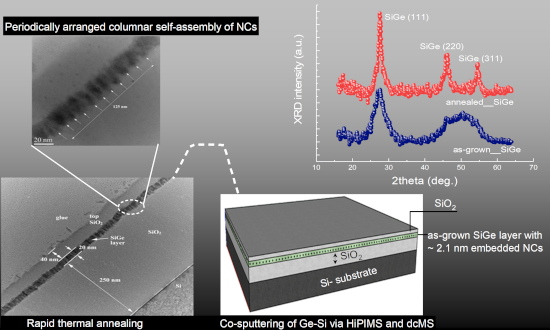
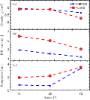
- , 050094 Bucharest, Romania 10.3762/bjnano.10.182 Abstract Multilayer structures comprising of SiO2/SiGe/SiO2 and containing SiGe nanoparticles were obtained by depositing SiO2 layers using reactive direct current magnetron sputtering (dcMS), whereas, Si and Ge were co-sputtered using dcMS and high-power
- impulse magnetron sputtering (HiPIMS). The as-grown structures subsequently underwent rapid thermal annealing (550–900 °C for 1 min) in N2 ambient atmosphere. The structures were investigated using X-ray diffraction, high-resolution transmission electron microscopy together with spectral photocurrent
- consequential interface characteristics and its effect on the photocurrent spectra. Keywords: grazing incidence XRD (GIXRD); high-power impulse magnetron sputtering (HiPIMS); HRTEM; magnetron sputtering; photocurrent spectra; SiGe nanocrystals in SiO2/SiGe/SiO2 multilayers; STEM-HAADF; TEM; Introduction


Subsurface imaging of flexible circuits via contact resonance atomic force microscopy
Beilstein J. Nanotechnol. 2019, 10, 1636–1647, doi:10.3762/bjnano.10.159
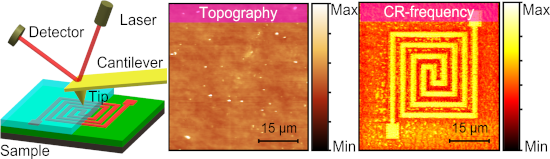
- 11 wt % PMMA in anisole solvent at 1500 rpm for 5 min, resulting in a thickness of approximately 3.5 µm. Then, a 300 nm thick Au film was sputtered on the PMMA substrate by using magnetron sputtering. The Au film was subsequently patterned by focused ion beam (FIB) milling (FEI, Helios NanoLab 650



Rapid thermal annealing for high-quality ITO thin films deposited by radio-frequency magnetron sputtering
Beilstein J. Nanotechnol. 2019, 10, 1511–1522, doi:10.3762/bjnano.10.149
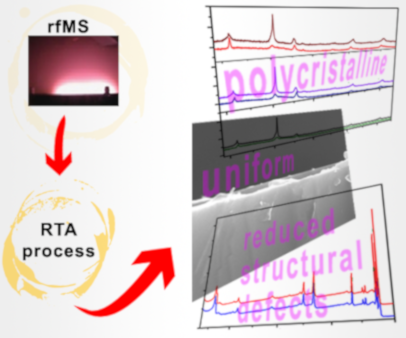
- temperature by radio-frequency magnetron sputtering (rfMS). After deposition, the films were subjected to a RTA process at 575 °C (heating rate 20 °C/s), maintained at this temperature for 10 minutes, then cooled down to room temperature at a rate of 20 °C/s. The film structure was modified by changing the
- treatment in an open atmosphere. Such films could be used to manufacture transparent contact electrodes for solar cells. Keywords: conductive transparent electrodes; indium tin oxide (ITO) films; optical properties; radio-frequency magnetron sputtering (rfMS); rapid thermal annealing (RTA); Introduction
- sputtering [20][21][22], and pulsed laser deposition (PLD) [23]. Various changes in the optical, electrical and structural qualities are known to occur depending on the type of deposition and thermal treatment process [24][25][26][27][28][29][30] applied to the ITO films. For instance, an improvement in the


Superconducting switching due to a triplet component in the Pb/Cu/Ni/Cu/Co2Cr1−xFexAly spin-valve structure
Beilstein J. Nanotechnol. 2019, 10, 1458–1463, doi:10.3762/bjnano.10.144
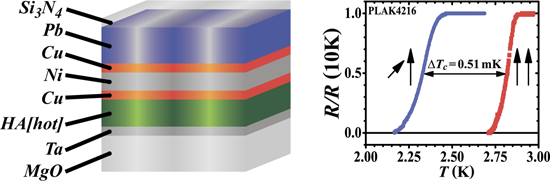
- . The Ni, Cu and Pb layers were prepared using e-beam techniques. For the fabrication of the HA and the Si3N4 layers dc sputtering was used. We used deposition rates of 0.4 Å/s for HA and Si3N4, 0.5 Å/s for Cu and Ni, and 10 Å/s for Pb. At first, when evaporating HA, the substrate temperature was kept



Growth of lithium hydride thin films from solutions: Towards solution atomic layer deposition of lithiated films
Beilstein J. Nanotechnol. 2019, 10, 1443–1451, doi:10.3762/bjnano.10.142
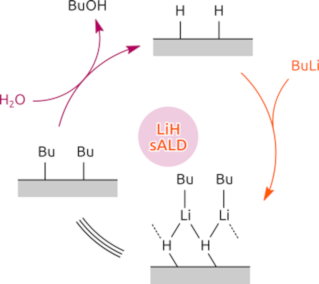
- LIPON battery in which the solid electrolyte consists of nitrogen-doped lithium phosphate, present several shortcomings. One of them is the use of sputtering [1] for the deposition of the thin layers. Inherently, sputtering does not yield coatings with high conformity on non-planar substrates. Low
- , LiH is not only suitable as an electrode material, where in fact it boasts the highest lithium concentration after elemental Li, it is also extremely useful as a hydrogen-torage layer. Since sputtering of LiH is possible [23][24], but not conformal, the sALD growth of LiH enables research regarding
- Li2O on the surface, acquired at two different areas of the sample (red and blue), shown together with the internal reference for Li2O (black). XPS spectra before Ar sputtering of a) Li 1s region, b) C 1s and c) O 1s region. In situ QCM results, showing approximately 18 sALD cycles. The maxima and


Direct observation of oxygen-vacancy formation and structural changes in Bi2WO6 nanoflakes induced by electron irradiation
Beilstein J. Nanotechnol. 2019, 10, 1434–1442, doi:10.3762/bjnano.10.141
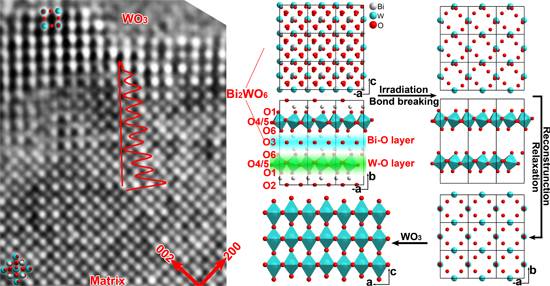
- transformed into WO3. These features indicate bond breaking within Bi–O layers and the reconstruction of WO6 octahedra predominantly occur at the surfaces of the irradiated nanoflake. In general, electron irradiation of materials results in three major effects: heating, sputtering and radiolysis. The maximum
- irradiation, in this case, is far too low to decompose Bi2WO6 nanoflakes. Besides, loops or defect clusters were not observed during the whole irradiation process suggesting that the knock-off or sputtering effects can be neglected. When a high-energy electron beam passes through the sample, an electric field


Kelvin probe force microscopy of the nanoscale electrical surface potential barrier of metal/semiconductor interfaces in ambient atmosphere
Beilstein J. Nanotechnol. 2019, 10, 1401–1411, doi:10.3762/bjnano.10.138
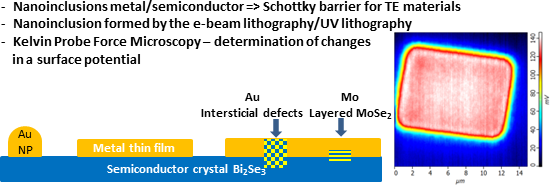
- crystals of 10–20 mm in length, 3–6 mm in width and up to 3 mm in thickness [31]. The surface of freshly cleaved layered Bi2Se3 single crystals was used as a substrate. The samples for the AFM measurement, Au nanoparticles (NPs) and thin films of gold or molybdenum, were prepared via DC sputtering in a SEM
- Coating System (Bio-Rad) in Ar atmosphere (p ≈ 20 Pa, I = 18 mA, U = 1.4 kV) from pure metal sheets (Mo 4N, Au 4N). For preparing separated Au nanoparticles under the same sputtering conditions, however, a stainless steel mask (system of 100 × 500 μm2 holes, 200 holes/cm2) between the substrate and target
- beam source in order to remove surface contaminants. A monoatomic argon ion source was utilized with energy of 2 keV, ion current 10 µA, raster area 1 × 1 mm2 and sputtering time 30 s. Results and Discussion Separated metal nanoparticles on the substrate In TE materials the NIs applicable for an


Gas sensing properties of individual SnO2 nanowires and SnO2 sol–gel nanocomposites
Beilstein J. Nanotechnol. 2019, 10, 1380–1390, doi:10.3762/bjnano.10.136
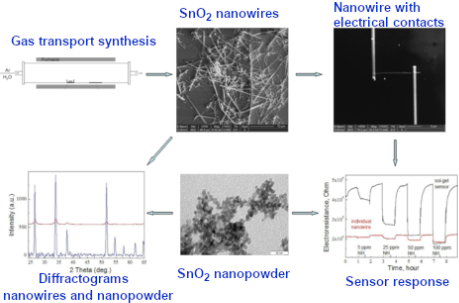
- and high surface-to-volume ratio, obtained by sintering, are traditionally used as sensing materials. By means of preparation methods such as magnetron sputtering, laser ablation, and pulverization, layer-by-layer nanoparticle deposition can be achieved with adhesion to the substrate and to previously
- intensity of the 533.6 eV component (Figure 6) of the O 1s line [51]. Previously, this component was observed on polycrystalline nanolayers formed by magnetron sputtering of tin and ambient air oxidation afterwards [47]. Figure 7 compares XANES Sn M4,5 spectra of the samples with those obtained on the SnO2