Search results
Search for "stability" in Full Text gives 1337 result(s) in Beilstein Journal of Nanotechnology. Showing first 200.
Serum heat inactivation diminishes ApoE-mediated uptake of D-Lin-MC3-DMA lipid nanoparticles
Beilstein J. Nanotechnol. 2025, 16, 740–748, doi:10.3762/bjnano.16.57
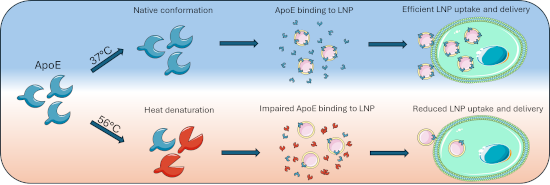
- ) ionizable lipids. Cellular uptake and siRNA delivery efficiency of the LNPs were determined in media containing untreated or heat-inactivated serum. Mechanistically, we found that apolipoprotein E, a protein corona component that is crucial for MC3 LNP tropism, displayed reduced stability and functionality
- inherent limitations of different classes of therapeutics, ranging from small molecule drugs, to biologicals such as proteins and nucleic acids. Nanoparticles can enhance the solubility and stability of their payload, prolong its circulation time, and improve its biodistribution to increase their safety
- proteins, forms on its surface. This so-called protein corona significantly affects the physicochemical properties of the nanoparticle, such as size, charge and stability [2][3][4][5]. In turn, the composition of the protein corona is influenced by the physicochemical properties of the pristine


Synthesis of a multicomponent cellulose-based adsorbent for tetracycline removal from aquaculture water
Beilstein J. Nanotechnol. 2025, 16, 728–739, doi:10.3762/bjnano.16.56
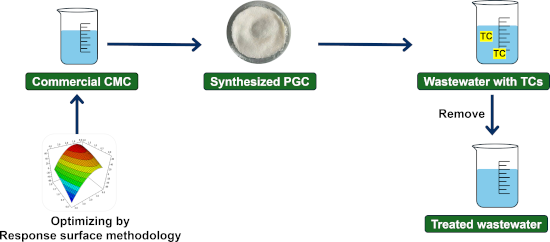
- , compromising the material’s stability. This interaction significantly influences the model (p-value < 0.05), particularly through the GA volume (X3). The interaction of the mole ratio between Ca2+ and Mg2+ (X4) with other factors also has a significant effect on the model, yielding an optimal value of
- hydroxy groups interact with the functional groups of the cross-linking agent, reducing the polymer’s water solubility while increasing its stiffness and chemical stability [35][36]. Glutaraldehyde (GA), a linear five-carbon dialdehyde, is regarded as a more effective cross-linking agent compared to
- monoaldehydes (e.g., formaldehyde) and other dialdehydes (C2 to C6) [37]. GA and PVA have been used as cross-linking agents in CMC-based materials to enhance selectivity, stability, and mechanical properties [38]. This method is both cost-effective and highly efficient in strengthening materials while improving


Efficiency of single-pulse laser fragmentation of organic nutraceutical dispersions in a circular jet flow-through reactor
Beilstein J. Nanotechnol. 2025, 16, 711–727, doi:10.3762/bjnano.16.55
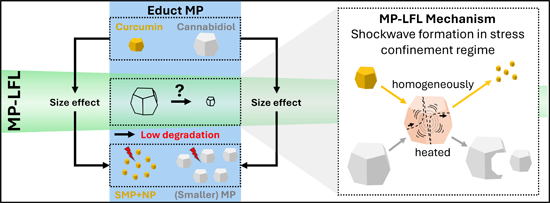
- , green, and IR ranges. Metal complex dyes are characterized by high thermal and UV stability and were therefore preferred for initial LFL studies [32]. Asahi et al. and Tamaki et al. repeatedly showed that using a UV nanosecond laser with a repetition rate of several hertz not only produces NPs of
- , which characterizes the chemical stability of nutraceuticals against LFL, is also relevant to evaluate the efficiency of the fragmentation process, impurities after fragmentation were quantified using HPLC analysis. Moreover, quantifying degradation is important for product application-oriented


The impact of tris(pentafluorophenyl)borane hole transport layer doping on interfacial charge extraction and recombination
Beilstein J. Nanotechnol. 2025, 16, 678–689, doi:10.3762/bjnano.16.52

- strong influence on the overall efficiency and stability in perovskite solar cell devices. Specifically, the charge extraction and recombination occurring at the interfaces between the perovskite and these materials can be a limiting factor for performance. A lot of effort has been put into improving the
- )amine] (PTAA) [24]. These compounds exhibit favorable solubility, reasonable energetic alignment with most perovskites, and an amorphous nature. The main issues that arise from their usage involve poor conductivity and mechanical stability [25], the existence of pinholes, and a poor adhesion with the
- ], thus leading to an improved morphology and uniformity of the resulting layer. However, its unfavorable long-term impact on stability indicates that new doping strategies might be required in the future [35][36]. For this, there have been efforts for finding cheap hydrophobic acidic substances with good


Colloidal few layered graphene–tannic acid preserves the biocompatibility of periodontal ligament cells
Beilstein J. Nanotechnol. 2025, 16, 664–677, doi:10.3762/bjnano.16.51
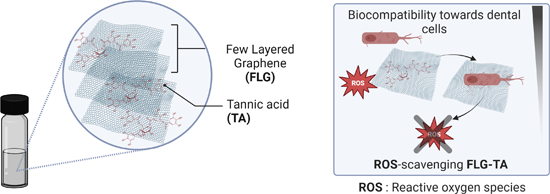
- provided DPPH (Figure S4B0–B2 of Supporting Information File 1). These findings indicate significant oxygen enrichment due to TA adsorption on FLG sheets, supporting earlier Raman spectroscopy results and colloidal stability observations (Figure S3A1, Supporting Information File 1). Both free and adsorbed
- hydrogen bonds and coat various surfaces [23]. Our results are compatible with a model where adsorbed TA molecules create a partially active antioxidant layer on the FLG surface, maintaining bioactivity while enhancing graphene colloid stability. Unfortunately, the zeta potential of the FLG–TA material in
- viability observed at 48 h may be related to changes in the stability of TA molecules within the culture medium, potentially resulting in dissociation of TA from FLG particles. The subsequent presence of unbound TA molecules may induce oxidative stress responses and compromise cellular viability




Aprepitant-loaded solid lipid nanoparticles: a novel approach to enhance oral bioavailability
Beilstein J. Nanotechnol. 2025, 16, 652–663, doi:10.3762/bjnano.16.50
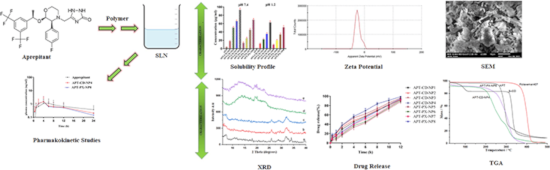
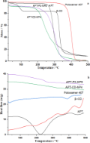
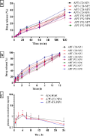
- , and zeta potential measurements. Also Fourier-transform infrared (FTIR) spectroscopy, X-ray diffraction (XRD), solubility, in vitro dissolution, and in vivo and stability studies were carried out. Result and Discussion Physicochemical evaluation The solubility of APT in the SLNs was 24-fold higher
- key factor in evaluating stability of APT-loaded SLNs. The zeta potential values of the prepared SLNs (APT-CD-NP1 to APT-PX-NP8) were −25.7 ± 0.21, −24.2 ± 0.31, −20.8 ± 0.41, −18.8 ± 0.94, −23.5 ± 0.75, −22.8 ± 0.64, −22.7 ± 0.52 and −20.7 ± 0.71 mV, respectively (Table 1). Among all formulations
- properties. The zeta potential values of all formulations remained negative, demonstrating that the electrostatic stability of SLNs was maintained. APT-CD-NP4 (from −18.8 ± 0.94 to −17 ± 0.6 mV) and APT-PX-NP8 (from −20.7 ± 0.71 to −20.0 ± 0.9 mV) showed only slight shifts. The particle size of all



A formulation containing Cymbopogon flexuosus essential oil: improvement of biochemical parameters and oxidative stress in diabetic rats
Beilstein J. Nanotechnol. 2025, 16, 617–636, doi:10.3762/bjnano.16.48
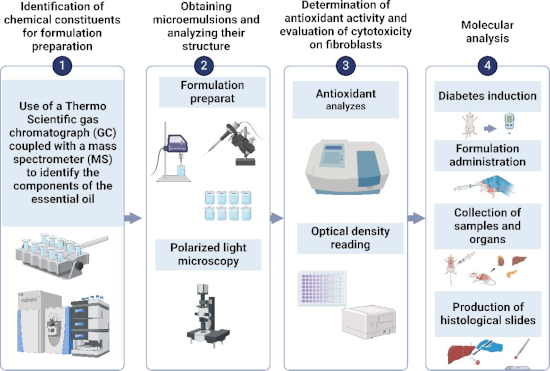
- obtained after consulting the corresponding pseudoternary phase diagram and showed stability, isotropy, Newtonian behavior, nanometric size (15.2 nm), and pH 4.2. Both EOCF and the ME showed high antioxidant activity, but the ME resulted in greater antioxidant activity, potentiating the activity of
- antidyslipidemic properties in vivo [4][5][6]. EOs are volatile components that are sensitive to temperature, light, oxygen, and humidity [7]. Therefore, it is recommended to use them in drug delivery systems, such as nanostructured systems, which are able to guarantee stability and a better therapeutic effect
- stabilized by surfactants, with a very small droplet size (<100 nm), which facilitates their permeation through membranes [9]. In addition, MEs showed increased anti-inflammatory activity, reduced irritation, and improved the stability of EOs in previous studies [10][11]. Thus, from an innovative perspective




Polyurethane/silk fibroin-based electrospun membranes for wound healing and skin substitute applications
Beilstein J. Nanotechnol. 2025, 16, 591–612, doi:10.3762/bjnano.16.46
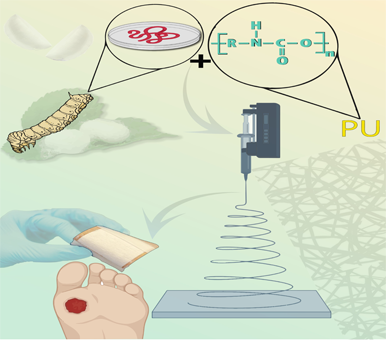
- engineering scaffolds [95]. An essential basis for using these natural proteins for biomedical applications is their relative environmental stability in contrast to globular proteins, along with their options for gene-customizing sequences [96]. SF has been extensively utilized in designing matrix scaffolds
- . developed a micro–nanofiber dressing by electrospinning a blend of SF, chitosan, and halloysite nanotubes (HNTs) loaded with the antibacterial agent chlorhexidine digluconate (CHD). The addition of HNTs considerably altered the nanofiber structure, and increased the material’s thermal stability and
- stability and give greater resistance against enzymatic hydrolysis [129]. Moreover, it promotes the formation of more hydrogen linkages that give greater biostability to PU-based biomaterials [130]. Polyether- and polyester-based PUs are prone to oxidation and hydrolysis, while polycarbonate-based PUs show



Feasibility analysis of carbon nanofiber synthesis and morphology control using a LPG premixed flame
Beilstein J. Nanotechnol. 2025, 16, 581–590, doi:10.3762/bjnano.16.45
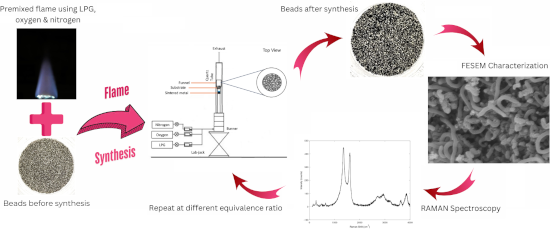
- varying equivalence ratios. The effects of flame equivalence ratio on the CNF morphology and crystallinity are then analyzed systematically. In the present study, a diffusion flame was used to check the stability of the flame at different flow rates, followed by establishing a premixed flat flame of LPG
- an initial diffusion flame to compare the stability to achieve a premixed flame. Flames with different equivalence ratios were systematically used to confirm the feasibility of the synthesis process and the effects of flame conditions on the morphology of the grown CNF. Experimental Preparation of
- propagation. It also shows no soot formation on the impregnated beads when the beads are held on top of the flame. LPG–air diffusion flames were used to study the flame stability in the flammability limit for upward propagation of Φ = 0.53–2.80 [21]. Air and LPG are passed through different inlets to the



Nanomaterials in targeting amyloid-β oligomers: current advances and future directions for Alzheimer's disease diagnosis and therapy
Beilstein J. Nanotechnol. 2025, 16, 561–580, doi:10.3762/bjnano.16.44
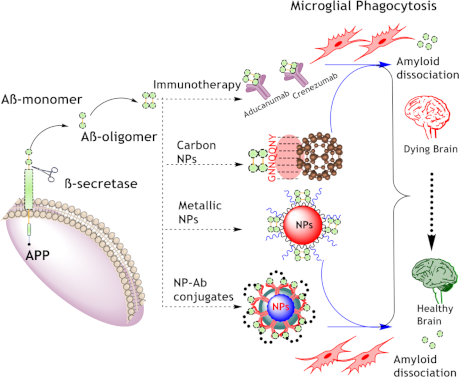
- oligomers, affecting their binding ability and preventing aggregation. Different nanoparticle geometries facilitate specific surface interactions that help to block oligomer formation and support structural stability. For example, Xiong et al. showed that peptide-functionalized AuNPs could effectively


Retrieval of B1 phase from high-pressure B2 phase for CdO nanoparticles by electronic excitations in CdxZn1−xO composite thin films
Beilstein J. Nanotechnol. 2025, 16, 551–560, doi:10.3762/bjnano.16.43

- diameter in CdO subjected to 120 MeV silver ion irradiation is calculated to be approximately 8 nm using an inelastic thermal spike simulation code. This study elucidates the intriguing reappearance of the B1 phase under oxygen ion irradiation and highlights the radiation stability of the B2 phase through
- , we reported a local pressure-driven structural phase transformation (PT) from B1 (NaCl) to B2 (CsCl) in CdxZn1−xO (x = 0.4) composite binary oxide thin films [1]. The radiation stability of these phases is crucial for optoelectronic applications in space, where the exposure to high-energy particles
- and gamma radiation can induce lattice defects and lower the device efficiency [7]. Swift heavy ion (SHI) irradiation experiments provide valuable insights into the radiation stability of the transformed B2 phase, which is essential for the future utilization of these composite materials in space


Functionalized gold nanoflowers on carbon screen-printed electrodes: an electrochemical platform for biosensing hemagglutinin protein of influenza A H1N1 virus
Beilstein J. Nanotechnol. 2025, 16, 540–550, doi:10.3762/bjnano.16.42
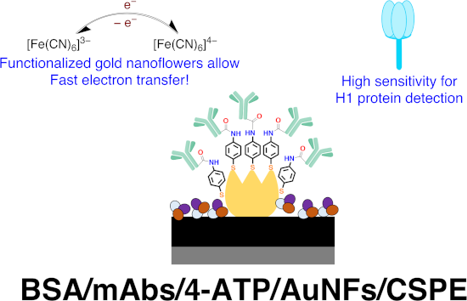
- improved; the challenge is to create portable devices that overcome drawbacks related to long incubation times, unsatisfactory limits of detection, low stability, and short shelf life of the biosensor. To address the current challenges, in this study, we built an electrochemical biosensor to detect and
- , electrode stability in different solvents, and circuit fitting for the EIS data. Acknowledgements The authors acknowledge SensUs organization for technical discussions on biosensors development, Dr. Quentin Palomar-Marchand for the technical advice provided on electrochemical measurements, and Jayendra


Electron beam-based direct writing of nanostructures using a palladium β-ketoesterate complex
Beilstein J. Nanotechnol. 2025, 16, 530–539, doi:10.3762/bjnano.16.41
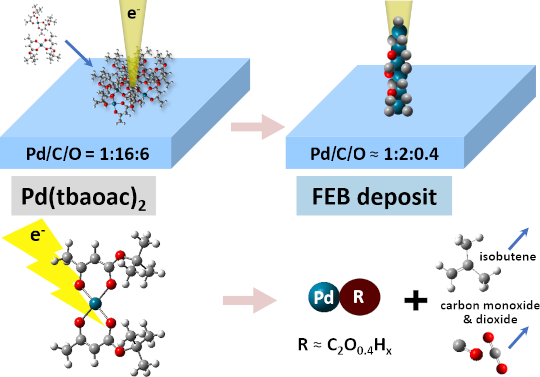
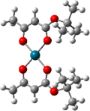
- ligands are typically used as a metal source. Metalorganic precursors are preferred because of their vacuum stability and volatility. Achieving pure metal deposits requires the complete dissociation of all ligands from the metal atom and their desorption without producing further nonvolatile fragments


Zeolite materials with Ni and Co: synthesis and catalytic potential in the selective hydrogenation of citral
Beilstein J. Nanotechnol. 2025, 16, 520–529, doi:10.3762/bjnano.16.40
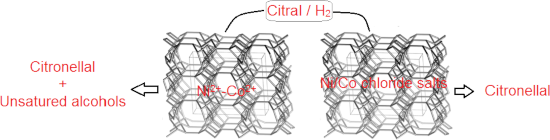
- elements, as well as the Si/Al ratios for the obtained materials are shown in Table 1 and/or Figure 3. The Si/Al ratio shows no significant change (Table 1), indicating a high degree of stability for the clinoptilolite–heulandite and mordenite phases after the applied hydrothermal treatments. Additionally


Water in nanoporous hexagonal boron nitride nanosheets: a first-principles study
Beilstein J. Nanotechnol. 2025, 16, 510–519, doi:10.3762/bjnano.16.39
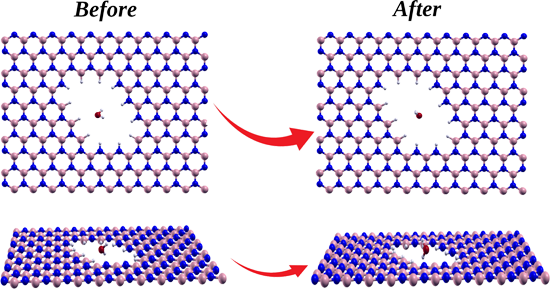
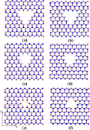
- deformations. Surprisingly, the stability of triangular pores with N–H termination is significantly increased by the addition of B–H pairs, whereas the stability of triangular pores with B–H termination is decreased by the addition of N–H pairs, indicating a distinct evolution of the pore shape based on the
- boron nitride (h-BN) [19]. Among these materials, h-BN stands out because of its properties, which are similar to those of graphene. It is composed of alternating boron and nitrogen atoms arranged in a honeycomb-like crystalline structure, characterized by high thermal stability, low dielectric constant
- passage of ions and polar molecules. However, the use of h-BN as a membrane for water desalination is still a relatively new area of research. In this paper we propose an analysis using first-principles calculations to understand the stability of pores in monolayer h-BN and their interaction with water




N2+-implantation-induced tailoring of structural, morphological, optical, and electrical characteristics of sputtered molybdenum thin films
Beilstein J. Nanotechnol. 2025, 16, 495–509, doi:10.3762/bjnano.16.38
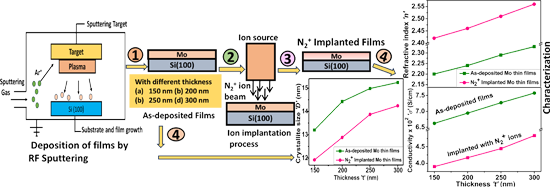
- remarkable thermal stability, high melting point, and chemical inertness. In the present study, Mo thin films of different thicknesses (150, 200, 250, and 300 nm) have been deposited on Si(100) substrates via radio frequency sputtering in an argon atmosphere at room temperature. Some of these films have been
- technological applications owing to their outstanding characteristics. The high melting point and stability of molybdenum ensure that it remains structurally intact under the harsh operating conditions of solar cells [1][2]. This stability is essential for long-term reliability and performance. The low
- range of applications [23][24][25][26][27][28]. Kim et al. [23] examined the impact of a 3 × 10¹⁷ N2+·cm−2 ion fluence on the structural characteristics, surface morphology, and thermal stability of Mo thin films. The internal stress of these films transitioned from strongly compressive to weakly


Impact of adsorbate–substrate interaction on nanostructured thin films growth during low-pressure condensation
Beilstein J. Nanotechnol. 2025, 16, 473–483, doi:10.3762/bjnano.16.36

- interactions in a homogeneous system. Next, we perform stability analysis and define a range of the strength of adsorbate–substrate interaction responsible for pattern formation during deposition. Finally, we present results of numerical simulations and discuss dynamics of surface patterns formation and
- deposition. Results and Discussion First-order transitions in a homogeneous system First, let us discuss homogeneous states xst and analyze their stability by setting ∇J = 0 in Equation 2. Stationary states xst correspond to ∂tx = 0 giving R(x) = 0 with Dependencies of the homogeneous stationary states xst
- and ε. By analysis of the dependencies xst(δ) for different ε, one can obtain the stability diagram δ(ε) at different α, shown in Figure 2a. Let us consider the case α = 0.03. It follows that the bistability domain (between the solid curves) is bounded by the critical values of ε for the fixed


Effect of additives on the synthesis efficiency of nanoparticles by laser-induced reduction
Beilstein J. Nanotechnol. 2025, 16, 464–472, doi:10.3762/bjnano.16.35
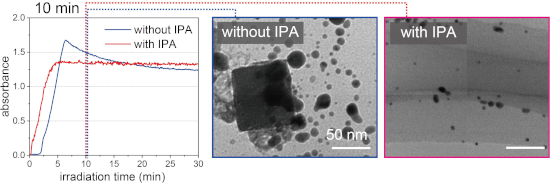
- two methyl groups in IPA, so the stability of the radicals is higher than in ethanol, which has only one methyl group. However, there was no significant difference in the synthesis efficiency when using these additives. So, the stability of the radical has little effect on the synthesis efficiency of


Synthetic-polymer-assisted antisense oligonucleotide delivery: targeted approaches for precision disease treatment
Beilstein J. Nanotechnol. 2025, 16, 435–463, doi:10.3762/bjnano.16.34

- potential in precision disease treatment. Synthetic polymers have shown significant promise in enhancing the delivery, stability, and therapeutic efficacy of ASOs by addressing key challenges such as cellular uptake, endosomal escape, and reducing cytotoxicity. The review highlights key studies from the
- target diseases and genetic variations. However, the lack of disease-specific biomarkers, which facilitate the identification of disease phenotypes, the poor chemical stability of nucleotide-based molecules and their inefficient biodistribution and targeted delivery result in insufficient biological
- into three generations based on their structural modifications (Figure 1) [17]. First-generation ASOs are characterised by having an altered phosphate backbone. This chemical modification increases their stability against nucleases, extending their half-life, and promotes the degradation of transcripts


Quantification of lead through rod-shaped silver-doped zinc oxide nanoparticles using an electrochemical approach
Beilstein J. Nanotechnol. 2025, 16, 422–434, doi:10.3762/bjnano.16.33
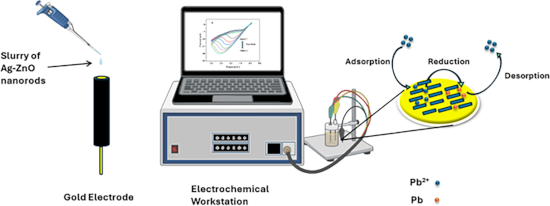
- NRs were studied using dynamic light scattering analysis, and their zeta potential was determined. Figure 5 represents the zeta potential of Ag@ZnO NRs. The samples were collected in the liquid state and the Ag@ZnO NRs zeta potential of ≈30 mV accounts for the stability of the nanoparticles in water





Size control of nanoparticles synthesized by pulsed laser ablation in liquids using donut-shaped beams
Beilstein J. Nanotechnol. 2025, 16, 407–417, doi:10.3762/bjnano.16.31
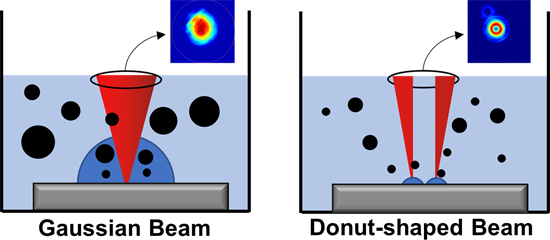
- ][26], ligands [27], and low-salinity ions [28], or by choosing different liquid media [29]. Nevertheless, the addition of molecular stabilizers or the use of liquids that increase the stability reduces the versatility of the technique and limits the applicability of the produced colloidal NPs. The


ReactorAFM/STM – dynamic reactions on surfaces at elevated temperature and atmospheric pressure
Beilstein J. Nanotechnol. 2025, 16, 397–406, doi:10.3762/bjnano.16.30
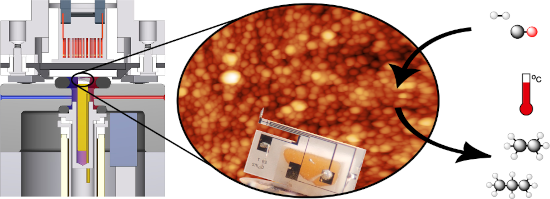
- hall. The AFM/STM is contained in a high-pressure cell and sealed off from the UHV chamber by a Kalrez elastomer seal, which exhibits outstanding thermal stability and chemical resistance together with improved sealing performance in both high-pressure and high-temperature environments. Being in direct
- developments of the ReactorAFM/STM could benefit from increasing the temperature range of the quartz tuning forks. This could be achieved by further investigating the temperature limitation and considering one designed with a higher T0, offering greater stability at elevated temperatures. Additionally


Engineered PEG–PCL nanoparticles enable sensitive and selective detection of sodium dodecyl sulfate: a qualitative and quantitative analysis
Beilstein J. Nanotechnol. 2025, 16, 385–396, doi:10.3762/bjnano.16.29
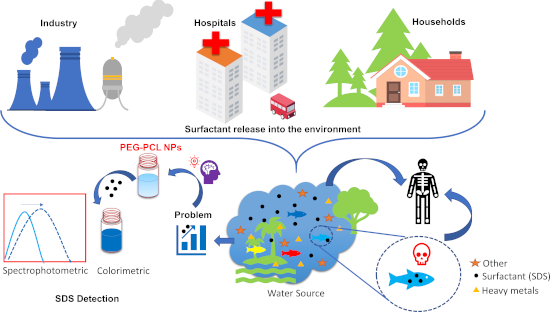
- negative surface charge. The zeta potential is a critical parameter for evaluating the stability of colloidal dispersions; typically, values greater than ±30 mV are associated with high stability due to strong electrostatic repulsion between particles [31]. Despite the zeta potential being less than ±30 mV
- elemental changes occurred during the synthesis process, suggesting the stability and integrity of the PEG–PCL NPs. This consistency in elemental composition further supports the use of these nanoparticles in various applications, as it ensures that the nanoparticles retain their designed properties without
- monitoring of SDS contamination in various sources. The developed method offers several key advantages: it is simple, rapid, cost-effective, and it has high stability. These findings highlight the potential of this method for SDS detection from different sources, providing a valuable tool for routine


Development of a mucoadhesive drug delivery system and its interaction with gastric cells
Beilstein J. Nanotechnol. 2025, 16, 371–384, doi:10.3762/bjnano.16.28

- , effective encapsulation, pH-responsive release, and enhanced stability. Eudragit RS 100 is a copolymer of ethyl acrylate, methyl methacrylate, and a low proportion of methacrylic acid ester with quaternary ammonium groups. It is known for its mucoadhesive properties [16], which are independent of the site


Pulsed laser in liquid grafting of gold nanoparticle–carbon support composites
Beilstein J. Nanotechnol. 2025, 16, 349–361, doi:10.3762/bjnano.16.26
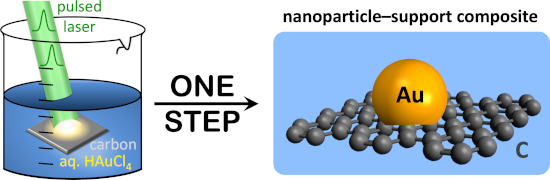
- -term stability. A widely used ionomer binder is Nafion, which is highly acidic [11] and can corrode earth-abundant catalysts that are not acid-stable [12]. Ionomer binders can additionally lead to undesired side reactions, thus reducing the energy efficiency for the desired transformation [13
- reactions and can create unwanted side products [7]. Long-term surfactant stability and associated catalyst agglomeration or detachment are another issue. Post-synthetic attachment of catalyst nanoparticles is poorly scalable, creates large amounts of organic hazardous waste, and results in wastage of
- pulsed laser-grafted over conventionally prepared cathodes. Chronoamperometry data, collected at a constant applied potential of −1.3 V vs RHE, showed enhanced stability and mass activity of the pulsed laser-grafted gold nanoparticle–carbon fiber paper composite, compared to an analogous conventionally