Search results
Search for "structural properties" in Full Text gives 181 result(s) in Beilstein Journal of Nanotechnology.
Large area scanning probe microscope in ultra-high vacuum demonstrated for electrostatic force measurements on high-voltage devices
Beilstein J. Nanotechnol. 2015, 6, 2485–2497, doi:10.3762/bjnano.6.258
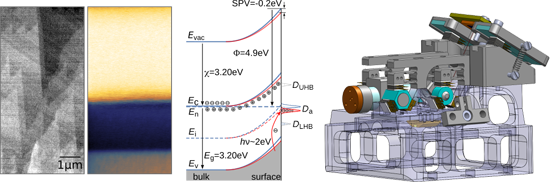
- power switches. Each switching process results in a melting of the contact surface and after several hundred events in a degradation of the device properties. Therefore, the chemical and structural properties of these surfaces are of major interest. Since the melting zone is typically macroscopically


Nanoinformatics for environmental health and biomedicine
Beilstein J. Nanotechnol. 2015, 6, 2449–2451, doi:10.3762/bjnano.6.253

- nanomaterials for their various intended applications, large amounts of data are being generated for better understanding and mapping the toxicology and pharmacology of nanomaterials. Nanomaterials data are typically sought regarding their physicochemical and structural properties, environmentally related
Impact of ultrasonic dispersion on the photocatalytic activity of titania aggregates
Beilstein J. Nanotechnol. 2015, 6, 2423–2430, doi:10.3762/bjnano.6.250
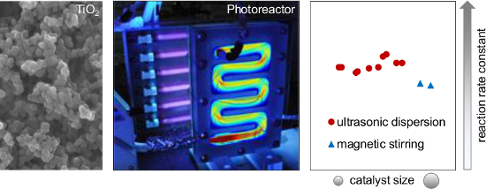
- illuminated batch reactors [6][7][8] and follow Langmuir–Hinshelwood kinetics [9][10]. This research has focused on the materials aspects such as the structural properties (e.g., surface area, particle size, crystal composition, porosity) [8][11] of pristine or modified photocatalysts [2][5][12]. However


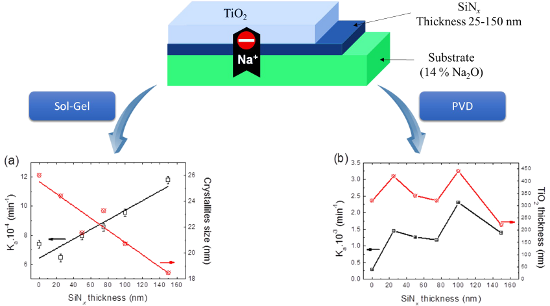
Effect of SiNx diffusion barrier thickness on the structural properties and photocatalytic activity of TiO2 films obtained by sol–gel dip coating and reactive magnetron sputtering
Beilstein J. Nanotechnol. 2015, 6, 2039–2045, doi:10.3762/bjnano.6.207
- for 2 h with a heating rate of 50 °C·min−1. Characterization The coating morphology was investigated by scanning electron microscopy (SEM) using a Philips XL30 SFEG equipped with a field effect gun. The structural properties of the films were determined by X-ray diffraction (XRD) using Co Kα radiation
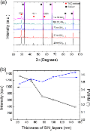
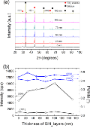
- SiNx diffusion barriers of different thicknesses. The structural properties of the TiO2 films was affected by the process used for the production of the films. The preferential orientation of the anatase phase obtained for the samples produced from the sol–gel process is the (001) plane, whereas those
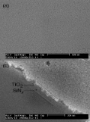
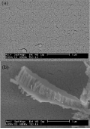
- diffusion barrier had no effect on the structural properties of the TiO2 films. SEM images of the (a) top surface and (b) cross section of the sol–gel TiO2 films grown on 75 nm thick SiNx/SLG after annealing at 450 °C. SEM images of (a) the top surface and (b) the cross-section of the magnetron sputtered
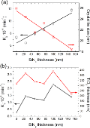
Nitrogen-doped graphene films from chemical vapor deposition of pyridine: influence of process parameters on the electrical and optical properties
Beilstein J. Nanotechnol. 2015, 6, 2028–2038, doi:10.3762/bjnano.6.206
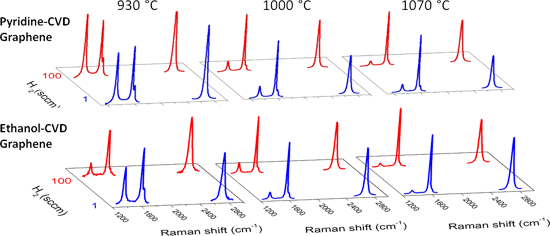
- approximately 1 μm. Low laser power (below 1 mW) was used to minimize sample heating and possible damages. Because of possible inhomogeneity in the films, the spectra were recorded at ten different spots and averaged. XPS The electronic and structural properties of the graphene films on Si/SiO2 were probed by X


Predicting cytotoxicity of PAMAM dendrimers using molecular descriptors
Beilstein J. Nanotechnol. 2015, 6, 1886–1896, doi:10.3762/bjnano.6.192
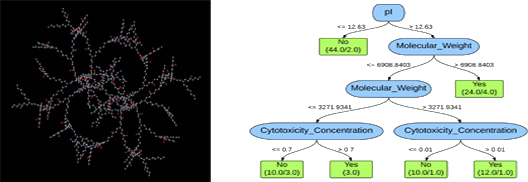
- techniques can be used for the development of predictive models of the cytotoxicity of poly(amido amine) (PAMAM) dendrimers using their chemical and structural properties. We present predictive models developed using 103 PAMAM dendrimer cytotoxicity values that were extracted from twelve cancer nanomedicine
- properties (two mass-related, six atom-count-related, seven bond-count-related, four ring-size-related, 13 ring-count-related, and ten other structural properties) and nine chemical properties (five charge-related and four hydrogen-bonding-related properties). Data preparation and preprocessing The data
- each molecule were calculated using plugins built into MarvinSketch [36]. The list of the 51 molecular descriptors calculated for each molecule is given along with their corresponding definitions in Supporting Information File 1, Table S1. Among these molecular descriptors, there are 42 structural


Large-voltage behavior of charge transport characteristics in nanosystems with weak electron–vibration coupling
Beilstein J. Nanotechnol. 2015, 6, 1853–1859, doi:10.3762/bjnano.6.188
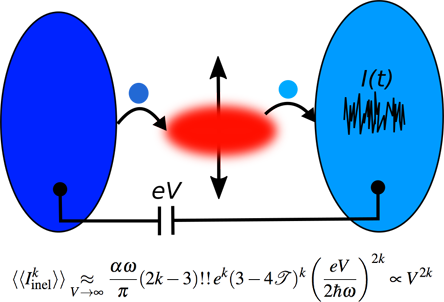
- applied successfully to single-molecule junctions and provides directly their vibrational frequencies from the position of IETS signals [4][7] and, indirectly from the IETS features such as heights of the peaks, also information about electronic and structural properties [8][9]. Theoretical modeling of
Metal hydrides: an innovative and challenging conversion reaction anode for lithium-ion batteries
Beilstein J. Nanotechnol. 2015, 6, 1821–1839, doi:10.3762/bjnano.6.186
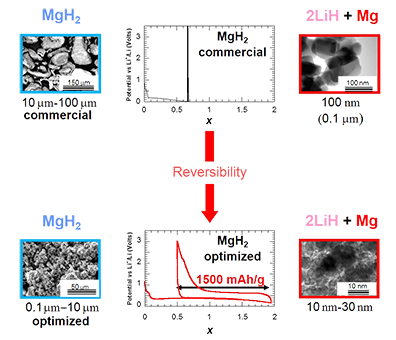
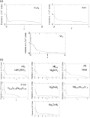
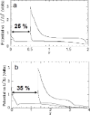
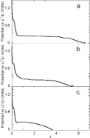
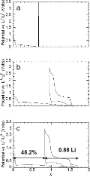
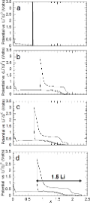
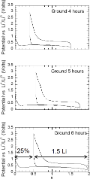
- chemical and structural properties of TiH2 [10]. As shown on Figure 1, TiH2 is attractive regarding its high theoretical capacities (like all binary hydrides). In addition, an improvement of the conversion process kinetics is expected because of the good electrode conductivity due to the metallic











Structural and magnetic properties of iron nanowires and iron nanoparticles fabricated through a reduction reaction
Beilstein J. Nanotechnol. 2015, 6, 1652–1660, doi:10.3762/bjnano.6.167
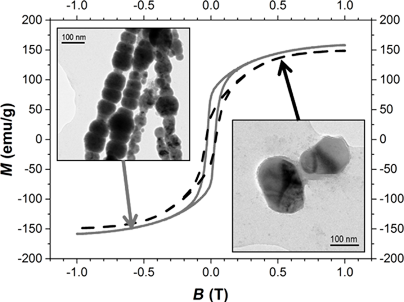
- nanowires; magnetic properties; structural properties; Introduction Iron-based nanostructures attract the attention of a vast amount of scientists from all over the world. Somehow, this is related to the properties and abundance of iron in the environment. Adding that iron nanomaterials are relatively
- ]. Above 550 °C, it seems that the studied nanowires as well as nanoparticles consist of crystalline α-Fe2O3 located on the surface of the investigated nanomaterials and an α-Fe core, which do not change the structural properties during further heating. The effects of iron oxidation and the following phase
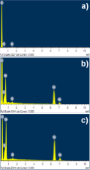
- scanning electron microscopy (FE-SEM Hitachi SU8020) with an energy dispersive X-ray spectrometer (EMAX Evolution X-Max). The structural properties of both synthesized samples were characterized at room temperature by a Bruker D2 Phaser diffractometer (XRD) equipped with a Cu sealed tube (X-ray source; λ



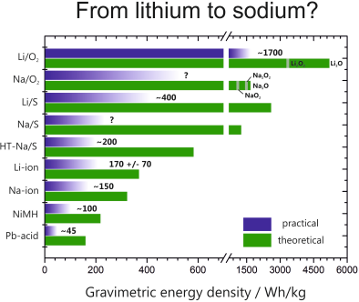
From lithium to sodium: cell chemistry of room temperature sodium–air and sodium–sulfur batteries
Beilstein J. Nanotechnol. 2015, 6, 1016–1055, doi:10.3762/bjnano.6.105


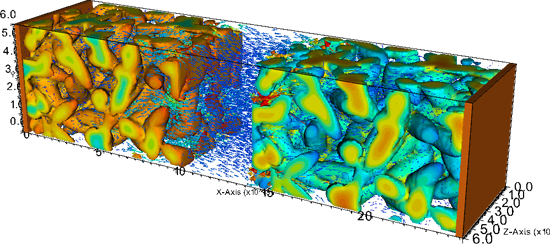
Multiscale modeling of lithium ion batteries: thermal aspects
Beilstein J. Nanotechnol. 2015, 6, 987–1007, doi:10.3762/bjnano.6.102


Characterization of nanostructured ZnO thin films deposited through vacuum evaporation
Beilstein J. Nanotechnol. 2015, 6, 971–975, doi:10.3762/bjnano.6.100
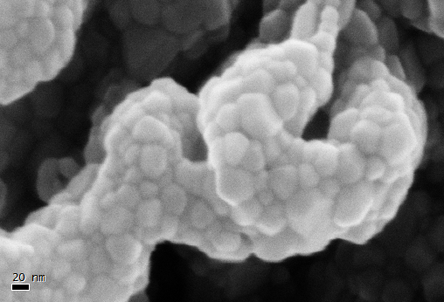
- microscope (HRSEM) Carl Zeiss Auriga. The UV–vis spectra were obtained by using a Falcon evolution 600 spectrometer, the thickness was measured with a profilometer. Results and Discussion Structural properties of nanostructured thin films Figure 1 shows XRD pattern of the films deposited onto corning glass


Observing the morphology of single-layered embedded silicon nanocrystals by using temperature-stable TEM membranes
Beilstein J. Nanotechnol. 2015, 6, 964–970, doi:10.3762/bjnano.6.99

- generation photovoltaics [1][2], light emitting diodes [3][4], lasers [5], but are also envisioned to be used as non-volatile memories [6][7][8][9][10]. The optical and electrical properties of ensembles of Si NCs are strongly influenced by the structural properties such as size distribution, separation


Effects of swift heavy ion irradiation on structural, optical and photocatalytic properties of ZnO–CuO nanocomposites prepared by carbothermal evaporation method
Beilstein J. Nanotechnol. 2015, 6, 928–937, doi:10.3762/bjnano.6.96
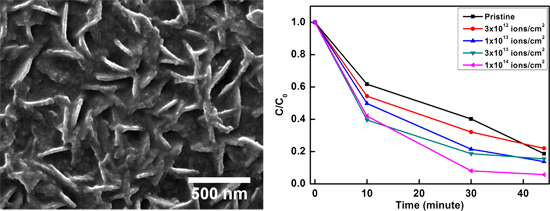
- -heterojunctions leading to a modification of optical and electronic properties, which finds promising applications in photocatalysis [30], sensors [31] and solar cells [32]. Several methods have been used to modify the optical, electrical and structural properties of nanostructured materials and nanocomposite
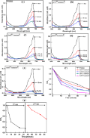
- formation of latent tracks along ion path and results in material modifications including growth [33] and elongation [34] of nanoparticles embedded in different insulating matrices. Several attempts have been made to study SHI-irradiation-induced changes in the optical, electrical and structural properties



Graphene on SiC(0001) inspected by dynamic atomic force microscopy at room temperature
Beilstein J. Nanotechnol. 2015, 6, 901–906, doi:10.3762/bjnano.6.93
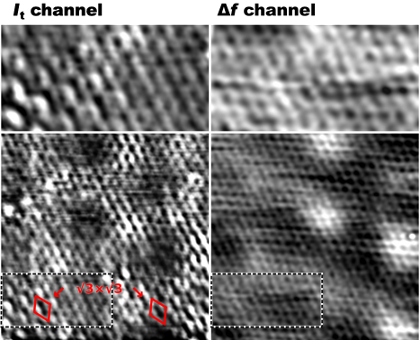
- of graphene grown on SiC substrate is a crucial factor for device construction. In this respect structural properties of graphene were extensively studied by atomic force microscopy (AFM) [7][8][9] and scanning tunneling microscopy (STM) [10][11][12]. STM measurements of single-layer (SLG) as well as



![[Graphic 1]](/bjnano/content/inline/2190-4286-6-93-i1.png?max-width=637&scale=1.18182) × 6
× 6Magnetic properties of self-organized Co dimer nanolines on Si/Ag(110)
Beilstein J. Nanotechnol. 2015, 6, 777–784, doi:10.3762/bjnano.6.80
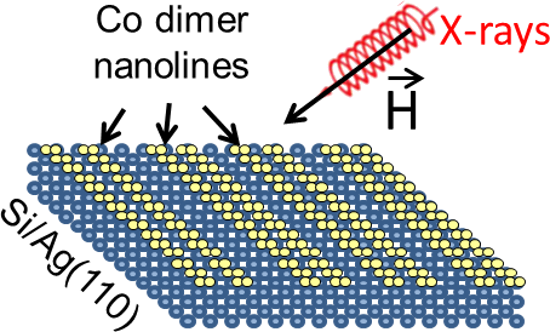
- molecules are deposited from the vapor phase onto surfaces. Taking advantage of the intrinsic structural properties of atomically well-defined surfaces, the self-ordering of atoms and molecules allows the fabrication of patterns with nanometer dimensions and precise control over the shape, composition and


Morphological and structural characterization of single-crystal ZnO nanorod arrays on flexible and non-flexible substrates
Beilstein J. Nanotechnol. 2015, 6, 720–725, doi:10.3762/bjnano.6.73
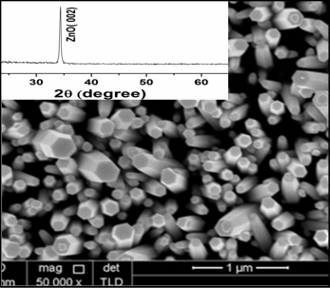
- , The American University in Cairo, New Cairo 11835, Egypt 10.3762/bjnano.6.73 Abstract We report a facile synthesis of zinc oxide (ZnO) nanorod arrays using an optimized, chemical bath deposition method on glass, PET and Si substrates. The morphological and structural properties of the ZnO nanorod


Tm-doped TiO2 and Tm2Ti2O7 pyrochlore nanoparticles: enhancing the photocatalytic activity of rutile with a pyrochlore phase
Beilstein J. Nanotechnol. 2015, 6, 605–616, doi:10.3762/bjnano.6.62
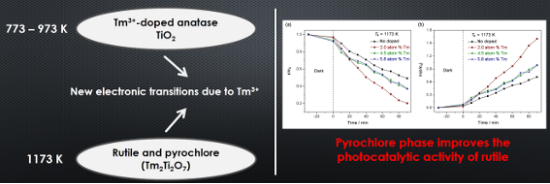
- scattering, this technique is sensitive to the atomic composition, valence and conduction band electronic properties, surface properties and chemical bonding. The latter allows for the characterization of the structural properties of the lattice traversed by the electron beam and, thus, determination of the


Overview of nanoscale NEXAFS performed with soft X-ray microscopes
Beilstein J. Nanotechnol. 2015, 6, 595–604, doi:10.3762/bjnano.6.61
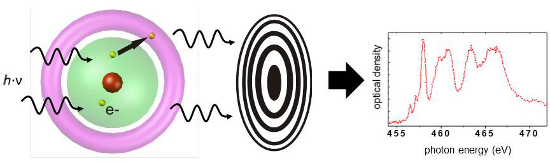
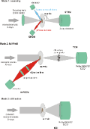
- techniques have been developed over the last century to explore electronic and structural properties of materials. Laboratory-source based techniques have compared to methods performed at synchrotron radiation sources the disadvantage of less brilliant X-ray beams and are not tunable over a wide photon


Raman spectroscopy as a tool to investigate the structure and electronic properties of carbon-atom wires
Beilstein J. Nanotechnol. 2015, 6, 480–491, doi:10.3762/bjnano.6.49
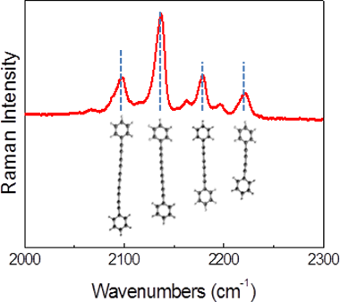
- the assumption of an infinite, atomic chain for the detailed discussion of real, finite-length systems, where the Peierls distortion effect, the stability of cumulenic versus polyynic chains and the vibrational structure (i.e., IR and Raman signals) must be considered. Beginning with the structural
- properties, the most significant parameter in this context is the bond length alternation (BLA). The BLA is the difference between the average length of quasi-single and quasi-triple bonds in the chain. It is well-known that an increase in the length of the sp (or sp2) carbon chain induces an increase in the


Nanoparticle shapes by using Wulff constructions and first-principles calculations
Beilstein J. Nanotechnol. 2015, 6, 361–368, doi:10.3762/bjnano.6.35
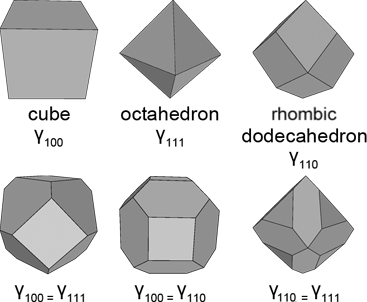
- indirect information about structural properties. Theoretical understanding of the nanocrystalline LiBH4 can provide an insight into structural and dynamical properties of crystallites confined in the smallest pores with dimension below 3 nm. The Wulff construction is the starting point for these studies


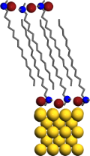

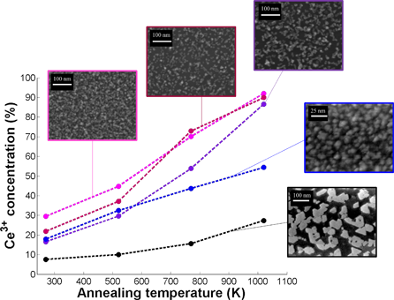
Morphology, structural properties and reducibility of size-selected CeO2−x nanoparticle films
Beilstein J. Nanotechnol. 2015, 6, 60–67, doi:10.3762/bjnano.6.7


Carbon nano-onions (multi-layer fullerenes): chemistry and applications
Beilstein J. Nanotechnol. 2014, 5, 1980–1998, doi:10.3762/bjnano.5.207
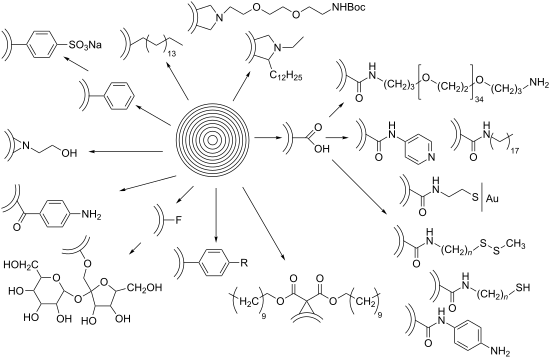
- revealed to be a promising nanomaterial that attracts a growing interest among researchers and opens new avenues for investigation. Preparation and structural properties of carbon nano-onions Carbon nano-onions were first discovered by Ugarte in 1992, who obtained them by intense electron irradiation of
- ), when referring to CNOs. In this review article, we have usually included the diameter of the utilized CNO nanomaterial, together with their fabrication method. If there are any divergent structural properties from the common definition of CNOs observed, we have included this information as well. High
- -resolution transmission electron microscopy (HRTEM) has been widely employed to visualize CNOs and to study the mechanisms of CNO formation and their structural properties. Raman spectroscopy is another useful technique for the structural characterization of CNOs and corroborates the basic graphitic


Cathode lens spectromicroscopy: methodology and applications
Beilstein J. Nanotechnol. 2014, 5, 1873–1886, doi:10.3762/bjnano.5.198

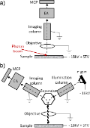
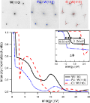
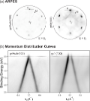
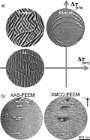
- , making LEEM one of the prominent methods to access the structural properties of graphene [7]. Since several review works have already addressed this subject [8][9][10], treating in depth also the experimental methods, the section on graphene is limited to an overview on the most recent research activity



Silicon and germanium nanocrystals: properties and characterization
Beilstein J. Nanotechnol. 2014, 5, 1787–1794, doi:10.3762/bjnano.5.189
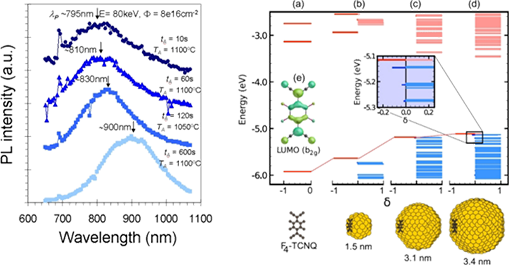
- other useful techniques that can provide information regarding the structural properties of NCs. One of them is grazing incidence small X-ray scattering (GISAXS), which is a non-destructive technique for the structural characterization of NCs supported on a substrate [32] and NCs embedded in a matrix