Search results
Search for "surface properties" in Full Text gives 226 result(s) in Beilstein Journal of Nanotechnology. Showing first 200.
Surface characterization of nanoparticles using near-field light scattering
Beilstein J. Nanotechnol. 2018, 9, 1228–1238, doi:10.3762/bjnano.9.114
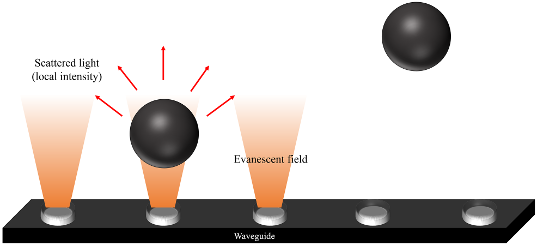
- reaction kinetics at the particle surface. Keywords: nanoparticle surface properties; nanoparticles; nanophotonic force microscopy; near-field light scattering; superparamagnetic iron oxide; Introduction Nanotechnology is an increasingly integral part of modern medicine, predominantly in the fields of
- trapped nanoparticles. Additionally, unlike most techniques available today, nanophotonic force microscopy measures the velocity of nanoparticles to determine interactions between the waveguide and particles that are correlated with the surface properties of individual particles. A recent study by Hristov
- velocity when compared to uncoated/single layer coated nanoparticles, complicating the analysis of the size of such particles. The surface properties and size collectively determine the interaction of the particles with the waveguide and detected local intensity. To this end, three classes of particles




Electrostatic force spectroscopy revealing the degree of reduction of individual graphene oxide sheets
Beilstein J. Nanotechnol. 2018, 9, 1146–1155, doi:10.3762/bjnano.9.106
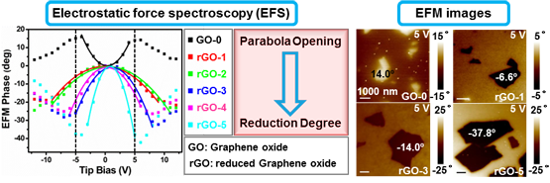
- carried out under room temperature at 23 °C and at a relative humidity of 15% in order to ensure constant substrate surface properties (especially regarding the dielectric constant of the mica surface) [20]. In all the SPM operations, the NSC18/Ti-Pt (MikroMasch Co.) tip was used, which employed a silicon


Imaging of viscoelastic soft matter with small indentation using higher eigenmodes in single-eigenmode amplitude-modulation atomic force microscopy
Beilstein J. Nanotechnol. 2018, 9, 1116–1122, doi:10.3762/bjnano.9.103
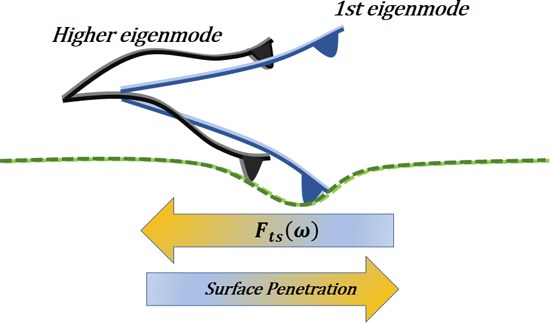
- [4], the first eigenmode of the cantilever is excited using the AM-AFM method and used for measuring topography, while a higher eigenmode (generally the second eigenmode) is simultaneously excited in “open loop” (with constant drive amplitude and frequency) to map the surface properties of the


A simple extension of the commonly used fitting equation for oscillatory structural forces in case of silica nanoparticle suspensions
Beilstein J. Nanotechnol. 2018, 9, 1095–1107, doi:10.3762/bjnano.9.101
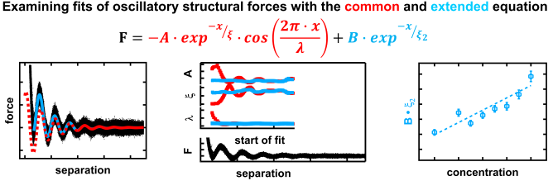
- interpretation that the newly introduced term represents double layer forces. In that case B would be related to surface properties of the confining walls and decrease with increasing ionic strength/particle concentration. It is difficult to attribute a correct error towards the parameters B and ξ2. Both


Review on nanoparticles and nanostructured materials: history, sources, toxicity and regulations
Beilstein J. Nanotechnol. 2018, 9, 1050–1074, doi:10.3762/bjnano.9.98



Noble metal-modified titania with visible-light activity for the decomposition of microorganisms
Beilstein J. Nanotechnol. 2018, 9, 829–841, doi:10.3762/bjnano.9.77
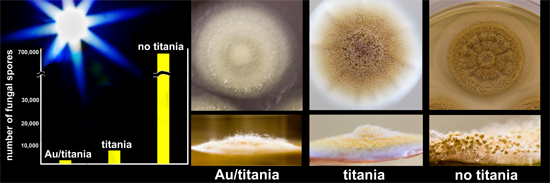
- number of ETs) induced the aggregation of NMNPs on its well-crystallized surface (Figure 1 (bottom)). It was found that silver formed smaller NPs than gold, as shown in Figure 1 (left and right, respectively). To investigate the surface properties of the deposited noble metals, XPS analysis was performed
- photocatalysts exhibit good antimicrobial properties in the dark and under visible-light irradiation due to antimicrobial properties of noble metals and plasmonic photocatalysis. The surface properties of photocatalysts are crucial for the antimicrobial effect, and generally, a decrease in particle sizes results


Fabrication and photoactivity of ionic liquid–TiO2 structures for efficient visible-light-induced photocatalytic decomposition of organic pollutants in aqueous phase
Beilstein J. Nanotechnol. 2018, 9, 580–590, doi:10.3762/bjnano.9.54
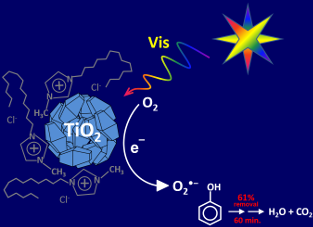
- , Chemical Faculty, Department of Chemical Technology, Narutowicza 11/12, 80-233 Gdansk, Poland, Institute of Physical Chemistry, Polish Academy of Sciences, 01-224 Warsaw, Poland 10.3762/bjnano.9.54 Abstract To investigate the effect of the ionic liquid (IL) chain length on the surface properties and
- - and microstructure preparation with novel properties [15]. Especially, their polarity and affinity towards particles and precursors, transport and surface properties seem to be crucial for formation of the protective layer at the particle surface, thus electrosteric, solvation and viscous
- the imidazolium cation on the surface properties of IL–TiO2 was not observed. However, the comparison of SBET of samples described in this work with values previously presented by Paszkiewicz [28] for ILs containing shorter chain lengths in the imidazolium cation (C4 and C10) revealed that elongation




Influence of the preparation method on the photocatalytic activity of Nd-modified TiO2
Beilstein J. Nanotechnol. 2018, 9, 447–459, doi:10.3762/bjnano.9.43
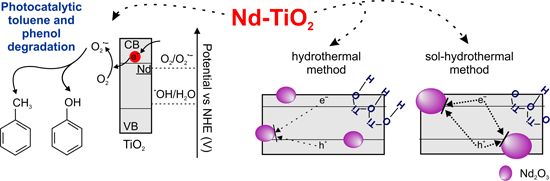
- . The Nd-modified TiO2 photocatalysts have been prepared using two different preparation routes, namely hydrothermal and sol–hydrothermal methods. The surface properties of these photocatalysts have been correlated with the preparation method as well as with the photoactivity in two model reactions
- defected and contaminated by organic impurities can also hinder the up-conversion process or even make it impossible to occur. Chemical composition To correlate the surface properties with the photoactivity of the obtained Nd-TiO2, the surface layer of pristine TiO2 and Nd-modified TiO2 prepared by SHT and
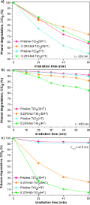
- surface properties and the charge carrier recombination processes is presented in Figure 8. The results of the photodegradation significant differences between aqueous solution and gas phase. The quantum yield of the reaction in the gas phase is much higher than that one in aqueous solution due to lower




Engineering of oriented carbon nanotubes in composite materials
Beilstein J. Nanotechnol. 2018, 9, 415–435, doi:10.3762/bjnano.9.41
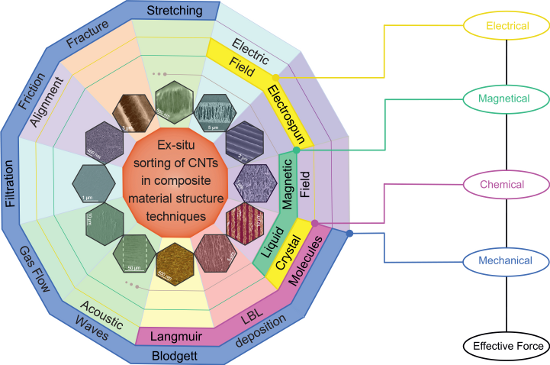
- , this technique can work in a vacuum, air, and liquid environments. Unlike other methods of analyzing surface properties, most of the time there is no fundamental limit to the type of surface and environment in this method. With this device, it is possible to analyze conductive or insulating, soft or
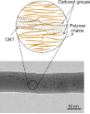
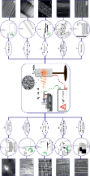
- , van der Waals) also plays a decisive role to enhance the uniformity of the CNT dispersion into the polymer matrix [136]. Therefore, to obtain the desired properties of CNT/polymer composites, such as the thermal, mechanical and electrical properties [8][10][137], the characterization of surface
- properties including the CNT surface orientation and surface defects are also important [138][139][140]. The defects can have both positive (increasing the bonding at the interface and between carbon structures [25][137][139][141]) and negative (reduction of the quality of physical properties [10][141








Periodic structures on liquid-phase smectic A, nematic and isotropic free surfaces
Beilstein J. Nanotechnol. 2018, 9, 342–352, doi:10.3762/bjnano.9.34
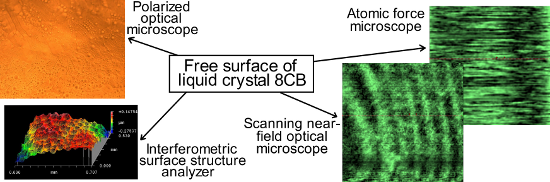
- ; liquid crystals; microscopy; smectic A phase; Introduction The considerable interest in studies of liquid crystalline free boundaries that has recently arisen is due to their intrinsic free surface properties which are not influenced by the substrate anchoring [1][2]. This is very important for many


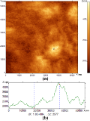


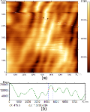


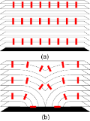



Wafer-scale bioactive substrate patterning by chemical lift-off lithography
Beilstein J. Nanotechnol. 2018, 9, 311–320, doi:10.3762/bjnano.9.31
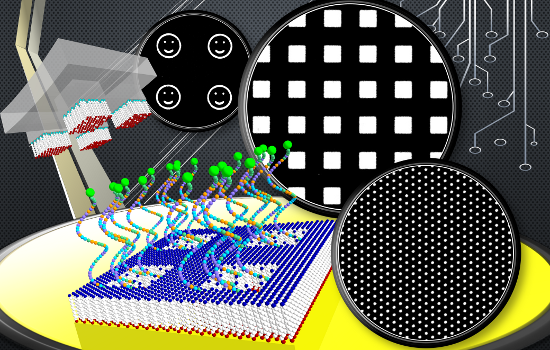
- create distinct regions carrying dissimilar surface properties for a variety of applications [21]. With conformal contact-induced reactions, the top layer Au–Au bond breakage on an alkanethiol SAM covered Au substrate leads to the exposure of fresh Au toward the exterior environment. These vacancies can


Anchoring of a dye precursor on NiO(001) studied by non-contact atomic force microscopy
Beilstein J. Nanotechnol. 2018, 9, 242–249, doi:10.3762/bjnano.9.26
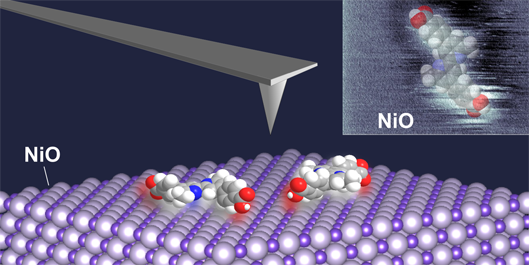
- CPD is increased above the islands compared to the bare NiO surface. In areas with a lower molecule density, e.g., at step edges and certain areas on the terraces, the CPD contrast is much weaker implying a direct influence of the self-assembly on the electrical surface properties. In summary

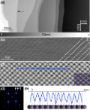
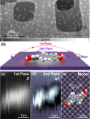


Nanoprofilometry study of focal conic domain structures in a liquid crystalline free surface
Beilstein J. Nanotechnol. 2017, 8, 2544–2551, doi:10.3762/bjnano.8.254
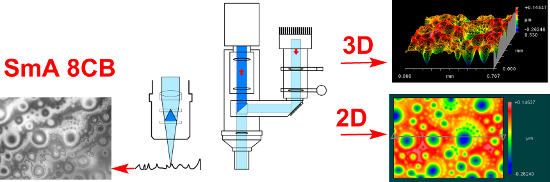
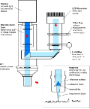
- ; nanoprofilometer; smectic-A phase; Introduction The free surface of liquid crystals has been a subject of great interest since the beginning of liquid crystal science. Liquid crystalline free boundary research is very important because it shows that the intrinsic free surface properties are not influenced by the




Interface conditions of roughness-induced superoleophilic and superoleophobic surfaces immersed in hexadecane and ethylene glycol
Beilstein J. Nanotechnol. 2017, 8, 2504–2514, doi:10.3762/bjnano.8.250
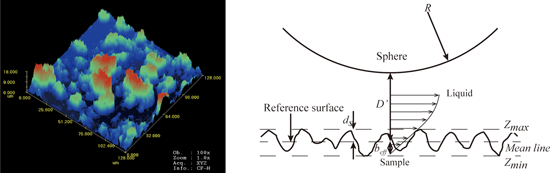
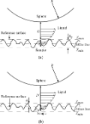
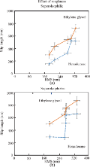
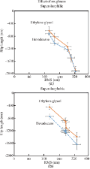
- studies that need to be addressed. Firstly, fabricating surfaces with controlled roughness parameters, omniphobicity and interface properties is difficult. Roughness parameters, wettability and some other surface properties have individual effects on the boundary slip and need to be separated. Secondly





High-stress study of bioinspired multifunctional PEDOT:PSS/nanoclay nanocomposites using AFM, SEM and numerical simulation
Beilstein J. Nanotechnol. 2017, 8, 2069–2082, doi:10.3762/bjnano.8.207
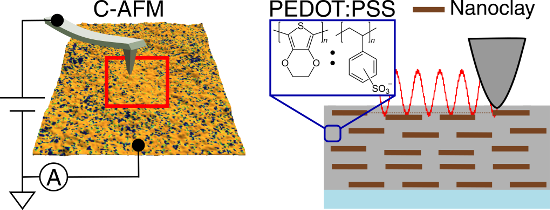
- -resonance frequency and quality factor are often referred to as mechanical parameters. Although, there are methods to approximately calibrate for the Young’s modulus, they require a standard reference sample with similar properties to the unknown sample, and this includes the surface properties [51
- properties of typical cantilevers (traditional testing of polymeric or biological materials is performed at a frequency range several orders of magnitude lower [53]). For these reasons, CRFM typically only provides mapping of the relative surface properties, although with high spatial resolution. Given the


Imidazolium-based ionic liquids used as additives in the nanolubrication of silicon surfaces
Beilstein J. Nanotechnol. 2017, 8, 1961–1971, doi:10.3762/bjnano.8.197
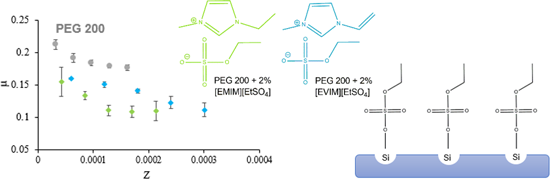
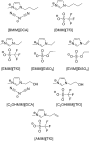
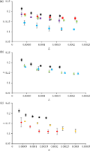
- topography and chemical composition of the substrates surfaces were determined with atomic force microscopy (AFM) and X-ray photoelectron spectroscopy (XPS), respectively. Correlations between the obtained friction coefficients and the surface properties as well as the lubricants viscosity were attempted in



Fluorination of vertically aligned carbon nanotubes: from CF4 plasma chemistry to surface functionalization
Beilstein J. Nanotechnol. 2017, 8, 1723–1733, doi:10.3762/bjnano.8.173
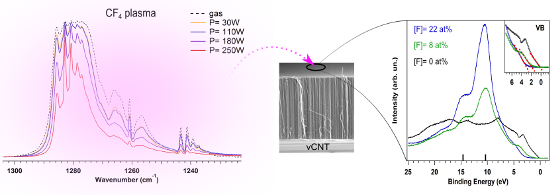
- , the emerging demand in functionalizing the surface of carbon-based materials has led to the use of various atoms for the tuning of the surface properties [12][13][14][15][16] and fluorine-based gas precursors have also been employed, including CF4 [17], with special attention to their effect on carbon
- ][24]. In single- and multiwalled nanotubes the tuning of surface properties via fluorine-based plasma has been investigated highlighting the modification of morphology, chemical composition and electronic properties, as well as focusing on the field emission performances and the thermal stability [25




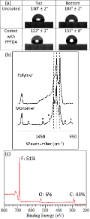
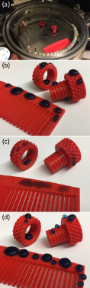
Surface functionalization of 3D-printed plastics via initiated chemical vapor deposition
Beilstein J. Nanotechnol. 2017, 8, 1629–1636, doi:10.3762/bjnano.8.162
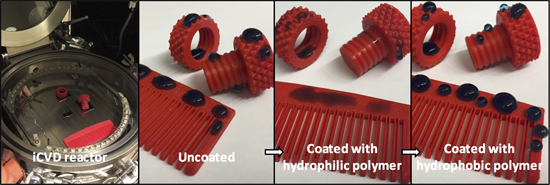
- flexibility and rapid prototyping. The ability to functionalize the surfaces of 3D-printed objects allows the bulk properties, such as material strength or printability, to be chosen separately from surface properties, which is critical to expanding the breadth of 3D printing applications. In this work, we
- . This limitation presents a problem for application-driven print objects, because consideration of material printability must supersede other functionalities, such as biocompatibility or responsiveness to stimuli. Thus, controlling post-printing surface properties is critical to expanding the breadth of
- hydrophobic surface properties and do not promote cellular differentiation [3][18]. Surface modification of printed scaffolds can allow for the tuning of surface functionalization to promote vascularization and tissue regeneration while maintaining control over the mechanical robustness of the bulk structure



Two-dimensional carbon-based nanocomposites for photocatalytic energy generation and environmental remediation applications
Beilstein J. Nanotechnol. 2017, 8, 1571–1600, doi:10.3762/bjnano.8.159
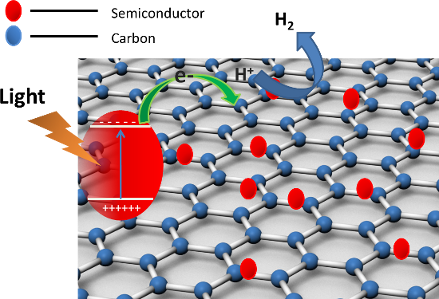
- morphology of catalytic material. Therefore the fabrication of g-C3N4 with different microstructures is expected to show different surface properties and ability to enhance the photocatalytic performance. As per one of the reports by Zhu et al., g-C3N4 synthesized by using melamine, thiourea, or urea as
- reactions but mainly hydrogen evolution reactions [67]. The lattice structure of g-C3N4 is composed of C–N with short interlayer distances and amino functional groups with larger periodic vacancies [67]. In addition to this, g-C3N4 possesses excellent chemical and thermal stability, unique surface
- properties with unsaturated N-atoms for anchoring active sites [69]. Furthermore, the stacked 2D layered structure of g-C3N4 consists of single-layer nitrogen heteroatom-substituted graphite nanosheets, formed through sp2 hybridization of C and N atoms, and various layers are bound together by van der Waals


Cationic PEGylated polycaprolactone nanoparticles carrying post-operation docetaxel for glioma treatment
Beilstein J. Nanotechnol. 2017, 8, 1446–1456, doi:10.3762/bjnano.8.144
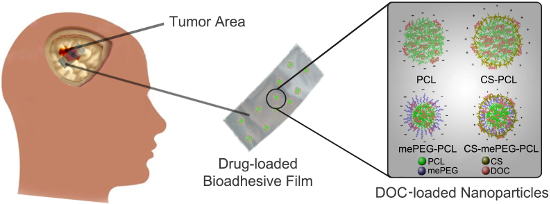
- . Nanoparticle-based drug delivery systems can be prepared with synthetic and natural polymers. As an advantage, their surface properties can be modified to increase cellular penetration and prolonged drug release. Additionally, suitable nanoparticle-based drug delivery systems can bypass biological barriers or
- distribution and surface properties. According to the results in Table 2, the addition of surfactant did not reduce the particle size; on the contrary, the mean particle size significantly increased proportional to the concentration of PF68 for both polymer PCL and mePEG-PCL (p < 0.05). Although it has been




Micro- and nano-surface structures based on vapor-deposited polymers
Beilstein J. Nanotechnol. 2017, 8, 1366–1374, doi:10.3762/bjnano.8.138
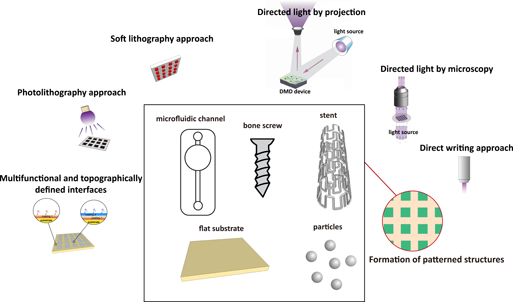
- Hsien-Yeh Chen Department of Chemical Engineering, National Taiwan University, Taipei 10617, Taiwan 10.3762/bjnano.8.138 Abstract Vapor-deposition processes and the resulting thin polymer films provide consistent coatings that decouple the underlying substrate surface properties and can be
- words, effective selectivity for the deposition of nonfunctional poly(p-xylylene) has been achieved, and the family of functionalized poly(p-xylylene) is now manageable [82]. Conclusion As more stringent specifications are required for designing the surface properties of prospective materials, and in
- addition, the development of new devices is pursued with complicated geometries and minimized sizes, the surface properties of such materials/devices now also require a more defined and flexible presentation of the chemical functionalities (e.g., multifunctional or gradient distribution) and the precise


Nanotopographical control of surfaces using chemical vapor deposition processes
Beilstein J. Nanotechnol. 2017, 8, 1250–1256, doi:10.3762/bjnano.8.126
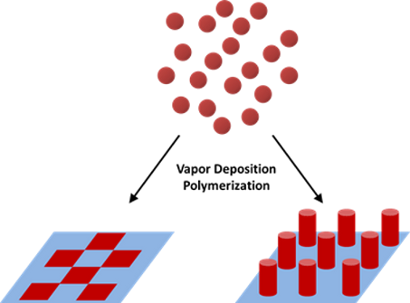
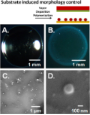
- achieved via various vapor deposition strategies, for instance, using masks, exploiting surface properties that lead to spatially selective deposition, via the use of additional porogens or by employing oblique angle polymerization deposition. Here, we provide a concise review of these studies. Keywords
- : polymer coatings; polymer structures; structured coatings; vapor deposition polymerization; Review Introduction Polymer coatings have wide-spread applications, from electronics [1], to sensor systems [2] to biotechnology [3]. The ability to spatially control the surface properties in order to further




Vapor-phase-synthesized fluoroacrylate polymer thin films: thermal stability and structural properties
Beilstein J. Nanotechnol. 2017, 8, 933–942, doi:10.3762/bjnano.8.95
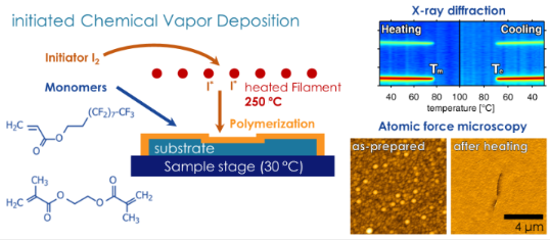
- deposition techniques (e.g., plasma-enhanced CVD). Therefore, depending on the application and on the desired polymer properties, one can choose to work in conditions that drive crystallinity and hydrophobicity or thermally stable surface properties instead. Molecular structure of the monomers PFDA and EGDMA


Vapor deposition routes to conformal polymer thin films
Beilstein J. Nanotechnol. 2017, 8, 723–735, doi:10.3762/bjnano.8.76
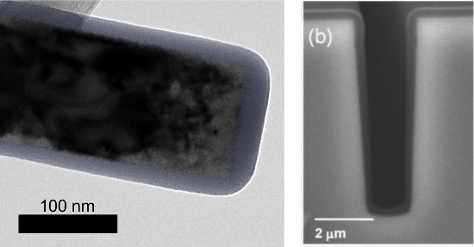
- films; vapor deposition; Review Introduction Conformal coverage is achieved when a film of uniform thickness precisely follows the geometry of the underlying substrate. Conformal coatings allow for surface properties to be optimized independently from the choice of the bulk material and shape of the


Diffusion and surface alloying of gradient nanostructured metals
Beilstein J. Nanotechnol. 2017, 8, 547–560, doi:10.3762/bjnano.8.59
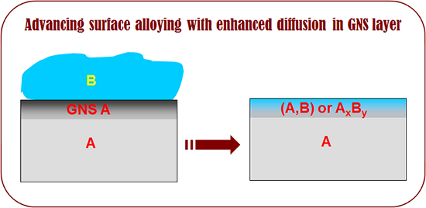
- works have been carried out on advancing surface alloying techniques of metals with a preformed nanostructured surface layer. The advantages are distinct, for example, improving surface properties such as wear and corrosion resistance with higher energy/time efficiency, reducing work-piece distortion