


Search results
Search for "template" in Full Text gives 287 result(s) in Beilstein Journal of Nanotechnology. Showing first 200.
Kinetics of solvent supported tubule formation of Lotus (Nelumbo nucifera) wax on highly oriented pyrolytic graphite (HOPG) investigated by atomic force microscopy
Beilstein J. Nanotechnol. 2018, 9, 468–481, doi:10.3762/bjnano.9.45
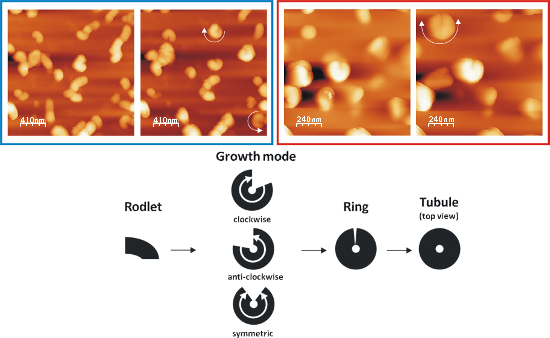
- , must be the reservoir for the following tubules' growth. One possibility would be a recrystallization of the initially formed amorphous film over time (Ensikat et al. have demonstrated a crystalline nature of wax deposits grown from wax material isolated from plants [34]) thus providing a template for


Al2O3/TiO2 inverse opals from electrosprayed self-assembled templates
Beilstein J. Nanotechnol. 2018, 9, 216–223, doi:10.3762/bjnano.9.23
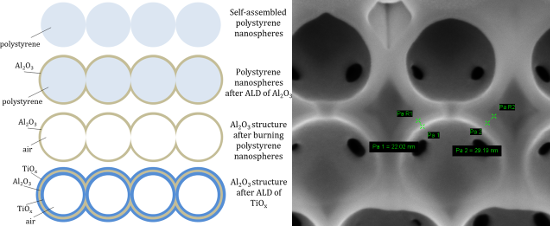
- deposition capacity and mechanical properties [41][42]. The main purpose of this article is to apply this technique to the fabrication of inverse opals using the 3D polystyrene nanoparticle template which enables the creation of large scale, large thickness, self-assembled structures with minimum fabrication
- errors and Al2O3/TiO2 as a structural layer infiltrated through the voids. This is a two-step atomic layer deposition (ALD) process in which the polymeric template is eliminated after the deposition of the alumina layer and before the ALD deposition of the titania layer. Results and Discussion The
- fabrication process of the Al2O3/TiO2 inverse opals is schematically outlined in Figure 1 where the starting step can be seen in Figure 1a and consists of the electrospray deposition of the template layer of ordered polystyrene nanoparticles. Only a side view of one row of four nanoparticles is shown for


Liquid-crystalline nanoarchitectures for tissue engineering
Beilstein J. Nanotechnol. 2018, 9, 205–215, doi:10.3762/bjnano.9.22
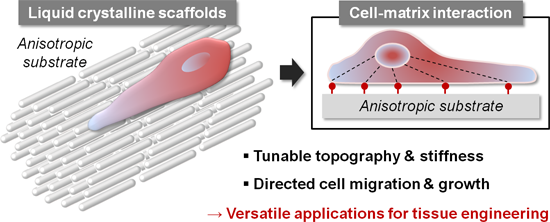
- transitions can be quantitatively characterized by Onsager’s theory [44]. In addition, various types of rod-like viruses (fd, M13, f1 virus and TMV) have been considered as template materials for tissue regeneration. The rod-like viruses have been shown to undergo a series of lyotropic phase transitions from
- matrix was confirmed by a nonlinear optics technique [88]. These properties enable the exploitation of the LC collagen matrix as a potential corneal implant. This matrix can be also utilized as a biological template for silica hybridization with long-range ordered structures [89]. Such 3D ordered


Dopant-stimulated growth of GaN nanotube-like nanostructures on Si(111) by molecular beam epitaxy
Beilstein J. Nanotechnol. 2018, 9, 146–154, doi:10.3762/bjnano.9.17
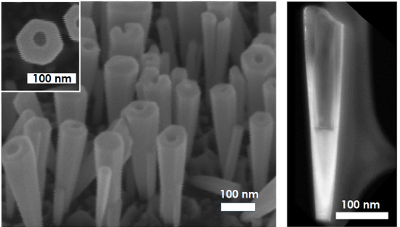
- ) formation of a GaN shell over the NW template (e.g., ZnO) followed by the template NW removal [14]; 3) selective area molecular beam epitaxy (MBE) growth of GaN on sapphire (111) substrates over titanium mask [15]; and 4) MBE deposition of GaN on Si(111) substrates covered by a silicon oxide layer in the


One-step chemical vapor deposition synthesis and supercapacitor performance of nitrogen-doped porous carbon–carbon nanotube hybrids
Beilstein J. Nanotechnol. 2017, 8, 2669–2679, doi:10.3762/bjnano.8.267
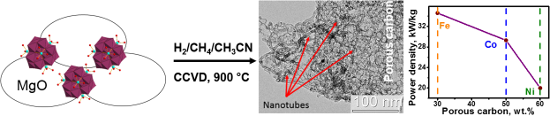
- over magnesium-oxide-supported metal catalysts. CNx nanotubes were grown on Co/Mo, Ni/Mo, or Fe/Mo alloy nanoparticles, and MgO grains served as a template for the porous carbon. The simultaneous formation of morphologically different carbon structures was due to the slow activation of catalysts for
- works devoted to one-step formation of porous carbon–CNT hybrids for energy storage applications. Lei et al. have reported the CCVD synthesis of nitrogen-doped ordered mesoporous carbon and multiwalled CNTs (MWCNTs) with the use of a silica SBA-15 template impregnated by iron nitrate [14
- , and nanostructured CaCO3 as a template [16]. The electrodes from the synthesis products exhibited a good reversible capacity and long-term cycling stability. The role of CNTs in such hybrids was to enhance the electrical conductivity and to act as a physical barrier, blocking large pores in the second


The role of ligands in coinage-metal nanoparticles for electronics
Beilstein J. Nanotechnol. 2017, 8, 2625–2639, doi:10.3762/bjnano.8.263
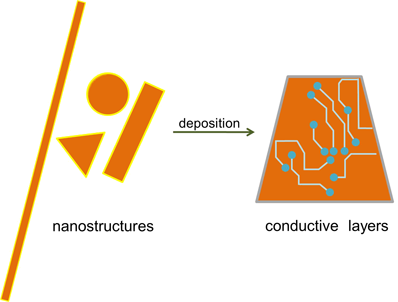
- of 10 nm average diameter with a conjugated copolymer comprising bithiazole and benzothiazole. The sulfur and nitrogen atoms in the blocks interacted with the metal surface, providing stability to the nanoparticles. The nanoparticles with the chemisorbed polymer acted as a template for the self
- with permission from [134], copyright 2014 Royal Society of Chemistry. Formation of gold nanoparticles in a bithiazole–benzothiazole-based polymer matrix and their role as a template for the self-assembly of the bulk polymer leading to enhancement of the charge-carrier mobility. Reprinted with


Synthesis of metal-fluoride nanoparticles supported on thermally reduced graphite oxide
Beilstein J. Nanotechnol. 2017, 8, 2474–2483, doi:10.3762/bjnano.8.247
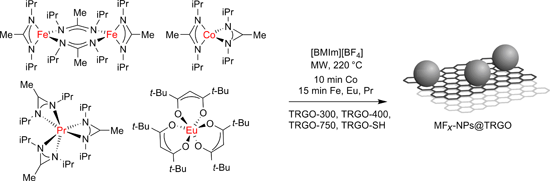
- ] yielded metal fluoride nanoparticles for Mn, Fe and Co [63]. The reaction of metal acetate (hydrate) precursors in ethylene glycol and an excess of [BMIm][BF4] gave fluoride nanoparticles [67]. Mesoporous carbon/iron carbide hybrids were synthesized using mesoporous silica as template and the ionic liquid


Fabrication of CeO2–MOx (M = Cu, Co, Ni) composite yolk–shell nanospheres with enhanced catalytic properties for CO oxidation
Beilstein J. Nanotechnol. 2017, 8, 2425–2437, doi:10.3762/bjnano.8.241
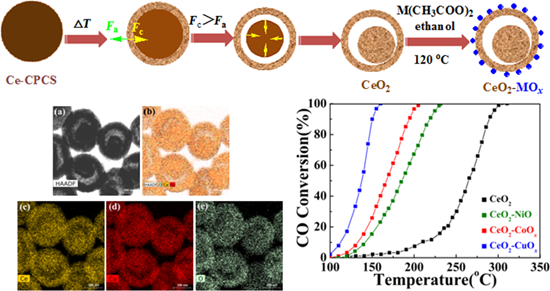
- /and hierarchical architecture, which possess excellent redox properties and abundant oxygen vacancies, will be favorable for the enhancement of catalytic activity toward CO oxidation. CeO2-based hybrid oxides with hollow structure can be synthesized by a sacrificial-template method based on
- interfacial oxidation–reduction under mild conditions. For example, Mn3O4/CeO2 hybrid nanotubes were created by a template-based process involving a redox reaction between the cryptomelane-type manganese oxide nanowire template and Ce(NO3)3 [20]. Ce–Mn nanotubes were also fabricated by treating Ce(OH)CO3






Increasing the stability of DNA nanostructure templates by atomic layer deposition of Al2O3 and its application in imprinting lithography
Beilstein J. Nanotechnol. 2017, 8, 2363–2375, doi:10.3762/bjnano.8.236
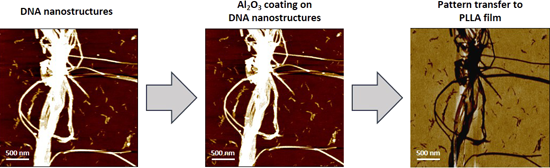
- complex features. Therefore, self-assembled DNA nanostructures are considered to be an ideal template for nanofabrication because it is easy to control their structural complexity and diversity at the nanoscale. Many approaches have been developed to use DNA nanostructures as templates to pattern a wide
- template relies on using water to lower the adhesion between the film and the template. The key advantage of our method is that any polymer with hydrophobicity and/or low surface energy can be patterned with the DNA nanostructure master template. Furthermore, because the method uses spin-coating instead of
- . Our approach has one substantial technical problem, however, which is that the DNA nanostructure master templates cannot be used in a repetitive manner. The DNA nanostructures were partially damaged during the release of the PMMA and PLLA hydrophobic stamps from the hydrophilic master template. It




Expanding the molecular-ruler process through vapor deposition of hexadecanethiol
Beilstein J. Nanotechnol. 2017, 8, 2339–2344, doi:10.3762/bjnano.8.233
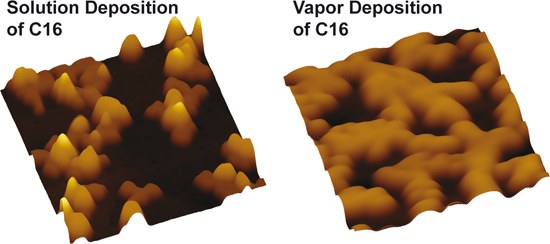
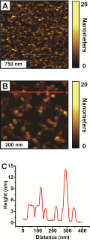
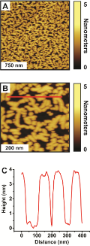
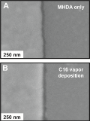
- the field allow for the fabrication of molecular-scale features into surfaces that template the assembly and growth of metals, polymers, biomolecules, and cellular structures [3][4][5][6][7][8][9][10][11]. In addition, these surface assemblies have been utilized as molecular-scale resists for
Tailoring the nanoscale morphology of HKUST-1 thin films via codeposition and seeded growth
Beilstein J. Nanotechnol. 2017, 8, 2307–2314, doi:10.3762/bjnano.8.230
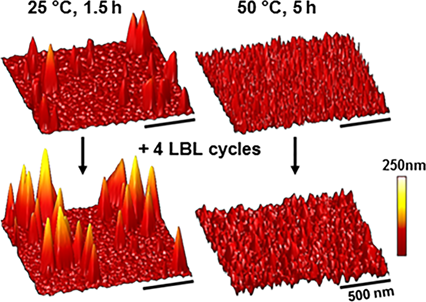
- at 50 °C. (For comparison, a representative AFM 500 nm × 500 nm image of the sample codeposited for 5 h at 50 °C can be found in Supporting Information File 1.) To potentially template film morphologies, samples seeded with unique surface morphologies were fabricated by codeposition for 1.5 h at 25


Fabrication of gold-coated PDMS surfaces with arrayed triangular micro/nanopyramids for use as SERS substrates
Beilstein J. Nanotechnol. 2017, 8, 2271–2282, doi:10.3762/bjnano.8.227
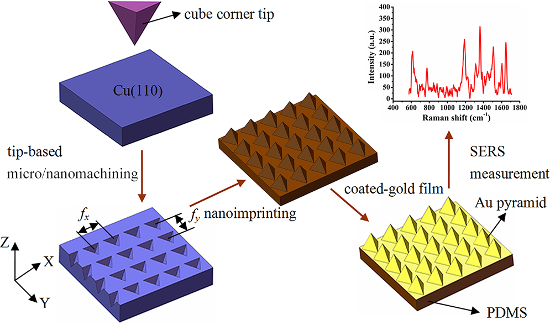
- School of Chemistry and Chemical Engineering, Harbin Institute of Technology, Harbin, Heilongjiang 150001, P.R. China 10.3762/bjnano.8.227 Abstract Using the tip-based continuous indentation process, arrays of three-dimensional pyramidal cavities have been successfully machined on a copper template and
- rhodamine 6G (R6G) were detected as test analytes [17]. The micro/nanostructures of a blue butterfly wing were used as a template, and a SERS substrate was produced and utilized to detect rhodamine dye for the elimination of organic pollutants [19]. Additionally, pyramidal array structures on conventional
- Klarite substrates [22] were fabricated as specifically engineered structures with an apex angle of 70.5° that can also be used as a template. The SERS substrate can then be achieved via a ultraviolet (UV) embossing process by transferring these structures to a plastic substrate. Templates [23][24][25





Vapor-based polymers: from films to nanostructures
Beilstein J. Nanotechnol. 2017, 8, 2219–2220, doi:10.3762/bjnano.8.221

- character of vapor-based coatings can furthermore be used to create nanostructures. Balkan et al. report the formation of coaxial nanotubes by the consecutive deposition of polyaniline and poly(hydroxyethyl methacrylate) on a template with mesoscopic pores [8]. The dissolution of the template results in the
Application of visible-light photosensitization to form alkyl-radical-derived thin films on gold
Beilstein J. Nanotechnol. 2017, 8, 1863–1877, doi:10.3762/bjnano.8.187
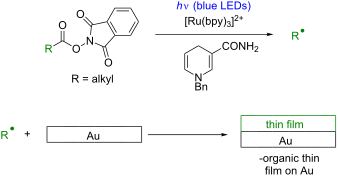
- solvents were purchased from Cambridge Isotope Labs. The irradiation source was two 4 W sapphire blue LED flex strips from Creative Lighting Solutions (Cleveland, OH, USA) wrapped around a crystallizing dish. Preparation of gold surfaces with a mesosphere mask. Template-stripped gold substrates were
- suspension was placed onto the template-stripped gold substrates, dried in air for 2 h, and then oven-dried for at least 96 h. The final heating step was used to temporarily anneal the silica spheres to the substrate to prevent displacement during immersion in solutions. After completion of the procedures



Synthesis and catalytic application of magnetic Co–Cu nanowires
Beilstein J. Nanotechnol. 2017, 8, 1769–1773, doi:10.3762/bjnano.8.178
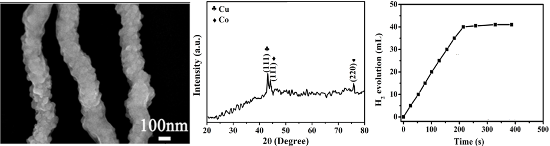
- Lijuan Sun Xiaoyu Li Zhiqiang Xu Kenan Xie Li Liao School of Chemical Engineering, Sichuan University, Chengdu 610065, PR China 10.3762/bjnano.8.178 Abstract A rapid, template-free method was developed to prepare magnetic, bimetallic Co–Cu nanowires via liquid phase reduction and metal
- mainly electrodeposition by different templates, as found in the previous literature. For example, many papers have reported Co–Cu nanowires electrodeposited into a porous anodic aluminum oxide template [1][2][3][4]. Additionally, L. Gravier et al. [8] prepared Co–Cu multilayered nanowires by
- , bimetallic Co–Cu nanowires with a highly desirable linear structure were successfully synthesized via a rapid and facile template-free method [9][10][11] assisted by magnetic fields. Moreover, they were applied to catalyze the hydrolysis of ammonia borane (NH3–BH3, AB) for the first time. This result lays


Near-infrared-responsive, superparamagnetic Au@Co nanochains
Beilstein J. Nanotechnol. 2017, 8, 1680–1687, doi:10.3762/bjnano.8.168
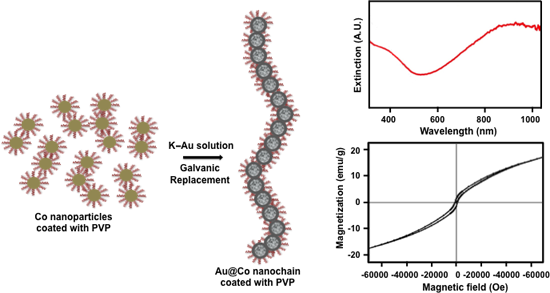
- , behaved as a soft template for chain growth [47], as described below. Notably, the shells appear to possess varying porosity. Consequently, it is plausible that Co2+ and AuCl4− ions continuously diffused through the shell during the galvanic replacement reaction and thereby gave rise to the formation of
- template exhibited a plasmonic resonance at 628 nm [27]. Consequently, our results represent a significant and potentially useful outcome, as there have been, to our knowledge, no prior reports of NIR-responsive nanochain systems. There is a strong need for nanomaterials that are NIR-active [10][11][12][14


Micro- and nano-surface structures based on vapor-deposited polymers
Beilstein J. Nanotechnol. 2017, 8, 1366–1374, doi:10.3762/bjnano.8.138
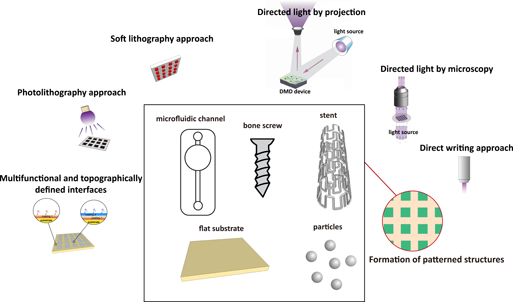
- flat substrates or 3D complex substrates. Next, the creation of multiple or gradient structures/patterns on the polymers provides an interfacial template with multifunctional reactivity and gradient information for multifunctional or directional activities. Then, the emerging discovery of the selective


Synthesis of [Fe(Leq)(Lax)]n coordination polymer nanoparticles using blockcopolymer micelles
Beilstein J. Nanotechnol. 2017, 8, 1318–1327, doi:10.3762/bjnano.8.133
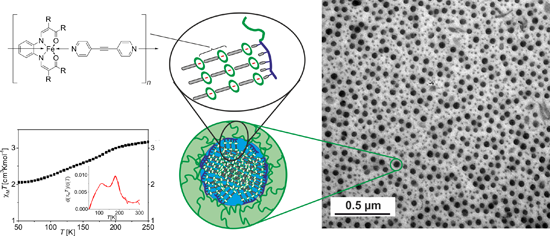
- -poly(4-vinylpyridine) (PS-b-P4VP) block copolymer (BCP) micelles as template. Variation of the solvent (THF and toluene) and the rigidity of the axial ligand Lax (Lax = 1,2-di(pyridin-4-yl)ethane) (bpea), trans-1,2-di(pyridin-4-yl)ethene (bpee), and 1,2-di(pyridin-4-yl)ethyne) (bpey); Leq = 1,2



Nanotopographical control of surfaces using chemical vapor deposition processes
Beilstein J. Nanotechnol. 2017, 8, 1250–1256, doi:10.3762/bjnano.8.126
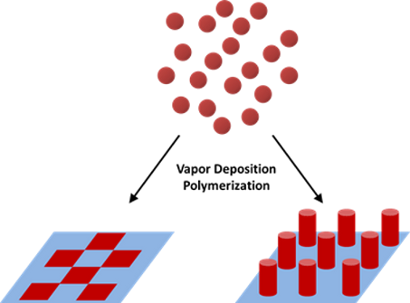
- and Oh used anodic aluminum oxide membranes as a template for the production of nanotubes with a tunable wall thickness (Figure 1) [11]. Via chemical oxidation polymerization of vaporized pyrroles, polypyrrole was deposited on the walls of the membrane pores which had been pretreated with ferric
- . The colloidal template was removed by ultrasonication after deposition. Structures derived from a broad range of polymers and across a variety of length scales (down to 25 nm) could be fabricated. Selective deposition A straightforward method to selectively deposit polymers on prepatterned substrates
- and patterned coatings from a great variety of polymer materials can be created that can be tailored to the respective applications. Polymer structures via masked deposition: polypyrrole nanotubes by deposition using aluminum oxide membranes with a pore size of 100 nm as the template. The wall




A top-down approach for fabricating three-dimensional closed hollow nanostructures with permeable thin metal walls
Beilstein J. Nanotechnol. 2017, 8, 1231–1237, doi:10.3762/bjnano.8.124
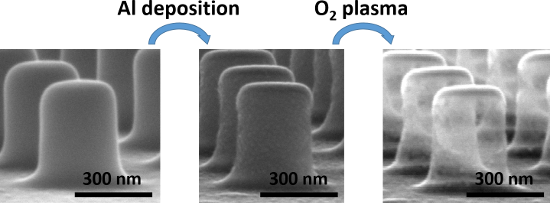
- template by means of an oxygen-plasma treatment (ashing). The latter is enabled by the permeability and thinness of the metal film deposited on the nanopatterned resist sidewalls, which allows oxygen species to react with the organic polymer template. The technique is demonstrated through the fabrication
- localization of the optical field among the hollow nanocages at resonance plays a major role. On the other hand, it should be pointed out that the measured nanocage bulk sensitivity is smaller than that exhibited by the SU-8 nanopillar array template (Figure 1a and blue curve in Figure 3a) of 509 nm/RIU [11
- with the purpose of releasing CO2 (thermal decomposition of carbonates) to the surroundings by applying heat to the Si chip. Note also that, besides SU-8, other organic polymers can be used to form the load-containing template. In addition, apart from evaporation, other metal deposition techniques


Enhanced catalytic activity without the use of an external light source using microwave-synthesized CuO nanopetals
Beilstein J. Nanotechnol. 2017, 8, 1167–1173, doi:10.3762/bjnano.8.118
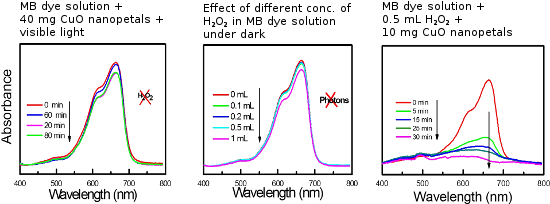
- S4).This confirms that the same as-synthesized CuO nanopetals can also be optimized for the efficient degradation of hazardous dyes other than MB. Conclusion In summary, we have synthesized CuO nanoflowers and nanopetals in the absence of any surfactant and/or template using a microwave-assisted wet


Preparation of thick silica coatings on carbon fibers with fine-structured silica nanotubes induced by a self-assembly process
Beilstein J. Nanotechnol. 2017, 8, 1145–1155, doi:10.3762/bjnano.8.116
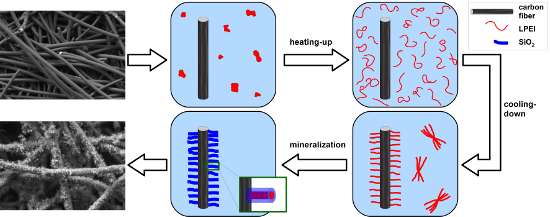
- self-assembles onto the carbon fiber substrate in the form of nanoscopic crystallites, which serve as a template for the subsequent silica deposition. The silicification at close to neutral pH is spatially restricted to the localized polyamine and consequently to the fiber surface. In case of the
- template, and an amorphous shell, i.e., free ethylenimine units, which direct the silica deposition to the aggregates’ surface. As soon as the amorphous shell is covered by silica, no further significant deposition takes place [16]. A considerable number of factors can influence the shape of the primary
- into the organic template core. A calcination process removes the LPEI template and provides access to the metal centers located at the inner wall of the silica nanotubes enabling potential catalytic reactions within the pores of the silica shell. A further conceivable application can be evaluated with


Hierarchically structured nanoporous carbon tubes for high pressure carbon dioxide adsorption
Beilstein J. Nanotechnol. 2017, 8, 1135–1144, doi:10.3762/bjnano.8.115
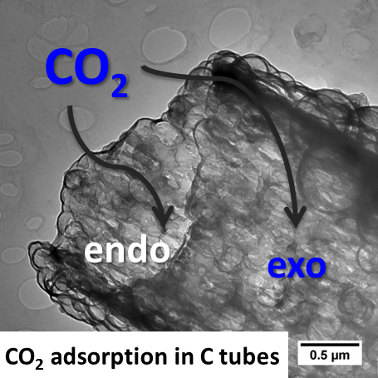
- tubes to be obtained. To obtain these materials, a polymer was employed and used as the carbon source and template to mold a spherical structure of silica particles obtained by the Stoeber process. After a carbonization step, a second thermal treatment was employed to obtain either SiC tubes or a
- . The formed carbon layer serves as the template and carbon source from which the silicon carbide is formed. It furthermore prevents particle agglomeration and reduces the loss of unstable SiO species which are formed during the conversion reaction. The conversion process thus represents a micro
- One-dimensional mesoporous carbon tubes and silicon carbide tubes with diameters in the micrometer size range were synthesized using electrospun PS fibres (acting as both the carbon source as well as the template) and amorphous silica particles of spherical morphology derived from the Stoeber process


Adsorption characteristics of Er3N@C80on W(110) and Au(111) studied via scanning tunneling microscopy and spectroscopy
Beilstein J. Nanotechnol. 2017, 8, 1127–1134, doi:10.3762/bjnano.8.114
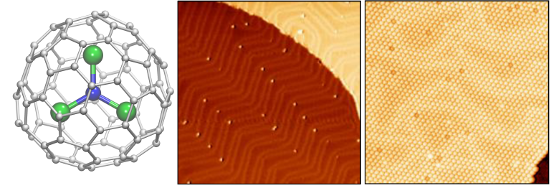
- scientific community. Sustained efforts on the synthesis of endohedral fullerenes led to the trimetallic nitride template (TNT) process and consequently to the creation of the class of trimetallic nitride endohedral fullerenes in 1999, which can be produced in a sufficiently high yield for experimental


Assembly of metallic nanoparticle arrays on glass via nanoimprinting and thin-film dewetting
Beilstein J. Nanotechnol. 2017, 8, 1049–1055, doi:10.3762/bjnano.8.106
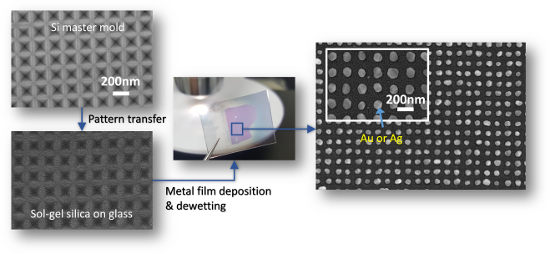
- the dewetted nanoparticles [1][12][13][14][15]. These complicated processing steps for prepatterned templates critically restrict extensive application of the thin-film dewetting technique. Furthermore, lithography techniques based on silicon wafers have limitations when the template must also serve
- as a functional layer. Thus, the applicability of a self-assembly technique that uses dewetting largely depends on how it can be combined with appropriate template materials that have both functionality and dewettability. In this regard, nanoimprint lithography (NIL) is expected to be an effective
- –500 °C, forming an assembly of one metal nanoparticle per pit in the topographic patterns in the silica template, as shown in Figure 6e. This was the same for the Au films (Figure 6g). This evolution of the particle assembly with film thickness and dewetting temperature is very similar to previous





