Search results
Search for "thin film" in Full Text gives 521 result(s) in Beilstein Journal of Nanotechnology. Showing first 200.
Protruding hydrogen atoms as markers for the molecular orientation of a metallocene
Beilstein J. Nanotechnol. 2020, 11, 1432–1438, doi:10.3762/bjnano.11.127
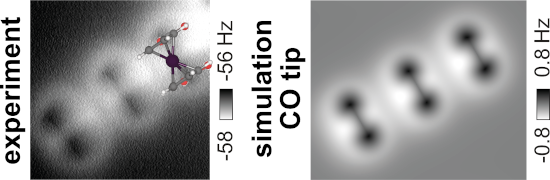
- acid (FDCA) molecules on bulk and thin film CaF2(111) surfaces with non-contact atomic force microscopy (NC-AFM). We use NC-AFM image calculations with the probe particle model to interpret this distinct shape by repulsive interactions between the NC-AFM tip and the top hydrogen atoms of the
- /CaF1/Si(111) thin film samples under ultrahigh vacuum conditions (p < 5 × 10⁻¹⁰ mbar) in two separate systems equipped with appropriate facilities for in situ sample preparation. Bulk CaF2 crystals (Korth Kristalle, Altenholz, Germany) were cleaved in vacuum [24] after degassing the crystal and sample
- details on the thin film growth and properties can be found in [22][26][27][28]. Deposition of 1,1’-ferrocene dicarboxylic acid (purity 98%, Alfa Aesar, Kandel, Germany) on samples held at room temperature was accomplished by sublimation from custom-built Knudsen cells heated to about 390 K. For bulk
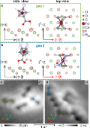


![[Graphic 10]](/bjnano/content/inline/2190-4286-11-127-i10.svg?max-width=637&scale=1.18182) row of FDCA molecules in geo 2. (a–c) Constant-height frequency-shi...
row of FDCA molecules in geo 2. (a–c) Constant-height frequency-shi...
Analysis of catalyst surface wetting: the early stage of epitaxial germanium nanowire growth
Beilstein J. Nanotechnol. 2020, 11, 1371–1380, doi:10.3762/bjnano.11.121
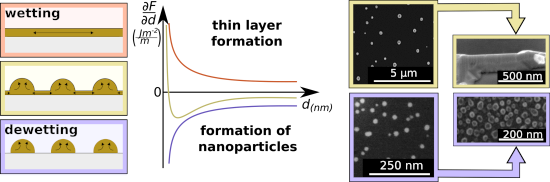
- beneficial when intentionally used (e.g., to create strongly localized heat sources [7][8]), but it can also be disruptive (e.g., when ultrathin copper layers collapse on titanium nitride, damaging electronic devices [9][10]). However, in thin film applications these phenomena are rarely attributed to the
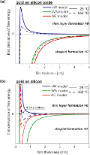
- values below the abscissa and converges towards zero. This is a major distinction since values above zero leads to the formation of a continuous thin film, whereas values below zero promote the formation of droplets on the surface. Since a gold monolayer has a nominal thickness of 0.32 nm, the maximum


Impact of fluorination on interface energetics and growth of pentacene on Ag(111)
Beilstein J. Nanotechnol. 2020, 11, 1361–1370, doi:10.3762/bjnano.11.120
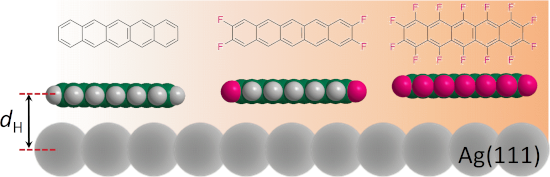
- PFP this could be ascribed to attractive quadrupole interactions between adjacent PFP molecules [18][56], and this seemed to be the case for partial fluorination as well. The differences in thin film structure were also reflected in the electronic structures, which were distinctively different in
- multilayers on Ag(111). Our results highlight that even for weak organic–metal interaction, the fluorine substitution significantly affects the organic thin film growth beyond the first layer as well as the multilayer electronic structure. Experimental F4PEN was synthesized following an established procedure
- (base pressure: 3 × 10⁻¹⁰ mbar) for substrate preparation, thin film evaporation and analysis. LEED was performed using a Micro-Channel-Plate LEED (OCI BDL800IR-MCP). Photoelectron spectroscopy experiments were performed using a SPECS PHOIBOS 150 analyzer and monochromatized He I radiation (21.22 eV


Effect of localized helium ion irradiation on the performance of synthetic monolayer MoS2 field-effect transistors
Beilstein J. Nanotechnol. 2020, 11, 1329–1335, doi:10.3762/bjnano.11.117
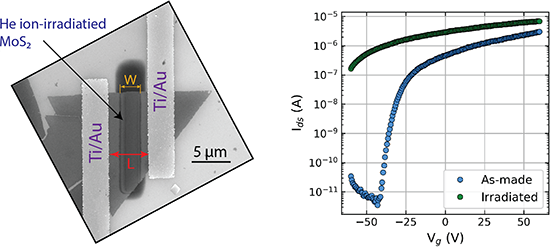
- achieved by selective ion sputtering in thin film transistors has also been observed in He+-irradiated InGaZnO devices [27]. This irradiation-induced carrier activation depends not only on the fluence of the ion beam, but also on the absolute number of defects that can be introduced. Therefore, the


Structural and electronic properties of SnO2 doped with non-metal elements
Beilstein J. Nanotechnol. 2020, 11, 1321–1328, doi:10.3762/bjnano.11.116
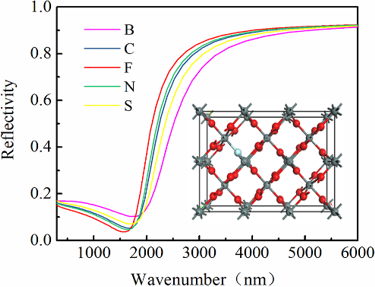
- SnO2; electronic structure; optical properties; Introduction Thin film solar cells are devices that convert solar energy into electrical energy. Transparent conductive films (TCFs) are a thin film material with both conductive capabilities and high transmittance in the visible light range (300–800 nm
- ) [1][2][3]. TCFs serve as the front electrode of thin film solar cells. Up to now, the solar energy conversion efficiency is about 23.3% [4], and it is important to increase the photovoltaic power generation efficiency, as well as the performance of the front electrode. The intrinsic semiconductor
- research works has been done examining different doping elements. Doped tin oxide thin film have been widely used in the fields of thin film solar cell electrodes, electronic display devices, and gas sensors. Also doped SnO2 been used for energy-saving low-emissivity glass coatings due to low resistivity



An atomic force microscope integrated with a helium ion microscope for correlative nanoscale characterization
Beilstein J. Nanotechnol. 2020, 11, 1272–1279, doi:10.3762/bjnano.11.111

- resist [31]. Chain scission leads to volume loss through the release of gas molecules, and this leads to the shrinkage of exposed PMMA [32], which can be easily quantified using AFM. In a second experiment, we tested the effect on a PMMA thin film exposed to different doses under the focused He ion beam


Proximity effect in [Nb(1.5 nm)/Fe(x)]10/Nb(50 nm) superconductor/ferromagnet heterostructures
Beilstein J. Nanotechnol. 2020, 11, 1254–1263, doi:10.3762/bjnano.11.109
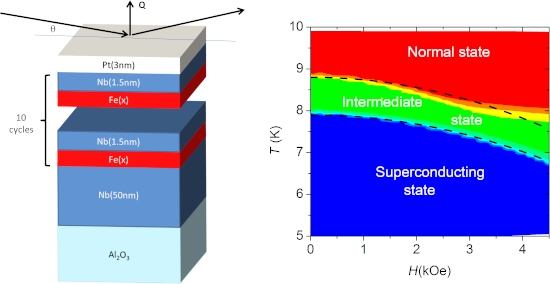
- discussions. This work is partially based on experiments performed at the NREX instrument operated by Max-Planck Society at the Heinz Maier-Leibnitz Zentrum (MLZ), Garching, Germany. Sample preparation was performed in the thin film laboratory of the Jülich Centre for Neutron Science (JCNS) at Heinz Maier


![[Graphic 13]](/bjnano/content/inline/2190-4286-11-109-i17.svg?max-width=637&scale=1.18182) ) substrate, (b) the Pt cap layer, and the Nb buffer layer grown at...
) substrate, (b) the Pt cap layer, and the Nb buffer layer grown at...


![[Graphic 16]](/bjnano/content/inline/2190-4286-11-109-i20.svg?max-width=637&scale=1.18182) (T) for the samples s4 (black) and s3 (red) in the vicinity of the superconducting transition m...
(T) for the samples s4 (black) and s3 (red) in the vicinity of the superconducting transition m...
Ultrasensitive detection of cadmium ions using a microcantilever-based piezoresistive sensor for groundwater
Beilstein J. Nanotechnol. 2020, 11, 1242–1253, doi:10.3762/bjnano.11.108
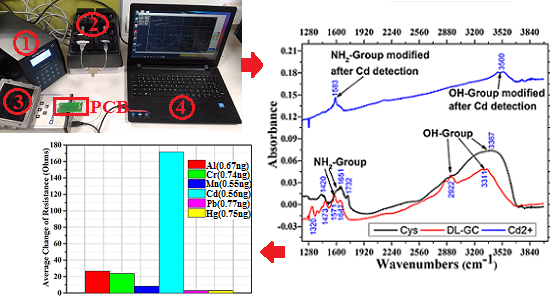
- expanding their deleterious effect on human health and the environment. The proposed technique uses a blend of thin-film and microcantilever (micro-electromechanical systems) technology, which mitigate the disadvantages of the nanoparticle approaches, for the selective detection of Cd(II) with a LOD below
- cantilever sensors. Moreover, the proposed piezoresistive device has capabilities to directly capture the surface stress make this a better option for HMI applications. Microfluidic Platform with Piezosensor In the proposed method, the benefits of three different technologies are combined, namely thin film






Hybridization vs decoupling: influence of an h-BN interlayer on the physical properties of a lander-type molecule on Ni(111)
Beilstein J. Nanotechnol. 2020, 11, 1168–1177, doi:10.3762/bjnano.11.101
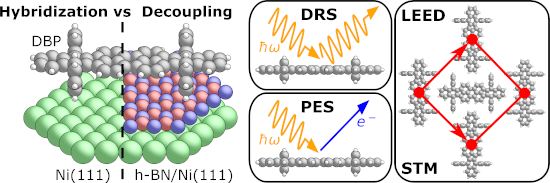
- this sample as highly ordered DBP layer. The DBP layer that was deposited at a substrate temperature of 25 °C, on the other hand, is labeled as less ordered DBP layer. An increase of the crystal quality of the DBP thin film grown at a substrate temperature higher than 90 °C was also reported by Zhou et


Revealing the local crystallinity of single silicon core–shell nanowires using tip-enhanced Raman spectroscopy
Beilstein J. Nanotechnol. 2020, 11, 1147–1156, doi:10.3762/bjnano.11.99
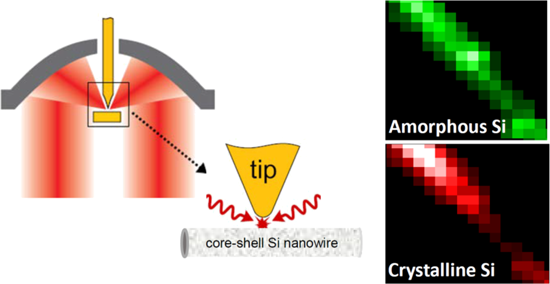
- antenna. This nanoantenna is typically made by chemical etching of a thin Ag or Au wire or by evaporating a Ag or Au thin film on AFM tips. The tip works like an optical antenna when it is brought as close as a few nanometers to the sample surface and when it is illuminated with a tightly focused laser
- light blue and orange lines show the raw spectra, which are composed of a broad photoluminescence continuum emitted from the underlying Au thin film and sharp Raman peaks. For further analysis, these spectral features are fitted using Lorentzian functions for the Raman peaks and a Gaussian function for


Excitonic and electronic transitions in Me–Sb2Se3 structures
Beilstein J. Nanotechnol. 2020, 11, 1045–1053, doi:10.3762/bjnano.11.89
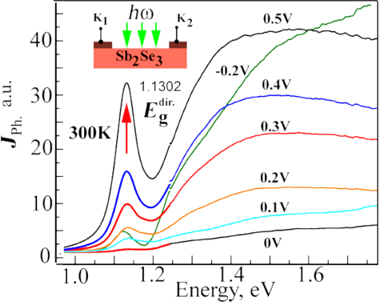
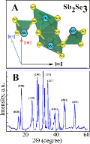
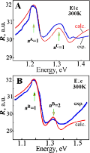
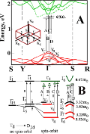
- costs [3][4][5][6][7][8][9][10]. It has been shown that Sb2Se3 has many applications in photovoltaic devices and thermoelectric systems where it can be used as a thin film [11], in thermovoltaic and switch devices [12], in optical data storage [13] and in optoelectronics as a 2D anisotropic material [14


Gas-sensing features of nanostructured tellurium thin films
Beilstein J. Nanotechnol. 2020, 11, 1010–1018, doi:10.3762/bjnano.11.85
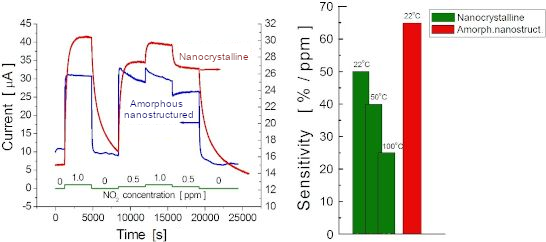
- films; Introduction Tellurium (Te) is a multifunctional chemical element used for the development of many devices, such as diodes with high (106) rectification ratios, thin-film field-effect transistors, optical recording media, infrared and UV detectors, strain-sensitive devices and others (see [1][2


Atomic layer deposition for efficient oxygen evolution reaction at Pt/Ir catalyst layers
Beilstein J. Nanotechnol. 2020, 11, 952–959, doi:10.3762/bjnano.11.79
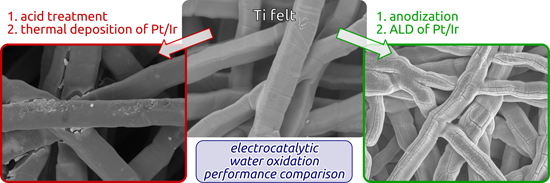
- Stefanie Schlicht Korcan Percin Stefanie Kriescher Andre Hofer Claudia Weidlich Matthias Wessling Julien Bachmann Friedrich-Alexander-Universität Erlangen-Nürnberg, Chair ’Chemistry of Thin Film Materials’, IZNF, Cauerstr. 3, 91058 Erlangen, Germany DWI-Leibniz Institute for Interactive Materials
- attractive thin film technique that allows for a conformal coating of not only planar substrates but also of highly porous ones [12][19][20][25]. This method is based on well-defined self-limiting surface reactions combined to deposit thin layers with highly uniform thickness. At least two precursors


Band tail state related photoluminescence and photoresponse of ZnMgO solid solution nanostructured films
Beilstein J. Nanotechnol. 2020, 11, 899–910, doi:10.3762/bjnano.11.75
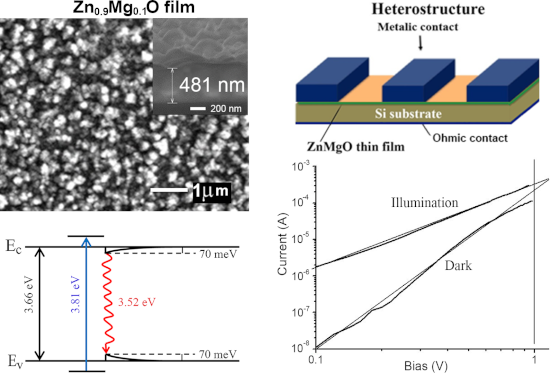
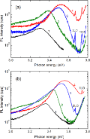
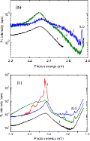
- the alloy. Moreover, the luminescence is excited by the photon energy (3.81 eV) much lower than the bandgap for the thin film with the x value of 0.40 (4.28 eV). The same is true for the luminescence measured at low temperature (Table 2). The bandgap of the alloy at low temperature was recalculated

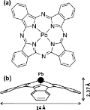
Templating effect of single-layer graphene supported by an insulating substrate on the molecular orientation of lead phthalocyanine
Beilstein J. Nanotechnol. 2020, 11, 814–820, doi:10.3762/bjnano.11.66
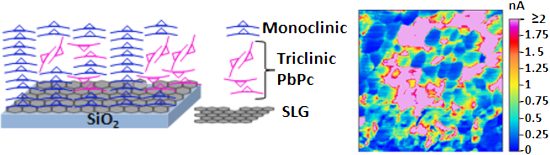
- height variation. (a) AFM topography,1 µm × 1 µm scan area. (b) Corresponding current map of 10 nm PbPc thin film on SLG/SiO2/Si substrate obtained at 2 V sample bias. (c) Profile section of (b) along the marked line showing the current variation across the film. (d) I–V curve acquired from a conducting


Epitaxial growth and superconducting properties of thin-film PdFe/VN and VN/PdFe bilayers on MgO(001) substrates
Beilstein J. Nanotechnol. 2020, 11, 807–813, doi:10.3762/bjnano.11.65
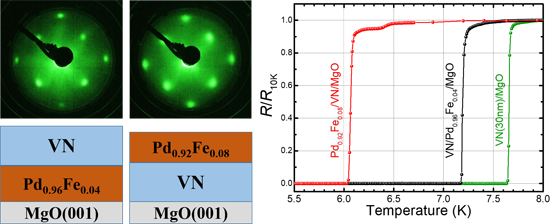
- Abstract Single-layer vanadium nitride (VN) and bilayer Pd0.96Fe0.04/VN and VN/Pd0.92Fe0.08 thin-film heterostructures for possible spintronics applications were synthesized on (001)-oriented single-crystalline magnesium oxide (MgO) substrates utilizing a four-chamber ultrahigh vacuum deposition and
- VN thin film has grown cube-on-cube epitaxially (for an individual Pd1−xFex film see the full crystallinity analysis in [33]). Figure 1c,d shows that the Pd0.96Fe0.04/VN and VN/Pd0.92Fe0.08 heterostructures are pass-through epitaxial. This is, first of all, due to the good lattice match between MgO
- Cu Kα (λ = 1.5418 Å) radiation in the Bragg–Brentano geometry with a scanning rate of 0.002°/s in the 2θ range from 17° to 82° and a step width of 0.0153°. Room-temperature XRD patterns of the pristine MgO(001) substrate, the VN thin film on MgO, Pd0.96Fe0.04 on MgO and the Pd0.96Fe0.04/VN


A set of empirical equations describing the observed colours of metal–anodic aluminium oxide–Al nanostructures
Beilstein J. Nanotechnol. 2020, 11, 798–806, doi:10.3762/bjnano.11.64
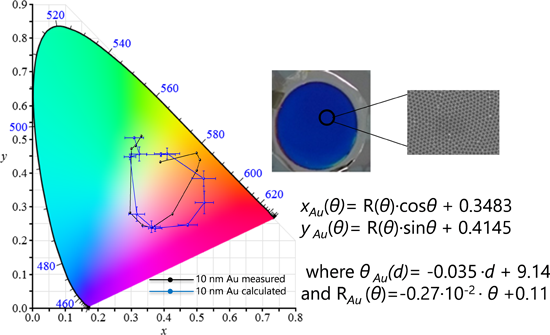
- and thickness) and the porosity of the films was changed by applying different chemical etching times (from 2 to 8 min) using a 5 wt % H3PO4 solution at 35 °C. In order to obtain different colours of the nanostructures, an 8 nm thin film of chromium was deposited on top of the AAO films using an


Structural optical and electrical properties of a transparent conductive ITO/Al–Ag/ITO multilayer contact
Beilstein J. Nanotechnol. 2020, 11, 695–702, doi:10.3762/bjnano.11.57
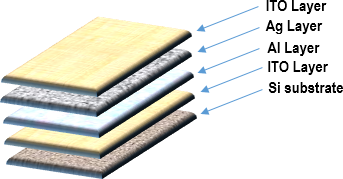
- measurements) were used as substrates. Decon90 glass cleaner was used for glass substrate cleansing. Thin film preparation A SNTEK Korea magnetron sputtering system with a dual radio frequency (RF)/direct current (DC) sputtering source with a main deposition chamber 15.7 inches in height and 23.6 inches in
- . K. Isiyaku as suggested by A. H. Ali and N. Nayan. Thin film deposition and characterization were performed by A. K. Isiyaku. Data analyses and interpretation including manuscript writing were carried out by A. K. Isiyaku, A. H. Ali and N. Nayan. Funding The support from Universiti Tun Hussein Onn


A novel dry-blending method to reduce the coefficient of thermal expansion of polymer templates for OTFT electrodes
Beilstein J. Nanotechnol. 2020, 11, 671–677, doi:10.3762/bjnano.11.53
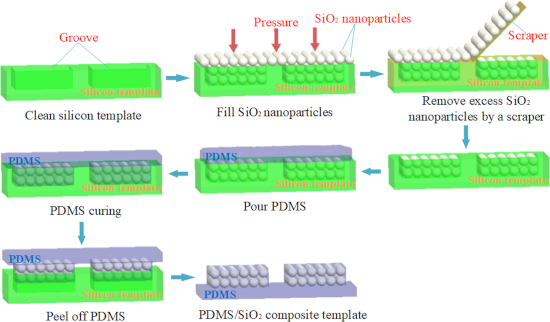
- Telecommunications, Xi’an 710121, China 10.3762/bjnano.11.53 Abstract Among the patterning technologies for organic thin-film transistors (OTFTs), the fabrication of OTFT electrodes using polymer templates has attracted much attention. However, deviations in the electrode alignment occur because the coefficient of
- achieved the alignment of OTFT electrodes using the composite template. Keywords: coefficient of thermal expansion; dry blending; organic thin-film transistors (OTFTs); OTFT electrodes; PDMS/SiO2 composite template; Introduction Organic thin-film transistors (OTFTs) provide a platform to construct next


Comparison of fresh and aged lithium iron phosphate cathodes using a tailored electrochemical strain microscopy technique
Beilstein J. Nanotechnol. 2020, 11, 583–596, doi:10.3762/bjnano.11.46
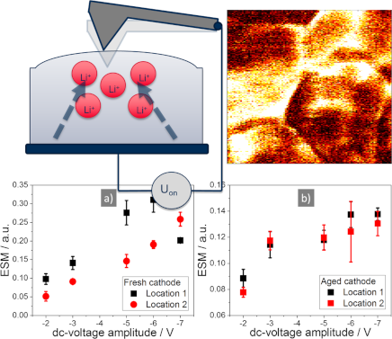
- they attributed to a reduced electrochemical activity [42]. Yang et al. report similar findings; they used ESM to study thin film Li1.2Co0.13Ni0.13Mn0.54O2 cathodes and observed decreasing ESM amplitude after a few ESM scans. They attributed this, similar to Zhu et al., to the reduction of the
- electrochemical activity, electrochemical fatigue and degradation of the material [43]. Jesse et al. conducted ESM on thin film silicon anodes and aged them by high frequency cycling [33]. Contrary to Yang et al. and Zhu et al., they found an increase of the ESM amplitude over cycling time, which they linked to
- (positive pulse) of the Li-ions. The distributions do not show any significant change from the fresh to the aged cathode, indicating an unaffected diffusivity in the material providing the signal. Using to describe the diffusion in a thin film [40] with a time constant τ = 2 ms and a depth of the probed



Evolution of Ag nanostructures created from thin films: UV–vis absorption and its theoretical predictions
Beilstein J. Nanotechnol. 2020, 11, 494–507, doi:10.3762/bjnano.11.40
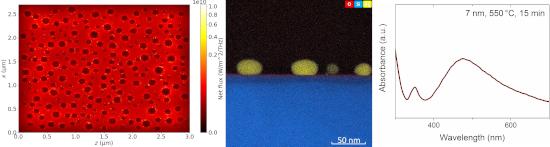
- annealing. In Figure 3a–g selected SEM images of nanostructures formed after annealing of Ag films with a thickness from 2 to 7 nm are presented. The films were annealed at 250 °C for 15 min. In the image corresponding to the 1 nm thin film (Figure 3a) only some voids are present. There are no islands




High dynamic resistance elements based on a Josephson junction array
Beilstein J. Nanotechnol. 2020, 11, 417–420, doi:10.3762/bjnano.11.32
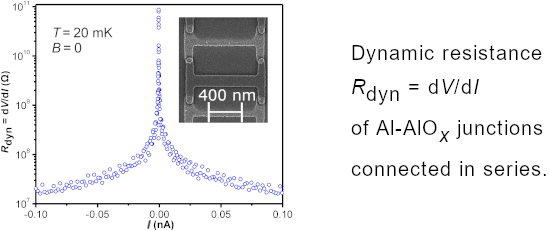
- followed by ultrahigh vacuum deposition of materials was used for the fabrication of the nanostructures. Hybrid QPSJ samples were made of Ti, Al and aluminum oxide [12]. The high-impedance JJs studied in this paper, similar to those from [12], were fabricated from superconducting thin film Al oxidized in
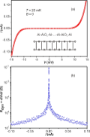
- test sample fabricated from superconducting thin film aluminum oxidized in situ to form tunnel barriers. Left panel: overview of the structure. Right panel: details of the JJ element. (a) Experimental I–V characteristics of 50 pairs of Al–AlOx junctions connected in series. Inset shows a schematic of

DFT calculations of the structure and stability of copper clusters on MoS2
Beilstein J. Nanotechnol. 2020, 11, 391–406, doi:10.3762/bjnano.11.30
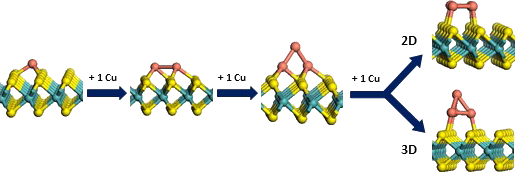
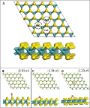
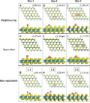
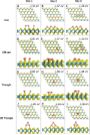
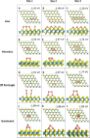
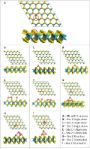
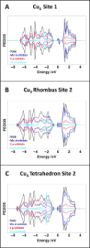
- transition metals, as well as Ag and Au. However, most studies have examined single-atom adsorption or adsorbed nanoparticles of noble metals. This means there is a knowledge gap in terms of thin film nucleation on 2D materials. To begin addressing this issue, we present in this paper a first-principles
- character of Cu nanoclusters is preserved. Keywords: copper (Cu); density functional theory (DFT); 2D materials; molybdenum disulfide (MoS2); thin film nucleation; Introduction Since the successful exfoliation of monolayers of graphene by Novoselov et al., 2D materials have gained a large interest in a
- enable the use of 2D materials in technology applications, processes have been developed to grow 2D materials via chemical vapour deposition (CVD) [16][17] and atomic layer deposition (ALD) [18][19]. The films prepared via thin film deposition were comparable in performance to materials obtained via

Poly(1-vinylimidazole) polyplexes as novel therapeutic gene carriers for lung cancer therapy
Beilstein J. Nanotechnol. 2020, 11, 354–369, doi:10.3762/bjnano.11.26
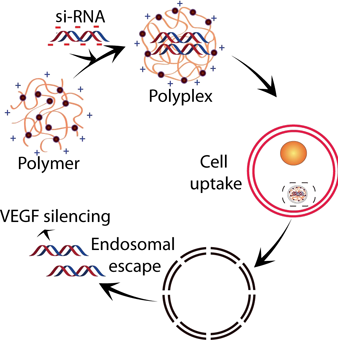
- . Characterization of the polyplex Electron microscopy: A small drop of the polyplex sample was placed on a conducting carbon tape and air-dried. The sample was then sputter-coated with a thin film of gold. The sample was placed in the sample chamber and imaged at an accelerating voltage of 3 kV using a cold field



Implementation of data-cube pump–probe KPFM on organic solar cells
Beilstein J. Nanotechnol. 2020, 11, 323–337, doi:10.3762/bjnano.11.24
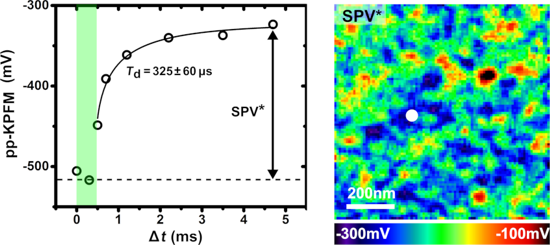
- ); organic photovoltaics; photocarrier dynamics; pump–probe configuration; time-resolved measurements; Introduction Many emerging photovoltaic technologies rely on the use of thin film materials displaying structural and/or chemical heterogeneities at the μm or nm scale. This is the case for solution
- same features as the raw data however at a slightly lower noise level. Organic BHJ thin films processing, solar cell fabrication and characterization The PTB7:PC71BM BHJ thin film was deposited on an indium thin oxide (ITO) substrate coated with PEDOT:PSS (a hole-conducting polymer) following the