Search results
Search for "ultrahigh vacuum" in Full Text gives 180 result(s) in Beilstein Journal of Nanotechnology.
Applications of three-dimensional carbon nanotube networks
Beilstein J. Nanotechnol. 2015, 6, 792–798, doi:10.3762/bjnano.6.82
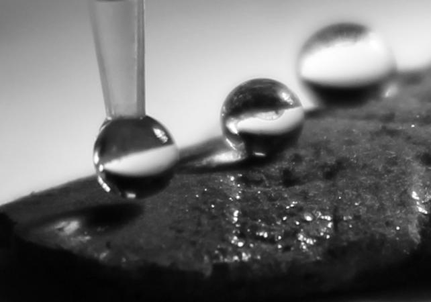
- with energy dispersion spectroscopy (EDX). Electron energy loss analysis: Electron energy loss (EELS) was recorded in reflection mode ex situ in an ultrahigh vacuum system (base pressure about 2 × 10⁻¹⁰ Torr) equipped with an electron gun (Ep = 300 eV, ΔE = 1.0 eV). Contact angle measurements: Static


Overview of nanoscale NEXAFS performed with soft X-ray microscopes
Beilstein J. Nanotechnol. 2015, 6, 595–604, doi:10.3762/bjnano.6.61
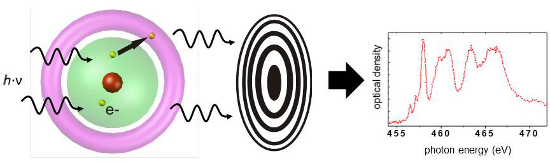
- storage ring, Helmholtz-Zentrum Berlin, Germany, is operated by the Max-Planck-Institut for Intelligent Systems, Stuttgart, Germany and allows – compared to other STXMs – investigations under ultrahigh vacuum conditions [56]. This instrument is dedicated for studies of the magnetic behaviour of solids in


In situ scanning tunneling microscopy study of Ca-modified rutile TiO2(110) in bulk water
Beilstein J. Nanotechnol. 2015, 6, 438–443, doi:10.3762/bjnano.6.44
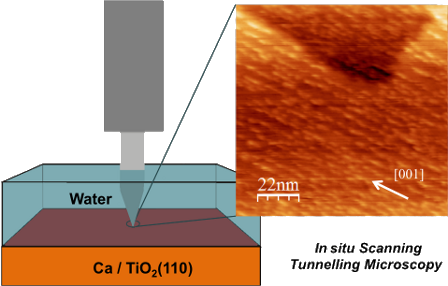
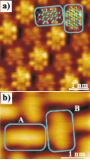
- -modified rutile TiO2(110) surfaces immersed in high purity water. The TiO2 surface was prepared under ultrahigh vacuum (UHV) with repeated sputtering/annealing cycles. Low energy electron diffraction (LEED) analysis shows a pattern typical for the surface segregation of calcium, which is present as an
- ) rutile surface prepared under ultrahigh vacuum (UHV) conditions, which is considered to be a model system [10][11]. Ordered Ca layers have been obtained by thermally activated segregation from the bulk [1][2][3][4][5], where calcium was a common bulk impurity in the TiO2 samples [10]. A c(6 × 2


Synthesis, characterization, monolayer assembly and 2D lanthanide coordination of a linear terphenyl-di(propiolonitrile) linker on Ag(111)
Beilstein J. Nanotechnol. 2015, 6, 327–335, doi:10.3762/bjnano.6.31
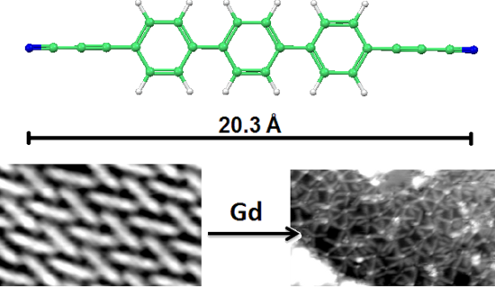
- several length scales on atomically well-defined surfaces under ultrahigh vacuum (UHV) conditions) have been achieved [13][14][15][18][19]. More recently, our groups have successfully extended this approach toward the on-surface coordination of f-block organic networks exhibiting five-vertex, Archimedean
- properties of f-elements [55]. Experimental STM measurements The STM measurements were performed using a CreaTec low temperature STM (LT-STM). The base pressure of the ultrahigh vacuum system was below 2 × 10⁻¹⁰ mbar. The Ag(111) substrate was prepared using standard cycles of Ar+ sputtering (800 eV) and


Spectroscopic mapping and selective electronic tuning of molecular orbitals in phosphorescent organometallic complexes – a new strategy for OLED materials
Beilstein J. Nanotechnol. 2014, 5, 2248–2258, doi:10.3762/bjnano.5.234
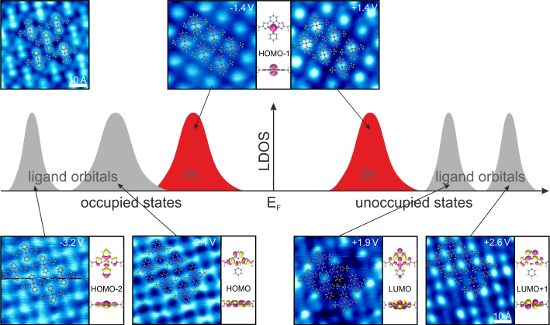
- strategy of fine-tuning both levels independently, which should permit the tunability of the HOMO–LUMO gap (and thus the emission color) as well as charge-injection barriers in a device. Results and Discussion Methods and sample preparation The experiments were performed under ultrahigh vacuum conditions
- onto a Au(111) surface by thermal sublimation inside an ultrahigh vacuum environment. These planar molecules are well-suited for a thorough analysis by STM and STS. We can simultaneously identify and visualize the molecular structure as well as various occupied and unoccupied molecular frontier



Restructuring of an Ir(210) electrode surface by potential cycling
Beilstein J. Nanotechnol. 2014, 5, 1349–1356, doi:10.3762/bjnano.5.148
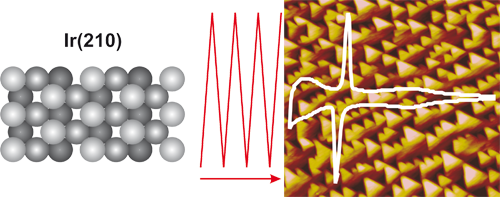
- identical under ultrahigh-vacuum (UHV) conditions and in contact with an electrolyte. However, there are several examples for which the stability of electrode surfaces is limited to certain potential regions or reaction conditions. Among these are (i) reconstructed surfaces of Au and Pt single crystals [10


Electron-beam induced deposition and autocatalytic decomposition of Co(CO)3NO
Beilstein J. Nanotechnol. 2014, 5, 1175–1185, doi:10.3762/bjnano.5.129
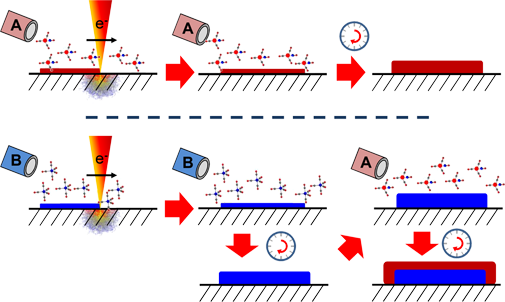
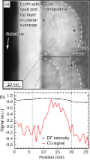
- nitrosyl, Co(CO)3NO. Different deposits are prepared on silicon nitride membranes and silicon wafers under ultrahigh vacuum conditions, and are studied by scanning electron microscopy (SEM) and scanning transmission X-ray microscopy (STXM), including near edge X-ray absorption fine structure (NEXAFS
- irradiated by the focused electron beam in the absence of a precursor, under high vacuum [15] or ultrahigh vacuum (UHV) conditions [7][8][16][17][18][19], resulting in a patterned, chemically activated surface. In a second step, a precursor is introduced into the system and decomposes selectively at the




Calibration of quartz tuning fork spring constants for non-contact atomic force microscopy: direct mechanical measurements and simulations
Beilstein J. Nanotechnol. 2014, 5, 507–516, doi:10.3762/bjnano.5.59
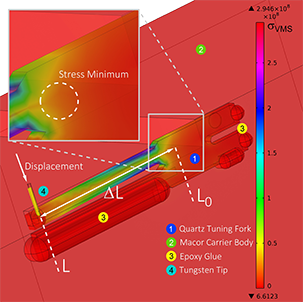
- scale usually demand well defined environments, such as ultrahigh vacuum (UHV) and low temperatures (LT). For these conditions, force sensors based on quartz tuning forks in the “qPlus” design [5] have been proven to routinely provide stable operation and sufficient sensitivity to achieve the highest


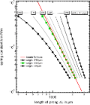


Uncertainties in forces extracted from non-contact atomic force microscopy measurements by fitting of long-range background forces
Beilstein J. Nanotechnol. 2014, 5, 386–393, doi:10.3762/bjnano.5.45
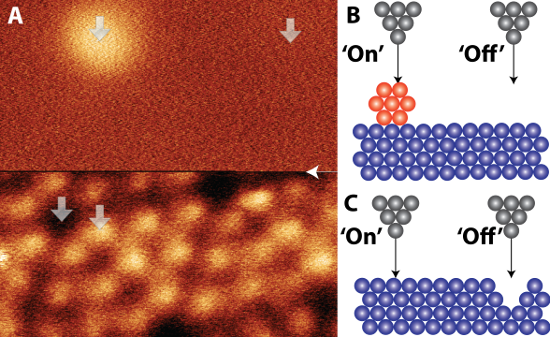
- to obtain the desired quantity. In this paper the focus primarily concerns the imaging and quantitative interpretation of atomic or molecular resolution NC-AFM experiments conducted in ultrahigh vacuum (UHV). In these experiments, the quantity of interest is usually the site-specific/short-range


Influence of the adsorption geometry of PTCDA on Ag(111) on the tip–molecule forces in non-contact atomic force microscopy
Beilstein J. Nanotechnol. 2014, 5, 98–104, doi:10.3762/bjnano.5.9
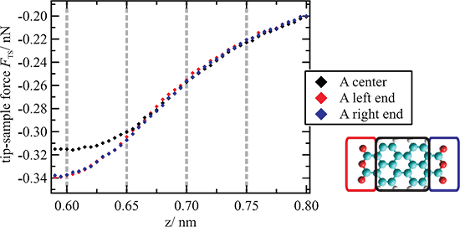
- atomic force microscope (Omicron LT-SPM) that was operated in frequency-modulation mode [11] under ultrahigh vacuum conditions and at a temperature of ≈5 K using a tuning fork sensor (resonance frequency f0 = 24640 Hz, spring constant k ≈ 2000 N/m) in the qPlus design [12]. The amplitude of the sensor



Study of mesoporous CdS-quantum-dot-sensitized TiO2 films by using X-ray photoelectron spectroscopy and AFM
Beilstein J. Nanotechnol. 2014, 5, 68–76, doi:10.3762/bjnano.5.6
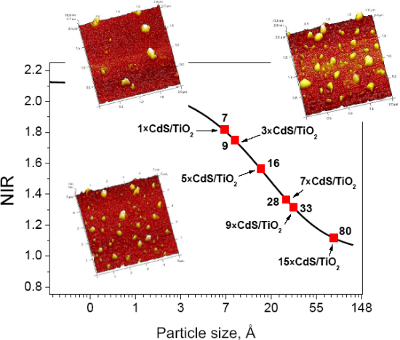
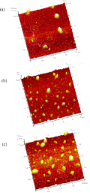
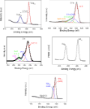
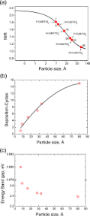
- spectral range of interest 200–550 nm. XPS analysis was performed on Kratos Axis-ultra spectrometer. Similarly as described in [10], the analysis chamber was operated under ultrahigh vacuum conditions with an approximate pressure of 5 × 10⁻⁷ Pa and the sample was irradiated with a monochromatic Al Kα


Noise performance of frequency modulation Kelvin force microscopy
Beilstein J. Nanotechnol. 2014, 5, 1–18, doi:10.3762/bjnano.5.1
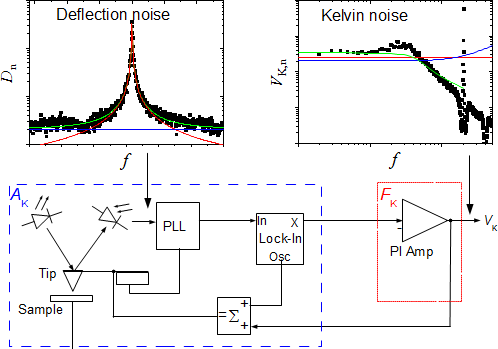
- and optimizing around randomly chosen key values. Keywords: dynamic; frequency noise; Kelvin force microscopy; noise performance; phase noise; thermal excitation; Introduction Surface potential imaging in combination with atomic force microscopy in ultrahigh vacuum is based on the measurement of
- modeled for a system with characteristics typically obtained in ultrahigh vacuum implementations. It has been shown that in a PLL based setup, the two main noise sources, thermal excitation and detector noise, transform into frequency noise exactly the same way as in a free-running oscillator, and that
- deteriorating one noise source when improving the other, ultimately merging into the uncertainty relation governing that a system cannot be measured without changing it by whatever kind of sensor back-action. Experimental The KFM is based on an Omicron ultrahigh vacuum variable temperature atomic force





Adsorption of the ionic liquid [BMP][TFSA] on Au(111) and Ag(111): substrate effects on the structure formation investigated by STM
Beilstein J. Nanotechnol. 2013, 4, 903–918, doi:10.3762/bjnano.4.102
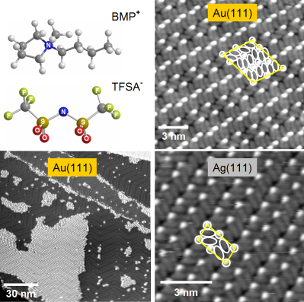
- , but also by other techniques such as in situ scanning tunnelling microscopy [12][13][14]. More detailed insight, on a molecular scale, may be gained in model studies investigating the interface between the respective solid surface and thin films of the IL under ultrahigh vacuum (UHV) conditions. These




Deformation-induced grain growth and twinning in nanocrystalline palladium thin films
Beilstein J. Nanotechnol. 2013, 4, 554–566, doi:10.3762/bjnano.4.64
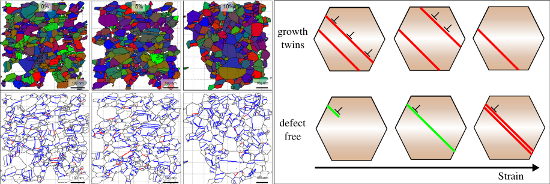
- homogeneous deformation up to very high total strain. Directly after rinsing, the samples were clamped onto special sample holders and transferred into ultrahigh vacuum of 2.0 · 10−8 mbar within the sputtering chamber. Mechanical testing and microstructural characterization Ex-situ uniaxial tensile tests were


Digging gold: keV He+ ion interaction with Au
Beilstein J. Nanotechnol. 2013, 4, 453–460, doi:10.3762/bjnano.4.53
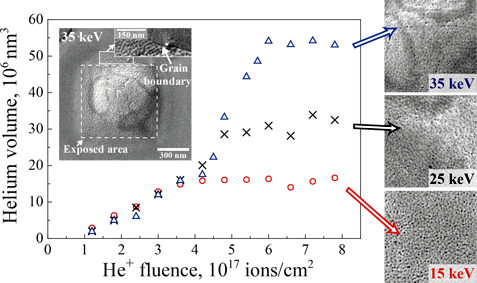
- formation, as a function of ion fluence and energy. Experimental The experiments were performed with an ultrahigh vacuum (UHV) Orion® Plus Helium Ion Microscope from Carl Zeiss NTS [15] at room temperature. As a result of the interaction of the He+ beam with the target, secondary electrons (SE


Kelvin probe force microscopy of nanocrystalline TiO2 photoelectrodes
Beilstein J. Nanotechnol. 2013, 4, 418–428, doi:10.3762/bjnano.4.49
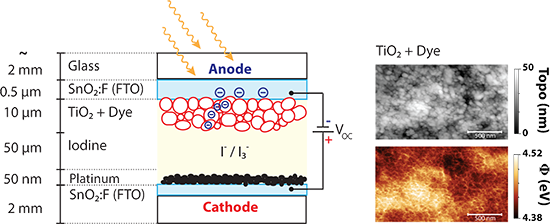
- rutile TiO2 in ultrahigh vacuum [42]. Using Equation 4 with θ = 0° and measured work-function shifts of ΔΦ = −180 ± 40 mV for the Cu(I) dye and ΔΦ = 150 ± 40 mV for N719 results in 6.3 ± 1.5 D and 5.3 ± 2 D with opposite directions, respectively. The latter value is in the same range as predicted by DFT


Ni nanocrystals on HOPG(0001): A scanning tunnelling microscope study
Beilstein J. Nanotechnol. 2013, 4, 406–417, doi:10.3762/bjnano.4.48
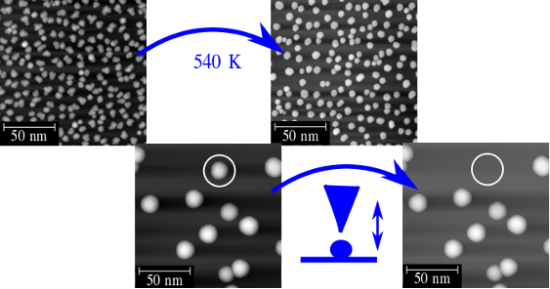
- important role for the aforementioned applications. Therefore, in this study we focus on the initial growing process of Ni clusters by evaporating Ni on the HOPG surface in ultrahigh vacuum (UHV). A quantitative characterization of the cluster properties, e.g., size, shape and distribution, for different



Determining cantilever stiffness from thermal noise
Beilstein J. Nanotechnol. 2013, 4, 227–233, doi:10.3762/bjnano.4.23
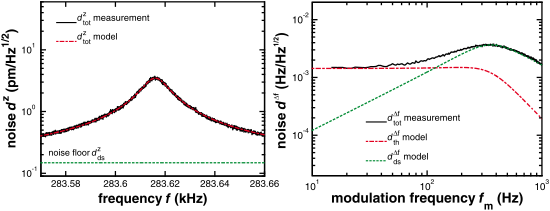
- force microscopy (NC-AFM) based on cantilever or tuning fork force sensors. We recently demonstrated how Equation 1 defines the ultimate limit of signal detection for an NC-AFM measurement performed under ultrahigh vacuum (UHV) conditions [6]. Although most NC-AFM systems are operated with cantilevers
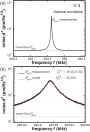
![[Graphic 34]](/bjnano/content/inline/2190-4286-4-23-i40.png?max-width=637&scale=1.18182) measured for the fundamental mode of cantilever V 4. Measureme...
measured for the fundamental mode of cantilever V 4. Measureme...
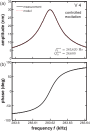
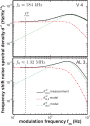
![[Graphic 23]](/bjnano/content/inline/2190-4286-4-23-i29.png?max-width=637&scale=1.18182) measured for cantilever V 4 (A0 = 16.8 nm, demodulator band...
measured for cantilever V 4 (A0 = 16.8 nm, demodulator band...
Catalytic activity of nanostructured Au: Scale effects versus bimetallic/bifunctional effects in low-temperature CO oxidation on nanoporous Au
Beilstein J. Nanotechnol. 2013, 4, 111–128, doi:10.3762/bjnano.4.13
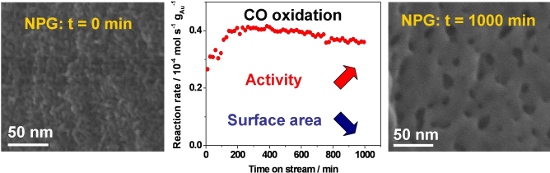
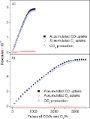
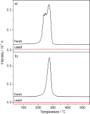
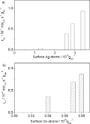
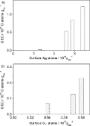
- products (TAP) reactor under ultrahigh vacuum (UHV) conditions. Further information on similarities and differences of the two different types of NPG catalysts in the reaction mechanism was obtained from multipulse TAP reactor measurements, which give access to the ability of the NPG catalysts to activate
- after surface saturation, which is equivalent to the initial intensity. The formation of CO2 could be determined directly from the CO2 pulse intensity. Additionally, (pre)treatment of the catalysts at higher (atmospheric) pressure is possible by separating the reactor from the ultrahigh vacuum (UHV


Thermal noise limit for ultra-high vacuum noncontact atomic force microscopy
Beilstein J. Nanotechnol. 2013, 4, 32–44, doi:10.3762/bjnano.4.4
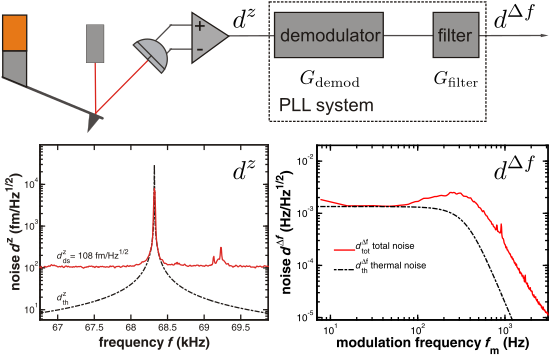
- at the demodulator output in dependence of cantilever properties and settings of the signal processing electronics in the limit of a negligible tip–surface interaction and a measurement under ultrahigh-vacuum conditions. For a quantification of the noise figures, we calibrate the cantilever
- systems based on other force sensors and detection schemes. Under ultrahigh-vacuum (UHV) conditions, the thermal noise of the cantilever is usually small compared to the noise of the detection system due to the high Q-factor of the cantilever in vacuum [6]. The instrumental noise sources in an optical


![[Graphic 53]](/bjnano/content/inline/2190-4286-4-4-i64.png?max-width=637&scale=1.18182) =
= ![[Graphic 32]](/bjnano/content/inline/2190-4286-4-4-i43.png?max-width=637&scale=1.18182) f...
f...


![[Graphic 56]](/bjnano/content/inline/2190-4286-4-4-i67.png?max-width=637&scale=1.18182) using three diff...
using three diff...

Characterization and properties of micro- and nanowires of controlled size, composition, and geometry fabricated by electrodeposition and ion-track technology
Beilstein J. Nanotechnol. 2012, 3, 860–883, doi:10.3762/bjnano.3.97
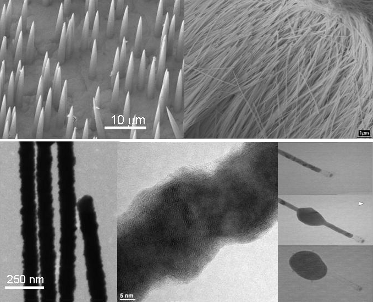
- mechanically stable Cu cones of about 28 μm length, 1.2 μm base radius, and 190 nm tip radius [115]. The field-emission properties of similar Cu-nanocone cathodes were investigated by using a field emission scanning microscope (FESM) under ultrahigh vacuum conditions [116]. The improved mechanical stability








Pure hydrogen low-temperature plasma exposure of HOPG and graphene: Graphane formation?
Beilstein J. Nanotechnol. 2012, 3, 852–859, doi:10.3762/bjnano.3.96
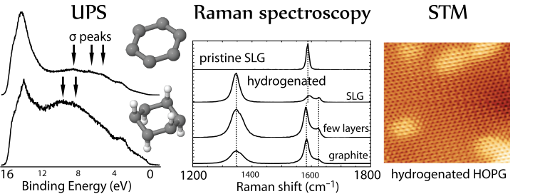
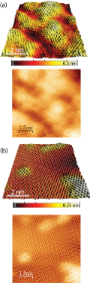
- were performed under ultrahigh vacuum (UHV) conditions. The latter value is around 200 °C lower than the theoretical calculations [27], which predicts a full transformation from graphane back to graphene. In contrast to [5], we did not observe a significant change of the Raman spectrum of LTP-exposed



Tuning the properties of magnetic thin films by interaction with periodic nanostructures
Beilstein J. Nanotechnol. 2012, 3, 831–842, doi:10.3762/bjnano.3.93
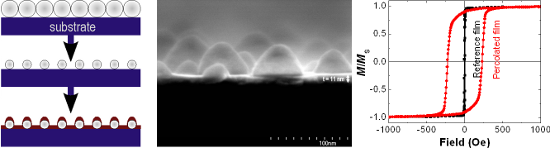
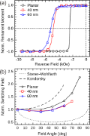
- . After the preparation of the non-close-packed PS nanostructure, subsequent growth of magnetic films can be carried out in standard deposition chambers under ultrahigh-vacuum conditions. The percolated magnetic films discussed below were deposited either by pulsed laser ablation (Fe films) or e-beam
- -beam evaporation under ultrahigh vacuum conditions at ambient temperature. For integral characterization polar magneto-optical Kerr effect (MOKE) magnetometry with a spot size of about 100 µm was used to investigate magnetic switching (details are given in reference [25]). For this sample, with


Current–voltage characteristics of single-molecule diarylethene junctions measured with adjustable gold electrodes in solution
Beilstein J. Nanotechnol. 2012, 3, 798–808, doi:10.3762/bjnano.3.89
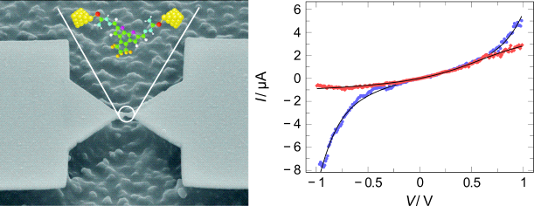
- -coating on the wafer. After developing, the patterned samples were mounted in an electron-beam evaporator under ultrahigh vacuum (10−9 mbar), and gold of about 80 nm thickness was deposited at a rate of 1 Å/s. After lift-off, the polyimide layer was partially etched away (thickness reduction ≈700 nm) by


Effect of spherical Au nanoparticles on nanofriction and wear reduction in dry and liquid environments
Beilstein J. Nanotechnol. 2012, 3, 759–772, doi:10.3762/bjnano.3.85
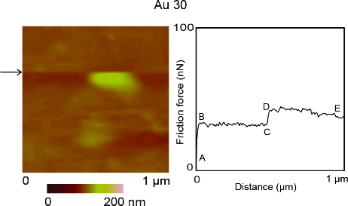
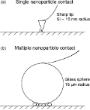
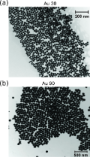
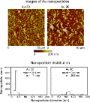
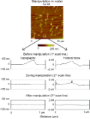
- ]. In the study by Mougin and co-workers [32], it was found that Au nanoparticles could not be moved in an ultrahigh vacuum (UHV) as compared to an ambient environment under otherwise identical manipulating conditions. Palacio and Bhushan [31] found that for larger nanoparticles, the friction force was