Search results
Search for "LED" in Full Text gives 775 result(s) in Beilstein Journal of Nanotechnology. Showing first 200.
Antimicrobial and mechanical properties of functionalized textile by nanoarchitectured photoinduced Ag@polymer coating
Beilstein J. Nanotechnol. 2023, 14, 95–109, doi:10.3762/bjnano.14.11
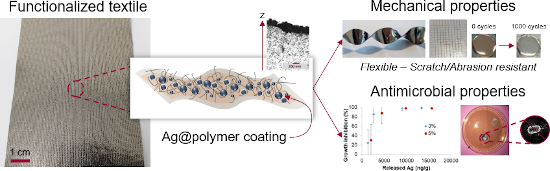
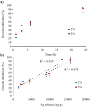
- antimicrobial activity due to the increased amount of available silver. Conclusion The innovative photoinduced approach led to the successful functionalization of nano-architectured Ag@polymer composites onto textile substrates. Two different biocompatible polymer matrixes were compared in terms of AgNP growth



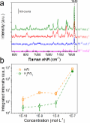
Combining physical vapor deposition structuration with dealloying for the creation of a highly efficient SERS platform
Beilstein J. Nanotechnol. 2023, 14, 83–94, doi:10.3762/bjnano.14.10
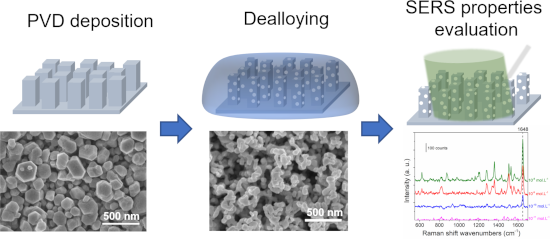
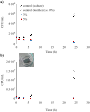
- substrates with better reliability and stability compared to conventional NP-based SERS substrates [25]. The race towards more efficient SERS platforms has led to the development of highly complex synthesis processes which limits their use in practical applications [15][26][27][28][29]. Most reports on
- residue content is observed. For H3PO4 and NaOH, the dealloying proceeds at the same rate for all samples until the formation of a protective layer containing silver, which protects the aluminum from further etching. Conversely, in the case of dealloying in HCl, the reaction with silver led to the




Solvent-induced assembly of mono- and divalent silica nanoparticles
Beilstein J. Nanotechnol. 2023, 14, 52–60, doi:10.3762/bjnano.14.6
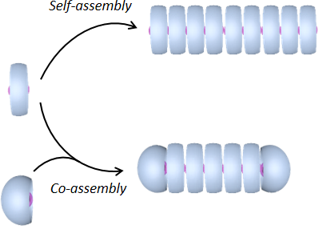
- controlled PPSR, which is defined as the ratio of the diameter of the PS patch divided by the diameter of the silica cap. As shown in Figure 3, this led to the formation of silica particles with one circular cavity, at the bottom of which the accessible surface of the initial silica seed is decorated by a PS
- by using pure water (Figure 4b) or salty water (Figure 4c) instead of ethanol in different fractions. We observed that, except for 1-PSN with PPSR ≤ 0.3, assembly was possible and led to dimers and possibly to clusters of low aggregation number for the highest PPSR values. These results first
- patches. The kinetics of the assembly in a 7:3 (vol/vol) THF/salty water mixture was more deeply investigated. Figure 4d shows that the incubation of 1-PSN with a PPSR of 0.57 led to the formation of dimers, trimers, and larger aggregates, whose number fraction after 10 days of incubation was 10%, 8%, and


Gap-directed chemical lift-off lithographic nanoarchitectonics for arbitrary sub-micrometer patterning
Beilstein J. Nanotechnol. 2023, 14, 34–44, doi:10.3762/bjnano.14.4
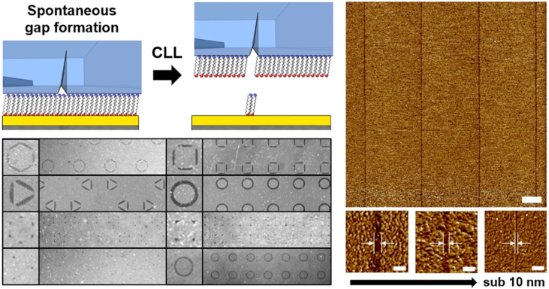
- captured with an epifluorescence microscope (Axio Imager. M2, Carl Zeiss microscopy, Jena, Germany) equipped with an X-Cite 120 LED (Lumen Dynamics Group, Inc., Mississauga, Canada) lamp. Excitation wavelength was set to 480 nm while emission of 535 nm was collected. Fluorescence images were analyzed with


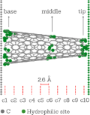
Atmospheric water harvesting using functionalized carbon nanocones
Beilstein J. Nanotechnol. 2023, 14, 1–10, doi:10.3762/bjnano.14.1
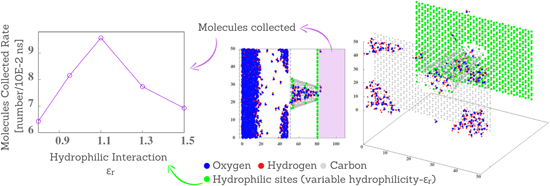
- led to the development of mimetic strategies [18][19][20][21], which require the combination of wetting and dewetting properties used by the beetle. The hydrophobic region, as is also the case for the cactus, is fundamental for the mobility of water. Water presents other kinds of anomalous behavior in




Electrical and optical enhancement of ITO/Mo bilayer thin films via laser annealing
Beilstein J. Nanotechnol. 2022, 13, 1589–1595, doi:10.3762/bjnano.13.133
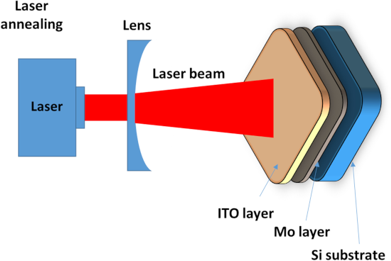
- thin film’s quality [9]. Conventional annealing treatment requires long periods of time and high temperatures during operation [24]. This led to the search for new methods using lower temperatures and shorter process times. Laser annealing can fulfil these requirements [24][25][26]. During laser


Single-step extraction of small-diameter single-walled carbon nanotubes in the presence of riboflavin
Beilstein J. Nanotechnol. 2022, 13, 1564–1571, doi:10.3762/bjnano.13.130
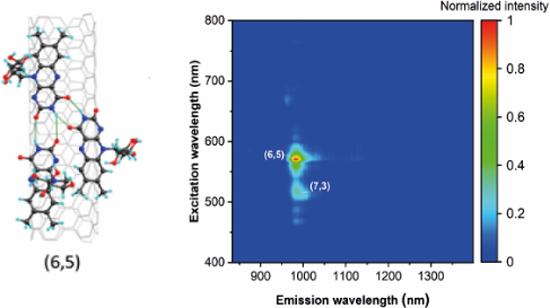
- SWCNTs led to the upscaling of nanotube synthesis from laboratory reactors to cutting-edge manufacturing all over the world. Usually, raw SWCNTs consist of highly bundled structures due to strong van der Waals interactions between nanotubes, which alter and deteriorate their outstanding intrinsic


Photoelectrochemical water oxidation over TiO2 nanotubes modified with MoS2 and g-C3N4
Beilstein J. Nanotechnol. 2022, 13, 1541–1550, doi:10.3762/bjnano.13.127
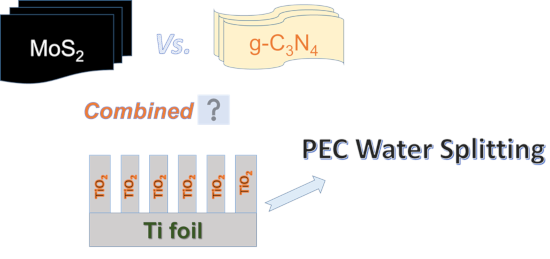
- ability. (i) TNAs only respond to ultraviolet (UV) light [22][23][24], and (ii) they exhibit fast carrier recombination [25]. Recently, the development of new heterojunction architectures through coupling TNAs with other semiconductor materials, especially low-bandgap semiconductors, led to a reduction of


Hydroxyapatite–bioglass nanocomposites: Structural, mechanical, and biological aspects
Beilstein J. Nanotechnol. 2022, 13, 1490–1504, doi:10.3762/bjnano.13.123
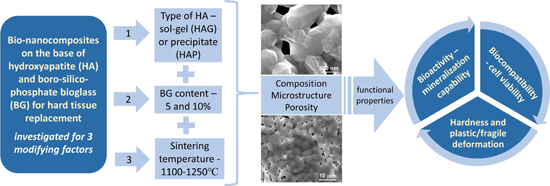
- of composites To assess the bioactivity of the composites they were soaked in SBF for 3, 5, 10, 15, and 30 days, after which the surface of the samples was investigated by means of SEM. The obtained SEM images led to the conclusion that the HAG-based composites had a quicker response to SBF, showing
Orally administered docetaxel-loaded chitosan-decorated cationic PLGA nanoparticles for intestinal tumors: formulation, comprehensive in vitro characterization, and release kinetics
Beilstein J. Nanotechnol. 2022, 13, 1393–1407, doi:10.3762/bjnano.13.115
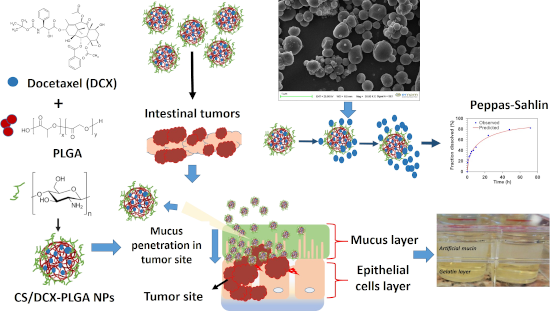
- adsorption of CS macromolecules on the surface of the NPs [42]. Besides coating, drug loading to NPs also led to remarkable changes in particle size. Moreover, after CS coating, the zeta potential of PLGA NPs changed from negative to positive. The negative zeta potential is attributed to the presence of
- nanoparticles for experimental studies and dose calculations [45]. EE and DL of DCX-loaded nanoparticle formulations are documented in Table 2. The EE values of DCX-PLGA and CS/DCX-PLGA were 46.18% and 69.04%, respectively (p < 0.05). CS as a coating material led to an increase in encapsulation efficiency of
- of CS on the nanoparticle surface led to a slower release. All results together indicate a release based on Fickian diffusion. In vitro cell culture studies Antiproliferative effect of DCX loaded PLGA nanoparticles against HT-29 cell line The antiproliferative activity of DCX-loaded and blank NPs was


LED-light-activated photocatalytic performance of metal-free carbon-modified hexagonal boron nitride towards degradation of methylene blue and phenol
Beilstein J. Nanotechnol. 2022, 13, 1380–1392, doi:10.3762/bjnano.13.114
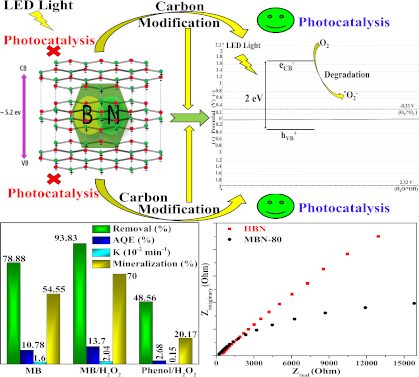
- absorb LED light irradiation with a light harvesting efficiency of ≈90% and a direct bandgap of 2 eV. The introduction of carbon into the HBN lattice led to a significant change in the electronic environment through the formation of C–B and C–N bonds which resulted in improved visible light activity
- shows zero activity in the visible region. Keywords: carbon modification; hexagonal boron nitride (HBN); LED light; phenol; photocatalysis; Introduction Hexagonal boron nitride (HBN) commonly known as white graphene belongs to a class of two-dimensional layered crystalline materials. It comprises
- specified subject. The present study discusses LED light-responsive modified boron nitride (MBN) towards its photocatalytic application. The HBN was modified by introducing carbon through the solid-state reaction method. Such introduction of carbon into the HBN lattice transformed it into a good light


Dry under water: air retaining properties of large-scale elastomer foils covered with mushroom-shaped surface microstructures
Beilstein J. Nanotechnol. 2022, 13, 1370–1379, doi:10.3762/bjnano.13.113
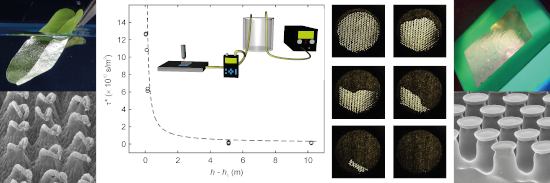
- ] and is known for more than thousand years [3], but after the Lotus effect publication [4], this research led to a paradigm shift in surface science [5] and was the starting point for novel technologies in surface science [5]. Today many products in forms of coatings, sprays and paints providing
- deeper submersion of the samples was simulated. As expected, it turned out that the higher the pressure, the faster the decrease of the air layers. The first reduction of the air covered area on the surfaces was due to the compression of the air under pressure. This compression of the air led to a


Recent trends in Bi-based nanomaterials: challenges, fabrication, enhancement techniques, and environmental applications
Beilstein J. Nanotechnol. 2022, 13, 1316–1336, doi:10.3762/bjnano.13.109
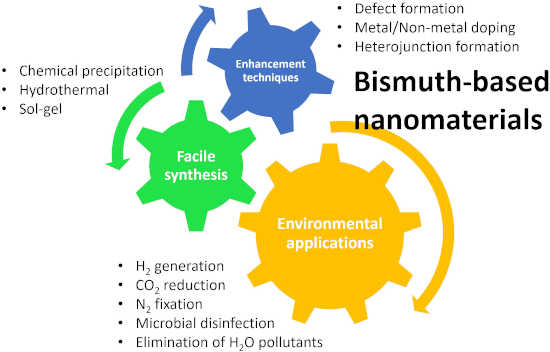
- carriers, and SPRs enhanced the ability to absorb visible light. The photocatalytic activity of Bi(M) was further enhanced by the exposure of (010) facets (Figure 4a). Bi5+ reduced the bandgap of BiOBr, which led to an increase in the density of carriers. Examining electron transfer channels and
- identifying the most active species led to a credible mechanism for RhB degradation (Figure 4b,c). It has been shown that the carrier combination centers may easily get doped at a deep level, considerably lowering photocatalytic activity. As a result, optimizing the electrical configuration by using suitable




Growing up in a rough world: scaling of frictional adhesion and morphology of the Tokay gecko (Gekko gecko)
Beilstein J. Nanotechnol. 2022, 13, 1292–1302, doi:10.3762/bjnano.13.107
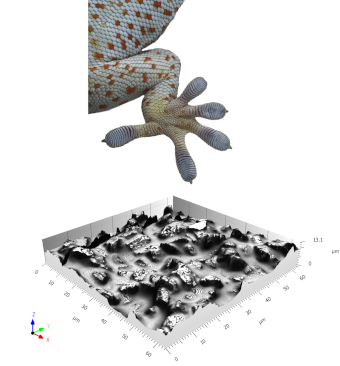
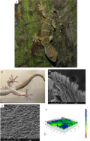
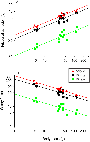
- sandpaper surfaces, but this led to a decrease in safety factor (see below) since force is related to toepad area, and toepad increases at a slower rate compared to body mass. Ecological consequences of reduced safety factor Safety factor (SF), as measured experimentally, decreases with body size in Tokay


Roll-to-roll fabrication of superhydrophobic pads covered with nanofur for the efficient clean-up of oil spills
Beilstein J. Nanotechnol. 2022, 13, 1228–1239, doi:10.3762/bjnano.13.102
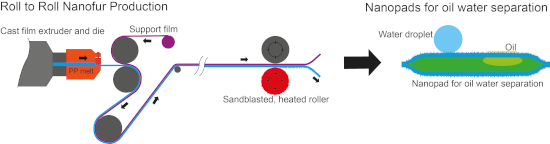
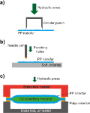
- . To a certain extent this can be beneficial because, in general, hairs with high aspect ratio led to high contact angles. However, if the hairs become too long and thin, they might bend under the weight of the water droplets. Furthermore, hair apexes might penetrate water drops. These two effects




Application of nanoarchitectonics in moist-electric generation
Beilstein J. Nanotechnol. 2022, 13, 1185–1200, doi:10.3762/bjnano.13.99
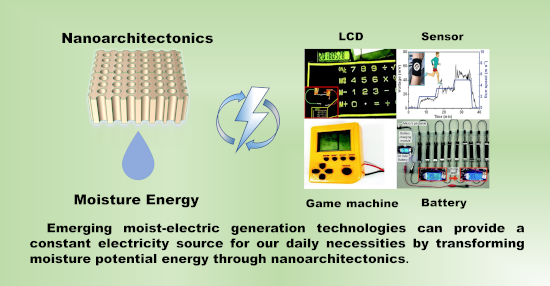
- are connected in parallel to produce a transient output with a voltage of 160 V and a current of 10 μA. When it is directly used to power LED lights, the power generation device group can make 10 LEDs flash for a moment. Increasing the fluctuation frequency can make the LEDs flash continuously. The
- . Copyright © 2021 WILEY-VCH GmbH. This content is not subject to CC BY 4.0. (a) MEGs power directly a blue LED. (b) MEGs charge a battery. Figure 10a,b were reproduced from [55] (“Towards Watt-scale hydroelectric energy harvesting by Ti3C2Tx-based transpiration-driven electrokinetic power generators“, © 2022
- humidification and dehumidification processes. (n) The equivalent circuit diagram of the PEDOT:PSS/PVDF double-layer generator charging a capacitor to power a LED. Figure 10k–n were reprinted from [92]. This article was published in Sensors and Actuators B: Chemical, vol. 255, by G. Wang; H. Xia; X.-C. Sun; C


Microneedle-based ocular drug delivery systems – recent advances and challenges
Beilstein J. Nanotechnol. 2022, 13, 1167–1184, doi:10.3762/bjnano.13.98
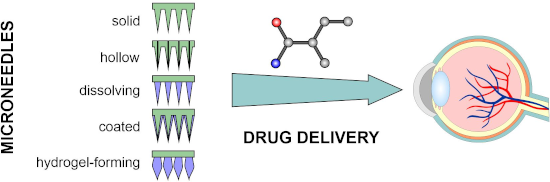
- significant trend and led to introduction of microneedles [92][93][94][95][96][97][98]. Taking into account the rapid progress in production technologies, it is already possible to obtain needles with a length of less than 1 mm, however, it can be expected that nanometer-sized needles will soon appear in use


Green synthesis of zinc oxide nanoparticles toward highly efficient photocatalysis and antibacterial application
Beilstein J. Nanotechnol. 2022, 13, 1108–1119, doi:10.3762/bjnano.13.94
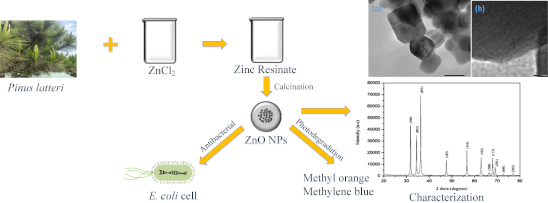
- in the dark for 30 min to equilibrate the adsorption. Subsequently, the suspensions were illuminated by a 30 W LED or an 18 W high-pressure mercury lamp. The light source was fixed at a distance of 20 cm from the surface of the reactor. After fixed illumination times, 5 mL was withdrawn and




Recent advances in green carbon dots (2015–2022): synthesis, metal ion sensing, and biological applications
Beilstein J. Nanotechnol. 2022, 13, 1068–1107, doi:10.3762/bjnano.13.93
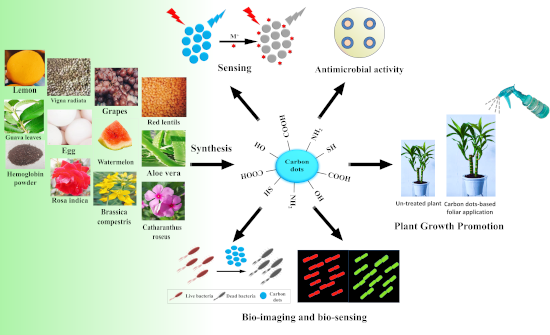
- lemon juice, fresh lemon juice had a higher PL intensity (Figure 2). Because in the case of the ripe lemon juice, a significant reduction in the quality of the components occurred, which might have led to reduced PL emission. It was also found that longer hydrothermal times could lead to more




Spindle-like MIL101(Fe) decorated with Bi2O3 nanoparticles for enhanced degradation of chlortetracycline under visible-light irradiation
Beilstein J. Nanotechnol. 2022, 13, 1038–1050, doi:10.3762/bjnano.13.91
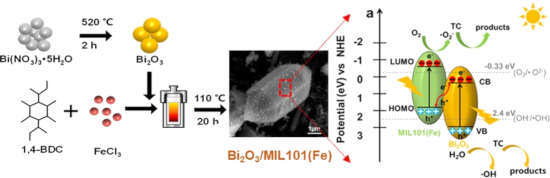
- an octahedron shape, and its size increases compared with that of pristine MIL101(Fe). In previous reports, graphene quantum dots changed the balance of organic ligands, which led to the change of MIL101(Fe) size [38]. In addition, Liao et al. reported that morphology or size of MOFs are dependent on


Interaction between honeybee mandibles and propolis
Beilstein J. Nanotechnol. 2022, 13, 958–974, doi:10.3762/bjnano.13.84
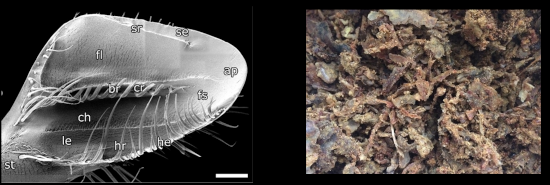
- development process that led to the anatomical investigation of honeybee mandibles. The hypothesis is that animal species that regularly have close contact with resinous plants or even actively harvest resins may have developed counter-stickiness strategies. This is because animals that permanently stick to a


Comparing the performance of single and multifrequency Kelvin probe force microscopy techniques in air and water
Beilstein J. Nanotechnol. 2022, 13, 922–943, doi:10.3762/bjnano.13.82
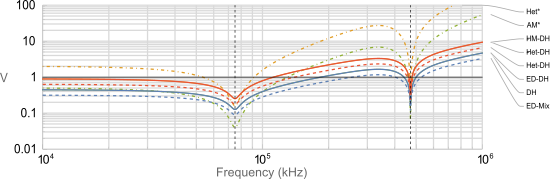
- cantilever) at a given frequency to the noise at that frequency. Furthermore, we use the conventional definition of whereby SNR = 1 [2][53][56][57][58][59]. The desire to take advantage of the SNR enhancement on eigenmodes of the cantilever have led to the adoption of a number of imaging strategies [10
Bioselectivity of silk protein-based materials and their bio-inspired applications
Beilstein J. Nanotechnol. 2022, 13, 902–921, doi:10.3762/bjnano.13.81
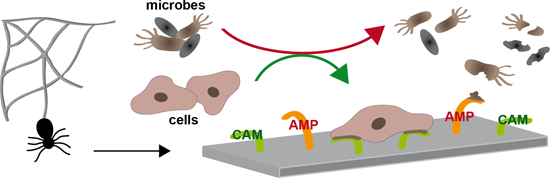
- of bio-inspired selective surface modifications The increasing knowledge on natural receptor–ligand binding mechanisms led to various approaches in the last years to increase both cellular adhesion on surfaces of biomaterials and biosensors, as well as for therapeutic drug carrier systems against
- [97], and peptide isomers known as peptoids, (oligo N-substituted glycines) [98]. In addition, the transfer of the general molecular structure of AMPs/HDPs has led to peptide-mimicking polymers and surface-engineered polymeric-brush-tethered AMPs. These approaches are promising for establishing
- flat films (Figure 3A) [150]. In another study, eADF4(C16) was modified with biomineralization and collagen-binding peptides, yielding an increased osteoblast attachment on these functionalized variants [149]. Genetic modification of 4RepCT led to recombinant spider silk proteins containing linear RGD


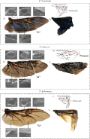
Micro-structures, nanomechanical properties and flight performance of three beetles with different folding ratios
Beilstein J. Nanotechnol. 2022, 13, 845–856, doi:10.3762/bjnano.13.75
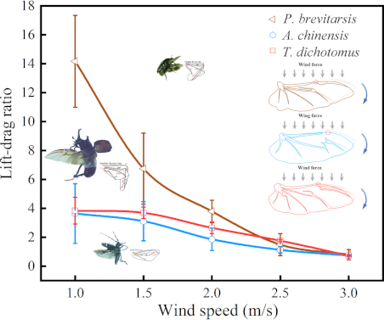
- length), while the wing drag increased (due to increased air viscosity) [44]. In addition, P. brevitarsis with a higher folding ratio was significantly affected by wind. Its peak lift force with increasing wind speeds appeared earlier than that of the other two beetles. This led to a larger decline of
- for the high lift-to-drag ratio of P. brevitarsis at wind speeds lower than 2.0 m/s. The largest reduction of Sw and Sb led to the largest reduction in total drag compared to the other two beetles. A multifactor analysis of variance was performed regarding the influence of folding ratio and wind speed




Recent advances in nanoarchitectures of monocrystalline coordination polymers through confined assembly
Beilstein J. Nanotechnol. 2022, 13, 763–777, doi:10.3762/bjnano.13.67
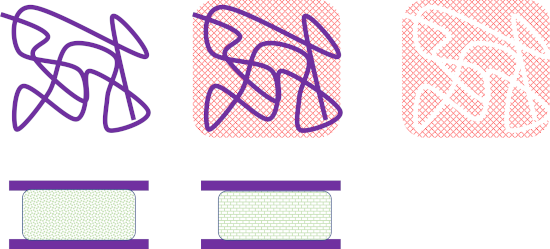
- lattices in the connected vessels in the networks. The front of the filled lattices could move along the connected vessels, occupying several branches or even swallowing the networks. These facts eventually led to three kinds of nanoarchitectures of coordination polymers: networks@crystal, ‘networks