


Search results
Search for "aggregate" in Full Text gives 194 result(s) in Beilstein Journal of Nanotechnology.
Green preparation and spectroscopic characterization of plasmonic silver nanoparticles using fruits as reducing agents
Beilstein J. Nanotechnol. 2015, 6, 293–299, doi:10.3762/bjnano.6.27
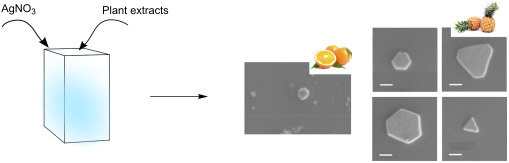
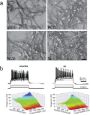
- oranges and pineapples, scale bar is 100 nm. a) Extinction spectra of solutions of green silver nanoparticles made from orange extract before and after the addition of NaCl, final NaCl concentration was 0.2 M. The inset shows an aggregate formed by green nanoparticles. b) SERS spectrum of pMBA collected


Release behaviour and toxicity evaluation of levodopa from carboxylated single-walled carbon nanotubes
Beilstein J. Nanotechnol. 2015, 6, 243–253, doi:10.3762/bjnano.6.23
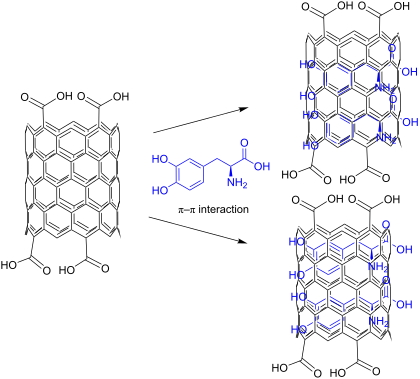
- , and at the same time, further enhance their degree of biocompatibility [7]. This is because non-functionalized CNTs tend to aggregate into bundles due to van der Waals interactions and hence, they might induce apoptosis (cell death) after administration into the human body. Parkinson’s disease (PD) or




Mechanical properties of MDCK II cells exposed to gold nanorods
Beilstein J. Nanotechnol. 2015, 6, 223–231, doi:10.3762/bjnano.6.21
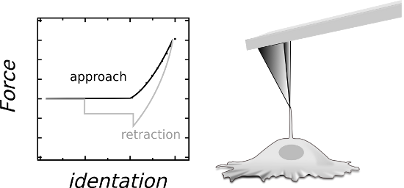
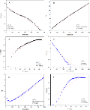
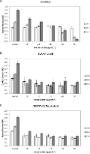
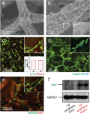
- , blue, *) and ZO-1 (cell borders, green) staining. Arrows indicate the particles (SP: single particle; Ag: aggregate; Cl: cluster, N: nucleus). We refer to clusters as very large aggregates of nanorods. Scale bar: 20 μm. Mechanical analysis of confluent MDCK II cells. Averaged force indentation curves


Materials and characterization techniques for high-temperature polymer electrolyte membrane fuel cells
Beilstein J. Nanotechnol. 2015, 6, 68–83, doi:10.3762/bjnano.6.8
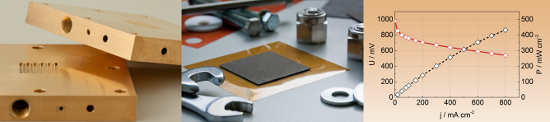
- polymer chains aggregate and create voids and channels with walls covered by sulfonic acid functional groups. In the presence of water, protons (H+) detach from the sulfonic acid groups and combine with water molecules to form hydronium complexes (H3O+). To function properly, Nafion needs to be 100




Interaction of dermatologically relevant nanoparticles with skin cells and skin
Beilstein J. Nanotechnol. 2014, 5, 2363–2373, doi:10.3762/bjnano.5.245
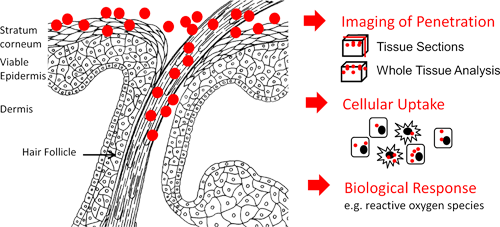
- heavily aggregated but still taken up into cells in large numbers. However, N-(6-aminohexyl)-aminopropyltrimethoxysilane (AHAPS)-functionalized particles, which had also a highly positive zeta-potential due to the amino groups but did not aggregate in cell culture media were also found in large numbers in


Liquid-phase exfoliated graphene: functionalization, characterization, and applications
Beilstein J. Nanotechnol. 2014, 5, 2328–2338, doi:10.3762/bjnano.5.242
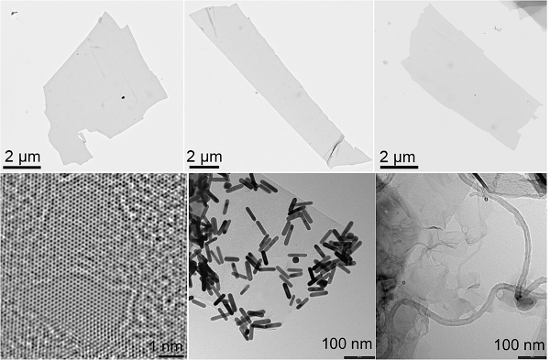
- to pure DMF. In this process, carbon nanofibers (CNFs) are formed revealing the occurrence of chemical reactions. During the ultrasonication process, graphene sheets were cut close to the edges, producing small fragments which later aggregate into CNFs. To verify the mechanism of CNF formation, gold




Nanobioarchitectures based on chlorophyll photopigment, artificial lipid bilayers and carbon nanotubes
Beilstein J. Nanotechnol. 2014, 5, 2316–2325, doi:10.3762/bjnano.5.240
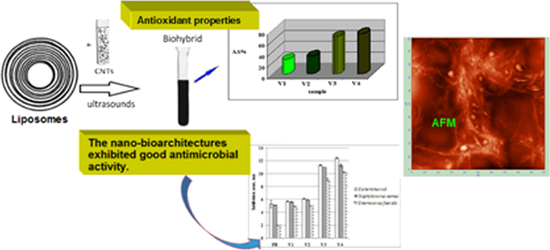
- biomedical field is complicated as they are completely insoluble in all solvents and are present as bundles. Thus, they have a tendency to aggregate due to van der Waals forces, π–π stacking and hydrophobic interactions among individual CNTs, making them difficult for characterization, handling, and


Electrostatic interplay: The interaction triangle of polyamines, silicic acid, and phosphate studied through turbidity measurements, silicomolybdic acid test, and 29Si NMR spectroscopy
Beilstein J. Nanotechnol. 2014, 5, 2026–2035, doi:10.3762/bjnano.5.211
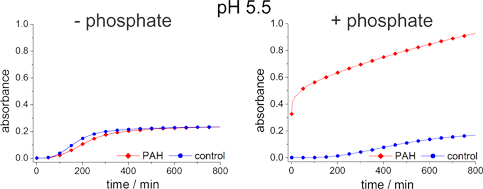
- compensated by attractive forces with the negatively charged silica oligomers/nanoparticles. Consequently, the aggregation process would be suppressed below a certain pH, as is indeed observed for pH 5.5. If the lack of negative charges is indeed the problem, the capability of the system to self-aggregate
- the sample at pH 5.5 is demonstrated in Figure 4. As predicted, the phosphate-containing solution exhibits a rapidly increasing, strong absorbance which indicates aggregate formation. In the case of the PAH-free control sample, the negatively charged phosphate has the opposite effect: The aggregation
- presence allylamine and allylamineQ as well as for the pure phosphate-containing sodium metasilicate (control). In contrast to the behavior observed for PAH, phosphate does not enhance the aggregate formation in these solutions. The influence of phosphate is even slightly retarding the aggregation. This


Carbon nano-onions (multi-layer fullerenes): chemistry and applications
Beilstein J. Nanotechnol. 2014, 5, 1980–1998, doi:10.3762/bjnano.5.207
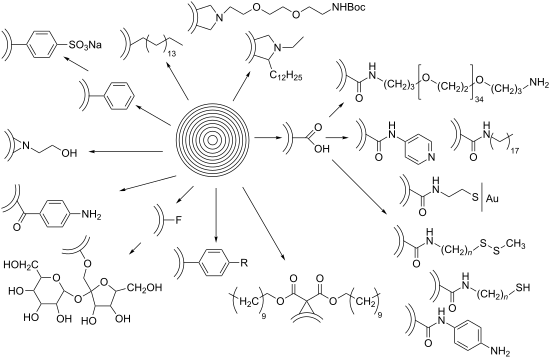
- . Analogous to carbon nanotubes, CNOs display poor solubility in both aqueous and organic solvents. This is due to aggregation, promoted by strong intermolecular interactions such as van-der-Waals forces. To overcome this tendency to aggregate, functionalization of the surface of the carbon materials is the


The impact of the confinement of reactants on the metal distribution in bimetallic nanoparticles synthesized in reverse micelles
Beilstein J. Nanotechnol. 2014, 5, 1966–1979, doi:10.3762/bjnano.5.206
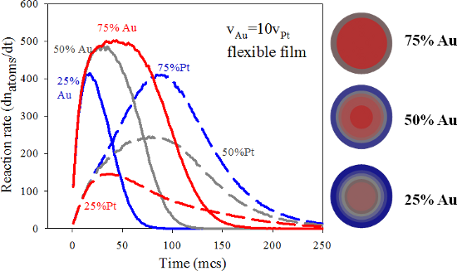
- atoms, is the dimer stability [38]. This is because free species traverse the channel one by one. Thus the channel size would not be important in this case. On the contrary, the channel size is the most important determining factor if the exchanged species is a growing particle (an aggregate of metal
- aggregate of atoms must be exchanged as a whole. This type of material exchange is governed by the film flexibility parameter, f (see below). The total Gibbs energy of an atomic arrangement determines the alloying ability of a bimetallic nanoparticle A-B. It depends on composition because of the different


Carbon-based smart nanomaterials in biomedicine and neuroengineering
Beilstein J. Nanotechnol. 2014, 5, 1849–1863, doi:10.3762/bjnano.5.196
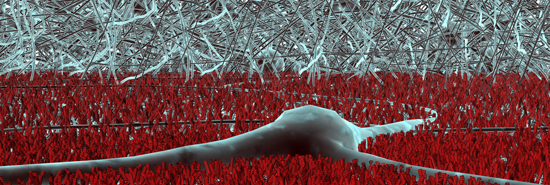
- ], interpreted as a likely consequence of their hydrophobic surface and as a result, their tendency to aggregate. However, these adverse effects appear to be reduced for functionalised CNTs [49][50]. Therefore, the cyto- and genotoxicity of CNTs appear to be sample-specific, and require the evaluation of


The surface properties of nanoparticles determine the agglomeration state and the size of the particles under physiological conditions
Beilstein J. Nanotechnol. 2014, 5, 1774–1786, doi:10.3762/bjnano.5.188
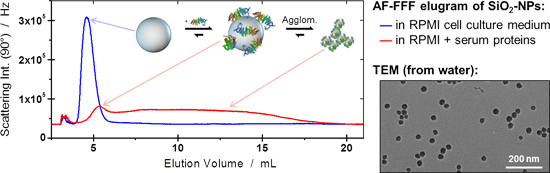
- DLS measurement of the mixture of components, discrete correlation functions can only be obtained from measurements of the isolated substances. DLS data evaluation of the mixture of substances is then used to reveal the relative amplitudes of the single components as well as the size of the aggregate
- amplitude of 0.08 plus one additional component with an amplitude of 0.91, which can be assigned to agglomerates. The relaxation time of the aggregate component corresponds to a hydrodynamic radius of 91 nm. As shown, the multicomponent analysis yields not only a size that can be assigned specifically to
- the aggregate fraction (in contrast to standard DLS data evaluation, which only yields a mean value), but it also allows a closer look at the contributions of the protein, particle and aggregate components to the scattering intensity. For the sample discussed above, this reveals that more than 90% of


Non-covalent and reversible functionalization of carbon nanotubes
Beilstein J. Nanotechnol. 2014, 5, 1675–1690, doi:10.3762/bjnano.5.178
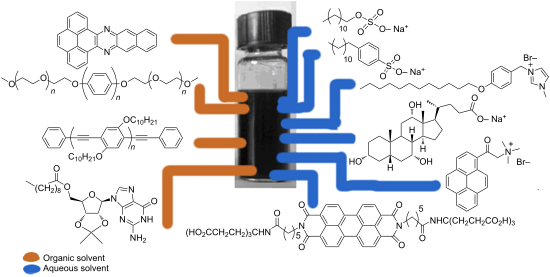
- strongly interact with each other through van der Waals forces reaching ~500 eV per μm of CNT’s length [18] and aggregate into bundles and ropes. In order to counteract these forces and favor CNTs manipulability and solubility mainly two strategies have been adopted: i) covalent functionalization through
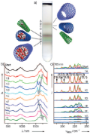
- to self-assemble into ribbon-like supramolecular structures that wrap, although not specifically, around the nanotube. It is interesting to note that the self-aggregation properties of the dispersant are crucial as the tendency of super-aggregate into bigger fibers can favor their desorption from CNT
- and a 2-nitrobenzyl ester derivative has been used to control the dispersion behavior of MWCNTs. After 30 minutes UV light irradiation CNT aggregate due to photocleavage of an hydrophilic segment from the hybrid [100]. Redox responsive systems. Oxidation or reduction of the dispersant can as well be



On the structure of grain/interphase boundaries and interfaces
Beilstein J. Nanotechnol. 2014, 5, 1603–1615, doi:10.3762/bjnano.5.172
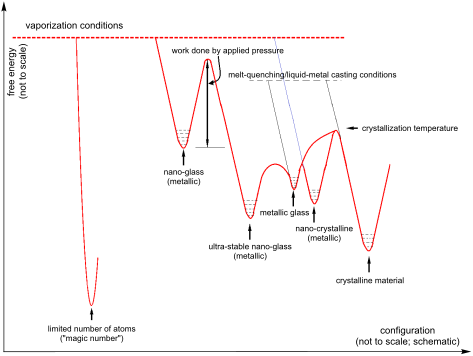
- entropy, EN the energy component that changes with the number of atoms (N) present in the ensemble mainly because of topological reasons and Efv is the energy associated with the free volume (fv) present in the aggregate. (In the traditional form of Equation 1, the energy contributions from N and fv are
- aggregate necessary to retain this enhanced stability. (5) Metallic glasses or bulk metallic glasses with basic units similar to those present in the nano-glass described in (3) (the difference is only in the free energy of the system) may be obtained directly by melt-quenching. (6) The melt-quenched glass


Ionic liquid-assisted formation of cellulose/calcium phosphate hybrid materials
Beilstein J. Nanotechnol. 2014, 5, 1553–1568, doi:10.3762/bjnano.5.167
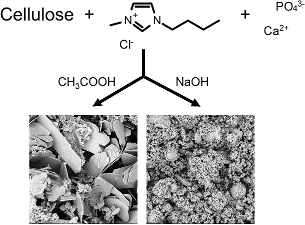
- particles with sizes of 100 to 200 nm aggregate into larger structures. The main difference between the samples isolated at 24 and 48 h is the increased aggregation of the smaller particles. That is, at longer reaction times, the aggregated features are larger and reach tens of microns at 48 h. Moreover


Current state of laser synthesis of metal and alloy nanoparticles as ligand-free reference materials for nano-toxicological assays
Beilstein J. Nanotechnol. 2014, 5, 1523–1541, doi:10.3762/bjnano.5.165
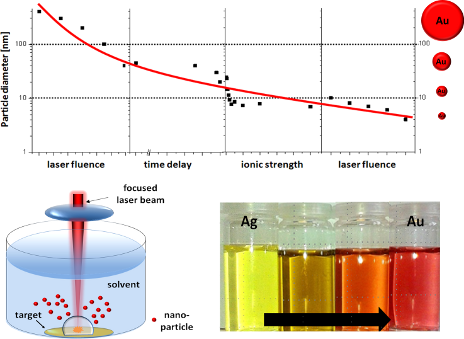
- -mechanism as stated by Pyatenko et al. [72]. When a nanoparticle aggregate in solution is irradiated by a nanosecond laser pulse exceeding a certain energy threshold, the structure melts and forms a liquid droplet. This melting process is highly localized in the vicinity of the particle due to high


Effects of palladium on the optical and hydrogen sensing characteristics of Pd-doped ZnO nanoparticles
Beilstein J. Nanotechnol. 2014, 5, 1261–1267, doi:10.3762/bjnano.5.140
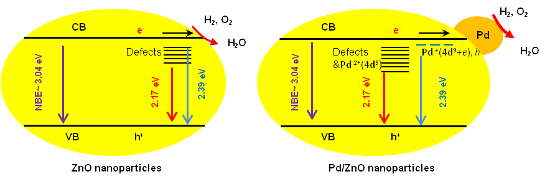
- of 16.2 and 16.5 nm from all the peaks, respectively. A more precise determination of the primary particle size is inevitably be accompanied by a significant error due to their aggregate nature and the formation of polycrystalline nanoparticles. Consequently, other methods were used to evaluate the


Methods for rapid frequency-domain characterization of leakage currents in silicon nanowire-based field-effect transistors
Beilstein J. Nanotechnol. 2014, 5, 964–972, doi:10.3762/bjnano.5.110
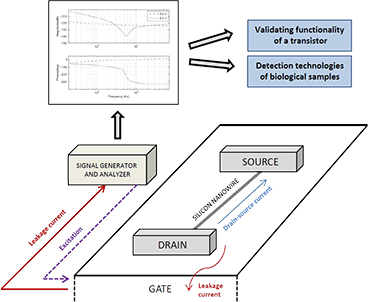
- card is 1 MHz (aggregate), and the maximum digital-to-analog converting frequency (maximum generation frequency of the excitation) is 2.8 MHz. The measured data is digitized by a 16-bit analog-to-digital (A/D) converter. The measurement card is controlled by a Matlab/Data Acquisition toolbox. Because


Nanodiamond-DGEA peptide conjugates for enhanced delivery of doxorubicin to prostate cancer
Beilstein J. Nanotechnol. 2014, 5, 937–945, doi:10.3762/bjnano.5.107
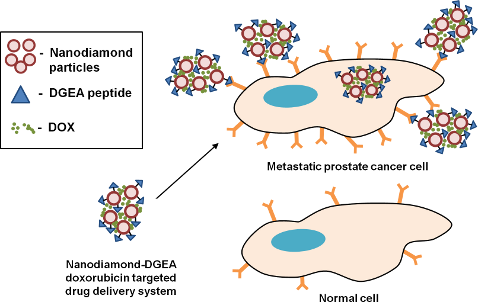
- but aggregate particle size should be less than 100 nm and zeta potential values greater than 30 mV in magnitude for good stability of particles in solution. The hydrodynamic size increased from 35 nm for pure NDs to 59 nm for the ND+DGEA conjugates to 89 nm for the ND-DGEA+DOX system (Figure 4). This


Pyrite nanoparticles as a Fenton-like reagent for in situ remediation of organic pollutants
Beilstein J. Nanotechnol. 2014, 5, 855–864, doi:10.3762/bjnano.5.97
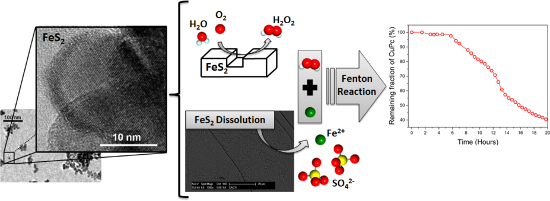
- . The nanoparticles tended to aggregate, forming polydisperse clusters of rounded particles ranging in size from 20 nm (individual nanoparticle) to 150 nm (largest cluster). At the initial stages of the process, the clusters were polycrystalline, as indicated by the SAED pattern (Figure 2b). However, as


In vitro toxicity and bioimaging studies of gold nanorods formulations coated with biofunctional thiol-PEG molecules and Pluronic block copolymers
Beilstein J. Nanotechnol. 2014, 5, 546–553, doi:10.3762/bjnano.5.64
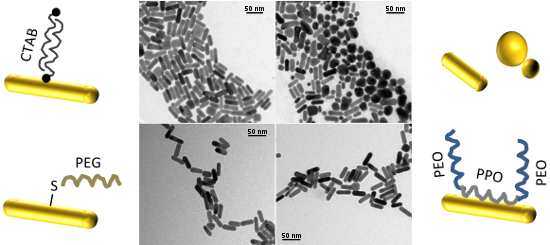
- and continues to exhibit toxicity to cells. On the other hand, repeated centrifugations results in structurally unstable AuNRs and causes them to aggregate and precipitate in solution. Also, CTAB-coated AuNRs are not suitable for in vitro and in vivo applications because they do not allow antibodies
- surface of AuNRs and CTAB-coated particles are known to be cytotoxic. We found that a major fraction of the CTAB molecules can be removed from the gold particle surface by multiple centrifugation steps. However, the washing steps affect the stability of the AuNRs and cause them to aggregate into


Mesoporous cerium oxide nanospheres for the visible-light driven photocatalytic degradation of dyes
Beilstein J. Nanotechnol. 2014, 5, 517–523, doi:10.3762/bjnano.5.60
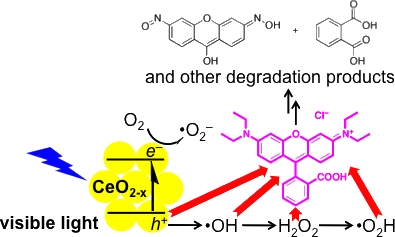
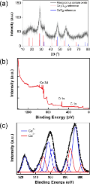
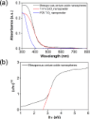
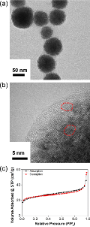
- material has fairly monodisperse nanospheres with diameters of 50–70 nm. Each nanosphere consists of an irregular mesoporous structure that is an aggregate of small nanocrystalline domains. The high-resolution TEM images confirm that the cerium oxide consists of crystalline domains, 4–5 nm in size (red

One pot synthesis of silver nanoparticles using a cyclodextrin containing polymer as reductant and stabilizer
Beilstein J. Nanotechnol. 2014, 5, 380–385, doi:10.3762/bjnano.5.44
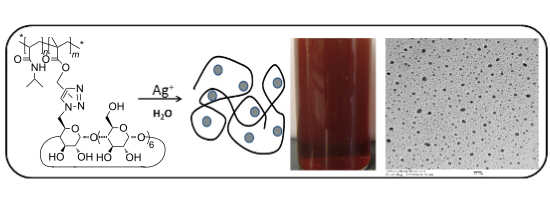
- altering the molar ratio of silver salt and polymer bound CD. Silver nanoparticles thus prepared are stable over weeks at room temperature and doesn’t appear to aggregate. Furthermore, we were able to show the thermoresponsive reversible changes of solution and optical properties, resulting in bathochromic


Morphological characterization of fullerene–androsterone conjugates
Beilstein J. Nanotechnol. 2014, 5, 374–379, doi:10.3762/bjnano.5.43
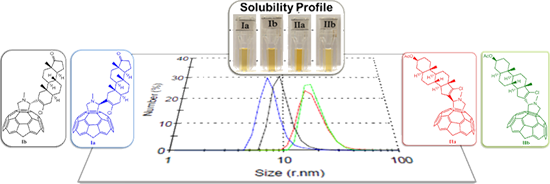
- release was observed for small particles, although these particles tended to aggregate. For this reason, a compromise between the size and the stability of dispersion is necessary in order to develop efficient systems [10]. On the other hand, androsterone [11] is an important and well-known metabolite of


Oriented attachment explains cobalt ferrite nanoparticle growth in bioinspired syntheses
Beilstein J. Nanotechnol. 2014, 5, 210–218, doi:10.3762/bjnano.5.23
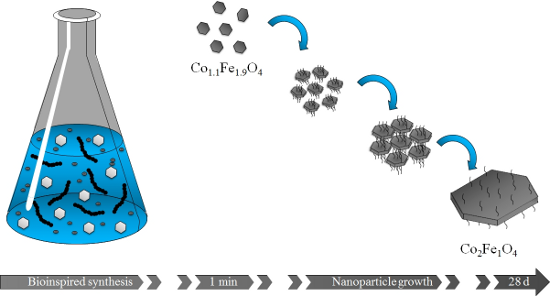
- interacts with the crystallites which then grow into primary building blocks. (c) The primary building blocks assemble and reorient along a common crystallographic axis. (d) The primary building blocks aggregate to form the secondary nanoparticle. Geometry used for the calculation of the inner surface





