


Search results
Search for "assembly" in Full Text gives 575 result(s) in Beilstein Journal of Nanotechnology. Showing first 200.
Growth of a self-assembled monolayer decoupled from the substrate: nucleation on-command using buffer layers
Beilstein J. Nanotechnol. 2020, 11, 1291–1302, doi:10.3762/bjnano.11.113
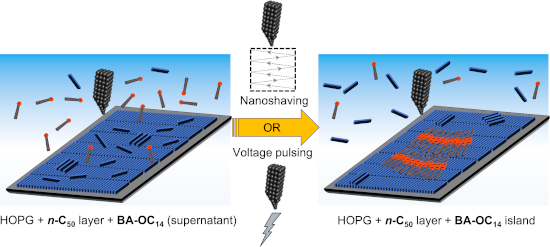
- solution–solid interface. One of the ways to influence network formation at this interface is to physically decouple the self-assembled monolayer from the underlying substrate thereby removing the influence of the substrate lattice, if any. Here we show a systematic exploration of self-assembly of a
- layer. We discovered that the self-assembly on top of the buffer layer allows better control over the nanoscale manipulation of the self-assembled networks. Using the influence of the STM tip, we could initiate the nucleation of small isolated domains of the benzoic acid on-command in a reproducible
- fashion. Such controlled nucleation experiments hold promise for studying fundamental processes inherent to the assembly process on surfaces. Keywords: benzoic acid; nucleation; self-assembly; solution–solid interface; substrate effect; Introduction The ability of some molecules to crystalize in more


An atomic force microscope integrated with a helium ion microscope for correlative nanoscale characterization
Beilstein J. Nanotechnol. 2020, 11, 1272–1279, doi:10.3762/bjnano.11.111
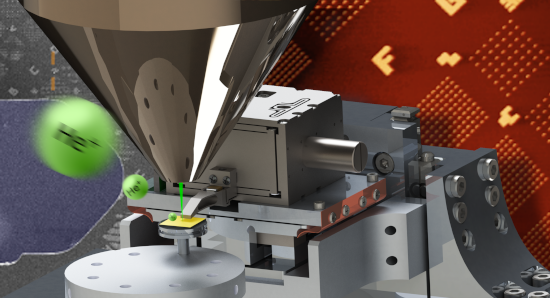
- seamlessly between the pole piece and the sample. The assembly is made from grade-5 titanium (Ti-6Al-4V) and the three axes of motion are actuated by stack-piezo actuators, offering an achievable scan range of 30 × 30 × 12 µm. The reported AFM uses a self-sensing readout for measuring cantilever deflection
- assembly tilts together with the sample stage. The three orthogonal translational degrees of freedom of the sample are decoupled from the AFM coarse positioning stage, as shown in Figure 1a. The integration of the AFM into the HIM requires no alteration of the HIM microscope stage. The AFM assembly is
- the AFM. In our AFM design, we accounted for this already in the mechanical design (avoidance of trapped air pockets, no lubricants, UHV-compatible motors) as well as in the assembly by using, wherever possible, Kapton flex-PCBs or scarcely outgassing Teflon-coated wires. It is also critical that the


Role of redox-active axial ligands of metal porphyrins adsorbed at solid–liquid interfaces in a liquid-STM setup
Beilstein J. Nanotechnol. 2020, 11, 1264–1271, doi:10.3762/bjnano.11.110
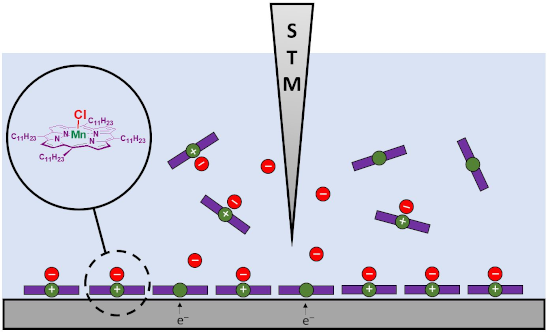
- concentration), the presence of ions in the solvent, and a possible assembly of solutes at the interface. Furthermore, the reaction rates are determined by the chemical and electronic state of the sample surface, ion concentrations in the solution, and the availability of possible reaction intermediates. Most


Hybridization vs decoupling: influence of an h-BN interlayer on the physical properties of a lander-type molecule on Ni(111)
Beilstein J. Nanotechnol. 2020, 11, 1168–1177, doi:10.3762/bjnano.11.101
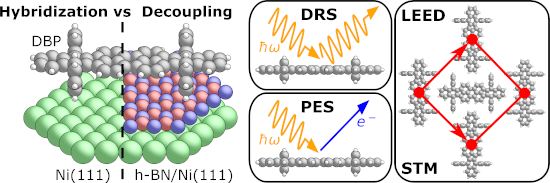
- DBP with Ni(111), presumably via the localized d bands, causes a drastic decrease of the mobility of the molecules hindering the highly ordered assembly of the molecules due to a hit-and-stick adsorption. Such a behavior was also observed for one monolayer of pentacene on Ni(111) [30]. In contrast
- mobility. This additional diffusion barrier thus hampers the molecular self-assembly and can be overcome by a higher substrate temperature during the film growth, which agrees with our structural findings above. Conclusion To summarize, we investigated the influence of an h-BN interlayer on the optical


Scanning tunneling microscopy and spectroscopy of rubrene on clean and graphene-covered metal surfaces
Beilstein J. Nanotechnol. 2020, 11, 1157–1167, doi:10.3762/bjnano.11.100
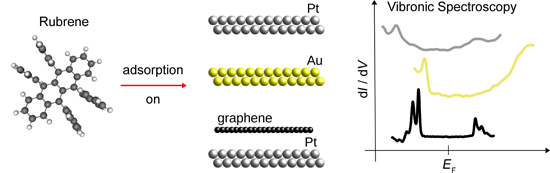
- indication of a vibronic fine structure. The molecular superstructure on graphene is similar to the assembly on Au(111), albeit with a lower molecule surface density, and dI/dV data exhibit vibronic progression in both frontier orbitals, which reflects the effective separation of C42H28 from the metal
- of the molecular backbone of C42H28 is not limited to low-temperature depositions. It was likewise observed for room-temperature deposition on low-index Cu surfaces [22][36] and Ag(100) [24]. The STM image in Figure 4c shows the influence of the Au(111) reconstruction on the C42H28 assembly
- . A template effect of graphene or a moiré lattice on the molecular assembly was not identified. Merely the orientation of the tetracene backbone perpendicular to a graphene crystallographic direction was observed. A finite residual coupling of the molecule to graphene-covered Pt(111) is likewise



Photothermally active nanoparticles as a promising tool for eliminating bacteria and biofilms
Beilstein J. Nanotechnol. 2020, 11, 1134–1146, doi:10.3762/bjnano.11.98
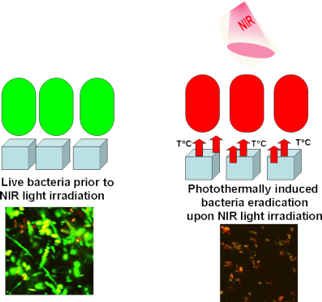
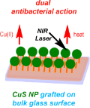
- achieve the desired temperatures, thus restricting the practical implementation of the bacteria photothermal eradication [33]. The gold nanoparticle self-assembly on glass surfaces is a generally time-consuming process with a relatively poor reproducibility. These restrictions may also limit the full


Straightforward synthesis of gold nanoparticles by adding water to an engineered small dendrimer
Beilstein J. Nanotechnol. 2020, 11, 1110–1118, doi:10.3762/bjnano.11.95
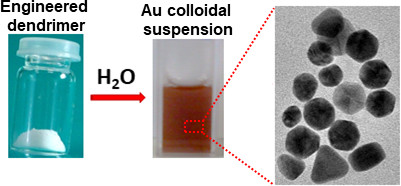
- when the powdered form of this dendrimer was dissolved in water, as shown by transmission electron microscopy (TEM) and energy dispersive X-ray spectroscopy (EDX) analyses. The dendrimers acted simultaneously as mild reducers and as nanoreactors, favoring the self-assembly of gold atoms and promoting
- a theoretical work was published in 2015 [65]. In this work, it was demonstrated that the first step required for the nonradical formation of an Au–Au bond was the presence of hydrogen followed by the insertion of a third gold atom to form a triangle by self-assembly. The release of only a small
- nanoreactor for the self-assembly of gold atoms, stabilizing the gold nanoparticles and inducing their water solubility forming colloidal suspensions. It must be emphasized that currently there is no other example of a comparable process in the literature. Possible extensions of this work should consider


Plant growth regulation by seed coating with films of alginate and auxin-intercalated layered double hydroxides
Beilstein J. Nanotechnol. 2020, 11, 1082–1091, doi:10.3762/bjnano.11.93
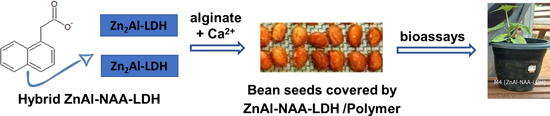
- of the experiment after 15 days (Figure 5). For the M4 film, the maximum germination percentage was obtained 14 days after the bioassay assembly. For the treatments with the seeds covered with the films M1, M2 and M3, the maximum germination percentage was reached after 12, 11, and 9 days of the



Monolayers of MoS2 on Ag(111) as decoupling layers for organic molecules: resolution of electronic and vibronic states of TCNQ
Beilstein J. Nanotechnol. 2020, 11, 1062–1071, doi:10.3762/bjnano.11.91
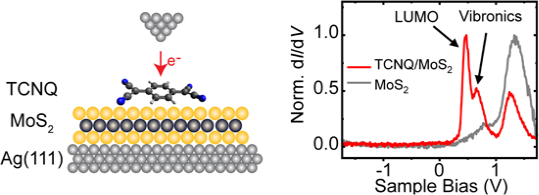
- dipole–dipole interactions between the cyano endgroups and the quinone center of neighboring molecules. This assembly is very similar to typical self-assembled TCNQ islands on weakly interacting substrates [5][23][47][48][49]. When measured at a lower bias voltage (e.g., at V = 0.2 V in Figure 4a), the


A 3D-polyphenylalanine network inside porous alumina: Synthesis and characterization of an inorganic–organic composite membrane
Beilstein J. Nanotechnol. 2020, 11, 938–951, doi:10.3762/bjnano.11.78
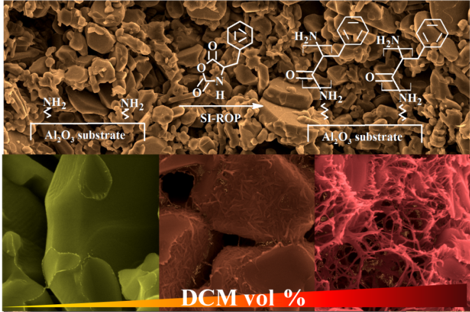
- have attracted significant attention in the last decades. Due their secondary structures (α-helix or β-sheet), polypeptides form macromolecular block segments, which can undergo a self-assembly process under certain circumstances [24][25]. The intramolecular interactions between these macromolecules as


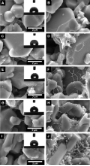


Three-dimensional solvation structure of ethanol on carbonate minerals
Beilstein J. Nanotechnol. 2020, 11, 891–898, doi:10.3762/bjnano.11.74
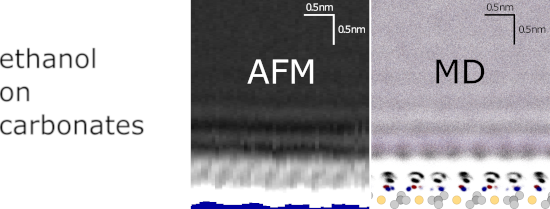
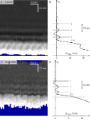
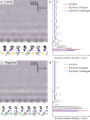
- resolution. However, the majority of 3D AFM studies have been focused on the arrangement of water at carbonate surfaces. Here, we present an analysis of the assembly of ethanol – an organic molecule with a single hydroxy group – at the calcite and magnesite (10.4) surfaces by using high-resolution 3D AFM and

Simulations of the 2D self-assembly of tripod-shaped building blocks
Beilstein J. Nanotechnol. 2020, 11, 884–890, doi:10.3762/bjnano.11.73
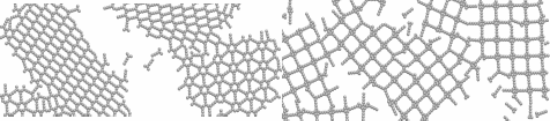
- diffraction pattern and average association number. Keywords: 2D materials; coarse-grained model; molecular simulations; self-assembly; structural characterization; tripod building blocks; Introduction On-surface synthesis is a newly developing field in chemistry that aims at making use of solid surfaces as
- this research, several factors have been established that can help to control the self-assembly process, such as precursor design [4][5], substrate nature and symmetry [6][7], type of solvent and its concentration, and thermodynamic conditions. The knowledge of the influence of these variables is
- ], tripod [15][16], tetrapod [17][18][19][20][21], and hexapod [22] architecture. Also, a lot of effort has been put into the investigation of the mixtures [23][24][25] and the guest-induced self-assembly [26] of aforementioned particles. An important aspect of the on-surface synthesis is that a lot of


Integrated photonics multi-waveguide devices for optical trapping and Raman spectroscopy: design, fabrication and performance demonstration
Beilstein J. Nanotechnol. 2020, 11, 829–842, doi:10.3762/bjnano.11.68
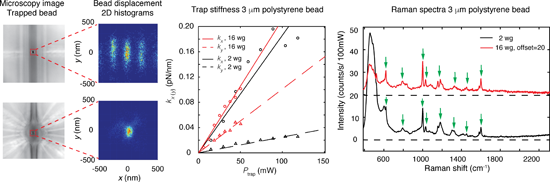
- particle (we use polystyrene beads; see below) can be grabbed from the fluidic volume, transported and then be handed over to a multi-waveguide trap. This transport is actually carried out by translating the main stage, on which the assembly with the sample holder and the small stages are mounted, while


Hexagonal boron nitride: a review of the emerging material platform for single-photon sources and the spin–photon interface
Beilstein J. Nanotechnol. 2020, 11, 740–769, doi:10.3762/bjnano.11.61




Comparison of fresh and aged lithium iron phosphate cathodes using a tailored electrochemical strain microscopy technique
Beilstein J. Nanotechnol. 2020, 11, 583–596, doi:10.3762/bjnano.11.46
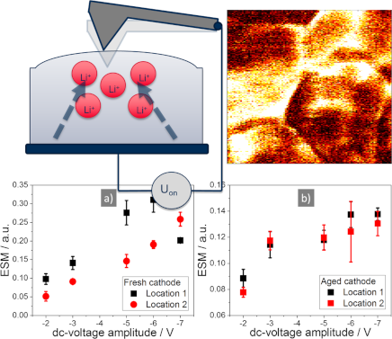
- capacity loss from first charge to first discharge is attributed to surface layer generation (anode: solid electrolyte interface, SEI; cathode: solid permeable interface, SPI) on both electrodes, since they were rinsed before the full-cell assembly. After the first cycle, the capacity stays constant (not



Luminescent gold nanoclusters for bioimaging applications
Beilstein J. Nanotechnol. 2020, 11, 533–546, doi:10.3762/bjnano.11.42
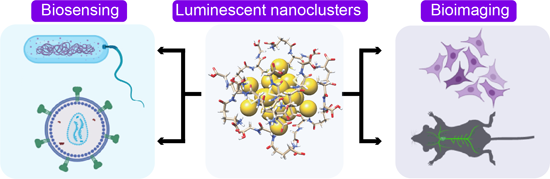
- ; biosensing; gold nanoclusters; immunoassay; luminescence; self-assembly; theranostics; Introduction Imaging methods play a central role in understanding the structural and functional biological processes of biomolecules, cells, tissues, organs, and even entire living organisms [1][2]. The importance of
- complexes and SCQD-based nanomaterials. To improve the quantum yield and PL, various approaches have been developed including ligand engineering, selective doping to create alloy clusters, aggregation-induced emission, selective etching and self-assembly [48][49][50][51][52][53][54][55][56][57][58]. Ligands
- that assists better binding. Zhu et al. reported a rigid host–guest assembly to improve the PL of AuNCs, their antibacterial activity and bioimaging [84]. In their work, 5-methyl-2-thiouracil (MTU)-capped AuNCs (Au-MTU) were prepared. The Au-MTU NCs were then treated with protamine (Prot), a cationic


Multilayer capsules made of weak polyelectrolytes: a review on the preparation, functionalization and applications in drug delivery
Beilstein J. Nanotechnol. 2020, 11, 508–532, doi:10.3762/bjnano.11.41
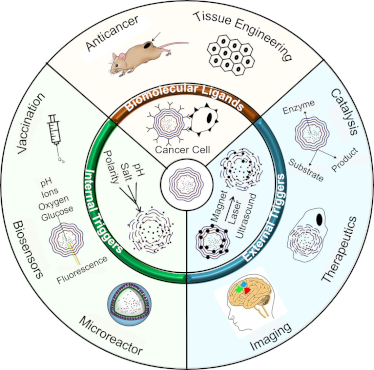
- core. The schematic diagram of layer-by-layer (LbL) deposition on colloidal templates, core dissolution and drug encapsulation into LbL-assembled capsules is shown in Figure 1. The method of fabricating core–shell particles and multilayered hollow capsules via LbL assembly was originally proposed and
- to the chemical nature of the polymers used and the assembly conditions [11]. Many studies have shown successful permeability changes for encapsulation and release via changes in pH or ionic strength for weak PE systems. The chemical nature of the polymers used along with the type of the core
- prominent when there are many charged groups present in the system. The use of different charged groups for LbL assembly can impart unique responsiveness to LbL systems as the residual charges in the multilayer films can play an important role in manipulating the polymer/polymer interactions, thus leading



Nanoarchitectonics: bottom-up creation of functional materials and systems
Beilstein J. Nanotechnol. 2020, 11, 450–452, doi:10.3762/bjnano.11.36

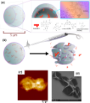
- synthesis; nanoarchitectonics; nanotechnology; self-assembly; supramolecular; Given the significant and time-critical problems of energy shortage, environmental protection, and biomedical issues, the creation of new functional materials and systems for efficient energy production and storage [1][2
- , the chiral structure was found to control the self-assembly of nitrocinnamic amide amphiphiles [25]. Works related to the formation of higher-dimensional materials included, for example, the self-assembly of crystalline cellulose oligomers that resulted in nanoribbon networks [26], silicon nanowires
- that were formed by metal-assisted chemical etching (MACE) [27], and the formation of high-tolerance crystalline hydrogels from cyclic dipeptides upon self-assembly [28]. In addition, a review on the use of DNA as the fundamental material building block for molecular and structural engineering [29

Nanoparticles based on the zwitterionic pillar[5]arene and Ag+: synthesis, self-assembly and cytotoxicity in the human lung cancer cell line A549
Beilstein J. Nanotechnol. 2020, 11, 421–431, doi:10.3762/bjnano.11.33
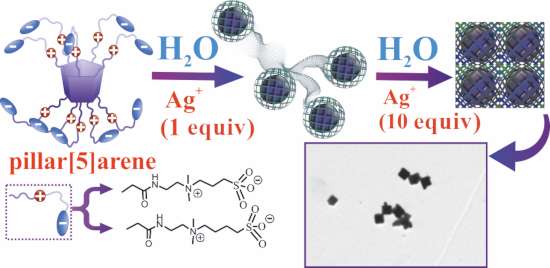
- and 2D biomedical coatings. Keywords: cytotoxicity; macrocyclic receptors; nanoparticles; pillar[5]arene; self-assembly; silver; Introduction The first use of silver (Ag) as a medicine dates back to Hippocrates, who used it as an antibacterial agent for the treatment of ulcers [1]. Over the past
- presence of a preorganized macrocyclic structure makes the process of controlled supramolecular self-assembly possible with certain coordination sites. In this paper, we report the first example of using nontoxic, water-soluble pillar[5]arene derivatives containing sulfobetaine fragments to produce
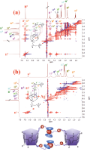
- nanoparticles with Ag+ ions using controlled supramolecular self-assembly. Results and Discussion Synthesis of decasubstituted pillar[5]arenes containing sulfobetaine fragments We previously developed a method [29] for introducing tertiary amino groups into the structure of pillar[5]arene. Diamines containing




Brome mosaic virus-like particles as siRNA nanocarriers for biomedical purposes
Beilstein J. Nanotechnol. 2020, 11, 372–382, doi:10.3762/bjnano.11.28
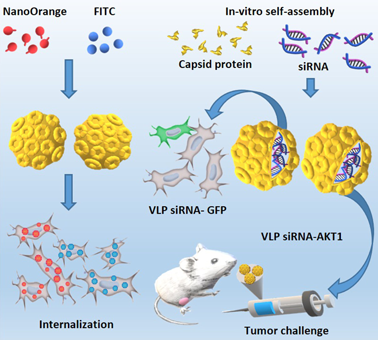
- ][19][20]. The capsids of these viruses result from the assembly of 180 identical proteins with T = 3 symmetry that forms the icosahedral shell with a diameter of 28 nm [21]. The N-terminal region of the capsid protein is highly basic and positively charged, which allows for the binding of the viral
- siRNA. VLPs nanovehicles containing siRNA were synthesized, taking advantage of the self-assembly of BMV capsid proteins. As a proof of concept, siRNA to silence the expression of green fluorescent protein (GFP) was encapsidated into BMV capsid proteins. In order to optimize the siRNA encapsidation
- ′-GACAAGGACGGGCACAUUAUU-3′. BMV VLPs with siRNA were synthetized as described previously [22] using a mass ratio of 1:6 (siRNA/capsid protein). The disassembled BMV capsid protein and siRNA were mixed and dialyzed overnight in an assembly buffer (50 mM NaCl, 10 mM KCl, 5 mM MgCl2, 1 mM DTT, 50 mM Tris-HCl, pH 7.2
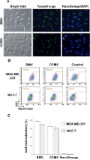


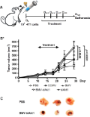
Correction: Biocatalytic oligomerization-induced self-assembly of crystalline cellulose oligomers into nanoribbon networks assisted by organic solvents
Beilstein J. Nanotechnol. 2020, 11, 370–371, doi:10.3762/bjnano.11.27
- ; oligomerization-induced self-assembly; organic solvent; The originally published Figure 4 contains wrong units on the y axes of both depicted CD spectra. The corrected Figure 4 is given below. Corrected Figure 4 of the original publication.

Understanding nanoparticle flow with a new in vitro experimental and computational approach using hydrogel channels
Beilstein J. Nanotechnol. 2020, 11, 296–309, doi:10.3762/bjnano.11.22
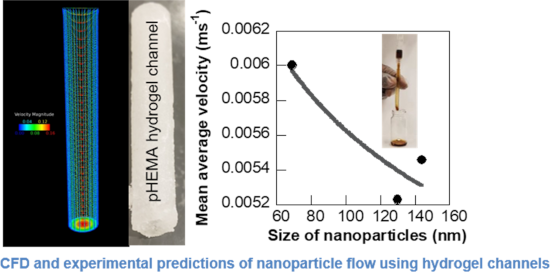
- hydrogel channels were formed via a facile experimental technique using a newly constructed syringe and plastic tube assembly (Figure 4). The liquid gel was allowed to solidify overnight within the syringe–tube assembly and slowly removed from the assembly after solidification. The resultant final product
- mL DI water. A plastic syringe and tube assembly was constructed to fabricate the cylindrical hydrogel flowpath. The liquid pHEMA hydrogel mixture was transferred to a 3 mL plastic syringe (Fisher). The thin plastic tube of diameter 4 mm was inserted through the open end of the syringe to form the
- internal perforation and path for the flow of NPs. The hydrogel was left to solidify for 12 h within the syringe and tube assembly. The soft three-dimensional hydrogel structure was then removed from the syringe to form the channels for subsequent flow studies with iron oxide NPs. Transport experiments The


Using gold nanoparticles to detect single-nucleotide polymorphisms: toward liquid biopsy
Beilstein J. Nanotechnol. 2020, 11, 263–284, doi:10.3762/bjnano.11.20
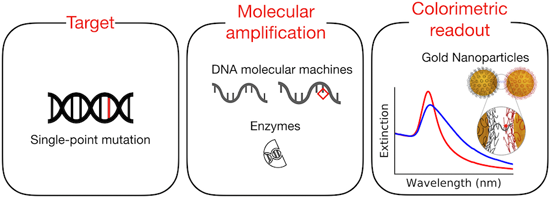
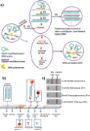
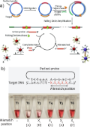
- formation of DNA circuits and include hybridization chain reaction (HCR), catalytic hairpin assembly (CHA) and entropy-driven catalysis [64]. These mechanisms have shown a great potential for developing biosensors of high sensitivity and high selectivity since the target DNA itself is used as a catalyst to
- cyclically amplify the process of DNA self-assembly. The strategies based on enzymatic tools, on the other hand, are characterized by an extraordinary potential for signal amplification. The main advantages of using enzymes involve: a) the capability of modifying oligonucleotides (e.g., polymerases
- ]. The assay allowed for an SNP discrimination at a detection limit of 1 nM in a complex physiological medium such as fetal bovine serum. Liang and co-workers [83] built on the previous results and developed a strategy to discriminate single-base mutations through the assembly of AuNPs driven by a DNA




Rational design of block copolymer self-assemblies in photodynamic therapy
Beilstein J. Nanotechnol. 2020, 11, 180–212, doi:10.3762/bjnano.11.15
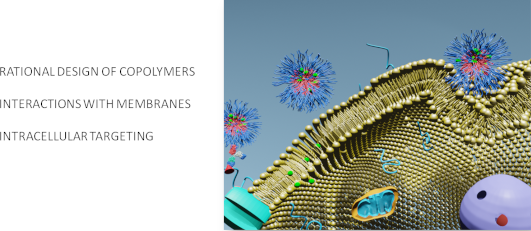
- the importance of intracellular targeting has been addressed. Keywords: intracellular targeting; micelles; photodynamic therapy (PDT); photochemistry; polymer; self-assembly; Review Introduction After Paul Ehrlich, in 1900, had the very first notion of a drug being delivered at will to a specific
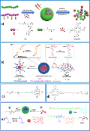
- micelles or vesicles. The driving forces of this assembly are a loss of entropy during the self-assembly and different interactions acting on the monomer units of the polymer. Whereas polymer/polymer interactions are favored for the hydrophobic block, interactions between the hydrophobic block and water
- influencing the self-assembly behavior and, consequently, the photosensitizer loading ability. Typical endogenous triggers for pH- and redox-responsive drug delivery are i) acidic tumor tissues (pH 6.0–7.0), endosomes (pH 5.0–6.0) and lysosomes (pH 4.0–5.0) microenvironments, ii) high intracellular




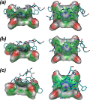


Internalization mechanisms of cell-penetrating peptides
Beilstein J. Nanotechnol. 2020, 11, 101–123, doi:10.3762/bjnano.11.10
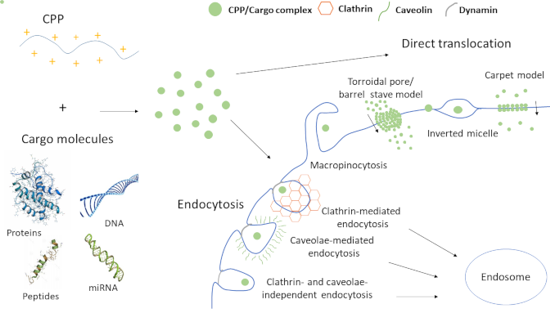
- strong binding of a ligand to a specific cell surface receptor, resulting in the assembly of clathrins in a polyhedral lattice on the cytosolic surface of the cell membrane. This process is followed by the invagination of the clathrin-coated membrane surface towards the cytoplasm and formation of a
- changes caused by the PI(4,5)P2 and cargo binding, as well the scaffold proteins, AP2 triggers clathrin assembly [80][81]. The second step in CME is called “cargo loading”. Basically, it involves the binding of clathrin-coat components to the cytosolic regions of the transmembrane cargo molecules. This





