


Search results
Search for "attachment" in Full Text gives 339 result(s) in Beilstein Journal of Nanotechnology. Showing first 200.
High-throughput synthesis of modified Fresnel zone plate arrays via ion beam lithography
Beilstein J. Nanotechnol. 2018, 9, 2049–2056, doi:10.3762/bjnano.9.194
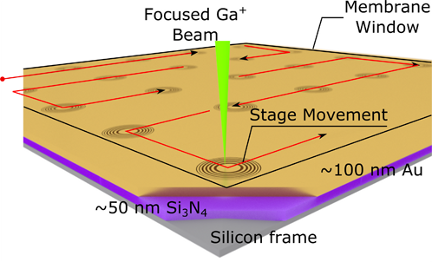
- (SEM), focused ion beam (FIB) dual-beam instrument, installed with a lithography attachment (Please see the Experimental section for details). Several exposure, milling or patterning strategies can be adopted in an IBL process. A few such processing procedures relevant to present work are illustrated


Metal-free catalysis based on nitrogen-doped carbon nanomaterials: a photoelectron spectroscopy point of view
Beilstein J. Nanotechnol. 2018, 9, 2015–2031, doi:10.3762/bjnano.9.191




SO2 gas adsorption on carbon nanomaterials: a comparative study
Beilstein J. Nanotechnol. 2018, 9, 1782–1792, doi:10.3762/bjnano.9.169

- -band are equally intense and is an indicator of the structural distortion induced by the attachment of a large number of functional groups [12][38]. The D- to G-band intensity ratios for VACNTs and MWNTs are 0.83 and 1.02, respectively. From our TEM investigations we could corroborate that the as


Preparation of micro/nanopatterned gelatins crosslinked with genipin for biocompatible dental implants
Beilstein J. Nanotechnol. 2018, 9, 1735–1754, doi:10.3762/bjnano.9.165
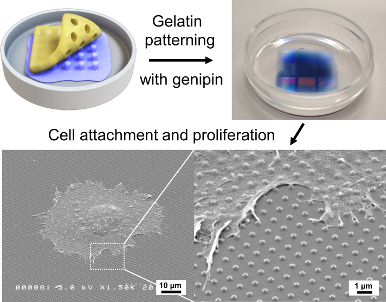
- the cells on groves were aligned along the direction of the grooves. In contrast, the cells on pillars and holes exhibited randomly elongated filopodia. The vinculin spots of the cells were observed on the top of ridges and pillars or the upper surface of holes. The results of a cell attachment assay
- showed that the number of surface-attached cells increased with increasing patterning of the gelatin surface. Unlike the cell attachment assay, the results of a cell proliferation assay showed that Saos-2 cells prefer grooves with diameters of approximately 2 µm and 1 µm and pillars with diameters of 1
- µm and heights of 500 nm. The number of cells on pillars with heights of 2 µm was larger than those of the other gelatin surface patterns tested. Conclusion: These data support that a detailed design of the gelatin surface pattern can control both cell attachment and proliferation of Saos-2 cells






Nanocomposites comprised of homogeneously dispersed magnetic iron-oxide nanoparticles and poly(methyl methacrylate)
Beilstein J. Nanotechnol. 2018, 9, 1613–1622, doi:10.3762/bjnano.9.153
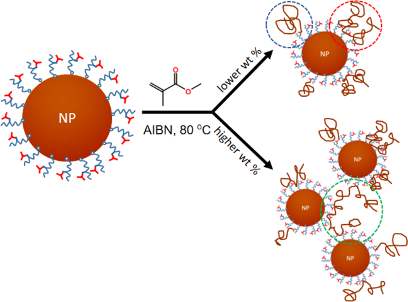
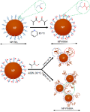
- polymers [31]. Three different events can lead to the copolymerization and attachment of the PMMA chains to NP-MMA: i) initiation occurs on the NP-MMA, resulting in PMMA chain(s) growing from the surface of the NP-MMA (blue circle in Scheme 1); ii) growing PMMA chain(s) copolymerizes with the methacrylate


Chemistry for electron-induced nanofabrication
Beilstein J. Nanotechnol. 2018, 9, 1317–1320, doi:10.3762/bjnano.9.124

- )) at energies above the ionization threshold while dissociative electron attachment (DEA) occurs already at near-thermal electron energies. Experiments reported in this Thematic Series have aimed at unraveling the role of these processes in FEBID [20]. They use cyclic silane precursors in which DEA has
- been literally switched on or off by the attachment of suitable atomic side groups. A similar strategy also enables tuning of the processing speed in the fabrication of nanoscale carbon membranes. In fact, an increase of the reaction rate can be achieved by introducing halogen substituents into the
Heterostuctures of 4-(chloromethyl)phenyltrichlorosilane and 5,10,15,20-tetra(4-pyridyl)-21H,23H-porphine prepared on Si(111) using particle lithography: Nanoscale characterization of the main steps of nanopatterning
Beilstein J. Nanotechnol. 2018, 9, 1211–1219, doi:10.3762/bjnano.9.112
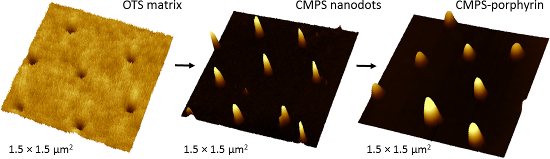
- solution for selective binding to produce heterostructures. The attachment of porphyrins was evidenced by increases in the height and width of the CMPS nanopatterns. The measurements of size indicate that multiple layers of porphyrins were added. Through each step of the surface reaction the surrounding
- porphyrins (Figure 1d). Atomic force microscopy was used to characterize the resulting nanostructures after each step of the fabrication procedure. The attachment of the H2TPyP was confirmed by measuring changes in the width and height of nanostructures. Surface platform of nanoholes within a thin film of
- Figure 3b [38]. A close-up view of three nanodots are shown in zoom-in topography and phase images in Figures 3c and 3d. The heights and sizes of the nanodots are quite similar, without nonspecific attachment of contaminants in surrounding areas of the OTS resist film. There is a dark outline surrounding


Review on nanoparticles and nanostructured materials: history, sources, toxicity and regulations
Beilstein J. Nanotechnol. 2018, 9, 1050–1074, doi:10.3762/bjnano.9.98

- geckos with varying body weight can attach along ceilings and move along vertical walls. The interaction of their patterned surface structure with the substrate profile gives efficient ability and mechanism for attachment to the insect’s legs. An intense inverse scaling effect in these attachment devices
- into finer subcontacts, helps to clearly explain the insect body weight to setae trend. The natural adhesive system uses this principle for their design and may be incorporated in future practical applications. Research on attachment and mechanism of insects walking on ceilings using their hairy
- attachment systems began 300 years ago and continues today. Electrostatic forces, sticking fluids, and microsuckers are the proposed reasons that explain the insect’s attachment mechanism [229]. Some of these theories have been rejected based on experimental data and combination of secretion-mediated


Heavy-metal detectors based on modified ferrite nanoparticles
Beilstein J. Nanotechnol. 2018, 9, 762–770, doi:10.3762/bjnano.9.69
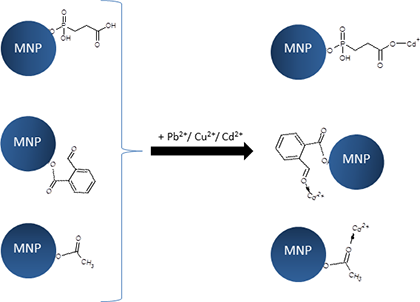
- with PBS and allowed to dry at room temperature [22]. Figure 1A presents the proposed most probable models of linker adsorption. However, the authors do not exclude other configurations. Attachment of Pb2+, Cu2+ and Cd2+ ions In order to verify if modified nanoparticles are able to detect/select some
- range of 1003–1123 cm−1 appear in addition to those previously observed. In the last series (Figure 4C) the presence of sharp signals at 1379–1384 cm−1 in case of Cd and Pb attachment can be found. In this region modifications in the reference system were also observed after interaction with heavy metal
- attachment) powdered samples of nanoparticles were analyzed using Raman spectroscopy giving additional information to IR spectroscopy. In Figure 5 selected spectra are presented. The Raman spectra show a set of peaks that are typical for inorganic cores (magnetite, maghemite/hematite) with accordingly


A review of carbon-based and non-carbon-based catalyst supports for the selective catalytic reduction of nitric oxide
Beilstein J. Nanotechnol. 2018, 9, 740–761, doi:10.3762/bjnano.9.68
- groups for the attachment of metal nanoparticles. It is believed that the oxidative treatment may create defects to the hexagonal or pentagonal structures of the GR sheet in the nanotubes. The functional groups can be introduced at the bent parts, defect sites, and at the sidewall of the MWCNTs. Acid
- treatment enables the covalent attachment of oxygenated groups on the surface and the open ends of the CNTs. After undergoing pre-treatment, the treated-CNTs will be dispersed with the choice of metal species. In the next step, several synthesis methods are applied such as impregnation, pyridine thermal
Cyclodextrin-assisted synthesis of tailored mesoporous silica nanoparticles
Beilstein J. Nanotechnol. 2018, 9, 693–703, doi:10.3762/bjnano.9.64
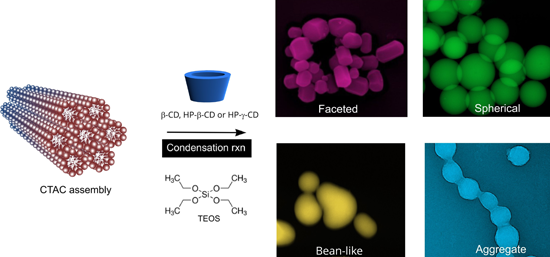
- shape. EDX analysis of particles demonstrated the presence of carbon in addition to oxygen and silicone, suggesting physical attachment of CDs. FTIR was used to confirm adsorbed CDs on silica particles (Figure S1b, Supporting Information File 1). The peaks at 2860 and 2930 cm−1 are associated with the C


Electron interactions with the heteronuclear carbonyl precursor H2FeRu3(CO)13 and comparison with HFeCo3(CO)12: from fundamental gas phase and surface science studies to focused electron beam induced deposition
Beilstein J. Nanotechnol. 2018, 9, 555–579, doi:10.3762/bjnano.9.53
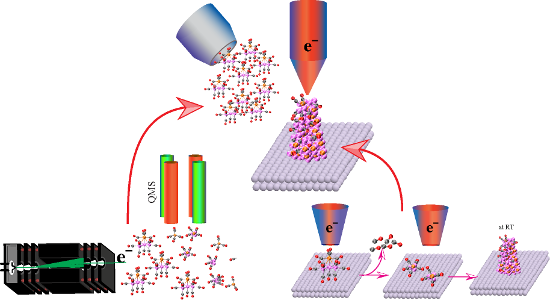
- carbonyl complex H2FeRu3(CO)13 covering its low energy electron induced fragmentation in the gas phase through dissociative electron attachment (DEA) and dissociative ionization (DI), its decomposition when adsorbed on a surface under controlled ultrahigh vacuum (UHV) conditions and exposed to irradiation
- induced decomposition of this precursor and how this is reflected in the relatively poor performance of H2FeRu3(CO)13 as compared to the structurally similar HFeCo3(CO)12. Keywords: dissociative electron attachment; dissociative ionization; electron induced deposition; electron molecule interaction
- by four distinctly different processes, which are active within different energy ranges, and more importantly, lead to distinctly different processes; dissociative electron attachment (DEA), dissociative ionization (DI), and neutral and dipolar dissociation upon electron excitation (ND and DD). An


Kinetics of solvent supported tubule formation of Lotus (Nelumbo nucifera) wax on highly oriented pyrolytic graphite (HOPG) investigated by atomic force microscopy
Beilstein J. Nanotechnol. 2018, 9, 468–481, doi:10.3762/bjnano.9.45
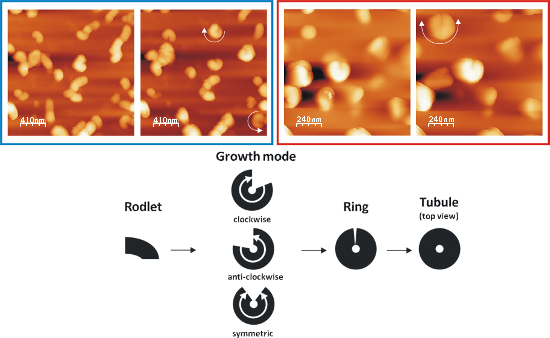
- may also continue by the attachment of wax molecules on both ends of the initial rodlet thereby showing a bidirectional growth (see growth of top left tubule in Video 6, Supporting Information File 1). The black cross in Figure 8b–d marks the position of the center of the wax feature marked by the


Electron interaction with copper(II) carboxylate compounds
Beilstein J. Nanotechnol. 2018, 9, 384–398, doi:10.3762/bjnano.9.38
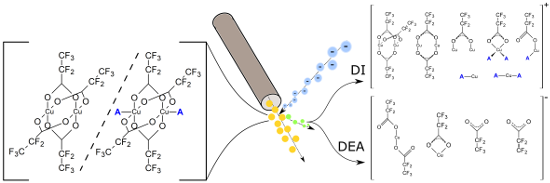
- the evaporation of whole complex molecules. A significant production of Cu+ ion was observed only for [Cu2(µ-O2CC2F5)4], a weak yield was detected for [Cu2(EtNH2)2(µ-O2CC2F5)4] as well. The dissociative electron attachment processes leading to formation of negative ions are similar for all
- fragments of these complexes are formed through single particle resonant processes close to 0 eV. Keywords: amines; dissociative electron attachment; dissociative ionization; FEBID; low energy electrons interaction; Introduction Present technological changes require the development of new methods and new
- . High energy electrons have low interaction cross section with the target molecule; their interaction efficiency is therefore very low. Secondary electrons, on the other hand, play important role through electron attachment (EA), dissociative electron attachment (DEA) [10][11][12][13][14][15][16] and


Sugarcane juice derived carbon dot–graphitic carbon nitride composites for bisphenol A degradation under sunlight irradiation
Beilstein J. Nanotechnol. 2018, 9, 353–363, doi:10.3762/bjnano.9.35
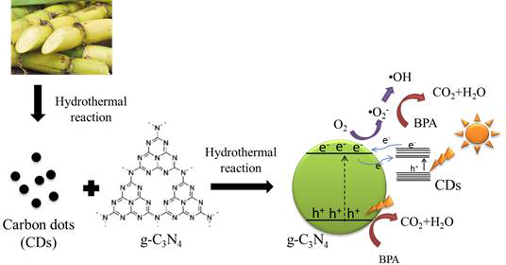
- micro-PL spectroscope (Renishaw, inVia Raman Microscope) was used to acquire the PL spectra with an excitation wavelength of 325 nm. UV–vis DRS was obtained using a Shimadzu UV-2600 spectrophotometer equipped with an integrating sphere attachment with barium sulfate (BaSO4) as a reference. The surface


Wafer-scale bioactive substrate patterning by chemical lift-off lithography
Beilstein J. Nanotechnol. 2018, 9, 311–320, doi:10.3762/bjnano.9.31
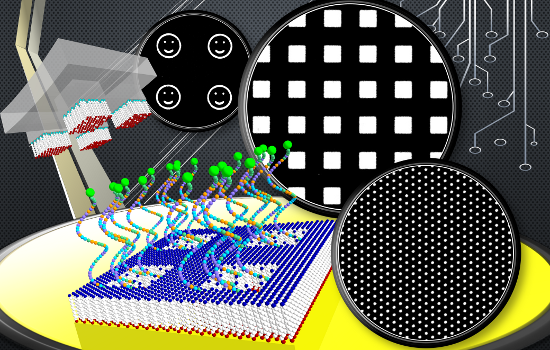
- biological species recognition with minimum nonspecific attachment. Herein, a straightforward approach utilizing chemical lift-off lithography to create a diluted self-assembled monolayer matrix for anchoring diverse biological probes is introduced. The strategy encompasses convenient operation, well-tunable
- reproduction, and high resolution control. Conventional strategies to fabricate bioactive substrates rely on the creation of different local molecular environments that are suitable for subsequent biological species attachment. For example, the supported lipid bilayer system has been widely used for many
- self-orienting and reduced nonspecific probe–substrate adhesion. In Figure 2B, the second type of bioactive substrate fabrication approach relies on a labelled probe attachment with subsequent binding partner recognition induced signal output. A FAM-labelled thiolated hairpin-structured nucleotide


Al2O3/TiO2 inverse opals from electrosprayed self-assembled templates
Beilstein J. Nanotechnol. 2018, 9, 216–223, doi:10.3762/bjnano.9.23
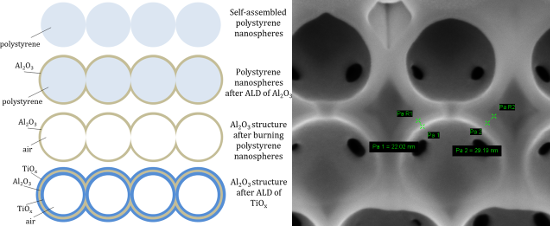
- , the samples were measured using a spectrophotometer from Shimadzu (UV3600 UV–vis–NIR, Kyoto, Japan) and an ISR-3100 integrating sphere attachment of 3 × 12 mm beam area. Schematic side view of the fabrication process. Two cross sections at 90° of a 360 nm polystyrene nanoparticle colloidal crystal


Liquid-crystalline nanoarchitectures for tissue engineering
Beilstein J. Nanotechnol. 2018, 9, 205–215, doi:10.3762/bjnano.9.22
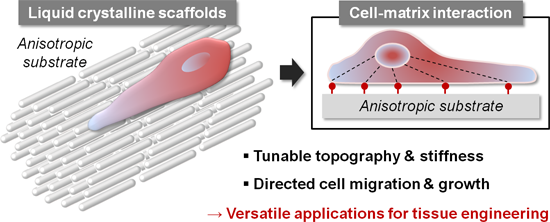
- tissue-derived biopolymers used in pharmaceutics, cosmetics and food industries, have a strong advantage as a cell scaffold material in that they harbor specific amino acid sequences (such as Arg–Gly–Asp) on which cell attachment occurs through the binding of transmembrane receptors (such as integrin
- purposes, LCEs need to undergo additional physicochemical modifications. For example, Abbott and co-workers developed a cell-culture monitoring tool with which the orientational order of ECM-decorated nematic LCE substrates could be utilized for sensing ECM-attachment and proliferation of human embryonic


Bombyx mori silk/titania/gold hybrid materials for photocatalytic water splitting: combining renewable raw materials with clean fuels
Beilstein J. Nanotechnol. 2018, 9, 187–204, doi:10.3762/bjnano.9.21
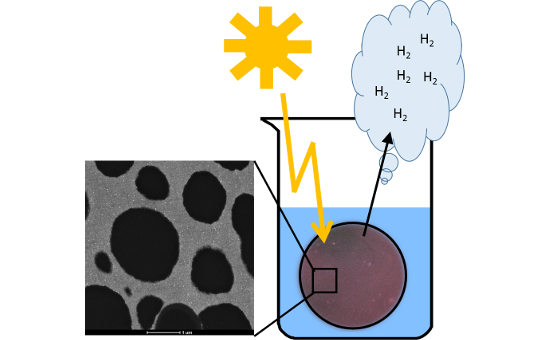
- from 200–850 nm with a resolution of 2 nm using a Praying Mantis™ attachment from Harrick Scientific Products Inc. Ground samples were mixed with MgSO4 in a 1:10 w/w ratio prior to measurements. Data analysis was done with the PE UV WinLab V6.03 software. Fourier transform attenuated total reflection
- infrared spectroscopy (FT-ATR-IR) was done from 4000–500 cm−1 with a resolution of 2 cm−1 on an FT-IR NEXUS spectrometer with a ThermoNicolet SmartOrbit ATR attachment with a diamond crystal. Samples were directly deposited on the crystal und fixed in the measurement position via the SmartOrbit attachment




Electron-driven and thermal chemistry during water-assisted purification of platinum nanomaterials generated by electron beam induced deposition
Beilstein J. Nanotechnol. 2018, 9, 77–90, doi:10.3762/bjnano.9.10
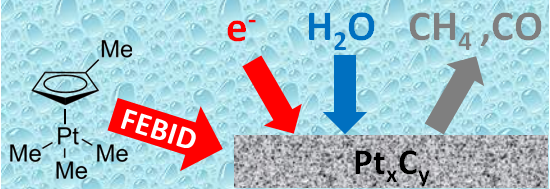
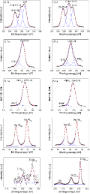
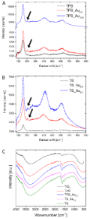
- attachment (DEA) leads to loss of only one neutral CH3 ligand. DEA occurs at low electron energies characteristic of the secondary electrons that are released in large numbers under impact of a high energy primary electron beam and are therefore thought to make major contributions to deposit formation


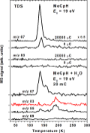

Response under low-energy electron irradiation of a thin film of a potential copper precursor for focused electron beam induced deposition (FEBID)
Beilstein J. Nanotechnol. 2018, 9, 57–65, doi:10.3762/bjnano.9.8
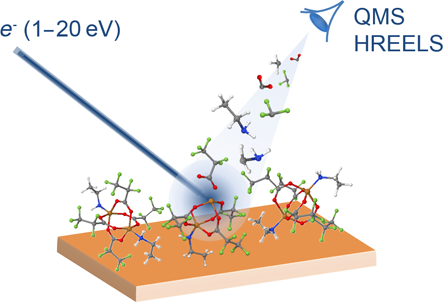
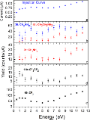
- process is dissociative electron attachment (DEA), which produces neutral species and an anion that can be neutralized. ESD efficiency is higher at high energy because DI is the most efficient process. However, in FEBID experiments, the distribution of secondary electrons strongly peaks in the range of 1
- , which is low compared to the electronic excitation energy and ionisation energy of primary amines (respectively, 5.9 eV and 8.8 eV [21][22]) points out possible resonances of dissociative electron attachment processes leading to fragmentation of neutral ethylamine. The nature of the resonance is
- difficult to determine from the data. To our knowledge, no measurement of amine metal cation complex dissociation is described in literature for comparison, and the resonances for dissociative electron attachment in amine compounds, known from gas-phase studies [23][24][25][26], are expected to be shifted



Facile synthesis of silver/silver thiocyanate (Ag@AgSCN) plasmonic nanostructures with enhanced photocatalytic performance
Beilstein J. Nanotechnol. 2017, 8, 2781–2789, doi:10.3762/bjnano.8.277
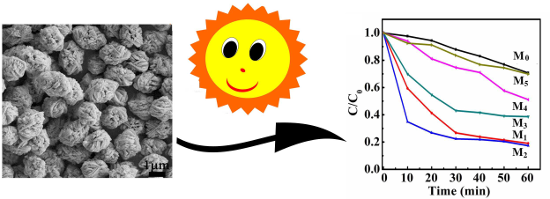
- . Based on calculations, the spots can be indexed to diffraction from the and (332) planes of the monoclinic AgSCN. The SAED pattern also reveals that the oriented attachment of the nanoplates composed the Ag@AgSCN nanostructures. To determine the Ag content in the Ag@AgSCN nanostructures, elemental


The rational design of a Au(I) precursor for focused electron beam induced deposition
Beilstein J. Nanotechnol. 2017, 8, 2753–2765, doi:10.3762/bjnano.8.274
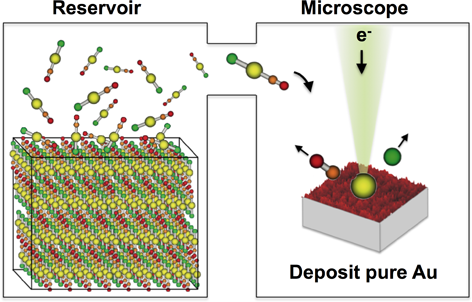
- is to develop dedicated FEBIP precursors [24]. The high-energy electrons in the focused beam (typically 1–15 keV) induce reactions through ionization processes, such as dissociative electron attachment and dissociative ionization [6][25][26]. While ionization reactions can be very selective [27


Dry adhesives from carbon nanofibers grown in an open ethanol flame
Beilstein J. Nanotechnol. 2017, 8, 2719–2728, doi:10.3762/bjnano.8.271
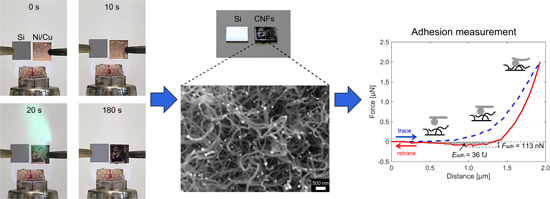
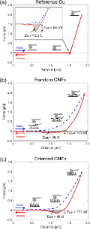
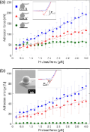
- linear with preload force. Carbon nanofibers oriented by a magnetic field show a 68% higher adhesion (0.66 N/cm2) than the randomly oriented fibers. Endurance tests revealed that the carbon nanofiber arrays withstand 50.000 attachment/detachment cycles without observable wear. Keywords: adhesion; atomic
- nearly every surface and adhere to it due to van der Waals forces, allowing the gecko to stick and climb nearly every surface [19][20][21]. Mimicking these nanostructures can lead to high performance dry adhesives with a great range of possible applications in attachment systems of climbing robots [22


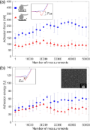
Synthesis of [{AgO2CCH2OMe(PPh3)}n] and theoretical study of its use in focused electron beam induced deposition
Beilstein J. Nanotechnol. 2017, 8, 2615–2624, doi:10.3762/bjnano.8.262
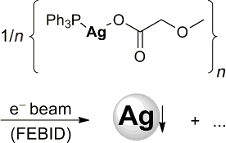
- ≈50. The reactions of a dissociative ionization, dipolar dissociation, dissociative electron attachment etc. were studied to obtain the reaction pathways energetically most likely and relate to experimentally obtained species. It implies that the energetic of reactions leading from the intact neutral





