Search results
Search for "cancer" in Full Text gives 318 result(s) in Beilstein Journal of Nanotechnology. Showing first 200.
Multilayer capsules made of weak polyelectrolytes: a review on the preparation, functionalization and applications in drug delivery
Beilstein J. Nanotechnol. 2020, 11, 508–532, doi:10.3762/bjnano.11.41
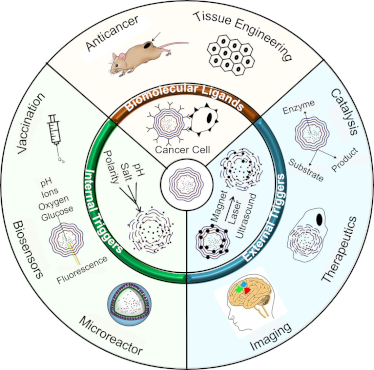
- of magnetic NPs (e.g., iron oxide and cobalt oxide NPs) into capsules allows them to respond to magnetic stimuli and produce heat due to magnetic energy dissipation, mechanical vibrations and motion induced in the film, thus releasing the cargo [80]. The Fe2O4-PAH capsules studied with A549 cancer
- cell line showed a rapid uptake, demonstrating the potential for cancer therapy. Silica and gold NPs were assembled in a one pot assembly of specifically tailored diblock polymers of PLL and poly-ʟ-cysteine [82]. The electrostatic binding between the positively charged lysine blocks and negatively
- intensity of radiation successfully breaks the shell and releases the loaded cargo, high intensity leads to the generation of high heat, which helps in destroying the surrounding cancer cells. Even though the advantages of NP incorporation in capsules have been immense, similar work in weak PE assemblies is


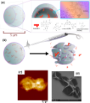

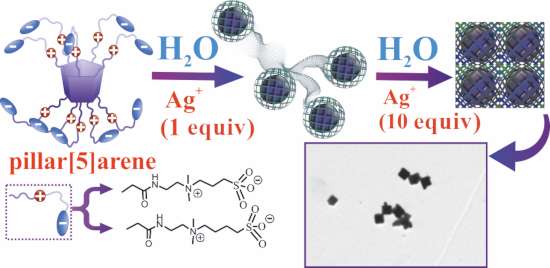
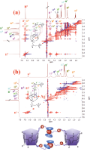
Nanoparticles based on the zwitterionic pillar[5]arene and Ag+: synthesis, self-assembly and cytotoxicity in the human lung cancer cell line A549
Beilstein J. Nanotechnol. 2020, 11, 421–431, doi:10.3762/bjnano.11.33




Brome mosaic virus-like particles as siRNA nanocarriers for biomedical purposes
Beilstein J. Nanotechnol. 2020, 11, 372–382, doi:10.3762/bjnano.11.28
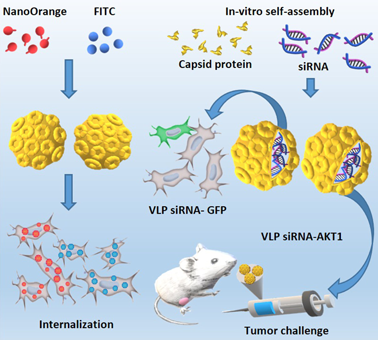
- Educación Superior de Ensenada, Baja California, (CICESE), Ensenada, Baja California, México 10.3762/bjnano.11.28 Abstract There is an increasing interest in the use of plant viruses as vehicles for anti-cancer therapy. In particular, the plant virus brome mosaic virus (BMV) and cowpea chlorotic mottle
- and the gene silencing. In addition, BMV VLP carring siAkt1 inhibited the tumor growth in mice. These results show the attractive potential of plant virus VLPs to deliver molecular therapy to tumor cells with low immunogenic response. Keywords: anti-cancer therapy; brome mosaic virus (BMV); cowpea
- chlorotic mottle virus (CCMV); nanocarriers; plant virus-like particles (VLPs); siRNA delivery; small interfering RNA (siRNA); Introduction Despite many efforts taken, the efficient and specific delivery of therapeutic molecules to tumor cells is still a unsolved challenge. Cancer therapies are often


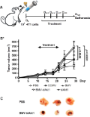
Poly(1-vinylimidazole) polyplexes as novel therapeutic gene carriers for lung cancer therapy
Beilstein J. Nanotechnol. 2020, 11, 354–369, doi:10.3762/bjnano.11.26
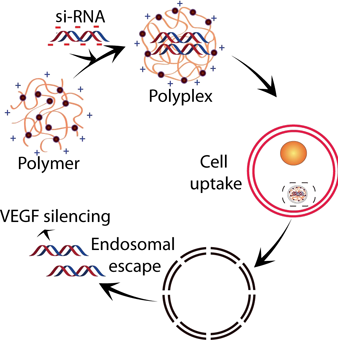
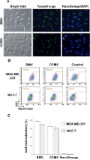
- efficiency of the formed complexes in A549 lung cancer cells. The polyplex formed was found to exhibit 66% complexation efficiency. The complexation was confirmed by gel retardation assays, FTIR and thermal analysis. The blank PVI polymer was not toxic to cells. The polyplex was found to exhibit excellent
- internalization and escaped the endosome effectively. The polyplex was more effective than free siRNA in silencing VEGF in lung cancer cells. The silencing of VEGF was quantified using Western blot and was also reflected in the depletion of HIF-1α levels in the cells treated with the polyplex. VEGF silencing by
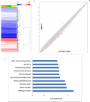
- that have been connected to the proliferation and invasion of lung cancer cells. These results indicate that the PVI complexes can be an effective agent to counter lung cancer. Keywords: anti-VEGF siRNA; gene silencing; lung cancer; microarray; poly(1-vinylimidazole); small interfering RNA (siRNA


Interactions at the cell membrane and pathways of internalization of nano-sized materials for nanomedicine
Beilstein J. Nanotechnol. 2020, 11, 338–353, doi:10.3762/bjnano.11.25
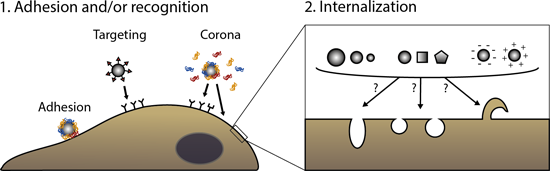
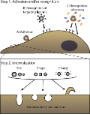
- nanoparticles by caveolae-mediated endocytosis [200]. Similarly, many in vitro studies use immortalized or cancer cell lines, such as HEK293 or HeLa cells, which are easy to transfect and culture. However, these cells can behave quite differently in comparison to primary cells or cells isolated directly from


Using gold nanoparticles to detect single-nucleotide polymorphisms: toward liquid biopsy
Beilstein J. Nanotechnol. 2020, 11, 263–284, doi:10.3762/bjnano.11.20
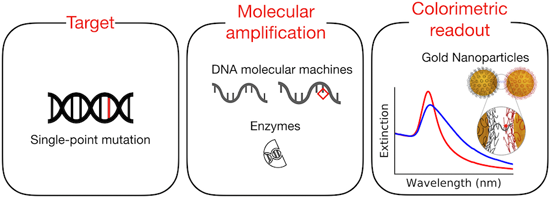
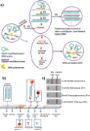
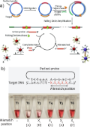
- cancer biomarker. We discuss the main mechanisms of the assays that either are assisted by DNA-based molecular machines or by enzymatic reactions, summarize their performance and provide an outlook towards future developments. Keywords: amplification reactions; biomarkers; colorimetric biosensing; gold
- nanoparticles; plasmonics; single-point mutation; Introduction Cancer is a leading cause of death accounting for about 8.8 million deaths in 2015 [1]. The list of tumor-linked substances, i.e., biomarkers for diagnosis and prognosis purposes is continuously increasing. Cancer biomarkers are present in tumor
- simple blood test, setting thus a milestone of “liquid biopsy”. Liquid biopsy has the potential to accelerate the early cancer diagnosis by the detection of biomolecules such as cell-fee DNA directly in blood samples. Currently, the development of liquid biopsies is directly linked to the state-of-the




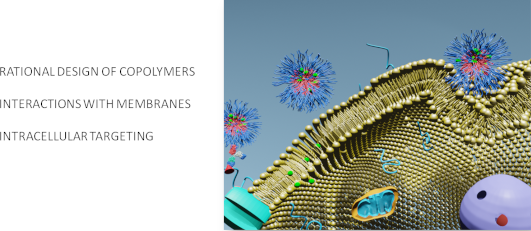
Rational design of block copolymer self-assemblies in photodynamic therapy
Beilstein J. Nanotechnol. 2020, 11, 180–212, doi:10.3762/bjnano.11.15
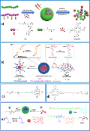
- glutathione concentration (ca. 10 mM), and iii) very recently, tumor hypoxia (i.e., low oxygen concentrations due to rapid use of blood supply for cancer cell growth) [55]. A typical exogenous trigger is light that can induce the cleavage of covalently linked groups and the solubilization and degradation of
- proposed to overcome the drug resistance of cancer cells. Indeed, it induced membrane permeability of the endo-lysosome and particle disassembly after white-light irradiation thus triggering the release of doxorubicin in the cytosol [96]. In the study by Zheng et al. [100] the AIE fluorophore is used as
- a hydrophilic shell for micelle stabilization, and the derivatized polylysin (Plys) acts as a hydrophobic core to load the photosensitizer (BODIPY), while PMAGP mainly serves to direct the target delivery to hepatoma cancer cells. Folate (FA) has been extensively studied as a targeting moiety [116






Molecular architectonics of DNA for functional nanoarchitectures
Beilstein J. Nanotechnol. 2020, 11, 124–140, doi:10.3762/bjnano.11.11
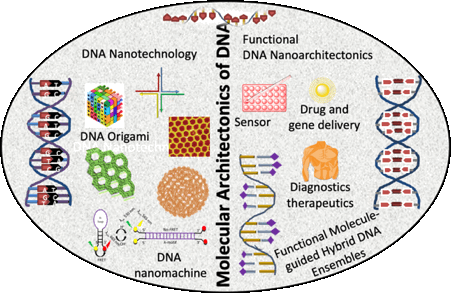
- construction of a DNA origami-based nanorobot for the cargo delivery of payloads into cancer cells [56]. The autonomous DNA nanorobot was constructed using a nucleolin-binding DNA aptamer and was loaded with thrombin protease. The nucleolin protein was overexpressed in tumor-associated endothelial cells, which
- delivery and nonimmunogenicity of the nanorobot made it a promising candidate for drug delivery in cancer therapeutics. The group of Krishnan reported the construction of a DNA nanodevice to quantitatively determine the activity and location of chloride ion channels and transport under pH stimuli [57]. In
- -functionalized iron oxide nanoparticle system was capable of selectively targeting the cancer cells and, potentially, to act as an MRI contrast agent. The programmability of the DNA tetrahedrons provided an opportunity to conjugate other functional nucleic acid sequences, viz., DNA, siRNA, or DNAzymes, to serve


Internalization mechanisms of cell-penetrating peptides
Beilstein J. Nanotechnol. 2020, 11, 101–123, doi:10.3762/bjnano.11.10


Advanced hybrid nanomaterials
Beilstein J. Nanotechnol. 2019, 10, 2563–2567, doi:10.3762/bjnano.10.247

- is simultaneously employed as a contrast agent in magnetic resonance imaging (MRI) and for local heating therapy using magnetic particle hyperthermia [33]. In vitro hyperthermia tests showed efficiency in inoculating mouse breast cancer cells. Another study reports the use of alendronate-coated gold
- nanoparticles [34]. The resulting gold–alendronate nanoplatform combines antitumor activity through drug delivery and photothermal therapy, as illustrated in vitro on the inhibition of prostate cancer cells. In the field of hybrid coordination networks, new lanthanide-based networks synthesized by a solvo
Bombesin receptor-targeted liposomes for enhanced delivery to lung cancer cells
Beilstein J. Nanotechnol. 2019, 10, 2553–2562, doi:10.3762/bjnano.10.246
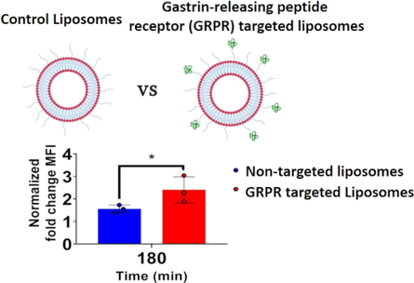
- receptor, gastrin releasing peptide receptor (GRPR), is widely expressed in cancers of the lung, pancreas and ovaries. Gastrin releasing peptide (GRP) is an autocrine growth factor in small cell lung cancer, which has very poor patient outcomes. High affinity antagonist peptides have been developed for in
- vivo cancer imaging. In this report we decorated pegylated liposomes with a GRPR antagonist peptide and studied its interaction with, and accumulation within, lung cancer cells. Results: An N-terminally cysteine modified GRPR antagonist (termed cystabn) was synthesised and shown to inhibit cell growth
- targeting has potential for enhancing drug accumulation in resistant cancer cells. Keywords: bombesin; GRPR; liposome; lung cancer; targeting; Introduction Small-cell lung cancer (SCLC) accounts for approximately one in five lung cancer diagnoses. In spite of global efforts to reduce tobacco smoking in

Frontiers in pharmaceutical nanotechnology
Beilstein J. Nanotechnol. 2019, 10, 2538–2540, doi:10.3762/bjnano.10.244
- applied in the development of semisolids. But we still have much to learn. Pharmaceutical science has indisputably become more complex with the discovery of nanocarrier-based delivery systems. Fueled by first successes in the 1990s, liposomes were at the forefront of cancer therapy [12][13]. The
Evaluation of click chemistry microarrays for immunosensing of alpha-fetoprotein (AFP)
Beilstein J. Nanotechnol. 2019, 10, 2505–2515, doi:10.3762/bjnano.10.241
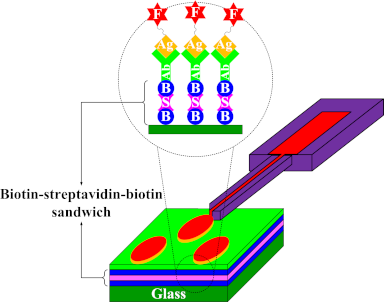
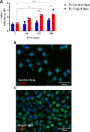
- (AOC), Karlsruhe Institute of Technology (KIT), Engesserstraße 15, 76131 Karlsruhe, Germany 10.3762/bjnano.10.241 Abstract The level of cancer biomarkers in cells, tissues or body fluids can be used for the prediction of the presence of cancer or can even indicate the stage of the disease. Alpha
- was spotted onto them via microchannel cantilever spotting (µCS). Based on the fluorescence measurements, the optimal microarray design was found and its sensitivity was determined. Keywords: alpha-fetoprotein (AFP); cancer biomarker; click chemistry; fluorescent immunosensor; hepatocellular
- carcinoma; Introduction Hepatocellular carcinoma (HCC) is the major cause of morbidity and mortality in patients with chronic liver disease, the sixth most common cancer and the fourth leading cause of cancer-related deaths worldwide. The last release of the Global Cancer Observatory (GCO) database in


Label-free highly sensitive probe detection with novel hierarchical SERS substrates fabricated by nanoindentation and chemical reaction methods
Beilstein J. Nanotechnol. 2019, 10, 2483–2496, doi:10.3762/bjnano.10.239
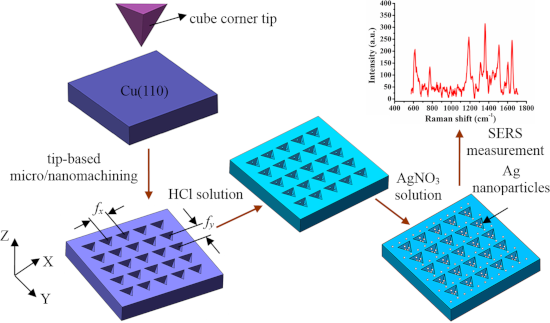
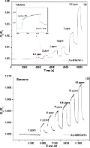
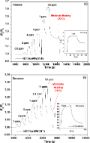
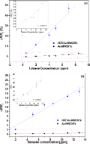
- green is highly toxic for aquatic animals or mammals and can induce cancer in animals. Thus, MG is significantly detected at low concentrations in water. The maximum concentration of malachite green is less than 2 μg/kg (5.48 × 10⁻⁹ mol/L) for many national food safety standards. Pesticide residues in


Small protein sequences can induce cellular uptake of complex nanohybrids
Beilstein J. Nanotechnol. 2019, 10, 2477–2482, doi:10.3762/bjnano.10.238
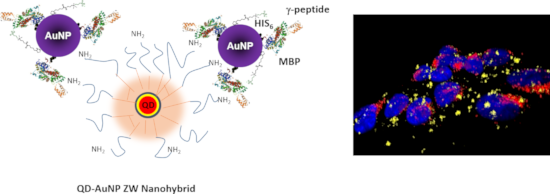
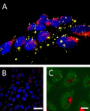
- have also been discussed [12][14][15]. More recently, there have been a few reports discussing the use of luminescent Eu-loaded hydroxyapatite nanocrystals for rapid HeLa cancer cell imaging [9][11][16], or the nanostructure self‐assembly driven by amino acid coordination to increase the biological

pH-Controlled fluorescence switching in water-dispersed polymer brushes grafted to modified boron nitride nanotubes for cellular imaging
Beilstein J. Nanotechnol. 2019, 10, 2428–2439, doi:10.3762/bjnano.10.233
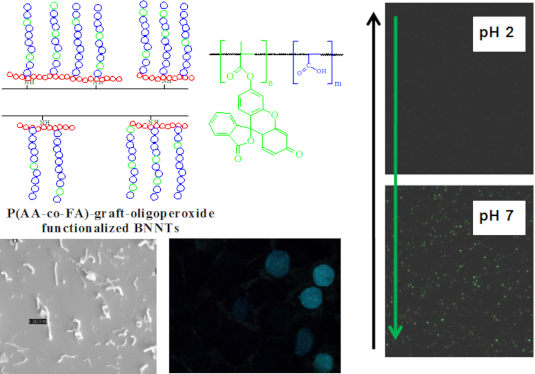
- contrast to acidic pH conditions where the fluorescent intensity is absent or low. No increase in the absorption was observed when the suspension pH was increased from 7 to 10. The functionalized BNNTs are easily taken up by human normal prostate epithelium (PNT1A) and human prostate cancer cell lines
- obtained with a Carl Zeiss Evo-40 instrument under high vacuum and accelerating voltage of 10 kV. Cell culture experiments Normal prostate epithelium (PNT1A) and human prostate cancer (DU145) cell lines were grown in Dulbecco’s Modified Eagle’s Medium, supplemented with 10% fetal bovine serum and 1
- intracellular pH values are often associated with cell dysfunction and are observed in diseases such as cancer [58] and Alzheimer’s [59]. Therefore, information on intracellular pH is a crucial factor in understanding the physiological and pathological processes within living cells. In our previous work, BNNTs


Multiwalled carbon nanotube based aromatic volatile organic compound sensor: sensitivity enhancement through 1-hexadecanethiol functionalisation
Beilstein J. Nanotechnol. 2019, 10, 2364–2373, doi:10.3762/bjnano.10.227
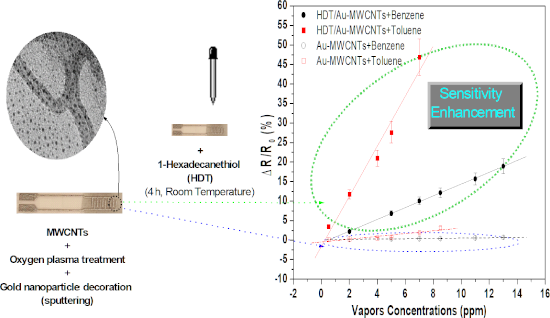
- of trace concentrations of toluene in exhaled breath is associated with lung cancer and can therefore be considered as a biomarker for this pathology [2][3][4]. A gas sensor is generally composed of an active sensing film or material deposited on an electrode. The sensing performance is strongly




Design of a nanostructured mucoadhesive system containing curcumin for buccal application: from physicochemical to biological aspects
Beilstein J. Nanotechnol. 2019, 10, 2304–2328, doi:10.3762/bjnano.10.222
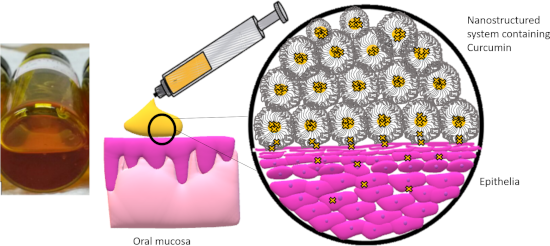
- activity, mainly in oral squamous cancer; however, its physicochemical characteristics hinder its application. Therefore, the aim of this study was to develop nanostructured formulations containing curcumin for oral cancer therapy. The photophysical interactions between curcumin and the formulations were
- 8 h and could permeate through the porcine oral mucosa. Cytotoxicity testing revealed that the formulations were selective to cancer cells over healthy cells. Therefore, these systems could improve the physicochemical characteristics of curcumin by providing improved release and permeation, while
- selectivity targeting cancer cells. Keywords: curcumin; mucoadhesion; oral squamous cell carcinoma; permeation; poloxamer 407; Introduction The development of nanostructured systems containing poloxamer 407 (P407) and Carbopol 974P® (C974P) have previously been shown to have rheological and mechanical


Dynamics of superparamagnetic nanoparticles in viscous liquids in rotating magnetic fields
Beilstein J. Nanotechnol. 2019, 10, 2294–2303, doi:10.3762/bjnano.10.221
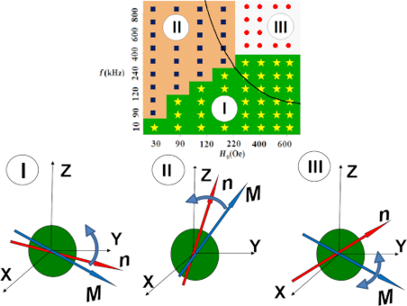
- ][3][19][20], certain thermal effects in combination with radiotherapy or chemotherapy can significantly improve the results of cancer treatment. One of the main technological problems of current magnetic hyperthermia development is the optimal choice of sizes and magnetic parameters of nanoparticles
- and analytical calculations. This topic has recently attracted considerable interest [33][34][35][36][37][38][39][40][41][42][43] in view of the possibility of using magnetic nanoparticles in magnetic hyperthermia for the cancer treatment. Unfortunately, in experiments [41][43] very small SAR values


Targeted therapeutic effect against the breast cancer cell line MCF-7 with a CuFe2O4/silica/cisplatin nanocomposite formulation
Beilstein J. Nanotechnol. 2019, 10, 2217–2228, doi:10.3762/bjnano.10.214
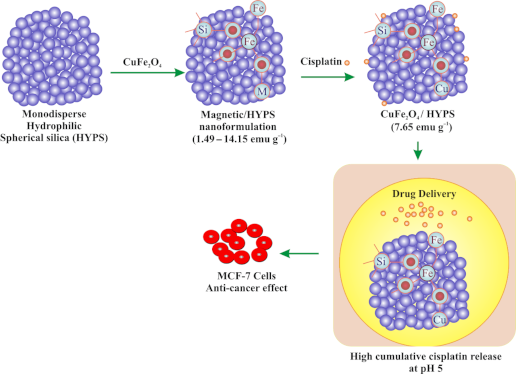
- /HYPS was applied as the support. An in vitro experiment was conducted to determine the potential of CuFe2O4/HYPS as an anticancer agent against the human breast cancer cell line MCF-7. The results show that the nanoparticle formulation can effectively target cancerous cells and could be an effective
- have been broadened in terms of chronic cancer, diabetic and other metabolic disorders. The global burden of cancer is expected to affect about 24 million people by 2035. The robust technological advancements in utilizing nanoparticles for therapeutic applications are the new hope to circumvent the
- materials have been reported to be effective for cancer therapeutics [3][4]. However, due to the poor crystallinity of SPIONs on silica supports, a low saturation value of magnetization occurs in the silica bound nanocomposites. For instance, the magnetometer (superconducting quantum interference device


Use of data processing for rapid detection of the prostate-specific antigen biomarker using immunomagnetic sandwich-type sensors
Beilstein J. Nanotechnol. 2019, 10, 2171–2181, doi:10.3762/bjnano.10.210
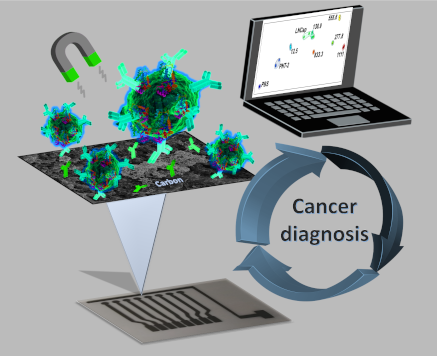
- Carlos 13560-970, São Paulo, Brazil Chemistry Department, Federal University of Paraná, Curitiba, 81531-980, Paraná, Brazil 10.3762/bjnano.10.210 Abstract Diagnosis of cancer using electroanalytical methods can be achieved at low cost and in rapid assays, but this may require the combination with data
- -linked immunosorbent assay. The approaches for immunoassays and data processing are generic, and therefore the strategies described here may provide a simple platform for clinical diagnosis of cancers and other types of diseases. Keywords: cancer biomarkers; magnetite nanoparticles; microfluidic devices
- ; nanoarchitectonics; information visualization; sandwich-type immunosensors; screen-printed electrodes; Introduction The prostate-specific antigen (PSA) used in clinical diagnosis is present in normal prostatic secretions, but its concentration is often elevated in prostate cancer patients. In spite of its lack of


Nitrogen-vacancy centers in diamond for nanoscale magnetic resonance imaging applications
Beilstein J. Nanotechnol. 2019, 10, 2128–2151, doi:10.3762/bjnano.10.207
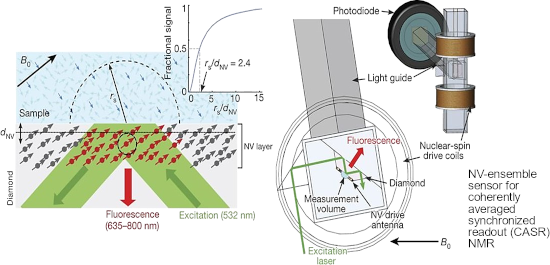
- the singlet state. Magnetic nanoparticles (MNPs) can act as contrast agents [16] to improve the imaging of tumors in specific cancer MRI. Multimodal imaging has been recently made possible by functionalizing the particle surface with biocompatible chemicals, where surface coverings (such as the
- whose features are used in many technologies, from magnetic information storage to ferrofluids or nanoscale drug-delivery systems and magneto-assisted hyperthermia cancer treatments [65]. Single SPION detection with 10 nm accuracy was shown by bulk diamond NV center magnetometry combining spin


Incorporation of doxorubicin in different polymer nanoparticles and their anticancer activity
Beilstein J. Nanotechnol. 2019, 10, 2062–2072, doi:10.3762/bjnano.10.201
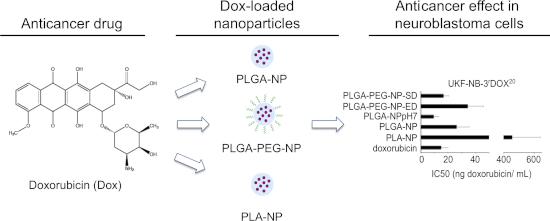
- . The expression of efflux transporters such as the ATP-binding cassette (ABC) transporter ABCB1 is an important resistance mechanism in therapy-refractory cancer cells. Drug encapsulation into nanoparticles has been shown to bypass efflux-mediated drug resistance, but there are also conflicting results
- an important step in the development of improved nanoparticle preparations for anticancer therapy. Further research is required to understand under which circumstances nanoparticles can be used to overcome efflux-mediated resistance in cancer cells. Keywords: cancer; doxorubicin; drug release
- ; nanoparticles; poly(lactic-co-glycolic acid) (PLGA); Introduction According to Globocan, there “were 14.1 million new cancer cases, 8.2 million cancer deaths and 32.6 million people living with cancer (within five years of diagnosis) in 2012 worldwide” [1]. Despite substantial improvements over recent decades





Review of advanced sensor devices employing nanoarchitectonics concepts
Beilstein J. Nanotechnol. 2019, 10, 2014–2030, doi:10.3762/bjnano.10.198
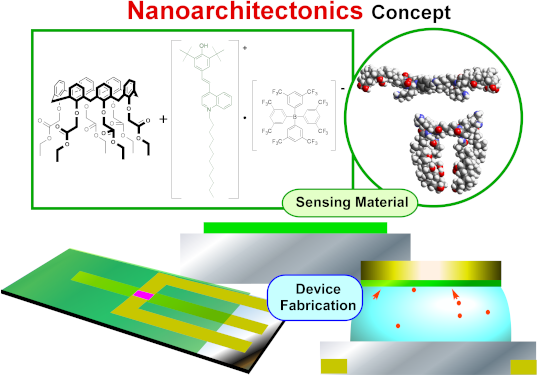
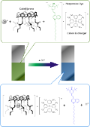
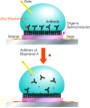
- nanoarchitectonics strategy could be applied for the sensing of various bio-related substances and may become useful for diagnostics of diseases such as cancer. Sensors that are used to detect environmental risks mostly require detection of metal ions and toxic ions. Akamatsu et al. developed an optode-type sensor
- could be applicable for demands requiring the evaluation of small normal pressures even on dynamic surfaces such as natural tissues and is expected to be useful for in situ biomedical digital monitoring, such as palpation for breast cancer. Triboelectric nanogenerators to convert mechanical energy to
- electron mobility transistors were used to dynamically monitor changes in the transmembrane potential, as reported by Lee, Wang, and co-workers [110]. Here, circulating tumor cells of colorectal cancer together with cellular bioelectric signals were investigated. The proposed sensor design would also be





Synthesis and potent cytotoxic activity of a novel diosgenin derivative and its phytosomes against lung cancer cells
Beilstein J. Nanotechnol. 2019, 10, 1933–1942, doi:10.3762/bjnano.10.189
- Liang Xu Dekang Xu Ziying Li Yu Gao Haijun Chen Cancer Metastasis Alert and Prevention Center, College of Chemistry, Fuzhou University, Fuzhou, Fujian 350116, China Fujian Provincial Key Laboratory of Cancer Metastasis Chemoprevention and Chemotherapy, Fuzhou University, Fuzhou, Fujian 350116
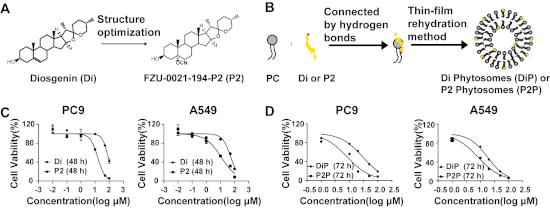
- and synthesized, aiming to discover new steroid-based antitumor agents. In this work, we synthesized several Di derivatives and screened FZU-0021-194-P2 (P2), which showed more potent cytotoxic activities against human non-small-cell lung cancer A549 and PC9 cells. Considering that Di has a unique
- sterol structure similarly to cholesterol, P2 phytosomes (P2Ps) were prepared to further improve the water solubility of P2. The P2Ps exhibited a particle size of 53.6 ± 0.3 nm with oval shape and a zeta potential of −4.0 ± 0.7 mV. P2Ps could inhibit the proliferation of lung cancer cells more