


Search results
Search for "capillary" in Full Text gives 260 result(s) in Beilstein Journal of Nanotechnology. Showing first 200.
Electron-driven and thermal chemistry during water-assisted purification of platinum nanomaterials generated by electron beam induced deposition
Beilstein J. Nanotechnol. 2018, 9, 77–90, doi:10.3762/bjnano.9.10
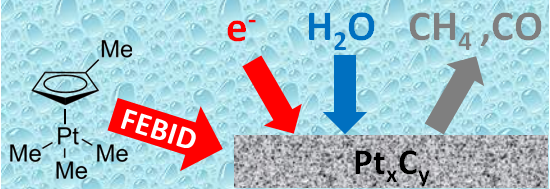
- calibrated volume where the absolute pressure is measured with a capacitance manometer. For each film deposition, a calibrated amount of vapour was leaked via a stainless steel capillary opening onto the metal substrate. Experiments on methylcyclopentadiene (MeCpH) were performed on a polycrystalline Au



Electro-optical characteristics of a liquid crystal cell with graphene electrodes
Beilstein J. Nanotechnol. 2017, 8, 2802–2806, doi:10.3762/bjnano.8.279
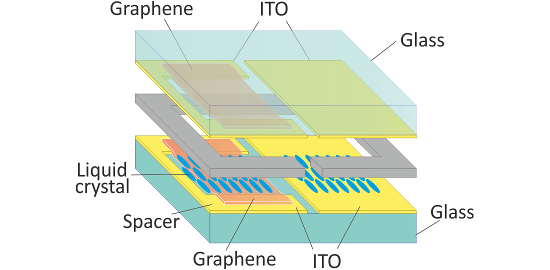
- nematic LC (Δn = 0.15) was filled by capillary action, and the thickness of the LC layer (20 μm) was set by spacers under planar orientation. Images of the fabricated cell, obtained between crossed polarizers when voltage is applied to different areas, are shown in Figure 2. Measurements All measurements


Thermo- and electro-optical properties of photonic liquid crystal fibers doped with gold nanoparticles
Beilstein J. Nanotechnol. 2017, 8, 2790–2801, doi:10.3762/bjnano.8.278
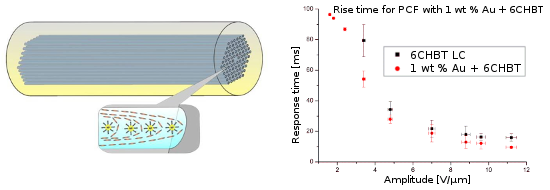
- to capillary forces and after that they were put on the computer-controlled hot stage (Linkam) and slowly heated (at rate 0.1 °C/min) above the phase transition temperature. The observed results were registered under a microscope with crossed polarizers (Nikon Eclipse). Nematic–isotropic phase
- -doped LC mixture was heated above the 6CHBT N–I phase transition temperature and then introduced into the PCF by capillary force. Unlike in previous experiments, where the sample was observed under a polarizing microscope, here we focused on the light exiting the fiber core. The preliminary part of the


Hyperthermic intracavitary nanoaerosol therapy (HINAT) as an improved approach for pressurised intraperitoneal aerosol chemotherapy (PIPAC): Technical description, experimental validation and first proof of concept
Beilstein J. Nanotechnol. 2017, 8, 2729–2740, doi:10.3762/bjnano.8.272
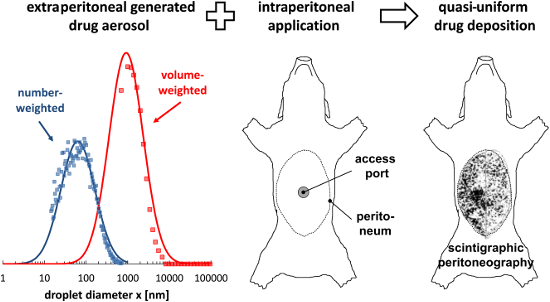
- -component nozzle located in the nozzle head, wherein the volumetric flow rate of pressurised carbon dioxide leads to a negative pressure in the capillary. The lower end of the capillary is partly submerged in the liquid drug to be aerosolised. The negative pressure causes a liquid flow rate into the nozzle




Amplified cross-linking efficiency of self-assembled monolayers through targeted dissociative electron attachment for the production of carbon nanomembranes
Beilstein J. Nanotechnol. 2017, 8, 2562–2571, doi:10.3762/bjnano.8.256
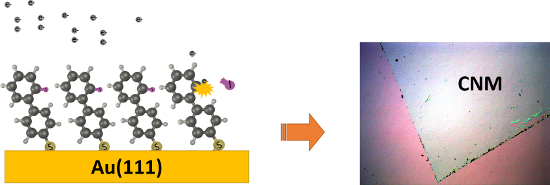
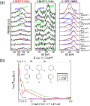
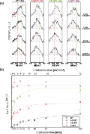
- description here. A monochromatic electron beam generated in a trochoidal electron monochromator is crossed with an effuse beam of the target molecules that enters the reaction zone through a capillary connected to the inlet system through a high-precision dosing valve. To record the DEA ion yield curves, the
- maintained at 120 °C by means of halogen lamps. Consequently, there is a temperature gradient along the inlet capillary and we expect the target gas to be above room temperature. From previous experiments we expect the gas temperature to be between 40 and 60 °C when entering the reaction zone. The CNMs were


PTFE-based microreactor system for the continuous synthesis of full-visible-spectrum emitting cesium lead halide perovskite nanocrystals
Beilstein J. Nanotechnol. 2017, 8, 2521–2529, doi:10.3762/bjnano.8.252
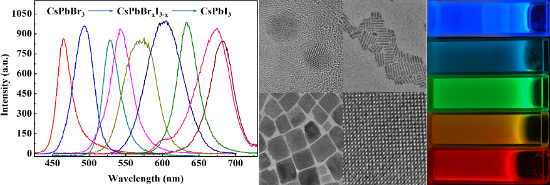
- of CsPbX3 QDs. A three-dimensional serpentine microchannel was constructed by interlacing a PTFE capillary (600 μm inner diameter) along two parallel metal bars (800 μm outer diameter). The PTFE capillaries were used as the microreactor and microchannels. Further nucleation and growth of the CsPbX3


Surfactant-induced enhancement of droplet adhesion in superhydrophobic soybean (Glycine max L.) leaves
Beilstein J. Nanotechnol. 2017, 8, 2345–2356, doi:10.3762/bjnano.8.234
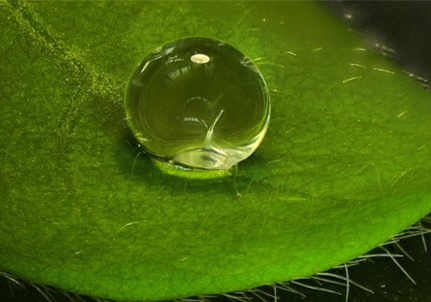
- )trifluoroacetamide; Machery-Nagel GmbH & Co KG, Germany) and 20 µL of pyridine (Fluka, Germany) for 45 min at 70 °C in a heating block. The quantitative wax composition was analyzed by capillary gas chromatography (GC) (GC–FID; CG-Hewlett Packard 5890 series H, Hewlett-Packard, Palo Alto, CA, USA) equipped with a


Material property analytical relations for the case of an AFM probe tapping a viscoelastic surface containing multiple characteristic times
Beilstein J. Nanotechnol. 2017, 8, 2230–2244, doi:10.3762/bjnano.8.223
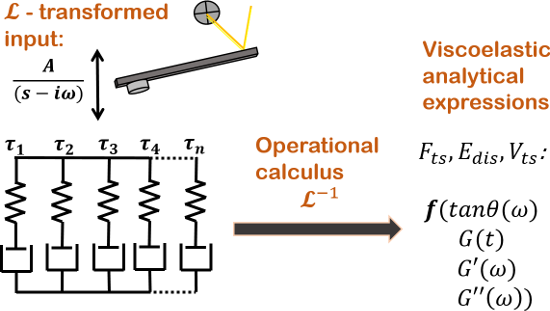
- . As a final comment on the dissipated energy, we point out that both simulations and analytics assume that dissipation stems exclusively from viscoelastic dissipation and the adhesion force [41][42]. This neglects other sources, such as capillary forces [41], rate dependent adhesion forces, and long


Bi-layer sandwich film for antibacterial catheters
Beilstein J. Nanotechnol. 2017, 8, 1982–2001, doi:10.3762/bjnano.8.199
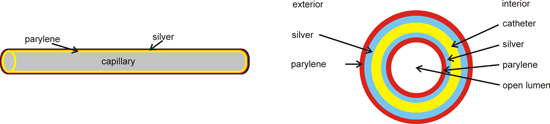
- during heating of the precursor, and exponential decrease of the layer thickness along the capillary, have been solved trough the application of a simple electrochemical reaction and two standard principles of physics: Papin’s pot and the principle of Le Chatelier. Keywords: catheters; chemical vapor
- polymer, which will be subsequently formed to an infinite catheter (capillary) by extruding, with an active reagent or developing a coating of the interior and exterior side of the capillary. For the first alternative, it is imperative that the active species must not be coated by the organic polymer, so
- pastry that was subjected to the extruding process, yielding randomly distributed silver particles in the wall of the capillary (Figure 1). The charm of this technique is its simplicity which offers potential for a large production scale, and large numbers are demanded by the market. Although it was


Self-assembly of chiral fluorescent nanoparticles based on water-soluble L-tryptophan derivatives of p-tert-butylthiacalix[4]arene
Beilstein J. Nanotechnol. 2017, 8, 1825–1835, doi:10.3762/bjnano.8.184
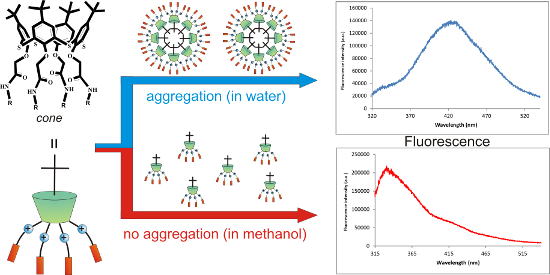
- analysis was performed on Perkin–Elmer 2400 Series II instruments. Mass spectra (ESI) were recorded on an AmaZonX mass spectrometer (Bruker Daltonik GmbH, Germany). The drying gas was nitrogen at 300 °С. The capillary voltage was 4.5 kV. The samples were dissolved in acetonitrile (concentration ≈10−6 g/mL



Uptake and intracellular accumulation of diamond nanoparticles – a metabolic and cytotoxic study
Beilstein J. Nanotechnol. 2017, 8, 1649–1657, doi:10.3762/bjnano.8.165
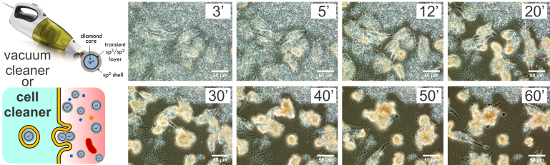
- diamond nanoparticles The size of the ND particles and their zeta potential was determined by dynamic light scattering (DLS) measurements in water at 25 °C using a Nano-ZetaSizer (Malvern, UK) equipped with an He-Ne laser. A separate disposable folded capillary cell was used for each set of ND


Cationic PEGylated polycaprolactone nanoparticles carrying post-operation docetaxel for glioma treatment
Beilstein J. Nanotechnol. 2017, 8, 1446–1456, doi:10.3762/bjnano.8.144
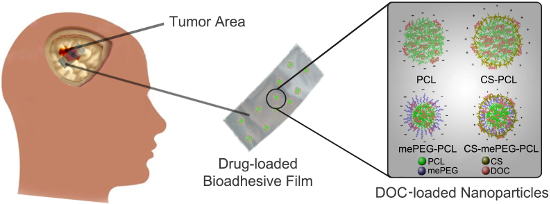
- Malvern NanoZS (Malvern Instruments, UK). All formulations were measured at a scattering angle of 173° at a temperature 25 °C (n = 3). The surface charge of the nanoparticles was determined by using a disposable capillary cell with the Malvern Zetasizer Nano ZS at room temperature (n = 3). Physical




Hierarchically structured nanoporous carbon tubes for high pressure carbon dioxide adsorption
Beilstein J. Nanotechnol. 2017, 8, 1135–1144, doi:10.3762/bjnano.8.115
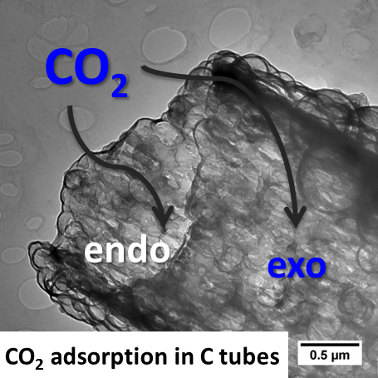
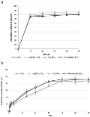
- which was identified as SiO2 by EDX analysis. Obviously, a small amount of the oxide particles is completely embedded in the molten PS fibres during the thermal treatment so that a complete etching by HF is not possible. With the observed capillary condensation at high relative pressure, the adsorption


The integration of graphene into microelectronic devices
Beilstein J. Nanotechnol. 2017, 8, 1056–1064, doi:10.3762/bjnano.8.107
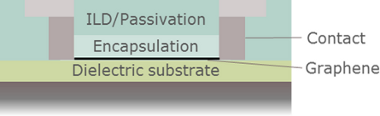
- methods are using a catalytic metal layer, one approach is the in situ removal of the metal layer between graphene and dielectric substrate by wet etching. In order to attach the graphene film to the substrate an additional adhesion mechanism has to be involved. One approach is the use of capillary forces


Assembly of metallic nanoparticle arrays on glass via nanoimprinting and thin-film dewetting
Beilstein J. Nanotechnol. 2017, 8, 1049–1055, doi:10.3762/bjnano.8.106
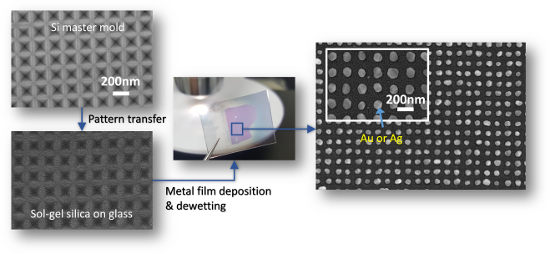
- void edges due to capillary-driven diffusion, and is completed with the formation of particles [35][36]. On a silicon template with inverted pyramidal pits (lightly oxidized to form 10 nm thick silica), however, the pits in the template modulate in the curvature of the as-deposited film, which induces


Structural properties and thermal stability of cobalt- and chromium-doped α-MnO2 nanorods
Beilstein J. Nanotechnol. 2017, 8, 1032–1042, doi:10.3762/bjnano.8.104
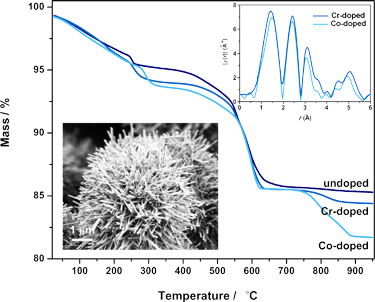
- by coupling the TGA/DSC1 Instrument with a quadrupole mass spectrometer Thermostar (Balzers). In this case, the initial mass of the sample was around 5 mg. Evolved gases were transferred via heated quartz capillary (T = 190 °C) to the entrance of the mass spectrometer. X-ray diffractograms of the


Bio-inspired micro-to-nanoporous polymers with tunable stiffness
Beilstein J. Nanotechnol. 2017, 8, 906–914, doi:10.3762/bjnano.8.92
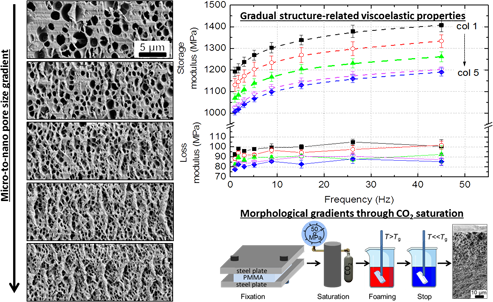
- storage modulus; Introduction Functional adaptation through porous structures is widely present in nature [1]. Natural structures are often made of hierarchical porous networks, serving mainly for passive mechanical functions [1][2][3], but also for capillary channels and membranes [1]. Nature offers


Functional dependence of resonant harmonics on nanomechanical parameters in dynamic mode atomic force microscopy
Beilstein J. Nanotechnol. 2017, 8, 883–891, doi:10.3762/bjnano.8.90
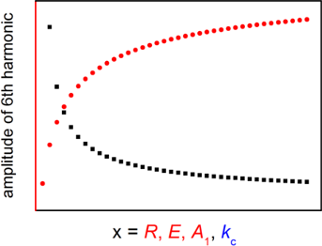
- with a well-defined radius R. For simplicity neither viscoelastic nor capillary forces have been considered. The negligible contribution of viscoelastic forces in PS with 25 N/m cantilevers is discussed in the Supporting Information File 1 (see Figure S3). Experimental AFM experiments have been


Measuring adhesion on rough surfaces using atomic force microscopy with a liquid probe
Beilstein J. Nanotechnol. 2017, 8, 813–825, doi:10.3762/bjnano.8.84
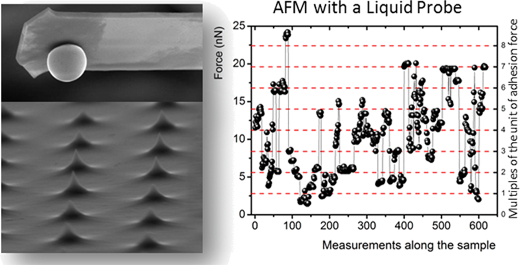
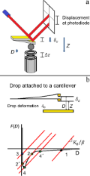
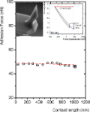
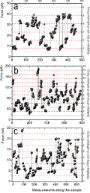
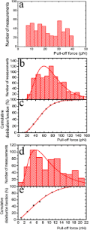
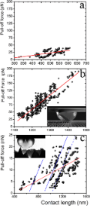
- nanometer-sized peaks commonly used for the determination of AFM tip sharpness and a multi-scaled rough diamond surface containing sub-micrometer protrusions. Measurements are carried out in a nitrogen atmosphere to avoid water capillary interactions. We obtain information about the average force of
- the colloidal particle on a tipless cantilever. The force required to pull the drop off a surface is measured in a nitrogen atmosphere to avoid water capillary interactions. The liquid probe is close to what would be expected to be a smooth probe down to the atomic level. Recently, we reported an
- be able to compare the value with published data. In this case, we obtain Fadh = 48.5 ± 0.1 nN (kc = 0.346 N/m). The measured Fadh in air is close to the value measured in vacuum, revealing the low humidity of our ambient conditions because forces of capillary origin seem to be negligible. Leite et

First examples of organosilica-based ionogels: synthesis and electrochemical behavior
Beilstein J. Nanotechnol. 2017, 8, 736–751, doi:10.3762/bjnano.8.77
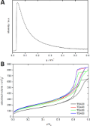
- IV isotherm typical of mesoporous solids. The H2 hysteresis loop is due to capillary condensation in the mesopores and is attributed to differences between condensation and evaporation processes occurring in pores with narrow necks and wide cavities often referred to as ink bottle pores. The late








Vapor deposition routes to conformal polymer thin films
Beilstein J. Nanotechnol. 2017, 8, 723–735, doi:10.3762/bjnano.8.76
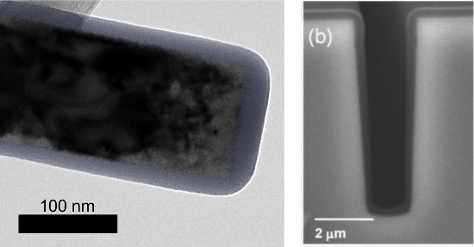
- 1a) or capillary bridge formation over a feature (Figure 1b). By contrast, vapor phase techniques are controlled by the individual adsorption of small molecules and their subsequent surface reaction to form a polymer film. In this case, the only interaction energy of concern is between the molecule
- wetting properties of capillary pore membranes, as seen in Figure 7c [4]. To determine the coating conformality, electron microprobe analysis (EMPA) was used to measure the fluorine signal down the pore wall of a coated membrane and presented in Figure 7d. While the fluorine signal is detected at the
- ) on a commercial sponge using iCVD [46]. Figure 9b shows the iCVD coating conformally covering the sponge’s microstructure. Previously, Lau et al. demonstrated conformal coverage of iCVD grown fluoropolymers on vertically aligned carbon nanotube (CNT) forests to prevent capillary densification as seen


Dispersion of single-wall carbon nanotubes with supramolecular Congo red – properties of the complexes and mechanism of the interaction
Beilstein J. Nanotechnol. 2017, 8, 636–648, doi:10.3762/bjnano.8.68
- -like structures formed in 2 mg/mL and 5 mg/mL solutions. The analysis was performed using NANO DSC Series III System (model 6300) with Platinum Capillary Cell (TA Instruments) equipped with Nano DSCRun software. In order to avoid the formation of air bubbles during the heating, the samples were
- degassed for 10–15 min before the measurement using the negative pressure of 0.3–0.5 atm. A reference chamber was filled with a buffer used for the analysed sample. All the measurements were performed at 3 bar pressure in a 0.33 mL capillary cell. Data was collected in the range of 10–90 °C at 1 °C·min−1


Formation and shape-control of hierarchical cobalt nanostructures using quaternary ammonium salts in aqueous media
Beilstein J. Nanotechnol. 2017, 8, 494–505, doi:10.3762/bjnano.8.53
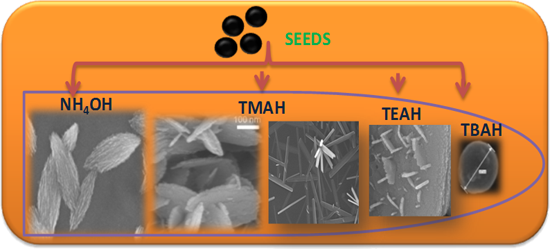
- or by thermal decomposition [18]. An alternative way to obtain complex hierarchical nanostructures is the controlled assembly of primary building blocks using electric and magnetic forces, capillary effects, and surface defects. Fascinating shapes such as, rice grain-like structures were formed by


Fiber optic sensors based on hybrid phenyl-silica xerogel films to detect n-hexane: determination of the isosteric enthalpy of adsorption
Beilstein J. Nanotechnol. 2017, 8, 475–484, doi:10.3762/bjnano.8.51
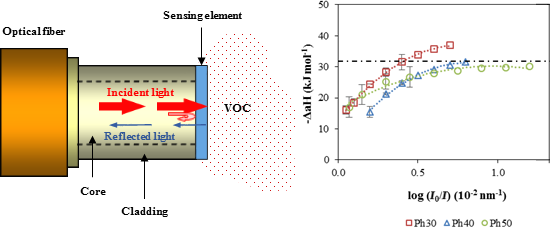
- in the molar percentage of PhTEOS in the mixture of silicon precursors. As the percentage of PhTEOS increased, the position of the capillary condensation step shifted towards higher relative pressure, indicating an increase in pore size. The hysteresis loops did not close at p/pº of 0.42, as is






Microfluidic setup for on-line SERS monitoring using laser induced nanoparticle spots as SERS active substrate
Beilstein J. Nanotechnol. 2017, 8, 237–243, doi:10.3762/bjnano.8.26
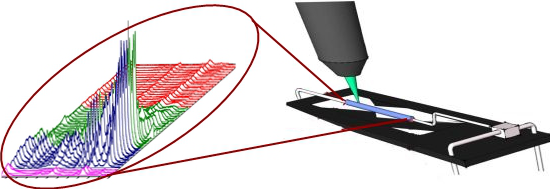
- of residues of malachite green (MG) using surface-enhanced Raman scattering (SERS) is reported. The SERS active substrate was prepared via laser induced synthesis of silver or gold nanoparticles spot on the bottom of a 200 μm inner dimension glass capillary, by focusing the laser beam during a
- detection of the analyte, as shown schematically in Figure 1a. SERS monitoring of MG adsorbed on silver nanoparticle spots The synthesis of the SERS active silver nanoparticles spot was carried out by laser-induced spot synthesis [24] inside the glass capillary. The silver nitrate and sodium citrate
- solution was injected in a continuous flow into the microfluidic capillary while the laser beam (λ = 514.7 nm) was focused on the bottom part of the capillary. As illustrated in the schematic diagram in Figure 1a, the exposure of the silver/citrate mixture to the laser beam causes the photoinduced





