


Search results
Search for "cathode" in Full Text gives 169 result(s) in Beilstein Journal of Nanotechnology.
Electrochemical and electron microscopic characterization of Super-P based cathodes for Li–O2 batteries
Beilstein J. Nanotechnol. 2013, 4, 665–670, doi:10.3762/bjnano.4.74
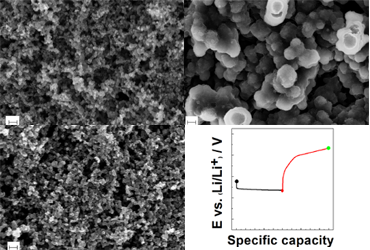
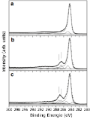
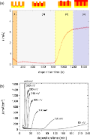
- (trifluoromethane)sulfonimide lithium salt (LiTFSI)/tetraglyme electrolyte were investigated by galvanostatic cycling and electrochemical impedance spectroscopy measurements. Ex-situ X-ray diffraction and scanning electron microscopy were used to evaluate the formation/dissolution of Li2O2 particles at the cathode
- electrolyte. The electrochemical behaviors of the batteries were investigated by galvanostatic cycling and electrochemical impedance spectroscopy. The physico–chemical investigation of the lithium-oxide phases that form and dissolve at the cathode side upon discharge and charge of Li–O2 batteries has been
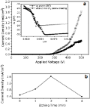
- kV. The images were acquired using a secondary-electron detector with an in-lens configuration. Results and Discussion The first galvanostatic discharge/charge curve of a typical Li–O2 battery that has a carbon-based cathode, a lithium metal anode and LiTFSI/tetraglyme electrolyte is reported in


Preparation of electrochemically active silicon nanotubes in highly ordered arrays
Beilstein J. Nanotechnol. 2013, 4, 655–664, doi:10.3762/bjnano.4.73
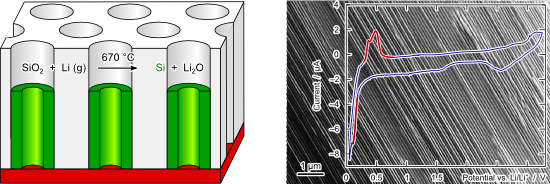
- . Scanning electron micrographs were taken on a Zeiss Evo equipped with LaB6 cathode or a Zeiss Sigma with field emission. Nuclear magnetic resonance spectra were recorded on a Bruker Avance II 400 spectrometer, equipped with a 4-mm magic angle spinning probe. For 29Si NMR, 10000 free induction decays were





Ultramicrosensors based on transition metal hexacyanoferrates for scanning electrochemical microscopy
Beilstein J. Nanotechnol. 2013, 4, 649–654, doi:10.3762/bjnano.4.72
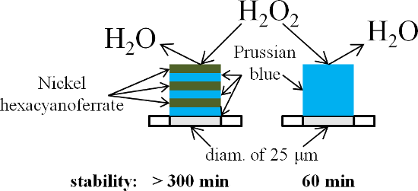
- molecules as it is produced in the cathode chamber of the hydrogen–oxygen fuel cells causing degradation of the proton-exchange membranes [5]. Investigations of the local distribution of hydrogen peroxide on the surface of living cells and electrode materials as well as the in vivo analysis requires sensors


AFM as an analysis tool for high-capacity sulfur cathodes for Li–S batteries
Beilstein J. Nanotechnol. 2013, 4, 611–624, doi:10.3762/bjnano.4.68
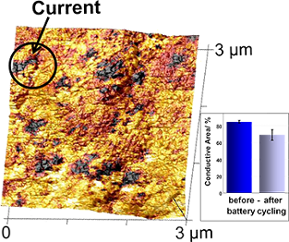
- particles. Based on the analytical findings, the first results of an optimized cathode showed a much improved discharge capacity of 800 mA·g(sulfur)−1 after 43 cycles. Keywords: conductive AFM; high capacity; lithium-sulfur batteries; material-sensitive AFM; sulfur cathode; Introduction Lithium
- -material and parasitic reactions of dissolved polysulfides at the Li electrode and (3) the morphological and volumetric changes of the cathode material upon cycling [3][4]. The redox reaction of the sulfur cathode can only occur when the sulfur is in contact with the carbon because of the insulating nature
- of sulfur. In this regard, an ideal cathode would be composed of a continuous, electronically conductive carbon network coated with a monolayer of sulfur. The contact between the carbon–sulfur composite and the current collector is also a very important parameter for the performance of the Li–S



Large-scale atomistic and quantum-mechanical simulations of a Nafion membrane: Morphology, proton solvation and charge transport
Beilstein J. Nanotechnol. 2013, 4, 567–587, doi:10.3762/bjnano.4.65
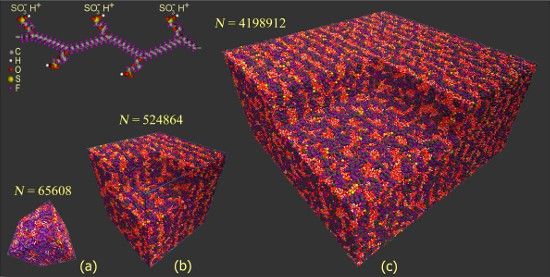
- positively charged hydrogen ions (protons) from the anode to the cathode; also, it serves as a barrier to fuel gas cross-leaks and electrical insulation between the electrodes. On the anode side, hydrogen fuel diffuses to the anode catalyst where it dissociates into electrons e– and protons H+: H2 ↔ 2H+ + 2e
- –. The hydrated polymer membrane behaves as a solid electrolyte: it swells in the presence of water and passes through into cathode compartment only positively charged protons. On the cathode catalyst, they react exothermically with oxygen molecules and electrons (which have traveled through the external
- process of proton transfer from anode to cathode, which is responsible for overall FC efficiency [1]. The membranes are manufactured from special polymers containing both nonpolar atom groups and a relatively small number of polar groups that can dissociate in the water environment to give ions. Such


A nano-graphite cold cathode for an energy-efficient cathodoluminescent light source
Beilstein J. Nanotechnol. 2013, 4, 493–500, doi:10.3762/bjnano.4.58
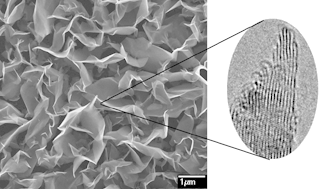
- appropriate phosphor materials. In this paper we propose a nano-graphite film material as a highly efficient cold cathode, which is able to produce high intensity electron beams without energy consumption. The nano-graphite film material was produced by using chemical vapor deposition techniques. Prototypes
- excited electron into radiation, is therefore attractive for light generation [5]. The most suitable source of electrons is the field emission (FE) cathode [5], allowing to exploit the FE effect for the creation of CL light emitting lamps. Cathodes of this type (also called "cold cathodes") are capable of
- -like materials, having the strongest interatomic interaction, are attractive for the FE cathode production. In this paper we describe the production technique and the electron field emission (FE) characteristics of nano-graphite films (NGF) and prototypes of CL lamps with NGF cold cathodes. Results and


Novel composite Zr/PBI-O-PhT membranes for HT-PEFC applications
Beilstein J. Nanotechnol. 2013, 4, 481–492, doi:10.3762/bjnano.4.57
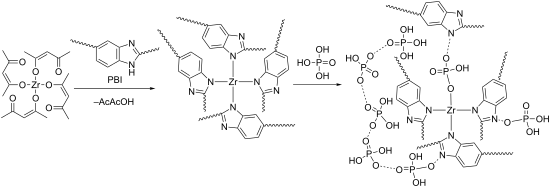
- operated at a constant current density of 0.4 A·cm−2 for a 50 hour break-in. Pure hydrogen and air were supplied separately to the anode and cathode electrodes, respectively, without any humidification or excessive pressure. The gas flows were controlled by Bronkhorst El-Flow mass-flow controllers, which
- used an RS-232 interface. During the electrochemical measurements the air flow on the cathode was kept at a rather high value of 200 mL·min−1 (corresponding to a stoichiometry of about 6 for a current density j = 0.4 A·cm−2) to minimize the oxygen-transport limitations [19]. Steady state polarization
- resistance of a cell, Rm, (mainly membrane resistance); the distributed resistance of proton transport in the cathode AL, Rel; the charge transfer resistance, Rct; and the double layer capacitance, C (Figure 2). Fitting of the impedance spectra was performed by means of the Zview modelling software using the


Electrospinning preparation and electrical and biological properties of ferrocene/poly(vinylpyrrolidone) composite nanofibers
Beilstein J. Nanotechnol. 2013, 4, 189–197, doi:10.3762/bjnano.4.19

- ). The data show that there is also a gradual decrease in cathode current with an increase in tryptophan concentration. This could be explained by the fact that Fc+ has a strong coordinating capacity with tryptophan ions. It is relatively hard for the Fc+ to escape from the tryptophan ion, which


Influence of diffusion on space-charge-limited current measurements in organic semiconductors
Beilstein J. Nanotechnol. 2013, 4, 180–188, doi:10.3762/bjnano.4.18
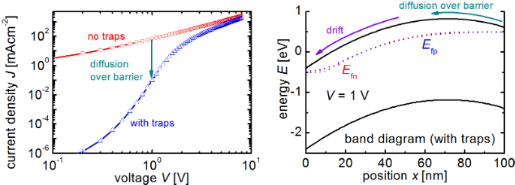
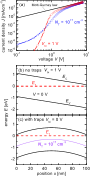
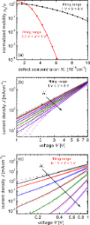
- is only well reproduced by the Mott–Gurney law at higher voltages, while its slope tends to be more ohmic (~V) than space-charge-limited (~V2) at lower voltages. This phenomenon has been described in the past [41] and is related to the movement of the virtual cathode (the point of zero electric field
- ) as a function of voltage. Figure 1b shows that the point of zero field is close to but not at the cathode, even in the cases without traps. In the derivation of the Mott–Gurney law it is assumed that the point of zero electric field is fixed at the actual cathode, which has previously been shown to
- injecting contact that impedes the flow of electrons from the injecting cathode at x = d towards the electron extracting contact at x = 0. The existence of this barrier means that more voltage has to be applied to achieve the same current flow than without the barrier. Thus, the current at a given voltage


Functionalization of vertically aligned carbon nanotubes
Beilstein J. Nanotechnol. 2013, 4, 129–152, doi:10.3762/bjnano.4.14
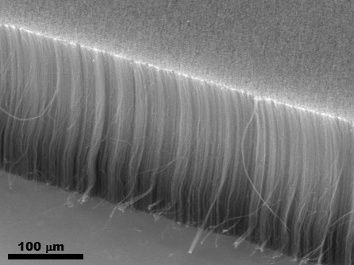
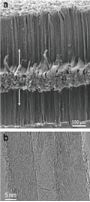
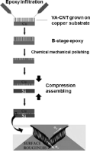
- without a coaxial layer of vanadium oxide (V2O5) as cathode and anode, respectively. Due to their unique properties (e.g., large surface area, electrical conductivity, regular pore structure, electrolyte accessibility, charge transport), they are candidates for replacing traditional electrodes. Instead of








Diamond nanophotonics
Beilstein J. Nanotechnol. 2012, 3, 895–908, doi:10.3762/bjnano.3.100
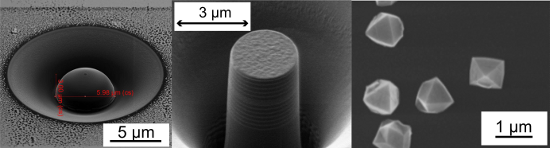
- was hence ascribed to impurities originating from the filament material and accordingly from the cathode material of the reactor systems. The observation of the W5-luminescence in diamond layers grown with the addition of W(CO)6 confirms the previous assignment. The gas-phase doping approach offered


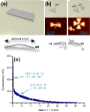




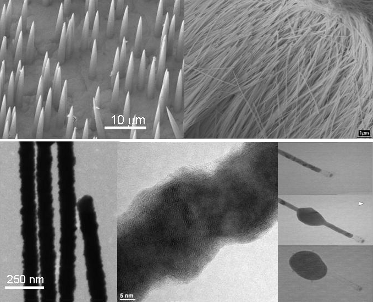
Characterization and properties of micro- and nanowires of controlled size, composition, and geometry fabricated by electrodeposition and ion-track technology
Beilstein J. Nanotechnol. 2012, 3, 860–883, doi:10.3762/bjnano.3.97
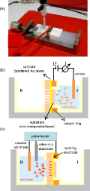
- monitored by chronoamperometric current–time (I–t) curves. In the two-electrode arrangement the potential Uc is applied between cathode and anode. In the three-electrode arrangement, reference electrodes such as saturated silver/silver chloride (Ag/AgCl/sat. KCl) and saturated calomel electrodes (SCE) are
- dominates [61]. It should be noted, that other than on a macroelectrode surface, the wire deposition process occurs in a recessed electrode ensemble, and that the cathode surface is placed, at the beginning of the process, at the bottom of the channels and shifts to the opposite surface during the nanowire
- the deposition. Addition of sulphuric acid increases the conductivity of the solution and lowers the cathode overvoltage. Electrodeposition is typically performed potentiostatically in a two-electrode arrangement by using a copper anode, at temperatures between 25 and 70 °C. By applying low








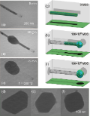
Low-temperature synthesis of carbon nanotubes on indium tin oxide electrodes for organic solar cells
Beilstein J. Nanotechnol. 2012, 3, 524–532, doi:10.3762/bjnano.3.60
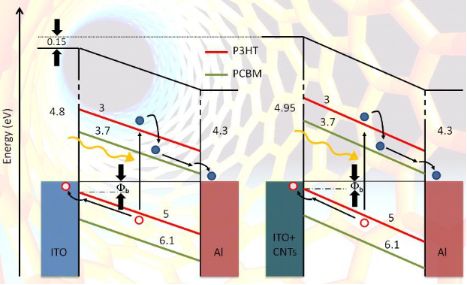
- the fullerene derivative acts as an electron acceptor [6]. The holes move in the polymeric phase towards the anode, while the electrons hop along the fullerenes and eventually reach the cathode. Since the diffusion length of the exciton in the polymers is very low, recombination is highly probable
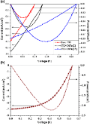
- -coated glass, which had been previously cleaned with acetone and isopropyl alcohol in ultrasonic baths. A 100 nm thick Al cathode was then thermally evaporated in high vacuum (~2 × 10⁻⁶mbar), by using a shadow mask with 3 mm wide stripes. The final device had an active area of 25 mm2. Reference cells




A facile approach to nanoarchitectured three-dimensional graphene-based Li–Mn–O composite as high-power cathodes for Li-ion batteries
Beilstein J. Nanotechnol. 2012, 3, 513–523, doi:10.3762/bjnano.3.59
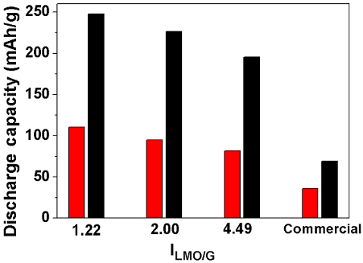
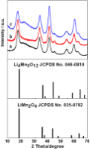
- can help to reduce the dissolution of Mn2+ into the electrolyte, as indicated by the inductively coupled plasma (ICP) measurements, and which is mainly attributed to the large specific surface area of the graphene sheets. Keywords: cathode; graphene; Li-ion battery; lithium manganate; Introduction
- Lithium-ion batteries (LIBs) are considered the primary candidate as the power source for plug-in and hybrid electric vehicles [1]. Although LiCoO2 is widely used as a commercial cathode for Li-ion batteries, there are several drawbacks, including high cost and toxicity. Spinel Lithium Manganate (LMO) is
- a promising cathode material for rechargeable Li-ion batteries due to the high energy density, improved operating safety, low cost and low toxicity [2]. However, the low electrical conductivity (10−6 S·cm−1) and poor cycling performance of LMO are the main issues associated with this material [3][4




Parallel- and serial-contact electrochemical metallization of monolayer nanopatterns: A versatile synthetic tool en route to bottom-up assembly of electric nanocircuits
Beilstein J. Nanotechnol. 2012, 3, 134–143, doi:10.3762/bjnano.3.14
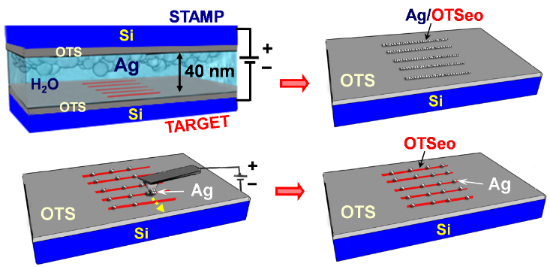
- cathode [30]. Metal-on-monolayer features resulting from the serial CEP–CET process executed with a moving SFM tip were shown to correspond to the OTSeo features defined in the pattern inscription step (CEP), whereas those produced with a stamp (parallel mode) were replicas of the stamp metal features [30
- , to the target monolayer (cathode), where effective nucleation and growth of stable metal grains (following the reduction of Ag+ ions to neutral atoms) can occur only at those surface sites that bind the ions, which correspond to the carboxylic acid terminated OTSeo lines of the template nanopattern
- electrochemical rather than adhesion-promoted [32][33][34][35], involving dissolution of stamp-metal grains (anode), ionic transport through an ultrathin water film adsorbed on the metal grains, and subsequent nucleation and growth of new metal grains at the target monolayer (cathode); (ii) metal grains can


Superhydrophobic surfaces of the water bug Notonecta glauca: a model for friction reduction and air retention
Beilstein J. Nanotechnol. 2011, 2, 137–144, doi:10.3762/bjnano.2.17
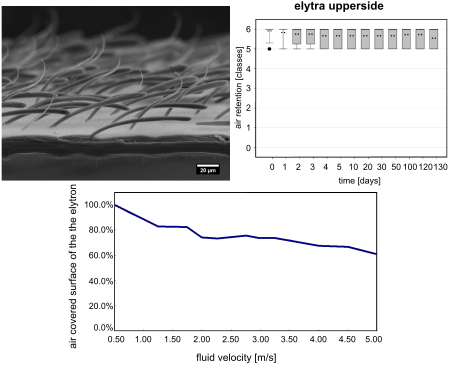
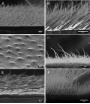
- made holder [25][36], which allowed the examination of all sides. The specimens were examined with a Cambridge Stereoscan 200 scanning electron microscope (SEM) (Cambridge Instruments Ltd., Cambridge, UK) using a tungsten cathode and accelerating voltages between 5 and 15 kV. To determine structural



Schottky junction/ohmic contact behavior of a nanoporous TiO2 thin film photoanode in contact with redox electrolyte solutions
Beilstein J. Nanotechnol. 2011, 2, 127–134, doi:10.3762/bjnano.2.15
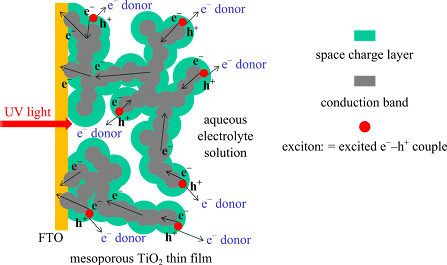
- materials have promising capabilities applicable for the construction of various photonic and electronic devices. In this paper, a mesoporous TiO2 thin film photoanode was soaked in an aqueous methanol solution using an O2-reducing Pt-based cathode in contact with atmospheric air on the back side. It was
- ]. The present authors have reported a cell composed of a nanoporous semiconductor photoanode and an O2-reducing cathode that can efficiently photodecompose various bio-related compounds in water [11][12]. When ammonia was present in water in contact with a nanoporous TiO2 photoanode, the semiconductor
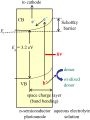
- are transported first to the fluorine-doped tin oxide (FTO, SnO2:F) conductive layer through TiO2 grain boundaries and then to the cathode reducing electron acceptor there (O2 in the present case). In a Schottky junction, under the conditions when the band structure is flat without any bending, the




Structure, morphology, and magnetic properties of Fe nanoparticles deposited onto single-crystalline surfaces
Beilstein J. Nanotechnol. 2011, 2, 47–56, doi:10.3762/bjnano.2.6
- beamline of the Swiss Light Source of the Paul Scherrer Institute (Villigen, Switzerland) [29]. The ACIS consists of three different stages as shown in Figure 1a: (A) the cluster aggregation part based on a hollow cathode made from the target material (here: Fe with a purity of higher than 99%), (B) a dual
- pumping stage with an oil-free roots pump (250 m3·h−1) and a turbo molecular pump (250 l·s−1) to reduce the huge amount of noble gas (Ar and He) required for the erosion process and (C) a mass-filtering unit based on an electrostatic quadrupole. The cluster material is eroded from the hollow cathode in
- negatively charged (mostly single charged) and are thus deflected in the electric field of the electrostatic quadrupole. Due to their nearly constant velocity after the expansion process in the hollow cathode, the kinetic energy of the particles is directly related to their mass allowing a separation by

Low-temperature solution growth of ZnO nanotube arrays
Beilstein J. Nanotechnol. 2010, 1, 128–134, doi:10.3762/bjnano.1.15
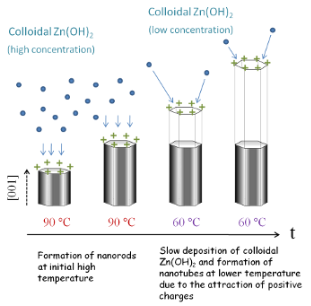
- V was applied to the ITO substrate as cathode and a platinum plate was used as the anode. The deposition time was about 5 min. The substrate was subsequently heat-treated at 500 °C for 30 min to improve the crystallinity of the film of ZnO nanocrystallites. For the growth of ZnO nanorods, the ZnO





