


Search results
Search for "cobalt" in Full Text gives 198 result(s) in Beilstein Journal of Nanotechnology.
Magnetic properties of iron cluster/chromium matrix nanocomposites
Beilstein J. Nanotechnol. 2015, 6, 1158–1163, doi:10.3762/bjnano.6.117
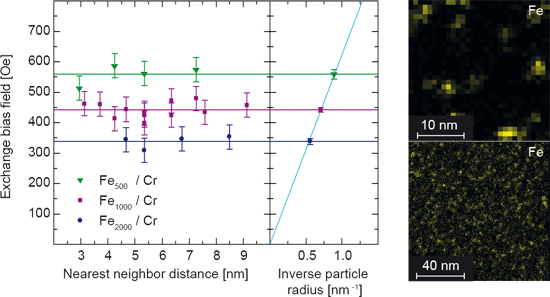
- , and is usually accompanied by an increase of coercivity (Hc) and of the blocking temperature (TB). The EB was first described by Meiklejohn and Bean in 1956 [4]. They investigated clusters with a FM cobalt core and an AFM cobalt oxide (CoO) shell and consequently observed the characteristic horizontal


Charge carrier mobility and electronic properties of Al(Op)3: impact of excimer formation
Beilstein J. Nanotechnol. 2015, 6, 1107–1115, doi:10.3762/bjnano.6.112
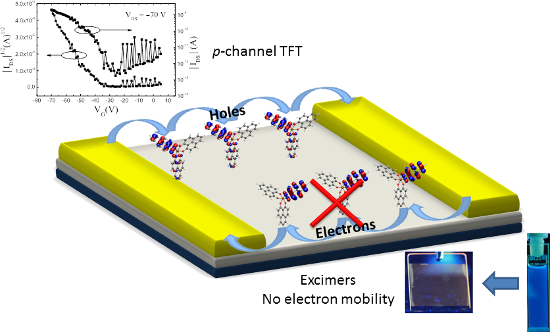
- additional electrons, and thus, Al(Op)3, should be characterized by both lower HOMO and LUMO energy levels as compared to Alq3. In a recent work, Al(Op)3 deposited on a magnetic cobalt substrate was investigated by means of ultraviolet photoemission spectroscopy (UPS) and near-threshold photoemission
- spectroscopy (NT-PS) [16]. The purpose was to study the spin-dependent properties of the Co/Al(Op)3 hybrid interface in comparison with the Co/Alq3 hybrid interface [17]. Due to the difference in the aromatic structures of Al(Op)3 and Alq3, which influences the chemisorption onto the cobalt substrate, it was
- calculated to be −5.93 eV, in fairly good agreement with the HOMO energy previously estimated by UPS on 1.5 and 5 nm films of Al(Op)3 deposited on cobalt which are −6.5 and −6.9 eV, respectively [16]. According to the same procedure, the HOMO–LUMO gap and the HOMO energy of Alq3 were estimated to be 2.82 and


High sensitivity and high resolution element 3D analysis by a combined SIMS–SPM instrument
Beilstein J. Nanotechnol. 2015, 6, 1091–1099, doi:10.3762/bjnano.6.110
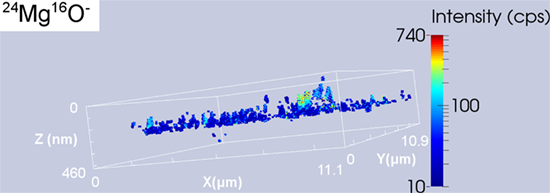
- re-sputtered and extracted by the secondary optics of the mass spectrometer. Titanium carbonitride-based cermet The titanium carbonitride-based cermet consists of Ti(C,N) grains with a cobalt binder percolating the ceramic grains [21]. Figure 3 shows two snapshots of a Ti(C,N) sample analysed by


Tunable magnetism on the lateral mesoscale by post-processing of Co/Pt heterostructures
Beilstein J. Nanotechnol. 2015, 6, 1082–1090, doi:10.3762/bjnano.6.109
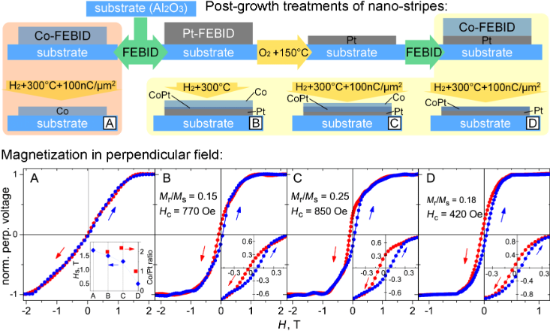
- hard-magnetic behavior for post-processed Co/Pt nano-stripes with coercive fields up to 850 Oe. We attribute the observed effects to the locally controlled formation of the CoPt L10 phase, whose presence has been revealed by transmission electron microscopy. Keywords: cobalt; focused electron beam
- . The employed purification procedure of heating at 300 °C in H2 atmosphere in conjunction with electron irradiation relies upon the Fischer–Tropsch reaction [30][43]. In this chemical process, cobalt serves as a catalyst, while volatile hydrocarbons and water are produced, effectively oxidizing the


Fabrication of high-resolution nanostructures of complex geometry by the single-spot nanolithography method
Beilstein J. Nanotechnol. 2015, 6, 976–986, doi:10.3762/bjnano.6.101
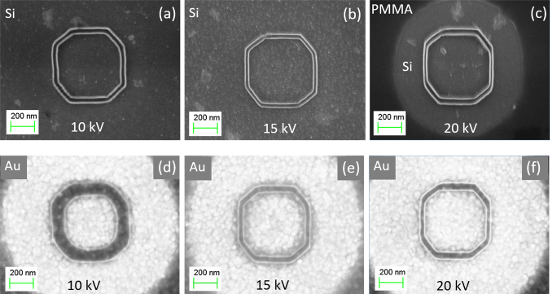
- were sputtered with a magnetron in vacuum with a 20 nm-thick cobalt film. This resulted in 3D magnetic nanostructures with unusual spin configurations that potentially can be used in magnetic sensing technologies, memory, logic and biomedical applications [20]. Moreover, the single-spot nanolithography


Magnetic properties of self-organized Co dimer nanolines on Si/Ag(110)
Beilstein J. Nanotechnol. 2015, 6, 777–784, doi:10.3762/bjnano.6.80
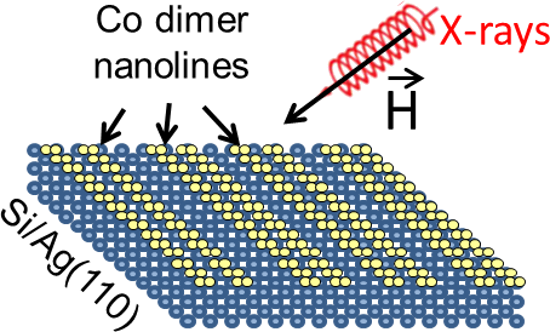
- edge, located at 779.4 eV. The XAS spectra, which clearly show no trace of cobalt silicides [30][31], are characteristic of metallic Co [32]. Such a lineshape has been seen in numerous structures composed of a thin Co layer grown on a metallic substrate [1][4][32][33][34] or an insulating support [35


Influence of gold, silver and gold–silver alloy nanoparticles on germ cell function and embryo development
Beilstein J. Nanotechnol. 2015, 6, 651–664, doi:10.3762/bjnano.6.66
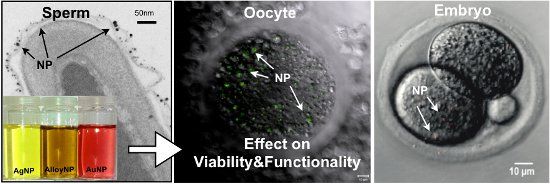
- 3). A possible explanation might be that those agglomerates geometrically interfere with oocyte–sperm interactions. Interestingly, a study investigating the effect of silver, titatium dioxide and cobalt nanoparticles on sea urchin sperm observed no impact on sperm fertilising capability, but





Filling of carbon nanotubes and nanofibres
Beilstein J. Nanotechnol. 2015, 6, 508–516, doi:10.3762/bjnano.6.53
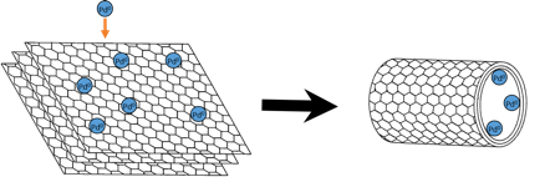
- surface area (SSA, 1315 m2/g) [6] makes MWCNTs an ideal material for application in hydrogen storage [7], capacitors [8] and sensing [9]. Single-walled carbon nanotubes (SWCNTs) were discovered during investigations into the filling of MWCNTs with iron and cobalt [10][11]. Rather than producing a filled
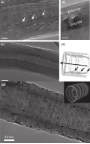
- within the core of a filled MWCNT. This was achieved by first filling a MWCNT with iron, cobalt, nickel, or an iron–cobalt alloy using capillary action. Following this step, the sample was placed inside a transmission electron microscope (with the sample stage temperature set at 600 °C) and subjected to


Hematopoietic and mesenchymal stem cells: polymeric nanoparticle uptake and lineage differentiation
Beilstein J. Nanotechnol. 2015, 6, 383–395, doi:10.3762/bjnano.6.38
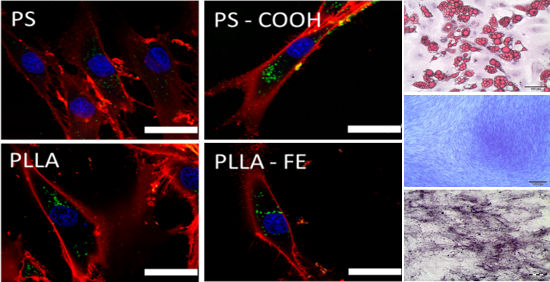
- oxide with a dextran shell), no toxicity and normal differentiation behavior was shown for hHSCs [6][7][8]. A study with diverse inorganic nanoparticles of different sizes showed distinct toxicity for some particles (cobalt, antimony oxide) as well as some negative influence on the differentiation


Synthesis, characterization, monolayer assembly and 2D lanthanide coordination of a linear terphenyl-di(propiolonitrile) linker on Ag(111)
Beilstein J. Nanotechnol. 2015, 6, 327–335, doi:10.3762/bjnano.6.31
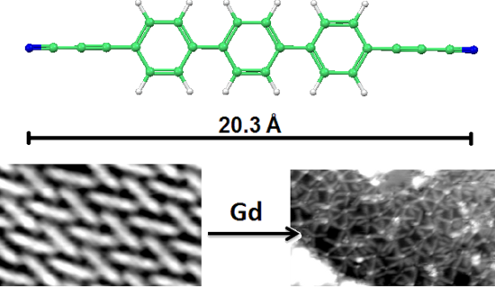
- were obtained on flat Ag(111) surfaces from the exposure of 1-type NC–Phn–CN (n = 3, 4, 5, 6) linkers to cobalt atoms [22][23][48], while the use of lanthanide atoms (Ce, Gd) yielded an Archimedean snub square tiling [20][21]. The underlying driving force for the diversity in results is associated with


Materials and characterization techniques for high-temperature polymer electrolyte membrane fuel cells
Beilstein J. Nanotechnol. 2015, 6, 68–83, doi:10.3762/bjnano.6.8
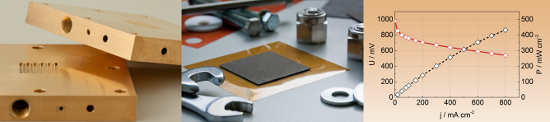
- . To reduce the noble-metal loading of a fuel cell, platinum alloy catalysts such as PtNi and PtCo may be used. However, the stability of these Pt alloy catalysts is questionable partially because, under fuel cell operating conditions, transition metals such as nickel and cobalt are expected to form




Proinflammatory and cytotoxic response to nanoparticles in precision-cut lung slices
Beilstein J. Nanotechnol. 2014, 5, 2440–2449, doi:10.3762/bjnano.5.253
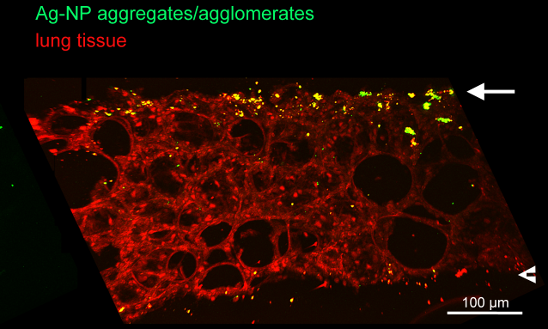
- , there are only a few studies using PCLS in the field of nanotoxicology, yet. It was demonstrated that solid lipid NPs induced a cytotoxic response in PCLS, but only at very high concentrations (1 mg/mL and higher) [15][16][17][18]. Wohlleben et al. reported that a cobalt ferrite nanomaterial elicited a


Interaction of dermatologically relevant nanoparticles with skin cells and skin
Beilstein J. Nanotechnol. 2014, 5, 2363–2373, doi:10.3762/bjnano.5.245
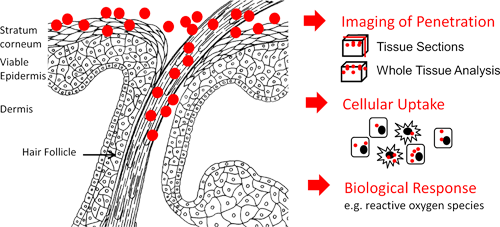
- tissue, especially when mild skin barrier disruption by tape stripping techniques was performed additionally [11][12]. Similarly, penetration of cobalt nanoparticles in the size range of 20–500 nm were found both in intact and abraded human skin [26][27][28], while Abdel-Mottaleb et al. confirmed


In situ metalation of free base phthalocyanine covalently bonded to silicon surfaces
Beilstein J. Nanotechnol. 2014, 5, 2222–2229, doi:10.3762/bjnano.5.231
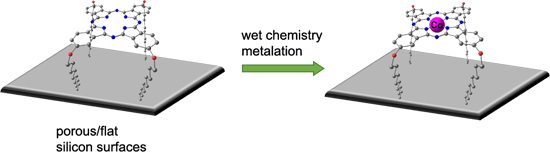
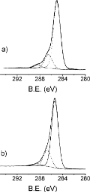
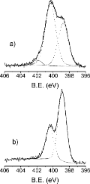
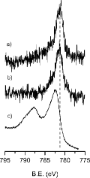
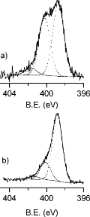
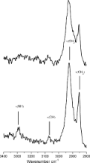
- metalated in situ with Co by using wet chemistry. The efficiency of the metalation process was evaluated by XPS measurements and, in particular, on porous silicon, the complexation of cobalt was confirmed by the disappearance in the FTIR spectra of the band at 3290 cm−1 due to –NH stretches. Finally, XPS
- (Figure 1). 1-Pc covalently bonded to silicon surface was in situ metalated with Co by using a solution of cobalt chloride. The direct formation of Co-Pc on flat and porous Si (Si-Co-Pc and PSi-Co-Pc, respectively) was monitored by XPS and FTIR. In particular, for phthalocyanines anchored on porous Si
- of CoCl2 in diglyme in the presence of triethylamine and then accurately sonicated to remove any physisorbed salt. XPS characterization of cobalt treated Si-1-Pc and PSi-1-Pc samples (Si-Co-Pc and PSi-Co-Pc, respectively) clearly showed the presence of Co, whilst no Cl could be detected (Cl content

Biopolymer colloids for controlling and templating inorganic synthesis
Beilstein J. Nanotechnol. 2014, 5, 2129–2138, doi:10.3762/bjnano.5.222
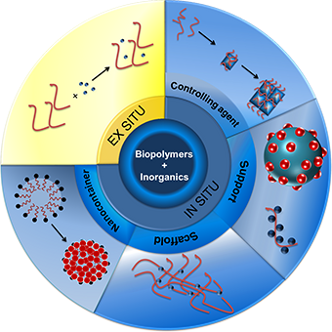
- microparticles through a microgel route and coated them with silica to obtain core–shell composites. In an alternative method, spray-drying of biopolymer and biopolymer/silica solutions was conducted. Magnetic cobalt silicate could be also generated by introducing a cobalt salt during the process. C. Biopolymers
- higher catalytic activity than bulk tungsten trioxide. Other materials, such as cobalt-Prussian blue nanoparticles [75], Zn–Al layered double hydroxide [76], hydroxyapatite [77], and calcium carbonate [78], were also prepared within, or in the presence of, chitosan gels. In a biological approach, calcium


Optical properties and electrical transport of thin films of terbium(III) bis(phthalocyanine) on cobalt
Beilstein J. Nanotechnol. 2014, 5, 2070–2078, doi:10.3762/bjnano.5.215
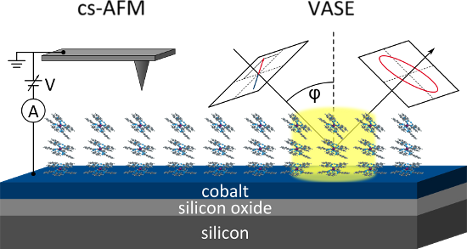
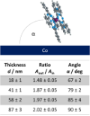
- -Leopoldshafen, Germany, Université de Strasbourg, Institut de Physique et de Chimie des Materiaux de Strasbourg, CNRS UMP 7504, 23 Rue du Loess, 67034 Strasbourg Cedex 2, France 10.3762/bjnano.5.215 Abstract The optical and electrical properties of terbium(III) bis(phthalocyanine) (TbPc2) films on cobalt
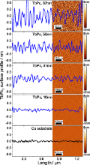
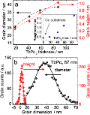
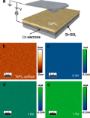
- substrates were studied using variable angle spectroscopic ellipsometry (VASE) and current sensing atomic force microscopy (cs-AFM). Thin films of TbPc2 with a thickness between 18 nm and 87 nm were prepared by organic molecular beam deposition onto a cobalt layer grown by electron beam evaporation. The
- the Tb couples antiferromagnetically to the Co substrate [11]. In this work we focus on the study of other device-relevant aspects: the influence of the film thickness, morphology, and molecular orientation on the electrical transport in TbPc2 layers on polycrystalline cobalt films. The TbPc2 molecule



Carbon nano-onions (multi-layer fullerenes): chemistry and applications
Beilstein J. Nanotechnol. 2014, 5, 1980–1998, doi:10.3762/bjnano.5.207
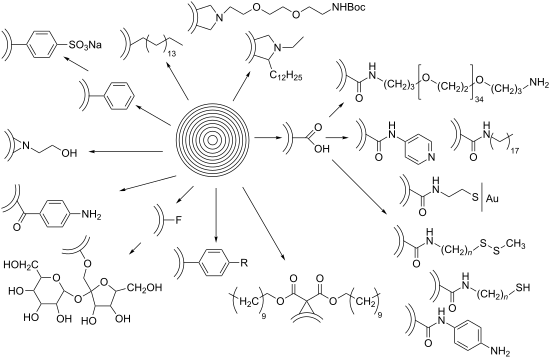
- combination with Co3O4 [64] and MnO2 [65] as electrode material. In the earlier study, the CNO-containing anode material was prepared by a solvo-thermal method from cobalt acetate and CNOs and the authors found that the novel composite material showed improved electrochemical properties, compared to pristine


Synthesis of Pt nanoparticles and their burrowing into Si due to synergistic effects of ion beam energy losses
Beilstein J. Nanotechnol. 2014, 5, 1864–1872, doi:10.3762/bjnano.5.197
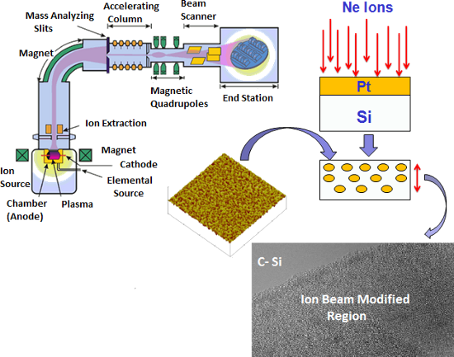
- -organized cobalt clusters in a gold substrate upon thermal activation was reported by Padovani et al. [27]. When the surface energy of the metallic film is larger than that of the substrate, then surface nano-structuring is due to ion-induced sputtering of the film followed by the dewetting of metallic



Liquid fuel cells
Beilstein J. Nanotechnol. 2014, 5, 1399–1418, doi:10.3762/bjnano.5.153
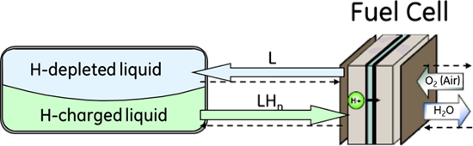
- . PGM catalysts exhibit low catalytic activity in electrooxidadion of carbohydrates. The oxidation of glucose in 1 M KOH in alkaline liquid fuel cells with a PtRu electrocatalyst generates gluconic acid (two-electron process) and 1. 4 mW/cm2 peak power [118]. The use of a Pt/C anode with a cobalt
- derivatives such as carbohydrazide (N2H3)2CO have been proposed to solve this issue [165]. Carbohydrazide has 71% of the capacity of hydrazine, it is miscible with water, and it can be electrochemically oxidized in the presence of inexpensive cobalt porphyrines [165]. Direct borohydride fuel cells The high

Magnesium batteries: Current state of the art, issues and future perspectives
Beilstein J. Nanotechnol. 2014, 5, 1291–1311, doi:10.3762/bjnano.5.143


Self-organization of mesoscopic silver wires by electrochemical deposition
Beilstein J. Nanotechnol. 2014, 5, 1285–1290, doi:10.3762/bjnano.5.142
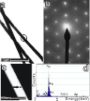
- TEM (STEM) image of a silver wire. Figure 3d shows the EDX spectrum collected from the marked region in Figure 3c. Strong silver element peaks are identified, together with very weak gold, iron, carbon, and cobalt peaks. Gold and carbon signals most likely come from the carbon-covered gold TEM grid
- , on which the sample has been deposited. Cobalt and iron most likely come from the pole pieces of the objective lens. Oxygen and sulfur signals are not observed. Therefore, one can conclude that the silver wires grown in the experiments presented here are chemically pure. The application of silver
- cobalt peaks were also found. Gold and carbon come from the substrate. The cobalt and iron signal comes from the pole pieces of the objective lens; no peak can be attributed to sulfur, nitrogen or oxygen, the latter demonstrating that the silver wires are not oxidized at ambient conditions in air. Auger




Review of nanostructured devices for thermoelectric applications
Beilstein J. Nanotechnol. 2014, 5, 1268–1284, doi:10.3762/bjnano.5.141
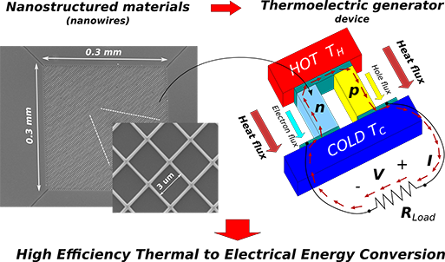
- ][36][37] skutterudites were found with Z factors of about 2 × 10⁻³ K−1, for temperatures up to 800 K. Skutterudites are, in general, based on elements that are not very rare, however sustainability problems could arise from the presence of cobalt. A big research effort has been devoted to the


Electron-beam induced deposition and autocatalytic decomposition of Co(CO)3NO
Beilstein J. Nanotechnol. 2014, 5, 1175–1185, doi:10.3762/bjnano.5.129
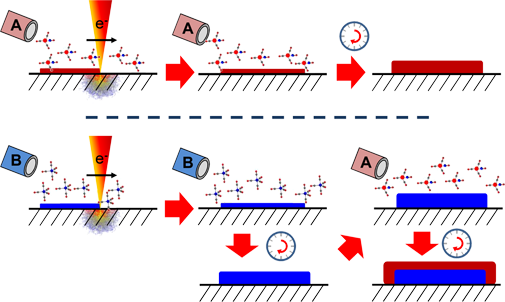
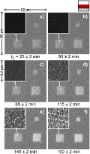
- Erlangen, Germany 10.3762/bjnano.5.129 Abstract The autocatalytic growth of arbitrarily shaped nanostructures fabricated by electron beam-induced deposition (EBID) and electron beam-induced surface activation (EBISA) is studied for two precursors: iron pentacarbonyl, Fe(CO)5, and cobalt tricarbonyl
- observed. In addition, we show that the autocatalytic growth of nanostructures from Co(CO)3NO can also be initiated by an Fe seed layer, which presents a novel approach to the fabrication of layered nanostructures. Keywords: autocatalytic growth; cobalt tricarbonyl nitrosyl; electron-beam induced
- products remain on the surface as a deposit. Some materials can be deposited with high purity, e.g., iron from iron pentacarbonyl, Fe(CO)5 [6][7][8][9], cobalt from dicobalt octacarbonyl, Co2(CO)8 [10][11], or Au from Au(CO)Cl [12]. In addition, EBID offers the advantage of very small obtainable structure




Enhanced photocatalytic hydrogen evolution by combining water soluble graphene with cobalt salts
Beilstein J. Nanotechnol. 2014, 5, 1167–1174, doi:10.3762/bjnano.5.128
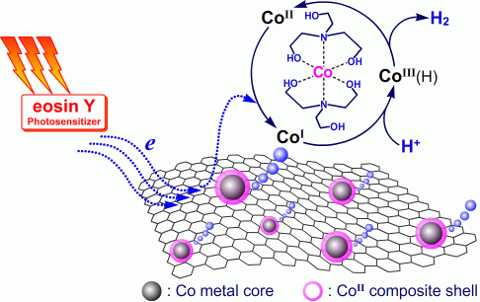
- , Beijing 100190, P. R. China 10.3762/bjnano.5.128 Abstract There is tremendous effort put in the pursuit for cheap and efficient catalysts for photocatalytic hydrogen evolution systems. Herein, we report an active catalyst that uses the earth-abundant element cobalt and water-dispersible sulfonated
- ) in 4 h with respect to the initial concentration of the added cobalt salts was shown to be 5.6 times larger than that without graphene. Keywords: cobalt salts; earth-abundant catalyst; photocatalysis; photocatalytic hydrogen evolution; water-dispersible sulfonated-graphene; Introduction
- promising candidates for catalyzing the hydrogen evolution [6][7][8][9][10][11][12][13][14][15]. Cobalt-based catalysts are particularly attractive catalysts that are easily obtained, environmentally benign and rely on earth-abundant elements [16]. Molecular cobalt catalysts [17], such as polypyridyl


Volcano plots in hydrogen electrocatalysis – uses and abuses
Beilstein J. Nanotechnol. 2014, 5, 846–854, doi:10.3762/bjnano.5.96
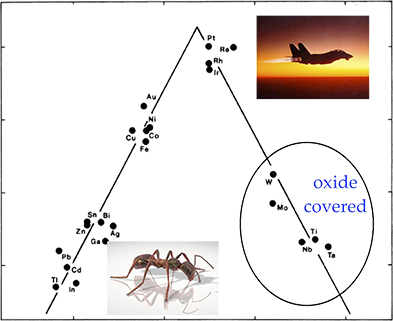
- , that there is no volcano once the oxide-covered metals are left out. We examine the factors that govern the reaction rate in the light of our own theory and conclude, that Sabatier’s principle is only one of several factors that determine the rate. With the exception of nickel and cobalt, the reaction
- faster in acid than in alkaline solutions, and they do not follow a volcano shape. Thus their behavior is not governed by Sabatier’s principle alone. We shall consider nickel and cobalt in detail later, and now focus on the other d metals. Starting from iridium, they ought to form the descending branch
- . Nickel and cobalt are the only metals that lie on the descending branch, and they are worth a special look. Nickel Nickel and cobalt are very similar, and we focus on Ni(111), which is the densest and most stable surface. Nickel is one of the few metals that are spin polarized, and the d bands for spin





