


Search results
Search for "current" in Full Text gives 1463 result(s) in Beilstein Journal of Nanotechnology. Showing first 200.
Natural nanofibers embedded in the seed mucilage envelope: composite hydrogels with specific adhesive and frictional properties
Beilstein J. Nanotechnol. 2024, 15, 1603–1618, doi:10.3762/bjnano.15.126
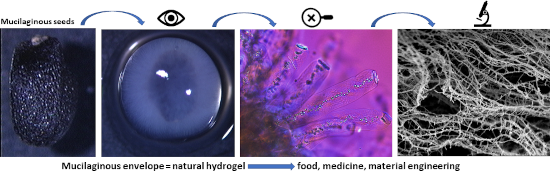
- , three-dimensional network of polysaccharides (cellulose, pectins, and hemicelluloses) and is able to absorb large amounts of water. Depending on the water content, mucilage can behave as an efficient lubricant or as strong glue. The current work attempts to summarise the achievements in the research on
- adhesive properties, and ecological aspects associated with these properties. We also summarise and discuss the results of our studies from the last few years conducted on mucilage envelopes and summarise them to demonstrate the current state of knowledge on this topic (Figure 2). Review Spatial structure


Facile synthesis of size-tunable L-carnosine-capped silver nanoparticles and their role in metal ion sensing and catalytic degradation of p-nitrophenol
Beilstein J. Nanotechnol. 2024, 15, 1576–1592, doi:10.3762/bjnano.15.124
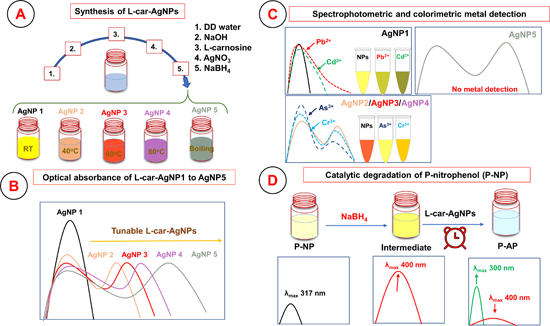
- environmental applications. Current research has paved the way for developing ʟ-carnosine-capped AgNPs (ʟ-car-AgNPs) enabling environmental monitoring and remediation applications. In addition, ʟ-carnosine is a natural compound widely present in the human brain and meat products. Also, it was reported that
- bands and colors of the ʟ-car-AgNPs samples are similar to those published on CTAB-capped silver nanorods [24]. The formation of aggregated nanoparticles in the current study is probably due to the capping of ʟ-carnosine instead of CTAB. In addition, ʟ-carnosine induces a second absorption peak in the




Green synthesis of silver nanoparticles derived from algae and their larvicidal properties to control Aedes aegypti
Beilstein J. Nanotechnol. 2024, 15, 1566–1575, doi:10.3762/bjnano.15.123

- cells, and in vivo models such as Danio rerio (zebrafish). Conclusion Nanotechnology has great potential in current medicinal and agricultural systems, where pests and disease vectors are controlled by chemical pesticides that are toxic to non-target species and harmful to soil fertility and ecosystems


Electrochemical nanostructured CuBTC/FeBTC MOF composite sensor for enrofloxacin detection
Beilstein J. Nanotechnol. 2024, 15, 1522–1535, doi:10.3762/bjnano.15.120
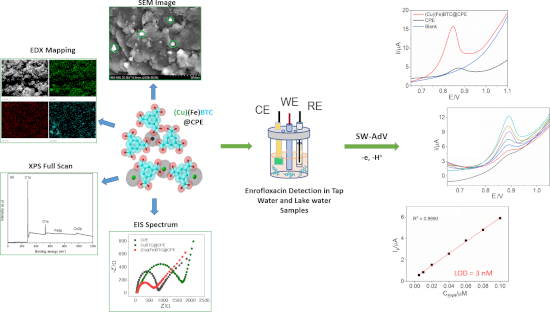
- −6 M [32]. The combination of two types of MOFs has been rarely investigated for the detection of antibiotics. To our current knowledge, no reports have been made on the use of electrodes modified with a mixture of MOFs for the detection of enrofloxacin. In this study, a sensor was developed using a
- current of approximately 6 µA. Therefore, the optimal weight percentages of 5% CuBTC and 5% FeBTC were chosen for electrode fabrication in the subsequent experiments. Effect of supporting electrolyte on the ENR signal The electrolyte plays a crucial role in the oxidation reaction of ENR. Four electrolytes
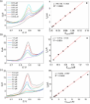
- @CPE electrode in a 1 µM ENR solution in PBS at different pH values (Figure 9a). The height of the ENR peak was significantly affected, as shown in Figure 9b. The ENR peak current increased significantly while the pH changed from 5 to 7 and reached the highest value at pH 7. As the pH value increased





Integrating high-performance computing, machine learning, data management workflows, and infrastructures for multiscale simulations and nanomaterials technologies
Beilstein J. Nanotechnol. 2024, 15, 1498–1521, doi:10.3762/bjnano.15.119
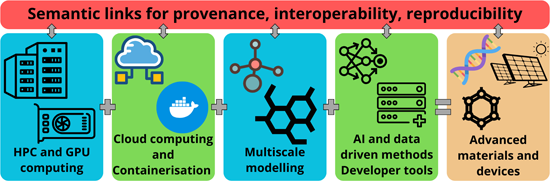
- of implementation, management, resources, and power. These strong constraints on infrastructures, competences, and resources constitute a significant barrier for non-specialists or non-academic institutions, for example technological SMEs. Current multiscale approaches also lack a high degree of
- relatively low throughput of multiscale modelling approaches in current scenarios. In recent years, however, we have begun to witness the success of AI and ML for materials development [7][13]. This is particularly evident, for example, in the application of AI-related methods for the prediction of structure


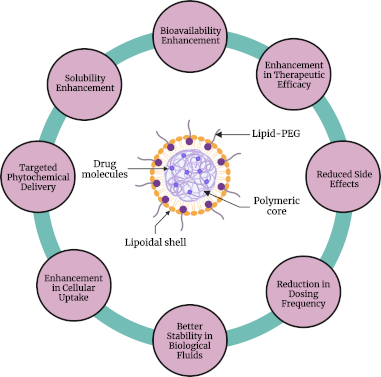
Polymer lipid hybrid nanoparticles for phytochemical delivery: challenges, progress, and future prospects
Beilstein J. Nanotechnol. 2024, 15, 1473–1497, doi:10.3762/bjnano.15.118


Effect of radiation-induced vacancy saturation on the first-order phase transformation in nanoparticles: insights from a model
Beilstein J. Nanotechnol. 2024, 15, 1453–1472, doi:10.3762/bjnano.15.117


Ion-induced surface reactions and deposition from Pt(CO)2Cl2 and Pt(CO)2Br2
Beilstein J. Nanotechnol. 2024, 15, 1427–1439, doi:10.3762/bjnano.15.115

- precursors that are transiently adsorbed on a substrate surface [1][2][3][4][5][6]. Charged-particle-induced deposition techniques offer control over process parameters such as particle position, energy, beam current, and flux, allowing for the formation of nanoscale patterns. Since they are direct-write
- with higher current densities leading to more rapid deposition rates [20], creates deposits with metal contents that are typically higher than those observed in FEBID and has a wider choice of charged-particle sources [21][22][23][24][25]. One of the major disadvantages of charged-particle deposition
- maximum precursor flux, corresponding to an increase in chamber pressure of 5.3 × 10⁻⁸ Torr. Ion beam-induced deposition of Pt(CO)2Cl2 was performed using the ion gun operating at a constant pressure of 99.999% Ar (Airgas) and an incident energy of 800 eV and target current of 5 nA. The 0.8 mm ion beam



Lithium niobate on insulator: an emerging nanophotonic crystal for optimized light control
Beilstein J. Nanotechnol. 2024, 15, 1415–1426, doi:10.3762/bjnano.15.114
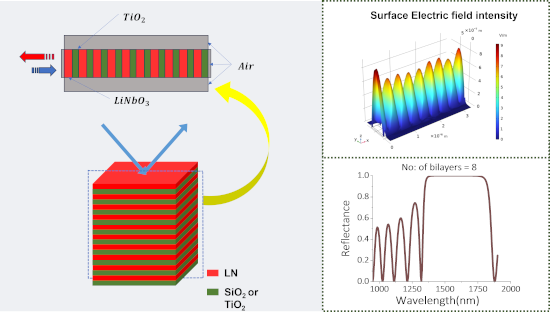
- systems. The research output gives a wide tuning range of 10.7 nm with 19 consecutive channels obtained with a single tuning current at room temperature, expanding to 16 nm with the help of heat sink temperature [49]. Our focus material, LN, possessing a large electromechanical coupling coefficient (Kt


Nanotechnological approaches for efficient N2B delivery: from small-molecule drugs to biopharmaceuticals
Beilstein J. Nanotechnol. 2024, 15, 1400–1414, doi:10.3762/bjnano.15.113
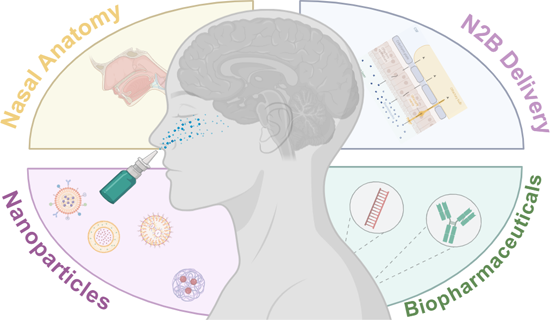
- small or large molecules from the current literature, we highlight the preclinical studies and their results to prove the strategies’ success and limitations. Keywords: antibody delivery; biopharmaceutical delivery; blood–brain barrier (BBB); CNS diseases; drug delivery; hybrid nanoparticles
- developments in N2B delivery and discuss the structure of the nasal anatomy and the principles of intranasal administration, the principles of the DDSs for N2B delivery, and the N2B delivery of biopharmaceuticals. To provide a current overview on the studies conducted in this field, we focus on work published
- highlights the possibility of even more advanced and combined benefits of using NPs for intranasal drug delivery. It should also be noted that there has been a shift in the type of drug molecules studied for N2B delivery. The current research applies advanced therapeutics such as mAbs and RNA for efficient


Various CVD-grown ZnO nanostructures for nanodevices and interdisciplinary applications
Beilstein J. Nanotechnol. 2024, 15, 1390–1399, doi:10.3762/bjnano.15.112
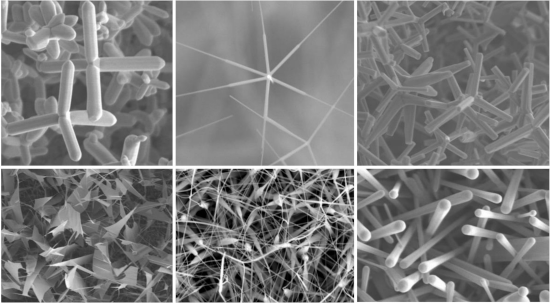
- nanostructures [23][35][36]. Our current work uses this simple method to grow ZnO nanostructures. After fabrication, the crystal quality of nanostructures is assessed through Raman scattering (RS) and photoluminescent (PL) measurements at room temperature. Experimental As mentioned above, CVD was utilized to



Green synthesis of carbon dot structures from Rheum Ribes and Schottky diode fabrication
Beilstein J. Nanotechnol. 2024, 15, 1369–1375, doi:10.3762/bjnano.15.110
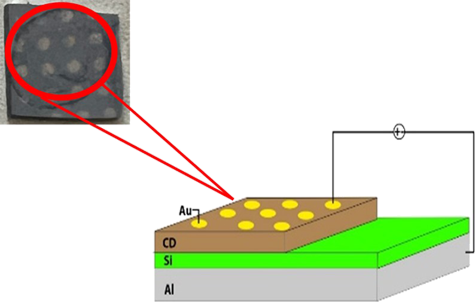
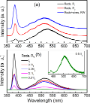
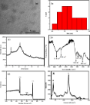
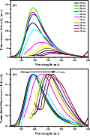
- steady-state fluorescence measurements. In the second part of the study, CDs were dripped onto silicon substrates, and a CDs thin film was formed by evaporation. A diode structure was obtained by evaporating gold with the shadow mask technique on the CDs film, and the current–voltage characteristics of
- behavior. The results obtained from this study showed that CDs can be applied in the field of electronics, apart from sensor studies, which are common application areas. Keywords: carbon dot (CD) structures; green synthesis; Rheum Ribes plant; Schottky diode; Introduction One of the most current types of
- electrical current. There are many types of diodes, such as Zener diodes, crystal diodes, and Schottky diodes, and each type has different features and is used for different purposes. Schottky diodes contain a metal–semiconductor junction. This structure differs from other diodes because of its high




Out-of-plane polarization induces a picosecond photoresponse in rhombohedral stacked bilayer WSe2
Beilstein J. Nanotechnol. 2024, 15, 1362–1368, doi:10.3762/bjnano.15.109
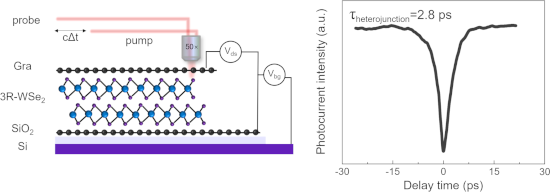
- and the scanning photocurrent map under zero bias, we reveal a non-zero short-circuit current in the graphene/3R WSe2/graphene heterojunction region, demonstrating the bulk photovoltaic effect. Furthermore, the out-of-plane polarization enables the 3R WSe2 heterojunction region to achieve an ultrafast
- inversion symmetry by second harmonic generation (SHG) measurements. The broken symmetry in 3R WSe2 leads to the BPVE. To confirm the BPVE, a vertical heterojunction of graphene-wrapped bilayer 3R WSe2 was fabricated. The non-zero short-circuit current was observed in the output characteristics and the
- under zero bias, known as BPVE [33][39]. Under 520 nm laser excitation, a short-circuit current of approximately 21.5 nA was observed in the output characteristic curve of the vertical heterojunction device (Figure 1d), proving the existence of spontaneous OOP polarization. To compare to the graphene


Investigation of Hf/Ti bilayers for the development of transition-edge sensor microcalorimeters
Beilstein J. Nanotechnol. 2024, 15, 1353–1361, doi:10.3762/bjnano.15.108

- based on a transition-edge sensor (TES) in experiments to determine the magnetic moment of neutrinos. Based on the measurements of the critical current, the critical temperature, and the width of the superconducting transition, we estimate the energy resolution δE of the TES prototypes, showing that it
- of the bulk resistivity at room temperature of 3.3 × 10⁻⁷ Ω·m [11]. The variation of calculated resistivity between bridges of different sizes is likely not due to physically different film properties, but rather due to rough estimations not taking into account the edge effects for the current flow
- critical temperature of sample A3 compared to the others is due to the lower measurement current. The resistance peak on the R(T) dependence for samples A1 and A2 (Figure 3a and Figure 3b) may appear due to non-equilibrium effects and the presence of NS borders in the setup [16][17]. But presently, we have


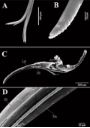
Hymenoptera and biomimetic surfaces: insights and innovations
Beilstein J. Nanotechnol. 2024, 15, 1333–1352, doi:10.3762/bjnano.15.107
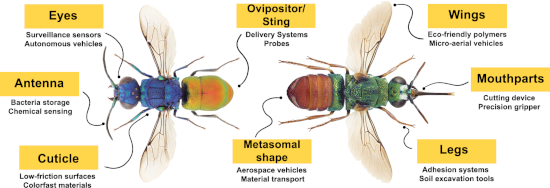
- surfaces. We highlight recent advancements and outline potential strategic pathways, evaluating their current functions and applications while suggesting promising avenues for further investigations. By studying these fascinating and biologically diverse insects, researchers could develop innovative
- boundaries of current engineering. Honeybees must visit approximately 3000 flowers to produce a single gram of honey [74]. To accomplish this, they use their hairy tongues to dip into viscous nectar at high frequencies. Their mouthparts consist of a pair of galeae, labial palps, and a hairy glossa with a






Nanoarchitectonics with cetrimonium bromide on metal nanoparticles for linker-free detection of toxic metal ions and catalytic degradation of 4-nitrophenol
Beilstein J. Nanotechnol. 2024, 15, 1312–1332, doi:10.3762/bjnano.15.106
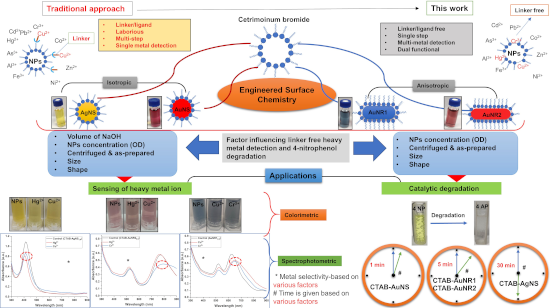
- CTAB-capped gold and silver nanoparticles without linker/buffer for catalysis and detection heavy metals is a current need. In this work, we have developed a linker-free nanosensor with CTAB as capping agent on both isotropic and anisotropic gold and silver nanoparticles. The CTAB-capped metal
- strong reducing agent (such as NaBH4) in the presence of a catalytic agent (i.e., the nanoparticles) [27]. In the current study, we also examined the catalytic properties of CTAB-capped nanoparticles in the degradation of 4-nitrophenol (Figure 1d). The catalytic properties of CTAB-capped nanoparticles
- different metals. Thus, it was confirmed that the size of the nanoparticles is a critical parameter influencing the physical and chemical properties of gold nanoparticles. The current study also evaluated size-dependent metal sensing using longer gold nanorods with the help of NaOH. Upon the addition of a




Mn-doped ZnO nanopowders prepared by sol–gel and microwave-assisted sol–gel methods and their photocatalytic properties
Beilstein J. Nanotechnol. 2024, 15, 1283–1296, doi:10.3762/bjnano.15.104
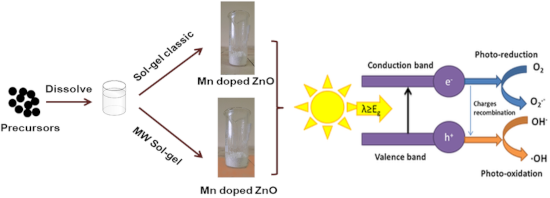
- previous studies, the authors demonstrated that Mn-doped ZnO films exhibit superior optical and piezoelectric properties compared to undoped ZnO, with a more compact microstructure and reduced surface roughness [41]. Building on this foundation, the current article aims to focus on the methods of


New design of operational MEMS bridges for measurements of properties of FEBID-based nanostructures
Beilstein J. Nanotechnol. 2024, 15, 1273–1282, doi:10.3762/bjnano.15.103
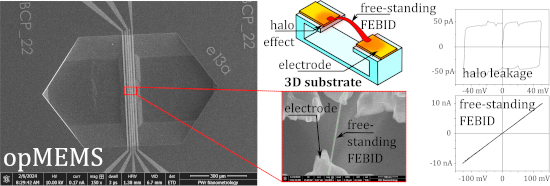
- cause leakage, that is, parasitic current flow through the insulating layer. Eliminating the halo effect is virtually impossible; however, the size of the halo can be measured, and its negative effects can be eliminated by proper spacing between conducting FEBID deposits [22]. Another approach is to
- the gallium FIB to mill a 200 nm wide slit (Figure 2c). As a side-effect, gallium was implanted along the edge of the RoI slit, so to prevent the leakage current; additional openings were formed using the DRIE process to create a non-conductive edge of the slit (Figure 3b). Mechanical characterization
- of opMEMS bridges As mentioned in [36], MEMS are well suited for electrothermal actuation. The actuation process is driven by the Joule heat from a current flowing through the actuation lines of an opMEMS bridge, which causes a change in temperature and, in turn, a displacement resulting from a


Enhanced catalytic reduction through in situ synthesized gold nanoparticles embedded in glucosamine/alginate nanocomposites
Beilstein J. Nanotechnol. 2024, 15, 1227–1237, doi:10.3762/bjnano.15.99
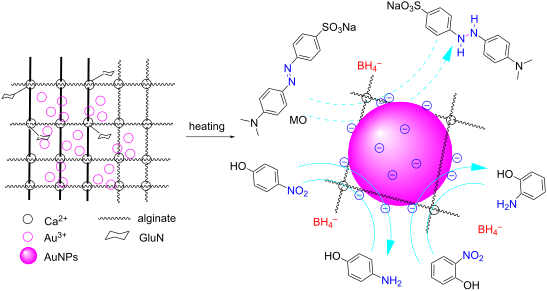
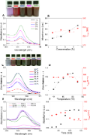
- applications. Conflicts of Interest The authors declare that they have no conflicts of interest. Schematic workflow illustration of the current study. UV–vis spectra of AuNPs@GluN/Alg measured under varying reaction conditions (left) and plots of absorbance as function of various synthesis parameters (right



Realizing active targeting in cancer nanomedicine with ultrasmall nanoparticles
Beilstein J. Nanotechnol. 2024, 15, 1208–1226, doi:10.3762/bjnano.15.98
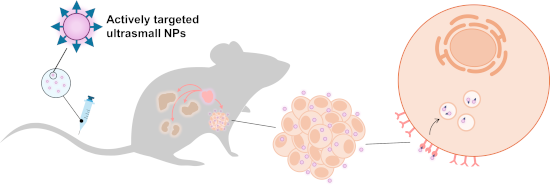
- modalities of actively targeted usNPs and their current applications in cancer diagnosis and treatment. 2 Inorganic ultrasmall NPs in cancer nanomedicine Important classes of inorganic usNPs under investigation for cancer nanomedicine include metallic usNPs (gold, silver), oxide and sulfide usNPs (silica


A low-kiloelectronvolt focused ion beam strategy for processing low-thermal-conductance materials with nanoampere currents
Beilstein J. Nanotechnol. 2024, 15, 1197–1207, doi:10.3762/bjnano.15.97

- not a large number of recent papers published looking at the underlying physics in the field of focused ion beams. A broader look at current literature on heat transfer induced by particle beams highlights that heat damage is not only problematic for FIB processing, but also presents challenges for
- lower ion beam currents [16][17] and by reducing the beam overlap as well as blurring the beam [17]. The drawback of this approach, however, is increased processing times due to the small current (picoampere range). Other approaches that were successfully used to avoid or reduce heat damage include
- and a cross section through the middle of the ion beam spot for a simulated sample volume of 600 nm × 600 nm × 400 nm after an irradiation time of 990.0 ns is shown in Figure 3. The simulations for 5 keV in the nanoampere beam current range (Figure 3A) and picoampere beam current range (Figure 3B



AI-assisted models to predict chemotherapy drugs modified with C60 fullerene derivatives
Beilstein J. Nanotechnol. 2024, 15, 1170–1188, doi:10.3762/bjnano.15.95
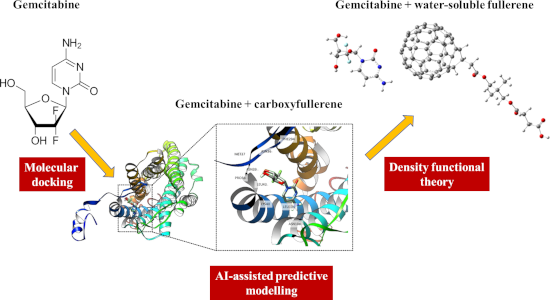
- bond acceptors sites. It is possible to add two other conditions, namely polar surface area (PSA) ≤ 140 Å2 and less than ten rotatable bonds [31]. Taking advantage of the readiness of these quantities in public datasets, the current study proposes some of these quantities as potentially suitable
- study the interactions with doxorubicin and gemcitabine [36]. The water-soluble fullerene is introduced to avoid known mutagenic reactions related to breast cancer [36]. It was also studied as a potential carrier for bedaquiline, an agent against tuberculosis [37]. The current study only considered
- obtain the predictive model as training set and the remaining 20% as testing set. Supporting Information File 1 gives the results of the cross-validation for all the models reported in the current manuscript. Once the models were built, an additional external validation set was used to obtain evaluation


Quantum-to-classical modeling of monolayer Ge2Se2 and its application in photovoltaic devices
Beilstein J. Nanotechnol. 2024, 15, 1153–1169, doi:10.3762/bjnano.15.94
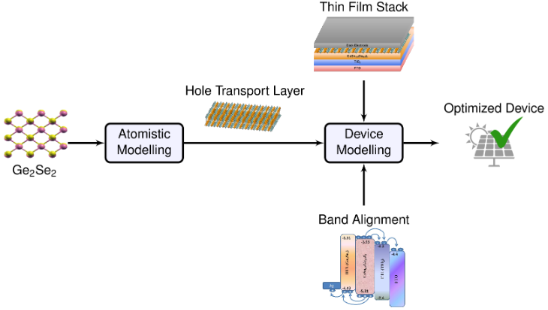
- promising and expedient because it has the potential to address the current energy demand without making a hazardous impact on the environment [1][2]. Henceforth, researchers have made continuous efforts to design efficient and robust PV devices and solar cells. The systematic study of various solar cells
- -term instability, poor device scalability, and the use of toxic compounds, have yet to be resolved [6]. Recent advancements have seen the integration of two-dimensional (2D) materials with PSCs, opening new avenues for enhancing their performance and addressing current challenges with the PSCs [7][8
- of open-circuit voltage (Voc), short-circuit current density (Jsc), fill factor (FF), and power conversion efficiency (η). The performance of solar cells largely depends on various parameters, including the thickness of transport layers, absorber layers, and absolute temperature. Therefore, to get




Introducing third-generation periodic table descriptors for nano-qRASTR modeling of zebrafish toxicity of metal oxide nanoparticles
Beilstein J. Nanotechnol. 2024, 15, 1142–1152, doi:10.3762/bjnano.15.93
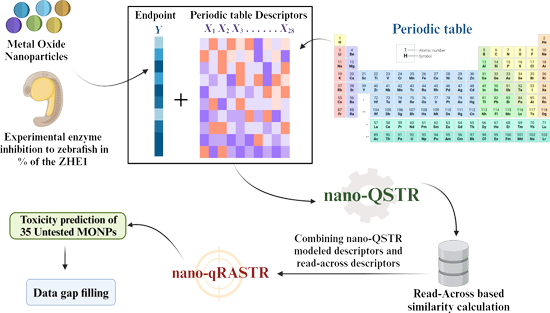
- hazards that MONPs may present in aquatic ecosystems and living organisms. Comparison with previously published models Compared to our previous nano-QSTR model ( = 0.68, = 0.74, and = 0.70) [34], the current nano-qRASTR model demonstrates improvements in these three critical metrics with enhancements of
- 0.01, 0.02, and 0.05, respectively. Although these improvements might seem minimal, it is crucial to note that in the preceding study, we were able to model 23 MONPs, excluding CoO, which significantly impacted the quality of the model because of its outlier behavior. In contrast, the current study


Photocatalytic methane oxidation over a TiO2/SiNWs p–n junction catalyst at room temperature
Beilstein J. Nanotechnol. 2024, 15, 1132–1141, doi:10.3762/bjnano.15.92
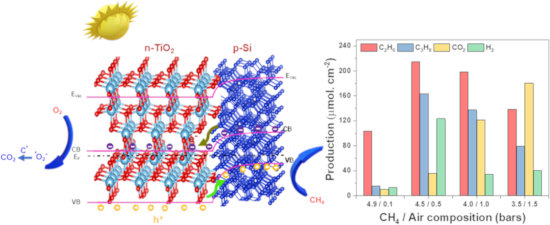
- TiO2/SiNWs catalyst may be attributed to the vertical wires, which enable strong light scattering leading to enhancement in light harvesting. The optical bandgap values of SiNWs and TiO2/SiNWs are estimated at around 3.8 and 3.3 eV, respectively. Figure 3b displays the current–voltage (I–V) curves of
- the photocatalyst under dark and light conditions. The current of the sample under light conditions is higher than that under dark conditions. The slope of the I–V characteristic starts to increase, showing that generated electrons strongly influence the electrical properties of the samples. The
- and light conditions. Each measurement was scanned with 0.05 V intervals. The bias supply and current signals were provided and recorded by a Keithley system adapted with an amplifier. XRD patterns of p-Si, p-type SiNWs, and the TiO2/SiNWs sample. Cross-sectional view (a, b) and top view (c, d) SEM





