


Search results
Search for "defects" in Full Text gives 746 result(s) in Beilstein Journal of Nanotechnology. Showing first 200.
Near-infrared photoactive Ag-Zn-Ga-S-Se quantum dots for high-performance quantum dot-sensitized solar cells
Beilstein J. Nanotechnol. 2022, 13, 1337–1344, doi:10.3762/bjnano.13.110
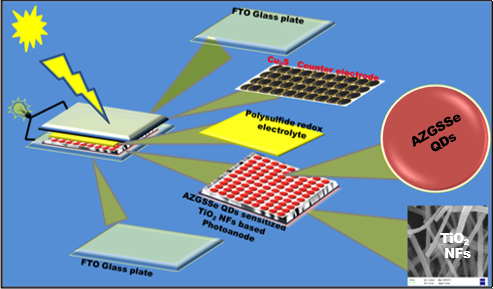
- surface trap state defects [11][12]. In order to minimize the number of these defects, a wide-bandgap material, such as ZnS or ZnSe, is deposited on group I-III-VI QDs. Zhang et al. over coated a ZnS layer [13][14] on Cu-In-S and Cu-In-Se QDs to obtain highly efficient sensitizers for QDSCs. Hua Zhang et


Recent trends in Bi-based nanomaterials: challenges, fabrication, enhancement techniques, and environmental applications
Beilstein J. Nanotechnol. 2022, 13, 1316–1336, doi:10.3762/bjnano.13.109
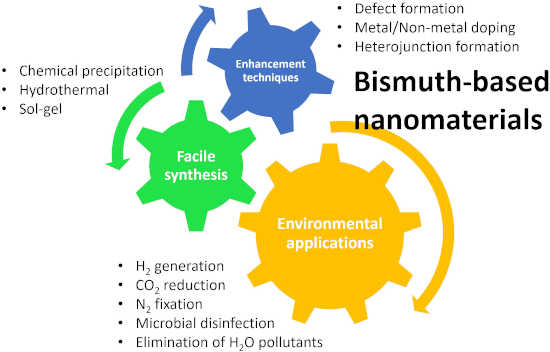
- , heterostructure formation, interface modification, and Bi-content enhancement, have been employed. Defect formation Vacancies and defects affect the electrical properties of Bi-based semiconductor photocatalysts and, hence, govern the photocatalytic efficacy. Rao et al. reported an N2-assisted heat treatment
- vacancies in monolayered Bi2WO6 nanosheets with a thickness of 1.0 nm have recently been shown [82]. The Bi defects were shown to promote the adsorption and activation of reactant molecules, which reduced the energy barrier even more. The photocatalytic performance corroborated this. The presence of
- and deposition and doping of metals and non-metallic elements are the most common doping methods. Metal ions modify the crystal structure of the Bi-based semiconductor photocatalysts or induce defects. Also, the photocatalytic properties may be altered by doping or deposition of metallic components




Enhanced electronic transport properties of Te roll-like nanostructures
Beilstein J. Nanotechnol. 2022, 13, 1284–1291, doi:10.3762/bjnano.13.106
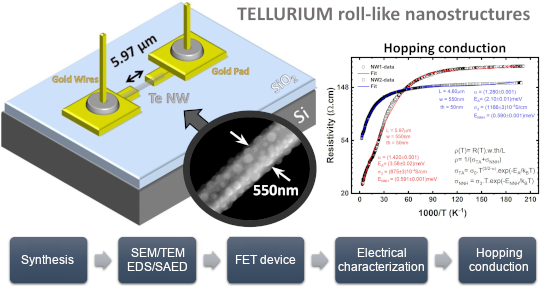
- ionization energy of the defects found on these nanostructures also favors the control of doping and, consequently, the electrical properties of the nanowires. These superior quality transport properties demonstrate the potential use of t-Te roll-like nanostructures for electronic device applications. (a–c




Rapid fabrication of MgO@g-C3N4 heterojunctions for photocatalytic nitric oxide removal
Beilstein J. Nanotechnol. 2022, 13, 1141–1154, doi:10.3762/bjnano.13.96
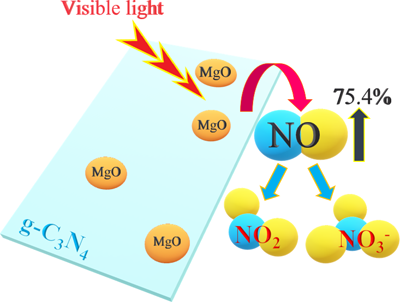
- oxide with wide bandgap (3.5–5 eV), high availability, non-toxicity, low cost, and native structural defects [18][19]. The large bandgap energy is the limitation of MgO, reducing the photocatalytic performance and applicability of MgO [20]. Various efforts have been made to enhance the absorption in the
- nm with an excitation wavelength (770 nm) in the visible range, which could be caused by the native structural defects in MgO [18]. 3% MgO@g-C3N4 shows intense fluorescence at 420 nm via excitation at 850 nm, due to the recombination of charge carriers. The photogenerated electrons from the valance
- atoms [64][65][66]. Also, Liang and co-workers reported that the recombination of the e−–h+ pairs could be inhibited by doping MgO into g-C3N4 [32]. When MgO is added, the defect concentration increases and Mg and O vacancies are generated in MgO@g-C3N4. These defects work as the electron traps, which





Recent advances in green carbon dots (2015–2022): synthesis, metal ion sensing, and biological applications
Beilstein J. Nanotechnol. 2022, 13, 1068–1107, doi:10.3762/bjnano.13.93
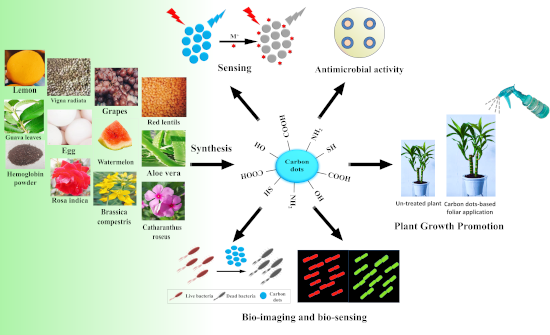
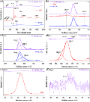
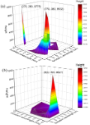
- . Surface passivation with different functional groups generates surface defects, which produces fluorescence and also generates new active sites for modification for specific applications. CDs can be chemically modified by many heteroatoms, including N, P, and S, and many other chemicals that increase
- high QY because nitrogen atom doping helps to stabilize the surface defects of CDs and enhances fluorescence emission. Moreover, owing to its five valence electrons and an atomic size that is similar to carbon, nitrogen is a common dopant and the most frequently employed method of enhancing PL
- contrast to nitrogen, phosphorus atoms are larger than carbon atoms. As a result, it has the potential to act as an n-type donor and create substitutional defects in the carbon cluster, changing the electronic and optical characteristics of CDs with great impact on polarizability, quantum yield, and




Biomimetic chitosan with biocomposite nanomaterials for bone tissue repair and regeneration
Beilstein J. Nanotechnol. 2022, 13, 1051–1067, doi:10.3762/bjnano.13.92
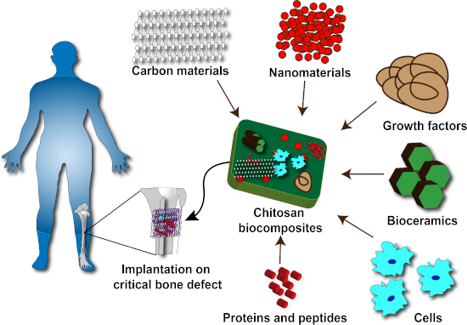
- regenerate bone defects. Autografts are still considered the gold-standard method/material to treat bone-related issues with satisfactory outcomes. It is important that the material used for bone tissue repair is simultaneously osteoconductive, osteoinductive, and osteogenic. To overcome this problem
- tissue engineering applications. Keywords: antibacterial activity; biomimetic materials; bone graft substitutes; chitosan; gold; osteoinductive; silver; Introduction Bone-related defects and diseases are a serious concern to the life of patients [1]. Autografts, allografts, and synthetic grafts are
- frequently utilized by clinicians to treat bone defects. Bone grafts should have osteoconductive, osteoinductive, and osteogenic properties to mimic the natural function of the bone [2]. Autografts are considered the gold-standard bone graft substitute since it has all three properties previously mentioned
Spindle-like MIL101(Fe) decorated with Bi2O3 nanoparticles for enhanced degradation of chlortetracycline under visible-light irradiation
Beilstein J. Nanotechnol. 2022, 13, 1038–1050, doi:10.3762/bjnano.13.91
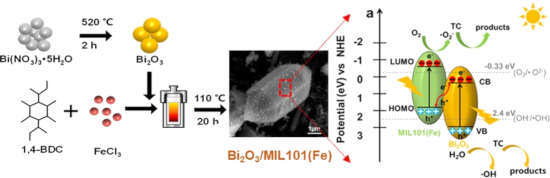
- ][21][35]. However, pure phase MIL101(Fe), like most semiconductor photocatalysts, has inherent defects, such as low conductivity and high recombination efficiency of photogenerated electron–hole pairs [26][36]. To overcome these shortcomings, several strategies have been developed. One approach is to


Influence of water contamination on the sputtering of silicon with low-energy argon ions investigated by molecular dynamics simulations
Beilstein J. Nanotechnol. 2022, 13, 986–1003, doi:10.3762/bjnano.13.86
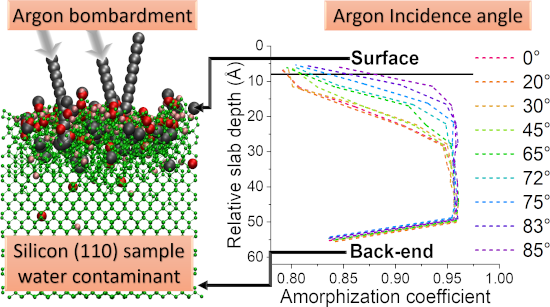
- simulation conditions used in this work, the adsorption of water favours the formation of defects in silicon by mixing hydrogen and oxygen atoms into the substrate. The sputtering yield of silicon is not significantly changed by the contamination, but the fraction of hydrogen and oxygen atoms that is
- after receiving some energy from the incident argon ion, and only a small number of defects is formed. Water molecules are usually fragmented by an argon ion on the sample surface. The hydrogen and oxygen atoms are lighter than argon and are pushed deeper into the sample, globally increasing the damage
- for more details). The 0.94 < µ < 1 interval describes a region where no defects are present. Changes in µ are due to variations in bond length coming from thermal vibrations around the equilibrium bond length. This region is crystalline. The 0.89 < µ < 0.94 interval describes regions that contain




Theoretical investigations of oxygen vacancy effects in nickel-doped zirconia from ab initio XANES spectroscopy at the oxygen K-edge
Beilstein J. Nanotechnol. 2022, 13, 975–985, doi:10.3762/bjnano.13.85
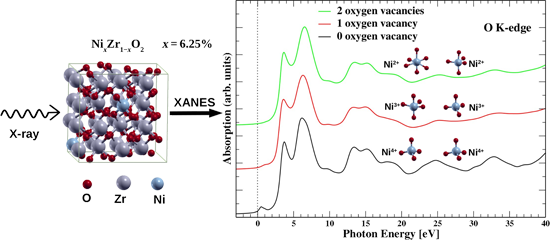
- [6][7][8][9][10] and theoretical [7][11][12][13] studies that investigated DMO showed the crucial role of intrinsic defects in determining the magnetic properties [14][15][16][17][18][19]. Among the DMO that have been investigated, transition metal-doped zirconia [20][21][22][23], a super-hard oxide


Self-assembly of C60 on a ZnTPP/Fe(001)–p(1 × 1)O substrate: observation of a quasi-freestanding C60 monolayer
Beilstein J. Nanotechnol. 2022, 13, 857–864, doi:10.3762/bjnano.13.76
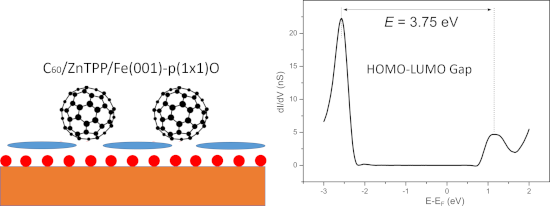
- compact molecular film is crucial to obtain high-performance devices, since an efficient charge carrier transport is hindered by morphological defects, such as grain boundaries or pinholes [10][11]. Moreover, crystalline and well-ordered layers are particularly suitable for spatially averaging


Hierachical epicuticular wax coverage on leaves of Deschampsia antarctica as a possible adaptation to severe environmental conditions
Beilstein J. Nanotechnol. 2022, 13, 807–816, doi:10.3762/bjnano.13.71
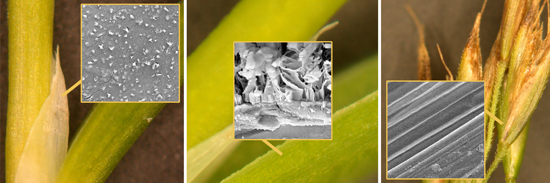
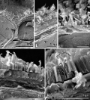
- thin and delicate structures (outgrowths of some lower platelets; see Figure 3e), which can readily brake. In this study, we observed such defects in the wax coverage in a few leaf samples, where upper wax platelets were absent and only the lower wax layer remained exposed (see Figure 2f). The coarsely




Optimizing PMMA solutions to suppress contamination in the transfer of CVD graphene for batch production
Beilstein J. Nanotechnol. 2022, 13, 796–806, doi:10.3762/bjnano.13.70
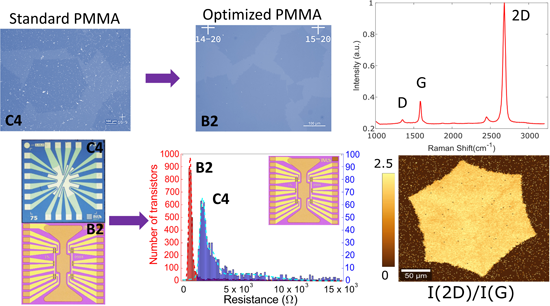
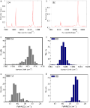
- corresponding statistics in Figure 2d and Figure 2g, respectively, show that the I(D)/I(G) ratio is very low (down to 0.03), meaning that no or few defects could be detected. Figure 2e and Figure 2h show that over 95% of the sample has a ratio of I(2D)/I(G) > 1.6 (average of 2.1 ± 0.3) and a FWHM(2D) of 34.2




Gelatin nanoparticles with tunable mechanical properties: effect of crosslinking time and loading
Beilstein J. Nanotechnol. 2022, 13, 778–787, doi:10.3762/bjnano.13.68
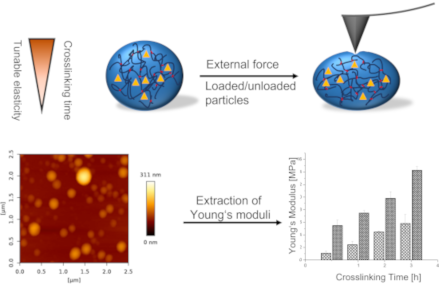
- macromolecule to the matrix should, following our explanation, not show an effect on the elasticity of the particles as no “defects” in the network will be introduced. In line with this explanation, lysozyme-loaded GNPs exhibited a particle elasticity not significantly different from unloaded GNPs. Regarding


Recent advances in nanoarchitectures of monocrystalline coordination polymers through confined assembly
Beilstein J. Nanotechnol. 2022, 13, 763–777, doi:10.3762/bjnano.13.67
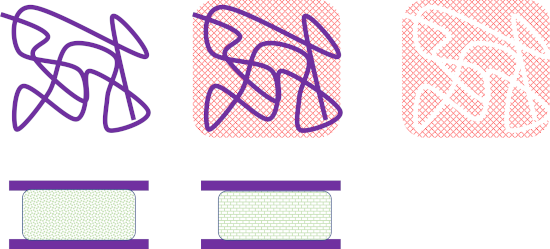
- ]. There are several parameters of the single crystals, such as defects, hydrophilicity, and dispersity in water, that determine the performance of the composites in biomedicine [106][107]. To introduce more controllable and repeatable synthetic methods to tailor the parameters of monocrystalline




Hierarchical Bi2WO6/TiO2-nanotube composites derived from natural cellulose for visible-light photocatalytic treatment of pollutants
Beilstein J. Nanotechnol. 2022, 13, 745–762, doi:10.3762/bjnano.13.66
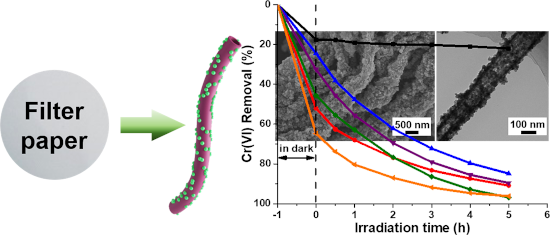
- three weak peaks at 448, 479, and 490 nm, which are indexed to the recombination of photoinduced electron−hole pairs, freely excited electrons, surface defects, and oxygen vacancies on the band edges, respectively [36][61]. It is apparent that the PL intensities of the Bi2WO6/TiO2-NT nanocomposites at


A nonenzymatic reduced graphene oxide-based nanosensor for parathion
Beilstein J. Nanotechnol. 2022, 13, 730–744, doi:10.3762/bjnano.13.65
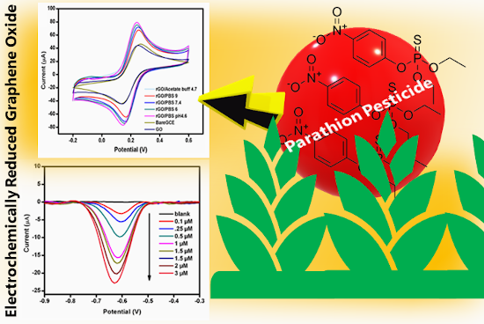
- composition of the electrolyte were optimized to increase the deoxygenation of the GO sheet during ERGO formation. Figure 1B depicts three significant Raman peaks of GO at 1350 cm−1 for the D band (associated with defects in the sp2 lattice), 1596 cm−1 for the G band (due to vibrations of the hexagonal
- the electrolytic buffer during electrochemical reduction of GO. The highest value of ID/IG was found to be 1.454 for the conversion of ERGO using PBS (pH 4.5), which suggests the formation of higher defects between the graphene layers during electrochemical reduction [26][34]. Thus, 50 mM PBS, pH 4.5


Sodium doping in brookite TiO2 enhances its photocatalytic activity
Beilstein J. Nanotechnol. 2022, 13, 599–609, doi:10.3762/bjnano.13.52
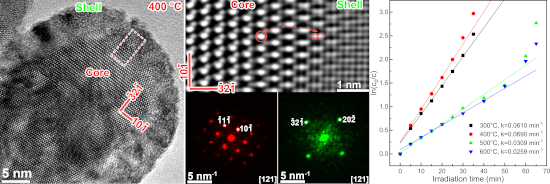
- lattice-plane indices Two octahedron layers spacing ≈3.7433 Å share corners to construct the brookite structure, as depicted in the inset of Figure 5b. The core–shell structure, defects, and twins in the brookite Considering the differences in the ionic radius and the electronegativity between Na and Ti
- including the core–shell structure, the nanodomain, interstitial atoms, atomic vacancies, and complex defects can be frequently observed in the samples calcinated at 300 and 400 °C but rarely for other samples calcinated at higher temperatures. Since the higher calcinating temperature can improve the atomic


Revealing local structural properties of an atomically thin MoSe2 surface using optical microscopy
Beilstein J. Nanotechnol. 2022, 13, 572–581, doi:10.3762/bjnano.13.49
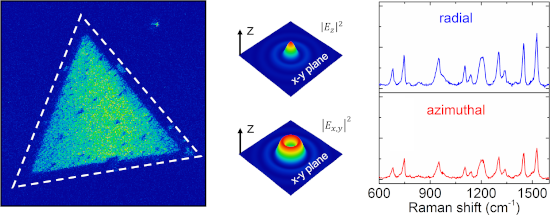
- , valleytronics, and nonlinear optics [2][3][4][5][6][7][8]. Many interesting phenomena can be observed, mainly due to the presence of structural irregularities such as point defects, edges, boundaries, and the formation of contaminants in the process of 2D-TMDC growth [9][10][11][12][13]. These structural
- photoluminescence spectroscopy. Owing to the larger population of charge carriers, the photoluminescence from these structural defects of monolayer WS2 originates from the biexcitons under high-power excitation [16]. Interestingly, tilt boundaries in monolayer MoS2 induce strong photoluminescence enhancement and


Zinc oxide nanostructures for fluorescence and Raman signal enhancement: a review
Beilstein J. Nanotechnol. 2022, 13, 472–490, doi:10.3762/bjnano.13.40
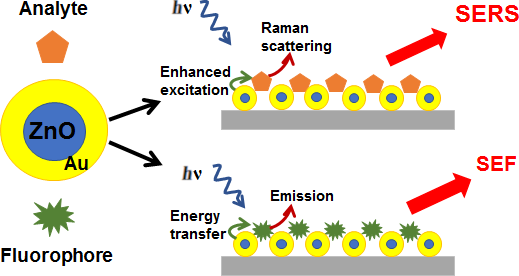
- synthesis methods are discussed, highlighting low-cost methods and the recyclability of ZnO-based nanosubstrates. Also, the SERS signal enhancement by ZnO-based nanostructures and the influences of lattice defects on the SERS signal are described. The photoluminescence enhancement of ZnO in the presence of
- a higher adsorption of analyte molecules, increasing the EF from 106 (before) to 108 (after hydrogenation) [43]. The charge transfer effect was probably increased as well since the hydrogenation introduced lattice defects that could alter the energy band structure of ZnO, promoting charge separation
- development of composite semiconductor–noble metal-based substrates is desirable since they could be implemented as reusable, low-cost SERS substrates for ultrasensitive detection of analytes. ZnO lattice defects and doping ZnO nanostructures usually present two emission bands, namely a narrow UV band




Investigation of electron-induced cross-linking of self-assembled monolayers by scanning tunneling microscopy
Beilstein J. Nanotechnol. 2022, 13, 462–471, doi:10.3762/bjnano.13.39
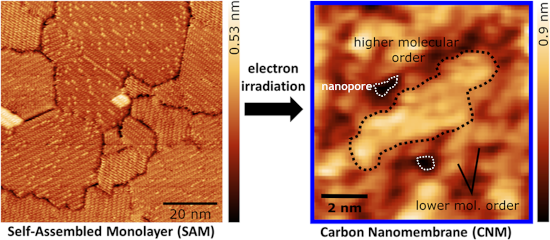
- in a less dense but more ordered structure over a large area with very few defects. During the self-assembly process, gold adatoms are ejected from the surface layer due to the relaxation of the herringbone reconstruction [68]. Several gold adatom islands, which would build up if the density of
- tilting or randomly moving some or all molecules and by either removing some of the atoms or whole molecules to, for example, mimic defects in the experimental process (randomization). (3) The electron irradiation was modeled by a vertical force gradient being applied to the atoms; it is linear and


Tubular glassy carbon microneedles with fullerene-like tips for biomedical applications
Beilstein J. Nanotechnol. 2022, 13, 455–461, doi:10.3762/bjnano.13.38
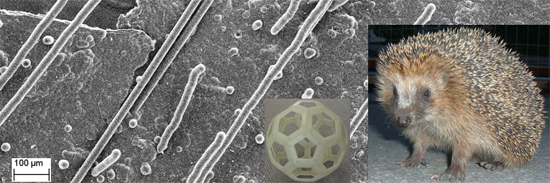
- different allotropes depending on the hybridizations of the C–C bond, that is, sp, sp2, or sp3. Furthermore, a variety of short-range ordering effects can interact with each other and this, along with the effects of microporosity, grain boundaries, and defects, render this a fascinating material. Following
- glassy carbon microneedles Figure 4 shows a typical Raman spectrum of the glassy carbon microneedles. The D-band is at 1352 cm−1, and the G-band is at 1589 cm−1. The D-band, the so-called defect band, originates from a hybridized vibrational mode associated with local defects and disorder. In this case


Micro- and nanotechnology in biomedical engineering for cartilage tissue regeneration in osteoarthritis
Beilstein J. Nanotechnol. 2022, 13, 363–389, doi:10.3762/bjnano.13.31
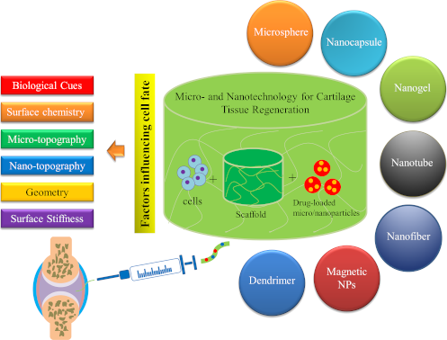
- made and offered hope for the treatment of degenerative diseases [3]. Articular cartilage defects were one of the first potential candidates for tissue engineering (TE) applications due to their anural and avascular integrity. Many efforts have been devoted to developing scaffolds with similar
- osteochondral defects can be overcome by the versatile and efficient methods developed by TE technologies and will be discussed in detail. 3.1 Development of biomaterials using micro and nanostructures for cartilage TE Since Vacanti et al. reported the application of bioabsorbable artificial polymers as
- growth factors and enables in situ spatial differentiation of MSCs to repair osteochondral defects [23]. It has been reported that microsphere-based structures could be efficiently used for gradient formation [24] and dual growth factor delivery [25]. Microspheres can be incorporated throughout the


Interfacial nanoarchitectonics for ZIF-8 membranes with enhanced gas separation
Beilstein J. Nanotechnol. 2022, 13, 313–324, doi:10.3762/bjnano.13.26
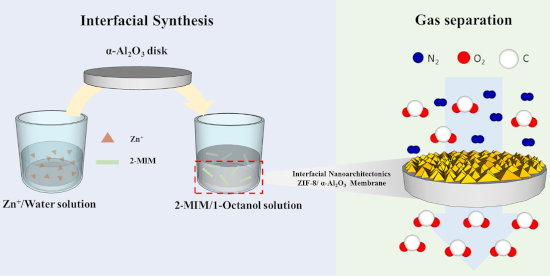
- intercrystalline defect formation in MOFs can have either positive or negative effects on the separation performance. Point defects and extended defects may increase the number of adsorption sites in MOFs [35], while missing linkers may provide low-resistance diffusion pathways by increasing the porosity of the
- MOF [36]. However, the presence of defects can hamper the structural stability of MOFs [35]. Therefore, characterization of defects in MOF-based membranes and the correlation to the preparation methods with membrane properties are critical in MOF film development. Among the various synthesis schemes
- usually separates the metal ion and ligand solutions by a porous substrate, and crystallization occurs within the substrate. Since the diffusion rates of metal ions and ligands are usually different due to different interactions with the substrate, the resultant membranes are likely to contain defects. In


Investigation of a memory effect in a Au/(Ti–Cu)Ox-gradient thin film/TiAlV structure
Beilstein J. Nanotechnol. 2022, 13, 265–273, doi:10.3762/bjnano.13.21
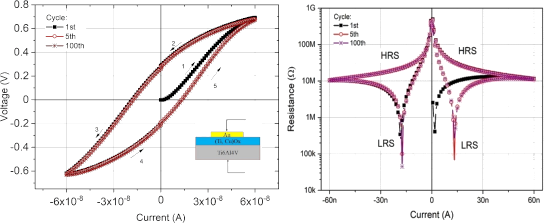
- reported in the literature as a mechanism responsible for the resistive switching behavior occurring in conventional multilayer stack constructions. Conducting paths are usually formed over extended defects in the thin film structure as a result of a thermal mechanism. An important property of this effect



Relationship between corrosion and nanoscale friction on a metallic glass
Beilstein J. Nanotechnol. 2022, 13, 236–244, doi:10.3762/bjnano.13.18
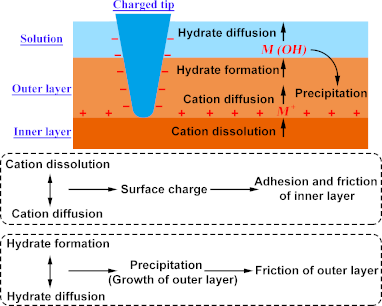
- immersion time due to the development of defects in the surface film [40][41]. The increase in the friction coefficient of the outer layer indicates the growth of the outer layer with increasing immersion time. More material of possibly higher shear strength is in contact with the sliding tip, which





