Search results
Search for "diffusion" in Full Text gives 773 result(s) in Beilstein Journal of Nanotechnology. Showing first 200.
Antimicrobial and mechanical properties of functionalized textile by nanoarchitectured photoinduced Ag@polymer coating
Beilstein J. Nanotechnol. 2023, 14, 95–109, doi:10.3762/bjnano.14.11
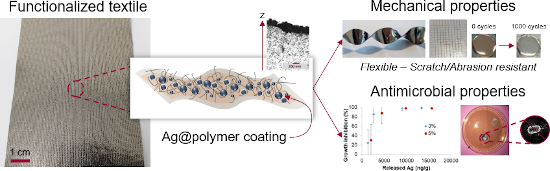
- and plate diffusion assays) of AgNP@polymer nanocomposites-coated textiles against Escherichia coli (E. coli) and Candida albicans (C. albicans) strains. The mechanical properties (flexibility, adhesion, abrasion) were also studied using a Mini-Martindale device, a standard scratch test kit, scanning
- is denser than in the case of PEG600DA diacrylate monomer, which ultimately limits not only the increase in particle size but also the migration/diffusion of silver ions and NPs towards the surface. This affects the final thickness of the top metal layer, the depth of the concentration gradient and
- diffusion of silver ions towards the surface, resulting in the observed thin top metal layer (90 nm) of the Ag@PEG600DA/PETIA film, as confirmed in the TEM images (Figure 5). The metal layer is not thick enough to withstand the damage inflicted by the abrasion process. Rheological properties Potential



Combining physical vapor deposition structuration with dealloying for the creation of a highly efficient SERS platform
Beilstein J. Nanotechnol. 2023, 14, 83–94, doi:10.3762/bjnano.14.10
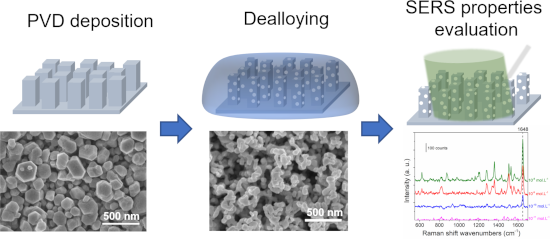
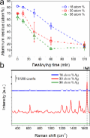
- diffusion of Ag atoms, and the reaction between Cl− and Al proceeds faster than that for other anions [47]. To complete the optimization of the SERS nanoporous silver substrate towards the detection of RhB, films with different silver compositions (i.e., 18, 30, and 36 atom %) were dealloyed using H3PO4 and
- 6a). For AlAg18, the ligament size is similar (≈30 nm) for HCl and H3PO4 dealloying media. However, for higher initial silver contents, samples dealloyed in HCl reveal larger ligaments than those dealloyed in H3PO4 and NaOH. This observation can be related to the fast diffusion of Ag promoted by Cl
- in a different way according to the initial silver content since smaller pores are observed for a lower amount of initial silver content. This effect is more pronounced for samples dealloyed in HCl since the Cl− ions accelerate the diffusion of the silver atoms and promote dealloying [47]. After 120




Solvent-induced assembly of mono- and divalent silica nanoparticles
Beilstein J. Nanotechnol. 2023, 14, 52–60, doi:10.3762/bjnano.14.6
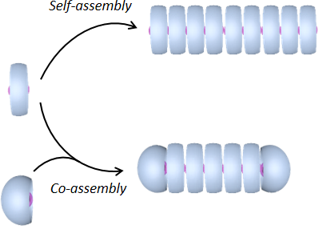
- “diffusion-controlled” stage, which can be attributed to the fact that the sedimentation of the chains becomes the rate-limiting factor when they become relatively long. We recently reported that the length of the chains made of 105 nm or 130 nm 2-PSN can be controlled by the addition of 1-PSN with a PPSR of


Upper critical magnetic field in NbRe and NbReN micrometric strips
Beilstein J. Nanotechnol. 2023, 14, 45–51, doi:10.3762/bjnano.14.5
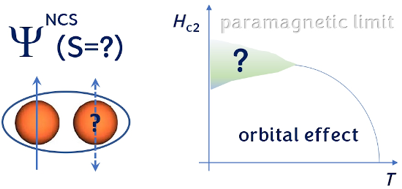
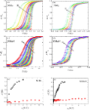
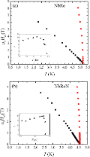
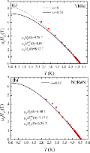
- Figure 4a). In fact, kF = 3Dm/ℏ [47], where D = [48] is the quasiparticle diffusion coefficient and m is the mass of the electron. From the value of D reported in Table 1, we get kF ≈ 1.3 and then α = 0.51. In contrast, data are very well reproduced by the WHH theory with α = 0, even though the points

Gap-directed chemical lift-off lithographic nanoarchitectonics for arbitrary sub-micrometer patterning
Beilstein J. Nanotechnol. 2023, 14, 34–44, doi:10.3762/bjnano.14.4
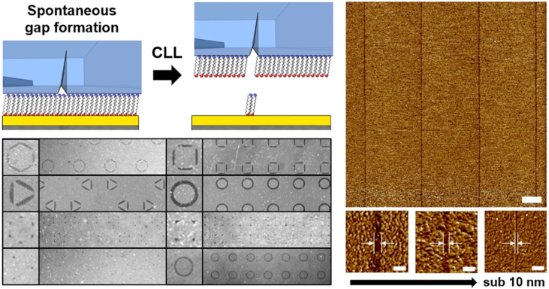
- and device fabrication [13][14]. Nevertheless, pattern resolution and reproducibility in contact printing approaches are affected by several factors, most notably the ink molecule lateral diffusion, gas phase transportation, and rubber stamp deformation [15][16]. These are unavoidable issues in soft
- lithography operations and could severely limit the obtainable feature resolution if neglected. Chemical lift-off lithography (CLL) is a rapidly emerging subtractive lithographic technique that aims to overcome the lateral diffusion and gas phase transfer obstacles present in conventional soft lithography [17
- master mold is placed in contact with the SAM, which initiates a covalent bonding between stamp surface siloxyl groups and alkanethiol hydroxy tails. Removal of the stamp from the SAM-covered surface lifts off alkanethiol molecules at the contact region, and thus circumventing the lateral diffusion issue


Atmospheric water harvesting using functionalized carbon nanocones
Beilstein J. Nanotechnol. 2023, 14, 1–10, doi:10.3762/bjnano.14.1
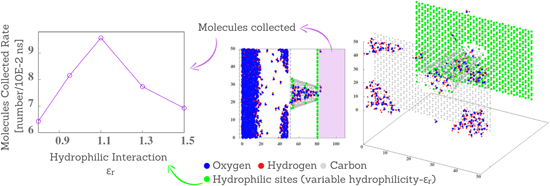
- addition to the hydrophobicity described above. The phenomena of density increasing with temperature at constant pressure and diffusion coefficients increasing with density at constant temperature were observed in experiments and simulations in bulk water [22][23][24]. Water presents both super flow and
- ). Molecular dynamics simulations were performed using the LAMMPS [48] package using an NVT ensemble with a timestep of 0.1 fs. The TIP4P/2005 [49] water model was used since it provides a satisfactory description of self-diffusion coefficient [50], phase diagram, vapor–liquid equilibria [51][52], vapor




Electrical and optical enhancement of ITO/Mo bilayer thin films via laser annealing
Beilstein J. Nanotechnol. 2022, 13, 1589–1595, doi:10.3762/bjnano.13.133
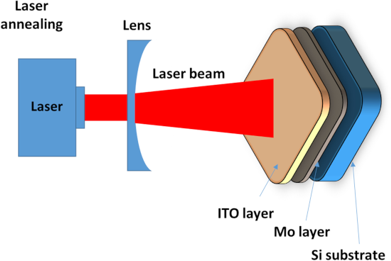
- increase is due to the effect of the laser on the surface reducing defects and eliminating grain boundaries. Above 120 mJ, the grain size decreased with the increase of the laser energy to 16.6 nm for 240 mJ. This decrease is due to the diffusion of gas atoms from the chamber into the upper layer


A TiO2@MWCNTs nanocomposite photoanode for solar-driven water splitting
Beilstein J. Nanotechnol. 2022, 13, 1520–1530, doi:10.3762/bjnano.13.125
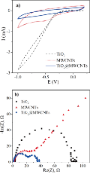
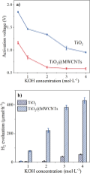
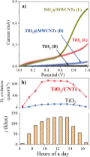
- performance because free electrons can shift to the trap state, resulting in a potential difference in the interface between the electrolyte and the electrode [40]. The Warburg element (W3) in the equilibrium circuit, indicating the contribution of diffusion to the overall charge transfer on the electrode, is



Structural studies and selected physical investigations of LiCoO2 obtained by combustion synthesis
Beilstein J. Nanotechnol. 2022, 13, 1473–1482, doi:10.3762/bjnano.13.121
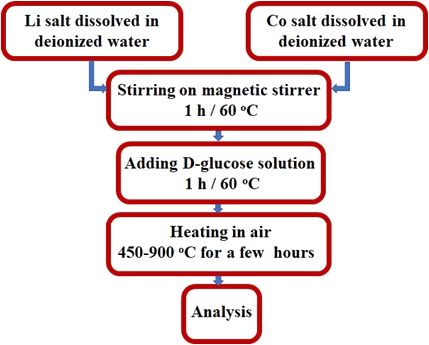
- conversion devices, such as Li-ion batteries, solar cells, solid oxide fuel cells, and thermoelectrics. Unusual and unexpected properties and also unique microstructures (and shapes), such as high porosity, high surface area, short reaction pathways, and diffusion length for Li-ion transport, eventually




Rapid and sensitive detection of box turtles using an electrochemical DNA biosensor based on a gold/graphene nanocomposite
Beilstein J. Nanotechnol. 2022, 13, 1458–1472, doi:10.3762/bjnano.13.120
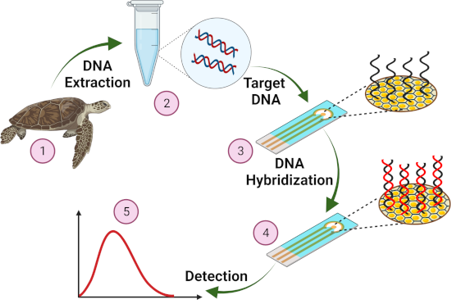
- shows that the diffusion process regulates the electrochemical reaction of ferrocyanide. Given that the diffusion coefficient and electrolyte concentration were constant throughout all tests, the effective surface area (A) of the electrode had the greatest influence on the peak current (Ip
- resistance (Rct), double layer capacitance (Cdl), Warburg impedance (W), and the solution resistance (Rs) [55]. As the Warburg impedance (which corresponds to the diffusion of the redox species) is limited at lower frequencies, the full semicircle disappeared which indicates the dominating diffusion
- -controlled charge-transfer process through the electrode–solution interface. Regarding the qualitative aspect, it was found that the nanocomposite-modified electrode shows a diffusion-limited charge transfer process. The bare SPCE comparatively showed lower charge transfer resistance at higher frequencies



Density of states in the presence of spin-dependent scattering in SF bilayers: a numerical and analytical approach
Beilstein J. Nanotechnol. 2022, 13, 1418–1431, doi:10.3762/bjnano.13.117
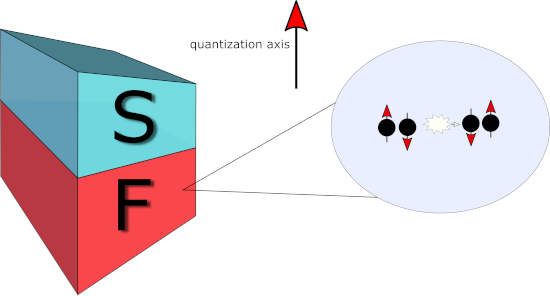
- the diffusion constant in the normal metal and Tc is the transition temperature. When a superconductor S is combined with a ferromagnetic layer F, forming an SF bilayer, the superconductivity leaks into the ferromagnetic region over the characteristic length ξh = where Df is the diffusion constant in
- l is much smaller than the superconducting coherence length ξ = where Ds is the diffusion constant in the superconductor. Previously, the DOS in SF bilayers has been studied numerically [84][85]. We revisit this question and propose an analytical model to describe the influence of spin-flip and
- is the conductivity of the F layer [88][89], ξf = Df is the diffusion coefficient in the ferromagnetic metal, and Tc is the critical temperature of the superconductor [1][2]. We assume ℏ = kB = 1. We also assume that the SF interface is not magnetically active. We will consider the diffusive limit


Orally administered docetaxel-loaded chitosan-decorated cationic PLGA nanoparticles for intestinal tumors: formulation, comprehensive in vitro characterization, and release kinetics
Beilstein J. Nanotechnol. 2022, 13, 1393–1407, doi:10.3762/bjnano.13.115
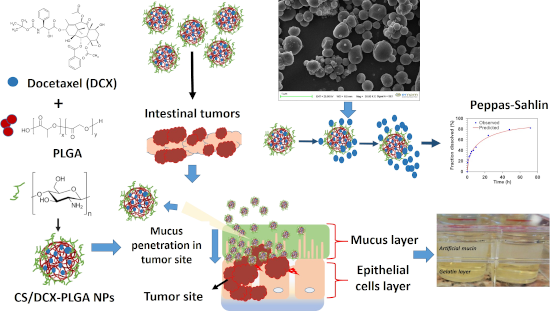
- matrix. A value of β ≤ 0.75 indicates Fickian diffusion, while 0.75 < β < 1 indicates a combination of Fickian diffusion and controlled release [59]. The β value for the Weibull model was calculated as 0.594 for the DCX-PLGA NPs. According to the literature, when these data are examined within the scope
- of the Weibull model, the DCX release kinetics from DCX-PLGA nanoparticles were found to be compatible with Fickian diffusion [60]. This shows that in the model-dependent baseline evaluation of in vitro release profiles, the drug adsorbed on the nanoparticle surface or encapsulated in the
- nanoparticle material is released from the polymeric structure on the basis of diffusion as the major mechanism. It has been confirmed by mathematical modeling that the release is based on diffusion [10][61]. In contrast, the Peppas–Sahlin model describes the drug release from CS/DCX-PLGA NPs. The Peppas


Dry under water: air retaining properties of large-scale elastomer foils covered with mushroom-shaped surface microstructures
Beilstein J. Nanotechnol. 2022, 13, 1370–1379, doi:10.3762/bjnano.13.113
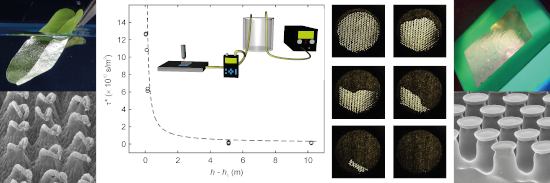
- nitrogen it is approx. 6.90 × 10⁻⁶ mol/(m3·Pa). Equating Henry’s law volatility constant for air, one gets approx. 1.27 m3·Pa/mol. Da is the diffusion constant of air in water which is 2.5 × 10⁻⁵ cm2/s [55], R is the gas constant and T the absolute temperature. 3 Underwater air retention and its
- surface energy (see section 2). If they are submerged deeper than 2 cm, the air layer gets lost over time due to diffusion effects. To confirm the predicted persistence of the air layer in a water depth below 2 cm samples have been submerged in a depth of about 5 mm for two weeks. The analysis of these
- MSM and to analyze their pressure and diffusion behavior, measurements under static pressure in a custom-made pressure chamber and again by using CLSM were carried out. The principle of these measurements is described in the experimental section and shown in Figure 4. By applying a constant pressure a


Recent trends in Bi-based nanomaterials: challenges, fabrication, enhancement techniques, and environmental applications
Beilstein J. Nanotechnol. 2022, 13, 1316–1336, doi:10.3762/bjnano.13.109
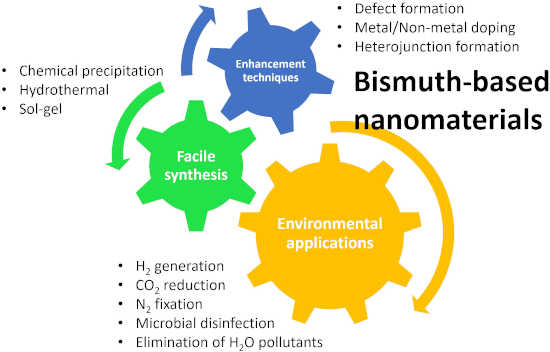
- = r2/π2D, where r is the grain radius and D is the carrier’s diffusion coefficient. Consequently, as the particle radius decreases, a higher number of photogenerated carriers can reach the surface, where they might participate in a photocatalytic process [76]. Bismuth is often used as a nanoscale




Design of surface nanostructures for chirality sensing based on quartz crystal microbalance
Beilstein J. Nanotechnol. 2022, 13, 1201–1219, doi:10.3762/bjnano.13.100
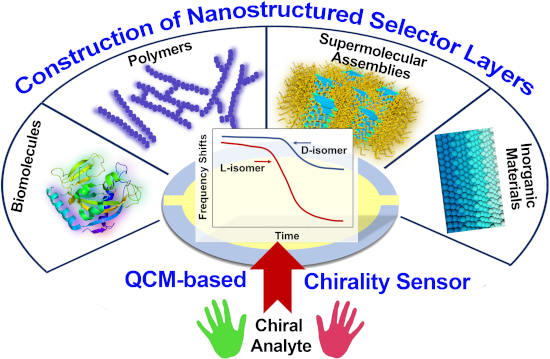
- in the pharmaceutical industry. It has been taken as a model molecule to verify the “proof-of-principle” concept for chiral recognition [28]. Kim and co-workers fabricated ʟ-phenylalanine (ʟ-Phe)-modified QCM sensor and used vapor diffusion molecular assembly (VDMA) to study the chiral adsorption of
- adsorptions of ʟ-MA, ᴅ-MA, and ʟ/ᴅ-MA racemates on the ʟ-Phe sensing layers was monitored through the evaporation diffusion of the solutes. The QCM results indicated that the ʟ-Phe-modified sensor surface had selective chiral recognition ability to MA. Through the control of different VDMA periods and


Application of nanoarchitectonics in moist-electric generation
Beilstein J. Nanotechnol. 2022, 13, 1185–1200, doi:10.3762/bjnano.13.99
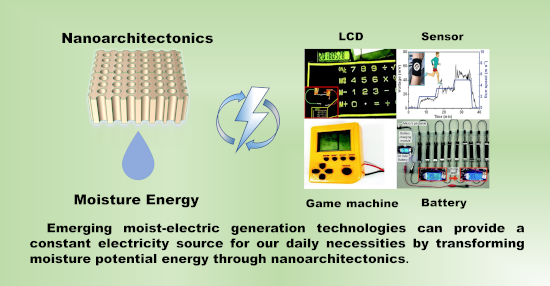
- occurs when a liquid is in contact with a solid with a surface charge. This interaction is mainly dominated by the electric double layer (EDL), which consists of a layer of ions (Stern layer) that is tightly adsorbed to the charged surface and a layer of counter ions (diffusion layer) that is attracted
- to the surface charges. When the liquid moves in the microchannel, it will drag the diffusion layer ions to form a flowing current, thus creating a potential difference, namely the flowing potential between the two ends of the channel. In nanochannels, approximating the channel geometry to be
- the device provided an instantaneous electrical output with a maximum open-circuit voltage of 0.3 V and a short-circuit current of 120 μA. After adding a conducting polymer to improve the number of charged ions and the ion selectivity of the diffusion channel, a specific electrolyte fluid was selected


Microneedle-based ocular drug delivery systems – recent advances and challenges
Beilstein J. Nanotechnol. 2022, 13, 1167–1184, doi:10.3762/bjnano.13.98
- vascular endothelium with tight junctions hampering the permeation of active ingredients to the intraocular area. When designing non-invasive ophthalmic drug dosage forms, the main aim is to improve the bioavailability by increasing the diffusion across sclera, cornea, and conjunctiva [42]. In the case of
- advantage of soluble inserts is that they do not have to be removed from the eye. The rate of drug release is influenced by dissolution or erosion of the polymer matrix. Ophthalmic therapeutic systems belong to the group of non-biodegradable inserts from which the drug substance is released by diffusion at
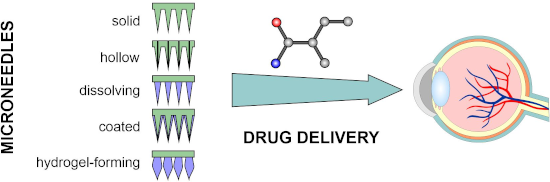
- microneedles containing an empty canal inside are usually filled with active ingredient solution, either passively or with the use of pressure-driven methods [161]. In the systems using passive diffusion, the drug solution can be loaded to the canals inside the microneedles [141] or to an external compartment


Recent advances in green carbon dots (2015–2022): synthesis, metal ion sensing, and biological applications
Beilstein J. Nanotechnol. 2022, 13, 1068–1107, doi:10.3762/bjnano.13.93
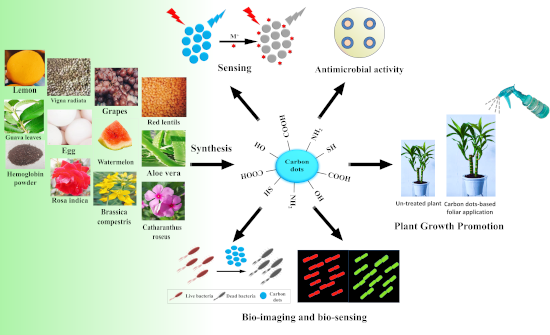
- had surface groups such as carboxyl and hydroxy groups. Aloe vera has intrinsic antimicrobial properties, so the bactericidal activity of these CDs was investigated by the agar well diffusion method, and the sensing ability towards Fe3+ was also reported [67]. Kavitha et al. used date palm fronds with
- honey, garlic, and ammonia as green source, sulfur source, and nitrogen source, respectively to prepare N,S-CDs via a simple hydrothermal technique. The Z-scan methodology was used for non-linear optical characterization and the agar well diffusion methodology was used to explore the antimicrobial




Electrocatalytic oxygen reduction activity of AgCoCu oxides on reduced graphene oxide in alkaline media
Beilstein J. Nanotechnol. 2022, 13, 1020–1029, doi:10.3762/bjnano.13.89
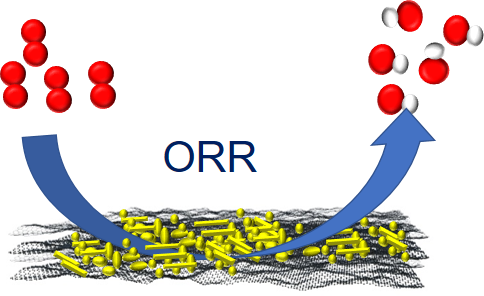
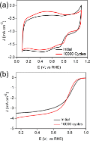
- potential, and diffusion limiting current density (JL). ACC-2 has the highest positive onset potential of the electrocatalysts. The decreasing order of onset potential is ACC-2 (0.94 V) > ACC-3 (0.92 V) > ACC-1 (0.91 V) > Ag-Co3O4 (0.90 V) > Ag-CuO (0.86 V) > ACC-2* (0.85 V). The kinetics of all trimetallic
- sharp slope in the low-frequency region, representing little ionic diffusion resistance from the 0.1 M KOH solution to the Ag electrode surface throughout the ORR process (Figure 4d). The excellent electrocatalytic ORR activity of ACC-2 may originate from the composition and synergistic effects of


Effects of focused electron beam irradiation parameters on direct nanostructure formation on Ag surfaces
Beilstein J. Nanotechnol. 2022, 13, 1004–1010, doi:10.3762/bjnano.13.87
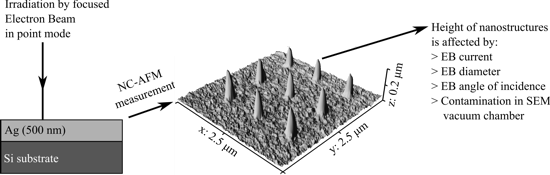
- common, but often undesirable occurrence on surfaces irradiated with EB [22][23]. In high-vacuum conditions, hydrocarbons tend to get adsorbed onto the surfaces of vacuum chamber or samples, where they can move via thermally activated diffusion. Cooling the surface can immobilize any adsorbed molecules
- chamber, the growth rate of the nanostructures was cut by about a half and slowly recovered over time, as hydrocarbon concentrations returned to normal levels. The results from Figure 7 support the theory about EB-induced carbon diffusion within the metal substrate and may provide hints of the carbon
- distribution there. Under the assumption that carbon and carbon-containing silver areas are more susceptible to N plasma etching, we could theorize that carbon atoms in this particular case have reached up to 140 nm deep within the Ag layer. The carbon diffusion could have been caused by a number of reasons




Influence of water contamination on the sputtering of silicon with low-energy argon ions investigated by molecular dynamics simulations
Beilstein J. Nanotechnol. 2022, 13, 986–1003, doi:10.3762/bjnano.13.86
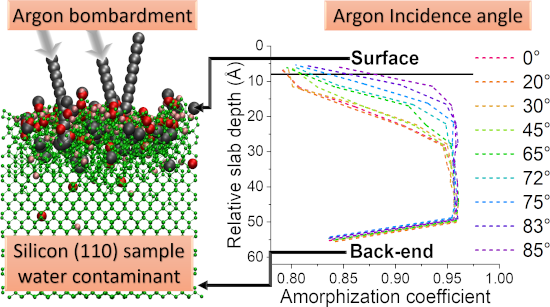
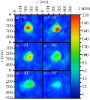
- . For the clean sample, the amorphization depth linearly evolves until the implanted argon atoms reach a saturation concentration due to the diffusion and desorption of excess atoms. In the contaminated sample, the observations are similar for argon and for the contaminants, and hydrogen is implanted




Bioselectivity of silk protein-based materials and their bio-inspired applications
Beilstein J. Nanotechnol. 2022, 13, 902–921, doi:10.3762/bjnano.13.81
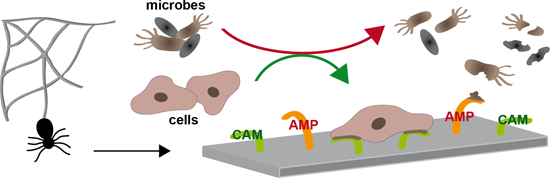
- be used to generate self-assembled membranes, allowing for the adhesion of endothelial cells on the one side and smooth muscle cells on the other side, as well as the diffusion of relevant molecules, making this material promising for vascular tissue engineering [170]. In addition to flat films or


Self-assembly of C60 on a ZnTPP/Fe(001)–p(1 × 1)O substrate: observation of a quasi-freestanding C60 monolayer
Beilstein J. Nanotechnol. 2022, 13, 857–864, doi:10.3762/bjnano.13.76
- measurements and for modeling by ab initio calculations. Periodic and compact films are generally obtained when the molecules possess enough surface mobility, that is, when the diffusion energy (Ed) is low compared to the thermal energy kBT, where T is the substrate temperature and kB is the Boltzmann constant
- directly on either the Fe(001) or Fe(001)–p(1 × 1)O surfaces. In the former case, the diffusion of C60 is completely hindered and fullerene forms a disordered film, while in the latter case a peculiar mode of growth, intermediate between diffusion-mediated and ballistic growth, is observed [23][50]. Figure
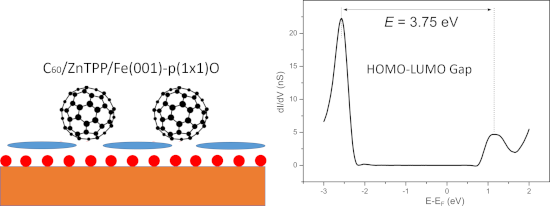
- promotes the surface diffusion of C60 and the growth of a crystalline film at room temperature. The large HOMO–LUMO gap and the negligible charge transfer at the interface indicate that C60 is electronically decoupled from the substrate. The C60/ZnTPP/Fe(001)–p(1 × 1)O multilayer represents a paradigmatic


Ultrafast signatures of magnetic inhomogeneity in Pd1−xFex (x ≤ 0.08) epitaxial thin films
Beilstein J. Nanotechnol. 2022, 13, 836–844, doi:10.3762/bjnano.13.74
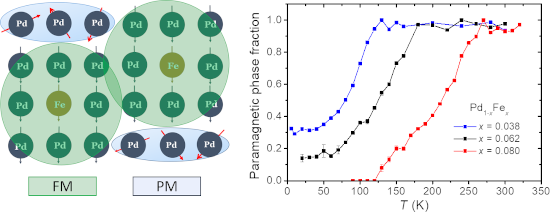
- with large (tens of nanometer) layer thicknesses [40][44][45]. It is our hypothesis that itinerant electron spin diffusion could bring the PM areas into equilibrium with the FM environment and is an origin of the 10 ps transient. Indeed, the diffusion velocity across the length of ≈1 nm on a time scale
- of 10 ps can be estimated as 10−9 m/10−11 s = 100 m/s. For the conventional spin diffusion, the spin memory length is where is the diffusion coefficient, τs is the Elliott–Yafet spin-relaxation time [46][47], τ is the charge transport relaxation time, and vF is the Fermi velocity. For the purpose
- of order-of-magnitude estimation we define the spin-diffusion velocity vs as from which Modern band-structure calculations [48][49] show that more than 95% of the electron density of states at the Fermi energy comes from the itinerant 4d electrons. The Fermi velocity of 3d electrons in iron-group


Hierachical epicuticular wax coverage on leaves of Deschampsia antarctica as a possible adaptation to severe environmental conditions
Beilstein J. Nanotechnol. 2022, 13, 807–816, doi:10.3762/bjnano.13.71
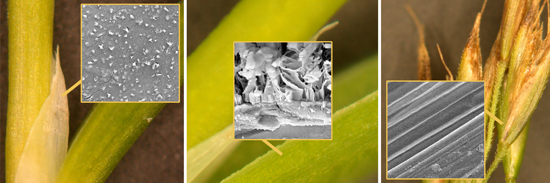
- the wax on both epidermis and stomata contributes to the resistance of water vapor diffusion from the mesophyll to the outside and to the control of cuticle transpiration, reducing in this way the water loss by the leaf blade [9]. Also, authors associated the epicuticular wax on leaves along with