


Search results
Search for "dyes" in Full Text gives 211 result(s) in Beilstein Journal of Nanotechnology. Showing first 200.
Functional diversity of resilin in Arthropoda
Beilstein J. Nanotechnol. 2016, 7, 1241–1259, doi:10.3762/bjnano.7.115
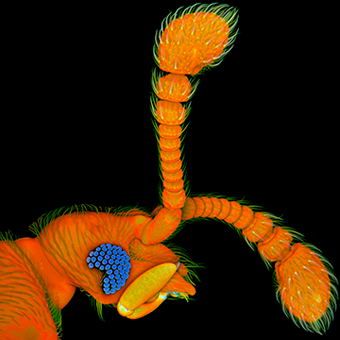
- by single conventional dyes. Chemical reactions with the Masson and Mallory dyes were mentioned to stain resilin red. Staining of resilin with aqueous solutions of methylene blue and toluidine blue is a common method and can provide good information about the presence and distribution of resilin
- . When resilin is stained with one of these two dyes, it does not show metachromasia. Among the amino acids that form resilin, dityrosine and trityrosine exhibit a relatively pronounced autofluorescence. This autofluorescence is present in natural resilin-containing structures and in isolated resilin


Optical absorption signature of a self-assembled dye monolayer on graphene
Beilstein J. Nanotechnol. 2016, 7, 862–868, doi:10.3762/bjnano.7.78
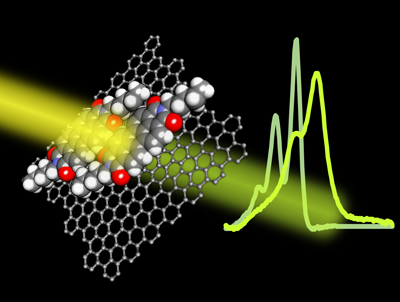
- interactions between the constituent molecules, as early predicted by McRay and Kasha [2]. A well-known example is the spectral shift induced by the self-association of cyanine dyes in solution [3]. Depending on the aggregation pattern of the dyes, either bathochromically shifted J-bands or hypsochromically
- original photonic processes. An atomically precise positioning of self-associated molecular dyes can be achieved either in vacuum or at the solution–substrate interface by self-assembly techniques. In particular, perylene-3,4,9,10-tetracarboxylic-3,4,9,10-diimide (PTCDI) and its sibling molecule perylene
- -3,4,9,10-tetracarboxylic dianhydride (PTCDA), have become archetypes for photonic applications of dyes [12], for self-organized adsorption on various atomically flat surfaces [13], and for their combination. Indeed, optical differential reflectance spectroscopy [14], photoluminescence, or Raman diffraction



Gold nanoparticles covalently assembled onto vesicle structures as possible biosensing platform
Beilstein J. Nanotechnol. 2016, 7, 655–663, doi:10.3762/bjnano.7.58
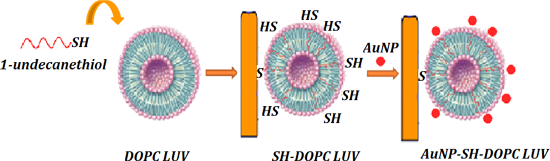
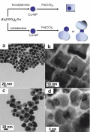
- and condensation of silicon alkoxides into organized inorganic materials (dioctadecyldimethylammonium bromide and didodecyldimethylammonium bromide). Thus, gold nanoparticles (AuNPs) form stable complexes with hydrophobic drugs and dyes. These drugs and dyes are successfully released into cells [9


Novel roles for well-known players: from tobacco mosaic virus pests to enzymatically active assemblies
Beilstein J. Nanotechnol. 2016, 7, 613–629, doi:10.3762/bjnano.7.54
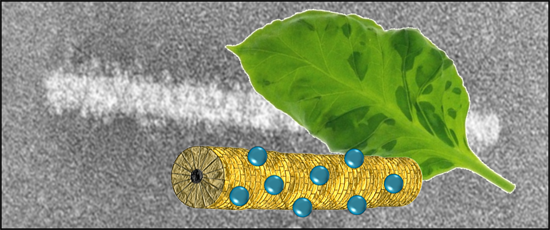
- (length: 300 nm) in combination with functional ligands such as peptides, enzymes, dyes, drugs or inorganic materials is advantageous for applications ranging from biomedical imaging and therapy approaches over surface enlargement of battery electrodes to the immobilization of enzymes. TMV building blocks
- dyes for imaging purposes either tracing the virus itself, or targeting specific cells or organs [73][74][75][76], antigens for the development of vaccines as reviewed in great detail [77][78][79], drugs or imaging reagents for increasingly elaborated biomedical applications [80][81][82] with numerous
- , batteries, photoelectrochemical cells or environmental remediation [63][93][94][95][96][97][98][99][100][101][102][103][104][105][106][107][108][109][110][111][112][113], as scaffolds for the display of reporter dyes, nanoparticles or contrast agents such as gadolinium complexes, for light harvesting


Single-molecule mechanics of protein-labelled DNA handles
Beilstein J. Nanotechnol. 2016, 7, 138–148, doi:10.3762/bjnano.7.16
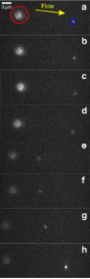
- out of focus or the known blinking of fluorescing quantum dots [32] (Figure 8). This single molecule fluorescence experiment clearly visualizes the specific binding of a protein to the biotinylated end of the dsDNA. Since the dsDNA was not labelled with intercalating dyes in this fluorescence



Sonochemical co-deposition of antibacterial nanoparticles and dyes on textiles
Beilstein J. Nanotechnol. 2016, 7, 1–8, doi:10.3762/bjnano.7.1
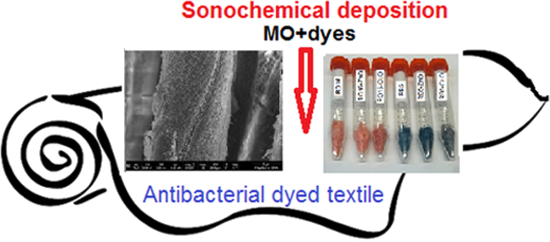
- nanoparticles on the fabric surface. It was shown that the antibacterial behavior of the metal oxides was not influenced by the presence of the dyes. Higher K/S values were achieved by sonochemical deposition of the dyes in comparison to a dip-coating (exhaustion) process. The stability of the antibacterial
- properties and the dye fastness was studied for 72 h in saline solution aiming at medical applications. Keywords: antibacterial nanoparticles; coating stability; dyes; sonochemical coating; Introduction The preferred technique for coating with nanoparticles (NPs) in most scientific and industrial examples
- process led to the partial reduction of Ag+ to metallic Ag, while AgCl was also formed due to the presence of Cl−. In the current work we describe the deposition of two different functional materials on textiles, e.g., dyes and biocidal NPs that were synthesized and embedded onto the surface from a




pH-Triggered release from surface-modified poly(lactic-co-glycolic acid) nanoparticles
Beilstein J. Nanotechnol. 2015, 6, 2504–2512, doi:10.3762/bjnano.6.260
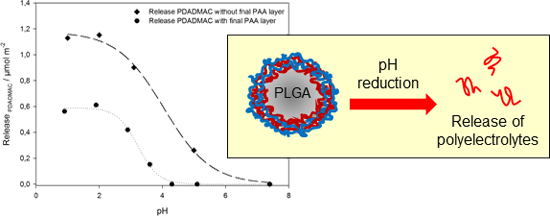
- ultrathin polyelectrolyte multilayers (PEM) with well adjustable properties and architecture. Layer build-up is based on alternating adsorption of cationic and anionic compounds, such as polyelectrolytes [15], proteins [16], nucleic acids [17][18], dyes [19], and even colloids [14] onto the surface of
- commonly applied to detect anionic polymers [29] or dyes [30]. The obtained release data reveal valuable information about the pH-tunability of PAA in the complexed state within a polyelectrolyte multilayer. The quantification of released PDADMAC is a direct evidence of PEM decomposition and marks their


Silica-coated upconversion lanthanide nanoparticles: The effect of crystal design on morphology, structure and optical properties
Beilstein J. Nanotechnol. 2015, 6, 2290–2299, doi:10.3762/bjnano.6.235
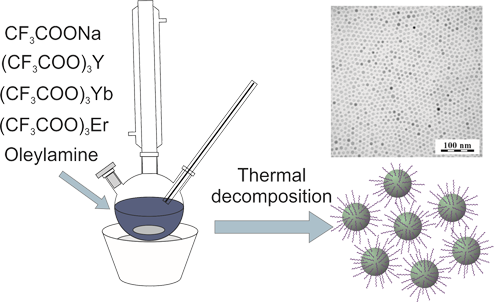
- tracking [8], bioimaging [9] and photodynamic therapy [10]. Lanthanide-doped upconversion nanoparticles emit visible light upon excitation by near-IR light (NIR). Compared with organic dyes and semiconductor quantum dots, upconversion nanoparticles have attractive chemical and optical properties, as well






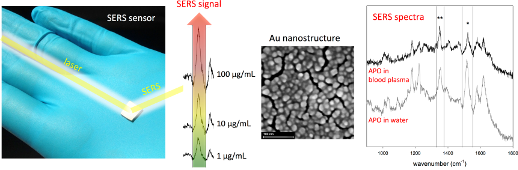
Au nanoparticle-based sensor for apomorphine detection in plasma
Beilstein J. Nanotechnol. 2015, 6, 2224–2232, doi:10.3762/bjnano.6.228
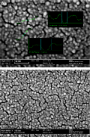
- from a straightforward SERS label (RH6G) to organic dyes of interest in art conservation (Alizarin, Purpurin) to small proteins (lysozime). These results also indicate that there is a trade-off between the size of the analyte and the average size of the inter-island channels where the analyte is pinned


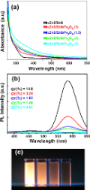
A facile method for the preparation of bifunctional Mn:ZnS/ZnS/Fe3O4 magnetic and fluorescent nanocrystals
Beilstein J. Nanotechnol. 2015, 6, 1743–1751, doi:10.3762/bjnano.6.178
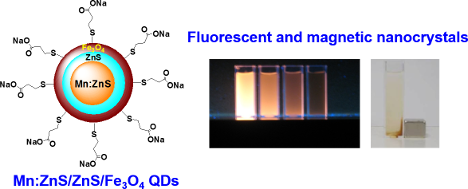
- ; Introduction Semiconductor nanocrystals with a diameter of approximately 1–10 nm, also referred to as quantum dots (QDs), have attracted great attention due to their unique optical and electronic properties, which are not observed in bulk semiconductor materials [1][2][3]. Compared to conventional organic dyes




Imaging of carbon nanomembranes with helium ion microscopy
Beilstein J. Nanotechnol. 2015, 6, 1712–1720, doi:10.3762/bjnano.6.175
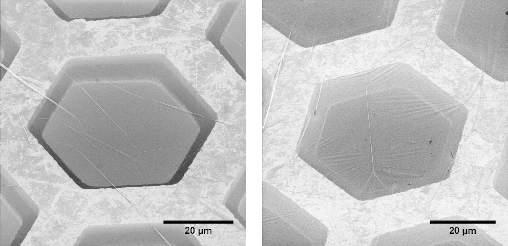
- /Si wafers [12], but on other substrates, CNMs are not (or only barely) visible. In particular, it is not possible to directly image freestanding CNMs by regular optical microscopy. Indirect optical methods require the attachment of particles, fluorescent dyes [13], metallic nanostructures [14] or


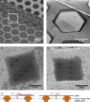


Transformations of PTCDA structures on rutile TiO2 induced by thermal annealing and intermolecular forces
Beilstein J. Nanotechnol. 2015, 6, 1498–1507, doi:10.3762/bjnano.6.155
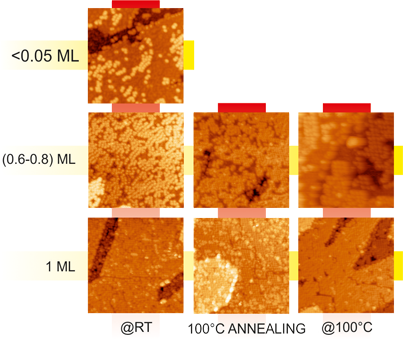
- factors giving rise to such recognition of PTCDA molecules. First, PTCDA belongs to the group of intensive dyes and is applied in a wide range of optoelectronic devices, such as photosensors and organic light emitting diodes. Second, as flat molecules with delocalized π orbitals and a permanent quadrupole


High photocatalytic activity of V-doped SrTiO3 porous nanofibers produced from a combined electrospinning and thermal diffusion process
Beilstein J. Nanotechnol. 2015, 6, 1281–1286, doi:10.3762/bjnano.6.132
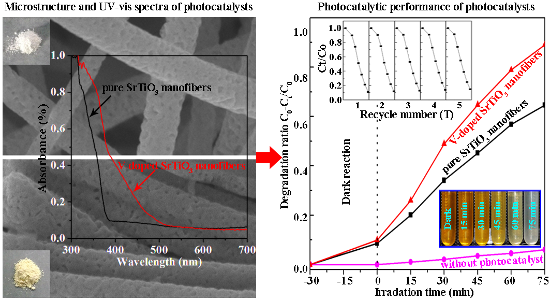
- seriously threatens aquatic organisms and human life. To purify the wastewater, several conventional treatment operations such as screening, sedimentation, and adsorption have been utilized [3]. Nevertheless, such operations cannot remove persistent and toxic soluble contaminants, such as organic dyes


Effects of swift heavy ion irradiation on structural, optical and photocatalytic properties of ZnO–CuO nanocomposites prepared by carbothermal evaporation method
Beilstein J. Nanotechnol. 2015, 6, 928–937, doi:10.3762/bjnano.6.96
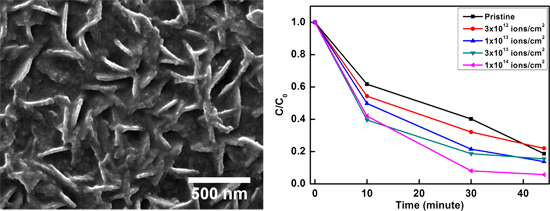
- degradation of methylene blue (MB) and methyl orange (MO) dyes under sun light irradiation and it was observed that swift heavy ion irradiation results in significant enhancement in the photocatalytic efficiency of ZnO–CuO nanocomposites towards degradation of MB and MO dyes. The possible mechanism for the
- carbothermal reduction-based vapor deposition method. We have demonstrated that swift heavy ion irradiation can be employed to significantly enhance the sun light driven photocatalytic activity of ZnO–CuO nanocomposites toward the degradation of methylene blue (MB) and methyl orange (MO) dyes in water. Results
- lateral mass flow leading to the formation of larger nanorod like structures with increased width and distinct facets, as can be seen in Figure 1c and Figure 1d. The photocatalysis studies were carried out by taking MB and MO as model organic dyes to demonstrate the capability of ion beam engineering to



Silica micro/nanospheres for theranostics: from bimodal MRI and fluorescent imaging probes to cancer therapy
Beilstein J. Nanotechnol. 2015, 6, 546–558, doi:10.3762/bjnano.6.57
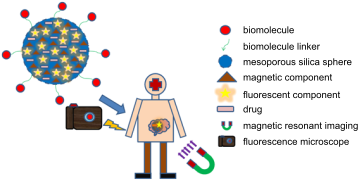
- ; organic dyes; quantum dots; silica nanospheres; theranostics; Review 1 Introduction In the modern era of medical diagnosis, X-rays have long played a major role in the clinical imaging of anatomical details of disease sites [1]. However, the development of suitable molecular diagnostic systems for
- (negative contrast, modified T2). Similarly the fluorescent CAs includes different lanthanide complexes, rare earth oxides, organic dyes, QDs, and ruthenium complexes. In this review article, we summarize recent literature reports on multifunctional nanocomposites for MRI and fluorescence imaging that are
- Lanthanide complex as magnetic and organic dyes as fluorescent probe Organic dyes are the most common fluorophores and have been studied for long time. The most common fluorophores include fluorescein isothiocyanate (FITC) and rhodamine B (RhB). Kačenka et al. [17] reported the synthesis of hybrid NPs


Palladium nanoparticles anchored to anatase TiO2 for enhanced surface plasmon resonance-stimulated, visible-light-driven photocatalytic activity
Beilstein J. Nanotechnol. 2015, 6, 428–437, doi:10.3762/bjnano.6.43
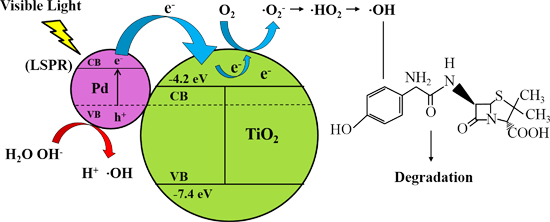
- plasmonic Au nanoparticles deposited on top of TiO2 [27]. While Mohapatra et al. had synthesized TiO2 nanotubes with palladium (Pd) NPs for the photocatalytic decomposition of azo dyes under sunlight irradiation. Pd/TiO2 nanotubes showed a faster degradation time (150 min) to completely decompose azo dye as


The effect of surface charge on nonspecific uptake and cytotoxicity of CdSe/ZnS core/shell quantum dots
Beilstein J. Nanotechnol. 2015, 6, 281–292, doi:10.3762/bjnano.6.26
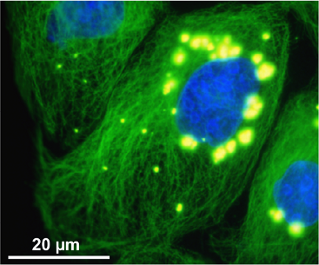
- advantageous tools for fluorescent labeling that have gained major attention over the past decade from various fields of application in the life sciences [1][2][3][4][5][6]. They are typically brighter than conventional organic dyes, much more resistant against photobleaching and their size-dependent optical




Overview about the localization of nanoparticles in tissue and cellular context by different imaging techniques
Beilstein J. Nanotechnol. 2015, 6, 263–280, doi:10.3762/bjnano.6.25
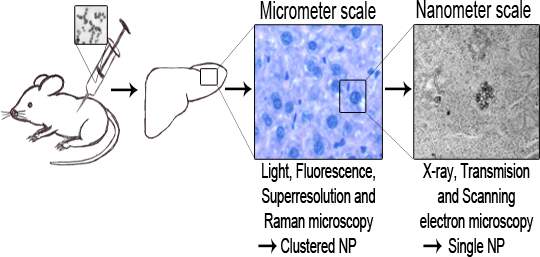
- activation statuses, and apoptotic or degenerative changes [74]. In addition, fluorescence microscopy has been widely used in studies on the biodistribution of nanoparticles [28][48][75][76][77][78]. For fluorescence microscopic detection, NP are usually labeled with fluorescent dyes, such as fluorescein
- surface functionalization and binding of other molecules of interest may remain completely similar to that of unlabeled particles [79][83][84]. Another disadvantage when using fluorescent dyes is their time-dependent photobleaching, which results in a more or less rapid fading of the fluorescent yield [85
- for the detection of mixed QD populations with a single excitatory wavelength [86]. Furthermore, the impact of toxic ions released by QD on biological matter has been minimized by embedding QD into silica nanoparticles [88] without influencing the optical properties [89]. Unlike fluorescent dyes that




Poly(styrene)/oligo(fluorene)-intercalated fluoromica hybrids: synthesis, characterization and self-assembly
Beilstein J. Nanotechnol. 2014, 5, 2450–2458, doi:10.3762/bjnano.5.254
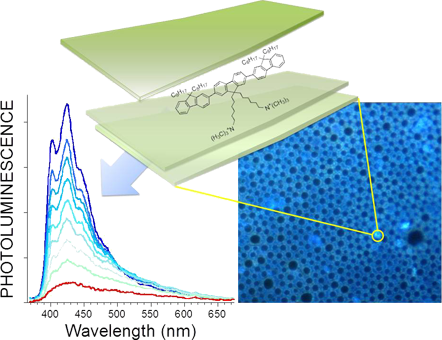
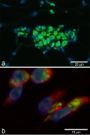
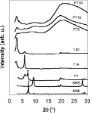
- ]. Among the inorganic nano-scaled materials, layered silicates have been widely used as hosts for functional π-conjugated molecules (dyes) [8][9][10], and polymers [11][12][13][14][15], owing to their adsorption properties, ion-exchange ability, high specific surface area, and a two-dimensional (2D




Synthesis and characterization of fluorescence-labelled silica core-shell and noble metal-decorated ceria nanoparticles
Beilstein J. Nanotechnol. 2014, 5, 2413–2423, doi:10.3762/bjnano.5.251
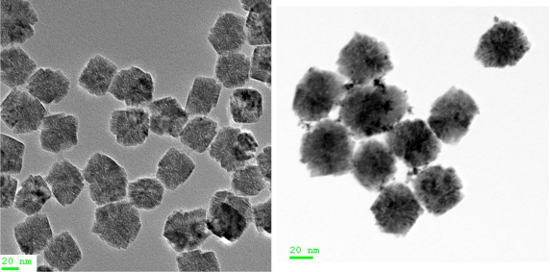
- titania NP and their interaction with human cell lines [1] and pointed out that the determination of the biological effects of zinc oxide NP is problematic since they are sensitive towards phosphate ions [2]. This work will not be included in this article. The fluorescence dyes and the labelling process
- As principal means of investigation by our physicochemical and medicinal partners, confocal microscopy and other fluorescence-based methods were envisaged. Consequently, a proper choice of the fluorescent label is crucial. We first experimented with commercial dyes Cy3 and Cy5 having an emission in a
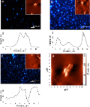
- suitable frequency range, but they turned out to be not sufficiently photostable under the experimental condititons. We then switched to perylenediimide derivatives which are known to be chemically and photochemically quite inert [3][4]. We prepared the dyes MPD (asymmetric) and BPD (symmetric) shown in


Synthesis of radioactively labelled CdSe/CdS/ZnS quantum dots for in vivo experiments
Beilstein J. Nanotechnol. 2014, 5, 2383–2387, doi:10.3762/bjnano.5.247
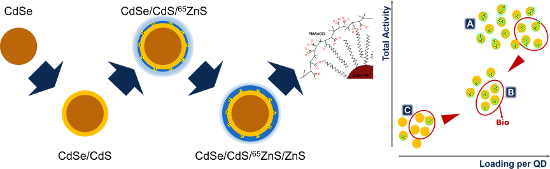
- alloyed structures [5][6][7][8]. Semiconductor nanocrystals are discussed in the literature as potential emitters for LEDs or as bio-labelling agents due to their complementary optical properties as well as other advantages in comparison to organic dyes. For example, they exhibit broad absorption


Interaction of dermatologically relevant nanoparticles with skin cells and skin
Beilstein J. Nanotechnol. 2014, 5, 2363–2373, doi:10.3762/bjnano.5.245
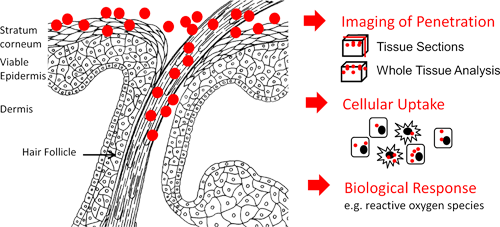
- cell culture conditions are not always predictive for ex vivo or in vivo tissue studies. For example, in previous studies on skin interactions with biodegradable poly(lactic acid) (PLA) particles loaded with different fluorescent dyes, we found that although mono-dispersed and stable in aqueous
- solution, skin contact with the particles lead to destabilization with the release of loaded dyes [36][37]. The studies further illustrated that cells, especially immortalized cell lines compared to primary cells as well as cell types, e.g., epithelial cells versus dendritic cells, differ significantly in
- studies with silica particles required labeling of particles with fluorescent dyes or introduction of gold cores followed by sectioning of the tissue for further analysis, skin penetration of AgNP could be studied in intact tissue blocks by tracking of the Raman signal. The representative Raman and SERS


Inorganic Janus particles for biomedical applications
Beilstein J. Nanotechnol. 2014, 5, 2346–2362, doi:10.3762/bjnano.5.244
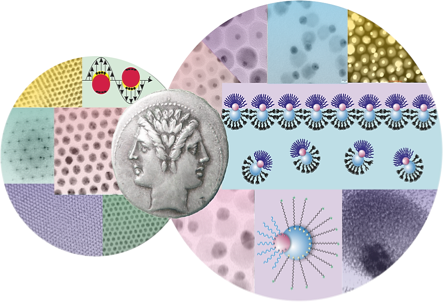
- introducing amino-groups at the surface [108][109]. The resulting positively charged nanoparticles are known to be taken up more efficiently in in vitro cultures [110][111], whereby amine-functionalized silica-particles enable covalent conjugation of dyes, biomolecules, such as sugars, antibodies, and






Localized surface plasmon resonances in nanostructures to enhance nonlinear vibrational spectroscopies: towards an astonishing molecular sensitivity
Beilstein J. Nanotechnol. 2014, 5, 2275–2292, doi:10.3762/bjnano.5.237
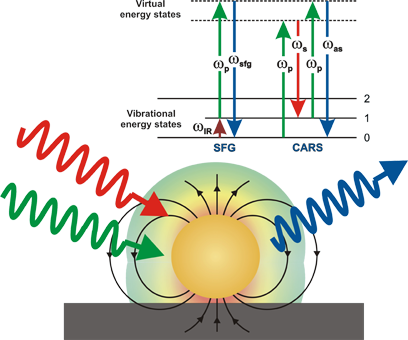
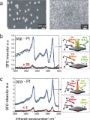
- . showed in 2011 that SE-CARS could be used to obtain large scale images of tissues, for diagnostic purposes [82]. The authors demonstrated that, similarly to immunohistochemistry (IHC) that labels antibodies with dyes or enzymes to image the tissue with conventional light microscope, antibody-labeled




Rapid degradation of zinc oxide nanoparticles by phosphate ions
Beilstein J. Nanotechnol. 2014, 5, 2007–2015, doi:10.3762/bjnano.5.209
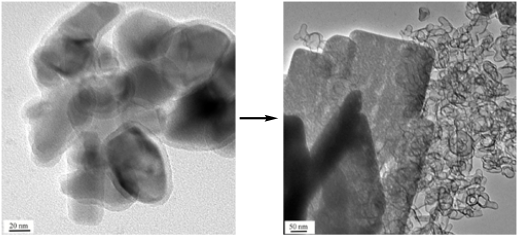
- for particles used in biomedical applications [26]. Similar perylene-derived dyes were applied as sensitizers for zinc oxide solar cells [27]. ZnO samples 1 were prepared by a wet method under acidic conditions [28]. In the absence of the fluorescence marker we obtained almost spherical particles of 5





