


Search results
Search for "environmental" in Full Text gives 600 result(s) in Beilstein Journal of Nanotechnology. Showing first 200.
Nanoarchitectonics of photothermal materials to enhance the sensitivity of lateral flow assays
Beilstein J. Nanotechnol. 2023, 14, 988–1003, doi:10.3762/bjnano.14.82
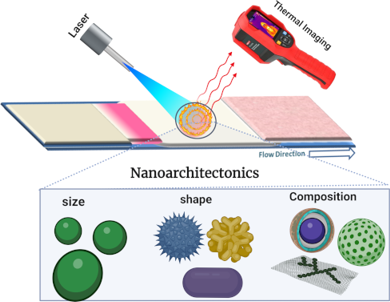
- to detect analytes of interest in a wide range of applications such as diagnostics, environmental monitoring, and food quality measurements [1][2][3]. LFAs are well known for their simplicity, affordability, accessibility to patients, and ease of use [4]. Since the discovery of this technique in the


Prediction of cytotoxicity of heavy metals adsorbed on nano-TiO2 with periodic table descriptors using machine learning approaches
Beilstein J. Nanotechnol. 2023, 14, 939–950, doi:10.3762/bjnano.14.77
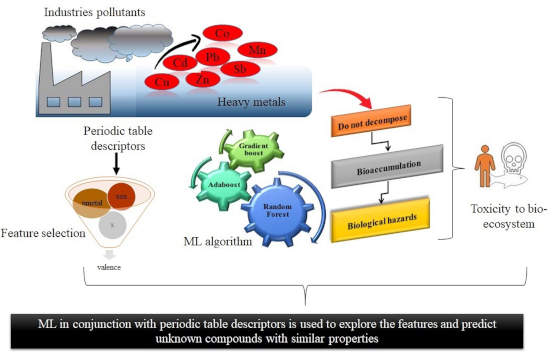
- metals, upon release and emission, may interact with different environmental components, which may lead to co-exposure to living organisms. Nanoscale titanium dioxide (nano-TiO2) can adsorb heavy metals. The current idea is that nanoparticles (NPs) may act as carriers and facilitate the entry of heavy


Upscaling the urea method synthesis of CoAl layered double hydroxides
Beilstein J. Nanotechnol. 2023, 14, 927–938, doi:10.3762/bjnano.14.76
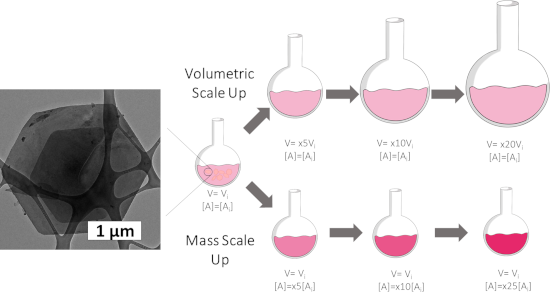
- materials is one of the most relevant fields in materials science. Layered double hydroxides (LDHs), a versatile class of anionic clays, exhibit great potential in photocatalysis, energy storage and conversion, and environmental applications. However, its implementation in real-life devices requires the
- < x < 0.33). An− symbolizes a constituent ranging from (in)organic anions to macromolecules, and Sv stands for solvent molecules. This general composition leads to a plethora of highly tunable systems [12][13][14][15][16] with relevance in environmental applications [17], photocatalysis [18], energy


Biomimetics on the micro- and nanoscale – The 25th anniversary of the lotus effect
Beilstein J. Nanotechnol. 2023, 14, 850–856, doi:10.3762/bjnano.14.69

- epicuticular wax coverage on leaves of Deschampsia antarctica as a possible adaptation to severe environmental conditions”, used cryo-scanning electron microscopy to study surfaces of D. antarctica, one of the only two flowering plants native to Antarctica. The results show that the two-layered wax, which
- densely covers both leaf surfaces, contributes to the plant's adaptation to severe environmental conditions in Antarctica by increasing its resistance to cold temperatures, icing, harmful UV radiation, and dehydration. In the paper “Micro-structures, nanomechanical properties and flight performance of
- production technologies allow for application-specific modification to develop adjustable, bioactive materials as shown in this review article. In the paper "Design of a biomimetic, small-scale artificial leaf surface for the study of environmental interactions" by Huth et al. [10], the authors developed wax


Ultralow-energy amorphization of contaminated silicon samples investigated by molecular dynamics
Beilstein J. Nanotechnol. 2023, 14, 834–849, doi:10.3762/bjnano.14.68
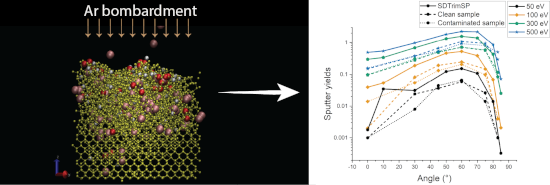
- very sensitive to contaminations [16] and environmental changes during preparation to the point where an oxide layer formed on the surface of the lamella could complicate analysis [17][18]. While this oxide layer has a substantial impact, ion-induced damage contributes even more to the degradation of





Silver-based SERS substrates fabricated using a 3D printed microfluidic device
Beilstein J. Nanotechnol. 2023, 14, 793–803, doi:10.3762/bjnano.14.65
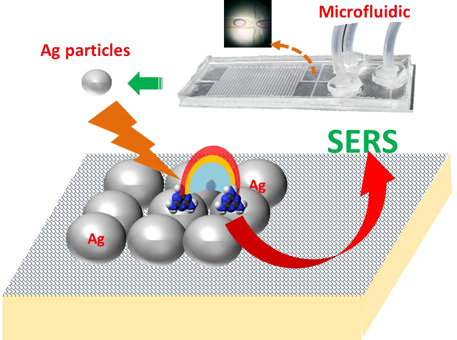
- the potential to be a valuable analytical tool for monitoring environmental contaminants. Keywords: 3D printing; microfluidic droplet; SERS substrate; silver nanoparticle; smartphone detection; Introduction Surface-enhanced Raman spectroscopy (SERS) has emerged as a powerful optical trace detection
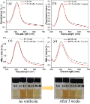
- excellent analytical performance of the PS@Ag SERS substrate, making it a promising tool for detecting environmental pollutants and ensuring food safety. Photograph of the as-fabricated droplet-based microfluidic device. Images and absorbance spectra of Ag NPs synthesized using silver nitrate and sodium



Silver nanoparticles loaded on lactose/alginate: in situ synthesis, catalytic degradation, and pH-dependent antibacterial activity
Beilstein J. Nanotechnol. 2023, 14, 781–792, doi:10.3762/bjnano.14.64
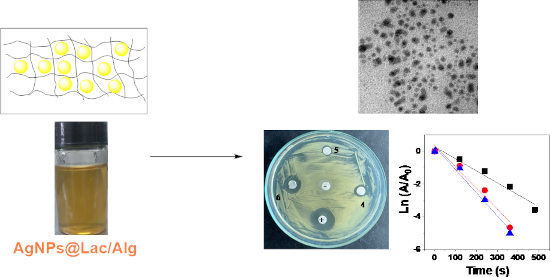
- activity. These findings suggest that this nanocomposite has the potential to be tailored for specific applications in environmental and medicinal treatments, making it a highly promising material. Keywords: alginate; bacterial activity; catalysis; lactose; silver nanoparticles; synthesis; Introduction
- also valuable catalysts for the removal of environmental contaminants in aqueous solutions. The high surface-to-volume ratio of AgNPs provides many active sites, thereby, enhancing their catalytic activity [32]. The catalytic activity of AgNPs is also influenced by the morphology and the use of capping
- surface properties of silver nanoparticles. The highest bioactivity was observed at pH 6. These findings suggest that the nanocomposite may be customized for specific applications in environmental and medicinal treatments, making it a promising material. Experimental Materials The following chemicals and


Carboxylic acids and light interact to affect nanoceria stability and dissolution in acidic aqueous environments
Beilstein J. Nanotechnol. 2023, 14, 762–780, doi:10.3762/bjnano.14.63
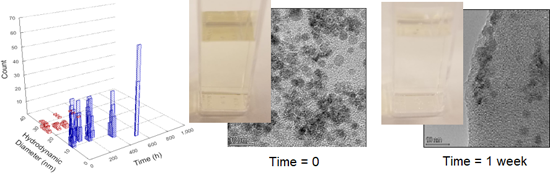
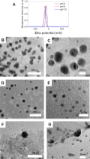
- acid coating to the particle surface [22]. Nanoceria partially dissolved in the presence of organic acids in radish root exudates [23]. Nanoceria agglomeration was reported in algae growth medium beyond 28 h of exposure [24]. Collin et al. [25] urged future studies to look into environmental exposures
- absorption edge in the UVA region [43]. Studying the effects of UV irradiation on nanoceria would be informative for environmental applications. In biological systems, colloidal nanoceria dispersions were found to be non-toxic to fibroblasts and were capable of preventing damage from UV irradiation [44
- structures. The authors thank Marsha Ensor for her contribution. This report is based on the following: Hancock, M. L. The Fabrication and Characterization of Metal Oxide Nanoparticles Employed in Environmental Toxicity and Polymeric Nanocomposite Applications. Doctoral Dissertation, University of Kentucky
In situ magnesiothermic reduction synthesis of a Ge@C composite for high-performance lithium-ion batterie anodes
Beilstein J. Nanotechnol. 2023, 14, 751–761, doi:10.3762/bjnano.14.62
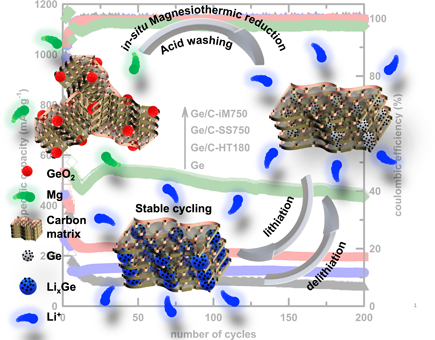
- various negative environmental consequences of using fossil fuel energy, such as water pollution, increasing emissions of greenhouse gases, and air pollution [1]. Therefore, research regarding eco-friendly and renewable energy resources has emerged [2]. One of the best alternatives to fossil fuels are


Nanoarchitectonics for advanced applications in energy, environment and biology: Method for everything in materials science
Beilstein J. Nanotechnol. 2023, 14, 738–740, doi:10.3762/bjnano.14.60
- ], but also from applied fields such as catalysis [20][21], sensors [22][23], devices [24][25], environmental research [26][27], energy [28][29], and biomedical [30][31] fields. In this thematic issue entitled “Nanoarchitectonics for advanced applications in energy, environment and biology”, the authors
- concept, it can be regarded as method for everything in materials science as shown in the manuscripts published in this thematic issue. By using nanoarchitectonics one can create new functional materials, help with societal development, and solve various problems, such as environmental issues, for

Nanomaterials for photocatalysis and applications in environmental remediation and renewable energy
Beilstein J. Nanotechnol. 2023, 14, 722–724, doi:10.3762/bjnano.14.58
- primary sources of environmental [2]. A Global Warming Potential (GWP) measurement was used to compare the global warming effects of different gases. It has been calculated to reflect how long gases remain in the atmosphere, on average, and how strongly it absorbs energy [3]. Besides, the discharge of
- persistent organic pollutants (POPs) also contributes to water pollution, increasing global environmental pollution. Recently, the reduction and conversion of CO2 into fuel as valuable hydrocarbon products has been drawing attention from scientists in materials science, chemical engineering, nanotechnology
- appropriate for treating pollutants, even in atmospheric conditions [9][10][11]. Moreover, the photocatalysis method is also a potential solution for environmental remediation, carbon emission reduction, and renewable energy production [12][13][14]. Combining photocatalysts and sunlight irradiation is a

Metal-organic framework-based nanomaterials as opto-electrochemical sensors for the detection of antibiotics and hormones: A review
Beilstein J. Nanotechnol. 2023, 14, 631–673, doi:10.3762/bjnano.14.52
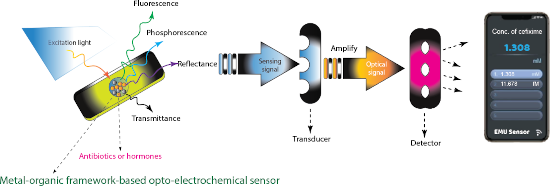
- was around 1400 tons [1]. Due to their complicated structural makeup, the majority of antibiotics are eliminated unaltered in urine and faeces, which ultimately contaminate natural water sources and soil [2][3][4][5][6]. In environmental samples, antibiotics are currently being found at levels between
- current trend in the abuse of antibiotics persists, 300 million people will die prematurely globally over the next 28 years [17]. Considering these environmental and health concerns, a number of regulatory bodies and nations, including the EU, have prohibited the use of chemicals and pharmaceuticals with
- to increased global antibiotic consumption and the usage of various hormones that promote health [18][19]. Therefore, research efforts have been concentrated on monitoring and detecting antibiotics and hormones in environmental, clinical, food, and biological samples due to the bioaccumulation


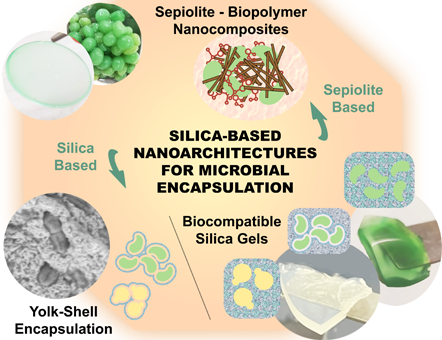
Nanoarchitectonics to entrap living cells in silica-based systems: encapsulations with yolk–shell and sepiolite nanomaterials
Beilstein J. Nanotechnol. 2023, 14, 522–534, doi:10.3762/bjnano.14.43
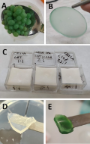
- and Figure 3D show that several yeast cells are embedded in the transparent silica matrix, featuring a visible interface resulting from the shellization process. The G57-4 silica gel materials with embedded yeasts were studied in further detail using the environmental SEM/EDS equipment described below
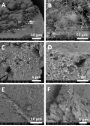
- an environmental SEM equipment at different magnifications. (C) Top: Composite image of the silica gel matrix with embedded yeast yolk–shell structures obtained by superimposing the various images of the elements distribution mapping (smaller pictures at the bottom). Schematic representation of the


A mid-infrared focusing grating coupler with a single circular arc element based on germanium on silicon
Beilstein J. Nanotechnol. 2023, 14, 478–484, doi:10.3762/bjnano.14.38
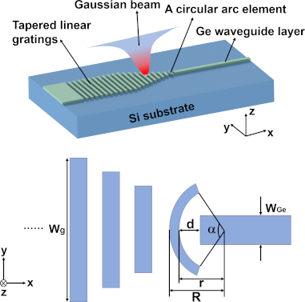
- -silicon; mid-infrared; Introduction The mid-infrared (MIR) spectrum region covers the absorption band of most organic and inorganic matter. Thus, it has a broad application prospect in gas detection, environmental monitoring, lidar, free space optical communication, and remote sensing technologies [1][2


Mixed oxides with corundum-type structure obtained from recycling can seals as paint pigments: color stability
Beilstein J. Nanotechnol. 2023, 14, 467–477, doi:10.3762/bjnano.14.37
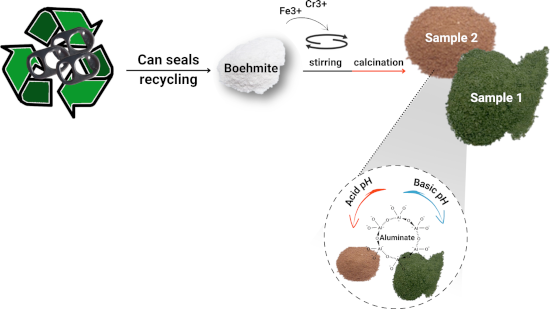
- . Keywords: circular economy; colorimetry; sustainability; Introduction The growing interest in industrial products that do not harm the environment triggered the development of diverse strategies to optimize recycling and green syntheses of materials. It is possible to combine economic and environmental
- a reduction to 5% in greenhouse gas emissions compared to the direct synthesis, reducing the environmental impact. Besides, one ton of recycled aluminium saves up to eight metric tons of bauxite [3][4]. The amount of recycled aluminium packaging depends on individual national recycling policies
- and physical stability of the pigments, ensuring greater durability. Furthermore, it reduces environmental problems because it avoids consuming natural raw materials, saving primary resources [10][11]. Inorganic pigments, generally, are less affected by light, ambient temperature, chemicals, and harsh




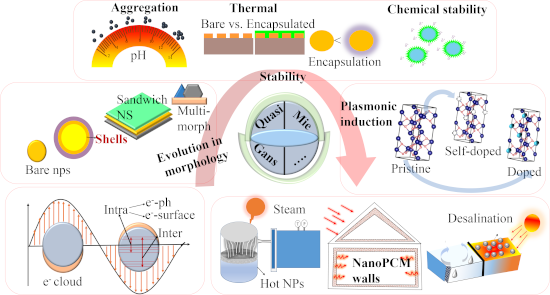
Plasmonic nanotechnology for photothermal applications – an evaluation
Beilstein J. Nanotechnol. 2023, 14, 380–419, doi:10.3762/bjnano.14.33




New trends in nanobiotechnology
Beilstein J. Nanotechnol. 2023, 14, 377–379, doi:10.3762/bjnano.14.32
- Pau-Loke Show Kit Wayne Chew Wee-Jun Ong Sunita Varjani Joon Ching Juan Department of Chemical Engineering, Khalifa University, P.O. Box 127788, Abu Dhabi, United Arab Emirates Centre for Energy and Environmental Sustainability, Lucknow, India Nanotechnology & Catalysis Research Centre (NanoCat
- Engineering, SIMATS, Chennai, 602105, India Department of Chemical and Environmental Engineering, Faculty of Science and Engineering, University of Nottingham Malaysia, Jalan Broga, 43500, Semenyih, Selangor Darul Ehsan, Malaysia School of Chemistry, Chemical Engineering and Biotechnology, Nanyang
- such as nanomaterials applied in biotechnology; nanoparticles used in environmental science and technology; nanosensors used in biosystems; nanomedicine in the context of biochemical engineering; micro- and nanofluidics; micro- and nano-electromechanical systems; nanoscience and nanotoxicology
Quercetin- and caffeic acid-functionalized chitosan-capped colloidal silver nanoparticles: one-pot synthesis, characterization, and anticancer and antibacterial activities
Beilstein J. Nanotechnol. 2023, 14, 362–376, doi:10.3762/bjnano.14.31
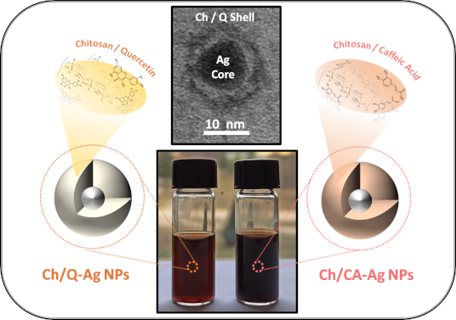
- , especially chitosan–silver nanocomposites, which yield a new type of nanoparticles, has raised more attention regarding eco-friendly properties and applications in nanomedicine and environmental remediation. Syntheses of chitosan, silver, and quercetin alone or in binary combinations, that is, chitosan


Overview of mechanism and consequences of endothelial leakiness caused by metal and polymeric nanoparticles
Beilstein J. Nanotechnol. 2023, 14, 329–338, doi:10.3762/bjnano.14.28
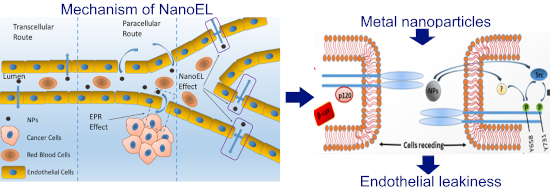
- vascular endothelial dysfunction include physiological processes (e.g., aging) or environmental factors such as a high-fat diet. These conditions are accompanied by an increased generation of reactive oxygen species (ROS), which, combined with impaired efficiency of antioxidant systems are one of the most


Bismuth-based nanostructured photocatalysts for the remediation of antibiotics and organic dyes
Beilstein J. Nanotechnol. 2023, 14, 291–321, doi:10.3762/bjnano.14.26
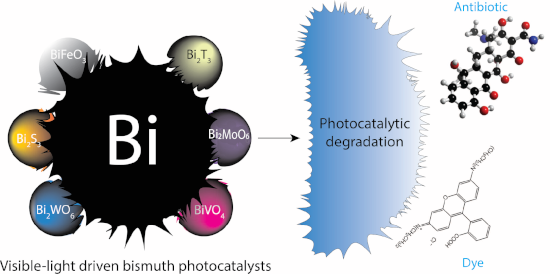
- geopolitical factors. Nevertheless, there is a growing need for the efficient removal of environmental pollutants and the proper treatment of industrial wastes to allowable discharge limits, which are crucial for preserving human life and protecting the environment. Numerous techniques have been employed to
- . Different materials based on bismuth have been developed and used for a range of environmental remediation applications. For instance, Mu et al. [46] synthesised a Bi2S3/Bi4O7 heterostructure via an in situ sulfidation approach and utilised it for the degradation of rhodamine B dye under visible-light
- [71], and environmental remediation via photocatalysis [25]. Bi-based semiconductors, in particular, are thought to be able to surpass the limitation of the solar light-harvesting capacity of TiO2-based photocatalytic materials because of their smaller bandgaps. Because of its highly anisotropic Fermi


Batch preparation of nanofibers containing nanoparticles by an electrospinning device with multiple air inlets
Beilstein J. Nanotechnol. 2023, 14, 141–150, doi:10.3762/bjnano.14.15
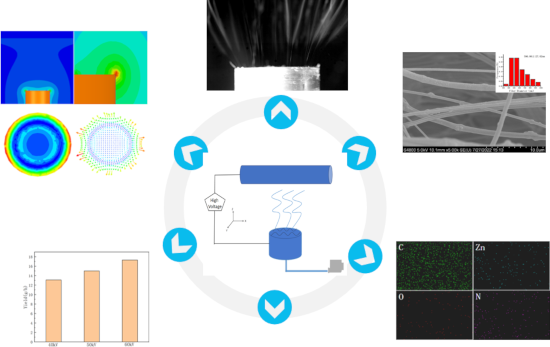
- the jet formed during the EMAI spinning process when ignoring air resistance and environmental interference. The spinning solution was assumed to be an incompressible ideal fluid [22]. According to previous studies [23], under a high voltage electric field, in point A there is the joint action of mass


Combining physical vapor deposition structuration with dealloying for the creation of a highly efficient SERS platform
Beilstein J. Nanotechnol. 2023, 14, 83–94, doi:10.3762/bjnano.14.10
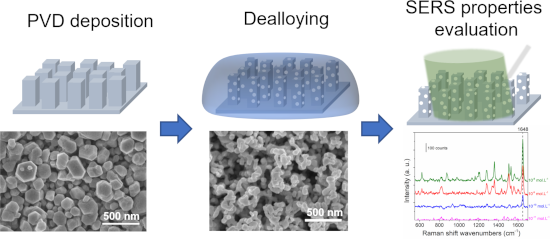
- sensors are promising for various applications in chemical (e.g., explosive [3] or chemical warfare agents [4]) or biological (e.g., lipid or protein [5]) sensing, environmental monitoring [6] as well as in food safety through the detection of pollutants such as phenol [3][7] or rhodamine [8]. The SERS




Non-stoichiometric magnetite as catalyst for the photocatalytic degradation of phenol and 2,6-dibromo-4-methylphenol – a new approach in water treatment
Beilstein J. Nanotechnol. 2022, 13, 1531–1540, doi:10.3762/bjnano.13.126
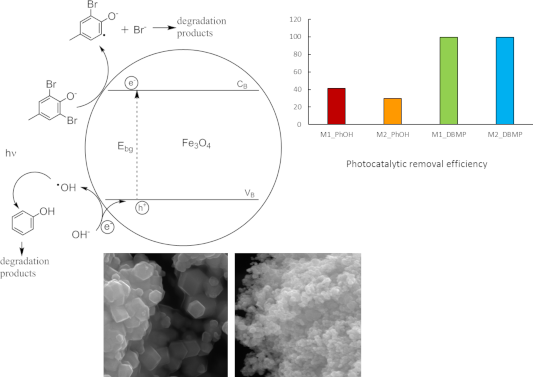
- ; Introduction Water is one of the most important natural resources on Earth. It helps to maintain environmental balance, but most of all, it is essential for human life and health. Although water covers more than 70% of our planet’s surface, only 2.5% is freshwater and less than 1% is accessible [1][2]. In the
- context of water consumption, there is an environmental indicator called the water footprint, which represents the sum of direct water consumption and virtual consumption (i.e., the amount of water needed to produce food and other consumer goods) [3]. Water consumption calculated in this way may amount to
- , BFRs), wood preservatives, and components in the polymer industry [4][5]. Bromophenols from various industries can cause severe contamination of soil, sediment, and water [6][7]. The United States Environmental Protection Agency (US EPA) has listed BPs as hazardous waste with strict environmental


A TiO2@MWCNTs nanocomposite photoanode for solar-driven water splitting
Beilstein J. Nanotechnol. 2022, 13, 1520–1530, doi:10.3762/bjnano.13.125
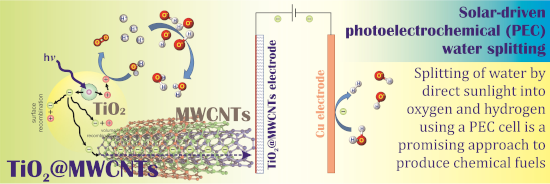
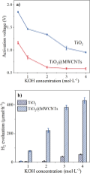
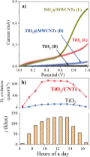
- under solar irradiation. Keywords: multi-wall carbon nanotubes (MWCNTs); nanomaterials; photoelectrochemical; TiO2; water splitting; Introduction TiO2 is an excellent photochemical catalyst for environmental and chemical applications due to its good activity regarding numerous reduction and oxidation



Double-layer symmetric gratings with bound states in the continuum for dual-band high-Q optical sensing
Beilstein J. Nanotechnol. 2022, 13, 1408–1417, doi:10.3762/bjnano.13.116
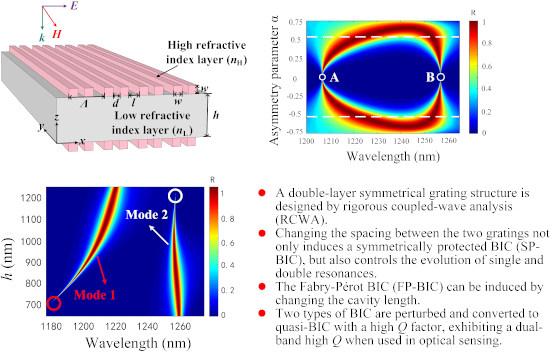
- ]. Particularly, the QBIC sensor enables highly accurate detection of environmental changes by reading variations in the spectrum. However, numerous research works have focused on the BIC mechanism of single-mode resonance [26][28], which may limit its application. In this work, we proposed a double-layer





