Search results
Search for "filling" in Full Text gives 202 result(s) in Beilstein Journal of Nanotechnology. Showing first 200.
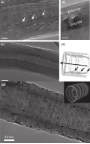
Filling of carbon nanotubes and nanofibres
Beilstein J. Nanotechnol. 2015, 6, 508–516, doi:10.3762/bjnano.6.53
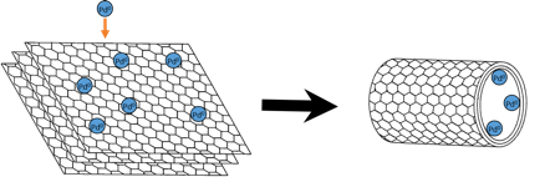
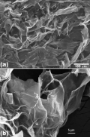
- , Australia 10.3762/bjnano.6.53 Abstract The reliable production of carbon nanotubes and nanofibres is a relatively new development, and due to their unique structure, there has been much interest in filling their hollow interiors. In this review, we provide an overview of the most common approaches for
- filling these carbon nanostructures. We highlight that filled carbon nanostructures are an emerging material for biomedical applications. Keywords: applications; carbon nanostructures; filling; nanofibers; nanotubes; Introduction Carbon nanotubes are well-known, 1D nanostructures, which are comprised of
- surface area (SSA, 1315 m2/g) [6] makes MWCNTs an ideal material for application in hydrogen storage [7], capacitors [8] and sensing [9]. Single-walled carbon nanotubes (SWCNTs) were discovered during investigations into the filling of MWCNTs with iron and cobalt [10][11]. Rather than producing a filled


Electrical properties of single CdTe nanowires
Beilstein J. Nanotechnol. 2015, 6, 444–450, doi:10.3762/bjnano.6.45
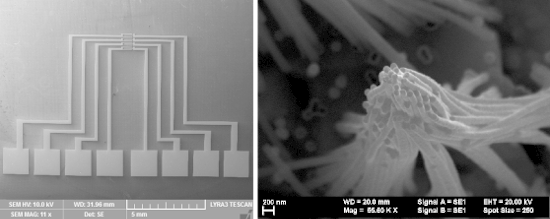
- excellent reproducibility and a narrow distribution of the geometrical characteristics [8][9][10][11][12][13]. The method typically makes use of a nanoporous membrane as a template along with a method for filling its pores. As templates, most used are polymer ion track membranes, anodic alumina and diblock
- copolymer templates, while the filling methods range from electrochemical or electroless deposition, to atomic layer deposition or molten metal injection. The nanoporous polymer ion track membranes are obtained by polymer foil irradiation with swift heavy ions and further chemical etching of the ion tracks
- switching from deposition inside the nanopore to deposition on the surface. This effect was used to determine the time necessary for complete filling whereby the process can be stopped earlier. The nanowires growing from caps on the surface (indicating complete pore filling) are more difficult to harvest
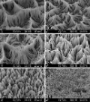


Nanoporous Ge thin film production combining Ge sputtering and dopant implantation
Beilstein J. Nanotechnol. 2015, 6, 336–342, doi:10.3762/bjnano.6.32
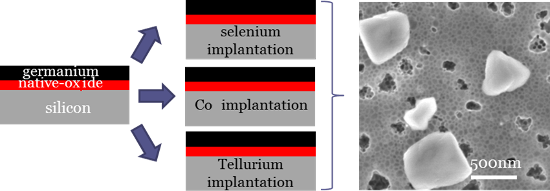
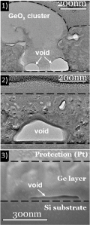
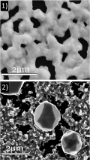
- -sectional view due to the superimposition of the structure in the analysis and due to the filling of the pores by the protective Pt layer, however, the various Ge nanograins (≤50 nm) exhibiting different orientations are easily observed. The SEM cross-sectional view of the sample with a TB = 4.8 µm (Figure


Multifunctional layered magnetic composites
Beilstein J. Nanotechnol. 2015, 6, 134–148, doi:10.3762/bjnano.6.13
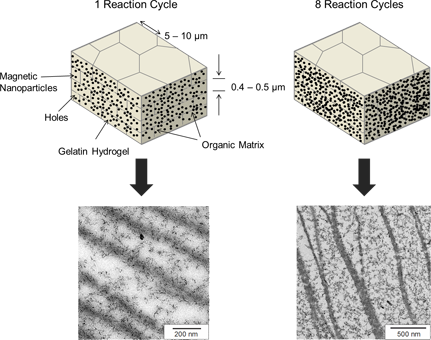
- infiltrated with gelatin by a vacuum infiltration process. Staining of this sample illustrates not only blue stained chitin layers and insoluble matrix proteins but also colored areas in between the layers, indicating a filling of the matrix with gelatin. The interaction and positive stain of gelatin and
- RGB channel of the images was exchanged by the red one to be able to better distinguish between the different matrix parts. As a result the stained gelatin parts appear purple in the image which makes it easier to differentiate between the blue chitin layers and the filling in between the layers. The





Two-dimensional and tubular structures of misfit compounds: Structural and electronic properties
Beilstein J. Nanotechnol. 2014, 5, 2171–2178, doi:10.3762/bjnano.5.226

- layered MX system. As a consequence, the electronic properties of some misfit compounds have been successfully described by a rigid-band formalism. In this description, the electronic bands are taken as immutable characteristics and only the filling is changed depending on the intercalated species. In
- result from the filling of the t2g energy levels coming from the titanium d states. Further studies used a comparable argument for the claim of charge transfer in other misfit layer compounds. One example is the electron transfer from PbSe to NbSe2 in [(PbSe)1.14]m(NbS2)1 with m = 1–6 [36]. The


Patterning a hydrogen-bonded molecular monolayer with a hand-controlled scanning probe microscope
Beilstein J. Nanotechnol. 2014, 5, 1926–1932, doi:10.3762/bjnano.5.203
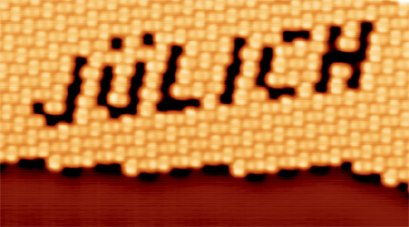
- shows, manual manipulation can also be used to “correct” errors by filling a created vacancy with a molecule that has been extracted from a different location. Conclusion In summary, HCM allows for the straightforward manipulation of single molecules of large organic adsorbates in bound assemblies. The


Non-covalent and reversible functionalization of carbon nanotubes
Beilstein J. Nanotechnol. 2014, 5, 1675–1690, doi:10.3762/bjnano.5.178
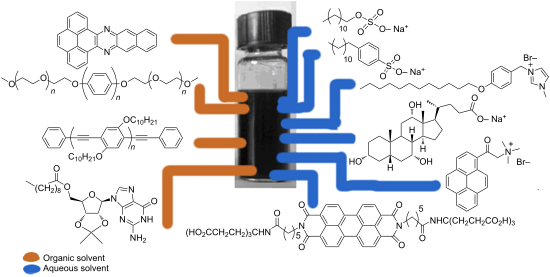
- forces the twin ionic groups to reside in a space-filling geometry reduced with respect to that of two distinct single-chained surfactant molecules. Similarly, Zhong and Claverie demonstrated from adsorption isotherm measurements [68] that MWCNTs form stable aqueous dispersions when 90% of their surface



The influence of molecular mobility on the properties of networks of gold nanoparticles and organic ligands
Beilstein J. Nanotechnol. 2014, 5, 1664–1674, doi:10.3762/bjnano.5.177
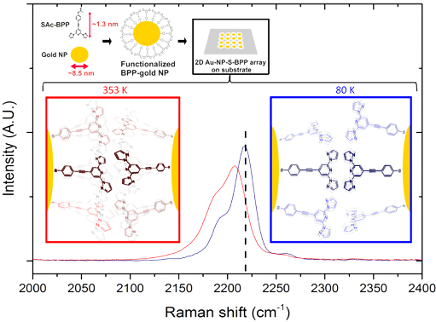
- nanoparticles. The so-called filling factor f = Vclusters/Vtotal denotes the relative volume occupied by other nanoparticles around the resonating nanoparticle. In this way, the surrounding nanoparticles in an array are incorporated into the theory effectively. Note that for f = 0 (i.e., there is no interaction
- C12, the SPR shifts to shorter wavelengths [9], as expected for a blue shift originating from a change in the spacing distance between the gold nanoparticles, i.e., a decrease in the filling factor f, (see Equation 1). Note that the change in εm is expected to be negligible for the alkanethiol series




Silica nanoparticles are less toxic to human lung cells when deposited at the air–liquid interface compared to conventional submerged exposure
Beilstein J. Nanotechnol. 2014, 5, 1590–1602, doi:10.3762/bjnano.5.171
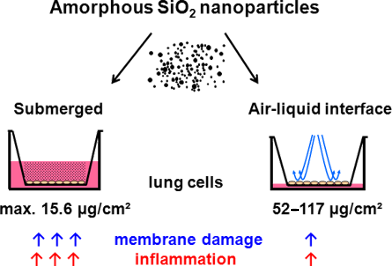
- filling factor of 1.56 assuming a polytetrahedral structure. In order to justify this simplification the deposited mass dose of the FITC-labeled SiO2-50 nm particles was estimated additionally from their fluorescent intensity. Therefore, the exposed Transwell inserts were filled with 0.8 mL distilled


Formation of CuxAu1−x phases by cold homogenization of Au/Cu nanocrystalline thin films
Beilstein J. Nanotechnol. 2014, 5, 1491–1500, doi:10.3762/bjnano.5.162
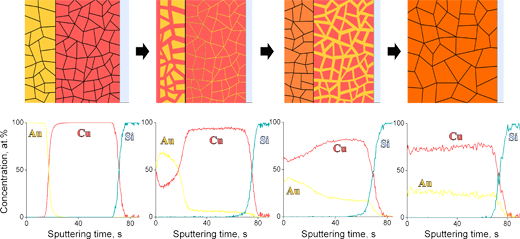
- layer (Figure 1b) as well as of the Au composition inside the Cu layer (Figure 1d). In addition there is a minimum of the Cu profile inside the Au layer. These are the consequences of the GB mass transport along the GBs. The complete filling-up of grain boundaries, e.g., in Au would lead to a maximum
- overall composition of the diffusing elements on both sides is rather high and cannot be simply explained by a filling-up of grain boundaries only, because the values obtained are larger than the one corresponding to the average value estimated from the volume fraction of the grain boundary area at the
- boundary motion and reaction layer formation, the process starts by grain boundary interdiffusion and after the filling-up of grain boundaries the reaction starts here. After the formation of the reaction zone (solid solution or ordered phase) the atomic transport along the original GB, or along the newly






Microstructural and plasmonic modifications in Ag–TiO2 and Au–TiO2 nanocomposites through ion beam irradiation
Beilstein J. Nanotechnol. 2014, 5, 1419–1431, doi:10.3762/bjnano.5.154
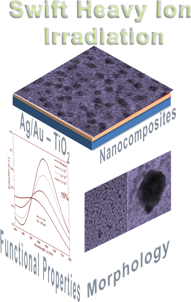
- , antibacterial coatings, photocatalysts, and implants [13][14][15][16][17][18]. The different properties of metal–TiO2 nanocomposites mainly depend on the metal volume filling fraction and the stoichiometry of the matrix. Generally, once the nanocomposites are prepared their properties are fixed. It is therefore
- nanocomposites at different ion beam fluences has been studied and discussed here. Results and Discussion The microstructural morphologies of Au–TiO2 nanocomposites with metal volume filling fractions (MVF) from 7 to 50% were investigated by transmission electron microscopy (TEM) studies and are shown in Figure
- selected area electron diffraction (SAED) patterns corresponding to each MVF composite is shown exactly below each TEM image. Bright field TEM morphologies of Ag–TiO2 nanocomposite films with different metal volume filling fractions, (a) 15%, (b) 26%, (c) 34% and (d) 47%. Morphological evolutions in Au


Review of nanostructured devices for thermoelectric applications
Beilstein J. Nanotechnol. 2014, 5, 1268–1284, doi:10.3762/bjnano.5.141
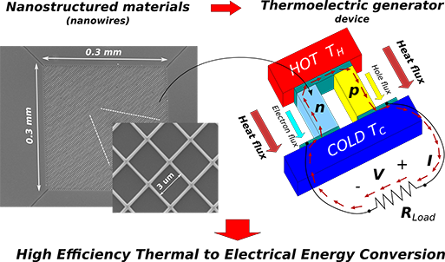
- distribution of filling ions as well as their “rattling” effect increases the phonon scattering on a large spectrum, so that the thermal conductivity is strongly reduced and Z is quite high. Several filling elements, such as La [32], Co [33], Ta [34], and others, have been experimented. Recently, filled [35


Physical principles of fluid-mediated insect attachment - Shouldn’t insects slip?
Beilstein J. Nanotechnol. 2014, 5, 1160–1166, doi:10.3762/bjnano.5.127
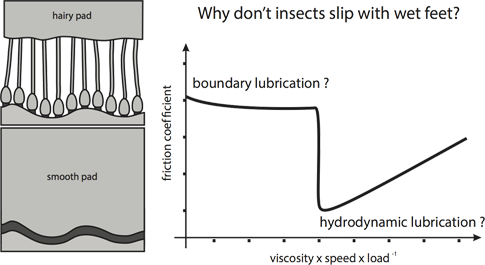
- actually smooth. Experimental studies indeed show that the adhesive fluid actually plays a more important role in increasing adhesion on rough surfaces by filling gaps between the pad and the surface, thereby maximizing contact area and adhesion to rough substrates [45][46]. This has been shown by studies


Highly NO2 sensitive caesium doped graphene oxide conductometric sensors
Beilstein J. Nanotechnol. 2014, 5, 1073–1081, doi:10.3762/bjnano.5.120
- Community Framework Programme, and the Australian Government Department of Agriculture, Fisheries and Forestry program “Filling the research gap” for funding. We thank the technical support of Dr. P. Hines, Dr. H. Diao from the Central Analytical Research Facility of the Institute for Future Environments




Nanoforging – Innovation in three-dimensional processing and shaping of nanoscaled structures
Beilstein J. Nanotechnol. 2014, 5, 1066–1070, doi:10.3762/bjnano.5.118
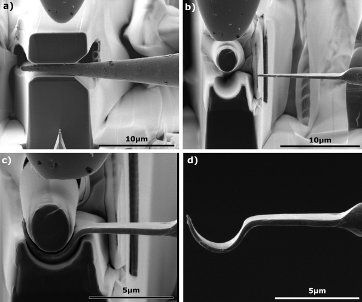
- example, studies on chip formation in the nanoscale are a wide field of research at present [1][2]. But three dimensional cutting in the nanoscale is still unexplored. Casting is also limited in its nano-applicability. The mold filling depends on the mold temperature and the filling pressure [3] and is
- in macroscopic forging, which is not an issue when microscopic material volumes are formed. As mentioned above, the small volume of the used material also yields mechanical properties which are not achievable in macroscopic forging. Consequently high degrees of deformation, good mold filling as well


Nanoscale patterning of a self-assembled monolayer by modification of the molecule–substrate bond
Beilstein J. Nanotechnol. 2014, 5, 258–267, doi:10.3762/bjnano.5.28
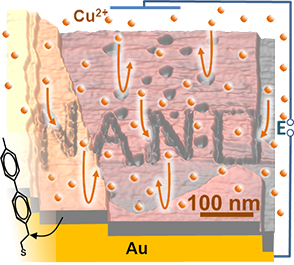
- referenced to Cu2+/Cu. Before filling in the electrolyte, the sample potential was set to +0.4 V. UPD was performed at potentials in the range of 0–300 mV, depending on the desired deposition rate. Generation of binary SAM. The exchange of BP2 by AdSH was done in a 0.1 M KOH ethanol solution containing 1 mM


Photovoltaic properties of ZnO nanorods/p-type Si heterojunction structures
Beilstein J. Nanotechnol. 2014, 5, 173–179, doi:10.3762/bjnano.5.17
- impact of Rs is the reduction of FF in the investigated structures. In case of sample C, the best value of Rs equals 5.1 Ω. We noticed that FF decreases from 38% to 28% when Rs increases from 5.1 Ω to 20.8 Ω. We observe an increase of the short circuit current, open circuit voltage and the filling factor



Constant-distance mode SECM as a tool to visualize local electrocatalytic activity of oxygen reduction catalysts
Beilstein J. Nanotechnol. 2014, 5, 141–151, doi:10.3762/bjnano.5.14
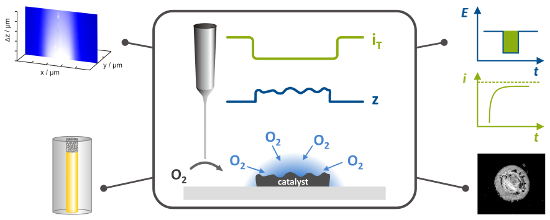
- . The depth of about 19 µm allows high catalyst loadings making any impact of bottom irregularities on the activity determination being negligible. The microcavities were further used for catalyst immobilization and manually filled with the catalyst powder (Figure 2d). The result of the filling
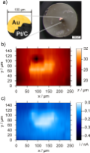
- shown in Figure 3b. The lateral inhomogeneous filling of the microcavity with the catalyst powder is clearly visible. With respect to the surrounding glass plane the catalyst filling is elevated by about 1 to 2 µm. Additionally, the unfilled part of the cavity can be distinguished, however, due to the
- exclusively above areas filled with catalyst material. The current detection of the 4D SF/CD mode is sensitive enough to visualize the fine structure of the filling and even the thin catalyst layer at the left side of the cavity was distinguished as a location of higher catalytic activity. No interference of




The role of oxygen and water on molybdenum nanoclusters for electro catalytic ammonia production
Beilstein J. Nanotechnol. 2014, 5, 111–120, doi:10.3762/bjnano.5.11
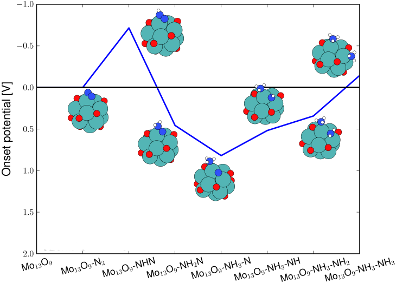
- cycles correspond roughly to an addition of 10 electrons, corresponding to the filling of a d-shell. Figure S1 in Supporting Information File 1 shows the d-band of the molybdenum nanocluster as the oxygen coverage increases and it is observed that the d-band broadens and the energetically lower lying d
- adsorption of a few oxygen atoms greatly distorts the surface; this restructuring allows a higher filling of oxygen on the surface, see Figure 3d. The maximum filling of the surface increases to 16 oxygen atoms and further additions of oxygen atoms are energetically unfavourable. Close to a full overlayer
- ) adsorption of oxygen at a nitrogen vacancy site on Mo13N12. Oxygen is adsorbed in the bridge site in both cases. The total free energy for covering the Mo13 nanocluster with nitrogen, oxygen or hydrogen. The filled black line shows the filling of the nitrogen skin, while the filled blue line shows the


Adsorption of the ionic liquid [BMP][TFSA] on Au(111) and Ag(111): substrate effects on the structure formation investigated by STM
Beilstein J. Nanotechnol. 2013, 4, 903–918, doi:10.3762/bjnano.4.102




Ellipsometry and XPS comparative studies of thermal and plasma enhanced atomic layer deposited Al2O3-films
Beilstein J. Nanotechnol. 2013, 4, 732–742, doi:10.3762/bjnano.4.83
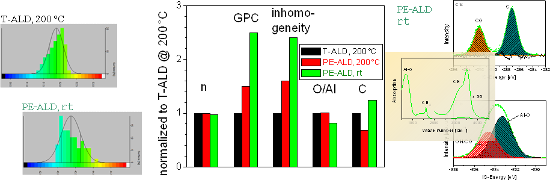
- filling/defilling of fixed charges. To check further whether the mentioned shifts of the core levels of the PE-ALD samples in comparison to the T-ALD sample originate from some surface bend bending we measured the O1s core level at different excitation energies (Figure 9a). In the T-ALD sample we observe


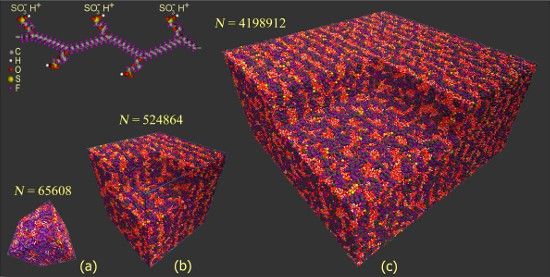
Large-scale atomistic and quantum-mechanical simulations of a Nafion membrane: Morphology, proton solvation and charge transport
Beilstein J. Nanotechnol. 2013, 4, 567–587, doi:10.3762/bjnano.4.65


Deformation-induced grain growth and twinning in nanocrystalline palladium thin films
Beilstein J. Nanotechnol. 2013, 4, 554–566, doi:10.3762/bjnano.4.64
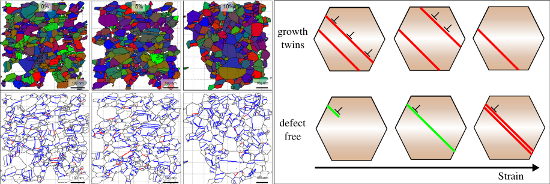
- 0.15 and index greater than 20. Crystallite filtering: Removal of crystallites with an equivalent diameter <8 nm (ncPd 1) <10 nm (ncPd 2). No re-filling of any of the removed pixels was performed. Independent of the exact filter settings used in steps 2–4, the trends revealed in this study remain the


Magnetic anisotropy of graphene quantum dots decorated with a ruthenium adatom
Beilstein J. Nanotechnol. 2013, 4, 441–445, doi:10.3762/bjnano.4.51
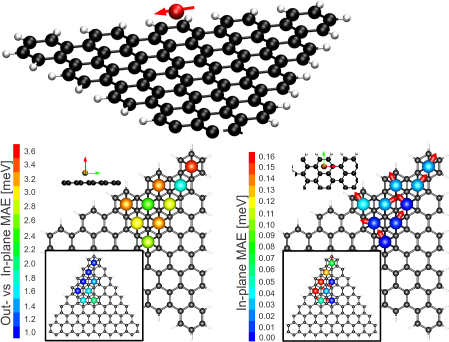
- spin polarisation of the ZGQD arises from a highly localized pz-type edge state [26], and the total moment of the quantum dot is exactly equal to the difference in number between the A-type atoms and B-type atoms, in agreement with the theorem of magnetism in a bipartite lattice at half filling


In situ monitoring magnetism and resistance of nanophase platinum upon electrochemical oxidation
Beilstein J. Nanotechnol. 2013, 4, 394–399, doi:10.3762/bjnano.4.46
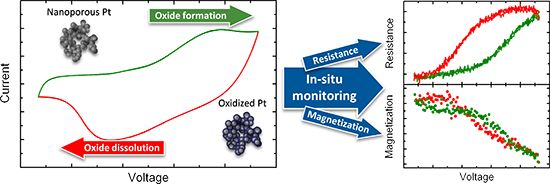
- monotonically decreases with increasing oxygen coverage [20]. This also demonstrates that a simple picture of voltage-induced filling or depletion of rigid electronic bands fails, because within such a picture positive charging, i.e., extraction of electrons from the nearly filled d-band of Pt would give rise