Search results
Search for "film" in Full Text gives 1174 result(s) in Beilstein Journal of Nanotechnology. Showing first 200.
Dual-heterodyne Kelvin probe force microscopy
Beilstein J. Nanotechnol. 2023, 14, 1068–1084, doi:10.3762/bjnano.14.88
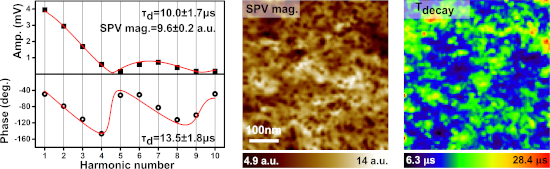
- reference substrate, a bulk organic photovoltaic heterojunction thin film, and an optoelectronic interface obtained by depositing caesium lead bromide perovskite nanosheets on a graphite surface. The conclusion provides perspectives for future improvements and applications. Keywords: heterodyne
- characterize the surface photovoltage dynamics are acquired on a photovoltaic organic bulk-heterojunction (BHJ) thin film. The time-constant values are shown to be fully consistent with the results of pump-probe KPFM. Last, the ability of DHe-KPFM to detect weak SPV signals is illustrated by investigating
- electron trapping centres. The blend morphology, phase composition and concentration gradients of the donor and acceptor species (through the film thickness) can therefore have a dramatic impact on the SPV decay dynamics probed by KPFM. The sample investigated in this work has been specifically processed




Fragmentation of metal(II) bis(acetylacetonate) complexes induced by slow electrons
Beilstein J. Nanotechnol. 2023, 14, 980–987, doi:10.3762/bjnano.14.81
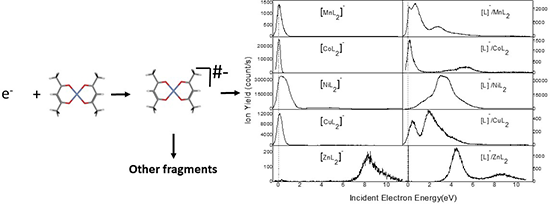
- . Metal bis(acetylacetonate) complexes are of interest for many thin film fabrication techniques (e.g., chemical vapor deposition [9], atomic layer epitaxy [10], or atomic layer etching [11]) and as precursors for carbon materials, such as carbon nanotubes and carbon onion particles [12], or metal oxide


Isolation of cubic Si3P4 in the form of nanocrystals
Beilstein J. Nanotechnol. 2023, 14, 971–979, doi:10.3762/bjnano.14.80
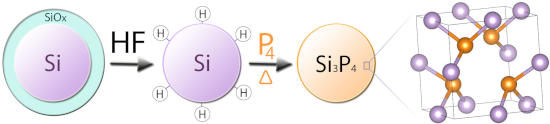
- “WinXPow”. Elemental analysis was carried out on an X-ray fluorescence spectrometer S2 Picofox (Bruker) with total external reflection. Transmission electron microscopy (TEM) samples were dispersed in an ultrasonic bath with hexane and then deposited on copper grids with lacey carbon film (SPI Supplies
- –1100 nm. The mass concentration of Si3P4 material in the sol (for the sake of attenuation coefficient calculation) was determined by drop casting 3.00 μL of the sol onto a sapphire substrate followed by an XRF study of the resultant film. DFT-GGA computations (structure optimization and calculation of


Low temperature atomic layer deposition of cobalt using dicobalt hexacarbonyl-1-heptyne as precursor
Beilstein J. Nanotechnol. 2023, 14, 951–963, doi:10.3762/bjnano.14.78
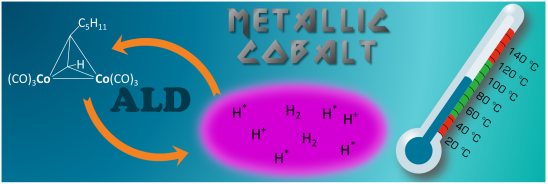
- defined by the onset of the decomposition of the precursor. In our case, decomposition occurs at temperatures of 125 °C and above, resulting in a film growth in chemical vapour deposition mode. The lower limit of the ALD window is around 35 °C, where the reduction of the precursor is incomplete. The
- decomposition of one of the precursors. In this case, the process is within the regime of chemical vapour deposition (CVD), resulting in a continuous film growth. It is therefore essential to carry out the ALD process in a way that the first precursor only reacts with the second precursor during the second half
- crystal 200 mm silicon (100) wafers with a pre-coated thermal SiO2 film of 100 nm thickness. As precursor for all depositions dicobalt hexacarbonyl-1-heptyne [Co2(CO)6HC≡CC5H11] was used. The precursor was synthesised according to Georgi et al. [23] and filled to a common 200 mL stainless steel bubbler


Upscaling the urea method synthesis of CoAl layered double hydroxides
Beilstein J. Nanotechnol. 2023, 14, 927–938, doi:10.3762/bjnano.14.76
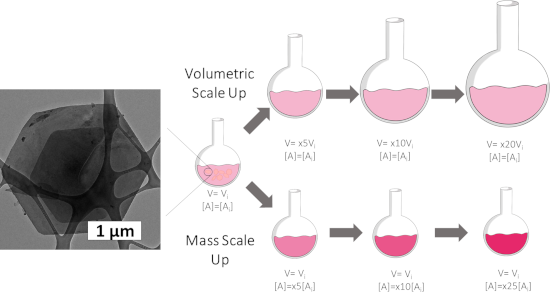
- corresponding structure. Microscopy Sample preparation The dried solids were suspended in ethanol and drop cast onto Au TEM grids covered with a lacy carbon film, and the solvent was left to evaporate. SEM samples were prepared from the same solution after 5 min of ultrasonication. The sonicated suspension was


N-Heterocyclic carbene-based gold etchants
Beilstein J. Nanotechnol. 2023, 14, 865–871, doi:10.3762/bjnano.14.71
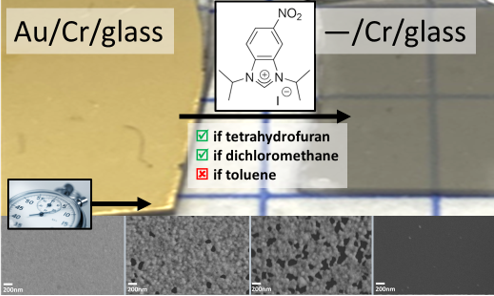
- ) iodide, and 1,3-diisopropyl-5-nitrobenzimidazole-2-ylidene. Contrary to expectation, solutions containing the first two species in tetrahydrofuran and dichloromethane caused visible loss of gold from thin-film-coated glass slides. The use of toluene solutions of all species resulted in no apparent
- dissolution of gold. We present scanning electron micrographs and elemental imaging analyses by energy dispersive X-ray spectroscopy to examine the effect of solutions of each species on the gold film. This work highlights the risk of unwanted etching during some routes to NHC-based surface functionalization
- File 1) shows similar results after exposure of gold-coated tokens to 1 and 2 in THF and DCM. Figure S2 (Supporting Information File 1) is a control for any potential effect of solvent. The areal contiguity of the film was unchanged after the longest solvent-only immersion time we used. This



Biomimetics on the micro- and nanoscale – The 25th anniversary of the lotus effect
Beilstein J. Nanotechnol. 2023, 14, 850–856, doi:10.3762/bjnano.14.69

- . The authors present a new technique that has the potential to achieve the breakthrough the researchers in the field have been searching for. This technique uses a typical industrial process in which a continuous film is run over and between rollers. The so-called roll-to-roll process takes the
- material through a few steps. In the first step, a molten polypropylene layer is laminated onto a carrier film and run over rollers to cool down. Then the combined laminate is forced through a gap between a hot sandblasted roller and a cold smooth one. The surface roughness and temperature difference
- create the hairy structured surface on the polypropylene side. In the final step, the structured film is separated from the carrier. The authors were able to set the hair length and density with the usual industrial control variables of speed, temperature, and gap width. The obtained result was a very


A wearable nanoscale heart sound sensor based on P(VDF-TrFE)/ZnO/GR and its application in cardiac disease detection
Beilstein J. Nanotechnol. 2023, 14, 819–833, doi:10.3762/bjnano.14.67
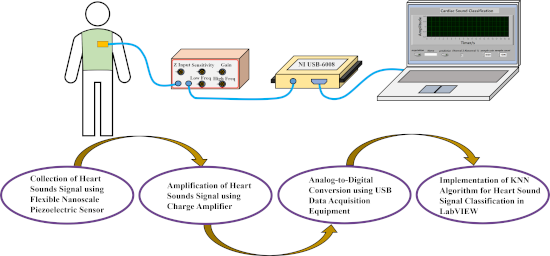
- . Composition and β-phase content of the piezoelectric composite films were analyzed using X-ray diffraction. The morphology of the composite film fibers was observed through scanning electron microscopy. Finally, the P(VDF-TrFE)/ZnO/graphene composite film was encapsulated in a sandwich-structure heart sound
- improved the film-making process by adding fillers to P(VDF-TrFE), using secondary polarization, and applying other methods to enhance its piezoelectric performance. Kumar et al. prepared P(VDF-TrFE)/ZnO matrix composite nanogenerators using electrospinning. Voltage and current of these nanogenerators were
- , respectively, 2.4 times and 1.6 times greater than those of pure P(VDF-TrFE) nanogenerators [14]. Subash et al. added ZnO nanoparticles and exfoliated graphene oxide to P(VDF-TrFE) to prepare a composite nanofilm with excellent touch sensitivity and high output energy. They also used the piezoelectric film for


Carboxylic acids and light interact to affect nanoceria stability and dissolution in acidic aqueous environments
Beilstein J. Nanotechnol. 2023, 14, 762–780, doi:10.3762/bjnano.14.63
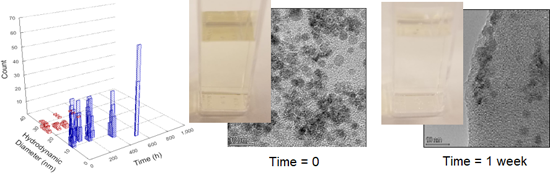
- agglomerates on the edges of the lacey carbon film are nanoceria. The presence of β-hydroxybutyric acid appeared to reduce the overall number of nanoceria particles from week 0 through week 2, similar to citric acid. However, by week 4, large micrometer-sized agglomerates were detected, made up of hundreds of
In situ magnesiothermic reduction synthesis of a Ge@C composite for high-performance lithium-ion batterie anodes
Beilstein J. Nanotechnol. 2023, 14, 751–761, doi:10.3762/bjnano.14.62
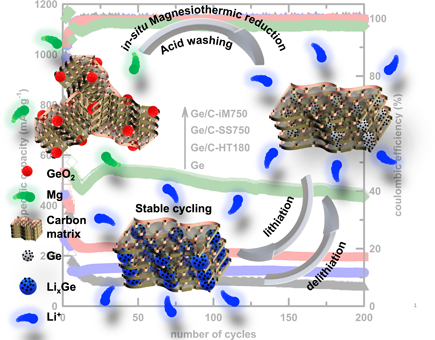
- electrodes. The obtained slurry was cast onto copper foil using an automatic film coater and dried in a vacuum oven at 80 °C for 10 h. Discs (diameter of 12 mm with a mass loading of the active material of around 1.2 mg·cm−2) punched from the film were used as a working electrodes. CR2032 coin cells, in half


Metal-organic framework-based nanomaterials as opto-electrochemical sensors for the detection of antibiotics and hormones: A review
Beilstein J. Nanotechnol. 2023, 14, 631–673, doi:10.3762/bjnano.14.52


Carbon nanotube-cellulose ink for rapid solvent identification
Beilstein J. Nanotechnol. 2023, 14, 535–543, doi:10.3762/bjnano.14.44
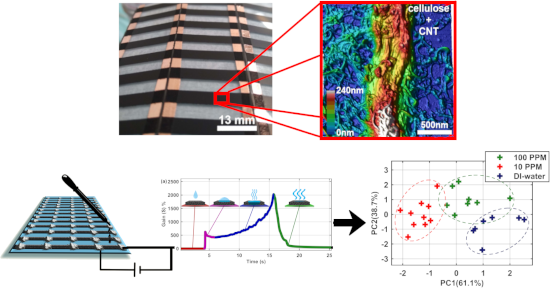
- devices that can be easily fabricated by scalable printing techniques. We monitored the electrical response due to the interaction between a given liquid with the carbon nanotube–cellulose film over time. Using principal component analysis of the electrical response, we were able to extract robust data to
- [39][40]. Besides, graphene films deposited on cellulose paper and a graphene/cellulose composite were also reported as a solvent sensor material [30][33]. However, most of these works rely on cellulose as a paper substrate or as a thick composite film that cannot be readily employed for large-scale
- more information). Also, to compare our results with a simple conductive response to the pure liquids, we performed control experiments on a substrate without applying the ink. Our sensor film proved to be two orders of magnitude more sensitive than the bare substrates with only electrical contacts


Nanoarchitectonics to entrap living cells in silica-based systems: encapsulations with yolk–shell and sepiolite nanomaterials
Beilstein J. Nanotechnol. 2023, 14, 522–534, doi:10.3762/bjnano.14.43
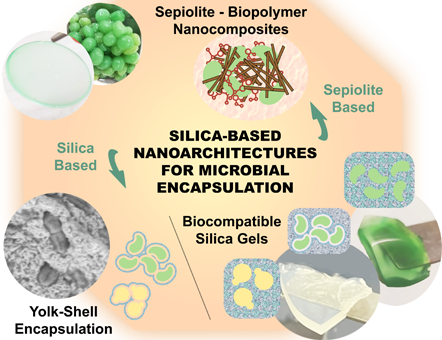
- until reaching a depth of 5 mm. Then the material was air dried for at least 24 h until a viscous, non-sticky elastic film was formed. For sepiolite–chitosan foams, the same preparation procedure was followed, but the sepiolite–chitosan dispersion was not mixed with biomass and freeze-dried instead of
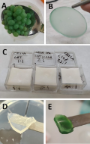
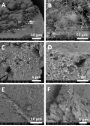
- conformations. (A) Sepiolite–alginate beads, (B) sepiolite–chitosan thin film, and (C) sepiolite–chitosan foams without cells. (D, E) Silica-based nanocomposites. (D) G57-4-type silica gel without cells and (E) the same type of silica gel with entrapped cyanobacteria cells. FE-SEM images of silica gel


On the use of Raman spectroscopy to characterize mass-produced graphene nanoplatelets
Beilstein J. Nanotechnol. 2023, 14, 509–521, doi:10.3762/bjnano.14.42
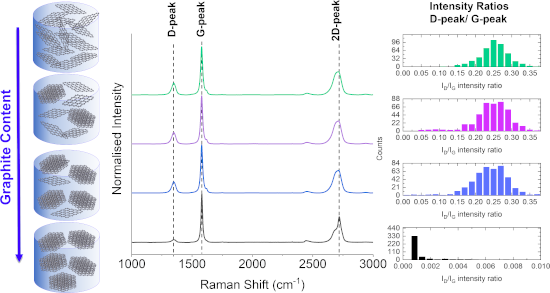
- . Raman spectra of the filtered films on the membrane were recorded using a Renishaw Qontor confocal spectrometer (Renishaw plc., UK) using a 532 nm excitation laser and a 2400 L/mm grating. An area of 20 μm × 20 μm of the film was mapped, with 1 μm distance between measurement locations. Spectra were


The origin of black and white coloration of the Asian tiger mosquito Aedes albopictus (Diptera: Culicidae)
Beilstein J. Nanotechnol. 2023, 14, 496–508, doi:10.3762/bjnano.14.41
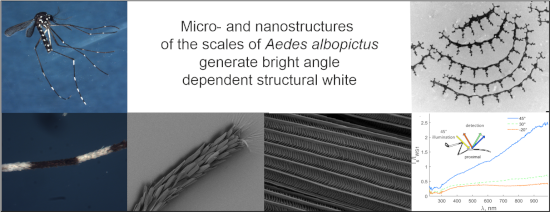
- is optically smooth, the metal-coated scales demonstrated specular reflection. A thin Au/Pd film on the scale surface effectively screens the pigment presented inside the scales and traps the light so that the white as well as the black appearance of the scales disappears. Observations of the legs of
- illumination/observation configuration; (2) light scattering, which might be subdivided in (a) Rayleigh scattering on nanostructures, (b) scattering on partially regular micro- and nanostructures, and (c) thin film interference scales; (3) selective absorption by various molecules present in the cuticle; and
- (and also the black) appearance and demonstrates the importance of multiple reflections for the appearance of the white scales (Figure 6c). Thin film interference In the microscopic areas on the scales with relatively constant cuticle thickness, the effect of interference in thin films can be observed

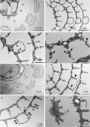


Conjugated photothermal materials and structure design for solar steam generation
Beilstein J. Nanotechnol. 2023, 14, 454–466, doi:10.3762/bjnano.14.36
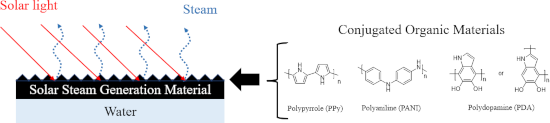
- supplies water to this photothermal film. The film is slightly lifted in order to reduce heat dissipation from the bulk water. This is also beneficial for SSG through the thermal energy generated by the PTM. Porous 3D structures Porous materials, such as sponges [45][49][58][59], foams [31][34][38][49][50


Molecular nanoarchitectonics: unification of nanotechnology and molecular/materials science
Beilstein J. Nanotechnol. 2023, 14, 434–453, doi:10.3762/bjnano.14.35
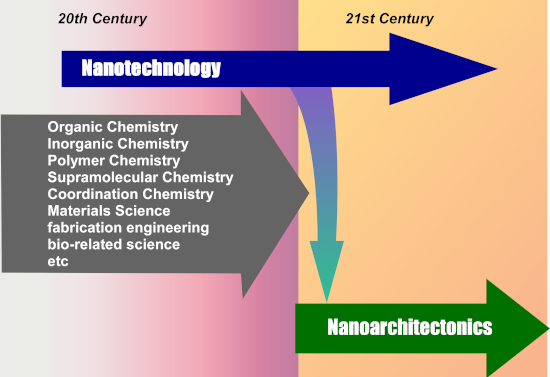
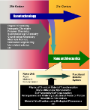
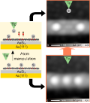
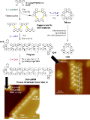
- molecular structures. Kawai et al. reported that local probe chemistry on an ultrathin NaCl film formed on a Cu(111) surface at 4.3 K led to the conversion of 6,13-dibromopentaleno[1,2-b:4,5-b′]dinaphthalene to a single Sondheimer–Wong diyne (Figure 3) [114]. The structures of the precursor, two
- ) backbones (Figure 7) [120]. First, silicon atoms were deposited on a Au(111) surface and annealed to form an AuSix film. Bromo-substituted polycyclic hydrocarbon precursors (triphenylene or pyrene) were then deposited on this surface and annealed to form a C4Si2 bridging network. In the linear structures
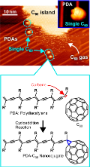
- polydiacetylene nanowires at designated locations on a solid surface. Figure 2 was adapted with permission from [112], Copyright 2014 American Chemical Society. This content is not subject to CC-BY-4.0. Local probe chemistry on an ultra-thin NaCl film formed on a Cu(111) surface for the synthesis of 6,13





Evaluation of electrosynthesized reduced graphene oxide–Ni/Fe/Co-based (oxy)hydroxide catalysts towards the oxygen evolution reaction
Beilstein J. Nanotechnol. 2023, 14, 420–433, doi:10.3762/bjnano.14.34
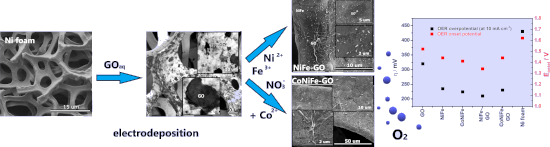
- ]. Afterwards, the current density tended to stabilize for NiFe and CoNiFe, which may be associated with the steady-state formation of the catalyst film on the metallic surface. The addition of cobalt to NiFe resulted in a lower overall current density during the synthesis process. In the case of the deposition
- reduction process of the already deposited GO. Afterwards, the current density increased due to the film formation, and then it gradually stabilized over time. A different chronoamperometric trend can be observed in the case of the electrodeposition of GO on the surface of nickel foam (Figure 1a inset). In




Quasi-guided modes resulting from the band folding effect in a photonic crystal slab for enhanced interactions of matters with free-space radiations
Beilstein J. Nanotechnol. 2023, 14, 322–328, doi:10.3762/bjnano.14.27
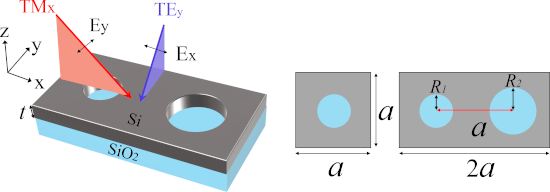
- larger than that of most plasmonic nanoantennas, suggesting the great potential of these QGMs for enhanced light–matter interactions. We use GMs supported by a regular PCS structure composed of a square lattice of air holes perforating a thin silicon (refractive index: 3.45) film on a silica (refractive


Spin dynamics in superconductor/ferromagnetic insulator hybrid structures with precessing magnetization
Beilstein J. Nanotechnol. 2023, 14, 233–239, doi:10.3762/bjnano.14.22
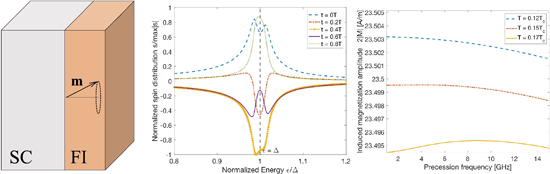
- film S that is in contact with a ferromagnetic insulator layer FI. Spin current and induced magnetization are calculated not only at the interface of the S/FI hybrid structure, but also inside the superconducting film. The new and interesting predicted effect is the frequency dependence of the induced
- interaction between the superconducting correlations and spin waves influences the dynamics of both superconducting and magnetic films. Interfacial exchange interaction between Cooper pairs and magnons results in a nonstationary induced magnetization and spin currents in the superconducting film and changes
- ][19] frameworks. However, the main subject of these works is the magnetic excitation spectrum in hybrid structures. Most of the works ignore the dynamics of nonuniform distributions of induced magnetization and spin current inside the superconducting film, which can be called the “dynamic inverse


A novel approach to pulsed laser deposition of platinum catalyst on carbon particles for use in polymer electrolyte membrane fuel cells
Beilstein J. Nanotechnol. 2023, 14, 190–204, doi:10.3762/bjnano.14.19
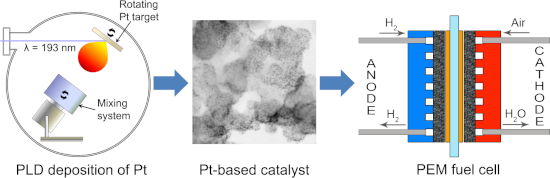
- ) number of electrons per O2 molecule formed during the ORR, (d) %H2O2 formed during the ORR. Curves (c) and (d) were calculated from the data in panels (a) and (b) using Equations 1 and 2, respectively, with η = 0.152 for 900 rpm. The thin film RRDE experiments were done in a four-electrode arrangement in



High–low Kelvin probe force spectroscopy for measuring the interface state density
Beilstein J. Nanotechnol. 2023, 14, 175–189, doi:10.3762/bjnano.14.18
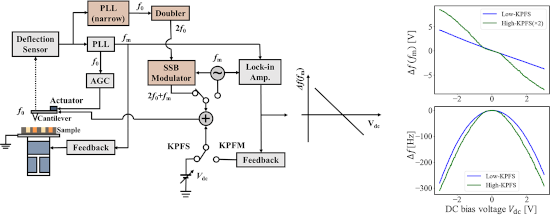
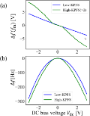
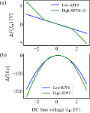
- (Figure 1a). No oxide film on the semiconductor surface is assumed, and to simplify the discussion, the CPD between the tip and the semiconductor substrate is assumed to be zero. To investigate the electrostatic force acting between the tip and the semiconductor surface, we use the theoretical model



Structural, optical, and bioimaging characterization of carbon quantum dots solvothermally synthesized from o-phenylenediamine
Beilstein J. Nanotechnol. 2023, 14, 165–174, doi:10.3762/bjnano.14.17
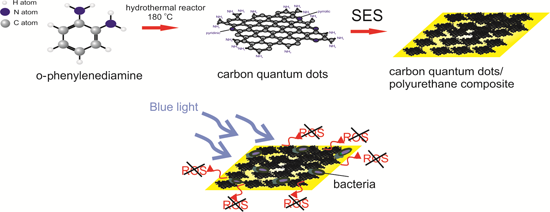
- 2.2 mg/mL. These specimens were designated as CQDs/PU. For bioimaging studies, toluene was evaporated, and a thin film of CQDs was redissolved in water and filtered. The prepared QCD samples were characterized by transmission electron microscopy (TEM), atomic force microscopy (AFM), Fourier


Formation of nanoflowers: Au and Ni silicide cores surrounded by SiOx branches
Beilstein J. Nanotechnol. 2023, 14, 133–140, doi:10.3762/bjnano.14.14
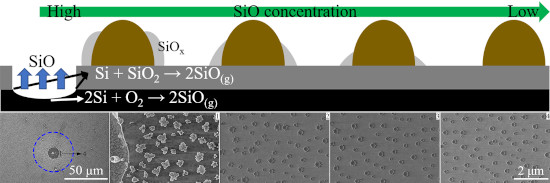
- substrate at higher temperatures in oxygen-deficient environment [3][4]. Another cost-effective nanofabrication method, thin film dewetting, driven by the reduction of the surface energy and the interface energy has also been profusely studied because it provides a straightforward and fast way to produce
- nanoparticles [5][6][7]. The research of thin film dewetting has been extended to bilayers and multilayers for the synthesis of multicomponent nanoparticles [8][9][10][11][12][13][14][15][16], like alloyed AuNi and AuAg nanoparticles produced by the solid-state dewetting of bilayers [17][18][19][20][21][22][23
- small pieces were ready for thin film deposition. Metallic bilayers of Au and Ni of three different thickness ratios and a total thickness of 20 nm were deposited onto the SiO2/Si substrate by electron beam evaporation (CS400ES, VON ARDENNE) at a working pressure of 1 × 10⁻⁶ mbar. The Au layer was


Characterisation of a micrometer-scale active plasmonic element by means of complementary computational and experimental methods
Beilstein J. Nanotechnol. 2023, 14, 110–122, doi:10.3762/bjnano.14.12
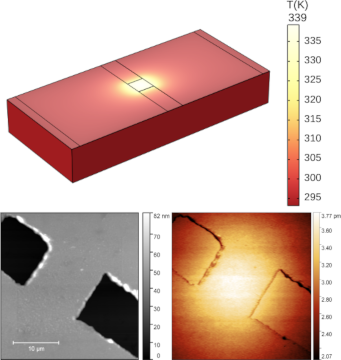
- software COMSOL Multiphysics has been used to predict and confirm the dynamic temperature distribution and the optical response of the system. Experimental The manufacturing of the active plasmonic elements employed in the present work is detailed in [5]. At first, a 48 ± 2 nm film of silver is deposited
- on a sapphire substrate via physical vapour deposition (PVD). After this, two separate AFMs are used to machine channels in the silver film to create the desired constriction, which in this case measures 10 μm. The tip of the AFM is held at a set loading force in contact with the thin metal film and
- constriction in the silver film such that a current modulated at a particular frequency affects its optical properties via Joule heating. The signal is acquired by a photodiode and further processed by a lock-in amplifier (Ametek 5210), with the driving signal of the modulated voltage acting as reference. The