


Search results
Search for "formulation" in Full Text gives 202 result(s) in Beilstein Journal of Nanotechnology. Showing first 200.
The cleaner, the greener? Product sustainability assessment of the biomimetic façade paint Lotusan® in comparison to the conventional façade paint Jumbosil®
Beilstein J. Nanotechnol. 2016, 7, 2100–2115, doi:10.3762/bjnano.7.200

- a large number of façade paints is available on the market, Kougoulis et al. refer to about 20,000 products [30], the decision whether Lotusan® should be compared to a generic paint formulation, typical for a hydrophobic façade paint available on the market, or to a real product, as a reference for
- typical façade paints available on the market had to be made. Suggestions made by Kougoulis et al. [30], may serve as a basis for a generic formulation, but the scoping phase revealed that considerations on an unknown formulation allow only rough approximations resulting in a serious increase of
- 1.5–1.6 g/mL and is, according to the technical data sheet, suitable for slightly filling, opaque exterior paintings on organic and mineral substrates. Jumbosil® is water-repellent and permeable to carbon dioxide and water vapour. Comparing the material input for the formulation of Lotusan® and


A novel electrochemical nanobiosensor for the ultrasensitive and specific detection of femtomolar-level gastric cancer biomarker miRNA-106a
Beilstein J. Nanotechnol. 2016, 7, 2023–2036, doi:10.3762/bjnano.7.193
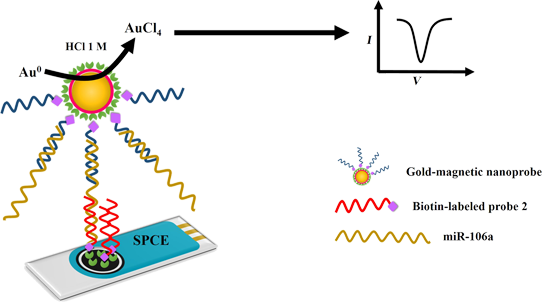
- interactions in the product formulation especially during covering the magnetic core with TMC polymer. Preparation of gold–magnetic nanoprobes The biotin-labeled probe P1 was attached onto the gold–magnetic NPs via a three step process: (1) functionalization of gold–magnetic NPs; (2) coating the functionalized


Chitosan-based nanoparticles for improved anticancer efficacy and bioavailability of mifepristone
Beilstein J. Nanotechnol. 2016, 7, 1861–1870, doi:10.3762/bjnano.7.178
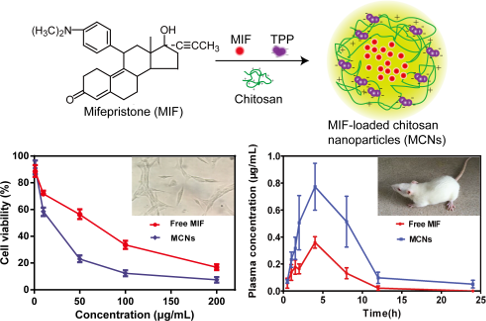
- due to P–O stretching vibration. The MCNs formulation showed the characteristic absorption peaks of both MIF and CNs, which proved that MIF was successfully wrapped in Cs nanoparticles. X-ray diffraction (XRD) analysis The XRD patterns were studied to observe the change in crystallinity of the MIF in
- area produced by the nanoparticles and the bioadhesive properties of Cs allow more of the drug to interact with the gastrointestinal tract [38][39]. These pharmacokinetic data clearly evidence the ability of CNs to enhance the absorption of MIF, which suggests that CNs could be a good formulation for
- 7. When a parameter is changed, the other variables are selected with the optimum conditions. FITR spectra of (A) MIF, (B) blank CNs, and (C) MCNs. The MCNs formulation showed the characteristic absorption peaks of both MIF and CNs. XRD spectra of (A) Cs, (B) blank CNs, (C) MIF, and (D) MCNs. The


Polystyrene-block-poly(ethylene oxide) copolymers as templates for stacked, spherical large-mesopore silica coatings: dependence of silica pore size on the PS/PEO ratio
Beilstein J. Nanotechnol. 2016, 7, 1454–1460, doi:10.3762/bjnano.7.137
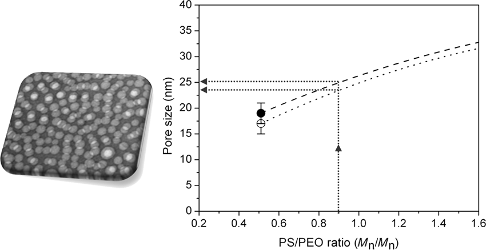
- in the synthetic formulation as well as by changing the amphiphile parameters (e.g., number of polar/apolar moieties, functional groups, block length) [20][21][22]. Pluronics, nonionic amphiphiles consisting of poly(ethylene oxide) (PEO) and poly(propylene oxide) (PPO) triblock copolymers (PEO-b-PPO
- formulation and 23 nm (polynomial curve) and 22 nm (linear curve) for the 93/7 one. Concerning the polynomial curves, the pore size calculation is highlighted in Figure 4C, whereas experimental values calculated for these two formulations are reported in Figure 4D (numerical values collected in Table 2


The self-similarity theory of high pressure torsion
Beilstein J. Nanotechnol. 2016, 7, 1267–1277, doi:10.3762/bjnano.7.117
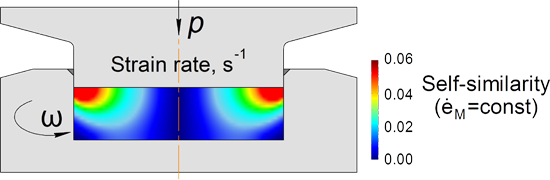
- , UMR 7239, Metz, F-57045, France 10.3762/bjnano.7.117 Abstract By analyzing the problem of high pressure torsion (HPT) in the rigid plastic formulation, we show that the power hardening law of plastically deformed materials leads to self-similarity of HPT, admitting a simple mathematical description
- micro-level hypothesized in [17]. Model 1 Rigid plastic flow formulation for HPT Figure 1 schematically shows the constrained HPT process [2]. Within the rigid plastic flow framework [18], the definition of the stress–strain state (SSS) during HPT is reduced to solving a set of equations in the


Preparation of alginate–chitosan–cyclodextrin micro- and nanoparticles loaded with anti-tuberculosis compounds
Beilstein J. Nanotechnol. 2016, 7, 1208–1218, doi:10.3762/bjnano.7.112
- , enzymatic degradation of the active compound in the lungs and the high cost of production. These challenges can be addressed with the formulation discussed in this article. Previously, advantages of similar formulations have been discussed by different research groups [7][8][9]. These include: • high



Reasons and remedies for the agglomeration of multilayered graphene and carbon nanotubes in polymers
Beilstein J. Nanotechnol. 2016, 7, 1174–1196, doi:10.3762/bjnano.7.109


Voltammetric determination of polyphenolic content in pomegranate juice using a poly(gallic acid)/multiwalled carbon nanotube modified electrode
Beilstein J. Nanotechnol. 2016, 7, 1104–1112, doi:10.3762/bjnano.7.103
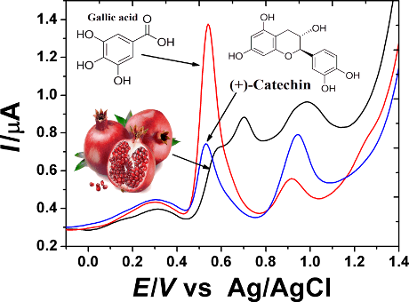
- ] were utilized for determination of gallic acid. A sensor based on a carbon paste electrode modified with multiwalled carbon nanotubes was used for voltammetric determination of ellagic acid and gallic acid in an Myrtus communis, Punica granatum and Itriphal formulation [10]. Glassy carbon electrodes


Multiwalled carbon nanotube hybrids as MRI contrast agents
Beilstein J. Nanotechnol. 2016, 7, 1086–1103, doi:10.3762/bjnano.7.102
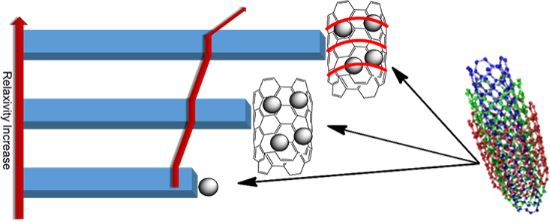
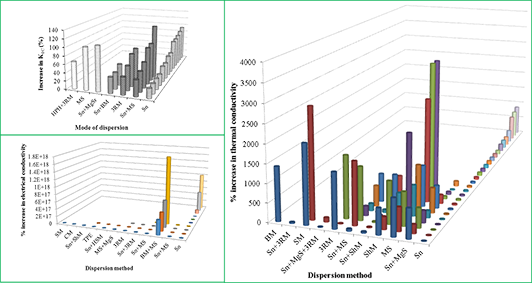
- techniques (fluorescence imaging, PET and others) is an attractive approach to administering one formulation for different tomography and therapeutic purposes. These issues, achieved by (non-)covalent modifications of pristine multiwalled carbon nanotubes (MWCNTs) and oxidized nanotubes are described in this
- relaxation mechanisms, especially for low molecular metal complexes [51][52][53]. Its formulation is divided into two levels: (i) the inner sphere mechanism, which is most important for the relaxation time T1 and its r1 describes the close interaction of water molecules with the paramagnet by direct



Comparison of the interactions of daunorubicin in a free form and attached to single-walled carbon nanotubes with model lipid membranes
Beilstein J. Nanotechnol. 2016, 7, 524–532, doi:10.3762/bjnano.7.46
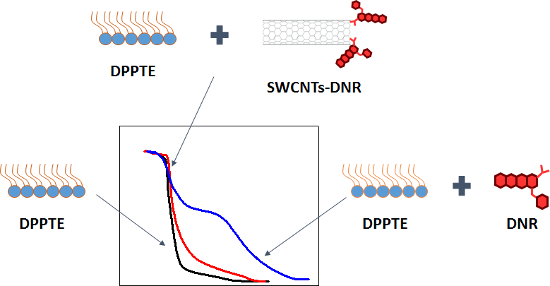
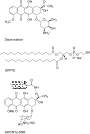
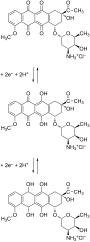
- includes liposomes, which are commercially available daunorubicin formulation (Daunoxome®) used in the treatment of Kaposi’s sarcoma [6]. Despite that, there are still numerous studies on the improvement of this drug delivery system aiming at enhancing drug loading into cells by using specific interactions




Free vibration of functionally graded carbon-nanotube-reinforced composite plates with cutout
Beilstein J. Nanotechnol. 2016, 7, 511–523, doi:10.3762/bjnano.7.45
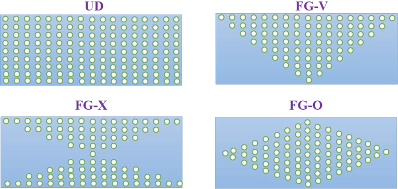
- vibration and static response of laminated plates with FG-CNTRC layers using a mixed Navier-layerwise differential quadrature method. In this research, plates with all edges simply supported are considered. Natarajan et al. [12] applied a higher order shear and normal deformable plate formulation to study
- analysis, the interaction of the plate with a two parameter elastic foundation is also taken into account. Wang and Shen [15] investigated the dynamic response of FG-CNTRC plates according to the von Kármán formulation. In this research, the interaction of a two parameter elastic foundation and a thermal
- environment are also included. The solution method of this research is based on a two-step perturbation technique and is suitable for plates with all edges simply supported. Using a mesh-free formulation proper for arbitrary edge supports, Lei et al. [16] investigated the elasto-dynamic response of FG-CNTRC


Surface coating affects behavior of metallic nanoparticles in a biological environment
Beilstein J. Nanotechnol. 2016, 7, 246–262, doi:10.3762/bjnano.7.23
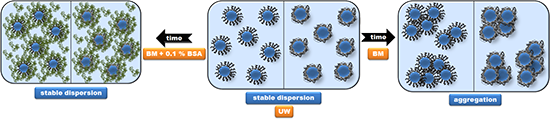
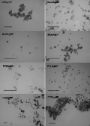
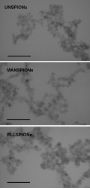
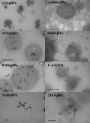
- properties and behavior in a biological environment. Despite a considerable number of studies on the colloidal stability of AgNPs and SPIONs in cell culture media, in natural water, or in the formulation of consumer products [2][7][8][9][10][11][12][13][14], general conclusions and a clear understanding of




Kelvin probe force microscopy for local characterisation of active nanoelectronic devices
Beilstein J. Nanotechnol. 2015, 6, 2193–2206, doi:10.3762/bjnano.6.225
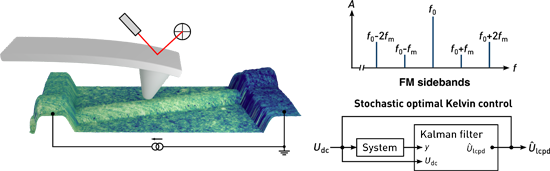
- model [40]. In this formulation the state estimate and covariances are refined recursively as new measurements are incorporated: At the time t, an a priori state and covariance estimate is found using the state and covariances at the time t − Δt, based on the system model. Then, the Kalman gain L is


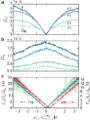
![[Graphic 33]](/bjnano/content/inline/2190-4286-6-225-i48.png?max-width=637&scale=1.18182) for different modulation amplitu...
for different modulation amplitu...




The role of low-energy electrons in focused electron beam induced deposition: four case studies of representative precursors
Beilstein J. Nanotechnol. 2015, 6, 1904–1926, doi:10.3762/bjnano.6.194
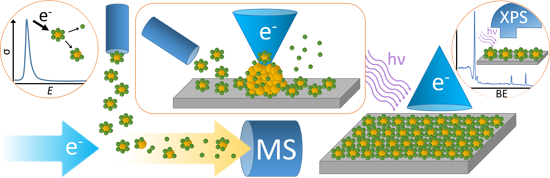
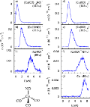
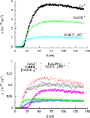
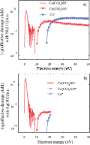
- precursors adsorbed on surfaces and may eventually aid the formulation of distinct criteria defining suitable ligand structure and composition for future FEBID precursors. 4 Case studies 4.1 Trimethyl(methylcyclopentadienyl)platinum(IV); MeCpPtMe3 The organometallic compound trimethyl(methylcyclopentadienyl








Predicting cytotoxicity of PAMAM dendrimers using molecular descriptors
Beilstein J. Nanotechnol. 2015, 6, 1886–1896, doi:10.3762/bjnano.6.192
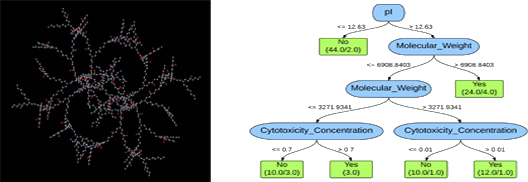
- dendrimers on Caco-2 cells. According to Figure 2, the results also indicate that the properties such as charge, size, and the desired concentration of the PAMAM dendrimers in the formulation are the important properties in the prediction of cytotoxicity on Caco-2 cells. We believe that the methods used in


In situ SU-8 silver nanocomposites
Beilstein J. Nanotechnol. 2015, 6, 1661–1665, doi:10.3762/bjnano.6.168
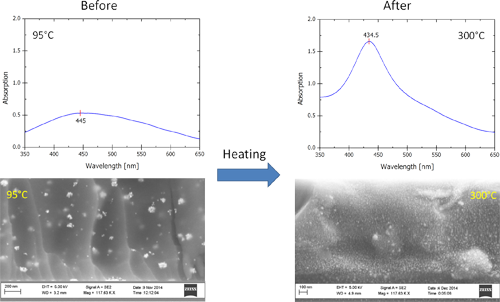
- precursor in acetonitrile in a two-fold dilution series: 500 mg·mL−1, 250 mg·mL−1, 125 mg·mL−1, 62.5 mg·mL−1, 31.3 mg·mL−1, and 15.6 mg·mL−1. 0.5 mL of the freshly prepared precursor solutions or 0.5 mL acetonitrile as reference is added to 4 mL of SU-8 2002, which is a formulation of SU-8 with
- filters in the aligner. The chosen co-solvent for the AgNO3 precursor, acetonitrile, is a mild reducing agent. This precursor solution must therefore be prepared fresh, and added to the SU-8 just before spin coating, to minimise unwanted formation of nanoparticles [13]. The used formulation of SU-8 can be


The eNanoMapper database for nanomaterial safety information
Beilstein J. Nanotechnol. 2015, 6, 1609–1634, doi:10.3762/bjnano.6.165
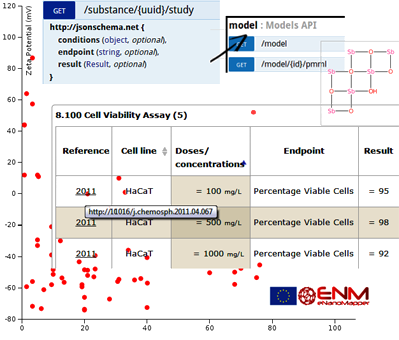
- ) defines a nanomaterial (NPO_199) as equivalent to a chemical substance (NPO_1973) that has as constituent a nano-object, nanoparticle, engineered nanomaterial, nanostructured material, or nanoparticle formulation. Chemical substances are classified as types of chemical entity (NPO_1972). The default
- nanoparticle formulation. The value of individual proteins within the serum protein fingerprint for predicting cell association was explored by the authors by developing a series of log-linear models that model the influence of the relative abundance of each adsorbed serum protein on net cell association


How decision analysis can further nanoinformatics
Beilstein J. Nanotechnol. 2015, 6, 1594–1600, doi:10.3762/bjnano.6.162

- ) executing the model via software; and (4) evaluating the results of the model [16]. MCDA can be applied to nanoinformatics decisions, for example, to help users evaluate and choose a nanomaterial type, formulation, fabrication technique, supplier, coating, or risk management strategy for a new product. From
- formulation, the Bayes factor is defined as the ratio of prior odds to posterior odds, and the WOE is the natural logarithm of the Bayes factor. More varied qualitative and quantitative applications of the WOE methodology have evolved since then [23]. On the basis of experience with WOE approaches, the
Experiences in supporting the structured collection of cancer nanotechnology data using caNanoLab
Beilstein J. Nanotechnol. 2015, 6, 1580–1593, doi:10.3762/bjnano.6.161
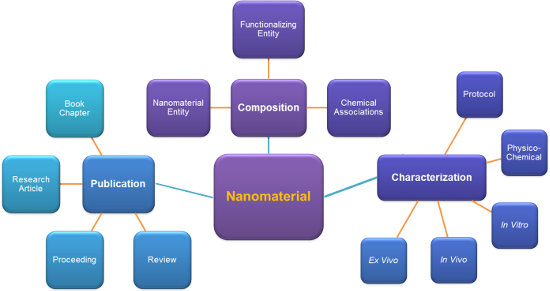
- samples. In addition to protocols, caNanoLab supports the submission of sample composition and characterizations. For the purposes of caNanoLab, a sample is defined as a formulation of a base nanomaterial platform and any additional components that contribute to the function(s) of the nanomaterial






PLGA nanoparticles as a platform for vitamin D-based cancer therapy
Beilstein J. Nanotechnol. 2015, 6, 1306–1318, doi:10.3762/bjnano.6.135
- nanocarriers for vitamin D3 delivery towards cancer treatment. Vitamin D3 vectorisation to guarantee specific action on malignant cells that avoids side effects such as hypercalcemia has been proposed. Nguyen et al. developed a formulation based on poly(vinyl neodecanoate-crosslinked-ethyleneglycol
- therapy [22]. A few years later, Almouazen et al. developed a formulation using PLA nanoparticles of about 200 nm [14]. This study proved that PLA nanocapsules are a suitable choice for controlled delivery of antineoplastic agents, namely the nanoencapsulated calcidiol induced a significant growth
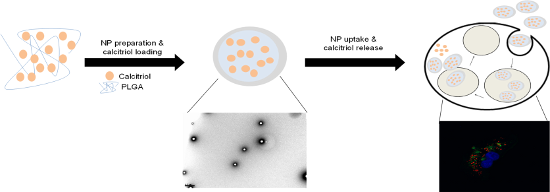
- (Figure 1, white arrow) [29]. Both forms of vitamin D3 were used for the formulation of the nanocarrier system and variations in the encapsulation efficiency and loading capacity were noticed. The observed differences may be based on their chemical structure, since calcitriol has two extra hydroxy groups


Multiscale modeling of lithium ion batteries: thermal aspects
Beilstein J. Nanotechnol. 2015, 6, 987–1007, doi:10.3762/bjnano.6.102
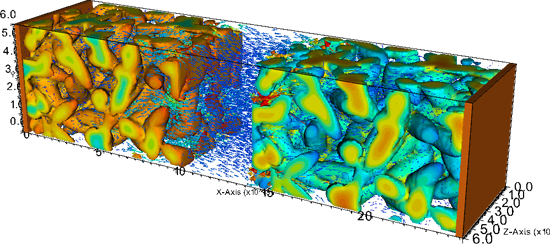
- consistent formulation of interface condition and transport equations. The usual “effect driven” procedure, in which bulk equations and interface conditions are formulated completely independent of each other, may easily miss such cancelation effects. A generic starting point for the derivation of the
- determined by Φ through Equation 10 and not by φ. It is possible to obtain the formulation in Equation 44 and Equation 45 directly from the entropy law by choosing the flux N+ and the electric current j together with the molar density c+ = ρ+/M+ =: c and the free charge density ρF = F(z+c+ + z−c−) as primary
- variables. In this formulation it can be easily seen as well that the diffusion coefficient D at vanishing current j is proportional to the determinant of the mobility matrix B. The requirement of positive entropy production mentioned above is therefore the equivalent of having a positive collective


Protein corona – from molecular adsorption to physiological complexity
Beilstein J. Nanotechnol. 2015, 6, 857–873, doi:10.3762/bjnano.6.88
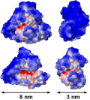
- formulation. Here, the authors demonstrated how charge stabilization can be replaced by steric effects providing new and altered stability to the NPs. Such mechanistic insights are critically important for the molecular scale interpretation of the effects resulting from the complex interplay between thousands



Stiffness of sphere–plate contacts at MHz frequencies: dependence on normal load, oscillation amplitude, and ambient medium
Beilstein J. Nanotechnol. 2015, 6, 845–856, doi:10.3762/bjnano.6.87
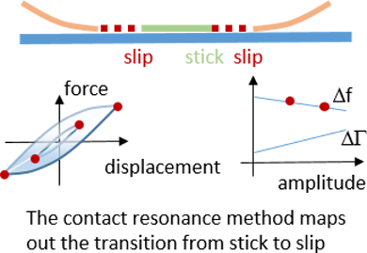
- first category of problems originates from the numerous assumptions in the formulation of the model. For example, the normal pressure is assumed to stay constant during tangential loading. A second set of limitations is related to the idealized conditions. The CM model ignores roughness, capillary
- further rather fundamental criticism of the CM model, which starts out from the extent to which a macroscopic view of friction guides its formulation. Macroscopic concepts enter the CM model at two separate instances. Firstly, a sliding stress proportional to the normal pressure is commonly associated




Production, detection, storage and release of spin currents
Beilstein J. Nanotechnol. 2015, 6, 736–743, doi:10.3762/bjnano.6.75
- that is pumped to the external wires. Finally, I note that in this formulation there are no mean-free-path effects. This is appropriate to systems that are small compared to the mean free path. In such cases the transport is ballistic. Numerical evolution and calculation of the currents For t < 0, B



Pulmonary surfactant augments cytotoxicity of silica nanoparticles: Studies on an in vitro air–blood barrier model
Beilstein J. Nanotechnol. 2015, 6, 517–528, doi:10.3762/bjnano.6.54
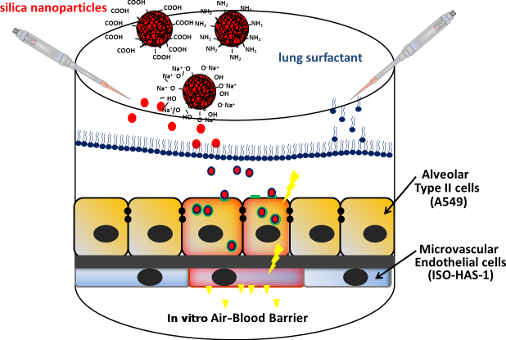
- the toxicity of lung surfactant-coated carbon nanotubes on a complex in vitro culture model of the airway barrier [12][13]. Therefore, we explored in this study the impact of the pulmonary surfactant formulation Alveofact® on the cytotoxic effect of amorphous silica nanoparticles (aSNPs) using in





