Search results
Search for "junction" in Full Text gives 316 result(s) in Beilstein Journal of Nanotechnology. Showing first 200.
Patterning of supported gold monolayers via chemical lift-off lithography
Beilstein J. Nanotechnol. 2017, 8, 2648–2661, doi:10.3762/bjnano.8.265
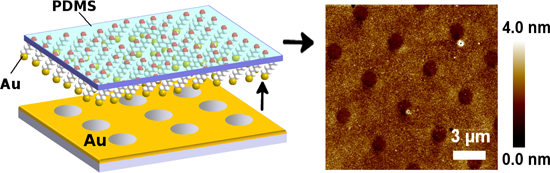
- ) withdraw charge from Au atoms, causing measurable changes in the physical properties of Au, including the increased binding energy of Au 4f electrons measured by XPS [51], decreased Au–Au rupture forces in molecular break-junction experiments [52][53][54], and shorter Au–S bonds compared with Au–Au bonds


The role of ligands in coinage-metal nanoparticles for electronics
Beilstein J. Nanotechnol. 2017, 8, 2625–2639, doi:10.3762/bjnano.8.263
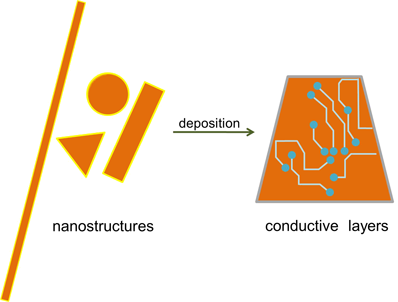
- junction resistance. The same is true for other anisotropic particles that have a potential for electronics: Oleylamine-coated gold nanowires, for example, are too instable to directly use them as inks today, but use of appropriate solvents could alleviate this limitation. This dynamic field at the border


Inelastic electron tunneling spectroscopy of difurylethene-based photochromic single-molecule junctions
Beilstein J. Nanotechnol. 2017, 8, 2606–2614, doi:10.3762/bjnano.8.261
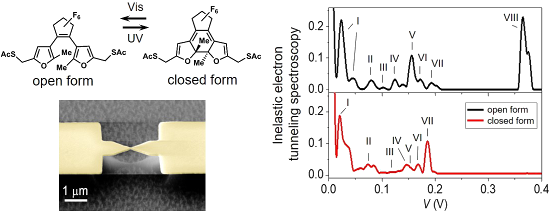
- theoretical analysis of charge transport through diarylethene-derived single-molecule devices, which are created using the mechanically controlled break-junction technique. Inelastic electron tunneling (IET) spectroscopy measurements performed at 4.2 K are compared with first-principles calculations in the
- : inelastic electron tunneling spectroscopy; molecular junction; photochromic; single molecule; Introduction Molecular junctions hold promise for the realization of novel miniaturized electronic circuits [1][2][3][4][5][6] as well as for thermoelectric energy conversion devices [7][8][9][10]. Optoelectronic
- nanobridge, a single-atom contact of Au forms with high probability. The single-atom contact is signaled by an electrical conductance G close to 1 G0, where G0 = 2e2/h is the quantum of conductance. As shown in Figure 1c, upon further stretching of the junction the atomic contact breaks, and molecules can be


Adsorption of iron tetraphenylporphyrin on (111) surfaces of coinage metals: a density functional theory study
Beilstein J. Nanotechnol. 2017, 8, 2484–2491, doi:10.3762/bjnano.8.248
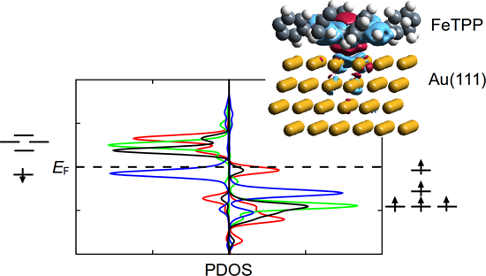
- molecule (e.g., NO, CO) or atom (Cl) in order to modify the coordination number [8][9][10][11]. Only few reversible manipulations of spin were achieved without additional ligand, as the one shown by N. Lin et al. on a single FeTPP molecule junction in a scanning tunnelling microscope (STM) [12]. In this
- junction, the line shape of zero-bias resonance of the adsorbed FeTPP molecule reversibly varies by adjusting the tip to surface distance, i.e., by mechanically squeezing the molecule. Density functional theory (DFT) calculations reveal that the spin state of the Fe centre undergoes a switch from S = 2 to




Robust procedure for creating and characterizing the atomic structure of scanning tunneling microscope tips
Beilstein J. Nanotechnol. 2017, 8, 2389–2395, doi:10.3762/bjnano.8.238
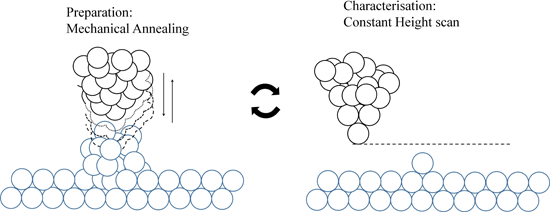
- repeatable cycles, which is interpreted as evidence for a crystalline tip structure. This work on mechanical annealing was inspired by earlier break junction and STM experiments, supported by molecular dynamics simulations [25][27][28]. A first application of this approach for a Au STM tip over a graphene
- simulations [25], the mechanical annealing cycles lead to a more regular atomic packing at both sides of the junction. The smooth evolution of this alignment observed here suggests that the process evolves through gradual shifts in packing and orientation of the layers farther away from the apex atom. Based
- on previous break junction experiments [27] it is known that for less than 100 mV bias voltage the Joule heating of the junctions is negligible and so the current level during mechanical annealing should not play an important role, when keeping the bias below this value. We find no evidence that the


Changes of the absorption cross section of Si nanocrystals with temperature and distance
Beilstein J. Nanotechnol. 2017, 8, 2315–2323, doi:10.3762/bjnano.8.231
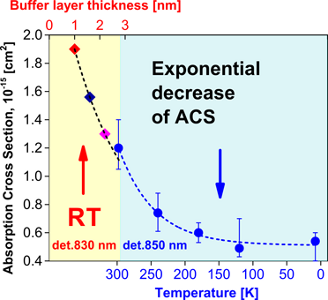
- photovoltaics, nanocrystalline Si is a promising material for the top cell of all-Si tandem cells that can theoretically reach efficiencies much above the Shockley–Queisser limit of 31% for single-junction solar cells [2]. Current injection into Si NCs can be utilized in Si-based light emitting diodes or


Electronic structure, transport, and collective effects in molecular layered systems
Beilstein J. Nanotechnol. 2017, 8, 2094–2105, doi:10.3762/bjnano.8.209
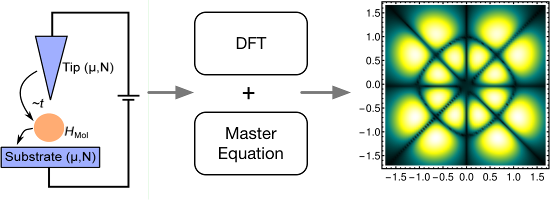
- tunneling out of the bottom electrode into the molecules. This is the junction with the larger tunneling rate Γbottom. Thus the asymmetry favors in-tunneling from the bottom electrode. Since increasing the degeneracy of the occupied sites also favors the occupied state and this can stabilize the


![[Graphic 29]](/bjnano/content/inline/2190-4286-8-209-i41.png?max-width=637&scale=1.18182) between the occupations nA and nB of the two checkerboard sublattices for a) asy...
between the occupations nA and nB of the two checkerboard sublattices for a) asy...

![[Graphic 30]](/bjnano/content/inline/2190-4286-8-209-i42.png?max-width=637&scale=1.18182) per site for a) asymmetric tunneling, Γtop/Γbottom = 0.5, and b) symmetric tunneli...
per site for a) asymmetric tunneling, Γtop/Γbottom = 0.5, and b) symmetric tunneli...
High-stress study of bioinspired multifunctional PEDOT:PSS/nanoclay nanocomposites using AFM, SEM and numerical simulation
Beilstein J. Nanotechnol. 2017, 8, 2069–2082, doi:10.3762/bjnano.8.207
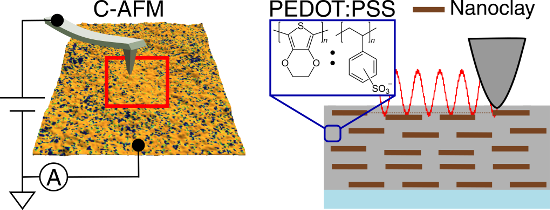
- , without feedback [61]. CRFM-DART was used as implemented in the Asylum Research software. In general, the cantilever is shaken sinusoidally while in continuous contact with the sample, measuring two parameters: the resonance frequency and quality factor of the tip–sample junction (as shown in Figure 6a
- ). Using the Euler–Bernoulli beam model interacting with a Kelvin–Voigt spring-dashpot element at the tip–sample junction, decoupling of the conservative and dissipative interactions of the tip–sample junction is possible [73]. In CRFM-DART, the amplitude and phase of the cantilever response are monitored


Adsorbate-driven cooling of carbene-based molecular junctions
Beilstein J. Nanotechnol. 2017, 8, 2060–2068, doi:10.3762/bjnano.8.206
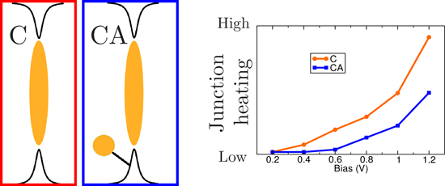
- that the charge rearrangement resulting from the adsorbate gates the carbene electronic structure and reduces the density of carbene states near the Fermi level as a function of bias. These effects result in the cooling of carbene modes at all voltages compared to the “clean” carbene-based junction. We
- stability under bias of single-molecule circuits. Keywords: adsorbate; carbene; current-induced heating and cooling; molecular junction; vibrations; Introduction Molecular electronics has experienced a remarkable progress since its first proposal [1]. Theoretical as well as experimental advances have made
- junction is particularly relevant for the stability of molecular circuits under bias [5][6][7][8][9][10]. However, simulations of single-molecule studies have usually assumed rather idealized conditions with “clean” junctions in which no molecular species other than the conducting molecules are considered


![[Graphic 14]](/bjnano/content/inline/2190-4286-8-206-i21.png?max-width=637&scale=1.18182) = 176 meV as a function of applied bias for the C and CA junctions, a...
= 176 meV as a function of applied bias for the C and CA junctions, a...

Spin-dependent transport and functional design in organic ferromagnetic devices
Beilstein J. Nanotechnol. 2017, 8, 1919–1931, doi:10.3762/bjnano.8.192
- interlayer has been studied in many experiments, motivated by the long spin relaxation time [4]. Examples are the giant magnetoresistance (GMR) and the room-temperature tunneling magnetoresistance (TMR) in LSMO/Alq3/Co junctions [6][7][8]. The MR in the ferromagnet/OF/ferromagnet junction Co/poly-BIPO/Co has
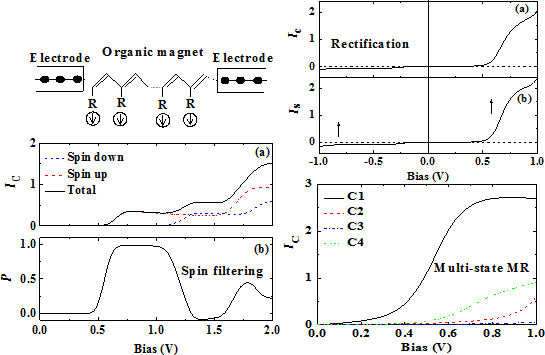
- , namely an inversion of the rectification, may happen. This has been discussed in detail in [59]. Note that the concept of SC rectification reviewed here is based on spin-polarized charge transport. This phenomenon has also been reported in a molecular junction with one ferromagnetic and one nonmagnetic
- . Current–voltage characteristics of a Co/OF/Co junction for the four magnetization configurations C1, C2, C3, and C4 shown in Figure 5c. Reproduced with permission from [32], copyright 2014 AIP Publishing. Spin-dependent transmission Tσσ(E) as a function of energy close to the Fermi energy for the four


Optical techniques for cervical neoplasia detection
Beilstein J. Nanotechnol. 2017, 8, 1844–1862, doi:10.3762/bjnano.8.186

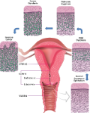
- caused by the infection with cancerogenic strains of human papillomavirus (HPV) [4][5][6]. Most of these infections are cleared by the immune system within one to two years. If carcinogenic HPV infection is not cleared, the virus invades the cells at the junction of squamous epithelium of the ectocervix
- and columnar epithelium of endocervical canal (cervical squamocolumnar junction CSJ) [7][8][9]. The location of the squamocolumnar junction relative to the external orifice, or external os (cervix opening to the vagina, see Figure 2) shifts over the lifetime of a woman. The transformation zone



Transport characteristics of a silicene nanoribbon on Ag(110)
Beilstein J. Nanotechnol. 2017, 8, 1699–1704, doi:10.3762/bjnano.8.170
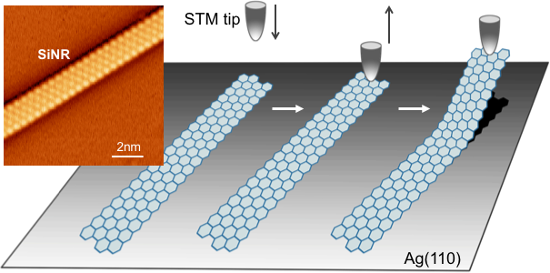
- at E. In the retracting procedure from C to D, the nanojunction is preserved until the tip is retracted about 1 nm from the contact position. The conductance trace in this regime is different from that in the approach procedure. The conductance value remains higher than 0.1G0 until the junction is
- strong and the SiNR junction is more easily broken. The AGNR was able to be lifted up more than 3 nm. This may come from the stronger interfacial coupling between the SiNR and Ag(110) as well as the weaker bond strength of Si–Si bonding in SiNR than that of C–C bonding in AGNR. We also tried to lift up
- investigated the geometric and electronic structure of SiNRs grown on Ag(110) using STM and STM junction measurements. We found that the dI/dV spectra of SiNRs on Ag(110) and the bare Ag(110) regions are essentially identical, indicating strong interfacial coupling between the SiNR and the Ag(110) substrate


Development of an advanced diagnostic concept for intestinal inflammation: molecular visualisation of nitric oxide in macrophages by functional poly(lactic-co-glycolic acid) microspheres
Beilstein J. Nanotechnol. 2017, 8, 1637–1641, doi:10.3762/bjnano.8.163
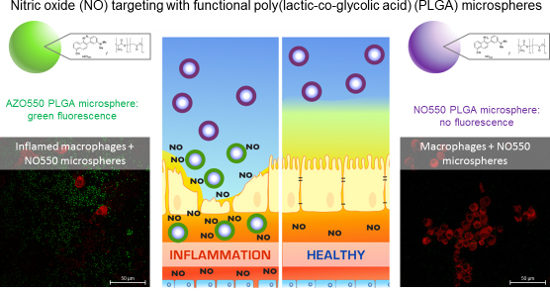
- approach is based on the epithelial barrier dysfunction of the intestine during intestinal inflammation. The intestinal barrier shows an increased permeability by disabled tight junction proteins, alterations in the thickness and composition of the mucus. Thus, particles penetrate and accumulate only into


Two-dimensional carbon-based nanocomposites for photocatalytic energy generation and environmental remediation applications
Beilstein J. Nanotechnol. 2017, 8, 1571–1600, doi:10.3762/bjnano.8.159
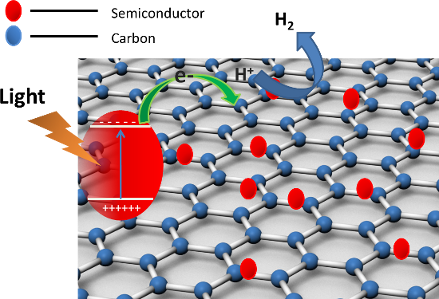
- nanocomposite heterojunctions can drastically enhance the photocatalytic efficiency by enhanced light absorption in combination with narrow band gap semiconductors, cocatalytic effect, which results in and the formation of a p–n heterojunction or Schottky junction, which can effectively suppress the


Low uptake of silica nanoparticles in Caco-2 intestinal epithelial barriers
Beilstein J. Nanotechnol. 2017, 8, 1396–1406, doi:10.3762/bjnano.8.141
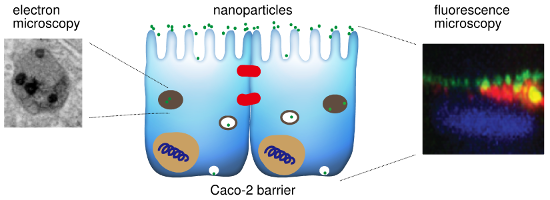
- and bioavailability of compounds in drug delivery. In vitro drug transport studies with differentiated Caco-2 barriers are usually performed using transwell systems that allow distinguishing the apical and basal side of the developed monolayer, after polarisation and tight junction expression have
- days of culture is needed for the full establishment of a polarised barrier with fully developed tight junction expression. We exposed the cultures to the two sizes of SiO2-NPs, in both cases with an excess of particles compared to the number of cells and at the same concentration (in mass per volume
- 4 days of culture; polarisation and tight junction expression were fully developed after 21 days. For flow cytometry experiments, cells were seeded in 12-well plates (approximately 3.9 cm2 growth area), and the cell density adjusted for the larger growth area in order to achieve similar growth



Charge transport in organic nanocrystal diodes based on rolled-up robust nanomembrane contacts
Beilstein J. Nanotechnol. 2017, 8, 1277–1282, doi:10.3762/bjnano.8.129
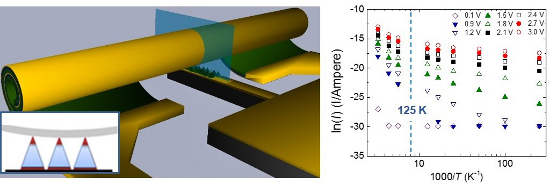
- picture of organic nanocrystal diode with rolled-up contact electrode. (b) Schematic picture of the vertical junction with the nanopyramid sandwiched between the Au mesa electrode and Au tube electrode. (c) Molecular structures of VOPC and F16CuPc. (d) Illustration of the F16CuPc/VOPc/F16CuPc nanopyramid


ZnO nanoparticles sensitized by CuInZnxS2+x quantum dots as highly efficient solar light driven photocatalysts
Beilstein J. Nanotechnol. 2017, 8, 1080–1093, doi:10.3762/bjnano.8.110
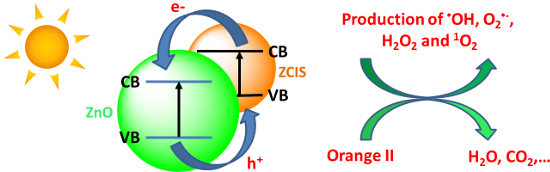
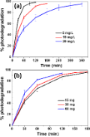
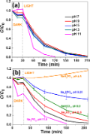
- vs NHE for ZnO and ZCIS, respectively, see Figure 4), the excited electrons in ZCIS QDs are probably quickly transferred to the CB of ZnO due to the electrostatic field at the junction. Meanwhile, the holes in the VB of ZnO are transferred to the VB of ZCIS QDs (Figure 12). These transfers result in




Stable Au–C bonds to the substrate for fullerene-based nanostructures
Beilstein J. Nanotechnol. 2017, 8, 1073–1079, doi:10.3762/bjnano.8.109
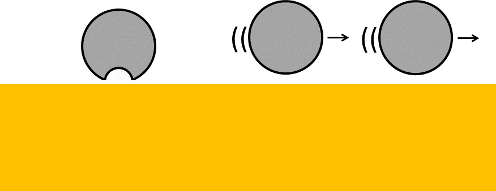
- the electronic properties of the adsorbed fullerenes with vacancy defect, and compare them to those of the C60/Au(111) system. Figure 5 shows the calculated density of states (DOS) of the isolated molecule (dashed lines) and junction (solid lines) projected onto the molecular atoms. Upon adsorption


Assembly of metallic nanoparticle arrays on glass via nanoimprinting and thin-film dewetting
Beilstein J. Nanotechnol. 2017, 8, 1049–1055, doi:10.3762/bjnano.8.106
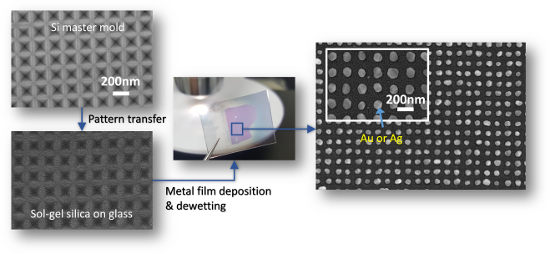
- solid-state dewetting. The dewetting processes of polycrystalline metallic films on smooth and topographic substrates are well known. On smooth substrates, solid-state dewetting of the film occurs with film thinning and hole formation at a grain boundary (GB) triple junction, followed by retraction of


Analysis and modification of defective surface aggregates on PCDTBT:PCBM solar cell blends using combined Kelvin probe, conductive and bimodal atomic force microscopy
Beilstein J. Nanotechnol. 2017, 8, 579–589, doi:10.3762/bjnano.8.62
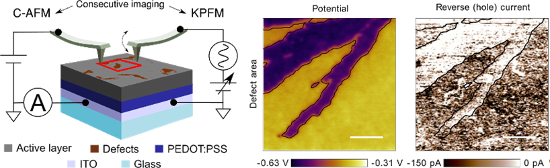
- no longer homogeneous, but rather its strength increases near the tip (Figure 5a), which induces band bending towards the tip side (Figure 5b), resulting in a narrower energy barrier at the tip–sample junction (Figure 5c,d). Due to the band-bending effect and the moderate bias applied to the
- , as qualitatively discussed above. Additionally, the diode-like behavior of the metal–semiconductor junction is clearly discerned, which is consistent with the C-AFM measurements for the defective areas. The simulation results also show a difference of several orders of magnitude between the electron


Anodization-based process for the fabrication of all niobium nitride Josephson junction structures
Beilstein J. Nanotechnol. 2017, 8, 539–546, doi:10.3762/bjnano.8.58
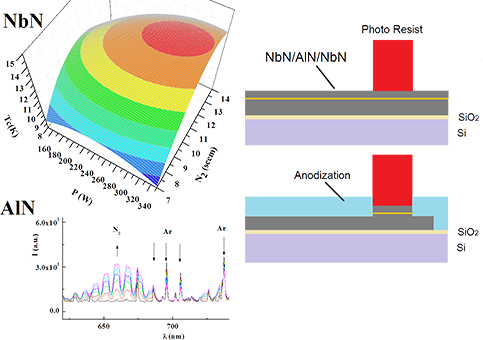
- surface and their stoichiometry. A multilayer superconductor/insulator/superconductor was obtained by successive depositions and patterned by means of the proposed anodization technique to obtain a NbN/AlN/NbN Josephson junction the current–voltage characteristic of which was measured in a liquid helium
- replacement with oxygen is observed from the measurements and a rough stoichiometry can be extrapolated compatible with Nb2O5. Tunnel junctions In Figure 11a we show the current–voltage characteristic of a Josephson-junction measured at 4.2 K. The three-layer junction (NbN/AlN/NbN) is formed by three films of
- different thickness, namely 175 nm, 2 nm and 360 nm. The choice of the thicknesses of the films was imposed by design requirements. The Josephson junctions (Figure 12) were realized using UV lithography and a lift-off process. The (10 × 10) µm2 junction areas were defined anodizing the top layer following


Solvent-mediated conductance increase of dodecanethiol-stabilized gold nanoparticle monolayers
Beilstein J. Nanotechnol. 2016, 7, 2057–2064, doi:10.3762/bjnano.7.196
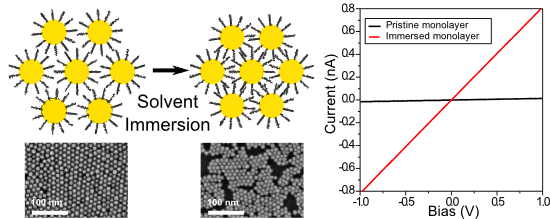
- .7.196 Abstract Gold nanoparticle monolayers provide convenient templates to study charge transport in organic molecules beyond single junction techniques. Conductance is reported to increase by several orders of magnitude following immersion of alkanethiol-stabilized gold nanoparticle monolayers in a
- –molecule–metal junction increases exponentially with decreasing interparticle distance, d, i.e., G exp(−βd) [24][25][26][27][28]. This relation was shown to be valid for single junctions in alkanethiolated nanoparticle networks [5][29]. Dodecanethiol cannot bridge two gold nanoparticles. However
- total conductance of the lattice is directly proportional to the conductance of a single junction [3]. The estimated conductance change originating from the measured change in lattice constant, Δa, follows then the relation G′/G = exp(βΔa). The decay constant, β, was found to be between 1.05 Å−1 and



Zigzag phosphorene nanoribbons: one-dimensional resonant channels in two-dimensional atomic crystals
Beilstein J. Nanotechnol. 2016, 7, 1983–1990, doi:10.3762/bjnano.7.189

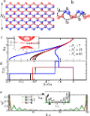
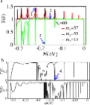
- single phosphorene edge provides an independent transport channel. Second, localized states in graphene junctions manifest as anti-resonances of zero conductance, these states are localized over the junction [26][27][28]. The localized states of phosphorene are constricted to the grooved zigzag edge and



A new approach to grain boundary engineering for nanocrystalline materials
Beilstein J. Nanotechnol. 2016, 7, 1829–1849, doi:10.3762/bjnano.7.176
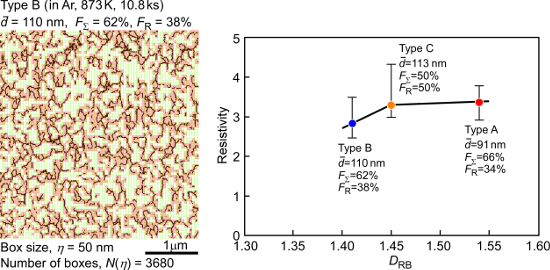
- microstructural parameters (e.g., grain boundary character distribution (GBCD) [30], grain boundary connectivity [30] and triple junction character distribution (TJCD)) may dominantly affect and control the bulk mechanical, physicochemical, electro-magnetic and other grain-boundary-related properties in
- by Palumbo, Erb and Aust for the development of high performance structural engineering materials [3][62][63]. For this objective, first, we will discuss the effect of grain boundary microstructures, characterized by the grain boundary character and triple junction character, on the bulk mechanical
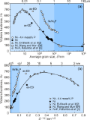
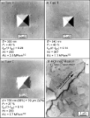
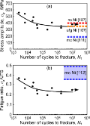
- . Structure-dependent grain boundary hardening and effects of GBCD and triple junction character distribution on the hardness It has been revealed that the hardness locally increases around grain boundaries against the grain interior, depending on the grain boundary character [69][70][71][72][73][74] and the








Monolayer graphene/SiC Schottky barrier diodes with improved barrier height uniformity as a sensing platform for the detection of heavy metals
Beilstein J. Nanotechnol. 2016, 7, 1800–1814, doi:10.3762/bjnano.7.173
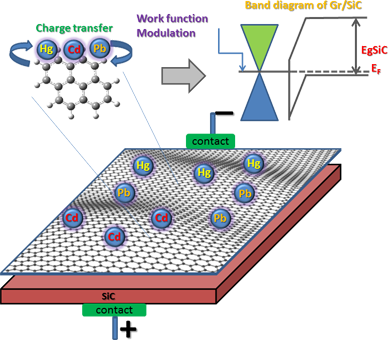
- graphene on silicon carbide is fabricated by thermal decomposition of a Si-face 4H-SiC wafer in argon atmosphere. Current–voltage characteristics of the graphene/SiC Schottky junction were analyzed by applying the thermionic-emission theory. Extracted values of the Schottky barrier height and the ideality
- this plot can be used to determine the series resistance. The practical realization of sensors based on a graphene/SiC Schottky junction for the detection of heavy metals requires a deep understanding of how heavy metals (Cd, Pb and Hg) behave on the graphene surface and how they modify the graphene
- range from 0.046 to 0.503 eV for the graphene/SiC junction, whereas the ideality factor ranges from 1.011 to 1.026. The standard deviations yield 0.013 eV and 0.0049 for both parameters, respectively. The mean values of Schottky barrier height and ideality factor of the Schottky diode are 0.4879 eV and