Search results
Search for "noise" in Full Text gives 490 result(s) in Beilstein Journal of Nanotechnology. Showing first 200.
Microwave photon detection by an Al Josephson junction
Beilstein J. Nanotechnol. 2020, 11, 960–965, doi:10.3762/bjnano.11.80
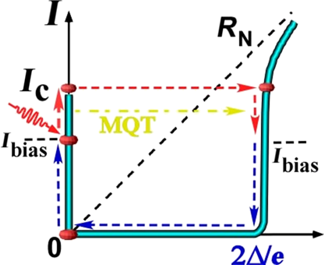
- significant improvement of the noise immunity of a device, radically decreasing the dark count rate, but it will also decrease the single-photon sensitivity of the considered threshold detector. Quantization of the switching probability tilt as a function of the signal attenuation for various bias currents
- the JJ constantly inspires new applications, such as thermometry [8][9], noise statistics [10][11][12] and single-photon detection [13]. There are, at least, two different approaches for the practical realization of single-photon detectors based on Josephson junctions, both having their advantages and
- than the switching time after the photon absorption (typically less than nanoseconds). In [4] it was shown theoretically that both the required sensitivity and the noise immunity can be reached at the same time in JJ with a suppressed critical current. Besides that, the mesoscopic junctions with low


Extracting viscoelastic material parameters using an atomic force microscope and static force spectroscopy
Beilstein J. Nanotechnol. 2020, 11, 922–937, doi:10.3762/bjnano.11.77
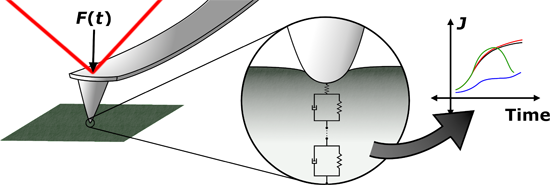
- occurs (tmax(z), marked as t2 in Figure 2a) are removed from the dataset. The resulting curve is illustrated in Figure 2b. Due to a number of possible factors, e.g., calibration and noise, the deflection in the region t0 to t1 can be non-zero despite the probe not being in contact with the surface. To
- , smoothing the deflection data with a simple first-order Butterworth filter can remove some of the measurement noise and make finding the deflection minimum easier. While searching for the smallest value without filtering, noise can cause neighboring points to appear lower than the actual minimum and
- velocities were selected in a logarithmic distribution: 10, 100, and 1000 nm/s. The probe utilized was an OLYMPUS AC 240TS-R3, featuring a tip radius of roughly 10 nm. Before measurement, the tip was calibrated using the thermal noise method [29] in which a hard silicon sample was used after sonicating using


Measurement of electrostatic tip–sample interactions by time-domain Kelvin probe force microscopy
Beilstein J. Nanotechnol. 2020, 11, 911–921, doi:10.3762/bjnano.11.76
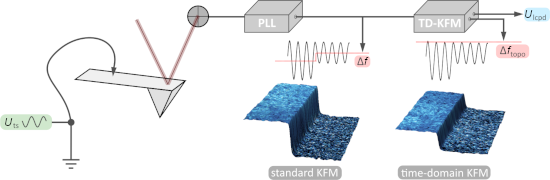
- effect is amplified when a significant change in the capacitance gradient is present. To reduce the impact of this component onto the height measurement, the modulation amplitude Uac must be minimized. Since the signal-to-noise ratio (SNR) scales with Uac, this is only possible to a certain extent
- , are introduced by the vector This vector, the so-called transition noise vector, is anticipated to be Gaussian white noise (0,QK) with the covariance matrix The output of the Kelvin system is the scalar value of the intrinsic frequency shift . It is defined by using the definition in Equation 10. The
- measurement noise is assumed to be Gaussian white noise and is defined by . This is the case for measurements where thermal noise is the dominating noise source, i.e., when the modulation frequency is below the crossover of thermal white noise and (with increasing frequency) detection noise [29]. The power


A Josephson junction based on a highly disordered superconductor/low-resistivity normal metal bilayer
Beilstein J. Nanotechnol. 2020, 11, 858–865, doi:10.3762/bjnano.11.71
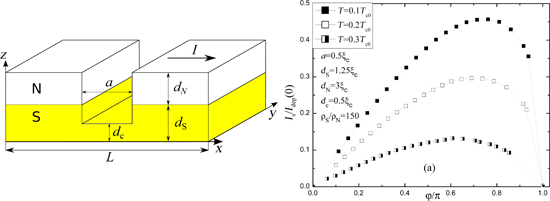
- achieve high noise immunity. Also many of these applications require to have a nonhysteretic current–voltage characteristic (IVC) and a large characteristic voltage Vc = IcRn, where Rn is the normal-state resistance of the junction. Tunnel superconductor–insulator–superconductor (SIS) Josephson junctions
- obtain high noise immunity. But due to large critical current and bad heat dissipation their IVCs are hysteretic due to Joule heating () and the subsequent formation of a stable region with suppressed superconductivity (a so-called “hot spot”) at I > Ic [6][7][8][9]. At temperatures near the critical


Light–matter interactions in two-dimensional layered WSe2 for gauging evolution of phonon dynamics
Beilstein J. Nanotechnol. 2020, 11, 782–797, doi:10.3762/bjnano.11.63
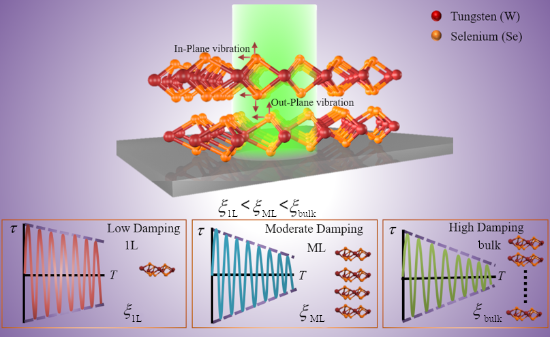
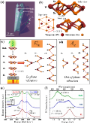
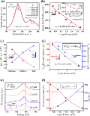
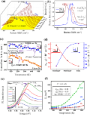
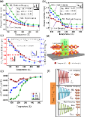
- a function of P at T = 298 K. In order to minimize the laser-induced effects on the crystallinity and structural changes in the WSe2, a laser P ≤ 3.35 mW was used. It was also found that the minimum P required to get a good signal-to-noise ratio for the Raman and PL data was when P ≥ 0.31 mW
- cell allowed the temperature to reach 523 K. During the cooling process, it was found that the signal to noise ratio was very poor when both the T and P became very low, particularly in case of PL measurements. The best signal to noise ratio in both the Raman and PL measurements was found for P = 3.35
Hexagonal boron nitride: a review of the emerging material platform for single-photon sources and the spin–photon interface
Beilstein J. Nanotechnol. 2020, 11, 740–769, doi:10.3762/bjnano.11.61
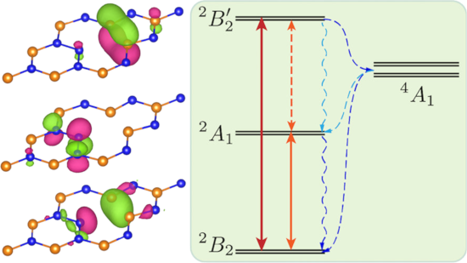
- are plotted as a function of time with the time-interval histograms building up in real-time. These coincidences are collected over enough time duration to extract a decent coincidence curve for the incident light with acceptable noise limits. The total collection time is dependent on the intensity of
- the incoming light, being very large for dim or low-intensity light and very small for high-intensity light. This raw coincidence curve for the detection events on the two detectors also contains events from the background emission. The background noise comes from the dark counts on the two detectors




Quantitative determination of the interaction potential between two surfaces using frequency-modulated atomic force microscopy
Beilstein J. Nanotechnol. 2020, 11, 729–739, doi:10.3762/bjnano.11.60
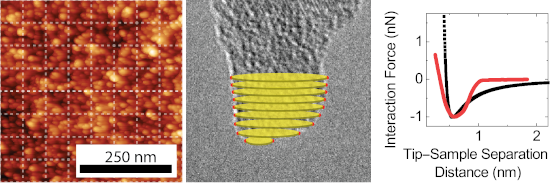
- into an F(z) curve using the procedure of Sader and Jarvis [45]. It should be noted that there is a smoothing algorithm applied to the Δf–d curve to prevent spurious force jumps caused by noise in the Δf–d curves when converted to F(z) curves. Furthermore, we assumed that the interaction force relation
- measurement due to noise or step-like interaction force changes can significantly change an experimentally extracted F(z) curve converted from a measured Δf–d curve. This factor should be considered minimal due to relatively large oscillation amplitudes used in the present study. Sader showed that this ill


Effect of Ag loading position on the photocatalytic performance of TiO2 nanocolumn arrays
Beilstein J. Nanotechnol. 2020, 11, 717–728, doi:10.3762/bjnano.11.59
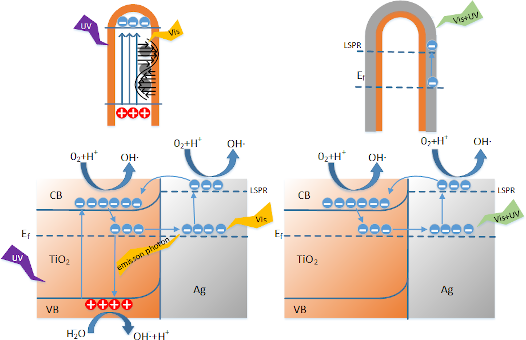
- . It can be seen from the figure that tiny Ag nanoparticles are supported on the TiO2 columns. Figure 4d shows the high-resolution TEM image of the Ag nanocolumns shown in Figure 4c. After removing the noise by performing Fourier transform on the selected area using software, we can clearly see lattice


Stochastic excitation for high-resolution atomic force acoustic microscopy imaging: a system theory approach
Beilstein J. Nanotechnol. 2020, 11, 703–716, doi:10.3762/bjnano.11.58
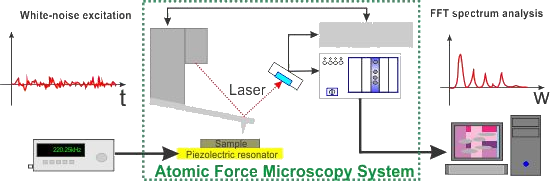
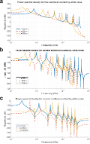
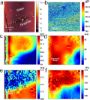
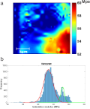
- that gives a qualitative relationship between a set of contact resonance frequencies and the indentation modulus. It is based on white-noise excitation of the tip–sample interaction and uses system theory for the extraction of the resonance modes. During conventional scanning, for each pixel, the tip
- –sample interaction is excited with a white-noise signal. Then, a fast Fourier transform is applied to the deflection signal that comes from the photodiodes of the atomic force microscopy (AFM) equipment. This approach allows for the measurement of several vibrational modes in a single step with high
- compared to conventional techniques. Keywords: atomic force microscopy; fast Fourier transform; mechanical properties; system theory; white noise; Introduction There are several methods to measure mechanical properties at the nanoscale level, based on, e.g., nanoindentation or on other physical phenomena



Electromigration-induced directional steps towards the formation of single atomic Ag contacts
Beilstein J. Nanotechnol. 2020, 11, 680–687, doi:10.3762/bjnano.11.55
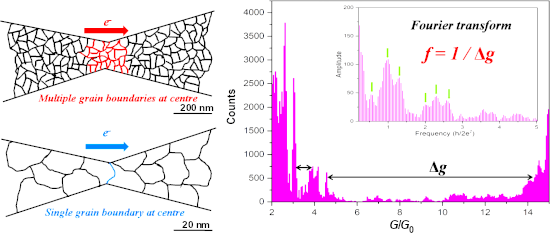
- peak at 0.6. Strong peaks below 0.5 again correspond to instabilities between other metastable configurations. On the other hand, a noticeable difference between Figure 3 and Figure 5 is that the contribution from the [111] orientation is absent in Figure 5. There is no peak above noise level at 1.3


Soybean-derived blue photoluminescent carbon dots
Beilstein J. Nanotechnol. 2020, 11, 606–619, doi:10.3762/bjnano.11.48
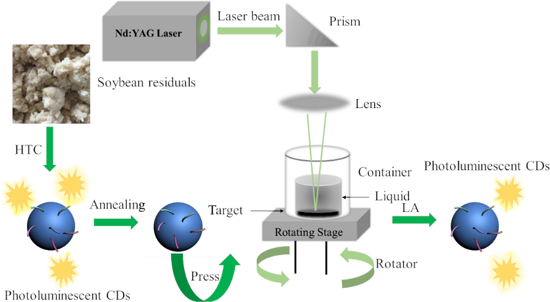
- number of the photons emitted at time t, A represents the baseline/noise level, Bi (i = 1, 2, 3) are proportionality constants for the corresponding decay functions, and τi is the corresponding lifetime. Using Equation 1 to fit the PL decay curves in Figure 4a,b, we obtain the lifetimes of τi and the


Examination of the relationship between viscoelastic properties and the invasion of ovarian cancer cells by atomic force microscopy
Beilstein J. Nanotechnol. 2020, 11, 568–582, doi:10.3762/bjnano.11.45

- . Force–distance curve-based AFM measurements were carried out to calculate the optical photodiode deflection sensitivity and the cantilever spring constant was verified by the thermal noise method before experiments. MLCT cantilevers (Bruker, USA) made of silicon nitride with approximate spring constant


Current measurements in the intermittent-contact mode of atomic force microscopy using the Fourier method: a feasibility analysis
Beilstein J. Nanotechnol. 2020, 11, 453–465, doi:10.3762/bjnano.11.37
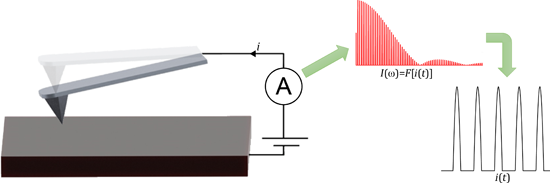
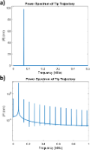
- trend. Reconstruction of the tip–sample current should be possible if one can record its power spectrum. It is of course desirable to be able to record as many harmonics as possible, although this may not always be possible, in part due to signal-to-noise ratio limitations for very high frequencies or
- challenges in the experimental implementation of the proposed method, which can be significant. We expect these challenges to arise from probe-related phenomena, data acquisition limitations, noise, the electrical nature of the sample, or some combination of all these factors. With regards to probe
- -conductive tip. Electrical noise is anticipated to also introduce challenges. Although classical C-AFM can be affected by noise as well, the expected current magnitude in this mode of imaging should be larger than for ICM-AFM for the reasons described above, such that the current signal-to-noise ratio for




High dynamic resistance elements based on a Josephson junction array
Beilstein J. Nanotechnol. 2020, 11, 417–420, doi:10.3762/bjnano.11.32
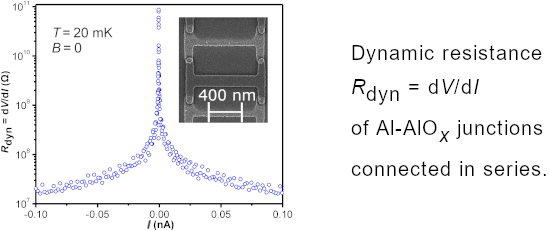
- current-biasing elements [7][8][9][10]. However, it was later understood that resistive dissipative elements inevitably act as a source of Johnson noise, leading to degradation of system performance [11]. Here we present an experimental study of a quasi-1D chain of JJs. A sufficient high-frequency
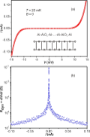
- impedance was demonstrated to study the QPS phenomena without the undesired impact of Johnson noise typically associated with dissipative elements [12]. The I–V dependence studied in [12] demonstrated clear and expected characteristics at low current, I → 0: the so-called “Bloch nose” (back-bending of I–V
- current values have been detected so far [10]. Later it was understood that the straightforward approach of using a high-Ohmic dissipative environment, Renv > RQ, is far from optimal, as it introduces Johnson noise, washing out the desired current singularities [11]. Various JJ-based systems were

Implementation of data-cube pump–probe KPFM on organic solar cells
Beilstein J. Nanotechnol. 2020, 11, 323–337, doi:10.3762/bjnano.11.24
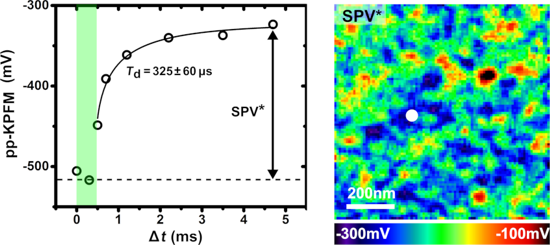
- , it is crucial to set a suitable time constant for the KPFM feedback loop and an adequate integration time per pixel. The signal-to-noise (S/N) ratio dramatically decreases when switching from KPFM to pp-KPFM due to a reduction of the bandwidth [22]. This effect demands a reduction of the loop gain
- illumination source. In other words, in this test, pp-KPFM is not used to perform a time-resolved measurement as a function of Δt. It is rather used to monitor a SP at two different levels of illumination, namely in a dark state and under cw illumination. Neglecting noise, both configurations yielded identical
- SP levels in the dark and upon cw illumination. However, as expected, the noise level increases for pp-KPFM, and a much longer time delay is needed to stabilize the compensation potential upon turning on and off the illumination. As noted above, this urged us to use pre-integration delays when




An advanced structural characterization of templated meso-macroporous carbon monoliths by small- and wide-angle scattering techniques
Beilstein J. Nanotechnol. 2020, 11, 310–322, doi:10.3762/bjnano.11.23
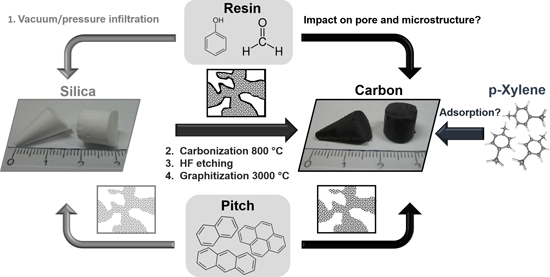
- templates were infiltrated by two different carbon precursors, namely a mesophase pitch and a formaldehyde resole. The template was removed with hydrofluoric acid. Further information can be found in a recent study [41]. SANS data with a very good signal-to-noise ratio were acquired utilizing the V16




A review of demodulation techniques for multifrequency atomic force microscopy
Beilstein J. Nanotechnol. 2020, 11, 76–91, doi:10.3762/bjnano.11.8

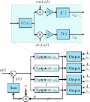
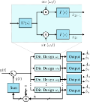
- [28][31]. Motivated by improving high-speed MF-AFM demodulation capabilities, a multifrequency Kalman filter was developed [32]. It outperformed a commercially available lock-in amplifier in terms of both tracking bandwidth and noise performance. However, a major disadvantage of the Kalman filter is
- measurement noise. However, multifrequency AFM applications require an additional metric due to the large number of potentially closely spaced frequencies. For example, higher-harmonic imaging with single-frequency excitation results in small harmonic amplitudes that must be estimated in the presence of both
- noise and much larger fundamental and/or harmonic components [19][36]. The performance of the demodulator in this regard can be quantified by a metric herein referred to as the off-mode rejection (OMR). OMR is defined as the gain ratio between a modeled carrier frequency fi and another frequency fj as


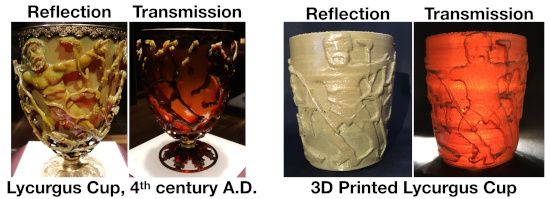
Gold and silver dichroic nanocomposite in the quest for 3D printing the Lycurgus cup
Beilstein J. Nanotechnol. 2020, 11, 16–23, doi:10.3762/bjnano.11.2
- . The space between the start of the collimation until the detector is a continuous, uninterrupted vacuum to reduce background. Solid samples were fixed in place, within the evacuated sample chamber, whilst liquid samples were flowed through a low-noise cell equipped with SiN windows. The resulting data



Self-assembly of a terbium(III) 1D coordination polymer on mica
Beilstein J. Nanotechnol. 2019, 10, 2440–2448, doi:10.3762/bjnano.10.234
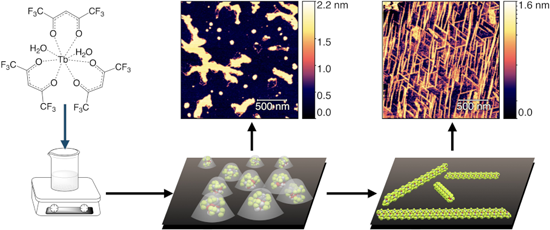
- it is. The static magnetic measurements of [Tb(hfac)3·2H2O]n and [Tb(hfac)3·2H2O]n@mica have been performed at 1.8 K using a conventional SQUID magnetometer (Figure S2, Supporting Information File 1). A very good signal-to-noise ratio is observed on the deposits, which validates the use of TbIII as a




Integration of sharp silicon nitride tips into high-speed SU8 cantilevers in a batch fabrication process
Beilstein J. Nanotechnol. 2019, 10, 2357–2363, doi:10.3762/bjnano.10.226
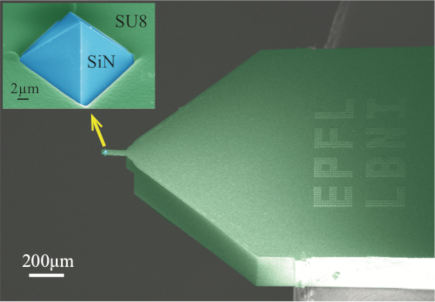
- results exclusively from the tip geometry, the noise suppression threshold is set at 100 pm which is superior to the measured image noise of 40 pm. Additionally, borders of the image are also excluded from the estimation to prevent edge artefacts. The inset of Figure 2a shows the result of the Gwyddion


A novel method to remove impulse noise from atomic force microscopy images based on Bayesian compressed sensing
Beilstein J. Nanotechnol. 2019, 10, 2346–2356, doi:10.3762/bjnano.10.225
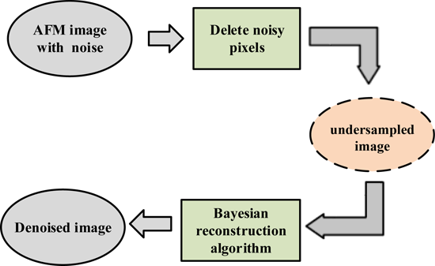
- , China School of Physics, Beihang University, Beijing 100191, China 10.3762/bjnano.10.225 Abstract A novel method based on Bayesian compressed sensing is proposed to remove impulse noise from atomic force microscopy (AFM) images. The image denoising problem is transformed into a compressed sensing
- matrices with some rows removed, are constructed by recording the position of the noise-free pixels. Third, the Bayesian compressed sensing reconstruction algorithm is applied to recover the image. Different from traditional compressed sensing reconstruction methods in AFM, each row of the AFM image is
- reconstructed separately in the proposed method, which will not reduce the quality of the reconstructed image. The denoising experiments are conducted to demonstrate that the proposed method can remove the impulse noise from AFM images while preserving the details of the image. Compared with other methods, the


Atomic force acoustic microscopy reveals the influence of substrate stiffness and topography on cell behavior
Beilstein J. Nanotechnol. 2019, 10, 2329–2337, doi:10.3762/bjnano.10.223
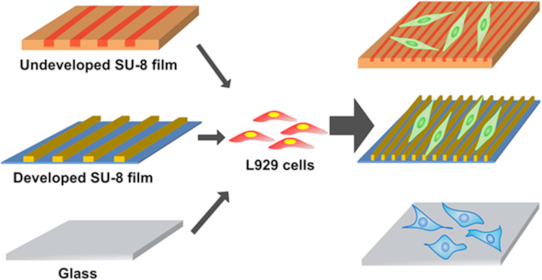
- acoustic images depict more details of the real nanostructures at higher contrast and lower noise. Influences of substrate stiffness on L929 cell morphology and migration After substrate fabrication, we cultured L929 cells on the undeveloped SU-8 films of different stiffness and on a reference glass


Nitrogen-vacancy centers in diamond for nanoscale magnetic resonance imaging applications
Beilstein J. Nanotechnol. 2019, 10, 2128–2151, doi:10.3762/bjnano.10.207
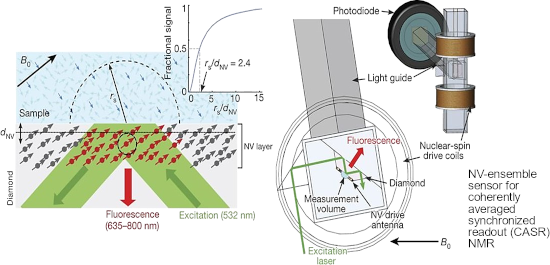
- technique that can dramatically increase the signal-to-noise ratio (SNR) in traditional MRI. The method is being applied to small injectable endogenous molecules, which can be used to monitor transient in vivo metabolic events in real time. Among all methodologies, the emergence of hyperpolarized 13C
- magnetic textures (e.g., domain walls and skyrmions), spin waves in ferromagnets and superconducting vortices, and electrical noise currents in metals have been proved feasible with NV magnetometry. Probing static magnetic textures (i.e., the static spin configuration of a magnetic system) is crucial for
- magnetic power spectral density of a system and can be used as a magnetic noise sensor. This supplies a relationship to be set up between the magnetic noise spectrum to the spin and current fluctuations in a material. As such, it could be used to measure the thermal spin noise in low dimensional materials


Ion mobility and material transport on KBr in air as a function of the relative humidity
Beilstein J. Nanotechnol. 2019, 10, 2084–2093, doi:10.3762/bjnano.10.203
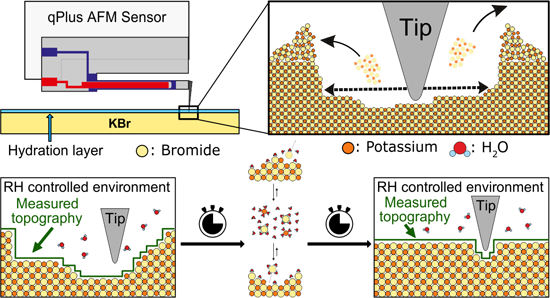
- water film and the water meniscus that forms around the tip–sample contact cause damping forces on the probe, which result in higher noise [7]. The hydrophobicity of sapphire reduces the meniscus effect. The impact that hydrophobicity or hydrophilicity of the tip material can have is demonstrated by


Review of advanced sensor devices employing nanoarchitectonics concepts
Beilstein J. Nanotechnol. 2019, 10, 2014–2030, doi:10.3762/bjnano.10.198

- -noise ratio in mercury ion detection with a detection limit of 0.01 ppb and a very short detection time constant of 3 s. This nanoarchitectonic design can maximize the intrinsic potential of black phosphorus and other materials. Sensors for physical conditions Not limited to particular chemicals, the