


Search results
Search for "polymer" in Full Text gives 784 result(s) in Beilstein Journal of Nanotechnology. Showing first 200.
Analytical and numerical design of a hybrid Fabry–Perot plano-concave microcavity for hexagonal boron nitride
Beilstein J. Nanotechnol. 2022, 13, 1030–1037, doi:10.3762/bjnano.13.90
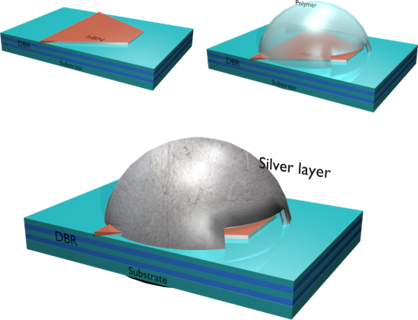
- the desired shape. A natural extension to the development of polymer photonic structures consists of the fabrication of hybrid (i.e., metal-dielectric) resonant structures [15] with the potential to enhance the light–matter interactions of such SPEs. This work will focus on finding an optimal design
- hBN where its value falls between experimentally achievable thicknesses of multilayer 2D materials [6]. A 3D concave shape polymer then could be fabricated on top of the 2D material (Figure 2b) by a direct laser writing system (e.g., Photonic Professional, Nanoscribe GmbH) by use of a 2PP process
- . Afterwards an 80 nm silver layer could be added, by thermal evaporative deposition, on top of the concave shape polymer to ensure a high reflectivity inside our microcavity. When designing the concave shape polymer a small rectangular aperture at its edge must be taken into account in the fabrication step


Design of a biomimetic, small-scale artificial leaf surface for the study of environmental interactions
Beilstein J. Nanotechnol. 2022, 13, 944–957, doi:10.3762/bjnano.13.83
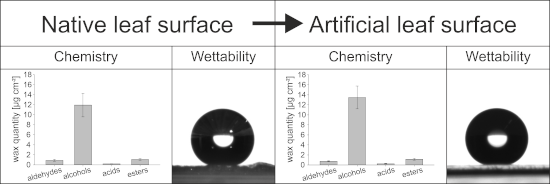
- differentiated into intracuticular waxes, which are incorporated into the cutin matrix, and epicuticular waxes, which are deposited on the polymer. Intra- and epicuticular waxes differ not only in their localization, but also in their chemical composition [12][13]. Epicuticular waxes form the outermost layer of
Bioselectivity of silk protein-based materials and their bio-inspired applications
Beilstein J. Nanotechnol. 2022, 13, 902–921, doi:10.3762/bjnano.13.81
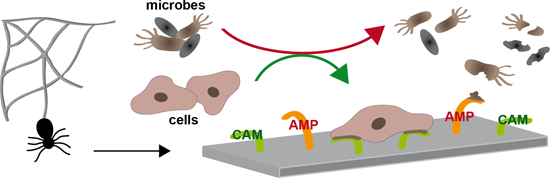
- , Germany Bavarian Polymer Institute (BPI), University of Bayreuth, Universitätsstr. 30, 95440 Bayreuth, Germany Bayreuth Center of Colloids and Interfaces (BZKG), University of Bayreuth, Universitätsstr. 30, 95440 Bayreuth, Germany Bayreuth Center for Molecular Biosciences (BZMB), University of Bayreuth
- from the development of sophisticated synthetic polymer systems [26][27], protein-based and bioinspired materials have nowadays an enormous impact [28][29]. Biomaterials based on native collagen, keratin, elastin, silk, and their recombinant, engineered counterparts become increasingly popular in
- attraction, and hydrophobic interaction free energies of surface-bound hydrophilic polyethylene oxide (PEO) polymer [67]. Greater surface density and chain length of terminally attached PEO chains were reported to correlate to a lower van der Waals attractive component. In turn, steric repulsion of the


Optimizing PMMA solutions to suppress contamination in the transfer of CVD graphene for batch production
Beilstein J. Nanotechnol. 2022, 13, 796–806, doi:10.3762/bjnano.13.70
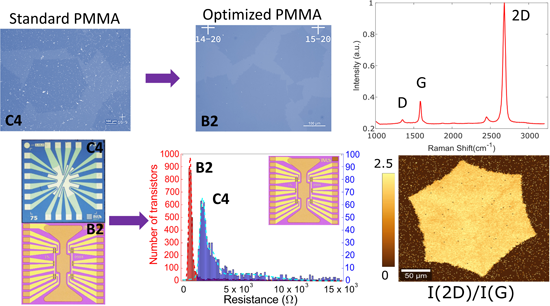
- (methyl methacrylate) (PMMA)-assisted process remains the most reliable and most commonly used approach [18]. The chemical structure of PMMA features long polymer chains, whose length is proportional to the average molecular weight (AMW) of the polymer. During the transfer of graphene, the polymer serves
- depolymerize due to strong van der Waals and London attractive forces among the long polymer chains [13]. It must also be considered that thermal treatments can often be counterproductive as they intensify polymerization, harden the PMMA residues, and complicate the removal. Therefore, the way toward clean
- PMMA-550k, see Table 1) was designed to lower the potential residue concentration while maintaining proper mechanical support. The rationale for the design of the optimized mixture is based on two hypotheses: (i) The PMMA-15k component provides short polymer chains, which are expected to diminish the




Gelatin nanoparticles with tunable mechanical properties: effect of crosslinking time and loading
Beilstein J. Nanotechnol. 2022, 13, 778–787, doi:10.3762/bjnano.13.68
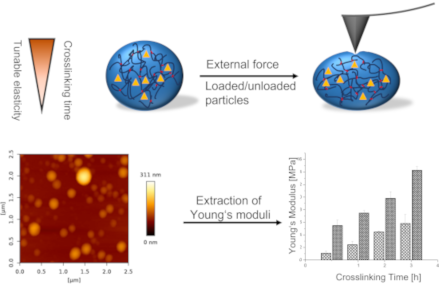
- the gelatin polymer chains. After release, the molecules might leave pores behind, which make the particles even more deformable. A further plausible mechanism is that the gelatin network can slide along the FITC-dextran molecules and therefore shows easier deformation under external pressure


Recent advances in nanoarchitectures of monocrystalline coordination polymers through confined assembly
Beilstein J. Nanotechnol. 2022, 13, 763–777, doi:10.3762/bjnano.13.67
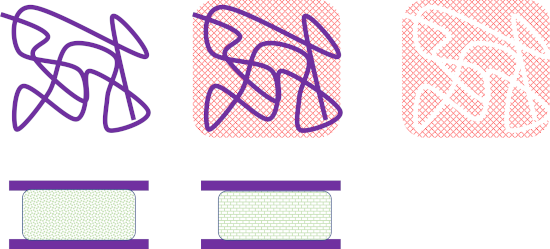
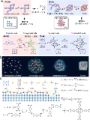
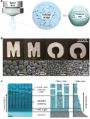
- first discuss the crystallization of coordination polymer single crystals inside confined liquid networks or on substrates through assembly of nodes and ligands. Then, we discuss assembly of preformed coordination polymer single crystals inside confined liquid networks or on substrates. In each part, we
- discuss the properties of the coordination polymer single crystals as well as their performance in energy, environmental, and biomedical applications. Keywords: applications; assembly; coordination polymer; metal-organic frameworks; nanoarchitectonics; Introduction Coordination polymers are hybrid
- ]. The networks themselves can also change the properties of the single crystals [42][43][44][45][46]. For example, commonly known fragile and rigid single crystals become soft by integrating polymer networks [45]. The thermal stability of some single crystals may also be improved by incorporating




Modeling a multiple-chain emeraldine gas sensor for NH3 and NO2 detection
Beilstein J. Nanotechnol. 2022, 13, 721–729, doi:10.3762/bjnano.13.64
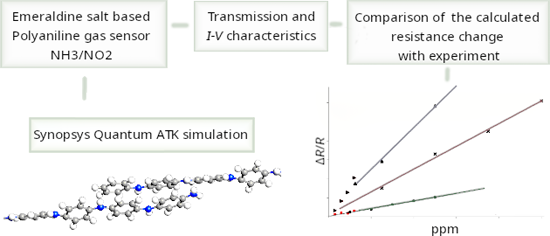
- good properties for NO2 detection. Keywords: ammonia; gas sensor; nitrogen dioxide; numerical computation; polyaniline; Introduction Polyaniline is a conducting polymer consisting of benzene rings connected by nitrogen units, which can be used in a wide spectrum of applications, for example, dyes for
- antistatically equipped clothing, capacitors, solar cells, energy storage devices, and polymer light-emitting diodes [1]. One electrical property of PANI are the π-conjugated bonds in the benzene rings. The key to this is the NH group, which can be doped. These nitrogen units are the key element of the chain
- conductivity of PANI [2]. PANI can be synthesized chemically or electrochemically, with different results in terms of polymer conductivity [3]. There are three different ground states of oxidation, which leads to a large spectrum of the electric properties of PANI. First, leucoemeraldine, the fully reduced


Antibacterial activity of a berberine nanoformulation
Beilstein J. Nanotechnol. 2022, 13, 641–652, doi:10.3762/bjnano.13.56
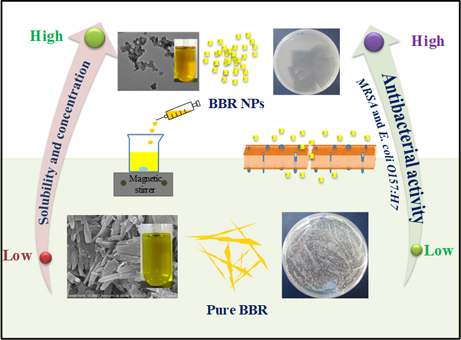
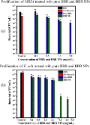
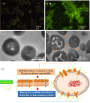
- types of nanoformulations, such as polymer-, lipid-, dendrimer-, graphene-, gold-, or silver-based nanoparticles, have been used for the delivery of BBR [29][30][31]. Yu et al. [29] prepared poly(ethylene glycol)–lipid–poly(lactic-co-glycolic acid) nanoparticles loaded with BBR to improve the oral



Fabrication and testing of polymer microneedles for transdermal drug delivery
Beilstein J. Nanotechnol. 2022, 13, 629–640, doi:10.3762/bjnano.13.55
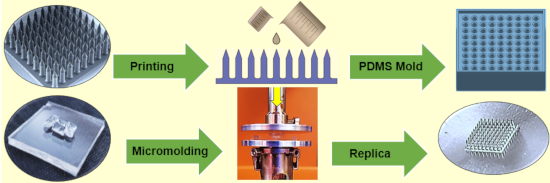
- bacterial infections and medical emergencies, with point-of-care patch diagnostics replacing ponderous and expensive laboratory testing. Therefore, there is a growing interest in small patches incorporating mass manufacturable polymer MNs [4][5], with the point-of-care rapid diagnosis market alone predicted
- characteristics of the arrays using theoretical, experimental, and simulation approaches. The arrays are coated with fluorescein to simulate transdermal low molecular weight drug delivery. To study MN penetration, the replicated polymer MN arrays were applied on the skin with various application methods
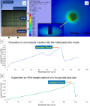
- dimensional accuracy of final MN replicas. Analytical and experimental characteristics of MN failures by mechanical compression test Bending, buckling, and fracture are the main possible failure risks of polymer MN arrays upon insertion into the skin. Thus, investigations on the MN failure scenarios are



Stimuli-responsive polypeptide nanogels for trypsin inhibition
Beilstein J. Nanotechnol. 2022, 13, 538–548, doi:10.3762/bjnano.13.45
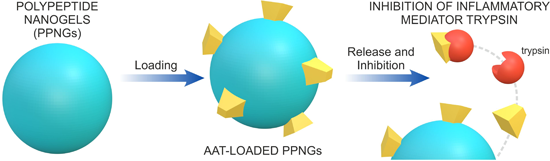
- short in vivo half-lives, chemical instability, and high susceptibility to degradation [6]. Delivery systems represented by various polymer particles provide necessary and effective protection of bioactive cargo against degradation and elimination as well as for prolonged circulation time. Nanogels
- crosslinking in inverse miniemulsion including the synthetics for these polymer precursors [23][24][25]. Our effort resulted in the development of new types of polypeptide nanogels with potential for biological applications [24][25]. In this work, we have designed two types of nanogels from biocompatible and
- network due to predominant polymer–medium interactions [27]. The subsequent increase of pH to 7.4 led to the decrease of DH of PHEG-Tyr nanogel to 131 nm driven by stronger polymer–polymer interactions including hydrophobic interactions and hydrogen bonds, leading to a shrinkage of the PHEG-Tyr nanogel


Ciprofloxacin-loaded dissolving polymeric microneedles as a potential therapeutic for the treatment of S. aureus skin infections
Beilstein J. Nanotechnol. 2022, 13, 517–527, doi:10.3762/bjnano.13.43
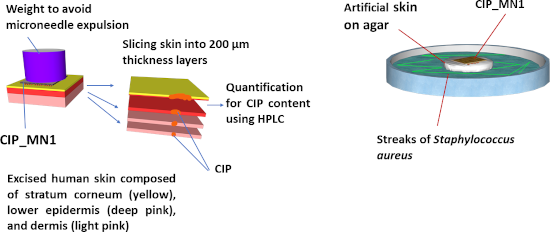
- incorporated into a polymer matrix of PVA and PVP with a weight ratio of (9:1), and CIP_MN2, composed of 10 mg ciprofloxacin incorporated into PVA polymer. CIP_MN1 and CIP_MN2 showed a mean microneedle height of 188 and 179 µm, respectively. Since Parafilm has been proven as a model to examine the perforation
- . aureus skin infections was investigated. Recent studies showed that dissolving polymeric microneedles are a promising approach in topical and transdermal drug delivery because of the rapid dissolution and/or degradation of the polymer, which, in turn, releases the incorporated drug [18]. These dissolving
- microneedles are based on polymers such as PVA, PVP, chitosan, and poly(lactide-co-glycolide) [19]. In our study, polymer-based microneedles were optimized to achieve a formulation that can efficiently penetrate the skin. In this context, microneedles were studied regarding drug content and penetration of


Design and characterization of polymeric microneedles containing extracts of Brazilian green propolis
Beilstein J. Nanotechnol. 2022, 13, 503–516, doi:10.3762/bjnano.13.42
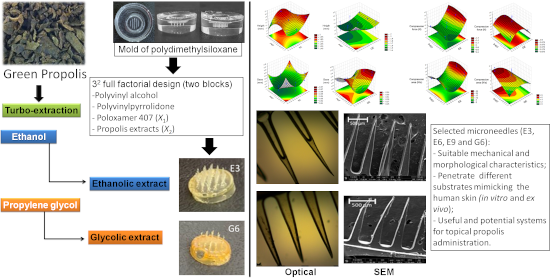
- , resulting in a factorial design of 32, totaling nine formulations for each type of extract, rendering a total of 18 formulations (Table 5). Firstly, each polymer was dispersed separately. To PVA, 8 mL of purified water were added, and the mixture was heated and stirred until completely dispersed. The


Zinc oxide nanostructures for fluorescence and Raman signal enhancement: a review
Beilstein J. Nanotechnol. 2022, 13, 472–490, doi:10.3762/bjnano.13.40
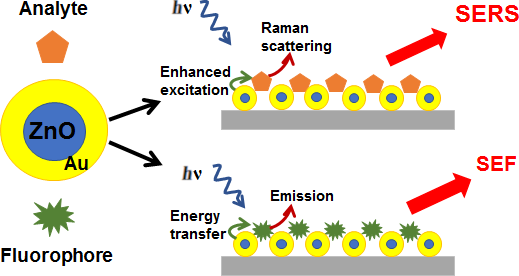
- metal-based nanocomposites can present several disadvantages, such as the use of complex polymer stabilizers, which result in toxic activity [40], SERS deactivation [41], or undesired signals in SERS analysis. Therefore, simple and rapid metal decoration methods have been applied recently. Some of these




Tubular glassy carbon microneedles with fullerene-like tips for biomedical applications
Beilstein J. Nanotechnol. 2022, 13, 455–461, doi:10.3762/bjnano.13.38
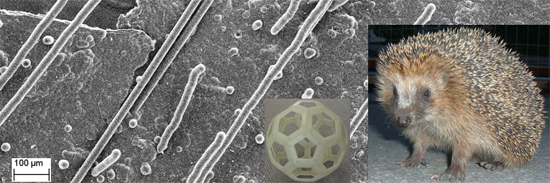
- the nanoarchitectonics concept of bottom-up creation of functional materials, we use methane rather than a polymer to form glassy carbon. Here we show that tubular glassy carbon microneedles with fullerene-like tips form when methane undergoes pyrolysis on a curved alumina surface. X-ray diffraction
- it contains essentially only carbon atoms, its structure can be varied at all size levels.” More recently, S. Sharma in a review of glassy carbon materials concluded that “it has been confirmed by both theoretical and experimental investigation that the chemical composition of the polymer plays the
- most important role in determining the nature of the resulting glassy carbon” [9]. Sharma has also coined the term “polymer-derived carbons” for glassy carbon made by the thermal decomposition of polymers, which accounts for virtually all the glassy carbons found in the literature to date. In this


The role of sulfonate groups and hydrogen bonding in the proton conductivity of two coordination networks
Beilstein J. Nanotechnol. 2022, 13, 437–443, doi:10.3762/bjnano.13.36
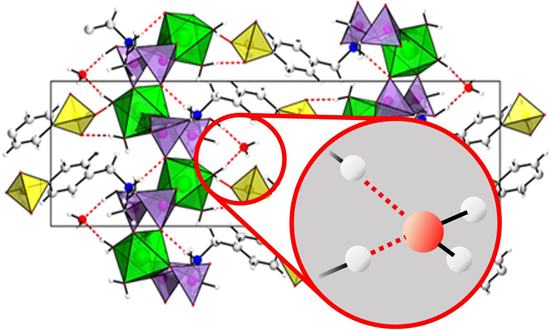
- the Pb-based metal-organic framework, in contrast, no extended hydrogen bonding occurs, as the sulfonate groups coordinate to Pb2+, without forming hydrogen bonds; the proton conductivity is much lower in this material. Keywords: coordination network; coordination polymer; impedance spectroscopy


Electrostatic pull-in application in flexible devices: A review
Beilstein J. Nanotechnol. 2022, 13, 390–403, doi:10.3762/bjnano.13.32
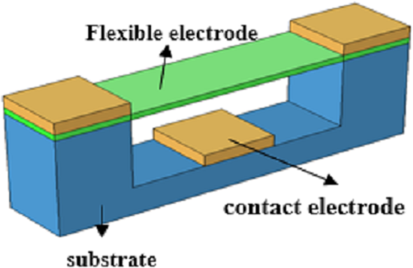
- collapse, the preparation technology is complex. Li et al. [30] prepared cantilever GR-NEM switches with two or three terminals using amorphous silicon as sacrificial layer. Sun et al. [6] prepared a three-terminal switch using PMMA polymer as the sacrifice layer. The graphene beam area was 2.5 µm × 0.5 µm
- kV output voltage using 3D printed conductive polylactic acid polymer. In 2021, they [101] integrated a lithium niobate crystal, a piezoelectric cantilever switch, and a capacitive load into a single printed circuit board (PCB). The output voltage ranges from 15.5 to 1480 V, and the cantilever switch


Micro- and nanotechnology in biomedical engineering for cartilage tissue regeneration in osteoarthritis
Beilstein J. Nanotechnol. 2022, 13, 363–389, doi:10.3762/bjnano.13.31
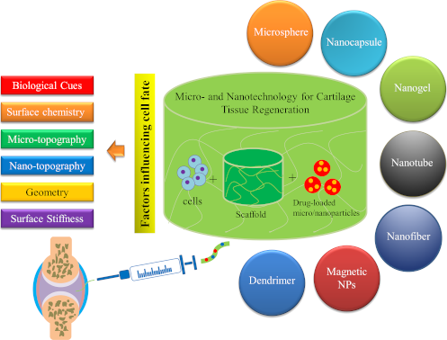
- -mimicking polymer and fabricated a 3D electrospun mat through electrospinning of PVA and sulfated alginate solutions. The results demonstrated that human bone marrow (hBM) MSCs attach appropriately and spread on the resulting nanofibrous mats. In addition, the results of type-II collagen expression and
- because they are not biodegradable and provide a more stable matrix in which osteoblasts can proliferate and deposit new ECM. The integration of CNTs into a polymer matrix would increase surface roughness and activate the mitogen-activated protein kinase (MAPK) pathway [128], which is responsible for


Interfacial nanoarchitectonics for ZIF-8 membranes with enhanced gas separation
Beilstein J. Nanotechnol. 2022, 13, 313–324, doi:10.3762/bjnano.13.26
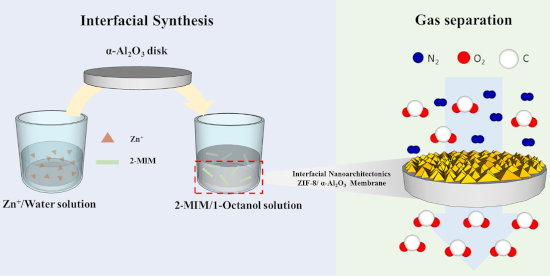
- ., strong acids or bases or organic solvents) compared to polymer substrates. The particle size of α-Al2O3 on dense top layers of these disks is around 200 nm (information from Fraunhofer IKTS, Germany). The porosity of the disks was measured as 41.58% by mercury porosimeter measurements. The XRD patterns
- fabricated in this work showed a lower separation factor but a higher CO2 permeance. Dense polymer materials in MMMs tend to lower the gas permeance. Conclusion ZIF-8 membranes embedded in porous α-Al2O3 disks were successfully fabricated via a simple one-step and low-pressure interfacial synthesis method


The effect of metal surface nanomorphology on the output performance of a TENG
Beilstein J. Nanotechnol. 2022, 13, 298–312, doi:10.3762/bjnano.13.25
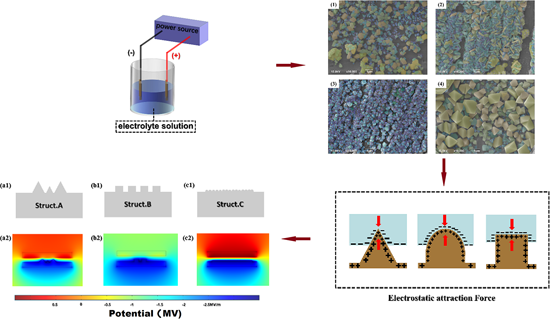
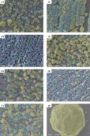
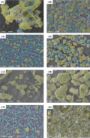
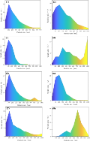
- of a metal and a polymer. There are different charge densities on different kinds of metal surface nanomorphology, which significantly influences the output performance of the TENG. Copper samples with different nanomorphology were obtained by controlling pH value, current density, electrolyte
- , such as template forming, plasma treatment, and chemical approaches. Previous studies mostly focused on the preparation process of the nanoscale morphology on the polymer surface [47][48][49]. The electrons on the polymer surface cannot be transferred to the conduction band and the charge cannot flow
- freely. Therefore, there is no high charge density on the tip surface of the polymer surface. Here, size and morphology of nanoscale copper were controlled by adjusting current density, temperature, pH value, and solution concentration during electrodeposition. The effects of different morphologies and




Systematic studies into uniform synthetic protein nanoparticles
Beilstein J. Nanotechnol. 2022, 13, 274–283, doi:10.3762/bjnano.13.22
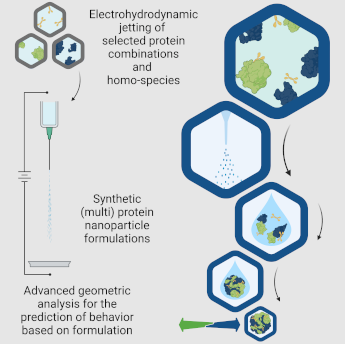
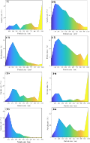
- kcps). DLS results are the application of the Mark–Houwink equations within the software (Malvern Zetasizer Software 8.01.4906). The results generated from this makes assumptions regarding the intrinsic viscosity, which can only be an estimate since the local viscosity in polymer and/or protein


Effects of drug concentration and PLGA addition on the properties of electrospun ampicillin trihydrate-loaded PLA nanofibers
Beilstein J. Nanotechnol. 2022, 13, 245–254, doi:10.3762/bjnano.13.19
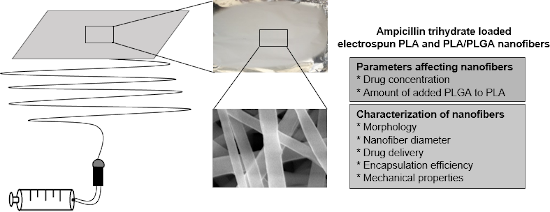
- than that of PLA since the increase in polymer molecular weight increases the viscosity, causing an increase in nanofiber diameter [14][15][16]. In other studies conducted on PLA/PLGA nanofibers, it was found that an increase in the viscosity of the solutions caused an increase in nanofiber diameters
- [8]. It was also claimed that the viscosity, which is related to the molecular weight of the polymer and the concentration of the polymer solution, is one of the most effective parameters to tune fiber diameters [11]. The nanofiber diameter is also greatly affected by changes in polymer structure [17
- ][18] and crystallization properties of the polymer [19]. Since the crystallinity of PLGA is known to be lower than that of PLA [20] and its structure is different, the increase in diameter with the addition of PLGA may be related to the lower crystallinity and different structure of PLGA. In our


Engineered titania nanomaterials in advanced clinical applications
Beilstein J. Nanotechnol. 2022, 13, 201–218, doi:10.3762/bjnano.13.15
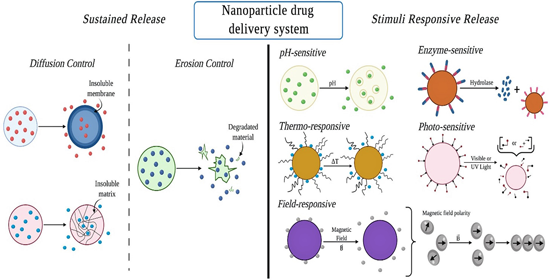
- demonstrated enhanced osseointegration [58]. Additionally, drug release kinetics and duration from titania nanotubes (TNTs) can be controlled by modifying nanotube dimensions, surface chemistry, or by a polymer coating on the TNT implant surface through dip coating or plasma polymerization. Losic and co
- augmenting better attachment of drug molecules, and the drug release profile was extended to more than 15 days by minimizing the burst release effect [59]. Polycaprolactone is a semi-crystalline biodegradable polymer used as a drug carrier, packaging material, and 3D scaffold for bone tissue engineering
- . However, it is hydrophobic and poor cell adhesion has been reported. In a study of Kiran et al., TiO2 nanoparticles (0, 2, 5, and 7 wt %) were suspended in polycaprolactone forming a polymer/ceramic hybrid composite (PCL/TiO2), which was then used as a coating over biomedical grade commercial pure


Piezoelectric nanogenerator for bio-mechanical strain measurement
Beilstein J. Nanotechnol. 2022, 13, 192–200, doi:10.3762/bjnano.13.14
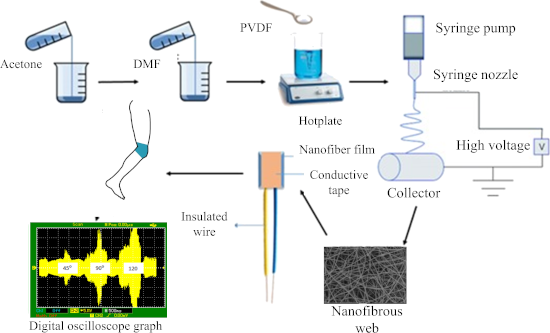
- through three different PVDF solutions (12, 14, and 16 wt %). The secondary electron images, taken at 10,000× and 40,000×, magnifications of prepared PVDF electrospun films from a 12 wt % polymer solution are shown in Figure 2A. The images show that the nanofibers have a more bead-on-string-like structure
- than the nanofibers obtained from 14 wt % solution (Figure 2B) due to incomplete solvent evaporation. The optimum polymer solution concentration is essential to obtain defect-free smooth fibers [14][37]. The nanofibers obtained from 16 wt % solution were smooth and presented a bead-free morphology
- high concentration of polymer solution. During evaporation of the solvent, polymer chains are more likely to form crystalline structures because they are closer together than in the solutions with lower concentration Also, when the polymer amount increases in the solution it increases generation


A comprehensive review on electrospun nanohybrid membranes for wastewater treatment
Beilstein J. Nanotechnol. 2022, 13, 137–159, doi:10.3762/bjnano.13.10
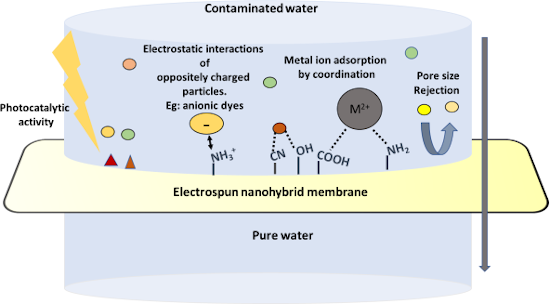
- fiber functionalization through blending the functionalizing material with the polymer prior to electrospinning, post-spinning surface functionalization, or the use of a coaxial electrospinning setup make electrospinning a superior technique for membrane fabrication [2]. The smaller size endows the
- polymers have shown a considerable enhancement of their properties and performances when compared to the as-spun fiber membranes [3][4]. The versatility of electrospinning has allowed for the fabrication of many synthetic and natural polymer membranes [5], and ceramic nanofibers as well [6]. The most
- common synthetic polymer membranes such as polycaprolactone (PCL), polyacrylonitrile (PAN), polyacrylic acid (PAA), polysulfones (PSF), polyimides (PI), polyvinyl alcohol (PVA), polystyrene (PS), polyethylene oxide (PEO), poly(vinylidene fluoride) (PVDF) and natural polymers such as gelatin, keratin




A photonic crystal material for the online detection of nonpolar hydrocarbon vapors
Beilstein J. Nanotechnol. 2022, 13, 127–136, doi:10.3762/bjnano.13.9
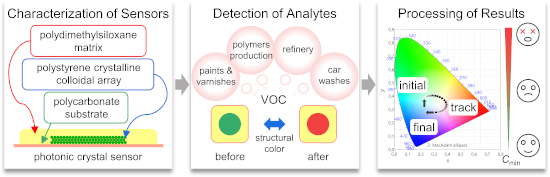
- [14]. Most of the configuration changes of the photonic bandgap in opal and inverse opal structures occur due to swelling or compression of the polymer matrix or gel. To date, four main methods for the modification of photonic crystals are used for the creation of stimuli-responsive materials: (a
- ) formation of a sensitive polymer matrix, (b) impregnation of the reagent, (c) immobilization of the reagent and (d) preparation of the sensor elements from molecularly imprinted polymers. Organic solvents are usually detected by using polymer matrix sensors (Table 1) through matrix interaction [7][8][9][15
- into the polymer matrix (Figure 5). The effect of n-decane vapor does not lead to a significant change in the sensor color, but only shifts the PBG by just ≈10 nm, nevertheless, the approach proposed here allows one to detect slight changes in the sensor color. Aromatic and aliphatic hydrocarbons were





