Search results
Search for "simulation" in Full Text gives 559 result(s) in Beilstein Journal of Nanotechnology. Showing first 200.
Amorphized length and variability in phase-change memory line cells
Beilstein J. Nanotechnol. 2020, 11, 1644–1654, doi:10.3762/bjnano.11.147
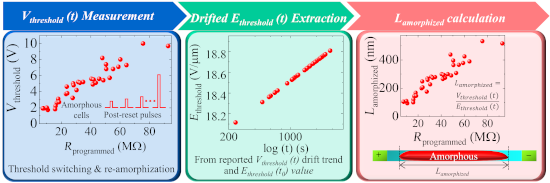
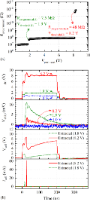
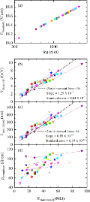
- simulation results obtained from the “simulation program with integrated circuit emphasis” (SPICE). The measured threshold voltage, and the drifted threshold field at that time are used to extract the amorphized length (Figure 1). A literature review of threshold switching in PCM Threshold switching is a
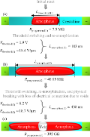
- of the amorphized region of length Lamorphized(2). At this point, the wire itself physically broke and the electrical connection was lost, possibly due to void formation in the middle of the cell (Figure 5c). Cell voltage and current extraction obtained via circuit simulation A SPICE simulation was
- rise and the re-amorphization is assumed to take place right after the peak of Vch3,4. Table 3 lists the melting and re-amorphization instances for the two re-amorphization events used in simulations. At the starting of the simulation, S1 is closed while S2 and S3 are kept open to use Ramorphous(before




Design of V-shaped cantilevers for enhanced multifrequency AFM measurements
Beilstein J. Nanotechnol. 2020, 11, 1525–1541, doi:10.3762/bjnano.11.135
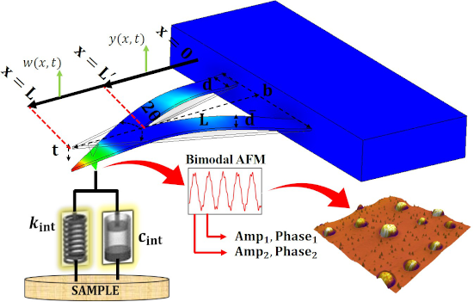
- an optimum rectangular cantilever. Two sets of bimodal AFM experiments are carried out on Au-PS and PS-LDPE (polystyrene and low-density polyethylene) samples to verify the simulation results. Keywords: bimodal AFM; optimization; soft matter; surface characterization; V-shaped cantilevers
- oscillation amplitude and phase response of the first and second bending eigenmodes, respectively. Results and Discussion Simulation analysis Figure 1 represents the schematic of the V-shaped cantilever where the length (L), width (b), thickness (t), width of each leg (), and the angle (2θ) are shown. We
- sample in air. R is the tip radius and Eeff is the effective elastic modulus between tip and sample. The material properties used in this simulation are shown in Table 1. The effects of length (L), overall width (b), the width of each leg () and the thickness (t) of the cantilever are optimized. In each


![[Graphic 4]](/bjnano/content/inline/2190-4286-11-135-i26.svg?max-width=637&scale=1.18182) = 15 µm, bref = 8...
= 15 µm, bref = 8...


![[Graphic 17]](/bjnano/content/inline/2190-4286-11-135-i39.svg?max-width=637&scale=1.18182) ) of V-shaped cantilevers for...
) of V-shaped cantilevers for...


Adsorption and self-assembly of porphyrins on ultrathin CoO films on Ir(100)
Beilstein J. Nanotechnol. 2020, 11, 1516–1524, doi:10.3762/bjnano.11.134
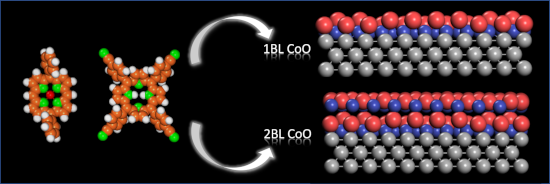
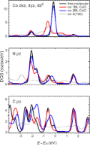
- -hexagonal layer with lattice parameter a2BL CoO = 3.0–3.1 Å [18]. STM images of both films show the positions of the oxygen atoms as bright protrusions [20]. Computational Methods Non-magnetic ab initio calculations were performed using the Vienna Ab-initio Simulation Package (VASP) [32] employing the PBE
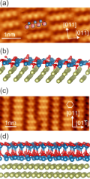
- corresponding STM simulation (Figure 7a, inset) agrees well with the symmetric dumbbell appearance in the experimental images. We also calculated the relaxed structure of 1 on 2BL CoO, where the molecule adopts a ruffled configuration [46]. We find that the maximum surface height difference between carbon atoms
- bent such that a bond between the cyano group and a Co ion of the substrate could be formed. However, the structure always relaxed into a state in which the N–Co distance exceeded 3.1 Å. While the STM simulation of that configuration shown in Figure 7d matches well with some of the molecules depicted




A wideband cryogenic microwave low-noise amplifier
Beilstein J. Nanotechnol. 2020, 11, 1484–1491, doi:10.3762/bjnano.11.131
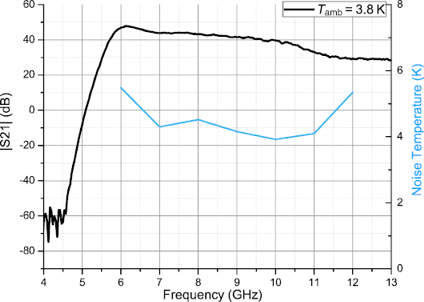
- frequency of 12 GHz. The design was optimized for the frequency range from 6 to 12 GHz, which fits to most of modern qubit measurement setups. We used the available S-parameters of the transistor for the matching circuit design. From a circuit simulation with ideal components a minimal gain value of more
- the box in the operation frequency range. We did an electromagnetic simulation of the box and it showed us the absence of self-resonances in a frequency range from 1 to 12 GHz. The substrate was soldered directly to the brass box and SubMiniature version A (SMA) connectors with a specified frequency




Self-assembly and spectroscopic fingerprints of photoactive pyrenyl tectons on hBN/Cu(111)
Beilstein J. Nanotechnol. 2020, 11, 1470–1483, doi:10.3762/bjnano.11.130
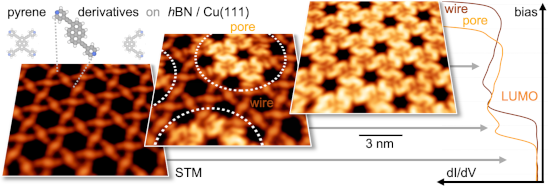
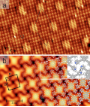
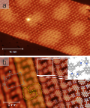
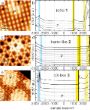
- polarizable continuum model (CPCM) was used to introduce nonspecific solvation effects. The spectra were generated either with GaussView 5 [94] or GaussSum [95], assuming a half-width of 0.15 eV for proper simulation. The IP and EA were determined as the vertical energy difference between the neutral molecule




Protruding hydrogen atoms as markers for the molecular orientation of a metallocene
Beilstein J. Nanotechnol. 2020, 11, 1432–1438, doi:10.3762/bjnano.11.127
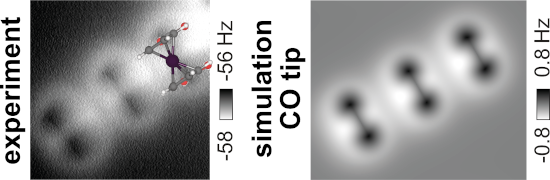
- between experiment and simulation might also reflect a more general feature of repulsive mode imaging. While the tip–surface interaction force curves in the attractive region differ significantly from each other for different tip-terminating species, the force curves in the repulsive region are so steep
- staggered molecular conformation [22]. The protruding hydrogen atoms align in this geometry along a different direction with respect to geo 1 due to the partly staggered conformation of the Cp rings. The corresponding PPM image calculations with identical simulation parameters as before for a CO tip are
- frequency shift image. An inverted colour scale is used for the constant-height Δf NC-AFM data to match the topography appearance.) High-resolution NC-AFM imaging and simulation. Experimental and simulated frequency-shift images of a single molecular row along the direction (red arrows). Exemplary
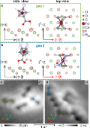


![[Graphic 10]](/bjnano/content/inline/2190-4286-11-127-i10.svg?max-width=637&scale=1.18182) row of FDCA molecules in geo 2. (a–c) Constant-height frequency-shi...
row of FDCA molecules in geo 2. (a–c) Constant-height frequency-shi...
On the frequency dependence of viscoelastic material characterization with intermittent-contact dynamic atomic force microscopy: avoiding mischaracterization across large frequency ranges
Beilstein J. Nanotechnol. 2020, 11, 1409–1418, doi:10.3762/bjnano.11.125
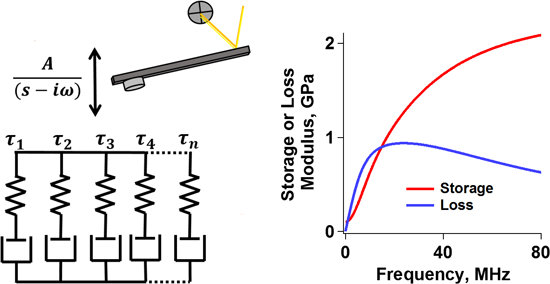
- (through simulation) the behavior of the dynamic AFM observables for hypothetical materials as a function of the frequency. We find this to be particularly important, as a review of the literature (including several of our own previous works), shows that dynamic AFM characterization has been routinely
- provides the simulation procedures and parameters). The amplitude curves (Figure 3a) exhibit the typical shape with bistability transitions [2]. We also notice that the amplitude values in the repulsive branch are larger for material 1 than for material 2. This is consistent with Figure 2, which shows that
- material 2 at 70 kHz, whereby material 2 appears much stiffer than material 1. Furthermore, the near absence of dissipation in the force curves of both materials supports the observed lack of phase sensitivity to material differences, in agreement with the literature [36][37]. For the simulation at 350 kHz


Transient coating of γ-Fe2O3 nanoparticles with glutamate for its delivery to and removal from brain nerve terminals
Beilstein J. Nanotechnol. 2020, 11, 1381–1393, doi:10.3762/bjnano.11.122
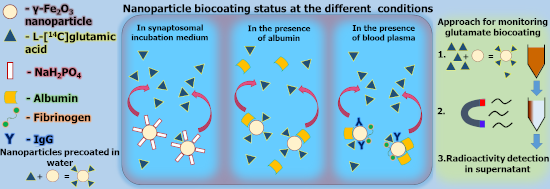
- mode v1.61. The laser correlation spectrometer was equipped with a multi-computing correlator type 7032 CE. Simulation of spatial structure of γ-Fe2O3 nanoparticles coated with blood plasma protein biocorona Simulations of biocorona formation at the surface of γ-Fe2O3 nanoparticles were performed using
- software for graphic-mathematical modeling, that is, a demonstration version of Diamond 4.5.3 (Crystal Impact GbR©) for the simulation of nanoparticle polycrystals, a demonstration version of LeadIT 2.3.2 (BioSolveIT GmbH©) to find the most probable binding sites between protein and nanoparticles, a free
- treatment with blood plasma were transferred into the standard salt solution. The mean nanoparticle size was 245 nm (Figure 8b), confirming that blood plasma prevented a significant increase in particle size due to presence of chelating agents in the standard salt solution. Simulation of the spatial


Atomic defect classification of the H–Si(100) surface through multi-mode scanning probe microscopy
Beilstein J. Nanotechnol. 2020, 11, 1346–1360, doi:10.3762/bjnano.11.119
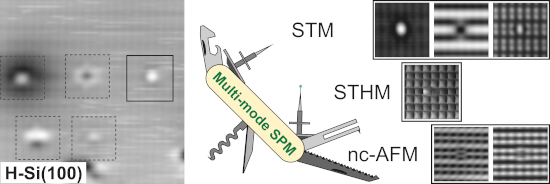
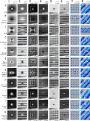
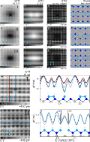
- terminations of different reactivity. Through this analysis we are able to identify unique electronic and structural signatures associated with the defects of each imaging mode. By combining these results with a simple probe particle simulation of the STHM and AFM images, we were able to confirm the underlying



Effect of localized helium ion irradiation on the performance of synthetic monolayer MoS2 field-effect transistors
Beilstein J. Nanotechnol. 2020, 11, 1329–1335, doi:10.3762/bjnano.11.117
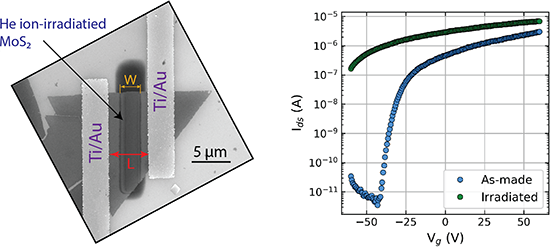
- ) Simulation of the S vacancy yield generated as the He+ ion beam penetrates the device at the contact stack, indicating damage to the metal–semiconductor interface. Acknowledgements We acknowledge D. Keane for helpful discussions and D. Daly for assistance with the helium ion microscope. Funding The


Ultrasensitive detection of cadmium ions using a microcantilever-based piezoresistive sensor for groundwater
Beilstein J. Nanotechnol. 2020, 11, 1242–1253, doi:10.3762/bjnano.11.108
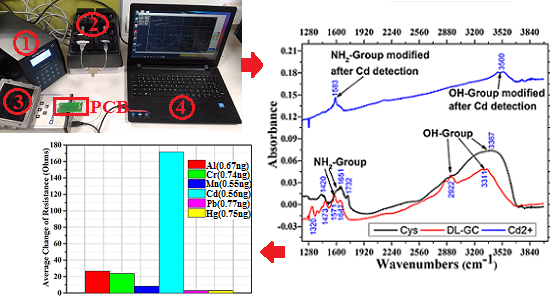
- mN/m, which is well below the stiffness required for BioMEMS applications (1000 mN/m [41][42]). COMSOL 5.3 software is used to perform design and simulation of the piezoresistive sensor to optimize the dimensions for better stiffness and sensitivity [43]. The fabricated piezoresistive sensor layer




Gas sorption porosimetry for the evaluation of hard carbons as anodes for Li- and Na-ion batteries
Beilstein J. Nanotechnol. 2020, 11, 1217–1229, doi:10.3762/bjnano.11.106
- the Mahle model [33]. Since our system could measure the adsorption amounts only up to p/p0 = 0.9, the measured value at this point was assumed to be the end point of the simulation curve at p/p0 = 1. The parameters were changed to get the simulation curves close to the actual adsorption isotherm


Influence of the magnetic nanoparticle coating on the magnetic relaxation time
Beilstein J. Nanotechnol. 2020, 11, 1207–1216, doi:10.3762/bjnano.11.105
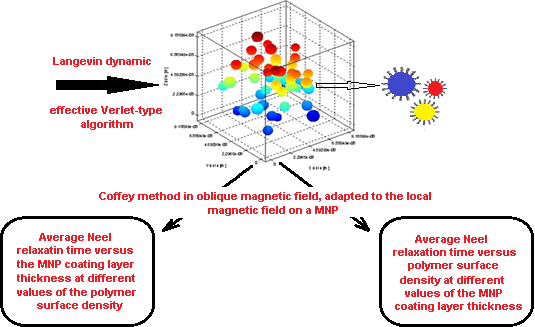
- fill in this gap, this study presents a numerical simulation model that elucidates how the nanoparticle coating affects the nanoparticle agglomeration tendency as well as the effective magnetic relaxation time of the system. To simulate the self-organization of the colloidal nanoparticles, a stochastic
- relaxation time; nanoparticle coating; numerical simulation; stochastic Langevin dynamics method; superparamagnetic nanoparticles; Introduction One of the most important biomedical applications of colloidal magnetic nanoparticle systems is magnetic hyperthermia applied as an alternative for cancer treatment
- nanoparticle properties [8]. In order to solve these issues, the current study aims to use simulation models to study the influence of nanoparticle coating on nanoparticle agglomeration tendency and on the Néel magnetic relaxation time, as well as on the effective magnetic relaxation time. Results and


Hybridization vs decoupling: influence of an h-BN interlayer on the physical properties of a lander-type molecule on Ni(111)
Beilstein J. Nanotechnol. 2020, 11, 1168–1177, doi:10.3762/bjnano.11.101
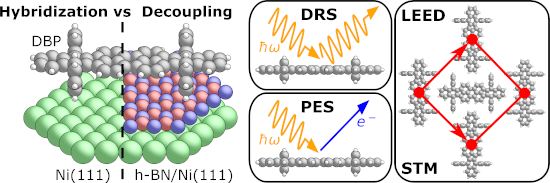
- al. [32]. The distinct LEED pattern of the highly ordered DBP layer makes it possible to apply a quantitative analysis by means of a LEED simulation that is numerically fitted to the diffraction pattern. The resulting simulation is shown in Figure 3 as yellow circles overlaid with the LEED image. The
- as clusters of molecules on top of the first DBP layer. The fast Fourier transform (FFT) of that STM image resembles the LEED simulation of the molecular lattice (considering eight symmetry equivalent domains only), which supports our structural model. Valence band structure and work function change
- (logarithmic intensity scale, contrast inverted) of the highly ordered DBP layer on h-BN/Ni(111) grown at a substrate temperature of 170 °C. Half of the LEED image is superimposed by the LEED simulation. Yellow points and lines correspond to the reciprocal lattice of the DBP structure including symmetry


Thermophoretic tweezers for single nanoparticle manipulation
Beilstein J. Nanotechnol. 2020, 11, 1126–1133, doi:10.3762/bjnano.11.97
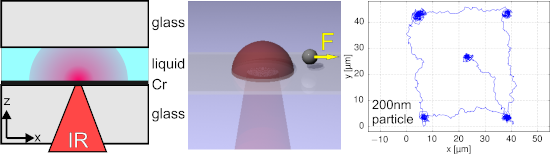
- with sizes of 1 μm and 200 nm in an aqueous medium. We model the effect with an overdamped Langevin dynamics simulation to obtain quantitative predictions. Since the feedback control algorithm can be easily modified, the resulting particle trapping potential can be thus arbitrarily shaped. We show this
- characteristic trapping length from the equilibrium probability density in a temperature field [24], ρ(x) = ρ0exp(−STΔT(x)) = ρ0exp(−ST∇Tx) as A lower temperature gradient therefore implies a less tight trap. Simulation It is clear that the trap stiffness depends on many factors, i.e., the diffusion constant of
- dynamics simulation of a spherical particle in water. The laser heating was modeled as an instantly imposed Gaussian-shaped temperature field, which changes its center position according to the feedback rule. To keep the model as simple as possible, the heat capacities of the substrate and the liquid, as


A new photodetector structure based on graphene nanomeshes: an ab initio study
Beilstein J. Nanotechnol. 2020, 11, 1036–1044, doi:10.3762/bjnano.11.88
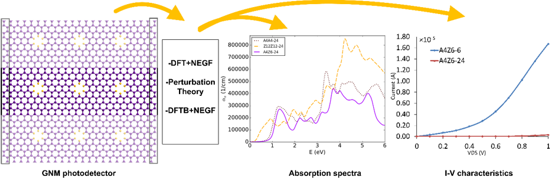
- ]. In this paper, for the first time, we study a new GNM-based photodetector using computational modeling. In order to do a complete device simulation, we initially perform ab initio DFT calculations to investigate the electronic and optical properties of the several materials used in devices channels


Extracting viscoelastic material parameters using an atomic force microscope and static force spectroscopy
Beilstein J. Nanotechnol. 2020, 11, 922–937, doi:10.3762/bjnano.11.77
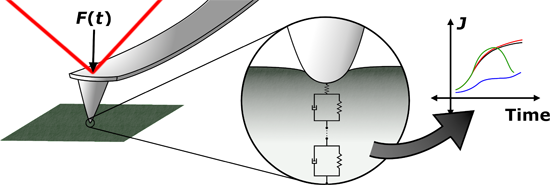
- accurate models specifically designed for AFM experimentation and simulation. The AFM community has pursued the precise quantification and extraction of rate-dependent material properties, in particular, for a significant period of time, attempting to describe the standard viscoelastic response of


Three-dimensional solvation structure of ethanol on carbonate minerals
Beilstein J. Nanotechnol. 2020, 11, 891–898, doi:10.3762/bjnano.11.74
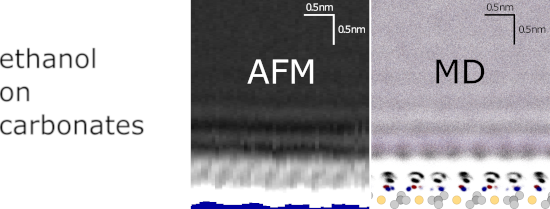
- reveals a qualitatively similar ethanol arrangement on both carbonates, indicating the general nature of this finding. Keywords: 3D AFM; calcite; ethanol; magnesite; MD simulation; solvation structure; Introduction Sedimentary rocks including the minerals calcite and magnesite are abundant constituents
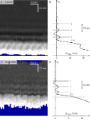
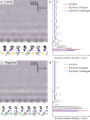
- reveals some minor differences that are within the variations typically seen for different tips. Thus, our experimental findings suggest these findings to be equally valid for the magnesite–ethanol interface. MD simulation results To allow for consistent comparisons between our experimental data and
- ethanol molecules throughout the production run of the simulation. In the graphs in Figure 2b and 2d, the atomic number density profiles for ethanol–carbon, hydroxy–oxygen and hydroxy–hydrogen atoms averaged from the data presented in the slice are shown. The density maxima for the hydroxy atoms directly

Simulations of the 2D self-assembly of tripod-shaped building blocks
Beilstein J. Nanotechnol. 2020, 11, 884–890, doi:10.3762/bjnano.11.73
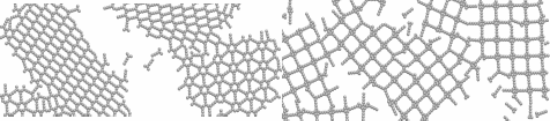
- as follows. In the next section, we describe our model and simulation details used in the course of our study. Then, we present the results of our simulations, which show various structures, depending on the molecular architecture, and their characterization. Finally, we briefly summarise our
- findings. Model and Simulation Details In this paper, we have used the same approach as in [37][39][40], which is a coarse-grained MD model, now extended to describe the behavior of tripod building blocks. One of the examples of chemical compounds with this molecular geometry is benzene-1,3,5-tricarboxylic
- latter means that the only attraction in the system is due to the interactions between active sites. The harmonic potential constants are equal to kbb ≡ kab = 1000ε/σ2 and kθ = 1000ε/rad2. All MD simulations have been performed in the NVT ensemble with the LAMMPS simulation package [42][43]. The standard


Transition from freestanding SnO2 nanowires to laterally aligned nanowires with a simulation-based experimental design
Beilstein J. Nanotechnol. 2020, 11, 843–853, doi:10.3762/bjnano.11.69
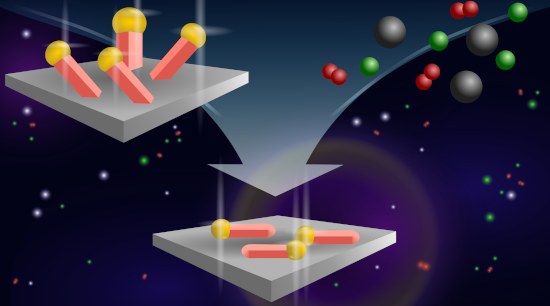
- laterally aligned nanowires, indicating that the nanowire growth takes place in a transient period of the gas exchange. Keywords: finite element method simulation; laterally aligned nanowires; planar growth; tin oxide; vapor–liquid–solid nanowire growth; Introduction Since the first reports in 1964 by
- process parameters for laterally aligned NWs [22][23]. The simulation should also provide information about the influence of modification to the volumetric flow and the process pressure for the systems reported in literature [15][16]. Therefore, we simulated a one-zone furnace instead of a two-zone
- better comparison with the studies of Wang et al. and Kim et al., we chose a one-zone furnace for simulation [15][16]. The temperature was not taken into account as the main influencing parameter in these simulations because the temperature range for laterally aligned NWs lies within the same temperature





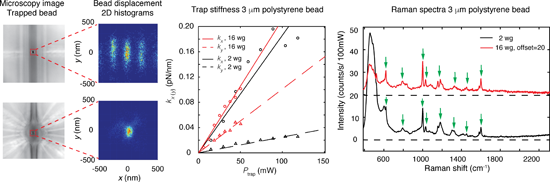
Integrated photonics multi-waveguide devices for optical trapping and Raman spectroscopy: design, fabrication and performance demonstration
Beilstein J. Nanotechnol. 2020, 11, 829–842, doi:10.3762/bjnano.11.68
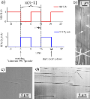
- scale) and the mass producibility. In [6], we presented a detailed simulation study of the trapping capabilities for extracellular vesicles (EVs) of the dual-waveguide trap we used in [5]. EVs are small cell-derived particles (diameter ranging from 30 to 1000 nm) and are important as potential
- index of silicon nitride, silicon oxide and water is chosen as nSi3N4 = 2.00, nSiO2 = 1.45, and nH20 = 1.33, respectively. To obtain the characteristics of the emitted beams, we follow the simulation approach of our previous work [6]. Figure 2a shows the longitudinal profiles of the energy density U of


Adsorption behavior of tin phthalocyanine onto the (110) face of rutile TiO2
Beilstein J. Nanotechnol. 2020, 11, 821–828, doi:10.3762/bjnano.11.67
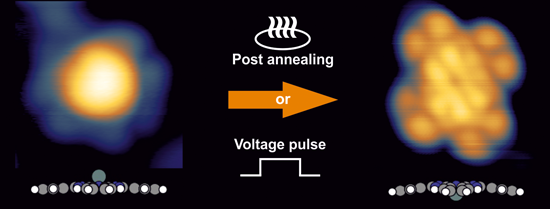
- ) 15 × 15 nm2, b) 9 × 9 nm2, c) 3.4 × 2.9 nm2; It = 15 pA; Utip = 1.6 V. Scale bars: a) 3 nm, b) 2 nm and c) 1 nm. a) RT-STM image of SnPc molecules in both geometries; b) LT-STM image of a molecule identified as Sn-down Pc; c) empty-state STM image simulation obtained for the lowest unoccupied


Quantitative determination of the interaction potential between two surfaces using frequency-modulated atomic force microscopy
Beilstein J. Nanotechnol. 2020, 11, 729–739, doi:10.3762/bjnano.11.60
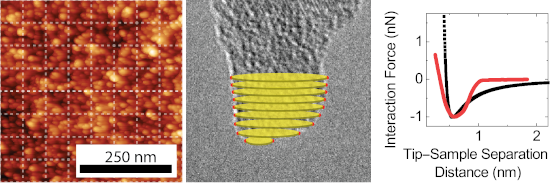
- experiments is often challenging as the measured adhesion and friction forces cannot provide direct mechanistic understanding of atomic-scale interactions that occur at the contact interface. Thus, it is often desirable to incorporate complementary atomistic simulation techniques [18][19][20][21] or contact


Effect of Ag loading position on the photocatalytic performance of TiO2 nanocolumn arrays
Beilstein J. Nanotechnol. 2020, 11, 717–728, doi:10.3762/bjnano.11.59
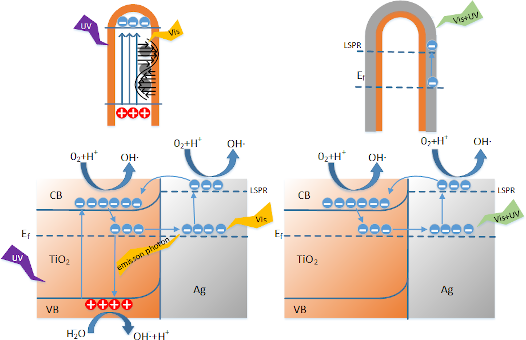
- efficiency of methylene blue (MB) compared with Ag-coated TiO2 (ACT) nanocolumn arrays and pure TiO2 nanocolumns arrays. Both experimental and theoretical simulation results demonstrated that the enhanced photocatalytic performance of AFT nanocolumn arrays was attributed to the surface plasmon resonance (SPR
- the influence of Ag loading position and deposition thickness on the photocatalytic reaction, we used a finite-difference time-domain (FDTD) simulation to study the electromagnetic field distribution of Ag-loaded TiO2 arrays with different structures. Figure 8 shows the simulation of the electric
- (c1–4) shows the results of the simulation of the AFT3 structure. The diameter of Ag particles in the nanocolumn is 8 nm, the distance between the horizontal and vertical spherical centers is 11 nm, the distance between the vertical spherical centers is 14 nm, and the diameter of Ag particles at the


Stochastic excitation for high-resolution atomic force acoustic microscopy imaging: a system theory approach
Beilstein J. Nanotechnol. 2020, 11, 703–716, doi:10.3762/bjnano.11.58
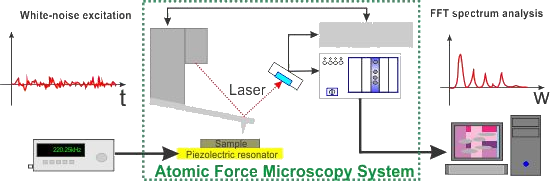
- presented and discussed. Equation 21 and Equation 27 are simulated with the following numerical data obtained from [28]: E = 169.7 GPa, I = 3.64 × 10⁻²² m4, c = 1 × 10⁻¹⁸ kg/ms and m = 4.08 × 10⁻⁷ kg/m. For the free cantilever, the simulation is shown in Figure 4a. In this figure, a difference in resonance
- cantilever that can be fitted best to these frequencies. For a cantilever in contact with the sample, the simulation is shown for three cantilevers with a contact stiffness of 10 N/m and different lengths of L = 300, 400 and 500 µm (Figure 4b). The behavior of the resonance frequencies is similar to that of
- cantilever with L = 400 µm is used and its contact stiffness is changed, it can be seen how the resonance frequencies increase with increasing contact stiffness. Three simulations are shown for contact stiffness values of = 1, 10 and 100 N/m (Figure 4c). The simulation results offer enough support for an