Search results
Search for "time dependent" in Full Text gives 233 result(s) in Beilstein Journal of Nanotechnology. Showing first 200.
Tight junction between endothelial cells: the interaction between nanoparticles and blood vessels
Beilstein J. Nanotechnol. 2016, 7, 675–684, doi:10.3762/bjnano.7.60
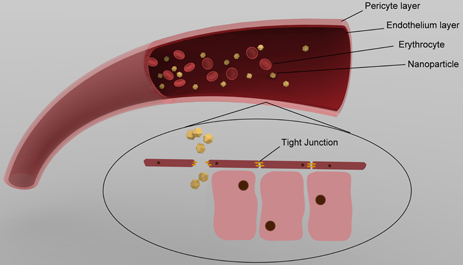
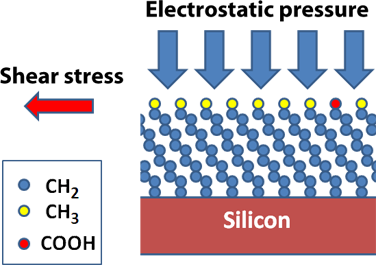
- bile duct ligation researchers suggested a relationship between the time-dependent down-regulation of the occludin expression and a time-dependent increase of superoxide radical levels in the brain [68]. Another factor, shear stress, different from normal stressors, exerts a perpendicular force on the

Unraveling the neurotoxicity of titanium dioxide nanoparticles: focusing on molecular mechanisms
Beilstein J. Nanotechnol. 2016, 7, 645–654, doi:10.3762/bjnano.7.57
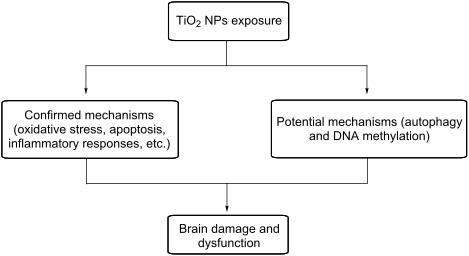
- ultimately be induced. Long et al. [19][20] first revealed in their in vitro studies that TiO2 NPs can induce dose- and time-dependent elevations in H2O2 levels in BV2 cells (an immortalized brain microglia cell line). BV2 internalized TiO2 NPs and subsequently swollen mitochondria were detected by
- found that prenatal exposure to TiO2 NPs could alter the expression of neurotransmitter genes as well as genes associated with apoptosis, OS, and psychiatric disorders. TiO2 NPs decreased cell viability in PC12 cells in a dose- and time-dependent manner by increasing the level of ROS and proportion of
Nanoscale effects in the characterization of viscoelastic materials with atomic force microscopy: coupling of a quasi-three-dimensional standard linear solid model with in-plane surface interactions
Beilstein J. Nanotechnol. 2016, 7, 554–571, doi:10.3762/bjnano.7.49
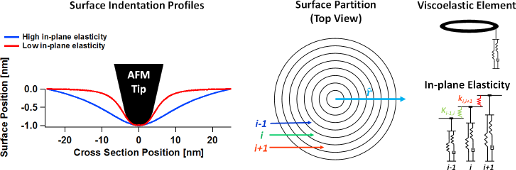
- the latter penetrates deeper into the surface. For a spherical tip, for example, each SLS element interacting with the tip follows a time-dependent relaxation similar to that of a simple SLS element [14][22], with a time delay for the onset of deformation and with decreasing indentation for each
- illustrates the time-dependent relaxation behavior of the surface element directly under the tip (Figure 8b), the oscillation amplitude and phase (Figure 8c and Figure 8d, respectively), the peak force within one fundamental oscillation (Figure 8e), and the maximum indentation within one fundamental


Charge and heat transport in soft nanosystems in the presence of time-dependent perturbations
Beilstein J. Nanotechnol. 2016, 7, 439–464, doi:10.3762/bjnano.7.39
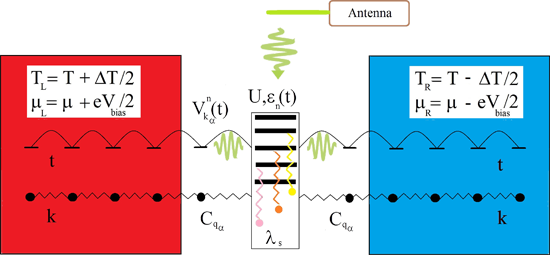
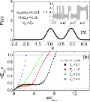
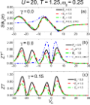
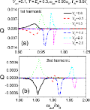
- . Effects of the electron–vibration coupling on the charge and heat transport of soft nanoscopic systems are theoretically investigated in the presence of time-dependent perturbations, such as a forcing antenna or pumping terms between the leads and the nanosystem. A well-established approach valid for non
- -equilibrium adiabatic regimes is generalized to the case where external time-dependent perturbations are present. Then, a number of relevant applications of the method are reviewed for systems composed by a quantum dot (or molecule) described by a single electronic level coupled to a vibrational mode. Results
- : Before introducing time-dependent perturbations, the range of validity of the adiabatic approach is discussed showing that a very good agreement with the results of an exact quantum calculation is obtained in the limit of low level occupation. Then, we show that the interplay between the low frequency






Hemolysin coregulated protein 1 as a molecular gluing unit for the assembly of nanoparticle hybrid structures
Beilstein J. Nanotechnol. 2016, 7, 351–363, doi:10.3762/bjnano.7.32
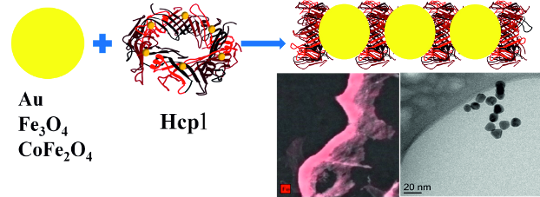
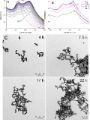
- network as a catalyst in the reduction reaction of 4-nitrophenol. The reduction of 4-nitrophenol to 4-aminophenol is a standard reaction to evaluate the catalytic reactivity of NPs [34]. The evaluation is based on the time-dependent absorbance decrease of the 4-nitrophenol cation at 400 nm. The absorbance
- network. A) UV–vis spectra of a 4-nitrophenol solution at different reaction times after the addition of the catalyst showing decreased absorbance. B) The time-dependent absorbance change at 400 nm in a mixture with pure Au NPs and the Au network as catalyst. A) and B) SEM image and EDX analysis of Fe3O4




Molecular machines operating on the nanoscale: from classical to quantum
Beilstein J. Nanotechnol. 2016, 7, 328–350, doi:10.3762/bjnano.7.31
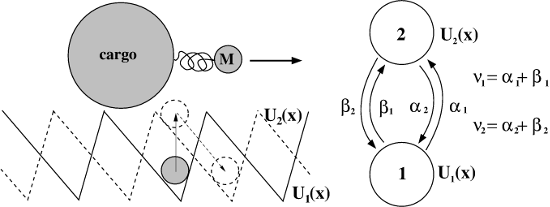
- directed currents due to broken time–space symmetries has been born. In an immediate follow-up work [44], we have, however, observed that in the above case, the directed current is produced only by breaking the time-reversal symmetry by time-dependent driving, but not otherwise. The breaking of the spatial
- modulation of the energy levels is now analyzed. The physical background of the idea of adiabatic operation is sound. However, can it be realized in popular models characterized by discrete energy levels? The minimalist model contains just one time-dependent energy

![[Graphic 40]](/bjnano/content/inline/2190-4286-7-31-i86.png?max-width=637&scale=1.18182) with depth ε. Bias Δμ < 0 per one rotation tur...
with depth ε. Bias Δμ < 0 per one rotation tur...

![[Graphic 48]](/bjnano/content/inline/2190-4286-7-31-i94.png?max-width=637&scale=1.18182) , for the most asymmetric sawtooth mod...
, for the most asymmetric sawtooth mod...


Time-dependent growth of crystalline Au0-nanoparticles in cyanobacteria as self-reproducing bioreactors: 2. Anabaena cylindrica
Beilstein J. Nanotechnol. 2016, 7, 312–327, doi:10.3762/bjnano.7.30
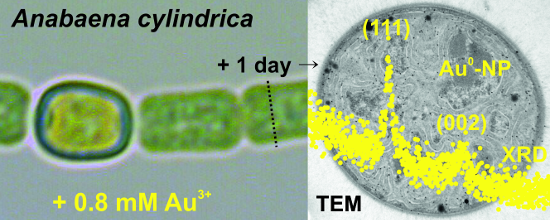
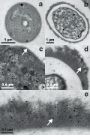
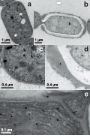
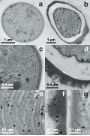
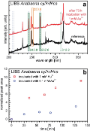
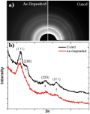
- (XRD), transmission electron microscopy (TEM) and laser-induced breakdown spectroscopy (LIBS) are applied to monitor the time-dependent development of gold nanoparticles for up to 40 hours. Some vegetative cells (VC) are filled with nanoparticles within minutes, while the extracellular polymeric
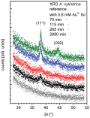
- observation of XRD and TEM that nanoparticle formation takes place in the first few hours after exposure to Au3+. As seen in Figure 6 the amount of gold is continuously increasing over the first two hours for Anabaena cylindrica. The time-dependent development seems to be the same for a ten times smaller
- . The time-dependent growth of nanoparticles and the distribution of their size were examined for the first time on a time scale of hours up to at least two days of incubation. TEM reveals a large variation between individual cells and most nanoparticles are found in vegetative cells and not in the



A simple and efficient quasi 3-dimensional viscoelastic model and software for simulation of tapping-mode atomic force microscopy
Beilstein J. Nanotechnol. 2015, 6, 2233–2241, doi:10.3762/bjnano.6.229
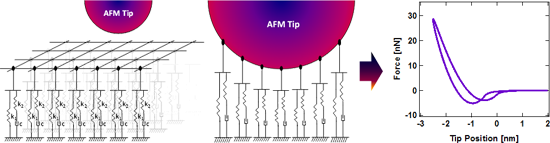
- analytical models cannot reproduce stress relaxation and creep [10][11]. Within AFM, this means that when the tip and sample are held in contact at a fixed relative position, the model must exhibit a time-dependent reduction in the stress (stress relaxation). Additionally, when the tip and sample are held in
- contact at a fixed stress, the model must exhibit a time-dependent relaxation of the position of the sample directly under the tip. That is, the sample must yield, allowing the tip to gradually increase the depth of indentation. Furthermore, if the tip is quickly removed following yielding of the surface



Magnetic reversal dynamics of a quantum system on a picosecond timescale
Beilstein J. Nanotechnol. 2015, 6, 1946–1956, doi:10.3762/bjnano.6.199
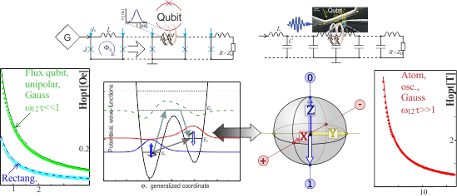
- the stationary states and , respectively, and the time-dependent probability amplitudes of the eigenstates a(t) and b(t) obey the condition |a(t)|2 + |b(t)|2 = 1. We suppose (see Figure 1) that at t = tin an external magnetic field, H(t), directed along the OX axis, starts to act on the system and
- (when ωl = 0) became critical in recent years in connection with the possibility to create magnetic field pulses of picosecond duration [16]. The time-dependent field is then given by: In matrix notation the problem looks quite simple: where . In the general case, this problem cannot be analytically
- solved due to the presence of the complex exponential function. We seek the approximate solution of Equation 10 in the form of the matrix exponential representation: where the matrix exponent can be understood as a sum where the time-dependent matrix A(t) obeys the differential equation . The solution




Synthesis, characterization and in vitro effects of 7 nm alloyed silver–gold nanoparticles
Beilstein J. Nanotechnol. 2015, 6, 1212–1220, doi:10.3762/bjnano.6.124
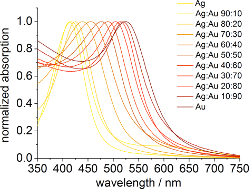
- is possible that a passivating effect from the alloyed gold is responsible for these observations. Future studies on the time-dependent dissolution of such alloyed nanoparticles in biological media may help to better understand this effect. Experimental Chemicals We used silver nitrate (Roth, p.a


Tunable magnetism on the lateral mesoscale by post-processing of Co/Pt heterostructures
Beilstein J. Nanotechnol. 2015, 6, 1082–1090, doi:10.3762/bjnano.6.109
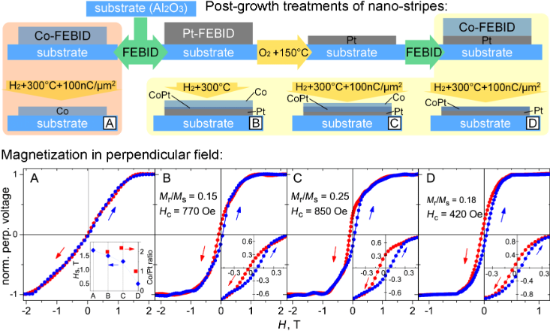
- °C, and dropped to 70–90 μΩ·cm after 10 oxygen pulses. Figure 3 depicts the time-dependent normalized conductance of the Pt layer of sample C during the purification process. The post-processed Pt layers exhibited a nano-porous structure and a reduction of height from 50 ± 1.5 nm to 11 ± 1.5 nm, as
- in this work. Throughout the text the samples are referred to by their labels A, B, C, and D, as indicated. SEM images of the samples. The 500 × 860 nm2 insets show the morphology of the post-processed Co/Pt FEBID nano-stripes in the middle of the overlap of the nano-stripes. Time-dependent


From lithium to sodium: cell chemistry of room temperature sodium–air and sodium–sulfur batteries
Beilstein J. Nanotechnol. 2015, 6, 1016–1055, doi:10.3762/bjnano.6.105
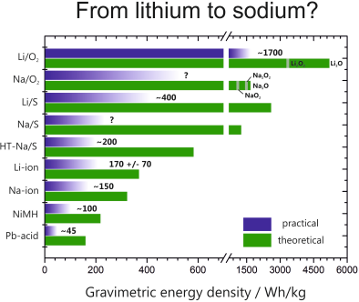
- different discharge products decompose at different potentials during charging. The matrix certainly includes some simplifications: side reactions might be time dependent, the voltage profile can change during cycling, overpotential increases with current density, etc. However, the matrix allows for a


Effects of swift heavy ion irradiation on structural, optical and photocatalytic properties of ZnO–CuO nanocomposites prepared by carbothermal evaporation method
Beilstein J. Nanotechnol. 2015, 6, 928–937, doi:10.3762/bjnano.6.96
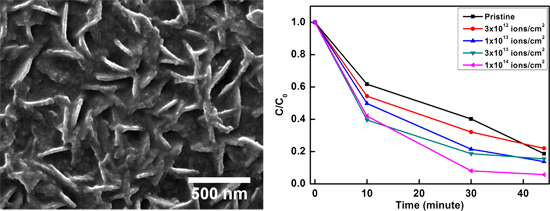
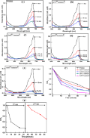
- estimating the band gap energies. Raman spectra from pristine and irradiated ZnO–CuO nanocomposite samples. Growth mechanism of ZnO nanorods and nanosheets in the nanocomposites. (a–e) UV–visible absorption spectra showing the sun-light-driven time-dependent photocatalytic degradation of MB dye through
- pristine and irradiated ZnO–CuO nanocomposite samples as photocatalysts. (f) Kinetics of the photocatalytic degradation of MB shown through time dependent variation of C/C0. (g) Repetitive tests using 3 × 10¹³ ions/cm2 irradiated sample for two runs of photocatalytic degradation studies on MB dye. (a–d) UV
- -visible absorption spectra showing sun light driven time dependent photocatalytic degradation of MO dye using the pristine and irradiated ZnO-CuO nanocomposite samples as photocatalysts. (e) Kinetics of photocatalytic degradation of MO dye shown through time dependent variation of C/C0. (f) Repetitive


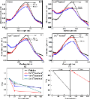

Electron-stimulated purification of platinum nanostructures grown via focused electron beam induced deposition
Beilstein J. Nanotechnol. 2015, 6, 907–918, doi:10.3762/bjnano.6.94
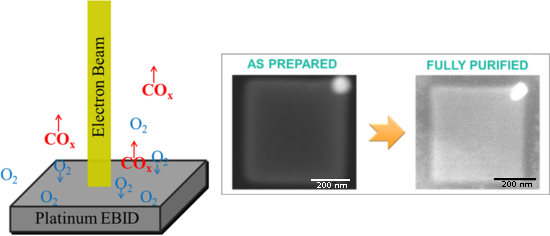
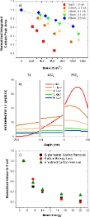
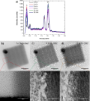
- -deposition electron exposure treatment in a localized oxygen ambient at room temperature. Time-dependent studies demonstrate that the process occurs from the top–down. Electron beam energy and current studies demonstrate that the process is controlled by a confluence of the electron energy loss and oxygen




Protein corona – from molecular adsorption to physiological complexity
Beilstein J. Nanotechnol. 2015, 6, 857–873, doi:10.3762/bjnano.6.88
- compositional changes has been shaped by Vroman in 1962 [164] who described the time-dependent composition of a protein layer. This description is commonly referred to as “Vroman effect” and it suggests that the bound protein layer is dominated by highly abundant proteins at short exposure times which are later
- all consisting of HSA with just minor chemical modifications as described above. Internalization of HSAam-coated NPs by the cells was completely suppressed within the sensitivity limits of their experiment. In addition the time-dependent NP uptake by HeLa cells was investigated, using spinning disk



Production, detection, storage and release of spin currents
Beilstein J. Nanotechnol. 2015, 6, 736–743, doi:10.3762/bjnano.6.75
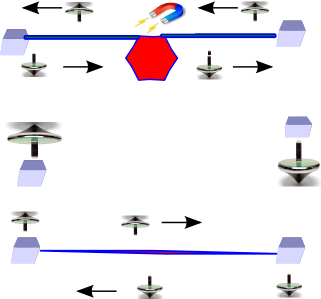
- the connection is not symmetric. Moreover, properly connected rings can be used to pump currents in the wires giving raise to a number of interesting new phenomena. At half filling using a time-dependent magnetic field in the plane of the ring one can pump a pure spin current, excited by the the spin
- driven by a time-dependent magnetic field. Geometry and dynamics of spin current generation In this Section, I recall the Hamiltonian Hprod, the same as in [12], which, in the half filling case, describes the magnetic production of the spin current based on a quantum pumping effect in the absence of an
- on spin and is: with the Bohr magneton μB = 5.79375 · 10−5 eV/T. The time-dependent field lies in the plane of the ring and has no flux through it. However, it couples to the electron spins in the ring, where the magnetic spin-flip combined with the spin–orbit interaction excites the spin current



Entropy effects in the collective dynamic behavior of alkyl monolayers tethered to Si(111)
Beilstein J. Nanotechnol. 2015, 6, 583–594, doi:10.3762/bjnano.6.60
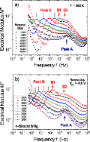
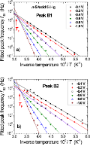
- ] and measurements can be performed in a well-defined metal/OML/semiconductor planar configuration, which is relevant for molecular electronics devices. Admittance spectroscopy provides insights in the modulation of localized charge density and dipole reorientation in a system submitted to a time
- -dependent electric field. Dissipation (energy loss) mechanisms can be described by using equivalent representations of the complex admittance, including the dielectric permittivity ε* and electrical modulus M*. Dipole reorientation requires an activation of the system with energy barriers related either to




Dynamic force microscopy simulator (dForce): A tool for planning and understanding tapping and bimodal AFM experiments
Beilstein J. Nanotechnol. 2015, 6, 369–379, doi:10.3762/bjnano.6.36
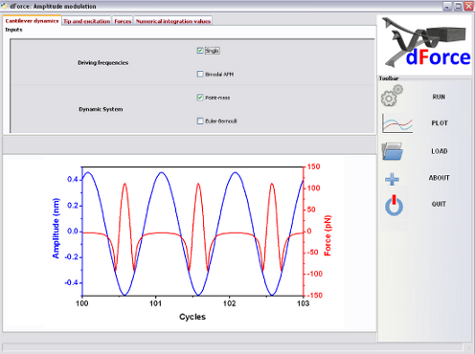
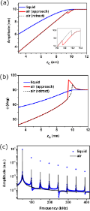
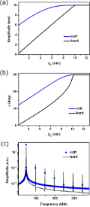
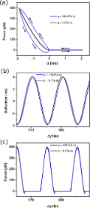
- the time-dependent, vertical displacement of the differential beam’s element placed at the x position. To numerically solve the above equation, we replace it by a system of point-mass equations, one for each relevant mode, n = 1, 2, etc. as described by [16][44][45] with m = 0.25·mc and 1 + cos (κn
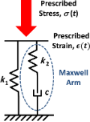
- Paulo [51] combines the relationship between the stress and strain given by the Kelvin–Voigt model and the sample deformation given by Hertz contact mechanics as where η is the viscosity coefficient. Standard linear solid viscoelastic model (SLS) The SLS model is considered to represent the time
- -dependent behavior of a viscoelastic material without residual strains [52]. The model characterizes a viscoelastic material as an elastic element, which is coupled in series with a system that includes another elastic element and a viscous response. The equivalent mechanical system is a spring in series




Comparative evaluation of the impact on endothelial cells induced by different nanoparticle structures and functionalization
Beilstein J. Nanotechnol. 2015, 6, 300–312, doi:10.3762/bjnano.6.28
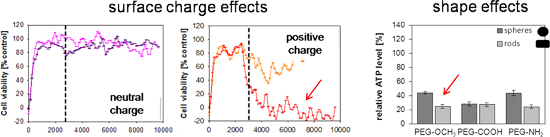
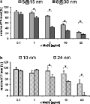
- MnO and Fe3O4, again, those with an elongated shape (Au@MnO and Au@Fe3O4, Figure 1b and Figure 1c) led to a stronger reduction of ATP levels than the spherical ones in a time-dependent manner. In general, the MnO-based nanoparticles and nanoparticles with NH2-functionalization had a stronger impact on




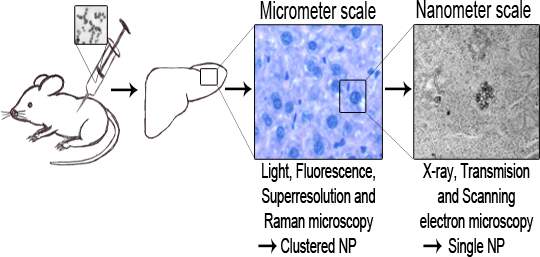
Overview about the localization of nanoparticles in tissue and cellular context by different imaging techniques
Beilstein J. Nanotechnol. 2015, 6, 263–280, doi:10.3762/bjnano.6.25
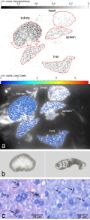
- surface functionalization and binding of other molecules of interest may remain completely similar to that of unlabeled particles [79][83][84]. Another disadvantage when using fluorescent dyes is their time-dependent photobleaching, which results in a more or less rapid fading of the fluorescent yield [85



Release behaviour and toxicity evaluation of levodopa from carboxylated single-walled carbon nanotubes
Beilstein J. Nanotechnol. 2015, 6, 243–253, doi:10.3762/bjnano.6.23
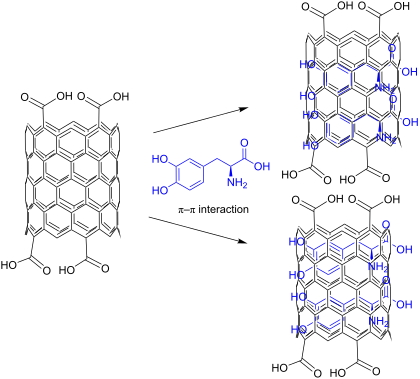
- with the free drug (LD) in a dose- and time-dependent manner at concentrations of 0 μg mL−1 (control) to 50 μg mL−1. The LD compound demonstrates a sustained decrease in cell viability with increasing concentration at each time point. This observation is comparable with the results published by




Mechanical properties of MDCK II cells exposed to gold nanorods
Beilstein J. Nanotechnol. 2015, 6, 223–231, doi:10.3762/bjnano.6.21
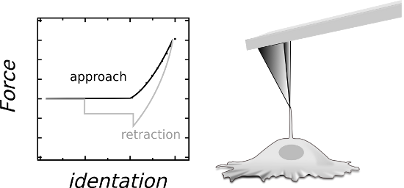
- migration, proliferation and tissue formation [19][20]. Mechanical behavior of living cells can be monitored spatially resolved in a concentration and time dependent manner using scanning probe techniques. It is possible to investigate local cellular elastic properties under physiological conditions using


Kelvin probe force microscopy in liquid using electrochemical force microscopy
Beilstein J. Nanotechnol. 2015, 6, 201–214, doi:10.3762/bjnano.6.19
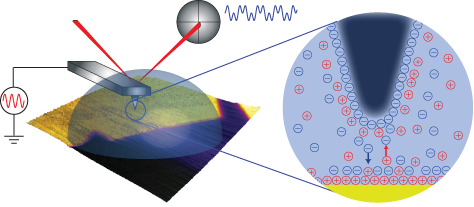
- electrostatic measurements in both ionically-active and -inactive liquids. EcFM is employed to detect the bias- and time-dependent electrostatic and electrochemical forces between probe and sample under ambient, non-polar (ionically-inactive decane) and polar (ionically-active isopropanol, milli-Q water and
- aqueous NaCl) environments. The measurement of bias- and time-dependent ion dynamics allows different electrokinetic phenomena to be separated and a set of environmental and measurement timescale requirements for determining CPD under conditions comparable with KPFM to be delineated. Finally, the
- electrostatic response, or more generally when the force experienced by the system is governed purely by the time-independent Maxwell stress tensor directly related to the charge density between probe and sample [58]. The data can be presented as an EcFM spectra representing the bias- and time-dependent for a


![[Graphic 6]](/bjnano/content/inline/2190-4286-6-19-i11.png?max-width=637&scale=1.18182) response collected 200 nm above a grounded Au electrode in (a, b, c) air, (d, e, f) decane an...
response collected 200 nm above a grounded Au electrode in (a, b, c) air, (d, e, f) decane an...


![[Graphic 22]](/bjnano/content/inline/2190-4286-6-19-i27.png?max-width=637&scale=1.18182) spectra [bias-on] collected 500 nm above HOPG in aqueous solutions of increasing salt concent...
spectra [bias-on] collected 500 nm above HOPG in aqueous solutions of increasing salt concent...

![[Graphic 25]](/bjnano/content/inline/2190-4286-6-19-i30.png?max-width=637&scale=1.18182) spectra [bias-on] collected 500 nm above (a) HOPG and (b) Au in milli-Q water (vertical color...
spectra [bias-on] collected 500 nm above (a) HOPG and (b) Au in milli-Q water (vertical color...

![[Graphic 27]](/bjnano/content/inline/2190-4286-6-19-i32.png?max-width=637&scale=1.18182) spectra [bias-on] recorded 500 nm above a HOPG/Au boundary in milli-Q water. T...
spectra [bias-on] recorded 500 nm above a HOPG/Au boundary in milli-Q water. T...

Increasing throughput of AFM-based single cell adhesion measurements through multisubstrate surfaces
Beilstein J. Nanotechnol. 2015, 6, 157–166, doi:10.3762/bjnano.6.15
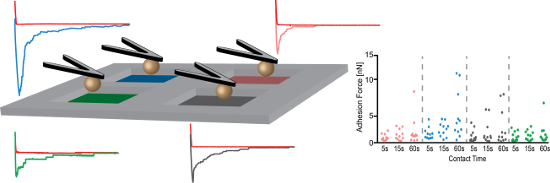
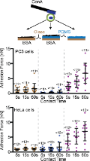
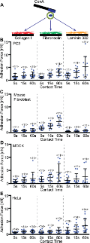
- mouse kidney fibroblast showed very low adhesion to collagen I and laminin 332, but high adhesion to fibronectin. This indicates that cell lines express different patterns of CAMs. Besides the cell line-dependent adhesion forces, contact time-dependent strengthening also differed between cell lines


Functionalization of α-synuclein fibrils
Beilstein J. Nanotechnol. 2015, 6, 124–133, doi:10.3762/bjnano.6.12
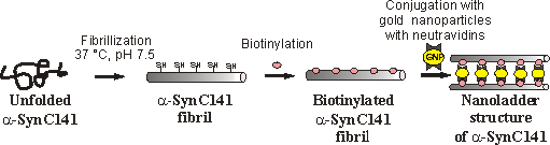
- attachment of gold nanoparticles to fibrils formed by α-SynC141 (Figure 3). The assembly process was found to be time dependent. After 24 hours of incubation, neutravidin-conjugated nanoparticles were found evenly scattered among the biotinylated fibrils. A number of fibrils involved in the nanoladder