


Search results
Search for "visible light" in Full Text gives 240 result(s) in Beilstein Journal of Nanotechnology. Showing first 200.
Application of visible-light photosensitization to form alkyl-radical-derived thin films on gold
Beilstein J. Nanotechnol. 2017, 8, 1863–1877, doi:10.3762/bjnano.8.187
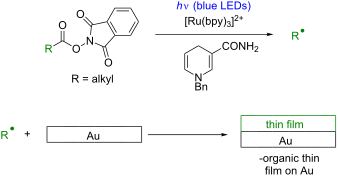
- Dallas, 800 W. Campbell Rd., Richardson, TX, 75080, USA Department of Materials Science, University of Texas at Dallas, 800 W. Campbell Rd., Richardson, TX, 75080, USA 10.3762/bjnano.8.187 Abstract Visible-light irradiation of phthalimide esters in the presence of the photosensitizer [Ru(bpy)3]2+ and
- the stoichiometric reducing agent benzyl nicotinamide results in the formation of alkyl radicals under mild conditions. This approach to radical generation has proven useful for the synthesis of small organic molecules. Herein, we demonstrate for the first time the visible-light photosensitized
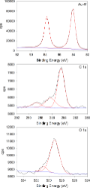
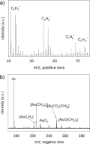
- deposition of robust alkyl thin films on Au surfaces using phthalimide esters as the alkyl radical precursors. In particular, we combine visible-light photosensitization with particle lithography to produce nanostructured thin films, the thickness of which can be measured easily using AFM cursor profiles



Synthesis and functionalization of NaGdF4:Yb,Er@NaGdF4 core–shell nanoparticles for possible application as multimodal contrast agents
Beilstein J. Nanotechnol. 2017, 8, 1815–1824, doi:10.3762/bjnano.8.183
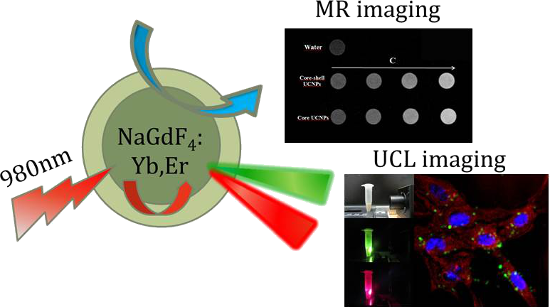
- visible light, have been extensively investigated due to the advantages associated with their unique optical properties [1]. Compared with traditional semiconductor quantum dots (QDs) or organic fluorophores, UCNPs show superior features such as sharp emission peaks, low toxicity, high photochemical


Three-in-one approach towards efficient organic dye-sensitized solar cells: aggregation suppression, panchromatic absorption and resonance energy transfer
Beilstein J. Nanotechnol. 2017, 8, 1705–1713, doi:10.3762/bjnano.8.171
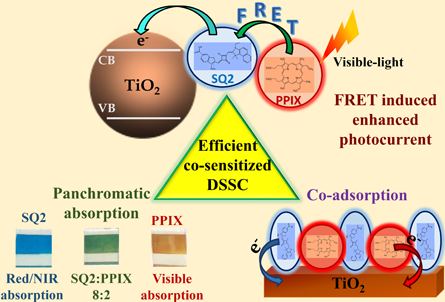
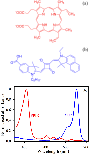
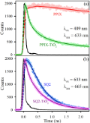
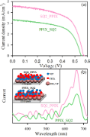
- visible light and transfer the energy to SQ2, followed by electron injection from SQ2 to TiO2 in SQ2_PPIX which lead us to get a increased photocurrent. The process of FRET is not much facile in PPIX_SQ2 as the first active layer of sensitizer is the donor itself, in that case. It can also be demonstrated



Two-dimensional carbon-based nanocomposites for photocatalytic energy generation and environmental remediation applications
Beilstein J. Nanotechnol. 2017, 8, 1571–1600, doi:10.3762/bjnano.8.159
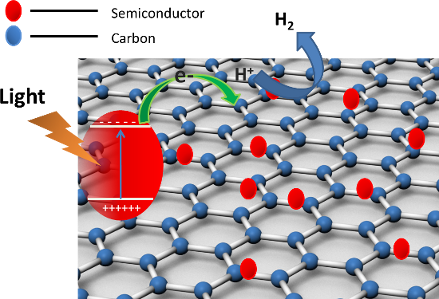
- -C3N4 makes it a multifunctional photocatalytic material [64]. Therefore, g-C3N4 has attracted immense attention mainly for photocatalytic hydrogen generation reactions and pollutant removal by harvesting visible light due to its suitable band gap energy (≈2.7 eV) [65][66]. Hence this material possesses
- high photocatalytic efficiency under visible light, which constitutes about 43% of the solar energy spectrum as compared to ultraviolet light (5%). Moreover, the CB and VB of g-C3N4 are suitably positioned with appropriate potential (CB = −1.13 eV, VB = 1.57 eV), which favours various photocatalytic
- positions are summarized in Figure 5 [103]. As it is well known, the band gap and wavelength are directly related to each other, and suitable band gap engineering is required to make photocatalysts active in the visible light region of the spectrum. The overall water splitting reaction on the surface of a


Fixation mechanisms of nanoparticles on substrates by electron beam irradiation
Beilstein J. Nanotechnol. 2017, 8, 1523–1529, doi:10.3762/bjnano.8.153
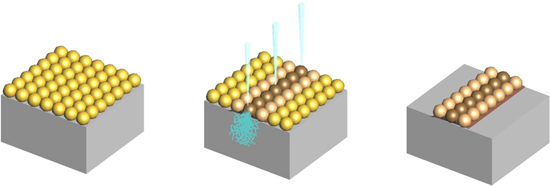
- particular, arrays of gold or silver nanostructures can be used for such waveguides, as nanostructures made of these materials interact with visible light. Such LSPR structures would make the development of smaller optical circuits and devices possible. Plasmon propagation through nanowires or rows of



Light-induced magnetoresistance in solution-processed planar hybrid devices measured under ambient conditions
Beilstein J. Nanotechnol. 2017, 8, 1502–1507, doi:10.3762/bjnano.8.150
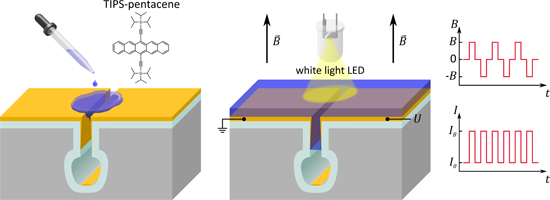
- illumination. Vollmer et al. showed [15], by investigating the occupied electronic states using ultraviolet photoemission spectroscopy, that the diffusion of molecular oxygen and water from the ambient into pentacene layers is reversible when the air exposure takes place in the dark or under visible light. The


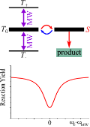
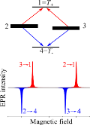
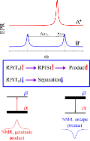
Spin-chemistry concepts for spintronics scientists
Beilstein J. Nanotechnol. 2017, 8, 1427–1445, doi:10.3762/bjnano.8.143



Enhanced catalytic activity without the use of an external light source using microwave-synthesized CuO nanopetals
Beilstein J. Nanotechnol. 2017, 8, 1167–1173, doi:10.3762/bjnano.8.118
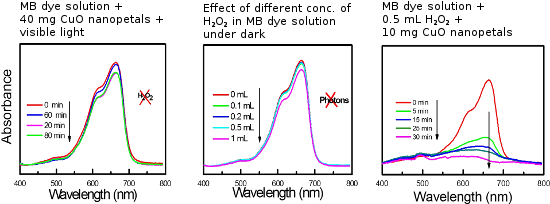
- application of an external light source and also under dark conditions for the degradation of hazardous dyes such as methylene blue and rhodamine B. We report enhanced catalytic activity of the synthesized CuO nanopetals, even without the use of an external light source (UV/visible light) for the degradation
- activity of CuO nanopetals activated by irradiation with photons (visible light) in the absence of H2O2 is also studied and compared with the activity under dark conditions. Results and Discussion Structural and morphological study Figure 1a illustrates X-ray diffraction (XRD) patterns of CuO nanomaterials
- out to investigate the effect of different concentrations of H2O2 for MB degradation in the absence of CuO nanopetals (catalyst) without any irradiation (UV/visible light). Figure 2c shows the UV–vis absorption spectra for different concentrations of H2O2 in MB solution, without catalyst, after one


Growth, structure and stability of sputter-deposited MoS2 thin films
Beilstein J. Nanotechnol. 2017, 8, 1115–1126, doi:10.3762/bjnano.8.113
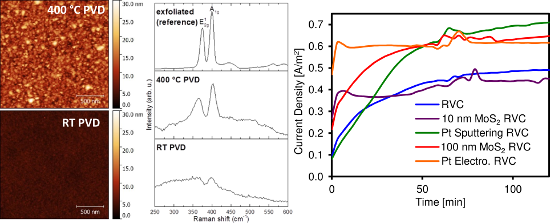
- density, whereas the in-plane ordering remains unaffected. Stability of MoS2 thin films deposited at RT and 400 °C In view of practical applications the stability of the sputter deposited MoS2 thin films is of importance. Possible degradation scenarios include exposure to visible light radiation or
- exposed to visible light radiation and local temperature increase. Electrical properties of MoS2 thin films In order to investigate the electrical properties of our PVD MoS2 films on the SiO2-covered Si substrates two types of FET devices with rectangular and circular source and drain contacts were


ZnO nanoparticles sensitized by CuInZnxS2+x quantum dots as highly efficient solar light driven photocatalysts
Beilstein J. Nanotechnol. 2017, 8, 1080–1093, doi:10.3762/bjnano.8.110
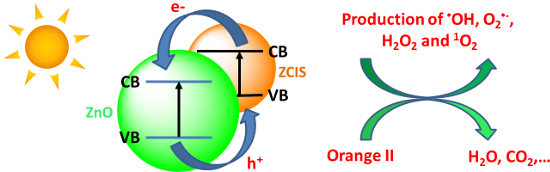
- bandgap (≈3.2–3.3 eV) restricts light activation to the UV range (which accounts for only ≈4% of the solar spectrum) for the generation of the charge carriers responsible for the surface redox reactions. To improve the efficient use of solar light, visible-light-responsive photocatalysts should be
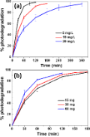
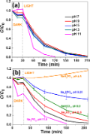
- both under solar and visible light illumination (light intensity = 5 mW/cm2) of all the ZnO/ZCIS composites prepared, we selected Orange II dye as a model contaminant because this dye is not a photosensitizer (in contrast to Methylene Blue or Rhodamine which promote photocatalytic degradation). Prior





Synthesis of graphene–transition metal oxide hybrid nanoparticles and their application in various fields
Beilstein J. Nanotechnol. 2017, 8, 688–714, doi:10.3762/bjnano.8.74
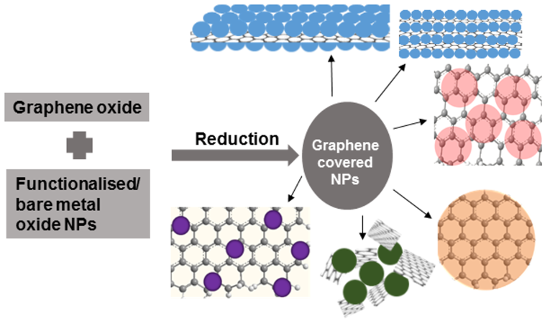
- excellent thermal (≈5000 W·m−1·K−1) [6] and electrical conductivity (up to 6000 S·cm−1) [7] and high theoretical specific surface area (2630 m2·g−1) [8]. Graphene is highly optically transparent (transmittance ≈97.7%) with absorption of <2.3% for visible light [9] and negligible reflectance (<0.1






Computing the T-matrix of a scattering object with multiple plane wave illuminations
Beilstein J. Nanotechnol. 2017, 8, 614–626, doi:10.3762/bjnano.8.66

- notable electric and magnetic dipole moment in the visible-light range. To calculate the T-matrix numerically we illuminate the sphere with the appropriate number of plane waves K. The wave vectors are chosen, such that they are evenly distributed in all directions. They can be considered as normal


Fabrication of black-gold coatings by glancing angle deposition with sputtering
Beilstein J. Nanotechnol. 2017, 8, 434–439, doi:10.3762/bjnano.8.46
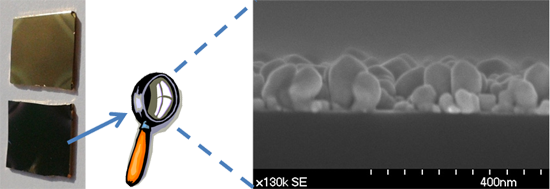
- obtained at high tilt angle. As a result, the nanostructured sample exhibits absorption above 60% over the whole visible-light range, slightly decreasing to 50% in the nIR region. Conclusion It has been shown that black-gold coatings in the visible range can be fabricated by means of sputtering using


Performance of natural-dye-sensitized solar cells by ZnO nanorod and nanowall enhanced photoelectrodes
Beilstein J. Nanotechnol. 2017, 8, 287–295, doi:10.3762/bjnano.8.31
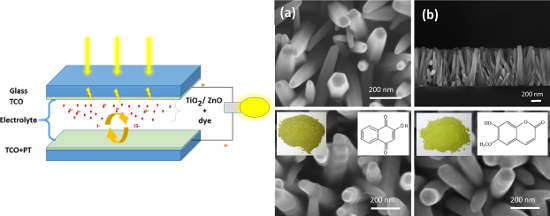
- as a dye in the cosmetics industry. The most significant feature of the lawsone molecule is its ability to absorb visible light between 400 and 600 nm. The FTIR spectrum of henna extract, presented in Figure 4a, shows the existence of three valence bands associated with C=C aromatics at 1338 cm−1


Photocatalysis applications of some hybrid polymeric composites incorporating TiO2 nanoparticles and their combinations with SiO2/Fe2O3
Beilstein J. Nanotechnol. 2017, 8, 272–286, doi:10.3762/bjnano.8.30
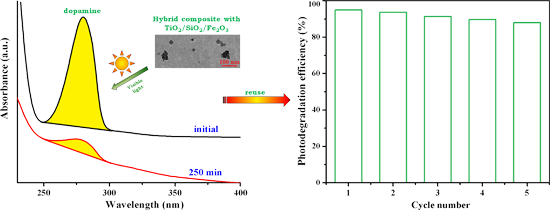
- phenol, hydroquinone and dopamine in aqueous solution under UV or visible-light irradiation. The best results were obtained for the films with TiO2/Fe2O3 or TiO2/SiO2/Fe2O3 NPs. The degradation of the mentioned model pollutants varied between 71% and 100% (after 250 min of irradiation) depending on the
- composition of the hybrid film tested and the light applied (UV–visible light). Also, it was established that such hybrid films can be reused at least for five cycles, without losing too much of the photocatalytic efficiency (ca. 7%). These findings could have implications in the development of new
- separation and recycling of photocatalyst particles from aqueous suspension can appear. In order to eliminate or at least diminish the limitations mentioned, many studies were directed on obtaining TiO2-based materials that are active under solar/visible light. It has been demonstrated that the increase of


Colorimetric gas detection by the varying thickness of a thin film of ultrasmall PTSA-coated TiO2 nanoparticles on a Si substrate
Beilstein J. Nanotechnol. 2017, 8, 229–236, doi:10.3762/bjnano.8.25
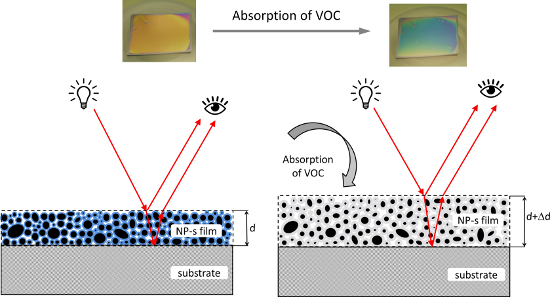
- caused by the periodic variation of the refractive index [2]. Tuneable optical properties in opals are observed by the shift of the Bragg reflection peak of visible light, or by varying the refractive index contrast by liquid or gas infiltration in inverse opals [3][4][5]. The latter demonstrate an


Performance of colloidal CdS sensitized solar cells with ZnO nanorods/nanoparticles
Beilstein J. Nanotechnol. 2017, 8, 210–221, doi:10.3762/bjnano.8.23
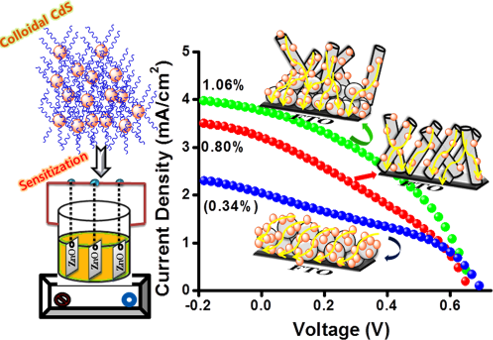
- characteristics of the colloidal CdS-sensitized ZnO-P, ZnO-R and ZnO-R+P films measured within the bias voltage −10 V to +10 V in visible light is shown in Supporting Information File 1, Figure S3, exhibiting ohmic response. I–V characteristics also sustain higher current generation for 1D ZnO-R than ZnO-P


Optical and photocatalytic properties of TiO2 nanoplumes
Beilstein J. Nanotechnol. 2017, 8, 190–195, doi:10.3762/bjnano.8.20
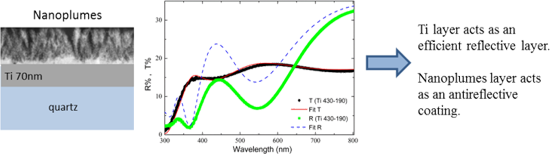
- synthesize black TiO2 with a large optical absorption in the visible and infrared region [15][16][17][18]. The amorphous shell on a crystalline nanoparticle core, causes the formation of intragap states [19], which are responsible for the high absorption of visible light (and consequently of the black color
- Ti films as an easy, rapid, and low-cost method to synthesize hydrogenated TiO2 nanoplumes with significant photocatalytic properties under UV and visible light irradiation. Here we report the optical properties of the TiO2 nanoplumes and their correlation with the efficiency of UV photodegradation


Influence of hydrofluoric acid treatment on electroless deposition of Au clusters
Beilstein J. Nanotechnol. 2017, 8, 183–189, doi:10.3762/bjnano.8.19
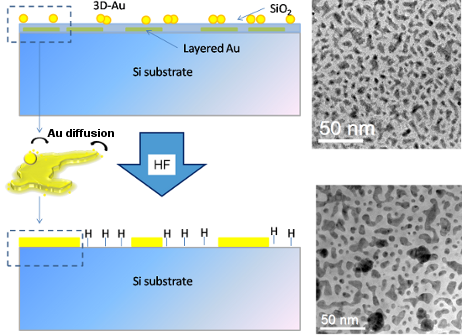
- excellent at scattering and absorbing visible light [6][7][8]. For these reasons, they have found an interesting application in the field of metal–semiconductor hybrid structures for solar energy conversion [9][10]. Among the different adopted methods to deposit Au nanoclusters on a substrate, electroless


Effect of Anderson localization on light emission from gold nanoparticle aggregates
Beilstein J. Nanotechnol. 2016, 7, 2013–2022, doi:10.3762/bjnano.7.192
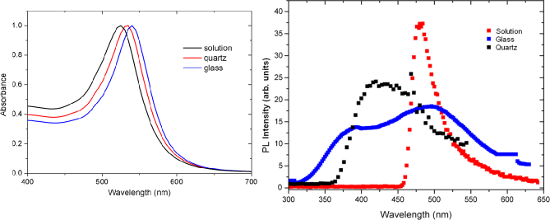
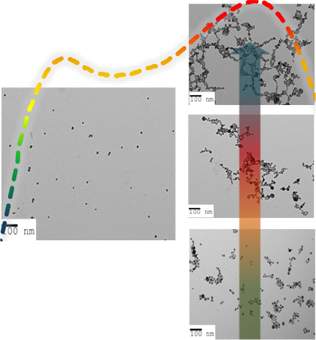
- phenomenon characterizing aggregates of metallic nanostructures. The electromagnetic energy of visible light can be localized inside nanostructures below the diffraction limit by converting the optical modes into nonradiative surface plasmon resonances. The energy of the confined photons is correlated to the


Role of RGO support and irradiation source on the photocatalytic activity of CdS–ZnO semiconductor nanostructures
Beilstein J. Nanotechnol. 2016, 7, 1684–1697, doi:10.3762/bjnano.7.161
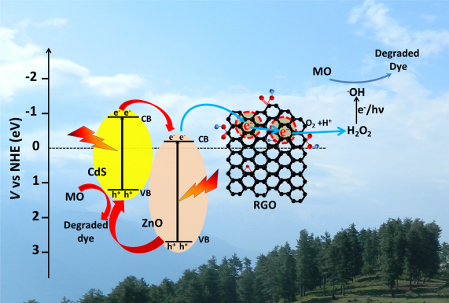
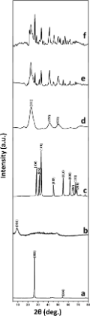
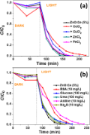
- characterized using different spectroscopic and microscopic techniques. The photocatalytic activity was evaluated by studying the degradation of a model dye (methyl orange, MO) under visible light (only) irradiation and under natural sunlight. The results reveal that the RGO-supported CdS–ZnO photocatalyst
- performs considerably better than the unsupported CdS–ZnO nanostructures. In addition, both the catalysts perform significantly better under natural sunlight than under visible light (only) irradiation. In essence, this work paves way for tailoring the photocatalytic activity of semiconductor
- radiation [17]. Due to this high band gap value, ZnO can only absorb ultraviolet (UV) light and this limits its practical applications [18]. Thus, in order to design more efficient photocatalysts, which are active in visible light, many research groups have devoted their studies towards dye sensitization





High performance Ce-doped ZnO nanorods for sunlight-driven photocatalysis
Beilstein J. Nanotechnol. 2016, 7, 1338–1349, doi:10.3762/bjnano.7.125
- been developed and their ability to degrade cyanide anions [28] or organic dyes [29][30][31][32][33] like methylene blue or methyl-orange has been demonstrated. The preparation of Ce–Cu, Ce–Pd or Ce–Ag co-doped photocatalysts to enhance the solar or the visible light catalytic response was also
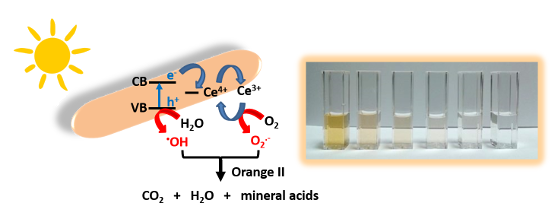
- , electronic and photocatalytic properties have been investigated. Our results demonstrate that Ce-doping improves the optical absorption ability toward visible light wavelengths and thus the photocatalytic performances. ZnO:Ce rods allow the complete degradation of the Orange II dye in ca. 80 min under solar
- compared to ZnO (Figure 4), we also evaluated the photodegradation of Orange II under visible light (intensity = 5 mW/cm2) (Figure S4 in the Supporting Information File 1). Results obtained demonstrate that 78% of the dye was decomposed after 400 min and that the photodegradation required a longer time







Tunable longitudinal modes in extended silver nanoparticle assemblies
Beilstein J. Nanotechnol. 2016, 7, 1219–1228, doi:10.3762/bjnano.7.113
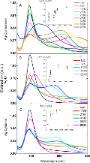
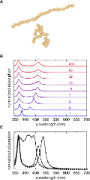
- of photonic structures is essential to increase the sensitivity and speed of photonic devices [35][36]. Common dielectric waveguides are restricted by the diffraction limit of light, which, for visible light, is several hundreds of nanometres. For nanodevices, much smaller photonic elements are


Manufacturing and investigation of physical properties of polyacrylonitrile nanofibre composites with SiO2, TiO2 and Bi2O3 nanoparticles
Beilstein J. Nanotechnol. 2016, 7, 1141–1155, doi:10.3762/bjnano.7.106
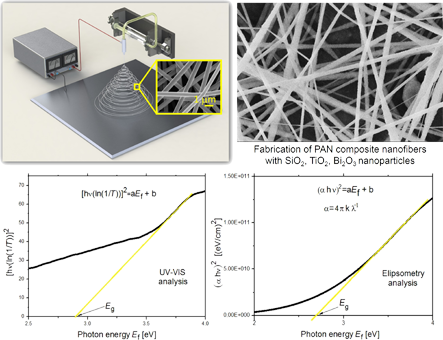
- , obtained for composite PAN nanofibres reinforced with nanoparticles of SiO2, is due to the relatively low refractive index of SiO2, which is about 1.45 for visible light. The used polymer and the SiO2 particles have a similar n. This means the mechanism of interaction of electromagnetic radiation with



Phenalenyl-based mononuclear dysprosium complexes
Beilstein J. Nanotechnol. 2016, 7, 995–1009, doi:10.3762/bjnano.7.92
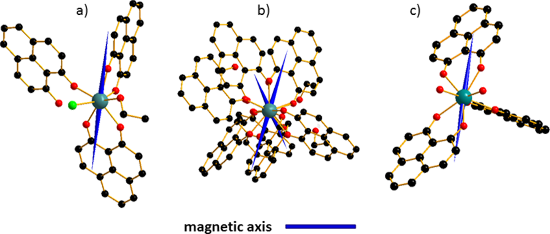
- interesting magnetic properties. In this regard, the 9-hydroxy-1H-phenalen-1-one (HPLN) ligand has previously been utilized for the preparation of mononuclear lanthanide complexes [23][24] to study the near-infrared luminescence upon excitation with visible light. However, this work, carried out by our group





