


Search results
Search for "Self-assembly" in Full Text gives 337 result(s) in Beilstein Journal of Nanotechnology. Showing first 200.
Identifying the nature of surface chemical modification for directed self-assembly of block copolymers
Beilstein J. Nanotechnol. 2017, 8, 1972–1981, doi:10.3762/bjnano.8.198
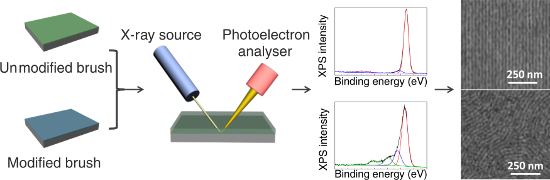
- the block copolymers. We have chosen hard X-ray high kinetic energy photoelectron spectroscopy as an exploration technique because it provides information on the electronic structure of buried interfaces. The outcome of the characterization sheds light onto key aspects of directed self-assembly
- : grafted brush layer, chemical pattern creation and brush/block co-polymer interface. Keywords: block copolymer; chemical guiding pattern; directed self-assembly; thin film; X-ray photoemission spectroscopy; Introduction Directed self-assembly (DSA) of block copolymers (BCPs) is a chemical-based
- [5][6]. When the BCP self-assembly is used in combination with surface prepatterning, aligned structures of alternative phases of the blocks can be obtained. This is the principle of DSA. The main advantages are a relaxation of the resolution requirements of traditional lithography methods, as the


Fabrication of carbon nanospheres by the pyrolysis of polyacrylonitrile–poly(methyl methacrylate) core–shell composite nanoparticles
Beilstein J. Nanotechnol. 2017, 8, 1897–1908, doi:10.3762/bjnano.8.190

- nanospheres were first fabricated by Kowaleski et al. [31] via successive shell crosslinking, oxidization and carbonization of the micelles resulting from the self-assembly of PAN-b-poly(acrylic acid) (PAA) block copolymer in water. The crosslinked shell can retain the micelle structure during the heat



Self-assembly of chiral fluorescent nanoparticles based on water-soluble L-tryptophan derivatives of p-tert-butylthiacalix[4]arene
Beilstein J. Nanotechnol. 2017, 8, 1825–1835, doi:10.3762/bjnano.8.184
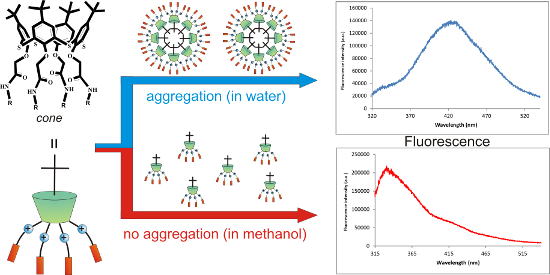
- feature of the compounds is the pronounced dependence of their spectral (emission and chiroptical) properties on the polarity of the solvent and the length of the linker between the macrocyclic and fluorophore parts of the molecule. Keywords: fluorescence; nanoparticles; self-assembly; thiacalixarene
- ][8]. Similarly, supramolecular particles can consist of various organic or inorganic components. However, most of the fluorescent water-soluble nanoparticles described in the literature are metal-based (silver, gold, copper, etc.) [9][10][11][12]. Noncovalent self-assembly is a promising approach for



Non-intuitive clustering of 9,10-phenanthrenequinone on Au(111)
Beilstein J. Nanotechnol. 2017, 8, 1801–1807, doi:10.3762/bjnano.8.181
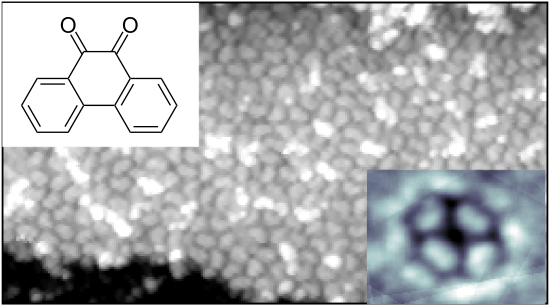
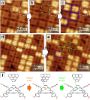
- , as well as those formed during the deposition of 9-fluorenone, which does not exhibit this anomalous clustering behavior. Keywords: metastable clusters; 9,10-phenanthrenequinone; scanning tunneling microscopy; self-assembly; Introduction The goal of crystal engineering is to utilize a combination
- of intermolecular interactions, molecule–substrate interactions and growth conditions to produce a desired mesoscale or nanoscale structure through self-assembly [1][2]. Generally, this involves a careful selection of these interactions to produce an equilibrium supramolecular assembly that has the
- desired two- or three-dimensional structure [3][4][5][6][7][8][9]. While this technique has been shown to be quite effective at achieving this goal, it is limited to geometries allowed by crystalline structures. Self-assembly under conditions far from equilibrium, under kinetic control, can produce a


(Metallo)porphyrins for potential materials science applications
Beilstein J. Nanotechnol. 2017, 8, 1786–1800, doi:10.3762/bjnano.8.180
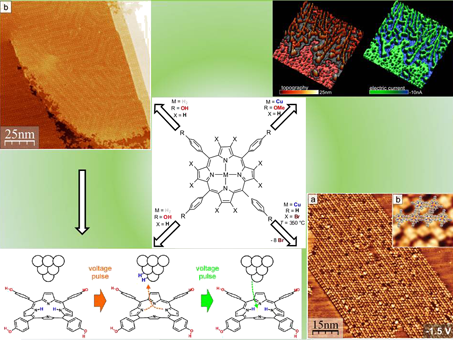
- further, but also to benefit from advanced functionalities of deposited molecules. Furthermore, the molecules itself can be tailored to allow via their self-assembly the potential fabrication of devices with an application potential, which is still unforeseeable at this time. Herein, we review efforts to
- of those ensembles of (metallo)porphyrins in materials science is discussed. Keywords: atomic force microscopy; magneto-optical Kerr effect spectroscopy; scanning tunnelling microscopy and spectroscopy; self-assembly; surface-confined 2D polymerization; transport properties; Review Introduction
- lithography [22][23]) is to functionalize the (metallo)porphyrins with terminal groups that allow their self-assembly on surfaces. Self-assemblies, giving rise to well-defined long-range ordered lateral structures, are frequently reported [24][25][26][27][28]. For example, in case that (metallo)porphyrins






Two-dimensional carbon-based nanocomposites for photocatalytic energy generation and environmental remediation applications
Beilstein J. Nanotechnol. 2017, 8, 1571–1600, doi:10.3762/bjnano.8.159
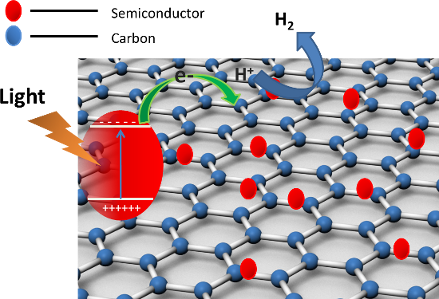
- known as chemical-modified graphene [51]. The schematic illustration of RGO preparation from graphite is shown in Figure 2. The composite formation of graphene with semiconductor materials has been reported by various methods, such as hydrothermal/solvothermal [52], sol−gel [53], self-assembly [54
- growth of nanoparticles and hence the resultant photocatalytic materials are chemically bonded with each other [53]. This method has been successfully used in the in situ preparation of various graphene–semiconductor nanocomposites, such as TiO2 on GO sheets [57]. Self-assembly is a very important method
- , wherein micro- and nanostructures assemble spontaneously by supramolecular interactions to form larger functional units [58]. This self-assembly of nanoparticles is very useful for various applications. In the surfactant-assisted ternary self-assembly of metal oxides with functionalized graphene sheets


Luminescent supramolecular hydrogels from a tripeptide and nitrogen-doped carbon nanodots
Beilstein J. Nanotechnol. 2017, 8, 1553–1562, doi:10.3762/bjnano.8.157
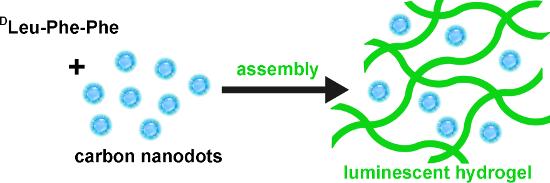
- are formed from unprotected D,L-tripeptides bearing the Phe-Phe motif and nitrogen-doped carbon nanodots (NCNDs) are promising materials for biological use. In this work, they were combined to obtain luminescent, supramolecular hydrogels at physiological conditions. The self-assembly of a tripeptide
- with narrower diameter distribution. Keywords: carbon nanodots; composites; hydrogels; nanomaterials; peptide self-assembly; Introduction Carbon nanodots (CNDs) are quasi-spherical nanoparticles with a diameter less than 10 nm. They are a very interesting class of nanocarbons because of their
- highly useful due to the low cost and simplicity of synthesis, as opposed to longer peptides that require solid-phase-peptide synthesis [23]. The most typical approach employs N-capped short peptides, especially whereby the N-capping group is a hydrophobic, aromatic moiety that assists self-assembly in


Parylene C as a versatile dielectric material for organic field-effect transistors
Beilstein J. Nanotechnol. 2017, 8, 1532–1545, doi:10.3762/bjnano.8.155
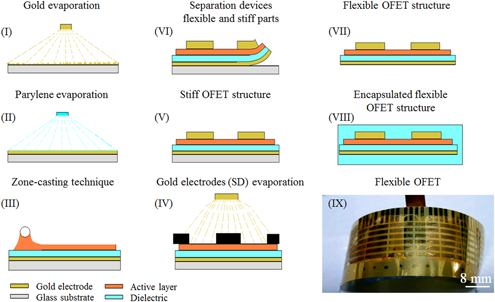
- cm2/V·s, was obtained for vacuum as a dielectric [38]. The deterioration of the dielectric/semiconductor interface was revealed to be due to charge trapping at that interface. This effect could be controlled by an application of self-assembly monolayers (SAM) that significantly reduce the number of




Deposition of exchange-coupled dinickel complexes on gold substrates utilizing ambidentate mercapto-carboxylato ligands
Beilstein J. Nanotechnol. 2017, 8, 1375–1387, doi:10.3762/bjnano.8.139
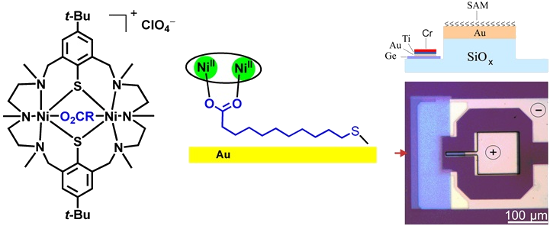
- , prevent the packing and self-assembly of the hydrocarbon chains. The smaller film thickness of 7 is attributed to the specific coordination mode of the coligand. Results of preliminary transport measurements utilizing rolled-up devices are also reported. Keywords: ambidentate ligands; chemisorption; gold
- part of the coligand to the Au surface is likely. The smaller film thickness of 7 would be consistent with this in view of the proposed absorption model. Also, in the absence of packing and self-assembly of hydrocarbon chains, a coplanar binding of alkane thiol to gold is possible [62]. It is likely


Synthesis of [Fe(Leq)(Lax)]n coordination polymer nanoparticles using blockcopolymer micelles
Beilstein J. Nanotechnol. 2017, 8, 1318–1327, doi:10.3762/bjnano.8.133
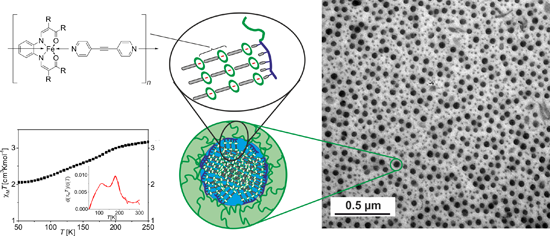
- (bpea)]n@BCP while pronounced differences are observed in the case of [FeLeq(bpey)]n@BCP nanoparticles. Keywords: block copolymer; composite; nanoparticles; self-assembly; spin crossover; Introduction Nanomaterials and especially nanocomposites of coordination polymers (CPs) and (porous) coordination
- size control of CPs [13]. BCPs form micellar structures through self-assembly in specific solvents and can therefore be used as nanoreactors [14][15][16]. Using this approach, a very controlled miniaturisation of coordination polymers or networks can be envisioned, provided it is easily transferable to



Charge transport in organic nanocrystal diodes based on rolled-up robust nanomembrane contacts
Beilstein J. Nanotechnol. 2017, 8, 1277–1282, doi:10.3762/bjnano.8.129
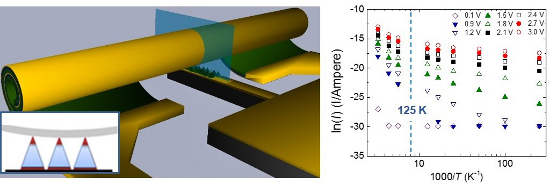
- smooth organic layer or self-assembly monolayer has larger contact area when the tube lands on top, while nanopyramid geometry restricts the contact area only within the limited peaks’ surface which can touch the tube. Due to geometry deviation of single nanopyramid structure, it is quite challenging to
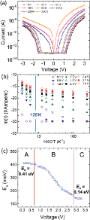
- conductance increases non-linearly and with decreasing temperature the conductance decreases correspondingly. It is worthy to compare here with the diodes consisting of self-assembly monolayer contacted with rolled-up tube electrodes, which is previously reported by some of the authors of this contribution


Characterization of ferrite nanoparticles for preparation of biocomposites
Beilstein J. Nanotechnol. 2017, 8, 1257–1265, doi:10.3762/bjnano.8.127
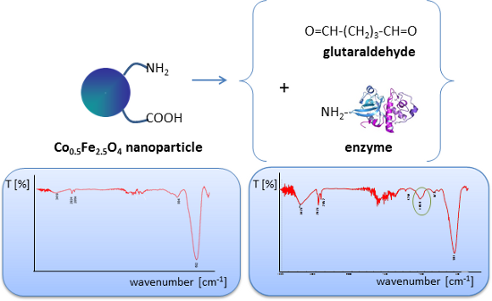
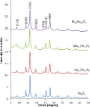
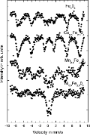
- nature of ferrites and difficulties in obtaining a sufficient surface coverage by surfactants. On the other hand, the preparation of the samples for TEM actually disturbs the functionality of primarily used surfactants, which can no longer maintain the separation of the particles. The lack of self
- -assembly also causes worse particle separation, as seen in the TEM images. It is also observed that after modification of the inorganic core, the size distribution increases in comparison to Fe3O4 nanoparticles (Table 1), while the average size of the ferrite core decreases. This suggests that Co, Mn, and



Preparation of thick silica coatings on carbon fibers with fine-structured silica nanotubes induced by a self-assembly process
Beilstein J. Nanotechnol. 2017, 8, 1145–1155, doi:10.3762/bjnano.8.116
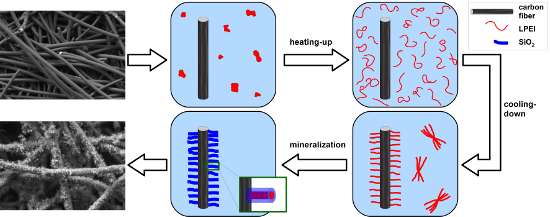
- fiber by fibrillar and interconnected silica fine-structures. The high surface area of the nanostructured composite fiber may be exploited for catalytic applications and adsorption purposes. Keywords: biomimetic silicification; carbon fiber; self-assembly; silica nanotubes; sol–gel process
- between the polyamine and the metal ions do not block the LPEI crystal growth, but largely change the crystalline morphology [27]. A prominent feature of this polyamine mediated biomimetic silicification process is the capability of LPEI to undergo self-assembly on arbitrary substrates. A sufficient
- immobilized at the carbon fiber surface either by a covalent linkage or by a self-assembly process of linear polyamines, i.e., LPEI. The covalent linkage of short-chain amines to the carbon fiber surface has already been reported in literature and it was shown that a high surface amine concentration of carbon


Assembly of metallic nanoparticle arrays on glass via nanoimprinting and thin-film dewetting
Beilstein J. Nanotechnol. 2017, 8, 1049–1055, doi:10.3762/bjnano.8.106
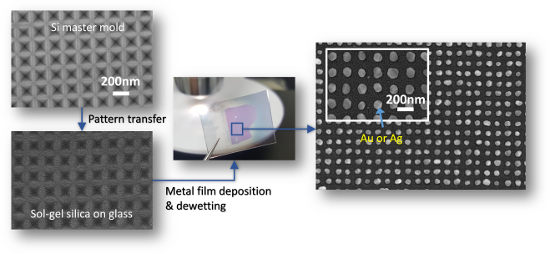
- processes were discussed. The results are promising for low-cost mass fabrication of devices for several photonic applications. Keywords: dewetting; metal thin films; nanoimprint; nanoparticles; self-assembly; Findings Thin films on nonreactive solid surfaces, having a high surface area relative to their
- as a functional layer. Thus, the applicability of a self-assembly technique that uses dewetting largely depends on how it can be combined with appropriate template materials that have both functionality and dewettability. In this regard, nanoimprint lithography (NIL) is expected to be an effective


Recombinant DNA technology and click chemistry: a powerful combination for generating a hybrid elastin-like-statherin hydrogel to control calcium phosphate mineralization
Beilstein J. Nanotechnol. 2017, 8, 772–783, doi:10.3762/bjnano.8.80
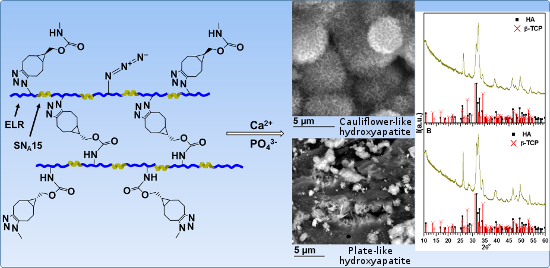
- polymers (ELPs) or recombinamers (ELRs), which are excellent example of materials that exhibit self-assembly and self-organization [27][28][29]. The majority of ELPs or ELRs consist of simple amino-acid consensus epitopes that are also present in natural elastin, such as (VPGXG)* (see Table 1 for details
- fibrillar morphology. It is known that ELRs undergo hierarchical self-assembly producing a fibrillar structure [27][30][47]. For example, poly(VPGVG) and its analog poly [fv(VPGVG), fx(VPGKG)] (0.1 ≤ fx ≤0.2, fv + fx = 1) interact hydrophobically and self-assemble into nanofilaments that align in parallel
- disassembling ELPs and ELRs [27][29]. Recently, the self-assembly properties of ELRs have been combined with the mineralization capacity of SNA15 using such a biotechnology approach [13]. In that study, Misbah et al. demonstrated that ELRs cannot control the formation of CP in the absence of SNA15. In addition



Synthesis of graphene–transition metal oxide hybrid nanoparticles and their application in various fields
Beilstein J. Nanotechnol. 2017, 8, 688–714, doi:10.3762/bjnano.8.74
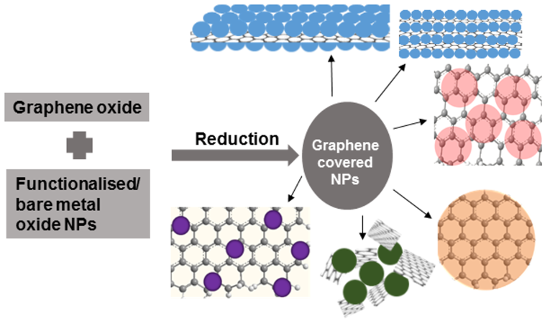
- applications [165]. This aerogel structure exhibits excellent rate capability and outstanding long-term cyclic stability at high current densities. Wang et al. have introduced a solvothermal-induced self-assembly approach to construct the monolithic 3D Fe2O3 and GS hybrids, which have excellent prolonged
- [188]. Guo et al. prepared Co/CoO–graphene by self-assembly of Co NPs on the surface of graphene. This hybrid has similar activity as and better stability than commercial Pt NP catalyst supported on carbon (C–Pt) NPs and may serve as an alternative to C–Pt catalysts for the ORR in alkaline solution






Calculating free energies of organic molecules on insulating substrates
Beilstein J. Nanotechnol. 2017, 8, 667–674, doi:10.3762/bjnano.8.71
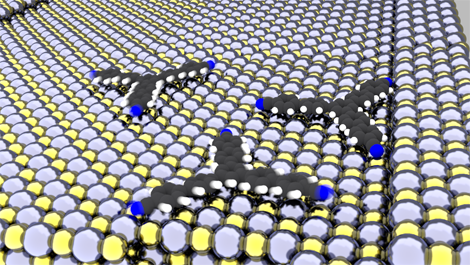
- insulating substrates where atomic force microscopy (AFM) provides vital information on film structure and growth modes. Non-contact (NC)-AFM has provided rich information on the adsorption, self-assembly and film structure of various organic molecules on insulators [15][16][17][18][19][20][21]. The current
- ]. In self-assembly processes, the right balance between molecule–molecule (MM) and molecule–surface (MS) interactions is critical to achieve large domains of ordered films. However, forming a molecular complex or a 2D film structure from freely rotating and translating molecules results in a loss in
- entropy as degrees of freedom within the molecules become constrained. This means that free energies can vary significantly from calculated enthalpy values, which may have a direct impact on our understanding of the balance of interactions that govern self-assembly. Methods to compute the free energy from


Computing the T-matrix of a scattering object with multiple plane wave illuminations
Beilstein J. Nanotechnol. 2017, 8, 614–626, doi:10.3762/bjnano.8.66
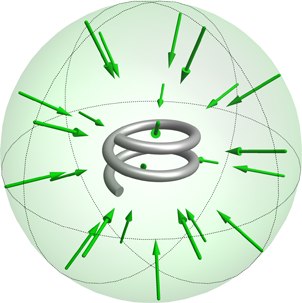
- experimental data for the dispersive permittivity of silver [43]. Such objects can be fabricated in large quantities by self assembly methods, e.g., by connecting commercially available metal nanospheres with a linker molecule [44]. We set N = 2, because the higher orders do not contribute notably. For general


Formation and shape-control of hierarchical cobalt nanostructures using quaternary ammonium salts in aqueous media
Beilstein J. Nanotechnol. 2017, 8, 494–505, doi:10.3762/bjnano.8.53
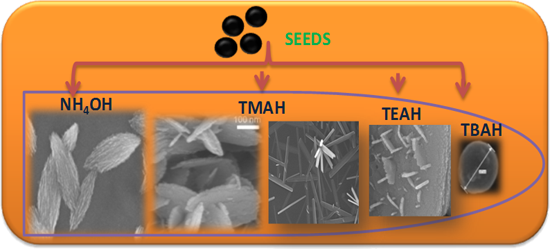
- Ruchi Deshmukh Anurag Mehra Rochish Thaokar Department of Chemical Engineering, Indian Institute of Technology Bombay, Powai, Mumbai 400076, India 10.3762/bjnano.8.53 Abstract Aggregation and self-assembly are influenced by molecular interactions. With precise control of molecular interactions


Self-assembly of silicon nanowires studied by advanced transmission electron microscopy
Beilstein J. Nanotechnol. 2017, 8, 440–445, doi:10.3762/bjnano.8.47
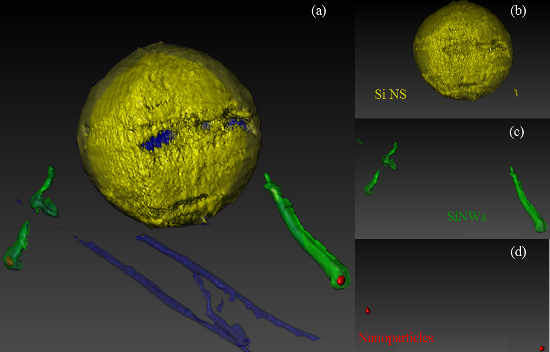
- within the plasma reactor. Both the STEM tomography and STEM-EDX analysis contributed to gain further insight into the self-assembly process. In the long-term, this approach might be used to optimize the synthesis of VLS-grown SiNWs via ICP as a competitive technique to the well-established bottom-up
- fabricate ultra-small structures. This concept encompasses the physics and the chemistry of nanostructure formation via a “self-assembly” route. Such ultra-low dimensional systems require appropriate characterization tools, which may lead to further insight in the comprehension of the dynamics of
- chamber and temperatures lower than 1150 °C can be reached at the bottom [16]. It is noteworthy to recall that the ICP process was designed for the synthesis of spherical Si particles. This leads us to suppose that, while the synthesis of spherical Si takes place, the self-assembly of SiNWs via VLS does


Methods for preparing polymer-decorated single exchange-biased magnetic nanoparticles for application in flexible polymer-based films
Beilstein J. Nanotechnol. 2017, 8, 408–417, doi:10.3762/bjnano.8.43
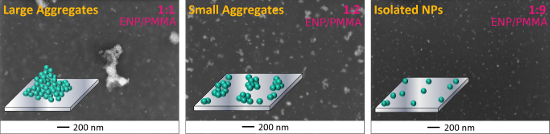
- hybrids, one of the main challenges is to avoid NP aggregation. The magnetic response of NPs to external magnetic stimulus depends strongly on their intrinsic properties (composition, size, and shape) but also on their spatial arrangement (self-assembly, dispersion in organic media, compatibility with


Innovations from the “ivory tower”: Wilhelm Barthlott and the paradigm shift in surface science
Beilstein J. Nanotechnol. 2017, 8, 394–402, doi:10.3762/bjnano.8.41

- compiling, to our knowledge, the largest dataset on plant epicuticular surface features. Epicuticular waxes are made up of various soluble lipids and, at least most of them, originate from self-assembly, again a topic studied in various different types of crystals accompanied by recrystallization


Nanoscale isoindigo-carriers: self-assembly and tunable properties
Beilstein J. Nanotechnol. 2017, 8, 313–324, doi:10.3762/bjnano.8.34
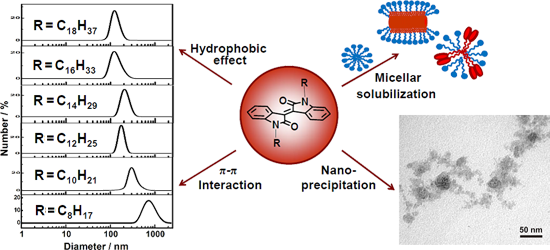
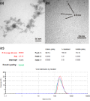
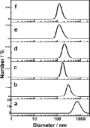
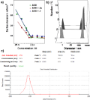
- structures with tunable morphologies for the use in drug delivery. Amphiphilic long-chain dialkylated isoindigos have the ability to form stable solid nanoparticles via a simple nanoprecipitation technique. Their self-assembly was investigated using tensiometry, dynamic light scattering, spectrophotometry
- ; nanoparticles; self-assembly; surfactants; Introduction Studies of amphiphilic isoindigo derivatives have revealed perspectives and high potential in several fields: (i) Supramolecular assemblies of amphiphilic conjugated π-systems can potentially be useful structures with improved tunable optical and
- . Drug nanostructures thus obtained are single-component systems unlike traditional colloidal drug carriers. The design of building blocks allows for the control of physical and chemical properties of self-assembled systems. Self-assembly [41] and nanoprecipitation [42] are the most common approaches to




Impact of surface wettability on S-layer recrystallization: a real-time characterization by QCM-D
Beilstein J. Nanotechnol. 2017, 8, 91–98, doi:10.3762/bjnano.8.10
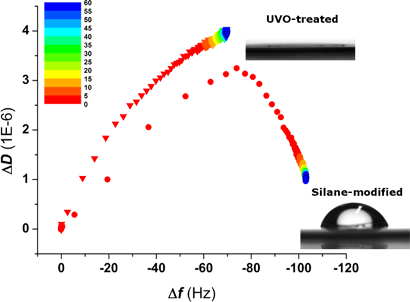
- 10 mM CaCl2 (98% Sigma-Aldrich, Germany) and adjusted to pH 9. Sample preparation S-protein preparation: After isolation, the protein solution was centrifuged at 5000 rpm for 5 min in order to separate the S-protein monomers from self-assembly products and was stored at 4 °C. Then, before each


Obtaining and doping of InAs-QD/GaAs(001) nanostructures by ion beam sputtering
Beilstein J. Nanotechnol. 2017, 8, 12–20, doi:10.3762/bjnano.8.2
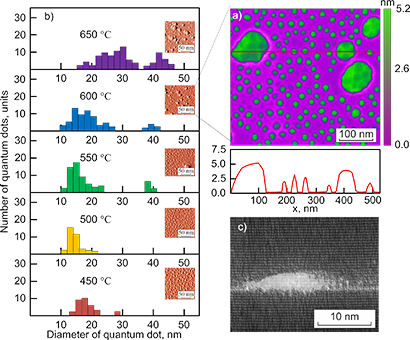
- homoepitaxy of silicon on substrates with (001) crystallographic orientation was in parts investigated by Lee and Xue [15]. High-vacuum ion beam heteroepitaxy of nanometer-thick germanium films on silicon substrates was carried out by Alexandrov and co-workers [16]. They were the first to observe the self
- -assembly growth of germanium quantum-dot nanostructures. Furthermore, ion beam sputtering was used for heteroepitaxy of Ge on GaAs substrates [17] and GaAs1−xPx on Si substrates [18]. In addition, the effect of ion beam bombardment of semiconductor surfaces is used at least for two applications. First, it





