


Search results
Search for "absorbance" in Full Text gives 409 result(s) in Beilstein Journal of Nanotechnology. Showing first 200.
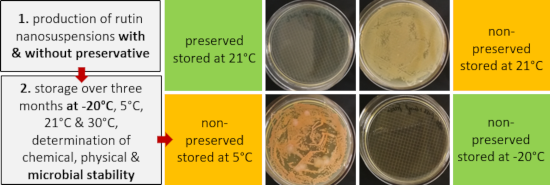
Preservation of rutin nanosuspensions without the use of preservatives
Beilstein J. Nanotechnol. 2019, 10, 1902–1913, doi:10.3762/bjnano.10.185
- time in the dark, the absorbance was measured by a UV–vis plate reader (Multiskan GO, Thermo scientific, Germany) at 517 nm. The inhibition activity (inhibition [%]) was calculated as where Asample is the absorbance of the sample and A0 is the absorbance of the control (DPPH solution). The resulting


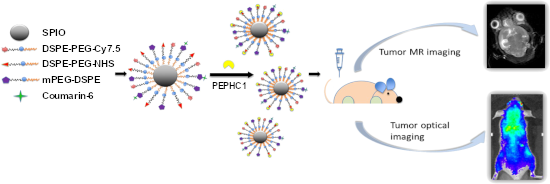
Engineered superparamagnetic iron oxide nanoparticles (SPIONs) for dual-modality imaging of intracranial glioblastoma via EGFRvIII targeting
Beilstein J. Nanotechnol. 2019, 10, 1860–1872, doi:10.3762/bjnano.10.181
- ) solution was added to each well. Finally, the absorbance of each well was measured with a microplate reader (Bio-TEK, USA) at a wavelength of 490 nm. To evaluate the in vivo systematic toxicity of PNPs, the histological sections of major organs (e.g., heart, liver, spleen, lung and kidney) were collected




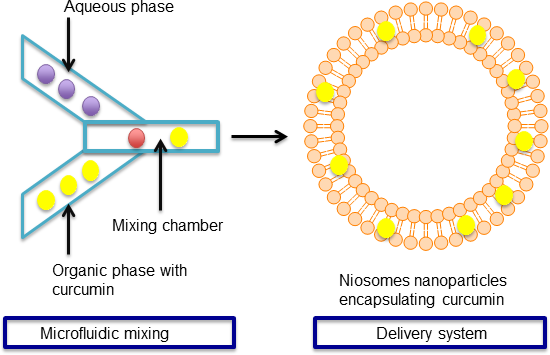
Microfluidic manufacturing of different niosomes nanoparticles for curcumin encapsulation: Physical characteristics, encapsulation efficacy, and drug release
Beilstein J. Nanotechnol. 2019, 10, 1826–1832, doi:10.3762/bjnano.10.177
- encapsulation efficiency Following removal of the non-encapsulated curcumin by dialysis, 100 µL of each niosome formulation (removed from the dialysis tubing) was lysed with methanol in order to release the encapsulated curcumin, which was then quantified at UV absorbance at 421 nm. The encapsulation efficiency
- preheated at 37 °C. At each time point, the absorbance was measured at 421 nm and the concentration of the released curcumin was determined against a calibration curve. The experiments were performed in triplicate and the mean ± SD is reported. Statistical analysis Statistical significance was assessed by


Toxicity and safety study of silver and gold nanoparticles functionalized with cysteine and glutathione
Beilstein J. Nanotechnol. 2019, 10, 1802–1817, doi:10.3762/bjnano.10.175
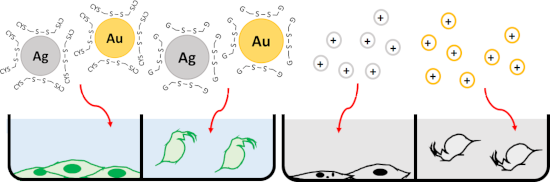
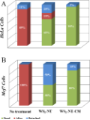
- shaking the plates. The absorbance was recorded at 530 nm using a VictorTM multilabel reader (Perkin Elmer, Massachusetts, USA). The ratio of live, apoptotic and dead cells after treatment with NPs or respective metal salts was determined by flow cytometry experiments using Annexin V and 7


Biocatalytic oligomerization-induced self-assembly of crystalline cellulose oligomers into nanoribbon networks assisted by organic solvents
Beilstein J. Nanotechnol. 2019, 10, 1778–1788, doi:10.3762/bjnano.10.173

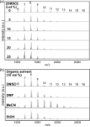
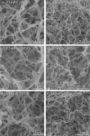
- solution containing 10 vol % MeCN or EtOH at a concentration where the absorbance of CDP at 280 nm was 0.1. The CDP solutions were incubated at 60 °C for 6 and 72 h. The CD spectra of the samples were recorded on a J-725 instrument (JASCO) at a path length of 2 mm, a scan rate of 100 nm min−1, and a





Growth dynamics and light scattering of gold nanoparticles in situ synthesized at high concentration in thin polymer films
Beilstein J. Nanotechnol. 2019, 10, 1768–1777, doi:10.3762/bjnano.10.172
- to aggregate yielding nanoparticles. These steps are enhanced by annealing the films at a temperature higher than the glass transition temperature of the polymer. In practice, the in situ synthesis allowed us to obtain relatively thin films (300–500 nm) with an absorbance equivalent to that measured
- with a “classical” colloidal solution of AuNPs in a cuvette with 1 cm optical path (Figure 1). This means that the same absorbance can be obtained with a material thickness ca. 2·104 times smaller. Passive Q-switches based on saturable absorption of AuNP-doped films are usually prepared in a two-steps
- mass ratio increases, the absorbance reaches an increasing plateau value. Moreover, increasing the annealing temperature increases the reduction kinetics. The plateau value is reached within shorter times. Besides playing a role in the growth kinetics of the nanoparticles by promoting the reduction of


Doxorubicin-loaded human serum albumin nanoparticles overcome transporter-mediated drug resistance in drug-adapted cancer cells
Beilstein J. Nanotechnol. 2019, 10, 1707–1715, doi:10.3762/bjnano.10.166
- 20% (w/v) sodium dodecylsulfate and 50% (v/v) N,N-dimethylformamide with the pH adjusted to 4.7 at 37 °C for 4 h. The absorbance was determined at 570 nm for each well using a 96-well multiscanner. After subtracting of the background absorption, the results are expressed as percentage viability


Kelvin probe force microscopy work function characterization of transition metal oxide crystals under ongoing reduction and oxidation
Beilstein J. Nanotechnol. 2019, 10, 1596–1607, doi:10.3762/bjnano.10.155
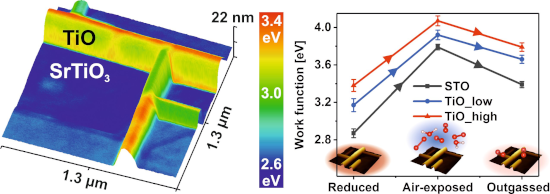
- nanostructures exhibit a strong absorbance of light over a broad spectrum, which is of potential use in novel tumor therapy [19]. In addition, in the previous year, a profound interest was focused on the superconductivity of various TiO structures [20][21]. According to those, rock-salt TiO is a type-II


Direct observation of oxygen-vacancy formation and structural changes in Bi2WO6 nanoflakes induced by electron irradiation
Beilstein J. Nanotechnol. 2019, 10, 1434–1442, doi:10.3762/bjnano.10.141
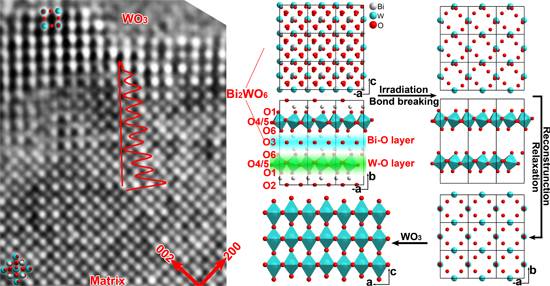
- . At constant intervals of time, samples were taken from the suspension and centrifuged. Then the absorbance of the solution was analyzed at a wavelength of 664 nm. The photocatalytic efficiency of Bi2WO6 was taken calculated as follows: η(%) = (A0 – A)/A0·100%, where A0 and A are the absorbance of MB
- (red) of the SAED pattern, overlaid by a standard PDF card; (d) Absorbance and degradation efficiency as a function of irradiation time, the inset is a photograph of the degradation experiment. Effects of electron-beam irradiation on an individual Bi2WO6 nanoflake observed by using HRTEM. (a–e


BiOCl/TiO2/diatomite composites with enhanced visible-light photocatalytic activity for the degradation of rhodamine B
Beilstein J. Nanotechnol. 2019, 10, 1412–1422, doi:10.3762/bjnano.10.139
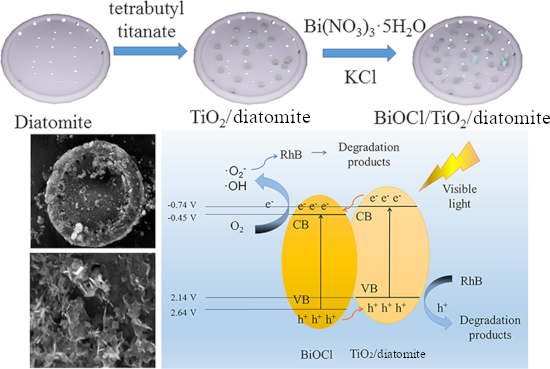
- –vis spectra of RhB in the degradation process by BTD. It can be seen that with the increase of illumination time, the absorbance intensity decreases and the peak shifts toward shorter wavelength (blue shift). This is mainly due to de-ethylation of RhB, accompanied by the breakage of aromatic groups


Construction of a 0D/1D composite based on Au nanoparticles/CuBi2O4 microrods for efficient visible-light-driven photocatalytic activity
Beilstein J. Nanotechnol. 2019, 10, 1360–1367, doi:10.3762/bjnano.10.134
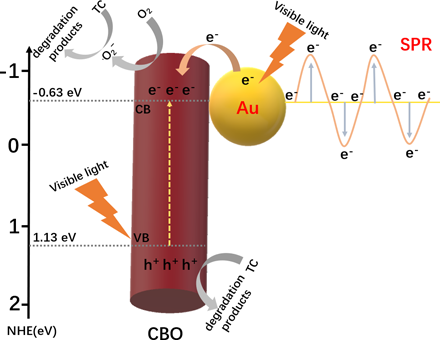
- solution (measured by means of the absorbance at a wavelength of 357 nm). The blank experiment showed that the degradation rate of TC solution under visible-light irradiation is very low, indicating that the self-degradation of TC is negligible (Figure 6a). Pure CBO has a poor photocatalytic activity


A highly efficient porous rod-like Ce-doped ZnO photocatalyst for the degradation of dye contaminants in water
Beilstein J. Nanotechnol. 2019, 10, 1157–1165, doi:10.3762/bjnano.10.115
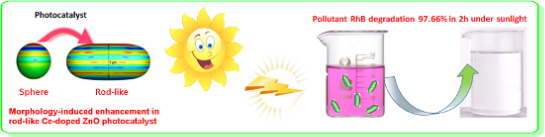
- centrifuged before this process began. The supernatant was diluted with an equal amount of deionized water, then taken out for the measurement of absorbance (A0) at 554 nm by UV–vis spectroscopy. Every 20 min the sampling process was repeated, and the absorbance was determined. The degradation rate (DR) was
- test tube. The suspension was stirred in darkness for 30 min before the initial absorbance was measured. The degradation rate was calculated after 2 h of exposure to sunlight. The design and results are listed in Table 1. Characterization of photocatalysts The XRD patterns of ZnO and CZO-4 were


Scavenging of reactive oxygen species by phenolic compound-modified maghemite nanoparticles
Beilstein J. Nanotechnol. 2019, 10, 1073–1088, doi:10.3762/bjnano.10.108
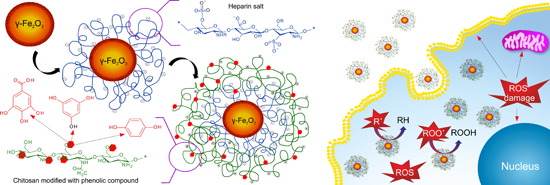
- the solution (20 μL) was transferred to a 2 mL Eppendorf tube containing water (1.58 mL) and FC reagent (100 μL). Then, 17 wt % sodium carbonate solution (300 μL) was added, and the mixture was vortexed for 140 s and kept in the dark for 1.5 h. Absorbance was measured using a Specord 250Plus UV
- mL Eppendorf tube containing chitosan solution (0.2 mL), and the mixture was vigorously vortexed for 1 min and stored in the dark for 30 min. The absorbance was measured at a wavelength of 517 nm against ethanol using the same spectrometer as above. A mixture of 0.1 mM DPPH (0.6 mL and ethanol (1.4
- mL) served as a control. DPPH inhibition was determined as follows: where A0 and A1 are the absorbance of the control and the sample, respectively. The results from the DPPH assay were expressed as the half maximal inhibitory concentration (IC50), which is the amount of substance required to decrease





Fe3O4 nanoparticles as a saturable absorber for giant chirped pulse generation
Beilstein J. Nanotechnol. 2019, 10, 1065–1072, doi:10.3762/bjnano.10.107
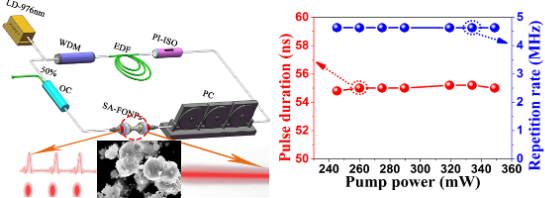
- directly used to measure the output power, and the other is used to measure the output power after passing through the SA. Figure 2d gives the nonlinear transmission curve of the FONP SA. It can be seen that the saturation absorption intensity, modulation depth, and nonsaturable absorbance are about 12 MW
- FONP powder were measured by UV–vis–NIR spectroscopy, as shown in Figure 3d. From these results, 92% absorbance at 1560 nm can be observed. In Figure 4a–c, the microstructure of the FONP SA is confirmed via scanning electron microscopy (SEM) at the 4, 3 and 1 µm scale, respectively. It can be clearly


Enhanced inhibition of influenza virus infection by peptide–noble-metal nanoparticle conjugates
Beilstein J. Nanotechnol. 2019, 10, 1038–1047, doi:10.3762/bjnano.10.104
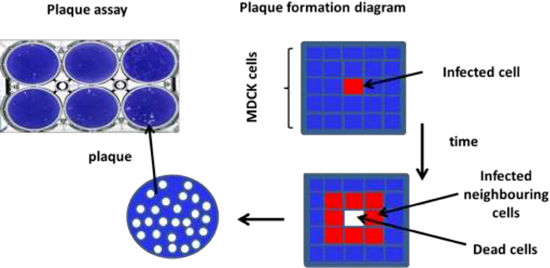
- exert its antiviral activity from the outside of the cell. Thus, the addition of FluPep to cells in culture prevents infection by influenza viruses, as does intranasal delivery of the peptide in a murine model of human influenza [15]. Noble-metal nanoparticles possess a strong plasmon absorbance, which
- allows for the detection at very low levels, using a range of approaches, from absorbance [17][18] to photothermal microscopy [19] and various extensions of the latter [20][21]. Noble-metal nanoparticles can be passivated and functionalised with biomolecules such that they possess the biological
- nanoparticles is at 520 nm. When gold nanoparticles are aggregated, their surface plasmons couple causing a red shift in their plasmon absorbance to approximately 650 nm. The aggregation parameter (AP) was defined as (A650nm − Aref 650nm)/(A520nm−Aref 520), where A650nm and A520nm are the absorbance of gold




Structural and optical properties of penicillamine-protected gold nanocluster fractions separated by sequential size-selective fractionation
Beilstein J. Nanotechnol. 2019, 10, 955–966, doi:10.3762/bjnano.10.96
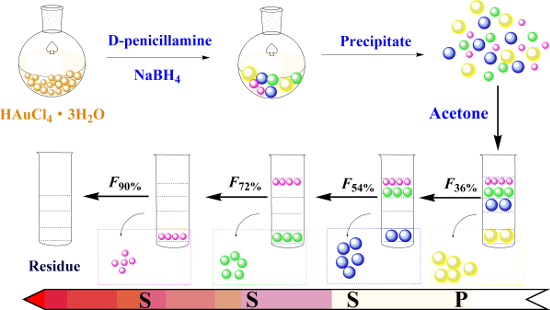
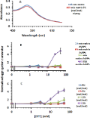
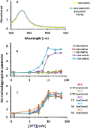
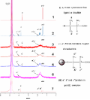
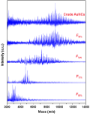
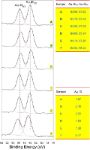
- AuNCs possess a sharper decrease in absorbance than that of larger ones, from shorter to longer wavelengths, as could be observed in previous work [38][39]. In essence, the large AuNCs produce absorption spectra that have higher absorption than that of the small core nanoclusters. The difference in the



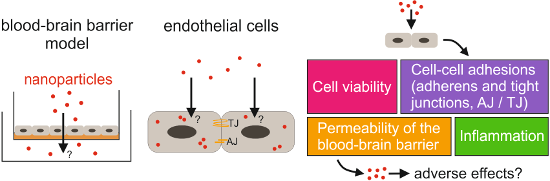
Effects of gold and PCL- or PLLA-coated silica nanoparticles on brain endothelial cells and the blood–brain barrier
Beilstein J. Nanotechnol. 2019, 10, 941–954, doi:10.3762/bjnano.10.95
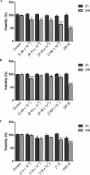
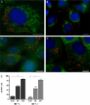
- was removed and the remaining MTT-formazan was dissolved in DMSO (Sigma, Switzerland). Absorbance was measured at 540 nm using a plate reader (Synergy HT, BioTek, Switzerland). Nanoparticle uptake PCL-, PLLA- and Au-NP uptake was investigated using transmission electron microscopy (TEM). PCL- and PLLA



Nanoscale optical and structural characterisation of silk
Beilstein J. Nanotechnol. 2019, 10, 922–929, doi:10.3762/bjnano.10.93
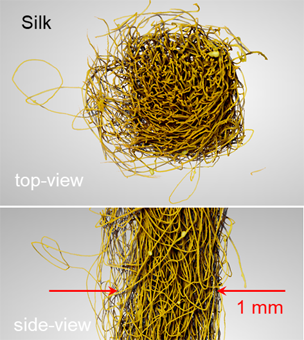
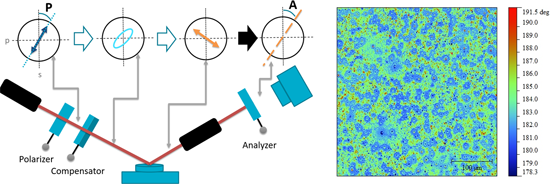
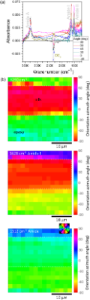
- crystalline building blocks of silk. Nanoscale optical and structural properties of silk have been measured from 100 nm thick longitudinal slices of silk fibers with ca. 10 nm resolution, the highest so far. Optical sub-wavelength resolution in hyperspectral mapping of absorbance and molecular orientation
- were carried out for comparison at IR wavelengths of 2–10 μm using synchrotron radiation. A reliable distinction of transmission changes by only 1–2% as the anisotropy of amide bands was obtained from nanometer-thin slices of silk. Keywords: absorbance; anisotropy; retardance; silk; Introduction
- orientation dependency of the birefringence Δn and dichroism Δκ, define the optical response of a material. The reflectance R is proportional to the real part, while the absorbance A corresponds to the imaginary part of . Recently, we demonstrated that the IR measurements of silk performed using three


Synthesis of novel C-doped g-C3N4 nanosheets coupled with CdIn2S4 for enhanced photocatalytic hydrogen evolution
Beilstein J. Nanotechnol. 2019, 10, 912–921, doi:10.3762/bjnano.10.92
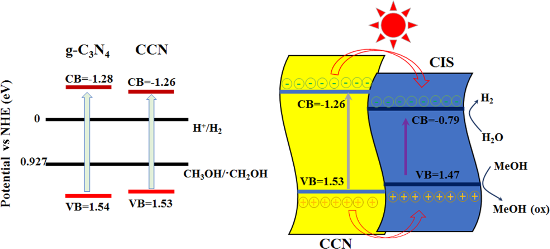
- nanocomposites. It can be clearly observed that the light absorbance decreases in the visible light range upon addition of CdIn2S4 content in CISCCN nanocomposites. The band gap (Eg) of g-C3N4, CCN and CdIn2S4 can be estimated by plotting (αhν)2 as a function of the photon energy (Figure 6b), with α being the


The systemic effect of PEG-nGO-induced oxidative stress in vivo in a rodent model
Beilstein J. Nanotechnol. 2019, 10, 901–911, doi:10.3762/bjnano.10.91
- acid (TCA) in a glass tube covered by aluminum foil. Then, 0.5 mL of an enzyme (diluted tissue homogenate) was added to the mixture and kept in a water bath at 100 °C for 30 min. Afterward, the mixture was allowed to cool at room temperature and was centrifuged at 1000g for 10 min. The absorbance was
- mixed with a 0.04% DNTB buffer in a ratio of 1:9. Then, the absorbance was measured at 412 nm using a UV–vis spectrometer. The GSH level was determined using a calibration curve and was expressed in μM/mg. Glutathione S-transferase Glutathione S-transferase (GST) activity was calculated by a method


Tungsten disulfide-based nanocomposites for photothermal therapy
Beilstein J. Nanotechnol. 2019, 10, 811–822, doi:10.3762/bjnano.10.81
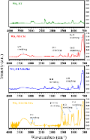
- attachment of polymers to the composite. Figure 3 shows the FTIR absorbance spectra of WS2-NT and its composites. The absorption of the WS2-NTs was so weak that we are not sure that anything can be learned from such absorption. In the spectrum of WS2-NT-CM (and of its two composites), the strong peak at 570
- , suitable for targeted PTT. Schematic description for WS2-NT-CM nanocomposite preparation. TEM, HRTEM, and SEM images of (a–c) WS2-NT; (d–f) WS2-NT-CM; (g,h) WS2-NT-CM-PEI and (i) WS2-NT-CM-PAA. FTIR absorbance spectra of WS2-NT and its nanocomposite samples. TGA analysis data of WS2-NTs and its






Towards rare-earth-free white light-emitting diode devices based on the combination of dicyanomethylene and pyranine as organic dyes supported on zinc single-layered hydroxide
Beilstein J. Nanotechnol. 2019, 10, 760–770, doi:10.3762/bjnano.10.75
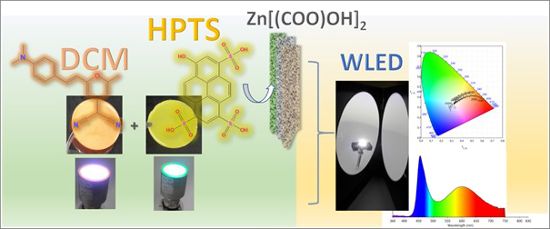
- information on the internal conversion (QYint) and the absorbance (Abs) of the studied material. QYint is defined as the ratio between photons emitted and photons absorbed by the material upon external excitation. The product of these two parameters gives the absolute quantum yield in percentage (QYab = QYint


An iridescent film of porous anodic aluminum oxide with alternatingly electrodeposited Cu and SiO2 nanoparticles
Beilstein J. Nanotechnol. 2019, 10, 735–745, doi:10.3762/bjnano.10.73
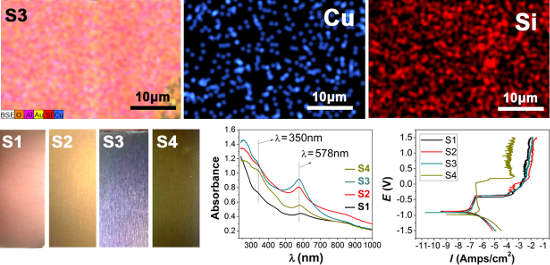
- above 10 Hz and below 10 Hz were 470 pF and 2.2 nF, respectively. The parameters related to filter and earthing modes were set as 470 nF and field, respectively. The prepared samples were observed using a TM3030 scanning electron microscope (SEM, Hitachi). The absorbance and emissivity properties were


Features and advantages of flexible silicon nanowires for SERS applications
Beilstein J. Nanotechnol. 2019, 10, 725–734, doi:10.3762/bjnano.10.72

- of the substrate. The pH value of 100% ethanol is 7.33, while the water has a pH value equal to 7. Therefore, we do not expect a significant increase in SERS intensity due to the reorientation of 4-MPBA that could be ascribed to a small change of pH value (see the charge transfer and absorbance in


Deposition of metal particles onto semiconductor nanorods using an ionic liquid
Beilstein J. Nanotechnol. 2019, 10, 718–724, doi:10.3762/bjnano.10.71
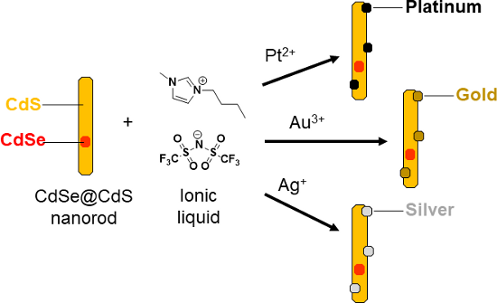
- expanded upon by Pyun et al. [27][28]. Our CdSe quantum dots had an average diameter of 2.4 nm as determined using the correlation of particle diameter with the wavelength of the low energy absorbance peak (λmax = 509 nm) [29]. The CdSe@CdS nanorods had an average length of 50 ± 10 nm and an average
- conducted to observe the dye degradation rate without catalyst present. The samples were irradiated with visible light and dye degradation was monitored using a UV–vis spectrometer to track the disappearance of the characteristic absorbance peak at 655 nm. Although both catalysts were stored in toluene





