


Search results
Search for "agglomeration" in Full Text gives 284 result(s) in Beilstein Journal of Nanotechnology. Showing first 200.
Role of oxygen in wetting of copper nanoparticles on silicon surfaces at elevated temperature
Beilstein J. Nanotechnol. 2017, 8, 425–433, doi:10.3762/bjnano.8.45
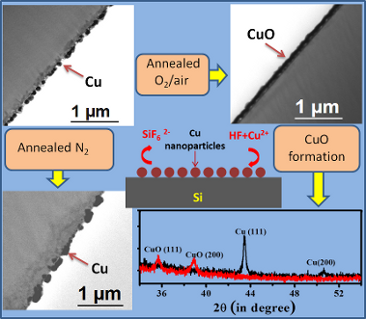
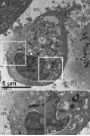
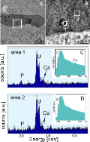
- rapid thermal annealing has been performed under various atmospheric conditions. In spite of the general tendency of the agglomeration of nanoparticles to lower the surface energy at elevated temperatures, our plan-view and cross-sectional transmission electron microscopy (TEM), energy dispersive X-ray
- spectroscopy (EDX) and X-ray diffraction (XRD) analysis shows that the thermal oxidation of the copper nanoparticles and formation of cupric oxide (CuO) on silicon surfaces leads to wetting rather than agglomeration. In contrast, agglomeration has been observed when copper nanoparticles were annealed in a
- annealing of thin films on a substrate leads to the formation of islands, which is the consequence of the Gibbs–Thomson effect for the energy minimization [31]. There are different theoretical explanations regarding the mechanism of particle agglomeration. In general, a copper thin film is agglomerated via


Uptake of the proteins HTRA1 and HTRA2 by cells mediated by calcium phosphate nanoparticles
Beilstein J. Nanotechnol. 2017, 8, 381–393, doi:10.3762/bjnano.8.40
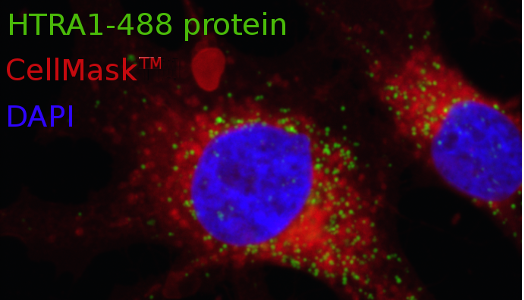
- dispersion. Both cationic (with PEI) and anionic (with CMC) nanoparticles were prepared. Note that the difference between the particle size by SEM and by dynamic light scattering (DLS) indicates a moderate degree of agglomeration of the nanoparticles in pure water. It can be safely assumed that the


Nanoscale isoindigo-carriers: self-assembly and tunable properties
Beilstein J. Nanotechnol. 2017, 8, 313–324, doi:10.3762/bjnano.8.34
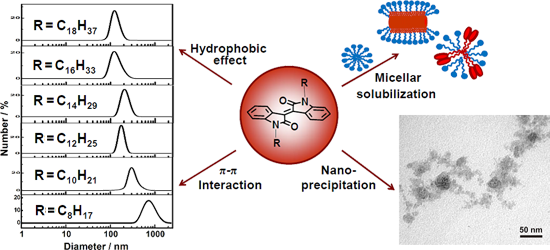
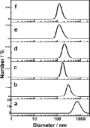
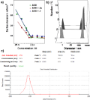
- . The samples based on compounds 2a–f were not used in this experiment due to their low stability in the presence of Sudan I. In these cases, gradual agglomeration and precipitation were observed in the systems. As seen in Figure 4a an increase in absorbance occurs at concentrations above 0.2 mМ (for 2g




Functionalized TiO2 nanoparticles by single-step hydrothermal synthesis: the role of the silane coupling agents
Beilstein J. Nanotechnol. 2017, 8, 304–312, doi:10.3762/bjnano.8.33
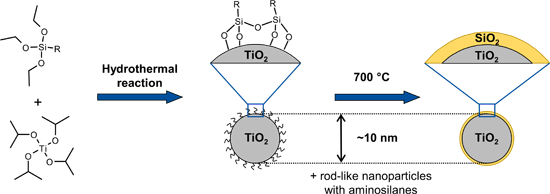
- the crystallite sizes determined by XRD, which suggest only weakly agglomeration in the powders after drying. The nitrogen adsorption and desorption isotherms of TiO2 and in situ surface-functionalized TiO2 nanoparticles demonstrate the hysteresis profile similar to mesoporous materials (Figure 4a



Photocatalysis applications of some hybrid polymeric composites incorporating TiO2 nanoparticles and their combinations with SiO2/Fe2O3
Beilstein J. Nanotechnol. 2017, 8, 272–286, doi:10.3762/bjnano.8.30
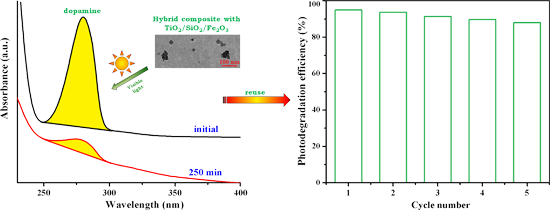
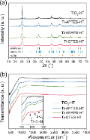
- in the polymeric matrix, as can be observed for the hybrid composites S1 and S4 in the inset of Figure 4a and Figure 4d, respectively. Therefore, it is clear that the introduction of the TiO2 nanoparticles in a polymer template avoids their agglomeration. The hybrid polymeric films, S1–S4 (thickness


Performance of colloidal CdS sensitized solar cells with ZnO nanorods/nanoparticles
Beilstein J. Nanotechnol. 2017, 8, 210–221, doi:10.3762/bjnano.8.23
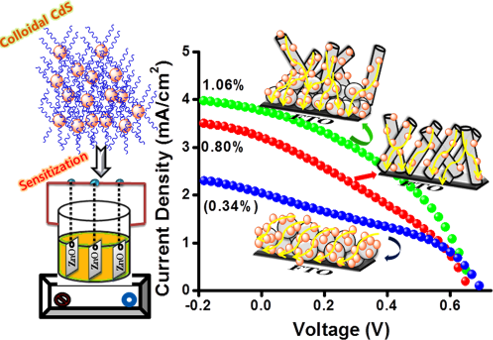
- agglomeration forms more interparticle gaps. This leads to the higher possibility of electron recombination and entrapment resulting in poor photovoltaic performance for particles. On the contrary, the multioriented 1D ZnO nanorods promote better light harvesting and faster electron injection, resulting in
- surface area of the nanoparticles, more CdS was loaded on them than on the nanorods but uncontrolled agglomeration may result in random electron conduction and further may enhance the recombination rate. Whereas, the nanorods (due to their superior one-dimensional structure and reduced grain boundaries


Streptavidin-coated gold nanoparticles: critical role of oligonucleotides on stability and fractal aggregation
Beilstein J. Nanotechnol. 2017, 8, 1–11, doi:10.3762/bjnano.8.1
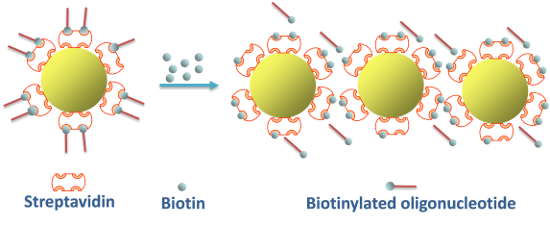
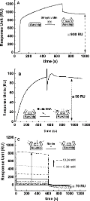
- expected, an almost negligible shift of the plasmon band (521 nm), which is a consequence of the disfavoured adsorption of BiotinDNA onto the more negatively charged citrate-stabilized AuNPs at higher pH, was observed in this case. Different methods for detecting aggregation or agglomeration of gold




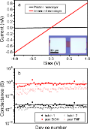
Solvent-mediated conductance increase of dodecanethiol-stabilized gold nanoparticle monolayers
Beilstein J. Nanotechnol. 2016, 7, 2057–2064, doi:10.3762/bjnano.7.196
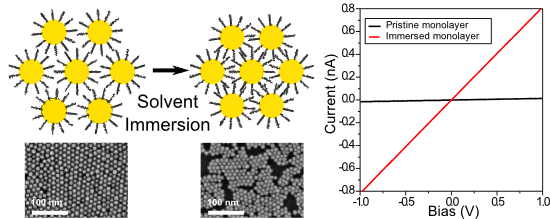
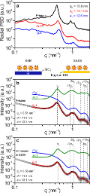
- dependence can be expected if the decrease in lattice constant is driven by an energy minimization process. Attractive van-der-Waals forces between adjacent nanoparticles can cause agglomeration of nanoparticles, which we observed after removing the alkane ligands by UV/ozone treatment. However, van-der



In situ formation of reduced graphene oxide structures in ceria by combined sol–gel and solvothermal processing
Beilstein J. Nanotechnol. 2016, 7, 1815–1821, doi:10.3762/bjnano.7.174
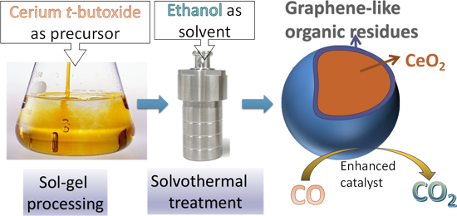
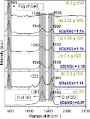
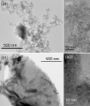
- 0.05 and 0.02 g, the Raman mapping showed no obvious phase separation, indicating that rGO and CeO2 were homogeneously dispersed. However, when the GO proportion was 0.2 g, phase separation (agglomeration of rGO) was observed by partial disappearance of the CeO2 signal and the enhancement of the rGO




Effective intercalation of zein into Na-montmorillonite: role of the protein components and use of the developed biointerfaces
Beilstein J. Nanotechnol. 2016, 7, 1772–1782, doi:10.3762/bjnano.7.170
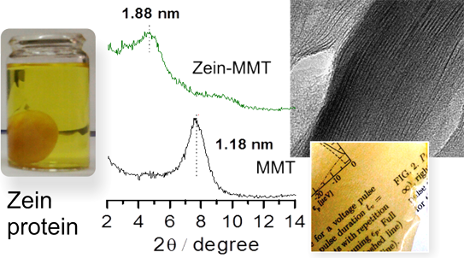
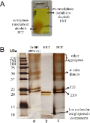
- phase (soluble in alcohol, denoted as EXT) and a solid or precipitate phase (insoluble in alcohol, denoted as PCT), resulting from the agglomeration of the insoluble components (Figure 1A). The aqueous clay suspension was then added to this system with the two phases of zein in absolute ethanol. The




Influence of hydrothermal synthesis parameters on the properties of hydroxyapatite nanoparticles
Beilstein J. Nanotechnol. 2016, 7, 1586–1601, doi:10.3762/bjnano.7.153
- hundred nanometers. It was impossible to determine the length distribution of these structures precisely due to their agglomeration (Figure 6). The average nanoparticle size for Type 2 HAp was 7.3 nm (Figure 7). An analysis of the histogram reveals that the sample contained a considerable fraction of


Development of adsorptive membranes by confinement of activated biochar into electrospun nanofibers
Beilstein J. Nanotechnol. 2016, 7, 1556–1563, doi:10.3762/bjnano.7.149
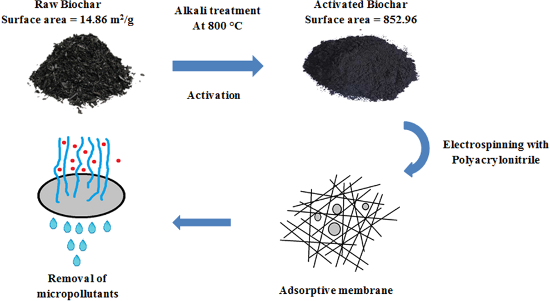
- infrared and thermogravimetric analysis. The results showed that at 1.5% of biochar loading, the surface area reached the maximum value of 12.4 m2/g and beyond this loading value, agglomeration of particles inhibited fine interaction with nanofibrous matrix. Also, the adsorption tests using




Antitumor magnetic hyperthermia induced by RGD-functionalized Fe3O4 nanoparticles, in an experimental model of colorectal liver metastases
Beilstein J. Nanotechnol. 2016, 7, 1532–1542, doi:10.3762/bjnano.7.147
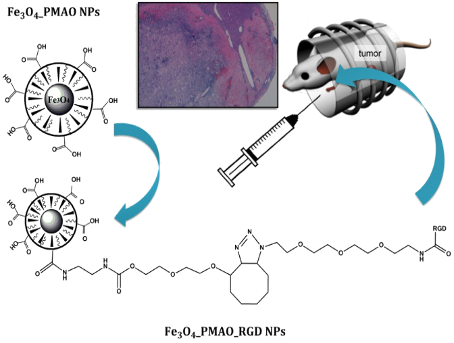
- ), maintaining monodispersity and size distribution. To better define the degree of agglomeration of the nanoparticles in solution, DLS measurements were performed at 24 h. The hydrodynamic diameter for Fe3O4@OA (in toluene) and Fe3O4@PMAO (in a 1:10 PBS/H2O solution) samples was 57 and 78 nm, respectively


On the pathway of cellular uptake: new insight into the interaction between the cell membrane and very small nanoparticles
Beilstein J. Nanotechnol. 2016, 7, 1296–1311, doi:10.3762/bjnano.7.121
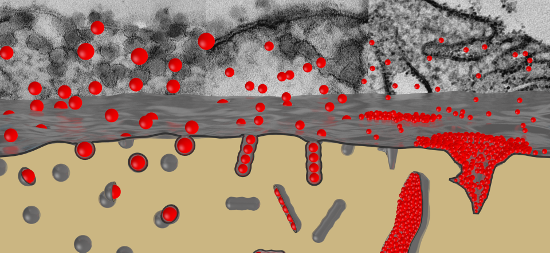
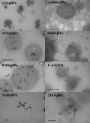
- aggregates. Figure 2 exemplarily shows aggregates of SiNP-22 as seen by TEM after drying from DMEM+FCS containing medium. On closer inspection of the micrographs one can even recognize an adsorption layer around the SiNPs (Figure 2B). Hence, we might attribute the immediate agglomeration of SiNPs to the
- agglomeration of NPs plays a crucial role in their uptake into cells. Accordingly, one has to examine the adsorption of the NP agglomerates on the cell membrane. Figure 3 shows a scanning electron microscope (SEM) micrograph of a HeLa cell exposed to 100 µg·mL−1 SiNP-22 for 15 min prior to fixation. It is worth
- process. Furthermore, we observed necrotic structures in TEM analysis, e.g., vacuolization and membrane disintegration supporting the evidences of necrotic cell death. Agglomeration of NPs in a protein containing environment and their interaction with the cell membrane All the NPs under examination showed




Influence of synthesis conditions on microstructure and phase transformations of annealed Sr2FeMoO6−x nanopowders formed by the citrate–gel method
Beilstein J. Nanotechnol. 2016, 7, 1202–1207, doi:10.3762/bjnano.7.111
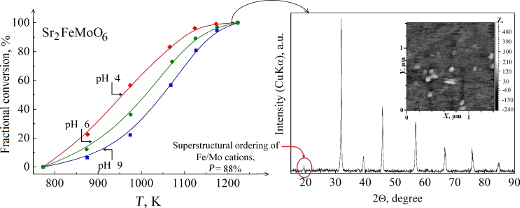
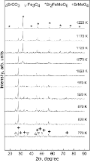
- pH leads to the growth of grain sizes from 150 to 650 nm. In the case of SFMO-4 (the lowest pH), grains down to 150–350 nm were obtained, as displayed in Figure 1d. Despite the agglomeration that occurs upon drying, the effect of pH is also visible in the FESEM images, as SFMO-4 (Figure 1a) presents



Reasons and remedies for the agglomeration of multilayered graphene and carbon nanotubes in polymers
Beilstein J. Nanotechnol. 2016, 7, 1174–1196, doi:10.3762/bjnano.7.109
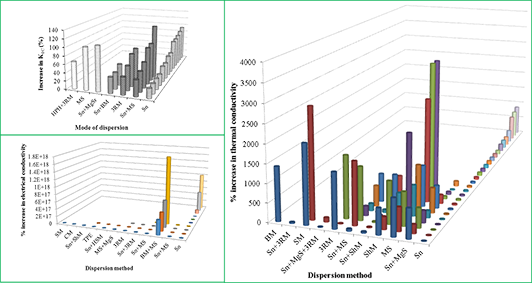
- dispersion state of filler as multilayered graphene (MLG) and carbon nanotubes (CNTs) tend to agglomerate due to van der Waals forces. The agglomeration can be avoided by using organic solvents, selecting suitable dispersion and production methods, and functionalizing the fillers. Another proposed method is
- the use of hybrid fillers as synergistic effects can cause an improvement in the dispersion state of the fillers. In this review article, various aspects of each process that can help avoid filler agglomeration and improve dispersion state are discussed in detail. This review article would be helpful
- for both current and prospective researchers in the field of MLG- and CNT-based polymer nanocomposites to achieve maximum enhancement in mechanical, thermal, and electrical properties of produced polymer nanocomposites. Keywords: agglomeration; carbon nanotubes (CNTs); dispersion state; multilayered


Multiwalled carbon nanotube hybrids as MRI contrast agents
Beilstein J. Nanotechnol. 2016, 7, 1086–1103, doi:10.3762/bjnano.7.102
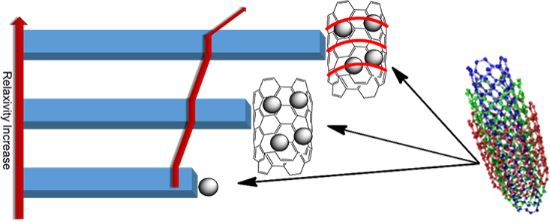
- agglomeration, while the lipophilic surface of the MWCNT has sufficiently high affinity to the cell membrane for permanent connections. Chen subjected pristine MWCNT to LBL (layer-by-layer) non-covalent functionalizations with the polyelectrolyte poly(allylamine hydrochloride) (PAH) followed by silica coating
- °C) allowed for the production of hybrids uniformly coated with metallic superparamagnets, yet an increased temperature was responsible for agglomeration of the nanoparticles on the nanotube walls. Yin, finally, presented a method of SPIO deposition by thermal decomposition of ferrocene under aerobic
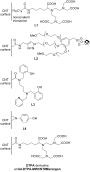
- micelle formation as a mechanism of preventing MWCNT from agglomeration and sedimentation with a critical micelle concentration (cmc) equal to 0.06 mM. On the other hand, in the course of Richard’s studies it was found that Gd-L1 adsorption on the nanotube takes place, thus also this form is adequate for



Development of highly faceted reduced graphene oxide-coated copper oxide and copper nanoparticles on a copper foil surface
Beilstein J. Nanotechnol. 2016, 7, 1010–1017, doi:10.3762/bjnano.7.93
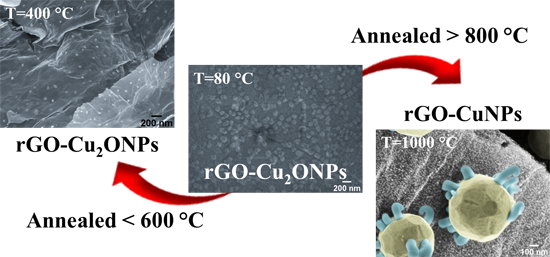
- , (c) surface diffusion, (d) agglomeration and (e) coalescence of adjacent NPs. (f) At the partially melted Cu surface, rGO sheets self-assemble to develop the rGO coating. (g) Equilibrium crystal shape of representative rGO-CuNPs at 1000 °C. FE-SEM images picturing the steps described above: (d1
- ) agglomeration, (e1), coalescence (circle) and (g1) equilibrium crystal shape. Note that, at annealing temperatures of 800–1000 °C, copper oxide transforms into copper via reduction by CO (Cu2O + CO → 2Cu + CO2). (a) TEM image of a sample annealed at 800 °C for 1 h. (b,c) Low- and high-magnification FE-SEM. (d


Improved biocompatibility and efficient labeling of neural stem cells with poly(L-lysine)-coated maghemite nanoparticles
Beilstein J. Nanotechnol. 2016, 7, 926–936, doi:10.3762/bjnano.7.84
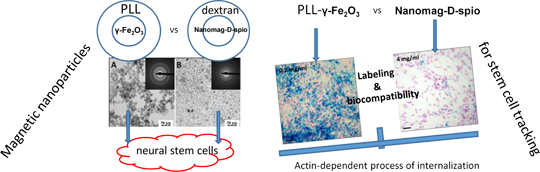
- tracking [16]. Biocompatible polymers are used to modify the surface of nanoparticles, prevent their agglomeration and facilitate internalization. The most widely used coating for surface modification of nanoparticles is dextran, which promotes nanoparticle internalization, in particular in different
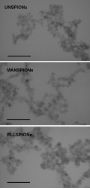
- of both types of the nanoparticles occurred via macropinocytosis as confirmed by TEM. Recently, PLL-γ-Fe2O3 agglomeration properties were studied in biological cell culture media with or without common serum protein, which showed the increase of size and negative ζ-potential in comparison to
- , Great Britain). The agglomeration properties and the surface charge properties of PLL-γ-Fe2O3 nanoparticles in biological cell culture medium with and without addition of common serum protein were previously described [26]. The crystal structure of both types of nanoparticles was investigated using the




Reorientation of single-wall carbon nanotubes in negative anisotropy liquid crystals by an electric field
Beilstein J. Nanotechnol. 2016, 7, 825–833, doi:10.3762/bjnano.7.74
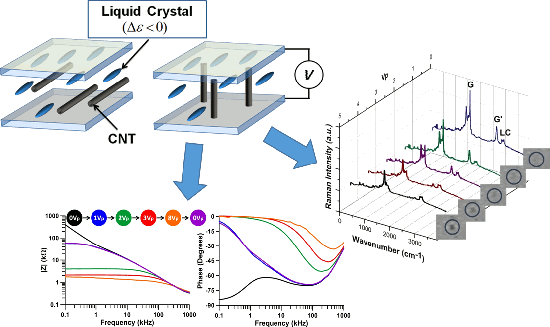
- SWCNT orientation is detected at all (Figure 6). This lack of reversibility can be linked to agglomeration, or imperfect dispersion, of the nanotubes. The agglomerates may become so large that the anchoring force that the LC exerts is not sufficient to realign the agglomerate, or they may even become


Direct formation of gold nanorods on surfaces using polymer-immobilised gold seeds
Beilstein J. Nanotechnol. 2016, 7, 809–816, doi:10.3762/bjnano.7.72
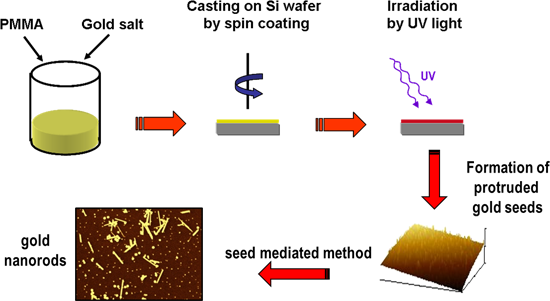
- formed by UV photoreduction. PMMA has amazing properties such as transparency, flexibility and light weight. Moreover, it is able to immobilise the nanoparticles avoiding their agglomeration and thus maintaining the novel size-dependent properties of nanomaterials. PMMA is widely used in lithography and
- with a wide distribution (±500 nm). The average distance for the P2-60 nanocomposite is 180 nm with a narrower distribution (±50 nm). In all samples, the gold nanoparticles are well dispersed in the polymer matrix and no agglomeration is observed. These well-dispersed and protruded gold nanoparticles


Microwave solvothermal synthesis and characterization of manganese-doped ZnO nanoparticles
Beilstein J. Nanotechnol. 2016, 7, 721–732, doi:10.3762/bjnano.7.64
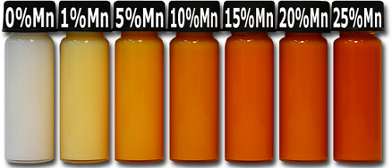
- employed methods. The lack of simultaneous control over chemical composition, stoichiometry, dopant homogeneity, particle size distribution, shape, phase purity, surface modification and agglomeration, makes it difficult to obtain NPs [22]. The primary cause of the lack of reproducibility of magnetic
- content, high efficiency, and surface modification [47]. MSS products are characterised by homogeneous morphology, purity, narrow size distribution and low agglomeration. The present paper contains an attempt to obtain ZnO nanoparticles with a Mn2+ dopant content of up to 25 mol %. For the synthesis we
- agglomeration and formation of conglomerates of Zn1−xMnxO NPs. Phase composition The XRD tests of the samples did not reveal a presence of foreign phases in the obtained Zn1−xMnxO NPs, and all diffraction peaks can be attributed to the hexagonal phase ZnO (Figure 5). Zinc oxide is characterised by hexagonal


Fabrication and properties of luminescence polymer composites with erbium/ytterbium oxides and gold nanoparticles
Beilstein J. Nanotechnol. 2016, 7, 630–636, doi:10.3762/bjnano.7.55
- macroscopic elements. At the same time one of the main disadvantages of nanocomposites is the high level of light scattering, which can be caused by agglomeration of nanoparticles. So the development of low-scattering, transparent nanocomposites is an important challenge nowadays. The method of thermal
- decomposition of rare earth salts is usually used for the fabrication of luminescent rare earth oxide (REO) nanoparticles [3]. Unfortunately, the agglomeration of nanoparticles during high temperature annealing (above 900 °C) causes a high level of light scattering in the nanocomposite made from these materials
- chlorides [9] for the fabrication of Er/Yb oxide nanoparticles with defined parameters and without agglomeration, and the fabrication of optically transparent nanocomposites on their basis in selected polymer matrices with tunable luminescent parameters. Introduction of preformed gold nanoparticles and


Surface coating affects behavior of metallic nanoparticles in a biological environment
Beilstein J. Nanotechnol. 2016, 7, 246–262, doi:10.3762/bjnano.7.23
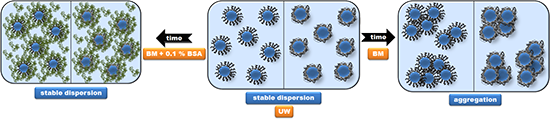
- fluids [19][20][21][22][23][24][25][26][27]. NP agglomeration is intended in some applications, such as in immunoassays [28], while many others require stable colloidal dispersions of NPs at high physiological ionic strength [29]. Stabilization of metallic NPs at high electrolyte content, i.e., in
- biological media, may be achieved by electrostatic or steric repulsions [30][31][32]. Various types of surface coatings have been shown to affect NP properties, particularly to improve their biocompatibility and stability against agglomeration [30][33][34][35]. Proteins or biologically-compatible surfactants
- may serve as desirable barriers preventing NPs from agglomeration in biomedical applications [18]. Moreover, when NPs enter a biological fluid, electrostatic, dispersive, and covalent interactions cause proteins to adsorb on NP surfaces, leading to the formation of a dynamic protein corona [30][36][37




Linear and nonlinear optical properties of hybrid metallic–dielectric plasmonic nanoantennas
Beilstein J. Nanotechnol. 2016, 7, 111–120, doi:10.3762/bjnano.7.13
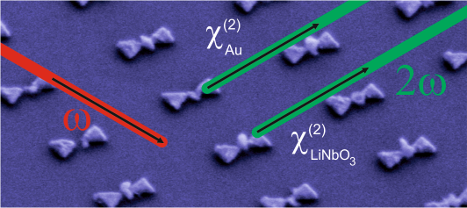
- depicts a tilted-view SEM micrograph of a single gold bowtie nanoantenna. One can clearly see the nanocrystals that have agglomerated in the gap region. In Figure 2b, additional SEM micrographs of the fabricated structures are shown. In order to track the agglomeration using an optical microscope, large





