


Search results
Search for "alcohol" in Full Text gives 276 result(s) in Beilstein Journal of Nanotechnology. Showing first 200.
Synthesis and characterization of electrospun molybdenum dioxide–carbon nanofibers as sulfur matrix additives for rechargeable lithium–sulfur battery applications
Beilstein J. Nanotechnol. 2018, 9, 262–270, doi:10.3762/bjnano.9.28
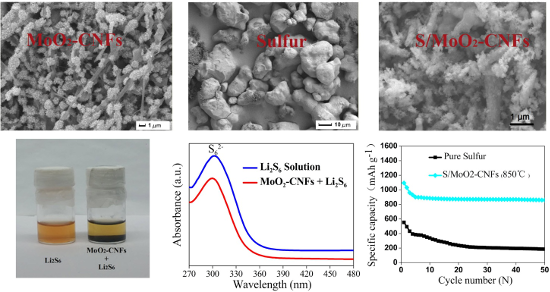
- known to be active in numerous reactions associated with noble metals, such as CO2 hydrogenation, water gas shift, alcohol synthesis and hydrazine decomposition. Here, CH4/H2 atmosphere was not used during calcination, which was much safer and facile when compared to other methods [27]. Raman


Electron-driven and thermal chemistry during water-assisted purification of platinum nanomaterials generated by electron beam induced deposition
Beilstein J. Nanotechnol. 2018, 9, 77–90, doi:10.3762/bjnano.9.10
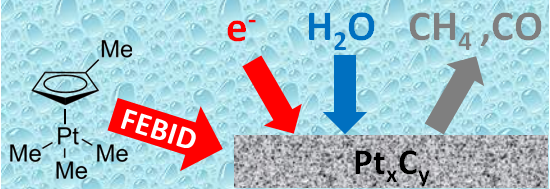
- , CO is produced during electron-driven degradation of methanol which is the smallest alcohol [35]. Alcohols, on the other hand, can be formed through electron-initiated reactions. This was demonstrated for a condensed mixture of ethylene (C2H4) and H2O [31]. Electron exposure initiated addition of H2O
- released from the precursor upon electron-driven proton transfer (see above). The resulting alcohol would then further decompose to release CO. Beside formation of an alcohol, other types of reactions are conceivable. Representative isomers of the different types of reaction products are listed in Table 1
- exposure at E0 above the ionization threshold. Table 1 also includes characteristic mass spectrometric signals of these different types of compounds as a basis for the analysis of our experimental product identification. To investigate if an alcohol is indeed formed, a mixed condensed layer of



The role of ligands in coinage-metal nanoparticles for electronics
Beilstein J. Nanotechnol. 2017, 8, 2625–2639, doi:10.3762/bjnano.8.263
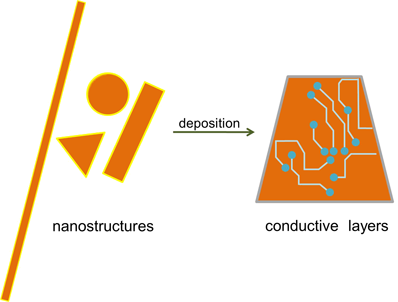
- . A solution containing AgNO3 and poly(vinyl alcohol) (PVA) was cast onto silicate glass. Evaporation of the solvent (water) led to the formation of a fern-like structure of PVA and AgNO3. A heat treatment reduced the silver precursor to metal structures that PVA stabilized in situ through its


Nanoprofilometry study of focal conic domain structures in a liquid crystalline free surface
Beilstein J. Nanotechnol. 2017, 8, 2544–2551, doi:10.3762/bjnano.8.254
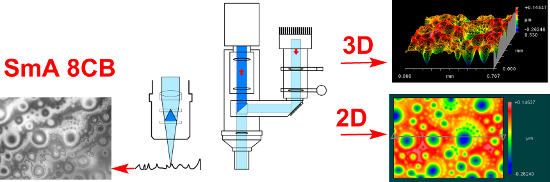
- and a decrease in the intensity of the back reflection of light. This is the reason that a stable interference pattern could not be established. Figure 3 demonstrates a 8CB smectic-A phase surface at 28 °С on the glass substrate. Before use, the quartz glass substrate was cleaned with an alcohol




Refractive index sensing and surface-enhanced Raman spectroscopy using silver–gold layered bimetallic plasmonic crystals
Beilstein J. Nanotechnol. 2017, 8, 2492–2503, doi:10.3762/bjnano.8.249
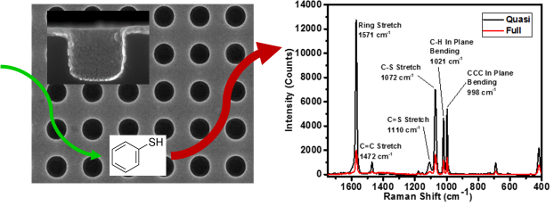
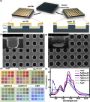
- benzenethiol (BT) (99.99 %) were purchased from Aldrich. 100% ethyl alcohol (Decon) was used to solvate benzenethiol. Ultrapure water (18.2 MΩ·cm) was generated using a Millipore Milli-Q Academic A-10 system and used to prepare the PEG buffer (0–5.6 wt %) solutions. Plasmonic crystal fabrication via soft


Surfactant-induced enhancement of droplet adhesion in superhydrophobic soybean (Glycine max L.) leaves
Beilstein J. Nanotechnol. 2017, 8, 2345–2356, doi:10.3762/bjnano.8.234
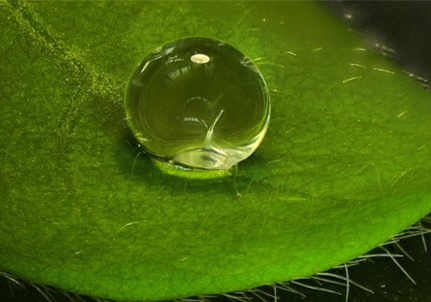
- with a lower HLB value led to a greater dissolution of the wax crystals built up by triacontanol by interacting with the nonpolar parts of the alcohol molecules. Most important for the increase in droplet adhesion is the above-discussed dissolution of wax crystals, which leads to a transition of the
- mainly of the primary alcohol triacosan-1-ol and octacosan-1-ol. An improvement of surface wetting and droplet adhesion was achieved by adding surfactants SBO 10, XP ED 0075 XP ED 28-13 with higher HLB values to the liquid. Such surfactants induce dissolution of the wax crystals and increase the droplet


Tailoring the nanoscale morphology of HKUST-1 thin films via codeposition and seeded growth
Beilstein J. Nanotechnol. 2017, 8, 2307–2314, doi:10.3762/bjnano.8.230
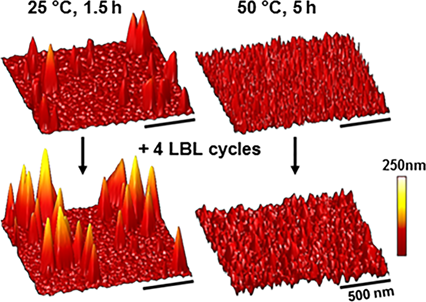
- , MO, USA). The DMSO was purged with nitrogen and passed through columns of molecular sieves. Copper(II) nitrate hemi(pentahydrate) (ACS grade) and copper(II) acetate monohydrate were received from Fisher Scientific (Fair Lawn, NJ, USA). Absolute, anhydrous ethyl alcohol (200 proof, ACS/USP grade) was


Evaluating the toxicity of TiO2-based nanoparticles to Chinese hamster ovary cells and Escherichia coli: a complementary experimental and computational approach
Beilstein J. Nanotechnol. 2017, 8, 2171–2180, doi:10.3762/bjnano.8.216
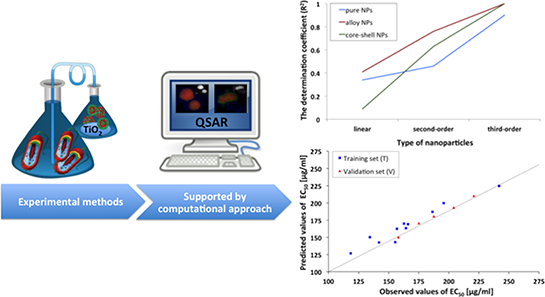
- -Aldrich. Cyclohexane, isopropyl alcohol, hydrazine, acetone, AOT (dioctylsulfosuccinate sodium salt) obtained from POCH S.A. (Poland) were used without further purification. F12 medium, streptomycin and penicillin, glutamine, and heat-inactivated fetal bovine serum (FBS Hi) were purchased from Gibco® Life


Ester formation at the liquid–solid interface
Beilstein J. Nanotechnol. 2017, 8, 2139–2150, doi:10.3762/bjnano.8.213
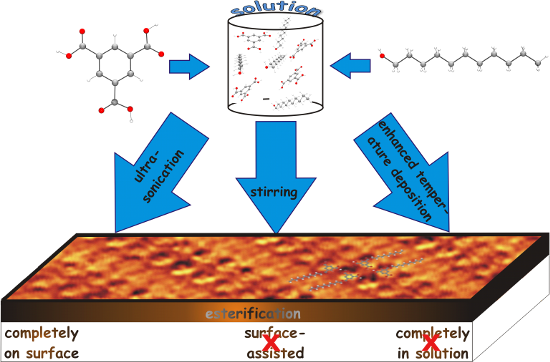
- /bjnano.8.213 Abstract A chemical reaction (esterification) within a molecular monolayer at the liquid–solid interface without any catalyst was studied using ambient scanning tunneling microscopy. The monolayer consisted of a regular array of two species, an organic acid (trimesic acid) and an alcohol
- (undecan-1-ol or decan-1-ol), coadsorbed out of a solution of the acid within the alcohol at the interface of highly oriented pyrolytic graphite (HOPG) (0001) substrate. The monoester was observed promptly after reaching a threshold either related to the increased packing density of the adsorbate layer
- which finds application in several areas like biology (synthesis of drug molecules), the food industry (artificial flavors and fragrances), and textiles (polyesters) [15]. The most common route of esterification starts from a carboxylic acid and an alcohol in the presence of dehydrating agents [16]. The


High-stress study of bioinspired multifunctional PEDOT:PSS/nanoclay nanocomposites using AFM, SEM and numerical simulation
Beilstein J. Nanotechnol. 2017, 8, 2069–2082, doi:10.3762/bjnano.8.207
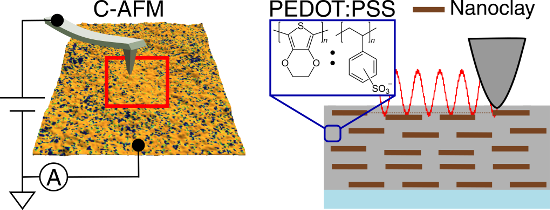
- (ITO, electromechanical characterization) and glass slides (light spectroscopy). Silicon wafers (Ted Pella, Inc.) were sonicated in a sequence of isopropyl alcohol, ethanol, and DI-H2O; then heated with a butane torch (until bright orange glowing) for 30 s for cleaning. The sample thickness was


Enhancement of mechanical and electrical properties of continuous-fiber-reinforced epoxy composites with stacked graphene
Beilstein J. Nanotechnol. 2017, 8, 1909–1918, doi:10.3762/bjnano.8.191
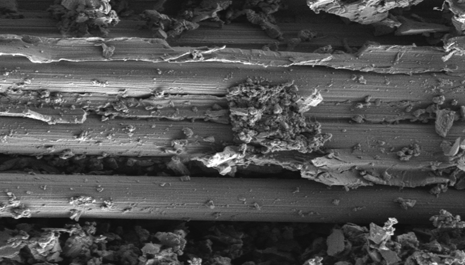
- fiberglass (FG) fabrics. CF was used as received, and Kevlar was cleaned by dipping in isopropyl alcohol (IPA) with further drying. FG was used as received or modified by silanes and surfactants. FG specimens (150 × 150 mm) were dipped in solutions of MEMO and GLYMO silanes in IPA/water. The silane/IPA/water


Fabrication of carbon nanospheres by the pyrolysis of polyacrylonitrile–poly(methyl methacrylate) core–shell composite nanoparticles
Beilstein J. Nanotechnol. 2017, 8, 1897–1908, doi:10.3762/bjnano.8.190

- observed in the cavitation of non-covalently-connected micelles composed of carboxyl-ended polybutadiene cores and crosslinked poly(vinyl alcohol) shells in THF/water (9/1, v/v) mixture [44]. It was very possible that the size of PAN chains was too large to diffuse out of the PMMA shell, thus, the



Nanotribological behavior of deep cryogenically treated martensitic stainless steel
Beilstein J. Nanotechnol. 2017, 8, 1760–1768, doi:10.3762/bjnano.8.177
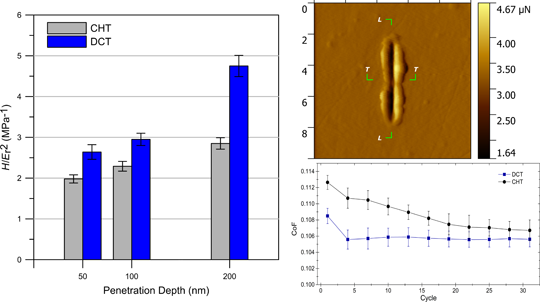
- specimens were ultrasonically cleaned with acetone and isopropyl alcohol for 5 min and then placed onto the stage of the triboindenter to perform nanoindentation and nanotribological tests. Nanoindentation tests A Hysitron TI950 triboindenter was employed for performing nanoindentation measurements, using a


Process-specific mechanisms of vertically oriented graphene growth in plasmas
Beilstein J. Nanotechnol. 2017, 8, 1658–1670, doi:10.3762/bjnano.8.166
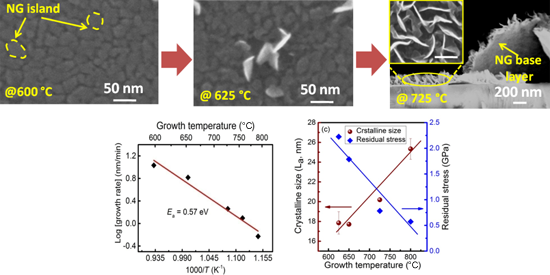
- . Ar and CH4 of high purity were used as dilution and source gas, respectively. Prior to the growth, the substrates were cleaned by acetone, isopropyl alcohol and deionized water, followed by drying with N2 gas, and then loaded into the growth chamber. The chamber was evacuated to 10−6 mbar. The


A biofunctionalizable ink platform composed of catechol-modified chitosan and reduced graphene oxide/platinum nanocomposite
Beilstein J. Nanotechnol. 2017, 8, 1508–1514, doi:10.3762/bjnano.8.151
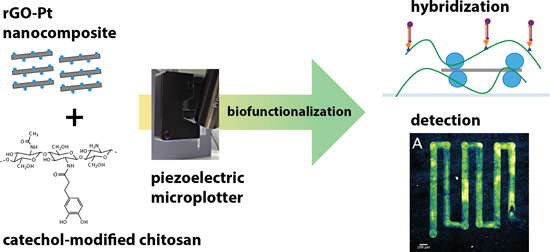
- glycol (EG), as it performed best in our initial dispersion tests, in comparison to isopropyl alcohol and dimethylformamide (data not shown). We prepared our dispersions following a modified version of the NMP graphene dispersion protocol used by Torrisi et al. [12], consisting of alternating bath


Cationic PEGylated polycaprolactone nanoparticles carrying post-operation docetaxel for glioma treatment
Beilstein J. Nanotechnol. 2017, 8, 1446–1456, doi:10.3762/bjnano.8.144
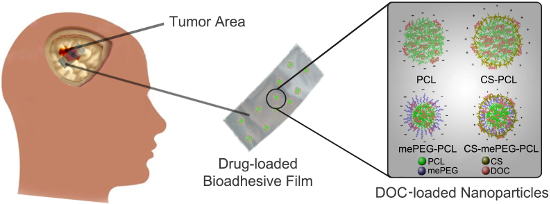
- stirring. This organic phase (5 mL) was added to ultrapure water (20 mL) containing PF68 (1% v/w) and polyvinyl alcohol (0.1% v/w) and emulsified by ultraturrax at 13,000 rpm. The organic solvent was evaporated under vacuum at 40 °C. The formulations were filtered through a 0.45 μm pore filter to eliminate
- was emulsified by ultraturrax at 13,000 rpm. This primary emulsion was added to 20 mL ultrapure water containing PF68 (1% w/v) and polyvinyl alcohol (0.1% w/v) and emulsified by ultraturrax at 13,000 rpm. The organic solvent was evaporated under vacuum at 40 °C. The formulations were filtered through




Fully scalable one-pot method for the production of phosphonic graphene derivatives
Beilstein J. Nanotechnol. 2017, 8, 1094–1103, doi:10.3762/bjnano.8.111
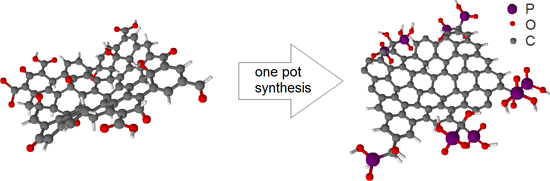
- led by treatment with SOCl2, followed by subsequent nucleophilic substitution reaction with, i.e., an alcohol or an amine. Alternatively, some coupling agents as N,N'-dicyclohexylcarbodiimide (DCC) or 1-ethyl-3-(3-dimethylaminopropyl)carbodiimide (EDC) are used for the synthesis of GO amides or esters


Study of the correlation between sensing performance and surface morphology of inkjet-printed aqueous graphene-based chemiresistors for NO2 detection
Beilstein J. Nanotechnol. 2017, 8, 1023–1031, doi:10.3762/bjnano.8.103
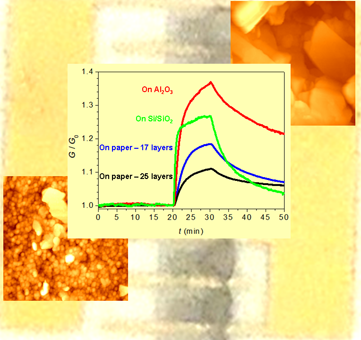
- devices by means of a wholly environmentally friendly, low-cost process that meets the requests coming from the increasing field of paper-based electronics and paving the way towards a flexible, green-by-design mass production. Experimental Materials Graphite flakes (product 332461) and isopropyl alcohol


α-((4-Cyanobenzoyl)oxy)-ω-methyl poly(ethylene glycol): a new stabilizer for silver nanoparticles
Beilstein J. Nanotechnol. 2017, 8, 627–635, doi:10.3762/bjnano.8.67
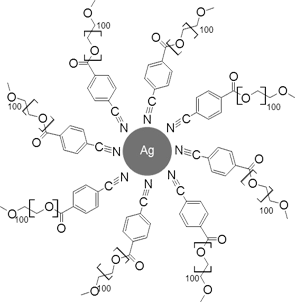
- essential to obtain and retain stable particle dispersions [11][14][15][16]. Synthetic particles often have coatings made from polymers such as poly(vinyl pyrrolidone), poly(vinyl alcohol), or poly(ethylene glycol) (PEG). PEG-based coatings are particularly popular [17][18]. This is also due to the high
- produces a negatively charged carboxylate (from 4-cyanobenzoic acid attached to the SNP surface) and a neutral alcohol (from the free PEG chains released from the surface). The –OH group does not affect the surface charge at pH 12 but the higher number of negative charges from the cleaved benzoic acid


Investigation of the photocatalytic efficiency of tantalum alkoxy carboxylate-derived Ta2O5 nanoparticles in rhodamine B removal
Beilstein J. Nanotechnol. 2017, 8, 604–613, doi:10.3762/bjnano.8.65
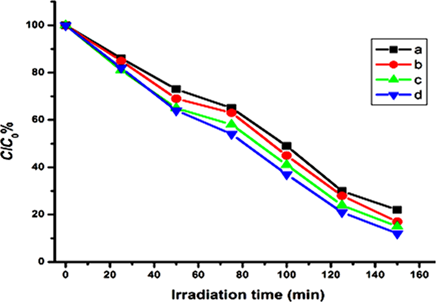
- alcohol (ethanol or n-butanol) (15 mL). The solution was cooled to −84 °C. Double distilled water (18 mmol) was added dropwise under continuous stirring. After the complete addition the solution was allowed to warm up slowly to room temperature leading to the formation of a transparent gel. The obtained


Analysis and modification of defective surface aggregates on PCDTBT:PCBM solar cell blends using combined Kelvin probe, conductive and bimodal atomic force microscopy
Beilstein J. Nanotechnol. 2017, 8, 579–589, doi:10.3762/bjnano.8.62
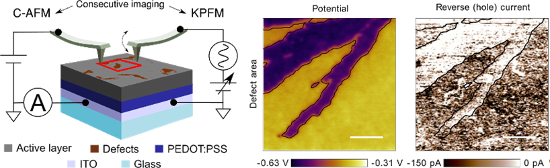
- prepared. Device fabrication Clean ITO-coated glass substrates (Sigma-Aldrich, 703192) were prepared by sonication with isopropyl alcohol and deionized water for 10 min, sequentially. A conductive polymer layer using high-conductivity grade 1.0 wt % in H2O PEDOT:PSS as received (Sigma-Aldrich, 768642) was


The longstanding challenge of the nanocrystallization of 1,3,5-trinitroperhydro-1,3,5-triazine (RDX)
Beilstein J. Nanotechnol. 2017, 8, 452–466, doi:10.3762/bjnano.8.49
- due to the freeze drying and washing of the microemulsion. Gao et al. [19] recrystallized 1,1-diamino-2,2-dinitroethene (FOX7) in ethyl alcohol down to the sub-micrometer range. SEM pictures show an irregular plate-like morphology and therefore highlight the inconsistency of the unique mean particle
- micrometer-sized counterparts. Spray drying is a less energy intensive RDX drying method studied by Patel et al. [36]. RDX and CL-20 were bead milled from water with the addition of isobutanol and poly(vinyl alcohol) (PVOH) to stabilize the colloid by dispersion and coating. Then, an unknown polymeric binder


Self-assembly of silicon nanowires studied by advanced transmission electron microscopy
Beilstein J. Nanotechnol. 2017, 8, 440–445, doi:10.3762/bjnano.8.47
- reactor towards a second collector where they accumulate in the form of Si nanopowder. To perform our studies, this Si nanopowder was collected, dispersed into isopropyl alcohol, and sonicated for 5 min. By dropcasting this solution on Si substrates and on lacey carbon Cu or Au grids, both scanning


Innovations from the “ivory tower”: Wilhelm Barthlott and the paradigm shift in surface science
Beilstein J. Nanotechnol. 2017, 8, 394–402, doi:10.3762/bjnano.8.41

- of lotus. However, epicuticular waxes, small tubules mainly composed of the secondary alcohol nonacosan-10-ol, as well as a specific group of alkaloids, implied that poppies (Papaveraceae) were more likely the sistergroup [42], results which were independently substantiated by molecular data [43


Selective photodissociation of tailored molecular tags as a tool for quantum optics
Beilstein J. Nanotechnol. 2017, 8, 325–333, doi:10.3762/bjnano.8.35
- energy and to enhance the effective cross section for photoabsorption and cleavage. The synthesis of the target structure 1 is displayed in Scheme 1. Reduction of the commercially available 4-bromo-2-nitrobenzaldehyde with sodium borohydride gave the benzyl alcohol 2, which was obtained in quantitative





