


Search results
Search for "alloy" in Full Text gives 216 result(s) in Beilstein Journal of Nanotechnology. Showing first 200.
Carbon nano-onions (multi-layer fullerenes): chemistry and applications
Beilstein J. Nanotechnol. 2014, 5, 1980–1998, doi:10.3762/bjnano.5.207
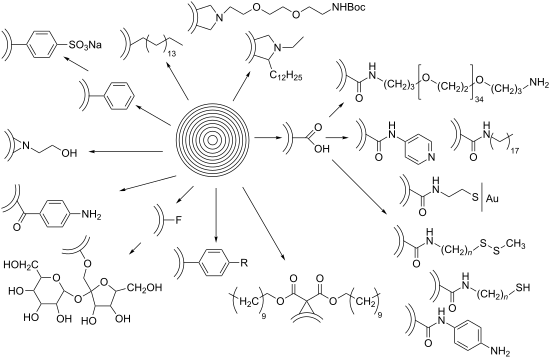
- fluorescent-tagged CNOs (Scheme 8) were then used for in vitro fluorescence imaging, which will be discussed in the corresponding section of this review article. Recently, Echegoyen et al. reported for the first time the alkylation of CNOs [42], which was achieved by a reductive process utilizing a Na–K alloy
- . CNOs were added to a previously prepared, deep-blue solution of the Na–K alloy in 1,2-dimethoxyethane under inert atmosphere affording a brownish dispersion. Then an excess of 1-bromohexadecane was added as electrophile and the alkylated CNO material (CNO-C16) could be recovered. TGA analysis and IR as


The impact of the confinement of reactants on the metal distribution in bimetallic nanoparticles synthesized in reverse micelles
Beilstein J. Nanotechnol. 2014, 5, 1966–1979, doi:10.3762/bjnano.5.206
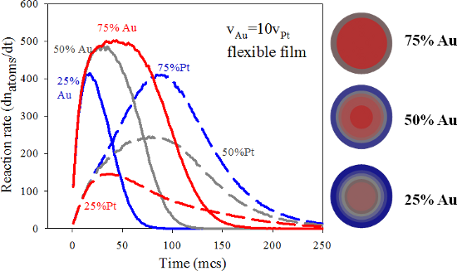
- than the other, it will form the core. The metal which is reduced more slowly will be deposited onto this core, forming the outer layers, which results in a core–shell nanostructure. In contrast, a small difference between reduction rates of the two metals leads to an alloy. Third, this result was


Cathode lens spectromicroscopy: methodology and applications
Beilstein J. Nanotechnol. 2014, 5, 1873–1886, doi:10.3762/bjnano.5.198

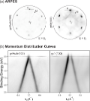
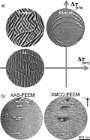
- , Fe preferentially wets the Pd-covered parts of the striped template. Furthermore, at about 200 °C Fe and Pd rearrange to make a surface alloy with a Pd-rich surface layer. The magnetization of the FePd stripes was found to be along the direction perpendicular to the stripe axis, as shown in the XMCD



On the structure of grain/interphase boundaries and interfaces
Beilstein J. Nanotechnol. 2014, 5, 1603–1615, doi:10.3762/bjnano.5.172
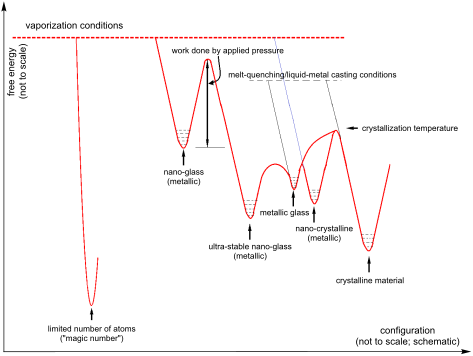
- deformation in micro-grained and nanostructured pseudo-single phase as well as micro-duplex metallic materials, ceramics, ceramic composites, intermetallics, dispersion strengthened alloys and an alloy containing quasi-crystalline particles [53]. Very recently, it has been found to be useful for interpreting


Current state of laser synthesis of metal and alloy nanoparticles as ligand-free reference materials for nano-toxicological assays
Beilstein J. Nanotechnol. 2014, 5, 1523–1541, doi:10.3762/bjnano.5.165
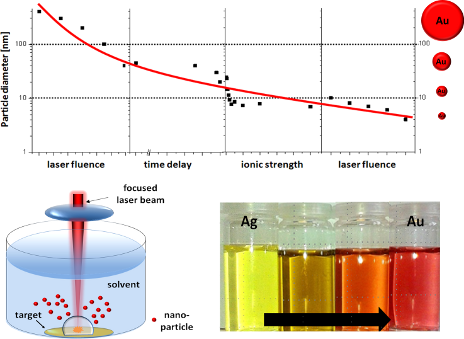
- paragraph of this article highlights the recent progress concerning the synthesis of composition controlled alloy nanoparticles by laser ablation in liquids. Here, binary and ternary alloy nanoparticles with totally homogeneous elemental distribution could be fabricated and the composition of these
- particles closely resembled bulk implant material. Finally, the model AuAg was used to systematically evaluate composition related toxicological effects of alloy nanoparticles. Here Ag+ ion release is identified as the most probable mechanism of toxicity when recent toxicological studies with gametes
- , mammalian cells and bacteria are considered. Keywords: albumin; gold-silver; implant alloy; laser ablation; nickel-titanium; size control; wear debris; Introduction The widespread use of medical implants consisting of metals (e.g., gold coatings [1]) and alloys (e.g., NiTi, CoCr, stainless steel) [2][3][4


Liquid fuel cells
Beilstein J. Nanotechnol. 2014, 5, 1399–1418, doi:10.3762/bjnano.5.153
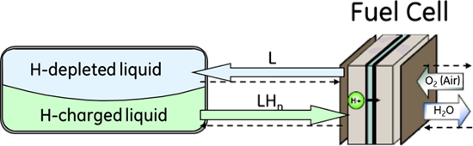
- alloy increases the reaction rate by more than one order of magnitude compared to pure Pt supposedly due to the formation of hydrous molybdenum oxide that reduces the surface poisoning by adsorbed CO [130]. Palladium-based electrocatalysts deliver higher power densities compared to platinum-based ones
- on carbon was comparable [157]. Nickel-0based electrocatalysts are the most active for hydrazine oxidation. An alloy with the composition Ni0.6Co0.4 was about 6 times more active than the pure Ni catalyst [155]. The design space of binary Ni–M (with M = Mn, Fe, Zn, La) and ternary Ni–Mn–Fe and Ni–Zn
- reduces the cell efficiency and poisons the cathode catalyst. A fuel cell with a Laves phase AB2 Zr–Ni based alloy and Pd/C as the anode catalyst, a Nafion® NRE-211 membrane and Pt/C as the cathode catalyst delivered a power density of 290 mW/cm2 at 60 °C [172]. The NaBH4 utilization was only 51% but

Synthesis, characterization, and growth simulations of Cu–Pt bimetallic nanoclusters
Beilstein J. Nanotechnol. 2014, 5, 1371–1379, doi:10.3762/bjnano.5.150
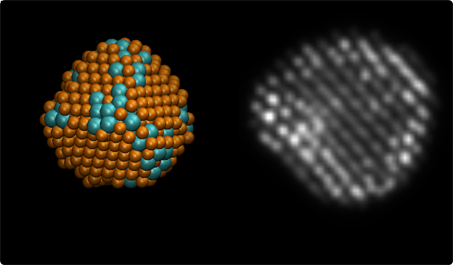
- randomly in the Cu lattice. A novel simulation method is applied to study the growth mechanism, which shows the formation of alloy structures in good agreement with the experimental evidence. The findings give insight into the formation mechanism of the nanosized Cu–Pt bimetallic catalysts. Keywords: Cu
- , heterostructures, and alloy nanocrystals, and this diversity potentiates the increase of the mass specific activity (MSA) of the nanoparticle while also minimizing the cost by using precious metals only in the surface of the particles. Thus, in order to attain a better control on shape, size and composition of the
- novel simulation method to study the growth mechanism of CuPt bimetallic nanoclusters; in particular, we explored the attaching of Pt atoms on Cu seeds by using grand-canonical Langevin dynamics (GCLD) simulations, which shows the formation of alloy structures in good agreement with empirical evidence


Magnesium batteries: Current state of the art, issues and future perspectives
Beilstein J. Nanotechnol. 2014, 5, 1291–1311, doi:10.3762/bjnano.5.143


Review of nanostructured devices for thermoelectric applications
Beilstein J. Nanotechnol. 2014, 5, 1268–1284, doi:10.3762/bjnano.5.141
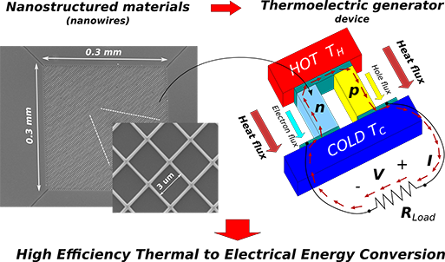
- ][79][80], and rapidly diffused and applied by several other groups [81][82][83][84][85]. The VLS growth is based on the catalytic effect of metal (gold or iron) nanoparticles, deposited on a silicon substrate. At high temperatures, an eutectic alloy is formed among metal and Si, supplied by a silane
- (SiH4) flux (or others silicon-based gases). A precise calibration of silane flux and reaction temperature gives a supersaturation of the melt and induces a transformation from the liquid alloy phase to solid Si that crystallizes under the metal nanoparticle. In this way, crystalline silicon


Integration of ZnO and CuO nanowires into a thermoelectric module
Beilstein J. Nanotechnol. 2014, 5, 927–936, doi:10.3762/bjnano.5.106
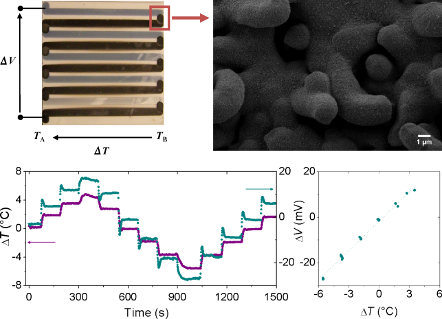
- material for the probing tips, Chromel was used. Chromel is an alloy of nickel and chromium, which exhibits a positive absolute Seebeck coefficient of about 28.1 μV/K [39] and is commonly used with Alumel to form K-type thermocouples. The voltage ΔV, measured at the ends of the probing tips, is


Injection of ligand-free gold and silver nanoparticles into murine embryos does not impact pre-implantation development
Beilstein J. Nanotechnol. 2014, 5, 677–688, doi:10.3762/bjnano.5.80
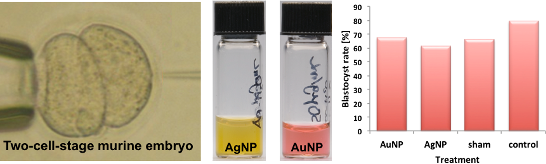
- nanoparticles made from gold [26], silver [27][28][29][30], silver–palladium alloy [31], and silver–copper alloy [30] by in ovo injection. Interestingly, no abnormal development was observed, except a low-grade inflammation of the embryonic liver after exposure to AgCu alloy nanoparticles. In mammals, almost




Magnesiothermic conversion of the silica-mineralizing golden algae Mallomonas caudata and Synura petersenii to elemental silicon with high geometric precision
Beilstein J. Nanotechnol. 2014, 5, 554–560, doi:10.3762/bjnano.5.65
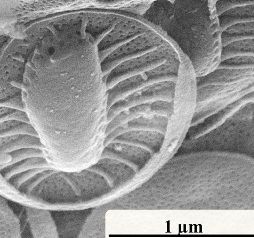
- ][14][23]. The formation of the mixed binary phase Mg2Si was also described in the literature, but the formation of the alloy phase occurs only as an intermediate that reacts in a subsequent step with silica to the products silicon and magnesium oxide [16]. These equations correspond to our results


Calibration of quartz tuning fork spring constants for non-contact atomic force microscopy: direct mechanical measurements and simulations
Beilstein J. Nanotechnol. 2014, 5, 507–516, doi:10.3762/bjnano.5.59
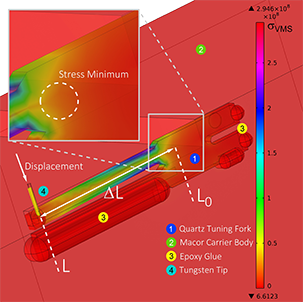
- precision. Recent achievements of this force spectroscopy method manifest in the identification of the chemical identity of single atoms in an alloy [2] or the measurement of the force applied during the controlled manipulation of molecules or atoms on a surface [3][4]. nc-AFM experiments at the atomic




Confinement dependence of electro-catalysts for hydrogen evolution from water splitting
Beilstein J. Nanotechnol. 2014, 5, 195–201, doi:10.3762/bjnano.5.21
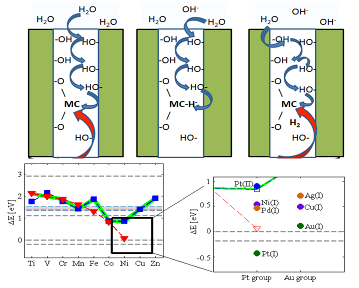
- assembly for the cathode process during water splitting. A computational model was designed to determine how alloying elements control the fraction of H2 released during zirconium oxidation by water relative to the amount of hydrogen picked up by the corroding alloy. This model is utilized to determine the
- ] site (cf. Figure 1c) Indeed, Equation 6 was found to be decisive for the fraction of hydrogen atoms not forming H2 but being absorbed in the Zr alloy according to For completeness, a 1.1 eV/H2 drive to release H2 from the confining grain boundary was computed according to Utilization of the hydride
- -proton recombination channel (see Figure 1b), the correlation between the computed reaction energies for the HER, Equation 6, and the experimental hydrogen pick-up fractions (HPUF), i.e., the fraction of the hydrogen, which does not undergo hydrogen evolution but are instead picked-up by the alloy during


3D-nanoarchitectured Pd/Ni catalysts prepared by atomic layer deposition for the electrooxidation of formic acid
Beilstein J. Nanotechnol. 2014, 5, 162–172, doi:10.3762/bjnano.5.16
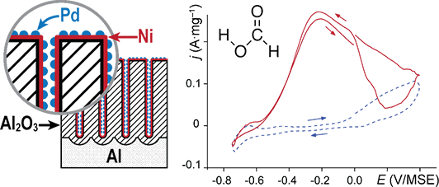
- film uniformly. This could be due to a lower surface energy between the Pd and the annealed substrate. It is even possible to form a Pd/Ni alloy if the NiO top layer appears only when the sample is exposed to air. The two different growth mechanisms demonstrate the strong influence of the substrate on


Design criteria for stable Pt/C fuel cell catalysts
Beilstein J. Nanotechnol. 2014, 5, 44–67, doi:10.3762/bjnano.5.5
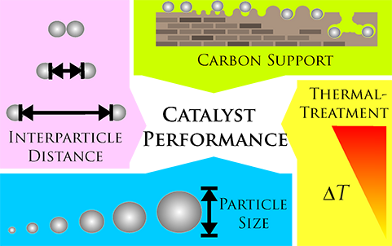
- , 40237 Düsseldorf, Germany Department of Heterogeneous Catalysis, Max-Planck-Institut für Kohlenforschung, Kaiser-Wilhelm-Platz 1, 45470 Mülheim an der Ruhr, Germany 10.3762/bjnano.5.5 Abstract Platinum and Pt alloy nanoparticles supported on carbon are the state of the art electrocatalysts in proton
- in particular the catalyst stability are evaluated. Based on our results, a set of design criteria for more stable and active Pt/C and Pt-alloy/C materials is suggested. Keywords: catalyst design criteria; degradation mechanisms; fuel cell catalyst; nanoparticles; stability; Introduction The

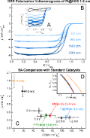




Template based precursor route for the synthesis of CuInSe2 nanorod arrays for potential solar cell applications
Beilstein J. Nanotechnol. 2013, 4, 868–874, doi:10.3762/bjnano.4.98
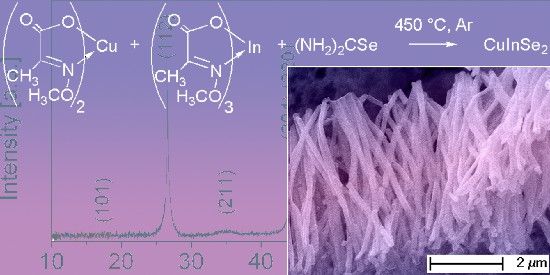
- Philips XL-30 FEG electron-scan microscope coupled with an energy-dispersive X-ray (EDX) analyser that was operated at 20–25 kV. The samples were mounted on conductive carbon-rich polymer films and sputtered with a Pt/Pd alloy. Transmission electron microscopy (TEM) images were taken by using a Tecnai G2
- 450 °C. EDX analysis of CuInSe2 nanorod arrays; Pt-signal originates from the sputtered Pt/Pd alloy. Powder X-ray diffraction pattern of polycrystalline CuInSe2 nanorods after final conversion at 450 °C. TEM images and SAED micrograph of polycrystalline CuInSe2 nanorods. Raman spectrum of CuInSe2


Lithium peroxide crystal clusters as a natural growth feature of discharge products in Li–O2 cells
Beilstein J. Nanotechnol. 2013, 4, 758–762, doi:10.3762/bjnano.4.86
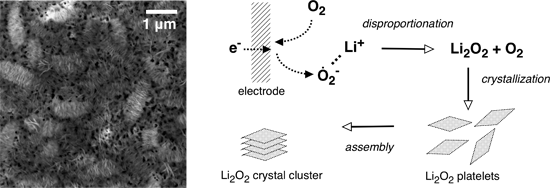
- utilized as the model electrodes (Figure 1a) were prepared from gold–silver alloy foils (see Supporting Information File 1 for experimental details). The mean pore size was estimated to be about 200 nm (see Figure S1 in Supporting Information File 1). This allowed us to observe changes in the morphology of


Plasticity of nanocrystalline alloys with chemical order: on the strength and ductility of nanocrystalline Ni–Fe
Beilstein J. Nanotechnol. 2013, 4, 542–553, doi:10.3762/bjnano.4.63
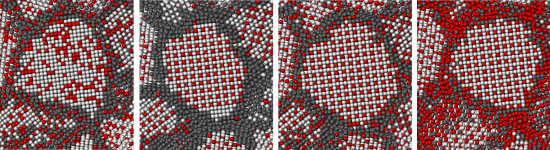
- dislocations [3][4]. The experimental realization of a nanocrystalline (nc) microstructure of an ordered alloy, however, strongly depends on the route of preparation. For electrodeposited nc Ni–Fe alloys (up to 28% Fe) a solid solution with no chemical order was observed [5]. In Ni3Al, a partially ordered
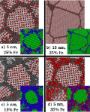
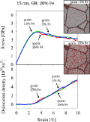
- elemental distribution and not due to a differing stable configuration for the case of a nanometer grain size as observed for other systems [29]. Random alloy: fixed GB composition, varying grain composition (15 nm) For coarse grained material, the strengthening effect of substitutional solutes (i.e., solid
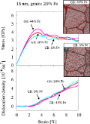
- composition in the next section. Random alloy: varying GB composition, fixed grain composition (15 nm) The delicate interplay between solute distribution and mechanical response of this nc alloy was further studied on samples, where the random solid solution inside the grain interior was held at a constant



Nanoglasses: a new kind of noncrystalline materials
Beilstein J. Nanotechnol. 2013, 4, 517–533, doi:10.3762/bjnano.4.61
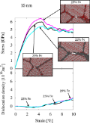
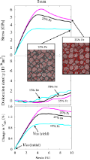
- properties of materials by varying their chemical microstructure is displayed in Figure 2 indicating the increase of the work hardening of an (Al-1.6 atom % Cu) alloy if the chemical microstructure (at constant chemical composition) is changed [2]. Glassy materials, although known for about 11000 years, have
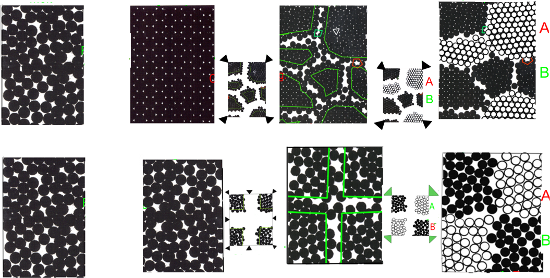
- nanomaterials. As is well known from the phase diagrams of numerous alloys, the mutual solubility of the components forming an alloy is, in most systems, in the molten state much higher than the mutual solubility of the same components in the crystalline state. Well-known examples for the different solubilities
- that are immiscible in the crystalline state. Multiphase glasses structured on a nanometer scale have been produced by phase separation and have been studied in several alloy systems, e.g., in Ag–Ni [79][80], Cu–Nb [81], Ag–Cu [82][83][84], Ag–Fe [56], Ag–Gd [57], Cu–Ta and Cu–W [58]. The






Catalytic activity of nanostructured Au: Scale effects versus bimetallic/bifunctional effects in low-temperature CO oxidation on nanoporous Au
Beilstein J. Nanotechnol. 2013, 4, 111–128, doi:10.3762/bjnano.4.13
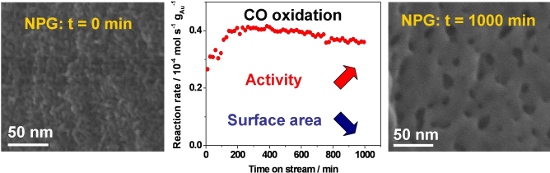
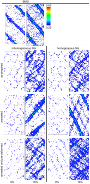
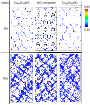
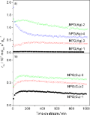
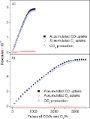
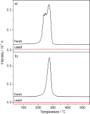
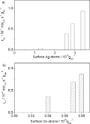
- are discussed. Keywords: AuAg alloy; AuCu alloy; CO oxidation; dynamic studies; kinetics; nanoporous Au (NPG) catalyst; oxygen storage capacity (OSC); temporal analysis of products (TAP); Introduction Porous metallic materials with well-controlled morphologies and surface properties have attracted
- latter method, electrochemical dealloying, nanoporous gold (NPG) materials with ligament sizes of less than 6 nm can be effectively fabricated [5][10]. Zielasek et al. [4] and Xu et al. [11] reported that nanoporous gold, prepared by the selective dissolution of Ag from a AuAg alloy, exhibits a
- amounts of the second, less noble metal in the Au alloy used for NPG formation, such as Ag [13][29][30], Cu [6] or Al [31], which cannot be fully removed during dealloying [29], were proposed to be responsible for the unexpected high catalytic activity of NPG catalysts [4][32][33]. This would agree also


Characterization and properties of micro- and nanowires of controlled size, composition, and geometry fabricated by electrodeposition and ion-track technology
Beilstein J. Nanotechnol. 2012, 3, 860–883, doi:10.3762/bjnano.3.97
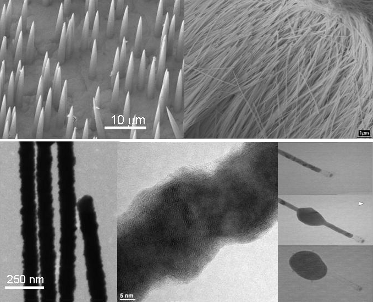
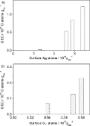
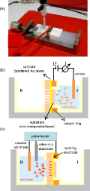
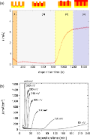
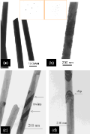
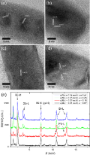
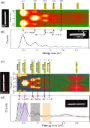
- thermoelectric nanowires in etched ion-track membranes enable the control of various wire parameters. It is particularly important to control the alloy composition and to obtain wire diameters as small as possible, because large enhancements in TE performance are expected when quantum size effects and enhanced








Ordered arrays of nanoporous gold nanoparticles
Beilstein J. Nanotechnol. 2012, 3, 651–657, doi:10.3762/bjnano.3.74
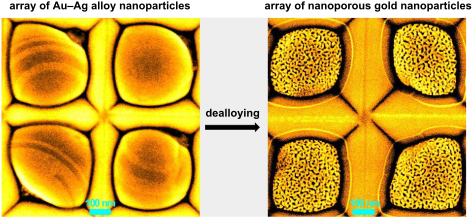
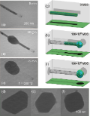
- ) enables fabrication of perfectly ordered 2-dimensional arrays of nanoporous gold nanoparticles. The dewetting of Au/Ag bilayers on the periodically prepatterned substrates leads to the interdiffusion of Au and Ag and the formation of an array of Au–Ag alloy nanoparticles. The array of alloy nanoparticles
- to fabricate nanoparticles [14][15]. The dewetting of metal films is driven by reducing the surface energy of the film and the interface energy between the film and the substrate, and occurs by diffusion even well below the melting temperature of the film [15]. In addition, alloy nanoparticles can be
- the local curvature or by limiting the diffusion paths. This leads to the formation of 2-D nanoparticle arrays with well-defined particle size and particle spacing. Dealloying is a “bottom-up” approach to fabricate nanoporous gold by selectively removing or leaching the element Ag from the Au–Ag alloy



Focused electron beam induced deposition: A perspective
Beilstein J. Nanotechnol. 2012, 3, 597–619, doi:10.3762/bjnano.3.70
- analysis (EDX), are shown for nine samples. A priori it is not clear whether Si is preferentially included in the carbonaceous matrix or forms an alloy with Pt. From the EDX results several conclusions can be drawn, as was detailed in [28]. For low Si content a progressive decrease of the C content is
- growth of Si and O content ceases when a Si/Pt ratio of about 1 is reached. It is speculated that a substantial part of the Si content of the samples is now bound to the Pt, forming amorphous Pt–Si alloy structures. This assumption is to some degree corroborated by the results of transmission electron


Synthesis and electrical characterization of intrinsic and in situ doped Si nanowires using a novel precursor
Beilstein J. Nanotechnol. 2012, 3, 564–569, doi:10.3762/bjnano.3.65
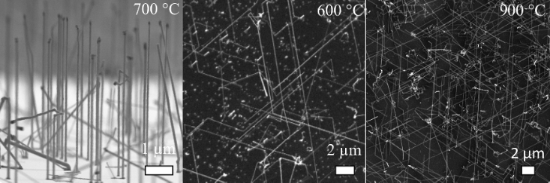
- straight, crystalline, nanometre-sized wires. During VLS growth a Si precursor is introduced, which is cracked and dissolved into the catalytic liquid phase. Generally Au is used as the catalyst on Si substrates, forming a liquid alloy with a eutectic temperature of 364 °C, which, upon supersaturation





