


Search results
Search for "barrier" in Full Text gives 566 result(s) in Beilstein Journal of Nanotechnology. Showing first 200.
Piezotronic effect in AlGaN/AlN/GaN heterojunction nanowires used as a flexible strain sensor
Beilstein J. Nanotechnol. 2020, 11, 1847–1853, doi:10.3762/bjnano.11.166
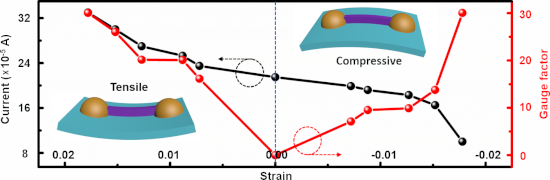
- ITO transparent electrodes were patterned and deposited onto the two ends of the AlGaN/AlN/GaN heterojunction NWs to eliminate the impact of the Schottky barrier. In addition, they fixed the NW to the flexible PET substrate. A schematic of the equipment (electric one-dimensional translation stage) for


Unravelling the interfacial interaction in mesoporous SiO2@nickel phyllosilicate/TiO2 core–shell nanostructures for photocatalytic activity
Beilstein J. Nanotechnol. 2020, 11, 1834–1846, doi:10.3762/bjnano.11.165
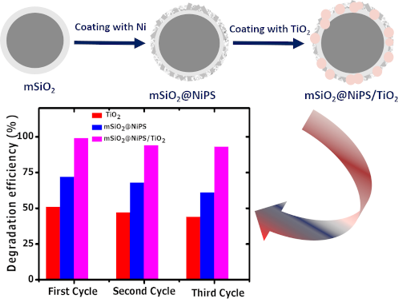
- photocatalysts is rarely reported. Nickel-based nanomaterials are of great interest for photocatalytic activity owing to their low cost, high optical absorption coefficients, and low bandgap energies [29][30][31]. Most importantly, the formation of a Schottky barrier between nickel species and titania can


Absorption and photoconductivity spectra of amorphous multilayer structures
Beilstein J. Nanotechnol. 2020, 11, 1757–1763, doi:10.3762/bjnano.11.158
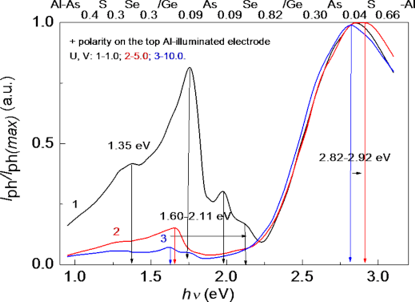
- applied field becomes higher than the internal electrical field. For amorphous semiconductors the barrier height of an Al–semiconductor contact, with a work function of φm = 4.18 eV, is φb = 0.40–0.75 eV [14][17]. This is very important from a practical point of view, because there is the possibility to


PEG/PEI-functionalized single-walled carbon nanotubes as delivery carriers for doxorubicin: synthesis, characterization, and in vitro evaluation
Beilstein J. Nanotechnol. 2020, 11, 1728–1741, doi:10.3762/bjnano.11.155
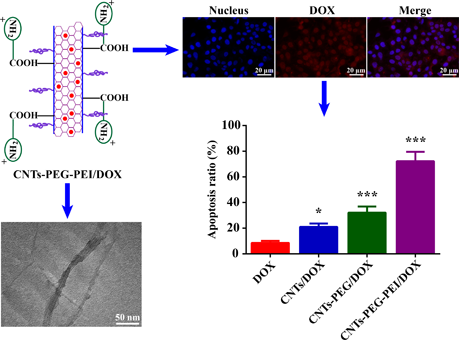
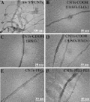
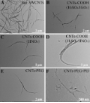
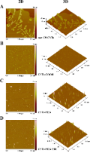
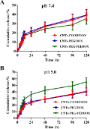
- from PEI make the CNTs much more soluble in aqueous solution and thus improve their biocompatibility [37]. Furthermore, surface modification with PEGylated agents or positively charged groups can protect the nanocarriers by providing a steric barrier from being recognized and captured by the




Seebeck coefficient of silicon nanowire forests doped by thermal diffusion
Beilstein J. Nanotechnol. 2020, 11, 1707–1713, doi:10.3762/bjnano.11.153
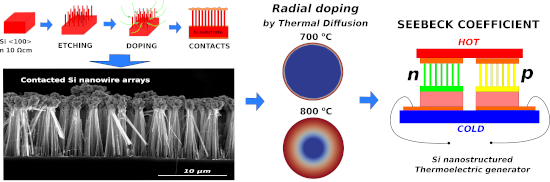
- penetration of the doping species (phosphorous, in our case) into the silicon. It requires an oxidizing environment, at least in a first preliminary phase, to grow a thin SiO2 layer at the surface as a barrier for the doping species, forcing the diffusion into silicon. In the specific case of thermoelectric


Out-of-plane surface patterning by subsurface processing of polymer substrates with focused ion beams
Beilstein J. Nanotechnol. 2020, 11, 1693–1703, doi:10.3762/bjnano.11.151
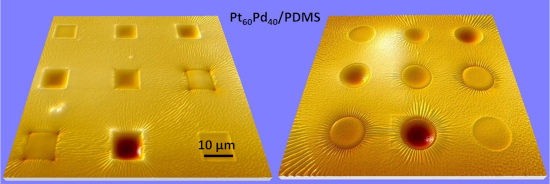
- energy barrier for material expansion and relaxation. This entirely phenomenological model is consistent with the conclusions drawn in a previous study [25], in which swelling was observed in PDMS samples irradiated with a 2 MeV proton beam. In that the case, the irradiated surface was fabricated by


A self-powered, flexible ultra-thin Si/ZnO nanowire photodetector as full-spectrum optical sensor and pyroelectric nanogenerator
Beilstein J. Nanotechnol. 2020, 11, 1623–1630, doi:10.3762/bjnano.11.145
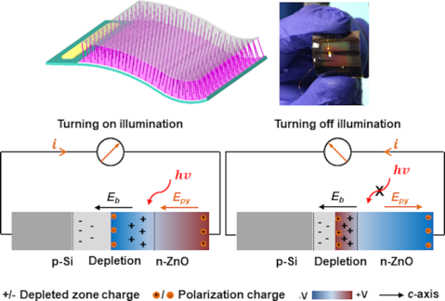
- -axis of the ZnO NWs (Figure 2, middle). Because the direction of the pyroelectric electric field (Epy) is the same as Eb and the barrier height decreases at the heterojunction interface due to the generation of a negative polarization potential, the total electric field in the depletion zone increases


PTCDA adsorption on CaF2 thin films
Beilstein J. Nanotechnol. 2020, 11, 1615–1622, doi:10.3762/bjnano.11.144
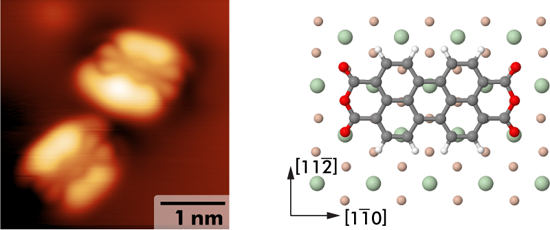
- statistical artefact. However, it is also noteworthy that the intermediate minimum in the distribution is less pronounced in measurements performed after PTCDA deposition on cooled samples, which suggests an increased barrier at the estimated sample temperature of 140 K to arrive in the optimum adsorption


Detecting stable adsorbates of (1S)-camphor on Cu(111) with Bayesian optimization
Beilstein J. Nanotechnol. 2020, 11, 1577–1589, doi:10.3762/bjnano.11.140
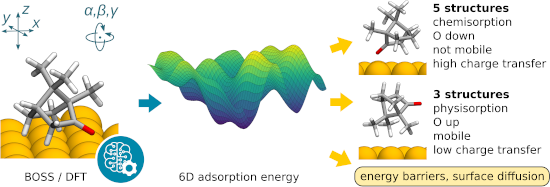
- minima, not only the global energy minimum. Local minima and barrier extraction Once the PES is converged, we data-mine the surrogate model. We extract the lowest energy minima, which we equate with the lowest-energy adsorbate structures. The minima are detected using the built-in local minima search
- upper limits to the true barriers. However, even qualitative accuracy in barrier evaluations suffices to identify the least mobile structures, which are the best candidates when compared to experimentally observed structures. We will return to energy barriers and our way of estimating them in the
- minimum at (θ, φ, ω) = (−3, 7, −3)°, and an energy barrier of 0.1 eV for the rotation of the methyl groups. Given this barrier, the rotation of the methyl groups Δφ away from the global minimum is expected to be small at room temperature. The Arrhenius law predicts that in 50% of the molecules Δφ < 10


Electrokinetic characterization of synthetic protein nanoparticles
Beilstein J. Nanotechnol. 2020, 11, 1556–1567, doi:10.3762/bjnano.11.138
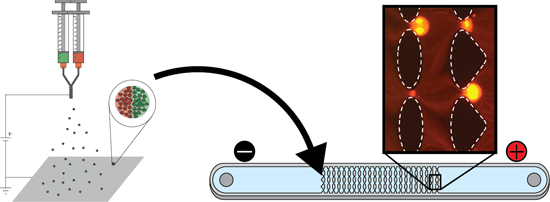
- 5a) become trapped along isoelectric lines (Figure 5b). The effects of DEP depend on the gradient of the square of the electric field (Figure 5c). The isoelectric line with the lowest magnitude in Figure 5b (i.e., the line passing through the midpoint of the constriction) forms a “barrier” through



Adsorption and self-assembly of porphyrins on ultrathin CoO films on Ir(100)
Beilstein J. Nanotechnol. 2020, 11, 1516–1524, doi:10.3762/bjnano.11.134
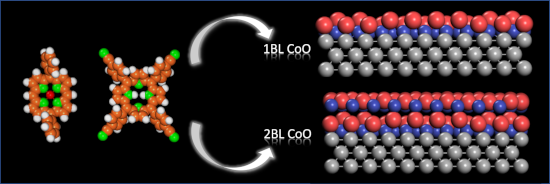
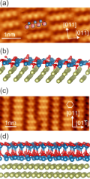
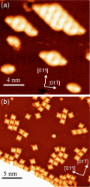
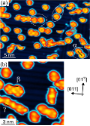
- molecular state at temperatures of 80 K and above prevents the molecules from locking into a compact self-assembled layer at low coverage. When stationary molecules with a rotational potential barrier larger than the diffusion barrier self-assemble, the intermolecular forces guide the molecules to diffuse
- into a state of low-energy at an appropriate bonding distance. This is, for example, observed at low coverage of 2H-DPP on Cu(111) [23]. When, as it appears here, the diffusion and the rotational barrier are of equal magnitude, the intermolecular forces cannot exert their directional influence on the




Antimicrobial metal-based nanoparticles: a review on their synthesis, types and antimicrobial action
Beilstein J. Nanotechnol. 2020, 11, 1450–1469, doi:10.3762/bjnano.11.129
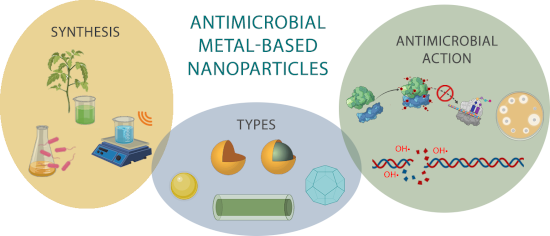
- protection to the cell against osmotic rupture and mechanical damage. It is the first barrier against any harmful particles from the environment, such as oxidative molecules. Every type of microorganism has a different cell wall composition: i) fungi and yeast are mainly composed of chitin and
- , slightly attract NPs [158]. In addition, the double membrane acts as a selective physical barrier against hydrophobic compounds, such as detergents and antibiotics. On the other hand, Gram-positive bacteria have a higher permeability, even with a thick layer of peptidoglycan, since the single membrane is


Protruding hydrogen atoms as markers for the molecular orientation of a metallocene
Beilstein J. Nanotechnol. 2020, 11, 1432–1438, doi:10.3762/bjnano.11.127
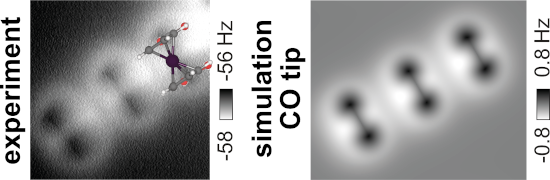
- ferrocene, the rotational barrier between these conformers amounts to only 0.04 eV in the gas phase [11][12][13], while for substituted ferrocenes the energy barrier values determined in the gas phase amount up to 0.2 eV [14][15][16]. In solution, barrier values of up to 0.7 eV are measured [17][18] and for
- ionised derivates calculations yielded rotational barrier values of up to 1.4 eV [19]. From this class of molecules we investigate the ferrocene derivate 1,1’-ferrocene dicarboxylic acid (FDCA), a ferrocene functionalised with two carboxylic acid moieties. This molecule has been analysed before on Ag(111
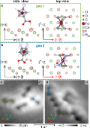


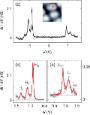
![[Graphic 10]](/bjnano/content/inline/2190-4286-11-127-i10.svg?max-width=637&scale=1.18182) row of FDCA molecules in geo 2. (a–c) Constant-height frequency-shi...
row of FDCA molecules in geo 2. (a–c) Constant-height frequency-shi...
Transient coating of γ-Fe2O3 nanoparticles with glutamate for its delivery to and removal from brain nerve terminals
Beilstein J. Nanotechnol. 2020, 11, 1381–1393, doi:10.3762/bjnano.11.122
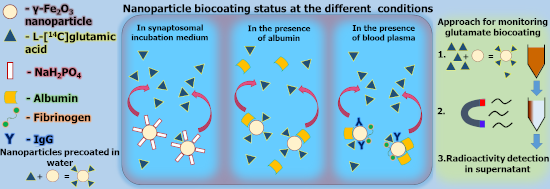
- glutamate homeostasis and synaptic neurotransmission. Also, glutamate plays an important role in mediating the blood–brain barrier function and can be exploited for clinical translation [38]. It was shown that the conjugation of non-permeable drugs with glutamate may improve the brain delivery of the drug
- [39]. The neuronal release of glutamate modulates the blood–brain barrier function, through activation of N-methyl-ᴅ-aspartate (NMDA) receptors [40]. Glutamate increased intracellular calcium levels in endothelial cells and levels of nitrogen oxide (NO) around microvessels. These results can be
- considered in support of a mechanism of glutamate-induced activation of NMDA receptors in endothelial cells, which leads to calcium signaling and downstream NO production to promote blood–brain barrier permeability [38]. Thus, it may be expected that glutamate-conjugated γ-Fe2O3 nanoparticles can more easily


Effect of localized helium ion irradiation on the performance of synthetic monolayer MoS2 field-effect transistors
Beilstein J. Nanotechnol. 2020, 11, 1329–1335, doi:10.3762/bjnano.11.117
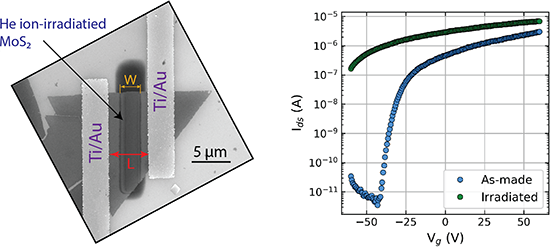
- the interface at this delivered dose. It may be expected that an increase in the Schottky barrier height will occur if the normally pinned Fermi level [42] is now a function of the physical state of the beam-altered metal–semiconductor interface. Ion beam pre-treatment of the contact region before


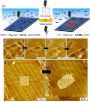
Growth of a self-assembled monolayer decoupled from the substrate: nucleation on-command using buffer layers
Beilstein J. Nanotechnol. 2020, 11, 1291–1302, doi:10.3762/bjnano.11.113
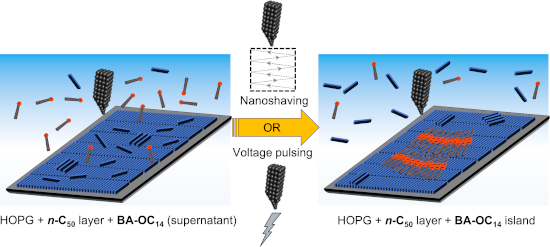
- formation by acting as a physical barrier between the substrate and the assembling moiety, buffer layers are also widely used to study intrinsic electronic properties of functional organic systems such as organic semiconductors [32][33] and films of 1D/2D polymers [34][35][36][37] via electronic decoupling


Gas sorption porosimetry for the evaluation of hard carbons as anodes for Li- and Na-ion batteries
Beilstein J. Nanotechnol. 2020, 11, 1217–1229, doi:10.3762/bjnano.11.106
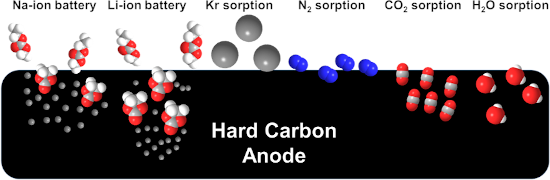
- relate the steep gas uptake to different sizes of pore necks, reflecting a barrier to penetrate the whole pore system. Similar to the case of SSA determination by N2 and CO2 sorption, it is interesting to compare absolute values and relative deviations in the quantification of pore volumes of the RF


Hybridization vs decoupling: influence of an h-BN interlayer on the physical properties of a lander-type molecule on Ni(111)
Beilstein J. Nanotechnol. 2020, 11, 1168–1177, doi:10.3762/bjnano.11.101
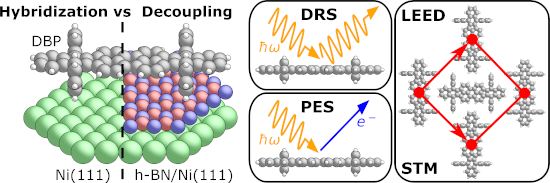
- consequences for possible applications in molecular electronic devices. Low work function metals such as Al, Ca or Ba are typically used to achieve a low electron injection barrier, which is necessary to build high-performance n-type organic semiconductors [41]. However, these substrates suffer from a high
- mobility. This additional diffusion barrier thus hampers the molecular self-assembly and can be overcome by a higher substrate temperature during the film growth, which agrees with our structural findings above. Conclusion To summarize, we investigated the influence of an h-BN interlayer on the optical


Scanning tunneling microscopy and spectroscopy of rubrene on clean and graphene-covered metal surfaces
Beilstein J. Nanotechnol. 2020, 11, 1157–1167, doi:10.3762/bjnano.11.100
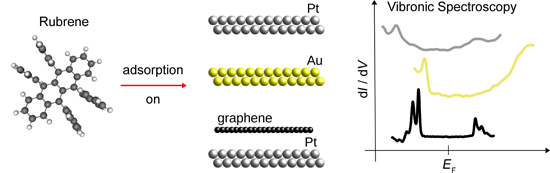
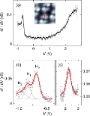
- by sinusoidally modulating the bias voltage (5 mVrms, 750 Hz) and measuring the first harmonic of the current response of the tunneling barrier. Results and Discussion Pt(111)–C42H28 Figure 2a shows an overview STM image of C42H28 on Pt(111) at a coverage of approx. 20%. Well separated molecules or
- states. The presented data were normalized by taking the exponential transmission factor of the tunneling barrier into account [38]. The normalized dI/dV data show a peak at approx. 2.3 V. Due to the considerably broad onset of dI/dV data starting from approx. 1 V it is difficult to unambiguously assign



Applications of superparamagnetic iron oxide nanoparticles in drug and therapeutic delivery, and biotechnological advancements
Beilstein J. Nanotechnol. 2020, 11, 1092–1109, doi:10.3762/bjnano.11.94
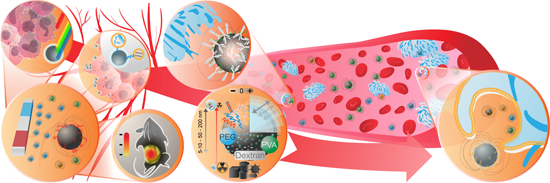
- inefficient methodology of use, and inconsistent results [94]. The potential toxicity could be put to a good use, though. Hybrid Fe3O4/Gd2O3 loaded with cisplatin and tagged with lactoferrin and RGD (a cell endocytosis small peptide) was proved in vitro and in vivo to cross the blood–brain barrier and target


Plant growth regulation by seed coating with films of alginate and auxin-intercalated layered double hydroxides
Beilstein J. Nanotechnol. 2020, 11, 1082–1091, doi:10.3762/bjnano.11.93
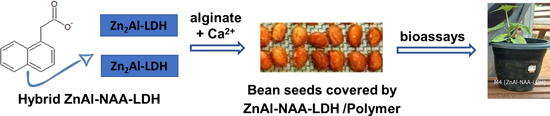
- forms a barrier that decreases the absorption of H2O and the passage of O2. Consequently, the activation of enzymes, the respiration of the plant cells, and the cell duplication slow down. These factors delay the embryonic development of the plant and, subsequently, the quantity and speed of the
- applied concentration (2.7 × 10⁻³ mg·L−1). Untreated seeds (control) and the seeds coated with the M3 film showed better performance than seeds coated with the M4 film. The coating acted as a physical barrier, hindering water absorption by the seeds, but also preventing the degradation of NAA, which is



Monolayers of MoS2 on Ag(111) as decoupling layers for organic molecules: resolution of electronic and vibronic states of TCNQ
Beilstein J. Nanotechnol. 2020, 11, 1062–1071, doi:10.3762/bjnano.11.91
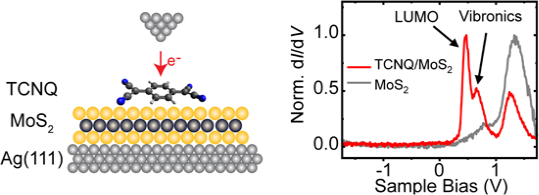
- Figure 3a) on the sample held at 230 K leads to large densely packed molecular islands on the MoS2 areas (Figure 3b). The large size and high degree of order of these islands reflects a low diffusion barrier on the MoS2 substrate. The moiré pattern of MoS2 remains intact and visible through the molecular


Microwave photon detection by an Al Josephson junction
Beilstein J. Nanotechnol. 2020, 11, 960–965, doi:10.3762/bjnano.11.80
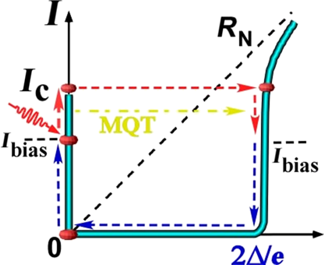
- anomalously large lifetime, not described by the Kramers’ theory for the escape time over a barrier under the influence of fluctuations. We explain it by the phase diffusion regime, which is evident from the temperature dependence of the switching current histograms. Therefore, phase diffusion allows for a
- the particle at rest in one well of the potential. The exit from this metastable state corresponds to the appearance of a finite voltage at the junction. In the case of low damping (but depending also on the barrier height and noise intensity), the particle, jumping over the barrier, gains enough
- then relax into one of the potential minima [24]. When barrier and noise are large, the exit from the well and the subsequent retrapping processes may occur many times at a given bias current. The most evident signature of the phase diffusion phenomenon is the temperature dependence of the switching


Key for crossing the BBB with nanoparticles: the rational design
Beilstein J. Nanotechnol. 2020, 11, 866–883, doi:10.3762/bjnano.11.72
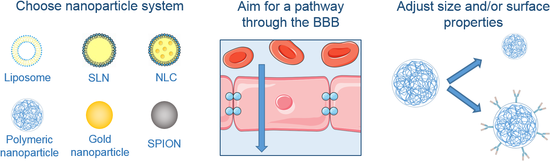
- Central nervous system diseases are a heavy burden on society and health care systems. Hence, the delivery of drugs to the brain has gained more and more interest. The brain is protected by the blood–brain barrier (BBB), a selective barrier formed by the endothelial cells of the cerebral microvessels
- nanoparticles (AuNPs); blood–brain barrier (BBB); drug delivery; liposomes; nanomedicine; polymeric nanoparticles; solid lipid nanoparticles; superparamagnetic iron oxide nanoparticles (SPIONs); Introduction Neurological disorders and brain diseases are real burdens for modern societies and healthcare systems
- damaged by ischemia [2]. One of the main limitations for the treatment of neurological disorders is the difficulty to deliver drugs to the brain. The brain is surrounded by the blood–brain barrier (BBB), a selective barrier formed by the endothelial cells of the cerebral microvessels [3][4]. The surface


Effect of Ag loading position on the photocatalytic performance of TiO2 nanocolumn arrays
Beilstein J. Nanotechnol. 2020, 11, 717–728, doi:10.3762/bjnano.11.59
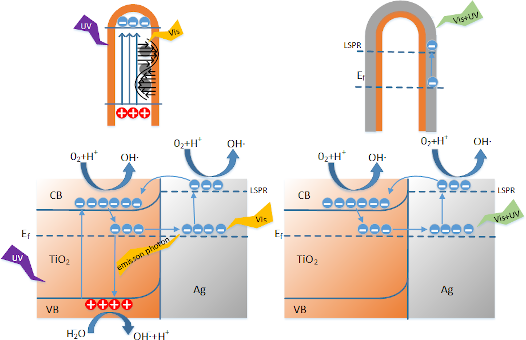
- electrons are injected intoTiO2, so the electric field intensity at the interface between Ag and TiO2 is the highest. Figure 9a shows the photoelectric energy conversion of the Ag–TiO2 structure. The contact between Ag and the n-type semiconductor TiO2 will form a Schottky barrier at the interface, which
- results in the bending of the energy band of TiO2 [37]. Due to the influence of SPR and LSPR effects, Ag can absorb visible light and make the electron near the Fermi level transition to a higher level [38]. When the high-level electrons have enough energy, the electrons will cross the Schottky barrier





