


Search results
Search for "cantilever" in Full Text gives 315 result(s) in Beilstein Journal of Nanotechnology. Showing first 200.
Understanding interferometry for micro-cantilever displacement detection
Beilstein J. Nanotechnol. 2016, 7, 841–851, doi:10.3762/bjnano.7.76
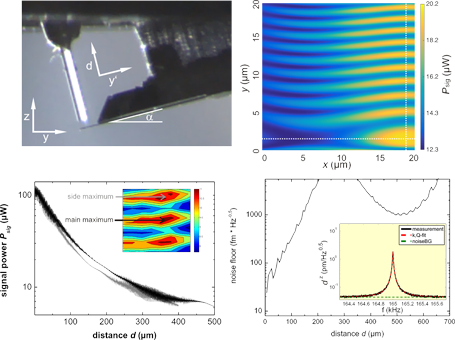
- Alexander von Schmidsfeld Tobias Norenberg Matthias Temmen Michael Reichling Fachbereich Physik, Universität Osnabrück, Barbarastraße 7, 49076 Osnabrück, Germany 10.3762/bjnano.7.76 Abstract Interferometric displacement detection in a cantilever-based non-contact atomic force microscope (NC-AFM
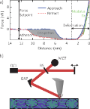
- ) operated in ultra-high vacuum is demonstrated for the Michelson and Fabry–Pérot modes of operation. Each mode is addressed by appropriately adjusting the distance between the fiber end delivering and collecting light and a highly reflective micro-cantilever, both together forming the interferometric cavity
- . For a precise measurement of the cantilever displacement, the relative positioning of fiber and cantilever is of critical importance. We describe a systematic approach for accurate alignment as well as the implications of deficient fiber–cantilever configurations. In the Fabry–Pérot regime, the




![[Graphic 27]](/bjnano/content/inline/2190-4286-7-76-i36.png?max-width=637&scale=1.18182) of the noise floor of the interferometer signal as a function of the...
of the noise floor of the interferometer signal as a function of the...
High-resolution noncontact AFM and Kelvin probe force microscopy investigations of self-assembled photovoltaic donor–acceptor dyads
Beilstein J. Nanotechnol. 2016, 7, 799–808, doi:10.3762/bjnano.7.71
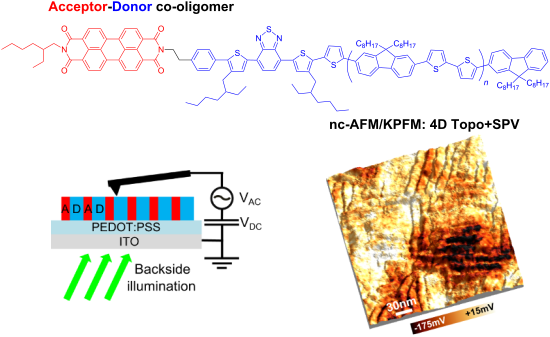
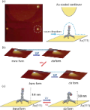
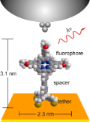
- Ar-sputtered in vacuum to remove the oxide layer and possible contaminants. KPFM measurements were performed in FM mode with the modulation bias VAC (typically 1 V peak-to-peak at 900 Hz) and the compensation voltage VDC applied to the cantilever (tip bias Vtip = VDC). In that configuration, the
- specifically designed sample holders with on-board mirrors. The surface photo-voltage of the dyads was investigated as a function of the illumination wavelength, confirming the absence of any photo-voltage related to the silicon cantilever itself (see Figure S5 in Supporting Information File 1). In the


Assembling semiconducting molecules by covalent attachment to a lamellar crystalline polymer substrate
Beilstein J. Nanotechnol. 2016, 7, 784–798, doi:10.3762/bjnano.7.70
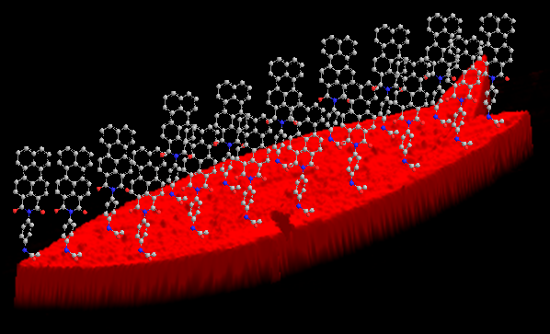
- . Their softness can be explained by a rather low number of attached dye molecules per island: When packing was not sufficiently dense, molecules could bend or be pushed sideways under the load applied through the cantilever, allowing the AFM tip to penetrate the semiconducting layer. Initially, the
- images of the nanocrystals, AFM-tips with a nominal radius of curvature of 8 or 10 nm and a resonance frequency around 150 kHz or 320 kHz were used. Both had force constants of the cantilever of about 40 N/m. For the images of the functionalized/non-functionalized CPE45 crystals, sharp AFM tips with


Coupled molecular and cantilever dynamics model for frequency-modulated atomic force microscopy
Beilstein J. Nanotechnol. 2016, 7, 708–720, doi:10.3762/bjnano.7.63
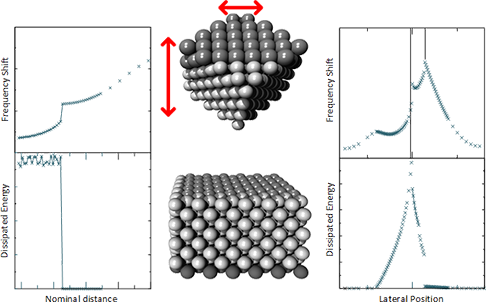
- cantilever. It gives new insight into the correlation between the experimentally monitored frequency shift and cantilever damping due to the interaction between tip atoms and scanned surface. Applying the model to ionic crystals with rock salt structure two damping mechanisms are investigated, which occur
- separately or simultaneously depending on the tip position. These mechanisms are adhesion hysteresis on the one hand and lateral excitations of the cantilever on the other. We find that the short range Lennard-Jones part of the atomic interaction alone is sufficient for changing the predominant mechanism
- disentangle concurrent complex processes that determine the imaging data, i.e., cantilever damping and frequency shift. Roughly, two types of simulations can be distinguished. First, there are simulations of the dynamics of the whole measurement setup [8][9]. They are crucial for understanding experimental


Cantilever bending based on humidity-actuated mesoporous silica/silicon bilayers
Beilstein J. Nanotechnol. 2016, 7, 637–644, doi:10.3762/bjnano.7.56
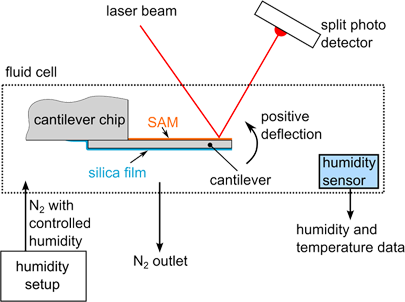
- cylindrical pores with elliptical cross-section on an ordered pore lattice. The film is deposited on silicon-based commercial atomic force microscope (AFM) cantilevers using dip coating. This bilayer cantilever is mounted in a humidity controlled AFM, and its deflection is measured as a function of relative
- layer is related to the cantilever deflection using simple bilayer bending theory. We also develop a simple quantitative model for cantilever deflection which only requires cantilever geometry and nanostructural parameters of the porous layer as input parameters. Keywords: AFM cantilever; bilayer
- instance, to detect molecules adsorbing on the cantilever surface by simply reading out the deflection of a chemically modified cantilever [1]. In order to differentiate a spectrum of molecules, cantilever arrays were used to create an artificial “chemical nose”, leading to sensor systems which are able to


Correlative infrared nanospectroscopic and nanomechanical imaging of block copolymer microdomains
Beilstein J. Nanotechnol. 2016, 7, 605–612, doi:10.3762/bjnano.7.53
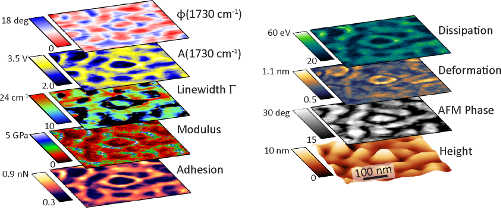
- ]. However, the tapping phase is also affected by the intermittent formation of a capillary water neck between tip and sample as the cantilever oscillates, which can lead to either net attractive or net repulsive regimes depending on tapping amplitude, relative humidity, and local curvature of the tip and
- operating in the repulsive capillary force regime. Tip–surface capillary forces are most studied in the context of resonant cantilever motion instead of the slower, nonresonant distance modulation employed in PF-QNM. Nonetheless, our modulation amplitude (15 nm), measured tip radius (16–25 nm), and the


![[Graphic 9]](/bjnano/content/inline/2190-4286-7-53-i10.png?max-width=637&scale=1.18182) (1730 ...
(1730 ...
Characterization of spherical domains at the polystyrene thin film–water interface
Beilstein J. Nanotechnol. 2016, 7, 581–590, doi:10.3762/bjnano.7.51
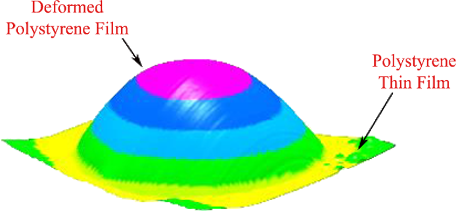
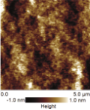
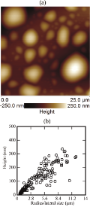
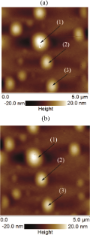
- nitride cantilevers with a nominal tip radius of 20 nm and nominal stiffness of 0.05 N/m. The resonance frequency of the cantilever immersed in DI water was 35.0 kHz. Furthermore, an average scan rate of 1 Hz was used to image the surface topography and the micro/nano spherical domains. Moreover, the




Nanoscale effects in the characterization of viscoelastic materials with atomic force microscopy: coupling of a quasi-three-dimensional standard linear solid model with in-plane surface interactions
Beilstein J. Nanotechnol. 2016, 7, 554–571, doi:10.3762/bjnano.7.49
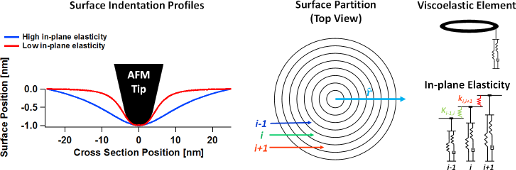
- frequencies well below the cantilever resonance frequency [21]. Novel spectroscopy methods have also been recently developed for intermittent-contact imaging. For example, it is now possible to extract tip–sample force curves using dual-eigenmode frequency-modulation AFM [10] and intermodulation AFM [11][12
- curves to variations in bulk elasticity. This would seem to be consistent with the reduced indentation observed (assuming it could be measured) and some small variation in the phase and amplitude of the cantilever oscillation. For the various values of the 2D Young’s modulus considered, Figure 8 also
- oscillation (Figure 8f). The cantilever parameters used in Figure 8 were as follows: resonance frequency 150 kHz, force constant 10 N/m, quality factor 150, free oscillation amplitude 100 nm, and tip radius of curvature 20 nm. The cantilever position above the sample was 76 nm for (a) and (b). The subsurface


Contact-free experimental determination of the static flexural spring constant of cantilever sensors using a microfluidic force tool
Beilstein J. Nanotechnol. 2016, 7, 492–500, doi:10.3762/bjnano.7.43
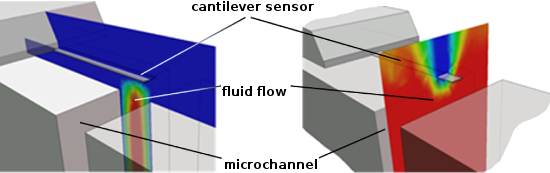
- and demonstrate that this, in combination with a thermal noise spectrum, can provide the static flexural spring constant for cantilever sensors of different geometric shapes over a wide range of spring constant values (≈0.8–160 N/m). Keywords: AFM; cantilever sensors; microfluidic force tool; spring
- addition, so-called force curves can reveal information about the interaction between the AFM tip and the surface, thus providing information about local interactions [4]. Cantilever structures also form an integral part of micro- and nanoelectromechanical systems (MEMS and NEMS) [5][6][7] and can be
- employed as freestanding sensors [8][9][10][11][12][13]. In many applications where a cantilever-type sensor is involved, the calibration of the sensor stiffness (spring constant, k) is a prerequisite for obtaining quantitative data. Several methods describing how the static flexural spring constant can be


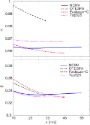


![[Graphic 28]](/bjnano/content/inline/2190-4286-7-43-i34.png?max-width=637&scale=1.18182) value for cantilever NCHV. The dashed line indicates the mean
value for cantilever NCHV. The dashed line indicates the mean ![[Graphic 29]](/bjnano/content/inline/2190-4286-7-43-i35.png?max-width=637&scale=1.18182) value for ...
value for ...
Efficiency improvement in the cantilever photothermal excitation method using a photothermal conversion layer
Beilstein J. Nanotechnol. 2016, 7, 409–417, doi:10.3762/bjnano.7.36
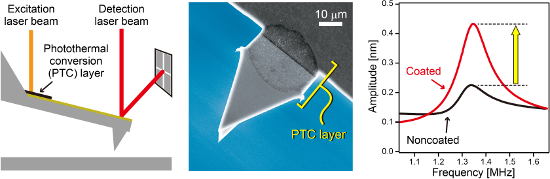
- /bjnano.7.36 Abstract Photothermal excitation is a cantilever excitation method that enables stable and accurate operation for dynamic-mode AFM measurements. However, the low excitation efficiency of the method has often limited its application in practical studies. In this study, we propose a method for
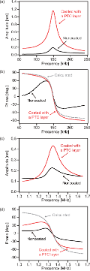
- improving the photothermal excitation efficiency by coating cantilever backside surface near its fixed end with colloidal graphite as a photothermal conversion (PTC) layer. The excitation efficiency for a standard cantilever of PPP-NCHAuD with a spring constant of ≈40 N/m and a relatively stiff cantilever
- than 2 h without any indication of possible contamination from the coating. The proposed method, using a PTC layer made of colloidal graphite, greatly enhances photothermal excitation efficiency even for a relatively stiff cantilever in liquid. Keywords: atomic force microscopy; cantilever excitation



Rigid multipodal platforms for metal surfaces
Beilstein J. Nanotechnol. 2016, 7, 374–405, doi:10.3762/bjnano.7.34










High-bandwidth multimode self-sensing in bimodal atomic force microscopy
Beilstein J. Nanotechnol. 2016, 7, 284–295, doi:10.3762/bjnano.7.26
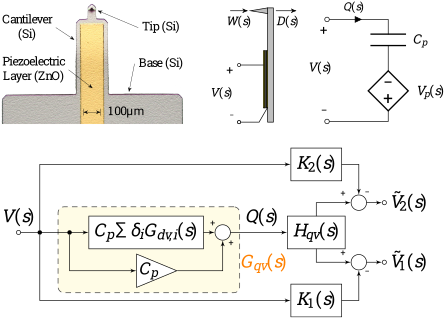
- simultaneously used for multimode excitation and detection of the cantilever deflection. This is achieved by a charge sensor with a bandwidth of 10 MHz and dual feedthrough cancellation to recover the resonant modes that are heavily buried in feedthrough originating from the piezoelectric capacitance. The setup
- fundamental mode, and phase imaging on the higher eigenmode. Keywords: atomic force microscopy; charge sensing; feedthrough cancellation; multimode sensor; piezoelectric cantilever; self-sensing; Introduction Emerging methods in multifrequency atomic force microscopy (MF-AFM) rely on the detection and
- excitation of higher order eigenmodes of a microcantilever [1][2][3] and as such, present a number of practical challenges to cantilever instrumentation. Both high-bandwidth cantilever actuation and deflection sensing are necessary, ideally without distorting the frequency response of the cantilever and


Determination of Young’s modulus of Sb2S3 nanowires by in situ resonance and bending methods
Beilstein J. Nanotechnol. 2016, 7, 278–283, doi:10.3762/bjnano.7.25
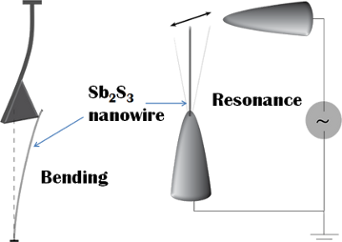
- , mechanical oscillation of the NW can be easily monitored directly in SEM images. For static bending experiments, soft silicon nitride AFM cantilevers with spring constants of 0.002–0.02 N/m (Olympus BL-RC-150VB) were used. The spring constant of the cantilever was calibrated in AFM (Asylum Research MFP-3D
- against the tip of the cantilever. The applied load direction was adjusted perpendicular to the vertical axis of the NW. Two SEM images were recorded for each nanowire during the bending, namely one under bending load and the other one in a relaxed state. By overlapping the two images both the
- cantilever displacement, ∆x, and the cantilever spring constant, k, as F = k·Δx. For static bending the load was applied at different vertical positions along the vertical axis of the NW. The measurements showed that the examined NWs exhibited uniform elastic properties along their length. The inset in


Controlled graphene oxide assembly on silver nanocube monolayers for SERS detection: dependence on nanocube packing procedure
Beilstein J. Nanotechnol. 2016, 7, 9–21, doi:10.3762/bjnano.7.2
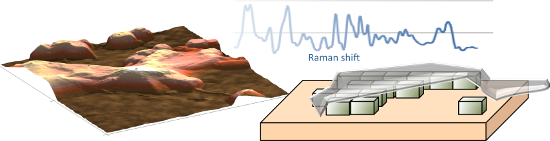
- rectangular non-contact gold coated cantilever were used (model Hi'Res-C14 from MicroMash – http://www.spmtips.com), with typical resonance frequency of 160 kHz, and 1 nm tip radius. The nanocube dimensions were measured from the height statistics in the topographic AFM images. Image processing and pseudo 3D


Large area scanning probe microscope in ultra-high vacuum demonstrated for electrostatic force measurements on high-voltage devices
Beilstein J. Nanotechnol. 2015, 6, 2485–2497, doi:10.3762/bjnano.6.258
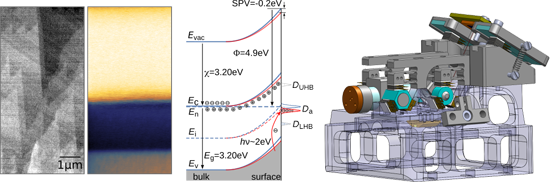
- molecules in ultra-high vacuum (UHV) conditions but also in areas which face the characterization of semiconductor devices. The common technical principle is always related to a conical tip attached to a cantilever which is accurately positioned at the specimen of interest and which is scanned over a
- certain surface area. The tip height is controlled by a feedback loop correlating the tip–sample interaction with the deflection of the cantilever. However, the interaction force contains many different components which can only be partly suppressed (e.g., magnetic forces when inspecting non-magnetic
- implemented. Additionally, the samples can be optically exited by an external light source (UV–vis) which is introduced by a separate light fibre. An in situ piezo-electric alignment stage allows to focus and position the light exactly below the cantilever tip apex. Therefore, the setup allows for the


Nanostructured surfaces by supramolecular self-assembly of linear oligosilsesquioxanes with biocompatible side groups
Beilstein J. Nanotechnol. 2015, 6, 2377–2387, doi:10.3762/bjnano.6.244
- layer was not removed or mechanically deformed with the probing tip of the cantilever during the measurement. For NAC and CA, specific structures that suggest formation of multilayered assemblies due to the presence of hydrogen bond accepting groups were observed. The AFM micrographs (Figure 4) show




Nanoscale rippling on polymer surfaces induced by AFM manipulation
Beilstein J. Nanotechnol. 2015, 6, 2278–2289, doi:10.3762/bjnano.6.234
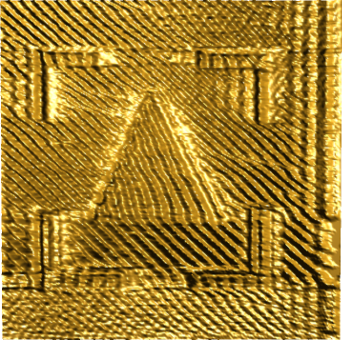
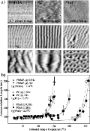
- cantilever longitudinal and lateral stiffness, the scan direction and velocity, the spacing between successive lines (named ‘feeding’). Depending on these parameters, the nanoripple patterns form in either one or several scan frames. The most significant physical observables of the process are the lateral
- the tip [22][36] inducing in this way the formation of a rippled structure along the circumference of a scanned circle (Figure 2). While scanning a PMMA surface with a minimum feedback, the authors have been able to record instantaneous variations in the cantilever vertical displacement. They have
- the tip during the stage movement. A hole forms where the tip resides and a mound forms in front of the tip hindering the sliding motion [20]. The tip can slip over when the cantilever exerts a lateral force larger than the tip–sample adhesive interaction. Then the tip forms a new pair of hole and




A simple and efficient quasi 3-dimensional viscoelastic model and software for simulation of tapping-mode atomic force microscopy
Beilstein J. Nanotechnol. 2015, 6, 2233–2241, doi:10.3762/bjnano.6.229
- analyze the depth dependence of the contact stiffness by performing a fit to appropriate models of elastic, viscous and adhesive forces, as is demonstrated in [13] for polymer blends. This approach is associated with small tip oscillations and is sensitive to the speed at which the base of the cantilever
- is approached towards and retracted from the sample. The method can be easily enhanced by relaxing the small oscillation amplitude requirement and using a variety of cantilever speeds to carry out the volume scan, although this may, in general, require the use of more complex tip–sample conservative
- , as in the finite elements method (FEM), coupled with the dynamics of the cantilever. Given the number of research directions in which the AFM community is rapidly advancing, this may be unrealistic in terms of the knowledge and time required on the part of the user and in terms of computational cost



Kelvin probe force microscopy for local characterisation of active nanoelectronic devices
Beilstein J. Nanotechnol. 2015, 6, 2193–2206, doi:10.3762/bjnano.6.225
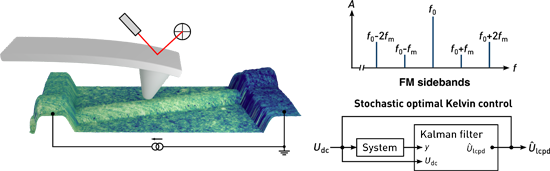
- superior resolution of FM-KFM while maintaining robust topography feedback and minimal crosstalk, we introduce a novel FM-KFM controller based on a Kalman filter and direct demodulation of sidebands. We discuss the origin of sidebands in FM-KFM irrespective of the cantilever quality factor and how direct
- on the number of layers. KFM has found widespread use in both vacuum and ambient environments. Most commercial instruments for operation in air include a scan mode based on amplitude modulation KFM (AM-KFM). In this mode, the feedback loop nullifies the cantilever oscillation that is excited by a
- modulated electrostatic force. Hence, the KFM image is a map of voltages required to compensate the electrostatic force at every point of the scanned field. However, since cantilever and AFM tip are extended objects, this voltage does not necessarily correspond to the local contact potential difference


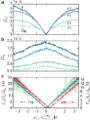
![[Graphic 33]](/bjnano/content/inline/2190-4286-6-225-i48.png?max-width=637&scale=1.18182) for different modulation amplitu...
for different modulation amplitu...




Development of a novel nanoindentation technique by utilizing a dual-probe AFM system
Beilstein J. Nanotechnol. 2015, 6, 2015–2027, doi:10.3762/bjnano.6.205
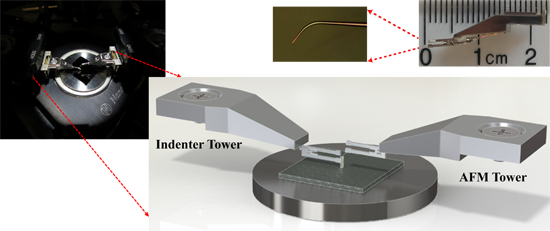
- be tackled [5][6][7][8]. Nanoindentation experiments requiring very low force values and high resolution usually use a standard AFM system. With this setup, an AFM cantilever probe is used for indenting the material and the probe displacement is monitored by laser beam bounce technology also known as
- optical lever method. With this methodology, a laser beam is reflected off the back end of the cantilever and directed towards a quadrant photodiode detector that monitors both vertical and lateral motion [9]. Force–distance (FD) curves can be generated based on displacement data and the spring constant
- value of the cantilever. Depending on the type of the material, various models can be applied in order to interpret and extract the elastic modulus of materials. One of the problems with this AFM-based approach is cantilever bending. Most of the conventional AFM nanoindentation probes have spring


A simple method for the determination of qPlus sensor spring constants
Beilstein J. Nanotechnol. 2015, 6, 1733–1742, doi:10.3762/bjnano.6.177
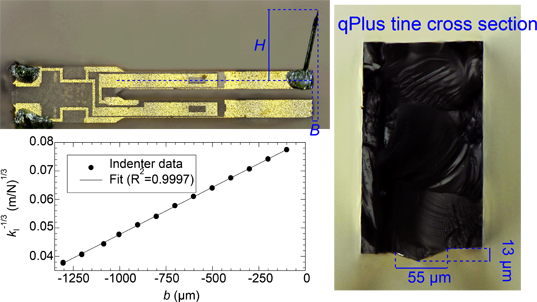
- for tip heights exceeding 400 μm or one sixth of the cantilever length. Experimental results with a calibrated nanoindenter reveal excellent agreement with an Euler–Bernoulli beam model for the sensor. Prior to the attachment of a tip, measured spring constants of 1902 ± 29 N/m are found to be in
- approach has been to estimate the spring constant from plane view geometry and the Young’s modulus of the appropriate crystallographic orientation. In this case, the qPlus sensor is treated as a uniform, rectangular cantilever and the spring constant is predicted from Euler–Bernoulli beam theory [1][7
- violated by the chamfered edge at the base of the tine, and the assumption of base rigidity has been questioned [25]. The attachment of a tip can alter the length of the cantilever, introduce parasitic tip motion [31], and, in extreme cases, introduce additional vibratory modes [32][33]. In what follows




![[Graphic 9]](/bjnano/content/inline/2190-4286-6-177-i28.png?max-width=637&scale=1.18182) vs b is plotted where kI is the spring constan...
vs b is plotted where kI is the spring constan...
Lower nanometer-scale size limit for the deformation of a metallic glass by shear transformations revealed by quantitative AFM indentation
Beilstein J. Nanotechnol. 2015, 6, 1721–1732, doi:10.3762/bjnano.6.176
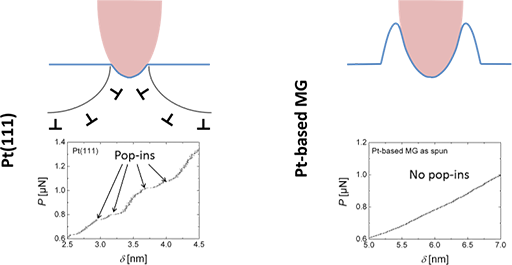
- nanometer-scale plastic deformation of Pt(111) and the Pt57.5Cu14.7Ni5.3P22.5 metallic glass was investigated in ultra-high vacuum by AFM indentation and subsequent nc-AFM imaging using a VT-AFM manufactured by Omicron Nanotechnology GmbH, Germany. In non-contact AFM an AFM cantilever is driven to oscillate
- close to a sample surface at its resonance frequency. The tip–sample distance is of the order of a few nanometers. Changes in tip–sample distance during scanning over a sample surface due to sample topography yield changes in the oscillation amplitude and in a frequency shift of the cantilever resonance
- . In order to measure topography both amplitude and frequency shift are tracked by a feedback loop so as to keep the cantilever oscillation in resonance [15]. For indentation and imaging we used a diamond-coated silicon single crystalline cantilever (Type: CDT-NCLR, manufactured by NanoSensors). The



Continuum models of focused electron beam induced processing
Beilstein J. Nanotechnol. 2015, 6, 1518–1540, doi:10.3762/bjnano.6.157
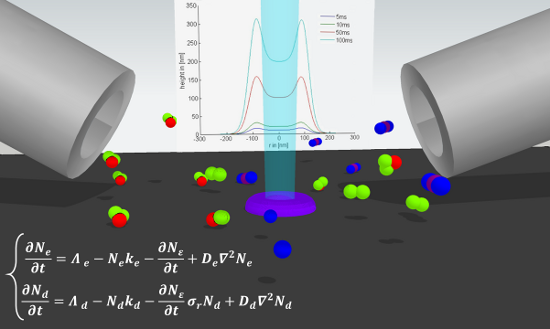
- effects which can cause disruptions in surface flatness [23]. A specific simulation of a gas-flow distribution on a cantilever-based mass sensor enabled the estimation of the residence time of Me3PtCpMe on SiO2 [47]. With the released code the reader can include new nozzle geometries or substrate


![[Graphic 37]](/bjnano/content/inline/2190-4286-6-157-i117.png?max-width=637&scale=1.18182) and chemisorbed
and chemisorbed ![[Graphic 38]](/bjnano/content/inline/2190-4286-6-157-i118.png?max-width=637&scale=1.18182) adsorbates versus pressure, calcul...
adsorbates versus pressure, calcul...


Atomic force microscopy as analytical tool to study physico-mechanical properties of intestinal cells
Beilstein J. Nanotechnol. 2015, 6, 1457–1466, doi:10.3762/bjnano.6.151
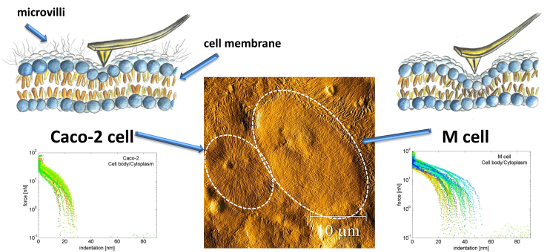
- getting an image of the cell surface to observe its morphological and structural features. The latter is used to study elastic properties of a cell. Briefly, the central part of an AFM is a sharp tip, situated at the end of a flexible cantilever. The reflection of a laser beam focused at the back side of
- the cantilever is used to measure the movement of the tip. When the probe at the end of the cantilever interacts with the sample surface, the laser light pathway changes and is finally detected by a photodiode detector. The measured cantilever deflections vary (depending on the sample nature, i.e
- ., high features on the sample cause the cantilever to deflect more) hence, a map of surface topography can be generated [21][22][24]. Moreover, quantitative analysis of the cell elasticity is possible by analyzing force-distance curves via monitoring the response of a cantilever once the tip is pushed


Improved atomic force microscopy cantilever performance by partial reflective coating
Beilstein J. Nanotechnol. 2015, 6, 1450–1456, doi:10.3762/bjnano.6.150
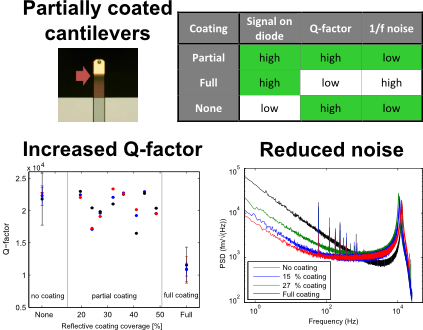
- Zeno Schumacher Yoichi Miyahara Laure Aeschimann Peter Grutter Department of Physics, McGill University, Montreal, Quebec, H3A 2T8, Canada NanoWorld AG, Neuchâtel, 2002, Switzerland 10.3762/bjnano.6.150 Abstract Optical beam deflection systems are widely used in cantilever based atomic force
- microscopy (AFM). Most commercial cantilevers have a reflective metal coating on the detector side to increase the reflectivity in order to achieve a high signal on the photodiode. Although the reflective coating is usually much thinner than the cantilever, it can still significantly contribute to the
- damping of the cantilever, leading to a lower mechanical quality factor (Q-factor). In dynamic mode operation in high vacuum, a cantilever with a high Q-factor is desired in order to achieve a lower minimal detectable force. The reflective coating can also increase the low-frequency force noise. In





