


Search results
Search for "catalysis" in Full Text gives 326 result(s) in Beilstein Journal of Nanotechnology. Showing first 200.
Synthesis of metal-fluoride nanoparticles supported on thermally reduced graphite oxide
Beilstein J. Nanotechnol. 2017, 8, 2474–2483, doi:10.3762/bjnano.8.247
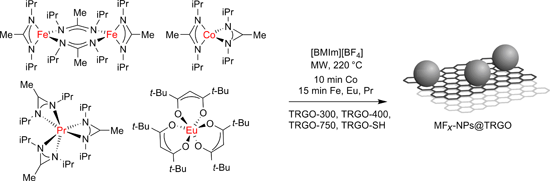
- important technical applications [15][16][17][18][19][20][21][22]. They can be used as composite materials [23][24], in chemical sensors [25], electrodes for fuel cells [26][27][28], for catalysis [29][30][31][32] or for hydrogen storage [33]. Because of their high ionic charge, polarity and dielectric


Comparing postdeposition reactions of electrons and radicals with Pt nanostructures created by focused electron beam induced deposition
Beilstein J. Nanotechnol. 2017, 8, 2410–2424, doi:10.3762/bjnano.8.240
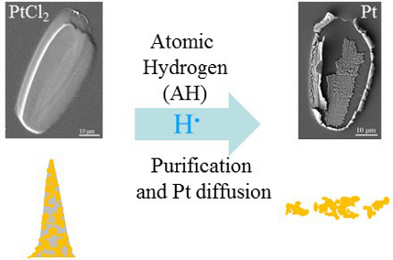
- could also be exploited to help redisperse metals, such as Pt, which have nucleated as a result of sintering during catalysis. Other Pt-containing deposits In contrast to the effectiveness of AH towards purification of PtCl2, there was no measureable removal of carbon or phosphorus contaminants for
- applications, but potentially useful in reversing the effects of sintering in catalysis and in creating high surface area catalysts. The purification of PtCx deposits created from MeCpPtMe3 using AO was found to exhibit many of the same characteristics of postdeposition purification using electron beam




Ta2N3 nanocrystals grown in Al2O3 thin layers
Beilstein J. Nanotechnol. 2017, 8, 2162–2170, doi:10.3762/bjnano.8.215
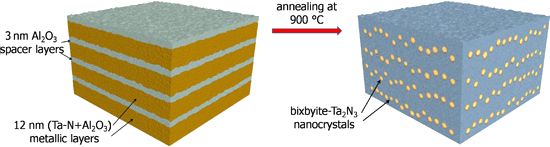
- light to nano-scale structures via local surface plasmon resonance (LSPR) [1]. LSPR produces a strong near-field enhancement and a local heating [2][3], which are considered to be promising in several applications ranging from surface-enhanced Raman scattering [4], to catalysis [5] and heat-assisted



Ester formation at the liquid–solid interface
Beilstein J. Nanotechnol. 2017, 8, 2139–2150, doi:10.3762/bjnano.8.213
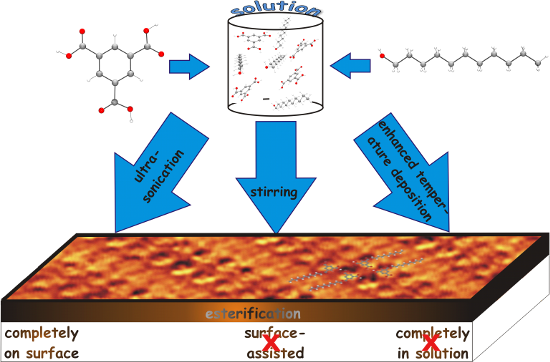
- the other hand, solid–liquid interfaces are much more often encountered in real world applications ranging from heterogeneous catalysis to biomembranes. Heating is in such cases usually limited by the boiling of the liquid phase, and other means to initiate on-surface reactions are often required


Synthesis and characterization of noble metal–titania core–shell nanostructures with tunable shell thickness
Beilstein J. Nanotechnol. 2017, 8, 2083–2093, doi:10.3762/bjnano.8.208
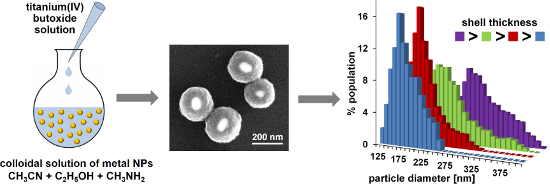
- , Kaliskiego 2 Str. 00-908 Warsaw, Poland 10.3762/bjnano.8.208 Abstract Core–shell nanostructures have found applications in many fields, including surface enhanced spectroscopy, catalysis and solar cells. Titania-coated noble metal nanoparticles, which combine the surface plasmon resonance properties of the


Fabrication of carbon nanospheres by the pyrolysis of polyacrylonitrile–poly(methyl methacrylate) core–shell composite nanoparticles
Beilstein J. Nanotechnol. 2017, 8, 1897–1908, doi:10.3762/bjnano.8.190

- batteries [3][4][5], fuel cells [6][7], supercapacitors [8][9], catalysis carriers [10][11], drug delivery [12][13] and adsorption [14][15]. Various techniques, including arc discharge [16], laser ablation [17], chemical vapor deposition [18], and solvothermal method [19], have been developed for the



Synthesis and catalytic application of magnetic Co–Cu nanowires
Beilstein J. Nanotechnol. 2017, 8, 1769–1773, doi:10.3762/bjnano.8.178
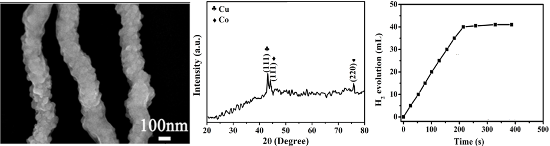
- easily separated from the reaction mixture. Furthermore, they were applied to the hydrolysis system of ammonia borane as a catalyst for the first time. More importantly, the catalysis results showed that the bimetallic nanowires possessed appealing catalytic performance. Therefore, a rapid and facile
- the foundation for expanding their application to industrial catalysis. All chemicals were of analytical reagent grade and used without any further purification. CoCl2·6H2O, EDTA-2Na, CuSO4·5H2O, PVP, NaOH, N2H4·H2O, H2PtCl6·6H2O and C2H5OH were purchased from Chengdu Kelong Reagent Co., Ltd (China


Near-infrared-responsive, superparamagnetic Au@Co nanochains
Beilstein J. Nanotechnol. 2017, 8, 1680–1687, doi:10.3762/bjnano.8.168
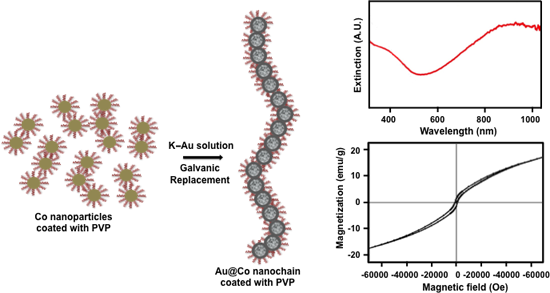
- unique properties of magnetic nanoparticles have led to diverse applications in the fields of magnetic data storage, catalysis, magnetic fluids, biosensors, drug delivery, and magnetic imaging [1][2][3][4][5][6]. Considerable efforts have been taken to tailor the magnetic properties to suit specific


Process-specific mechanisms of vertically oriented graphene growth in plasmas
Beilstein J. Nanotechnol. 2017, 8, 1658–1670, doi:10.3762/bjnano.8.166
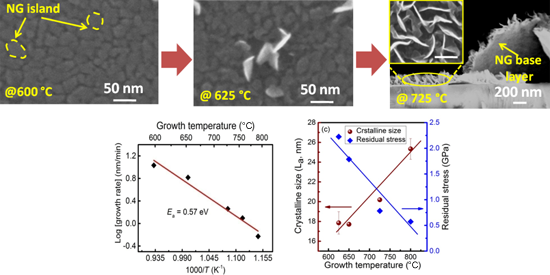
- , catalysis and energy storage. Keywords: activation energy; plasmas; residual stress; vertical graphene nanosheets; wettability; Introduction Vertical graphene nanosheets (VGNs) consist of interconnected 3D porous networks of vertically oriented graphitic sheets, which are aligned perpendicularly to the


Two-dimensional carbon-based nanocomposites for photocatalytic energy generation and environmental remediation applications
Beilstein J. Nanotechnol. 2017, 8, 1571–1600, doi:10.3762/bjnano.8.159
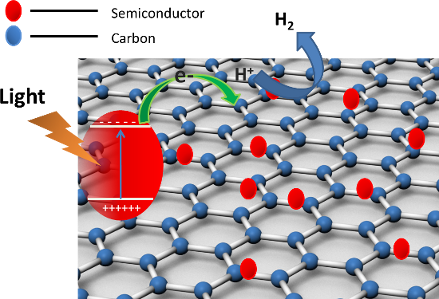
- ], biosensors [25], molecular imaging [26], fuel cells [27] and catalysis [28]. The non-toxicity, abundance and the environmentally benign nature of these carbon-based materials makes them a remarkable class of materials with unique electrical and optical properties for diverse applications. In recent times
- ]. It is noteworthy to mention here that by using different precursor materials, some of the properties, such as microstructure, adsorption affinity and isoelectric point of g-C3N4 can be tuned [91]. It is known that catalysis is a surface phenomenon, which is affected by the surface structure and


A top-down approach for fabricating three-dimensional closed hollow nanostructures with permeable thin metal walls
Beilstein J. Nanotechnol. 2017, 8, 1231–1237, doi:10.3762/bjnano.8.124
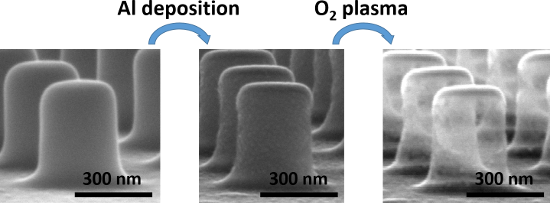
- as artificial cells [2], controlled transport and delivery of chemical agents (e.g., pharmaceutical drugs) [3], catalysis [4], lithium batteries [5] and confined reaction compartments (nanoreactors) [1]. Most fabrication methods of nanocages are based on bottom-up techniques, mainly colloidal and sol
- example, noble metal nanoparticles could be introduced in the nanocages by using this procedure. Thus, the resulting configurations might act as gas–solid catalysis nanoreactors by taking advantage of the gas permeability of the nanocage. Low-reactive metal carbonates could also be caged in this manner


Preparation of thick silica coatings on carbon fibers with fine-structured silica nanotubes induced by a self-assembly process
Beilstein J. Nanotechnol. 2017, 8, 1145–1155, doi:10.3762/bjnano.8.116
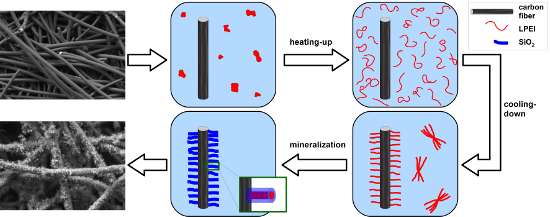
- [1][7][8], nitride [9] and oxide [10] were proven to be a successful way to retain the mechanical performance of carbon fibers in oxidative atmospheres at higher temperatures. Acid or base catalysis is necessary for the hydrolysis and the polycondensation of silica precursors to obtain a sol. In


Hierarchically structured nanoporous carbon tubes for high pressure carbon dioxide adsorption
Beilstein J. Nanotechnol. 2017, 8, 1135–1144, doi:10.3762/bjnano.8.115
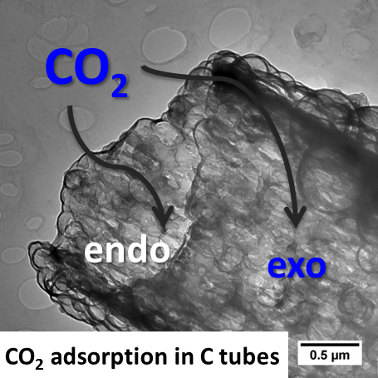
- successfully tested as potential material for catalysis [1], gas sensors [2], electronic devices [3] and for gas adsorption [4]. Activated carbons (ACs) are widely used for gas adsorption because of their straightforward production, low cost and thermal stability [5][6][7]. Nevertheless, the excellent
- attractive as a potential material for catalysis and electronic and photonic devices due to its semiconducting nature with a wide band gap, excellent mechanical properties, chemical inertness and thermal conductivity [13][14][15][16][17]. Especially, one-dimensional SiC in the form of nanowires or nanorods


Fully scalable one-pot method for the production of phosphonic graphene derivatives
Beilstein J. Nanotechnol. 2017, 8, 1094–1103, doi:10.3762/bjnano.8.111
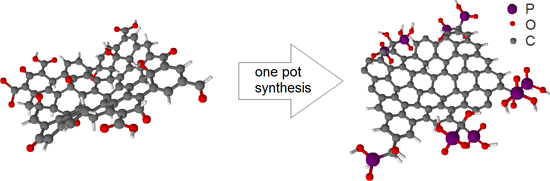
- retardation [4][11], catalysis [12], tissue engineering [13], and purification air and water [6][14]. Results and Discussion The phosphonic derivative of graphene (GO-P) was obtained through the reaction of GO with phosphorus trichloride in water. Phosphorous trichloride reacts with water to produce


Bio-inspired micro-to-nanoporous polymers with tunable stiffness
Beilstein J. Nanotechnol. 2017, 8, 906–914, doi:10.3762/bjnano.8.92
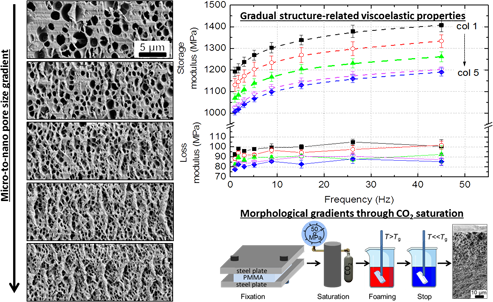
- , Karlsruhe Institute of Technology (KIT), Hermann-von-Helmholtz-Platz 1, 76344 Eggenstein-Leopoldshafen, Germany Institute of Catalysis Research and Technology, Karlsruhe Institute of Technology (KIT), Hermann-von-Helmholtz-Platz 1, 76344 Eggenstein-Leopoldshafen, Germany 10.3762/bjnano.8.92 Abstract


Synthesis of graphene–transition metal oxide hybrid nanoparticles and their application in various fields
Beilstein J. Nanotechnol. 2017, 8, 688–714, doi:10.3762/bjnano.8.74
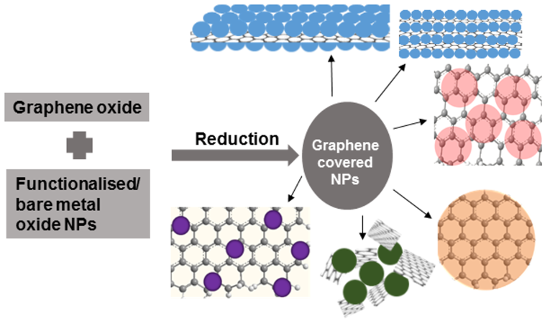
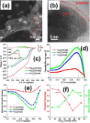
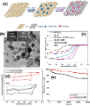
- electron–hole pairs. Additionally, the NPs result in a large volume expansion during the Li insertion–extraction process in LIB applications which hamper their use in applications such as energy storage, sensing, advanced catalysis, solar cells, diodes and also in biometrics. Thus, strongly coupled






Calculating free energies of organic molecules on insulating substrates
Beilstein J. Nanotechnol. 2017, 8, 667–674, doi:10.3762/bjnano.8.71
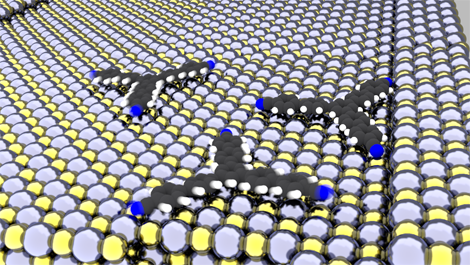
- of attention due to their versatility, functionality, and technological potential. Understanding the behaviour of self-assembling molecules is important for catalysis [1], coatings [2], sensors [3][4] and molecular electronics [5][6][7]. To design and fabricate surface structures relevant for these


Dispersion of single-wall carbon nanotubes with supramolecular Congo red – properties of the complexes and mechanism of the interaction
Beilstein J. Nanotechnol. 2017, 8, 636–648, doi:10.3762/bjnano.8.68
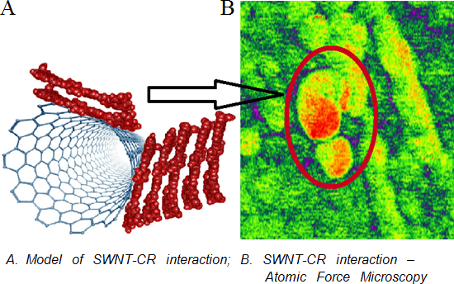
- , Poland Institute of Catalysis and Surface Chemistry, Polish Academy of Science, Niezapominajek 8, Kraków 30-239, Poland Department of Plant Physiology and Biochemistry, Faculty of Biochemistry, Biophysics and Biotechnology, Jagiellonian University, Krakow, Poland Malopolska Centre of Biotechnology


α-((4-Cyanobenzoyl)oxy)-ω-methyl poly(ethylene glycol): a new stabilizer for silver nanoparticles
Beilstein J. Nanotechnol. 2017, 8, 627–635, doi:10.3762/bjnano.8.67
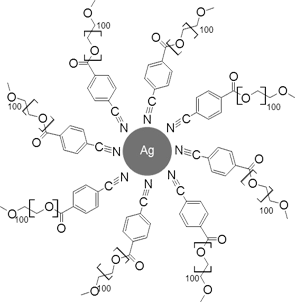
- , Zhang et al. [25] demonstrated the passivating effect of a PEG/silica hybrid coating on CdSe quantum dots. Thus, there is a growing interest in PEG-based stabilizers for a large variety of applications including catalysis, diagnostics, biology or biomedicine. There are numerous examples in which the


Liquid permeation and chemical stability of anodic alumina membranes
Beilstein J. Nanotechnol. 2017, 8, 561–570, doi:10.3762/bjnano.8.60
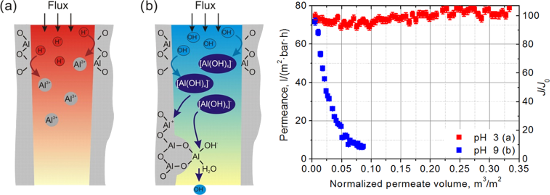
- ) merges into the microporous selective skin layer [5]. All these issues make AAO extremely attractive for baromembrane processes, including micro- and ultrafiltration, pervaporation, emulsification and membrane catalysis. AAO membranes are abundantly used as solid porous supports for asymmetric gas


Formation and shape-control of hierarchical cobalt nanostructures using quaternary ammonium salts in aqueous media
Beilstein J. Nanotechnol. 2017, 8, 494–505, doi:10.3762/bjnano.8.53
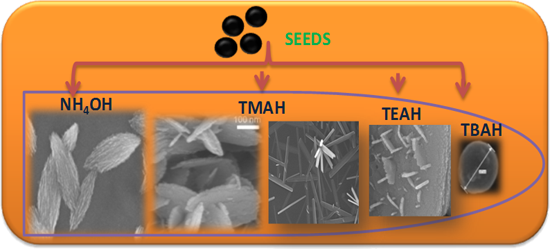
- chemical forces that drive the hierarchy. These nanostructures also show novel properties that are different from their bulk or discrete counterparts and could be of immense use for catalysis [2], magnetic recording media [7], magnetic sensors [8], and biomedical science [9]. For example, consider the case
- of the morphology-dependent catalysis by cobalt nanostructures. It is understood that the synthesis of nanoparticles with well-controlled shape and a well-defined reactive crystal plane is critical for efficient catalytic performance. For example, appropriate loading and dispersion of cobalt


Nanostructured carbon materials decorated with organophosphorus moieties: synthesis and application
Beilstein J. Nanotechnol. 2017, 8, 485–493, doi:10.3762/bjnano.8.52
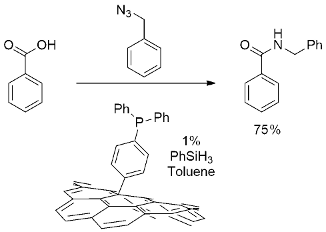
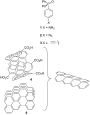
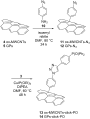
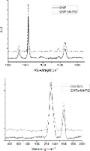
- corresponding phosphine derivatives and applied one of the materials produced as heterogeneous organocatalyst in a Staudinger ligation reaction. Keywords: azides; click chemistry; heterogeneous catalysis; organocatalysis; phosphorus; Introduction The term of carbon nanomaterial (CNMs) comprises many different
- , and their nanometric dimensions that prompted their application in chemistry of materials [4]. Furthermore, their functionalization with an increasing number of molecular moieties [5][6] has extended their use in new fields ranging from biology [7] to catalysis. Despite such variability, the classes





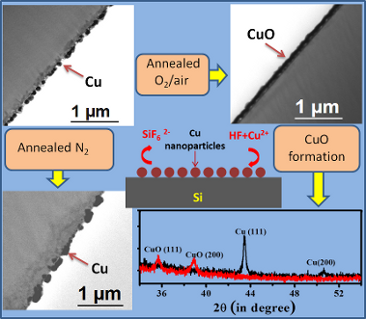
Role of oxygen in wetting of copper nanoparticles on silicon surfaces at elevated temperature
Beilstein J. Nanotechnol. 2017, 8, 425–433, doi:10.3762/bjnano.8.45
- been observed in composite CuO–carbon nanotube and CuO–graphene systems [8][9]. CuO nanostructures find promising application in many other fields such as gas sensing, catalysis, and arsenic (As) removal in water purification [10][11][12]. Such differently shaped CuO nanostructures have been


Photocatalysis applications of some hybrid polymeric composites incorporating TiO2 nanoparticles and their combinations with SiO2/Fe2O3
Beilstein J. Nanotechnol. 2017, 8, 272–286, doi:10.3762/bjnano.8.30
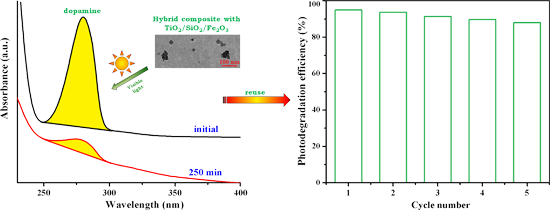
- excellent ability to adsorb aromatic compounds through π–π stacking and other molecular interactions, enhancing the catalysis effect due to the presence of other inorganic components. Also, in the case of the composites with TiO2/Si–O–Si (S2) or TiO2/Fe2O3/Si–O–Si (S4) the presence of a higher number of


Influence of hydrofluoric acid treatment on electroless deposition of Au clusters
Beilstein J. Nanotechnol. 2017, 8, 183–189, doi:10.3762/bjnano.8.19
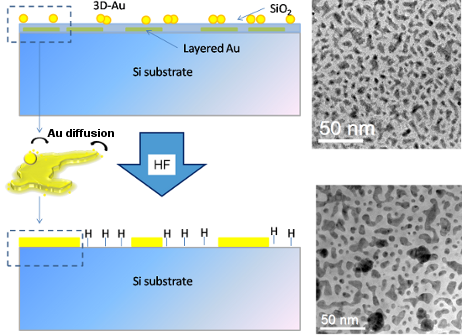
- shown quite interesting applications in the fields of Si nanowire (SiNW) catalysis [1][2][3], metal-assisted etching (MAE) [4] or even as electrical contacts in standard miniaturized devices [5]. Their ability to display enhanced surface plasmon resonance (SPR) at optical frequencies makes them





