Search results
Search for "clusters" in Full Text gives 469 result(s) in Beilstein Journal of Nanotechnology. Showing first 200.
Imaging the surface potential at the steps on the rutile TiO2(110) surface by Kelvin probe force microscopy
Beilstein J. Nanotechnol. 2019, 10, 1228–1236, doi:10.3762/bjnano.10.122
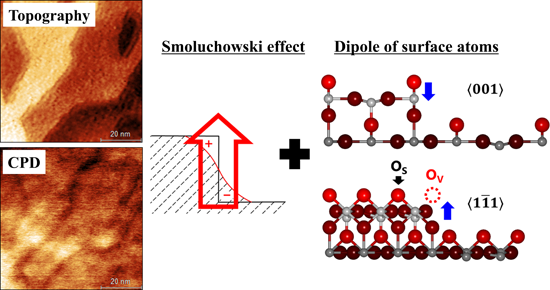
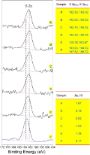
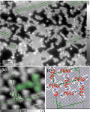
- low coordination and unique charge distribution [16][17][18][19]. In the case of TiO2, steps act as preferential sites for the adsorption of molecules and metal clusters [20][21][22], as active sites for catalytic reactions [23][24][25], and as the central elements of surface reconstructions [26][27
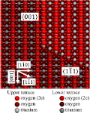
![[Graphic 16]](/bjnano/content/inline/2190-4286-10-122-i16.svg?max-width=637&scale=1.18182) and
and ![[Graphic 17]](/bjnano/content/inline/2190-4286-10-122-i17.svg?max-width=637&scale=1.18182) .
.
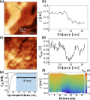

![[Graphic 38]](/bjnano/content/inline/2190-4286-10-122-i38.svg?max-width=637&scale=1.18182) and
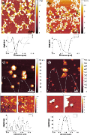
and ![[Graphic 39]](/bjnano/content/inline/2190-4286-10-122-i39.svg?max-width=637&scale=1.18182) steps. (a) Topographic image...
steps. (a) Topographic image...


![[Graphic 72]](/bjnano/content/inline/2190-4286-10-122-i72.svg?max-width=637&scale=1.18182) , b)
, b) ![[Graphic 73]](/bjnano/content/inline/2190-4286-10-122-i73.svg?max-width=637&scale=1.18182) , c) reduced
, c) reduced ![[Graphic 74]](/bjnano/content/inline/2190-4286-10-122-i74.svg?max-width=637&scale=1.18182) , and d)
, and d) ![[Graphic 75]](/bjnano/content/inline/2190-4286-10-122-i75.svg?max-width=637&scale=1.18182) steps. B...
steps. B...
Green fabrication of lanthanide-doped hydroxide-based phosphors: Y(OH)3:Eu3+ nanoparticles for white light generation
Beilstein J. Nanotechnol. 2019, 10, 1200–1210, doi:10.3762/bjnano.10.119
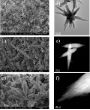
- in Figure 1c. These micrographs reveal that the sample consists of agglomerated nanoparticles. The clusters formed by the sub-10 nm nanoparticles have sizes between 50 nm to a few micrometers. It is possible to visualize the individual nanoparticles in the lower left HAADF STEM micrograph where the



Pure and mixed ordered monolayers of tetracyano-2,6-naphthoquinodimethane and hexathiapentacene on the Ag(100) surface
Beilstein J. Nanotechnol. 2019, 10, 1188–1199, doi:10.3762/bjnano.10.118
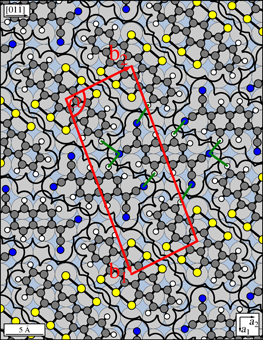
- that no de-wetting from the Ag(100) surface by formation of small three-dimensional clusters occurred over time. HTPEN forms two different structures on Ag(100) depending on the coverage. The predominantly observed phase has a slightly larger unit cell (ca. 10%) than the second phase with a more


Scavenging of reactive oxygen species by phenolic compound-modified maghemite nanoparticles
Beilstein J. Nanotechnol. 2019, 10, 1073–1088, doi:10.3762/bjnano.10.108
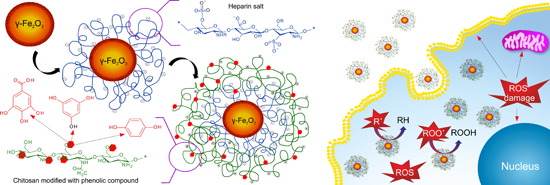
- , triplets and small clusters), due to the absence of a polymeric steric stabilizer, and of larger particles, which was also confirmed by TEM microscopy (Figure 2b). The ζ-potential of the γ-Fe2O3 particles was positive (ca. 50 mV) due to the presence of cations on the particle surface, originating from





Structural and optical properties of penicillamine-protected gold nanocluster fractions separated by sequential size-selective fractionation
Beilstein J. Nanotechnol. 2019, 10, 955–966, doi:10.3762/bjnano.10.96
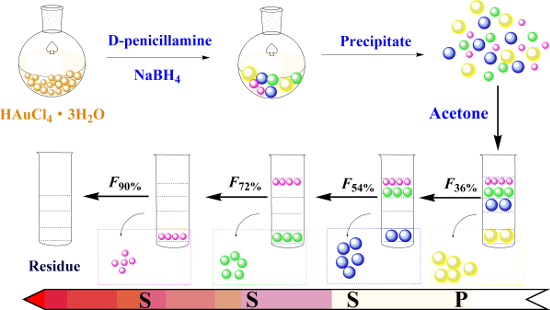
- protective layer of organic molecules [2]. These clusters are considered to be a hybrid system of small molecules and macroscopic materials, and are of great interest to the properties of gold core and organic monolayers [3]. The stable monolayer-protected NCs have enabled experiments to be carried out that
- precipitation technique can reduce the ability of a solvent to disperse clusters by adding a miscible non-solvent to the cluster agglomeration point. The larger clusters are first aggregated due to the greater van der Waals attraction between the clusters, and the clusters aggregated can be precipitated by
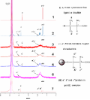
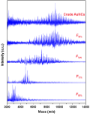
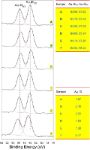
- centrifugation, and the smaller clusters are still dispersed in the solvent. Herein, we performed SSSP for the polydisperse penicillamine-coated water-soluble AuNCs from aqueous medium using acetone as a nonsolvent. When acetone was gradually added to the aqueous solution of AuNCs to achieve supersaturation of



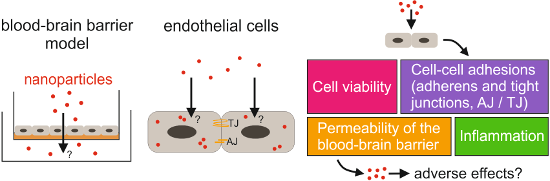
Effects of gold and PCL- or PLLA-coated silica nanoparticles on brain endothelial cells and the blood–brain barrier
Beilstein J. Nanotechnol. 2019, 10, 941–954, doi:10.3762/bjnano.10.95
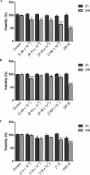
- these three NP types. Both PLLA- and PCL-NPs were taken up to a high extent after 2 and 24 h of exposure, respectively. They tended to form clusters and were detected freely in the cytosol or in membrane-bound vesicles (Figure 2A,D and Figure 2B,E). On the other hand, Au-NPs could not be found inside
- physicochemical properties, the formation of NP clusters before entry into the cell may modulate the cellular uptake [9][34]. NPs might not only cause cytotoxicity but also hinder proliferation, differentiation or lead to inflammation via activation or inhibition of various pathways including phosphatidylinositol
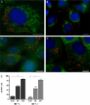
- , B, C) and higher magnification (D, E, F); analyzed by TEM. PLLA- and PCL-NPs were found in clusters inside the cells (arrows) (A, B; scale bar: 5 µm) and were present freely in the cytoplasm (arrows) or in membrane-bound vesicles (arrow head) (D, E; scale bar: 1 µm). Single Au-NPs were taken up by



Comparing a porphyrin- and a coumarin-based dye adsorbed on NiO(001)
Beilstein J. Nanotechnol. 2019, 10, 874–881, doi:10.3762/bjnano.10.88
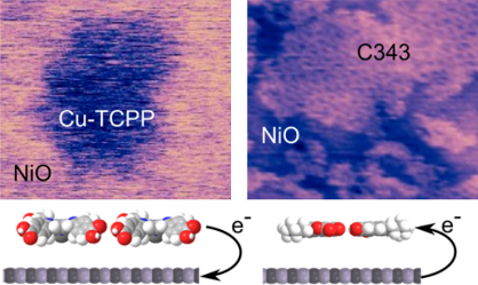
- adsorbed on the substrate, where it can be seen that Cu-TCPP exhibits either the tendency to aggregate in small clusters at step edges and defects, or to form large molecular islands (up to 70 nm in width). The fact that the island formation takes place at RT indicates a relatively high diffusion rate of
- the molecules on NiO(001). The emergence of numerous clusters is related to the presence of various defects on the surface that act as anchoring sites for the dyes. Concentrating on the islands and measuring their heights (250–300 pm), we can conclude that the molecules are lying flat on the substrate



Tungsten disulfide-based nanocomposites for photothermal therapy
Beilstein J. Nanotechnol. 2019, 10, 811–822, doi:10.3762/bjnano.10.81
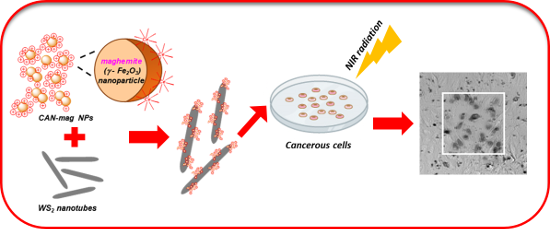
- conjugation of CAN-mag nanoparticles, and later on, of the polymers. At the same time, attachment of CAN-mag to the nanotubes is clearly visible (Figure 2d–f). Rather than conformally coating the nanotubes, CAN-mag nanoparticles seem to attach to the surface of the nanotubes in small clusters, appearing dark






Capillary force-induced superlattice variation atop a nanometer-wide graphene flake and its moiré origin studied by STM
Beilstein J. Nanotechnol. 2019, 10, 804–810, doi:10.3762/bjnano.10.80
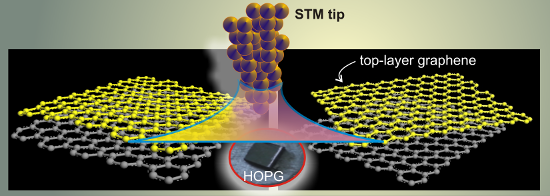
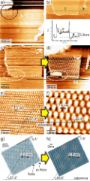
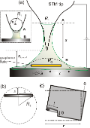
- arachidic acid-HOPG interface. Acknowledgements This work has been funded by Georg-Christoph-Lichtenberg-Stipendium from the State government of Niedersachsen, Germany, through the Promotionsprogramm "Synthesis and Characterization of surfaces and Interfaces assembled from Clusters and Molecules".


Features and advantages of flexible silicon nanowires for SERS applications
Beilstein J. Nanotechnol. 2019, 10, 725–734, doi:10.3762/bjnano.10.72

- , preferably with clusters of metal nanoparticles, sharp edges and tips, are the key to strong electromagnetic enhancement ranging from 1010 to 1014 [3]. If the values of Raman cross section of the analyte and of SERS enhancement are appropriate, even single-molecule detection is possible. For example, under


Ultrathin hydrophobic films based on the metal organic framework UiO-66-COOH(Zr)
Beilstein J. Nanotechnol. 2019, 10, 654–665, doi:10.3762/bjnano.10.65
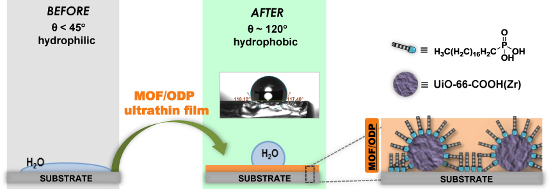
- . Keywords: hydrophobic coating; Langmuir–Blodgett (LB) films; metal organic framework (MOF); surface modification; UiO-66-COOH(Zr); Introduction Metal organic frameworks (MOFs) are well-known, crystalline, porous materials formed by metal ions (or metallic clusters) and organic ligands coordinated in a pre
- film homogeneity. Interestingly, a recent study has shown that alkyl phosphonic acids, such as ODP, interact with the zirconium oxide clusters situated near and on the surface of Zr-based MOFs and the surface free energy on the exterior of the MOF can be reduced by the octadecyl alkyl chains, spawning


Hydrophilicity and carbon chain length effects on the gas sensing properties of chemoresistive, self-assembled monolayer carbon nanotube sensors
Beilstein J. Nanotechnol. 2019, 10, 565–577, doi:10.3762/bjnano.10.58
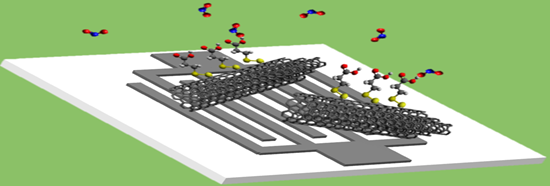
- more responsive to nitrogen dioxide than Au, Pt or Pd-decorated CNTs when operated at room temperature [10][18][40]. This was attributed to a stronger interaction and charge transfer between nitrogen dioxide and oxygenated defects in CNTs than with metal clusters. Possibly the surface of metal clusters
- requires higher operating temperatures to act as reactive sites for the adsorption of nitrogen dioxide molecules. Therefore, the response obtained for Au-MWCNTs cannot be explained by the catalytic activity of gold clusters at the nanometer range, and instead the resistance changes observed are probably


Quantification and coupling of the electromagnetic and chemical contributions in surface-enhanced Raman scattering
Beilstein J. Nanotechnol. 2019, 10, 549–556, doi:10.3762/bjnano.10.56
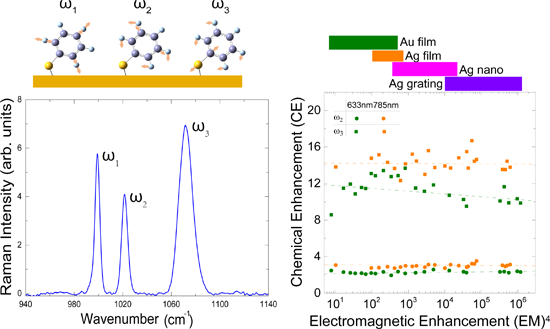
- ]. Only the ω3 mode is thought to be sensitive to charge redistribution due to the nuclear motion of the S-atom with respect to metal substrate and phenyl ring [15]. DFT calculations (Gaussian 09 package) were performed based on benzenethiol bound to three silver atom clusters, for illustration, and the
- displayed in Figure 2a–e. A significant change in the intensity ratio of the different modes is seen, as compared to the neat benzenethiol spectrum. The observed dominance of the ω3 mode is the result of the charge redistribution from the Au/Ag surface clusters to the S atom in benzenethiol associated with


Advanced scanning probe lithography using anatase-to-rutile transition to create localized TiO2 nanorods
Beilstein J. Nanotechnol. 2019, 10, 412–418, doi:10.3762/bjnano.10.40
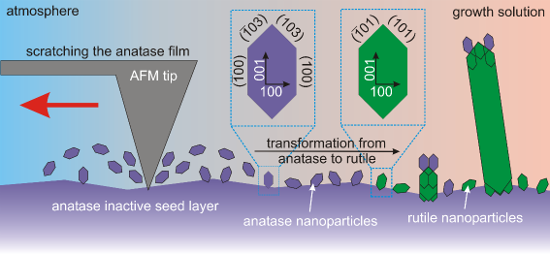
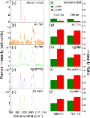
- TiO2 nanorods grow hydrothermally on anatase particles with a diameter of approximately 25 nm [39][40]. Even if rutile TiO2 seed nanocrystals are already present, it is assumed that anatase clusters diffuse along rutile TiO2 surfaces towards low-energy facets and perform a solid-state phase


One-step nonhydrolytic sol–gel synthesis of mesoporous TiO2 phosphonate hybrid materials
Beilstein J. Nanotechnol. 2019, 10, 356–362, doi:10.3762/bjnano.10.35
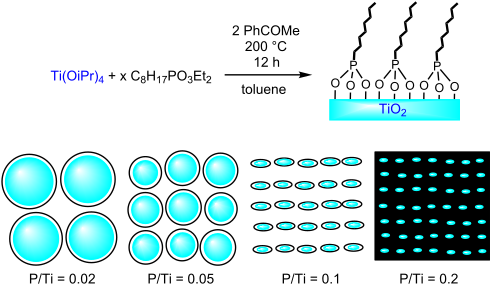
- with the P/Ti ratio, leading to an increase of the specific surface area and a decrease of the pore size of the hybrid samples. For a P/Ti ratio of 0.2, the volume fraction of organic octyl groups exceeds 50%. The hybrid material becomes nonporous and can be described as amorphous TiO2 clusters


Nitrous oxide as an effective AFM tip functionalization: a comparative study
Beilstein J. Nanotechnol. 2019, 10, 315–321, doi:10.3762/bjnano.10.30
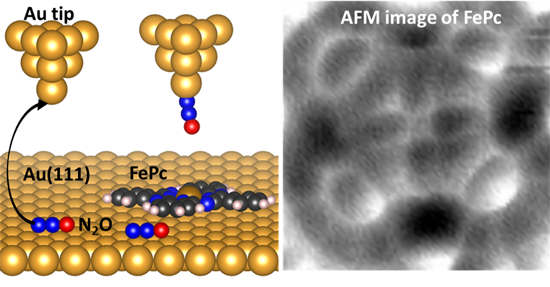
- (111) system, revealing the formation of small 2D clusters, preferentially located at the kinks of the characteristic herringbone structure. Their variable size is typically a few nanometers in diameter. The estimated average apparent height of the cluster formations was 70 pm. After the N2O cluster
- formation, the metallic tip (pre-treated by a gentle indentation into the substrate) was functionalized by an impurity CO molecule, which significantly improved the resolution in both STM and AFM. We performed high-resolution AFM/STM measurements on various clusters (comparable to the inset of Figure 1a
- , due to their slightly different polarization. The calculations reveal that the preferred orientation of the N2O molecules in the clusters is with the O atoms outward (Figure 1b), being 17 meV more stable than the opposite arrangement. Using the optimized geometry of the cluster obtained from DFT


Heating ability of magnetic nanoparticles with cubic and combined anisotropy
Beilstein J. Nanotechnol. 2019, 10, 305–314, doi:10.3762/bjnano.10.29
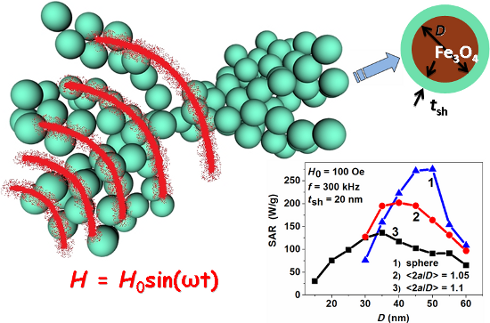
- taking into account both thermal fluctuations of the particle magnetic moments and strong magneto–dipole interaction in assemblies of fractal-like clusters of nanoparticles. Similar calculations are also performed for assemblies of slightly elongated magnetite nanoparticles having combined magnetic
- anisotropy. A substantial dependence of the SAR on the nanoparticle diameter is obtained for all cases investigated. Due to the influence of the magneto–dipole interaction, the SAR of fractal clusters of nanoparticles decreases considerably in comparison with that for weakly interacting nanoparticles
- . However, the ability of magnetic nanoparticle assemblies to generate heat can be improved if the nanoparticles are covered by nonmagnetic shells of appreciable thickness. Keywords: fractal clusters; magnetite nanoparticles; magneto–dipole interaction; numerical simulation; specific absorption rate


A Ni(OH)2 nanopetals network for high-performance supercapacitors synthesized by immersing Ni nanofoam in water
Beilstein J. Nanotechnol. 2019, 10, 281–293, doi:10.3762/bjnano.10.27
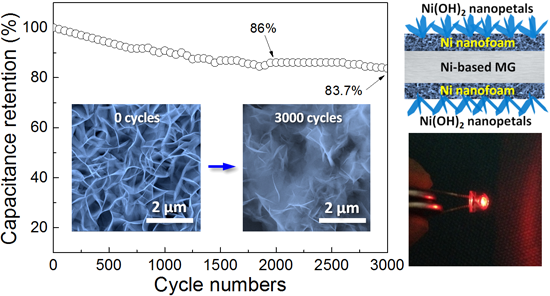
- nanopetals exhibit a network shape. With increasing immersion time, clusters of nanopetals accumulate into a flower morphology upon the Ni(OH)2 network layer, resulting in a thickness increase of the Ni(OH)2 layer and a decline in conductivity. A higher conductivity of the electrode leads to a better rate




Thermal control of the defunctionalization of supported Au25(glutathione)18 catalysts for benzyl alcohol oxidation
Beilstein J. Nanotechnol. 2019, 10, 228–237, doi:10.3762/bjnano.10.21
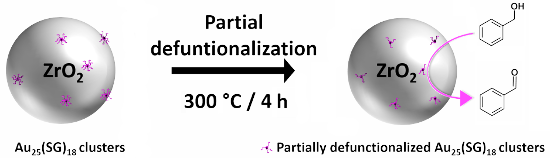
- des Multimatériaux et Interfaces (LMI), Villeurbanne, France 10.3762/bjnano.10.21 Abstract Au25(SG)18 (SG – glutathione) clusters deposited on ZrO2 nanoparticles have been used as a catalyst for benzyl alcohol oxidation. Calcination was performed at different temperatures to study the ligand and
- chemical sensing, bioimaging, biotherapy and catalysis. As a catalyst, GNCs, and mostly Au25(SR)18 gold thiolate clusters, have shown high activity for different reactions such as liquid or gas phase oxidation, hydrogenation, C–C coupling and electro/photocatalysis [13]. Based on different studies, it is
- has been shown that the presence or absence of the thiolate ligand affects the catalytic activity and selectivity of gold thiolate clusters [17][18]. For example, high activity in the aerobic epoxidation of trans-stilbene was observed using non-calcined Au25(SPhNH2)17@SBA-15, whereas upon calcination




Uniform Sb2S3 optical coatings by chemical spray method
Beilstein J. Nanotechnol. 2019, 10, 198–210, doi:10.3762/bjnano.10.18
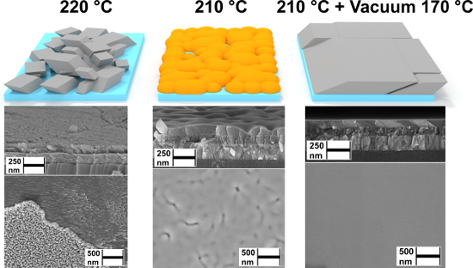
- Information File 1, Figure S2A,B, Figure S3A,B; 6-200-As-dep., Figure 3A,B; 6-210-As-dep., Figure 3C,D) cover the substrate almost entirely. Grain boundaries and larger clusters of grains have formed in layers deposited from Sb/S 1:6 solutions for 40 minutes at 210 °C (6-210-As-dep., Figure 3C,D, Figure S5C,D
- met. Indeed, metastibnite, the naturally occurring mineral form of amorphous Sb2S3, has the botryoidal characteristic, preferentially forming globular clusters [55]. We have also observed 3D growth of extremely thin TiO2 layers by spray pyrolysis [56]. Therefore, 3D island growth may partially be




Sputtering of silicon nanopowders by an argon cluster ion beam
Beilstein J. Nanotechnol. 2019, 10, 135–143, doi:10.3762/bjnano.10.13
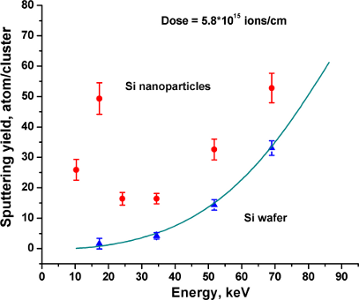
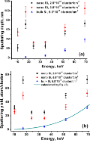
- clusters is generally recognized an effective technique to sputter solid materials [1]. Sputtering using gas cluster ions differs drastically from sputtering using monomer ions; this difference arises from the peculiar features of the cluster beam. Due to the large quantity of monomers which constitute
- sputtering yield has already been discussed by Belykh et al. [27]. In the present work, we use massive argon clusters, as projectiles, and pressed Si nanopowder consisting of nanoparticles with a mean particle diameter of 60 nm, as the sputtered material. The sputtering yield dependence versus average target
- shown. The electron energy influences the mass spectra rather profoundly. The mean cluster specific sizes are 2900 and 840 atoms at Ee = 17 and 150 eV, respectively. It is known that the effect of the cluster fragmentation under electron impact is negligible for massive clusters (N > 100) [29





Zn/F-doped tin oxide nanoparticles synthesized by laser pyrolysis: structural and optical properties
Beilstein J. Nanotechnol. 2019, 10, 9–21, doi:10.3762/bjnano.10.2
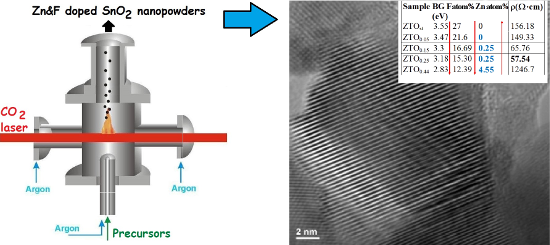
- the freshly formed tin-based clusters. Using the same SF6 flow rate (0.5 sccm), the highest F content was found in the ZTOst sample where none of the central Ar streams pass through ZnEt2. The most probable explanation comes from the reactive flame temperature when the presence of ZnEt2 vapors
- reaches the temperature where the precursors start to decompose, forming Zn/F-doped Sn-based (and sometimes even SnF2) clusters. At the same time, due to the presence of an oxidative environment, the freshly formed clusters oxidize to SnO or SnO2 nanodomains. Also, a reference sample doped only with



Colloidal chemistry with patchy silica nanoparticles
Beilstein J. Nanotechnol. 2018, 9, 2989–2998, doi:10.3762/bjnano.9.278
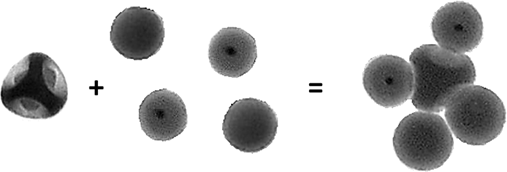
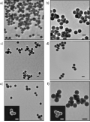
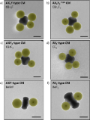
- report a new route to synthesize clusters, or so-called colloidal molecules (CMs), which mimic the symmetry of molecular structures made of one central atom. We couple site-specifically functionalized patchy nanoparticles, i.e., valence-endowed colloidal atoms (CAs), with complementary nanospheres
- of the inherent directionality of colloidal clusters and by growing a matrix material onto the clusters [13][14]. By adjusting the matrix growth, it is possible to leave some zones of the clusters exposed to the outer medium, which further serve as patches with controlled size. The group of van
- ethanol followed by two cycles of centrifugation (12,000g; 10 min)/redispersion in anhydrous DMF. Synthesis of the dimpled silica particles with aminated PS chains Synthesis of the multipod-like PS/silica clusters We prepared batches of bipods and tetrapods, consisting of a central silica core surrounded


Site-controlled formation of single Si nanocrystals in a buried SiO2 matrix using ion beam mixing
Beilstein J. Nanotechnol. 2018, 9, 2883–2892, doi:10.3762/bjnano.9.267
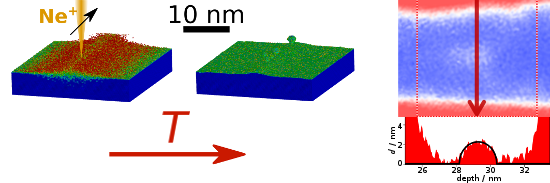
- of Monte Carlo steps, ultimately leading to the formation of a 1D Si NC chain (see Figure 5c). During this process, small clusters decay faster than larger clusters which form at the location of the highest Si excess close to the center of the irradiation line. Finally, the NCs start to decay and all


Controlling surface morphology and sensitivity of granular and porous silver films for surface-enhanced Raman scattering, SERS
Beilstein J. Nanotechnol. 2018, 9, 2813–2831, doi:10.3762/bjnano.9.263
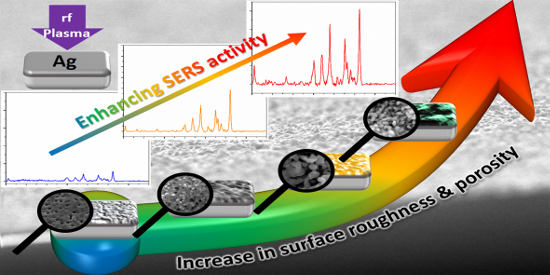
- are observed due island formation during sputtering (Figure 1c,d) [77]. The granular morphology could be advantageous for the formation of hot spots resulting in an efficient SERS activity of the silver film. For the 200 nm thick silver film the coalescence of the adjacent silver clusters formed in