


Search results
Search for "diamond" in Full Text gives 243 result(s) in Beilstein Journal of Nanotechnology. Showing first 200.
Patterning technique for gold nanoparticles on substrates using a focused electron beam
Beilstein J. Nanotechnol. 2015, 6, 1010–1015, doi:10.3762/bjnano.6.104
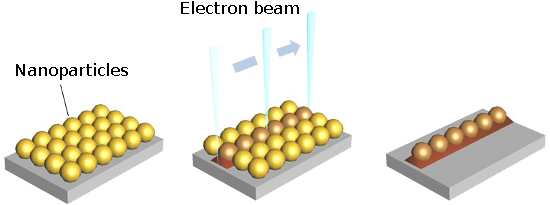
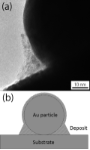
- these bands suggests that amorphous carbon or diamond-like carbon exists on the specimen. It should be noted that no such peaks were observed for the sample without electron beam irradiation (after the steps (i) and (iii)). Figure 6 shows a transmission electron microscope (TEM) image of a nanoparticle




Mapping of elasticity and damping in an α + β titanium alloy through atomic force acoustic microscopy
Beilstein J. Nanotechnol. 2015, 6, 767–776, doi:10.3762/bjnano.6.79
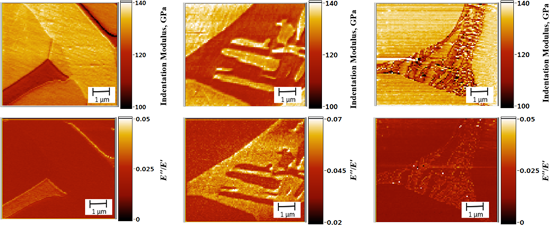
- diamond solution. Further, the specimens were polished by using a 50 nm colloidal silica suspension at a very low load to obtain the strain-free specimen surfaces. Plane parallelism of the specimens was maintained throughout the polishing. An NTEGRA AFAM system supplied by M/s. NT-MDT Co., Zelenograd


Self-assembled anchor layers/polysaccharide coatings on titanium surfaces: a study of functionalization and stability
Beilstein J. Nanotechnol. 2015, 6, 617–631, doi:10.3762/bjnano.6.63
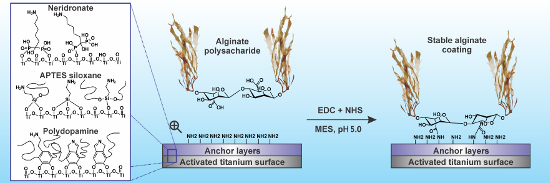
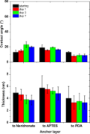
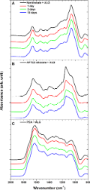
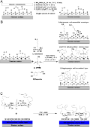
- . Infrared reflection–absorption spectroscopy (IRRAS): The infrared spectra of neridronate, APTES and dopamine moieties were recorded using a Perkin Elmer, Paragon 1000PC, FTIR spectrometer, equipped with a MCT detector and a single reflection, monolithic diamond, Golden Gate ATR accessory (Specac, England


Chains of carbon atoms: A vision or a new nanomaterial?
Beilstein J. Nanotechnol. 2015, 6, 559–569, doi:10.3762/bjnano.6.58
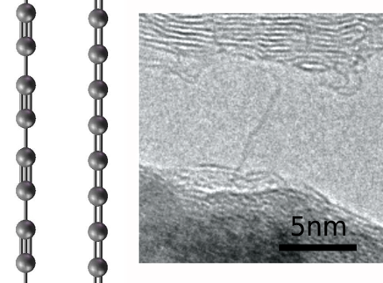
- . Accordingly, the modifications of carbon have completely different appearance. The sp2- and sp3-bonded modifications, graphite and diamond, are known since ancient times, however it took until the beginning of the 21st century until the synthesis and investigation of graphene, as the two-dimensional
- likely, never become available as a standard bulk material like graphite or diamond. In the same way as graphite is composed of stacked sheets of graphene, carbyne is considered as an arrangement of linear chains of carbon atoms. The chains are therefore the elementary building blocks of sp1-hybridized
- characteristics in alkynes, in particular acetylene, the structure of sp1-hybridized carbon is addressed in many textbooks of chemistry although carbyne is not a standard phase of carbon like graphite or diamond. Two extreme cases for the electronic structure can be imagined, namely cumulene with double bonds


Nanoparticle shapes by using Wulff constructions and first-principles calculations
Beilstein J. Nanotechnol. 2015, 6, 361–368, doi:10.3762/bjnano.6.35
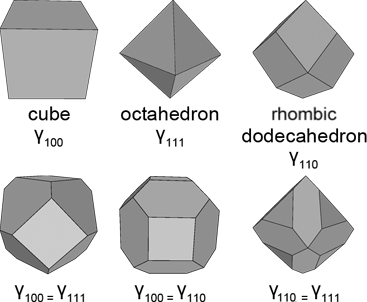
- composition. For example, the octahedral shape characteristic of natural diamonds is also observed for nanoparticles that consist entirely of C atoms in the diamond crystal structure [18]. The Wulff construction offers a simple and rigorous way to describe nanoparticle shapes without the need to use complex
- structure of materials allowed for calculations of interface tensions from first principles. These data were often used in Wulff constructions for the prediction of the shape of nanoparticles in a variety of environments. Some characteristic examples include supported Au [33][34], diamond [35], TiO2 [36
- ], Si in amorphous SiO2 [37], diamond in amorphous C [38], Rh and Pd under oxidizing conditions [39], Cu in N gas [40], Au under oxidizing conditions [41], noble metals with an environment [42], complex metal hydrides [43], iron carbides [44] and dawsonites [45][46], just to name a few. Atomistic Wulff



Synthesis, characterization, monolayer assembly and 2D lanthanide coordination of a linear terphenyl-di(propiolonitrile) linker on Ag(111)
Beilstein J. Nanotechnol. 2015, 6, 327–335, doi:10.3762/bjnano.6.31
- Diamond software [57]. CCDC-1026443 (2) and CCDC-1006987 (3) contain the supplementary reference crystallographic data for this paper. These data can be obtained free of charge at http://www.ccdc.cam.ac.uk/conts/retrieving.html (or from the Cambridge Crystallographic Data Centre, 12 Union Road, Cambridge


Comparative evaluation of the impact on endothelial cells induced by different nanoparticle structures and functionalization
Beilstein J. Nanotechnol. 2015, 6, 300–312, doi:10.3762/bjnano.6.28
- -angle diamond knife (Diatome, Biel, Switzerland) in a Leica Ultracut S ultramicrotome was used to make ultrathin sections and then staining with freshly prepared uranyl acetate and lead citrate was performed. The sections were evaluated using a transmission electron microscope EM 902A (Zeiss, Germany




Oxygen-plasma-modified biomimetic nanofibrous scaffolds for enhanced compatibility of cardiovascular implants
Beilstein J. Nanotechnol. 2015, 6, 254–262, doi:10.3762/bjnano.6.24
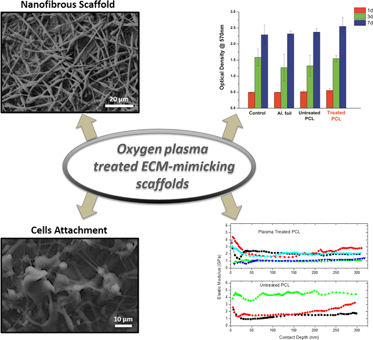
- . Mechanical characterization Nanoindentation: Dynamic nanoindentation testing (continuous stiffness measurements, Nanoindenter XP) was carried out. A Berkovich type diamond nanoindenter with nominal tip roundness of ca. 50 nm was used to test the samples. Several nanoindents were made to different surface


X-ray photoelectron spectroscopy of graphitic carbon nanomaterials doped with heteroatoms
Beilstein J. Nanotechnol. 2015, 6, 177–192, doi:10.3762/bjnano.6.17
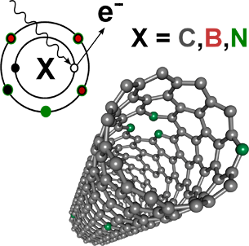
- sp2-hybridized covalent bonds into structures with dimensionalities in the nanometer scale. Although two naturally occurring forms of carbon, graphite and diamond, have been known for millennia, several new carbon nanomaterials have been created and identified in the last decades. Three recent stages


Multifunctional layered magnetic composites
Beilstein J. Nanotechnol. 2015, 6, 134–148, doi:10.3762/bjnano.6.13
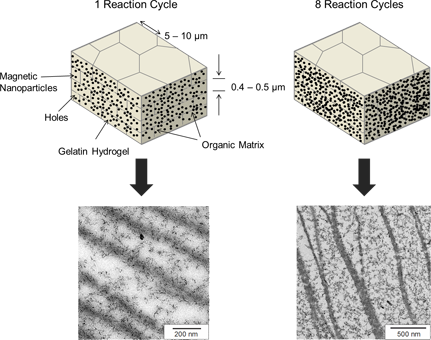
- perpendicular with a diamond knife in a Leica ultracut UCT and transferred onto a Formvar-coated copper grid. TEM and electron diffraction were performed on a Zeiss Libra 120 operating at 120 kV. For SEM measurements the samples were air-dried at room temperature and cut perpendicular to the chitin layers with





Mammalian cell growth on gold nanoparticle-decorated substrates is influenced by the nanoparticle coating
Beilstein J. Nanotechnol. 2014, 5, 2479–2488, doi:10.3762/bjnano.5.257
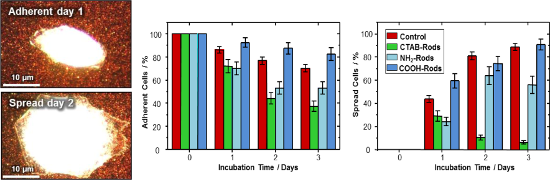
- centrifugation at 110 g for 10 min. Cells were resuspended in fresh medium (10 mL) and seeded into a new culture flask at a ratio of 1:10 [37]. Cell growth on patterned substrates Markers for cell tracking shown in Figure 2A were scratched with a diamond-tipped pencil into the glass bottom of a petri dish


Gas sensing properties of nanocrystalline diamond at room temperature
Beilstein J. Nanotechnol. 2014, 5, 2339–2345, doi:10.3762/bjnano.5.243
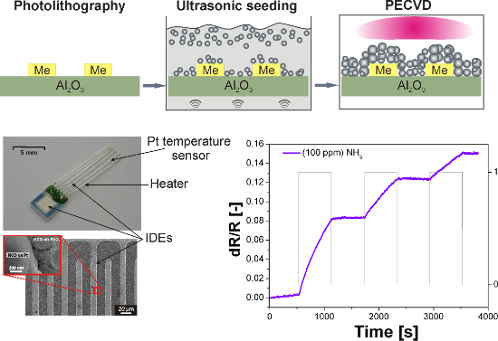
- Prague, Czech Republic 10.3762/bjnano.5.243 Abstract This study describes an integrated NH3 sensor based on a hydrogenated nanocrystalline diamond (NCD)-sensitive layer coated on an interdigitated electrode structure. The gas sensing properties of the sensor structure were examined using a reducing gas
- electrodes; nanocrystalline diamond; response; Introduction Air pollution is one of the main environmental-health related threats. Increasing amounts of noxious pollutants are emitted into the atmosphere, resulting in damage to human health and the environment. There is great interest in using sensing
- ][4][5][6][7]. To date, various publications have focused on conductometric integrating gas sensors, which are able to avoid several problems of conventional gas sensors. Nevertheless, the proper choice of the sensing material plays an essential role [3][4]. Diamond is a promising sensor material and


Localized surface plasmon resonances in nanostructures to enhance nonlinear vibrational spectroscopies: towards an astonishing molecular sensitivity
Beilstein J. Nanotechnol. 2014, 5, 2275–2292, doi:10.3762/bjnano.5.237




Carbon nano-onions (multi-layer fullerenes): chemistry and applications
Beilstein J. Nanotechnol. 2014, 5, 1980–1998, doi:10.3762/bjnano.5.207
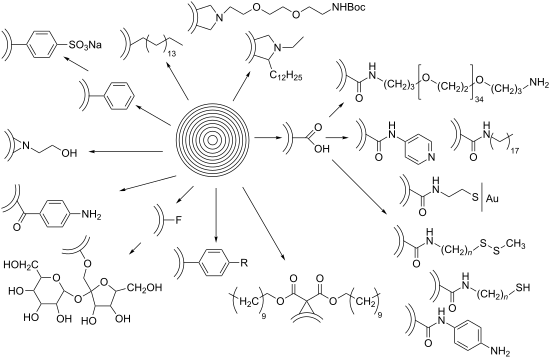
- particles have demonstrated high cellular uptake, low cytotoxicity and lower inflammatory potential than CNTs and a very promising future for biomedical applications. HRTEM images of (a) diamond nanoparticles, (b) spherical carbon onions, and (c) polyhedral carbon onions. Diamond nanoparticles are


Imaging the intracellular degradation of biodegradable polymer nanoparticles
Beilstein J. Nanotechnol. 2014, 5, 1905–1917, doi:10.3762/bjnano.5.201
- the disk. The cells were then enclosed in the resin block. The block was divided in halves, then trimmed into a trapezoid area with an abundant number of cells, and then fixed in the ultra-microtome (Leica Ultracut UCT). With a diamond knife (Diatome Ultra, Switzerland), 60 nm thick sections were


Cathode lens spectromicroscopy: methodology and applications
Beilstein J. Nanotechnol. 2014, 5, 1873–1886, doi:10.3762/bjnano.5.198

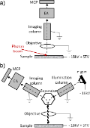
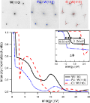
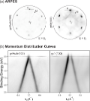
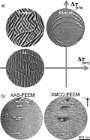
- Although LEEM and PEEM are widespread, only few instruments that combine both methods can be found in synchrotrons. Some prominent ones are situated at ALBA (Spain), BESSY (Germany), Diamond (UK), MAXLAB (Sweden), NSLS (USA), SOLEIL (France) and SPRING-8 (Japan). Among these, the end station of the



Carbon-based smart nanomaterials in biomedicine and neuroengineering
Beilstein J. Nanotechnol. 2014, 5, 1849–1863, doi:10.3762/bjnano.5.196
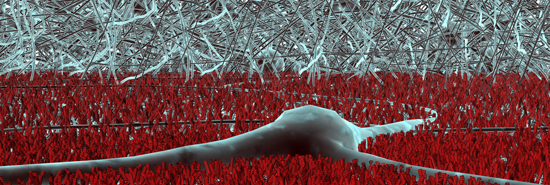
- allotropes, the most widely known are carbon nanotubes (CNTs) and fullerenes, graphite and graphene (sp2), and diamond (sp3). From these distinct hybridisations, different properties are inherent to these allotropes. Carbon nanotubes (CNTs): CNTs, first reported by Iijima in 1991 [1], are hollow cylinders
- stimulation and functional scaffolds for tissue engineering). Nanodiamonds (NDs): As a result of the complete sp3 hybridisation of its carbon atoms and its characteristic tetrahedral configuration, diamond shows interesting and peculiar properties such as an extreme hardness, low friction coefficient, high
- mobility of electrical charge carriers and high thermal conductivity [8][9]. Diamond exhibits these properties both in bulk as well as at the nanoscale and combines them with typical features of nanomaterials, such as a large surface area and small overall size. NDs, mainly obtained by detonation of TNT
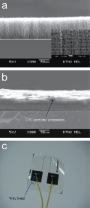


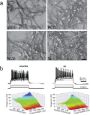
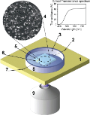
Electronic and electrochemical doping of graphene by surface adsorbates
Beilstein J. Nanotechnol. 2014, 5, 1842–1848, doi:10.3762/bjnano.5.195
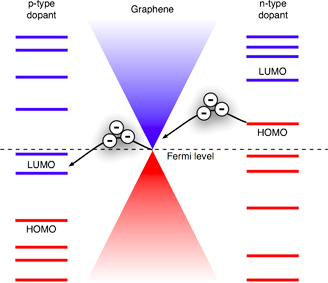
- demonstrated to be an efficient acceptor for diamond [33] and carbon nanotubes [34]. As the workfunctions of diamond and graphene are similar, the F4-TCNQ molecule was considered to be a good candidate for p-type doping of graphene. The effect of the F4-TCNQ molecule on the electronic properties of epitaxial
- molecules, which consequently increases the concentration of holes in graphene, as it was observed experimentally [21]. Some of these redox reactions were first discussed for diamond and carbon nanotubes [17][45] and were investigated for graphene because of the similarity in all their work functions. For
- instance, the exposure of hydrogenated diamond to a humid atmosphere results in p-type doping [46][47], which can be suppressed by NH3 and enhanced by NO2 [48]. Similar effects were reported for carbon nanotubes [49][50]. It would be interesting to see whether they could apply to graphite or indeed if some


Silicon and germanium nanocrystals: properties and characterization
Beilstein J. Nanotechnol. 2014, 5, 1787–1794, doi:10.3762/bjnano.5.189
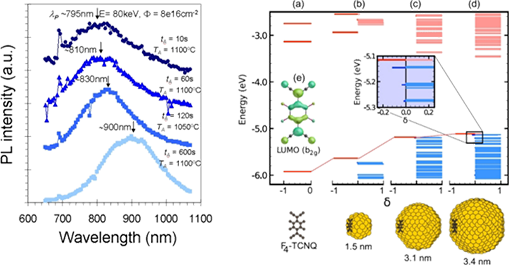
- , Portugal 10.3762/bjnano.5.189 Abstract Group-IV nanocrystals have emerged as a promising group of materials that extends the realm of application of bulk diamond, silicon, germanium and related materials beyond their traditional boundaries. Over the last two decades of research, their potential for
- energy, as well as edge- and corner-energies (for less than 104 atoms) determine the shape of the NCs grown under near-equilibrium quasi-static conditions. It has been found that diamond NCs are most stable in a truncated octahedral structure, but Si and Ge NCs are stable in a nearly-spherical geometry
- [61]. In any case, free standing Si and Ge NCs are usually grown in conditions very far from equilibrium, justifying the use of spherical models [62]. Diamond nanocrystals, however, have been grown in different shapes and configurations, and their optical properties have been found to be in


Quasi-1D physics in metal-organic frameworks: MIL-47(V) from first principles
Beilstein J. Nanotechnol. 2014, 5, 1738–1748, doi:10.3762/bjnano.5.184
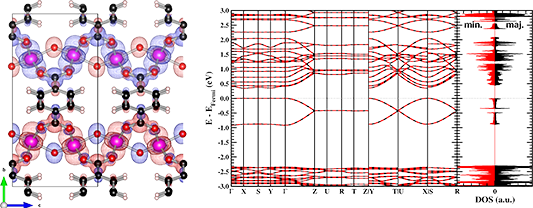
- fractions of antiferromagnetic chains show increasingly higher transition pressures, until the systems contain only antiferromagnetic chains, which have the highest transition pressure of 124 MPa. Alternately, in XRPD experiments at room temperature while using a diamond anvil cell the transition pressure


Ionic liquid-assisted formation of cellulose/calcium phosphate hybrid materials
Beilstein J. Nanotechnol. 2014, 5, 1553–1568, doi:10.3762/bjnano.5.167
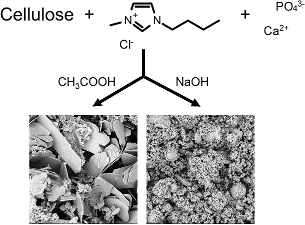
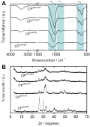
- done on a Thermo Nicolet FT-IR Nexus 470 with a diamond crystal. Spectra were recorded from 500 to 4000 cm−1 with a resolution of 2 cm−1. X-ray diffraction patterns were recorded with a Siemens D5005 (Cu Kα, 0.154 nm) between 3 and 70° 2θ with a step size of 0.02° per second. Samples were mounted on a


Synthesis of hydrophobic photoluminescent carbon nanodots by using L-tyrosine and citric acid through a thermal oxidation route
Beilstein J. Nanotechnol. 2014, 5, 1513–1522, doi:10.3762/bjnano.5.164
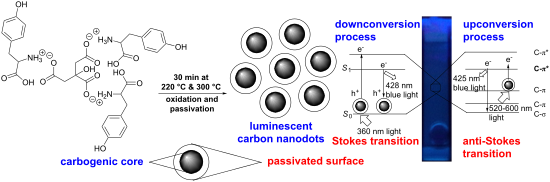
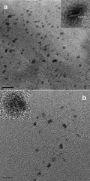
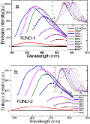
- molecule detection, energy transfer [1]. A special form of carbon (smaller than 10 nm in size) exhibiting fascinating properties are carbon nanodots (CNDs), which are different in their properties from zero-band gap graphene, diamond, and fullerene. Carbon nanodots (CNDs) exhibit properties such as






Near-field photochemical and radiation-induced chemical fabrication of nanopatterns of a self-assembled silane monolayer
Beilstein J. Nanotechnol. 2014, 5, 1441–1449, doi:10.3762/bjnano.5.156
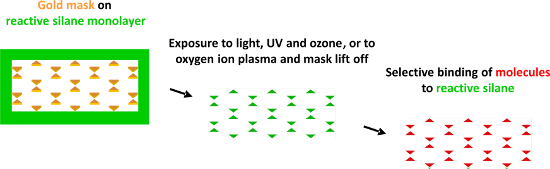
- coating of a 2% solution of polystyrene (MW 100000) in toluene at 1500 rpm. The sandwich layer of the gold film and the polystyrene film is cut with a diamond marker into squares of about 2–3 mm. By dipping the coated cover glass slowly at an oblique angle into a water trough, the films are separated from


Nano-rings with a handle – Synthesis of substituted cycloparaphenylenes
Beilstein J. Nanotechnol. 2014, 5, 1320–1333, doi:10.3762/bjnano.5.145
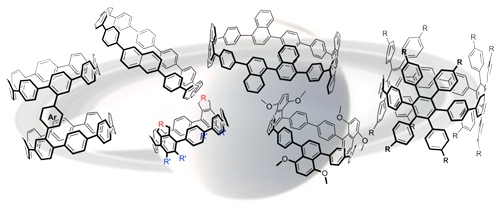
- beyond the parent unsubstituted oligo-phenylene structure. Keywords: aromatic compounds; carbon nanotubes; cycloparaphenylene; organic synthesis; Introduction Carbon is for organic chemists the essential building block. Besides graphite and diamond scientists have discovered new carbon allotropes such


An insight into the mechanism of charge-transfer of hybrid polymer:ternary/quaternary chalcopyrite colloidal nanocrystals
Beilstein J. Nanotechnol. 2014, 5, 1235–1244, doi:10.3762/bjnano.5.137
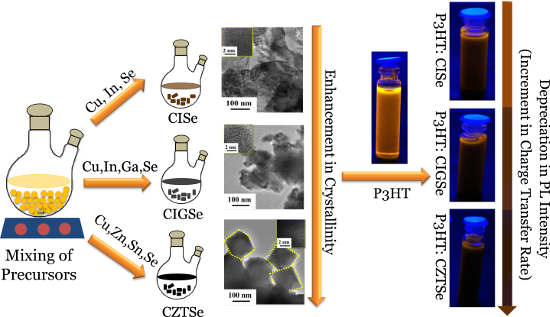
- various complimentary characterization techniques. Results and Discussion CISe is known to acquire a chalcopyrite lattice structure, which usually is a diamond-like structure similar to the sphalerite structure. The difference lies in the ordered substitution of the Cu and In element on the Zn sites of





