


Search results
Search for "dissolution" in Full Text gives 292 result(s) in Beilstein Journal of Nanotechnology. Showing first 200.
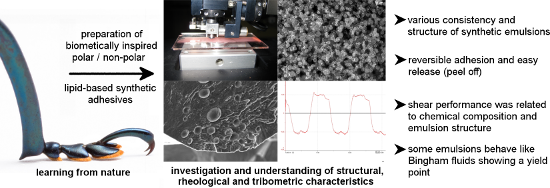
Structural and tribometric characterization of biomimetically inspired synthetic "insect adhesives"
Beilstein J. Nanotechnol. 2017, 8, 45–63, doi:10.3762/bjnano.8.6


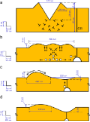
Annealing-induced recovery of indents in thin Au(Fe) bilayer films
Beilstein J. Nanotechnol. 2016, 7, 2088–2099, doi:10.3762/bjnano.7.199
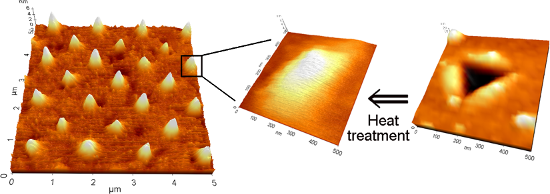
- their subsequent dissolution. The application of the processes uncovered in this work show great potential for the patterning of thin films. Keywords: annealing; diffusion; dislocation loops; nanoindenation; thin films; Introduction The intentional introduction of defects into bulk metallic material





Facile fabrication of luminescent organic dots by thermolysis of citric acid in urea melt, and their use for cell staining and polyelectrolyte microcapsule labelling
Beilstein J. Nanotechnol. 2016, 7, 1905–1917, doi:10.3762/bjnano.7.182
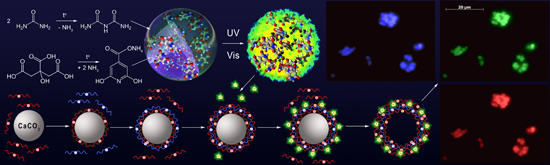
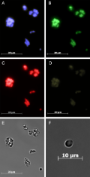
- min, typically 120 min, see Figures 1–4 and Supporting Information File 1, Figures S5–S10, S12). Synthesis of the LbL-microcapsules decorated by O-dots Polyelectrolyte microcapsules were fabricated by using a layer-by-layer (LbL) technique, followed by dissolution of the core material as described in
- experiments conducted was five. Statistical differences within and between groups were verified using one-way analysis of variance (ANOVA). Absorption spectra of citric acid heated in the urea melt (1:1, 1:2, 1:3, 1:4 and 1:5 molar ratios) at 160 °C for 120 min (with subsequent dissolution of the reaction
- products in water). The control sample consisted of the product of thermal treatment of triammonium citrate (without urea) under the same conditions. Left: Maximum emission wavelengths of the products obtained by heating citric acid in the urea melt at 160 °C for 120 min (with subsequent dissolution in




Evolution of the graphite surface in phosphoric acid: an AFM and Raman study
Beilstein J. Nanotechnol. 2016, 7, 1878–1884, doi:10.3762/bjnano.7.180
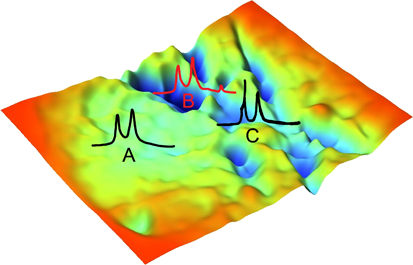
- eroded during the EC process as well as the terraces, suggesting the occurrence of graphite dissolution at these high EC potentials. Turning back to the A- and B-areas, a chemical/structural analysis of the film surface requires a spectroscopic characterization carried out by Raman. Hence, we recorded ex


Chitosan-based nanoparticles for improved anticancer efficacy and bioavailability of mifepristone
Beilstein J. Nanotechnol. 2016, 7, 1861–1870, doi:10.3762/bjnano.7.178
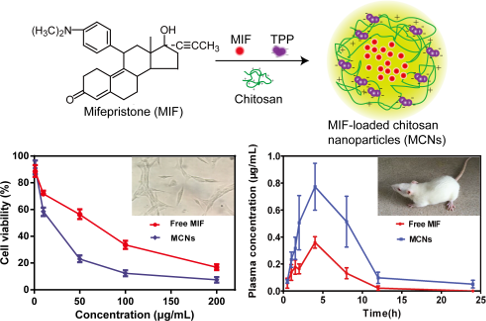
- Cs [25]. Ethanol and Tween-80 (1:1 v/v) were used as the organic solvent and detergent, respectively, for MIF because of their low toxic potential and emulsifying activity for dissolution of the hydrophobic components. In the preparation process, it was reported that several factors such as Cs
- resuspended in 10 mL of dissolution media; the suspension was then put into a pretreated dialysis bag which was sealed with a dialysis bag holder. The sealed dialysis bag was put into a large beaker containing 500 mL 1% ethanol/PBS solution of pH 7.4 or pH 2.5. The solution was stirred with a magnetic stirrer


Nanostructured TiO2-based gas sensors with enhanced sensitivity to reducing gases
Beilstein J. Nanotechnol. 2016, 7, 1718–1726, doi:10.3762/bjnano.7.164
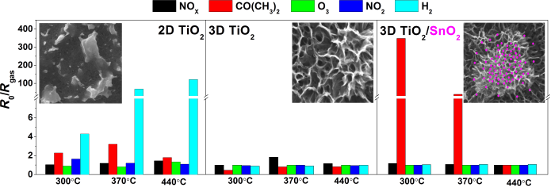
- , decomposition of titanium hydrogenperoxy gel and amorphous titania hydrate dissolution [26]. Due to these features, acceptor intrinsic defects may occur and lead to n→p transitions [36][37]. Secondly, according to Nicoloso [38], p-type conductivity is an attribute of the surface rather than the material bulk


Properties of Ni and Ni–Fe nanowires electrochemically deposited into a porous alumina template
Beilstein J. Nanotechnol. 2016, 7, 1709–1717, doi:10.3762/bjnano.7.163
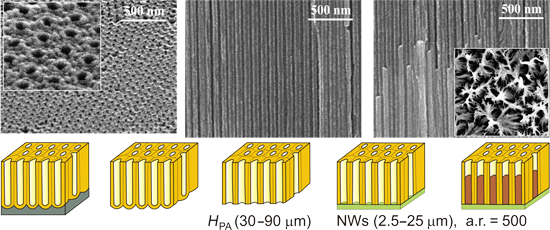
- , the detachment of alumina from the substrate was performed by Al dissolution in a saturated solution of hydrochloric acid and cupric chloride (HCl + CuCl2). Chemical dissolution of the rest of a barrier layer at the pore bottom and chemical pore widening was performed in 4 wt % Н3РО4 (30 °C) for 15


Polystyrene-block-poly(ethylene oxide) copolymers as templates for stacked, spherical large-mesopore silica coatings: dependence of silica pore size on the PS/PEO ratio
Beilstein J. Nanotechnol. 2016, 7, 1454–1460, doi:10.3762/bjnano.7.137
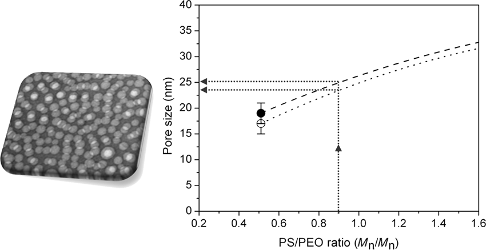
- copolymer solutions. Copolymer benzene solutions (1 wt %) were stirred for 30 min to ensure complete dissolution of the copolymer. Micellar solutions were prepared by adding the desired amount of sol–gel solution to the copolymer solution. Final solutions were spin-coated onto mica sheets of 1.27 cm × 1.27


Dealloying of gold–copper alloy nanowires: From hillocks to ring-shaped nanopores
Beilstein J. Nanotechnol. 2016, 7, 1361–1367, doi:10.3762/bjnano.7.127
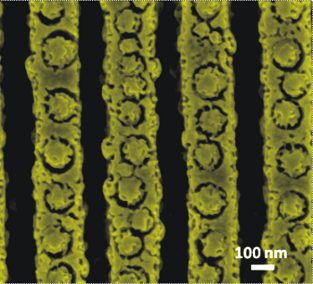
- completely surrounded by the electrolyte resulting in an increased dissolution of copper from the alloy. As a consequence, ring-shaped pores appear around the hillocks and the diameter of the latter drops from 150 to 115 nm. When increasing the dealloying voltage to 0.4 V, for 18 atom % of gold (Figure 5c
- substrate was fixed to 5 rpm. Electrochemical dealloying process The porous gold nanowires were prepared by electrochemical dealloying of Au–Cu alloy nanowires. These experiments consist in the selective dissolution of Cu by an anodic process. All experiments were performed with a Biologic SP-300




Preparation of alginate–chitosan–cyclodextrin micro- and nanoparticles loaded with anti-tuberculosis compounds
Beilstein J. Nanotechnol. 2016, 7, 1208–1218, doi:10.3762/bjnano.7.112
- surface-area-to-volume ratio of the particles [8] leading to a high rate of dissolution and absorption; • high potential of the microparticles for penetrating the target cells (alveolar macrophages in the case of M. tuberculosis lung infection) [10]; • the ability to maintain a high concentration of the



Role of solvents in the electronic transport properties of single-molecule junctions
Beilstein J. Nanotechnol. 2016, 7, 1055–1067, doi:10.3762/bjnano.7.99
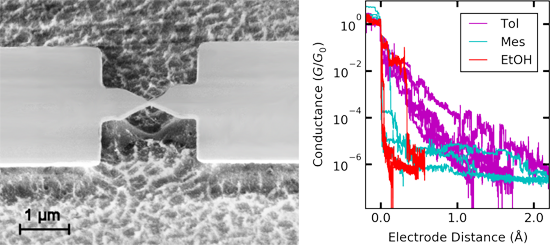
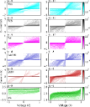
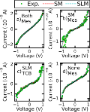
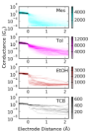
- ][8]. A very fruitful method for gathering statistical information on the transport behaviour of single-molecule junctions is the repeated formation and breakage of atomic contacts immersed in a solution containing the molecules under investigation in a suitable solvent. The dissolution of the





Reconstitution of the membrane protein OmpF into biomimetic block copolymer–phospholipid hybrid membranes
Beilstein J. Nanotechnol. 2016, 7, 881–892, doi:10.3762/bjnano.7.80
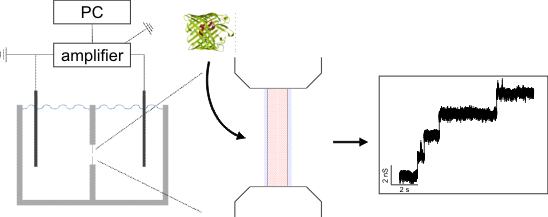
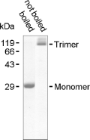
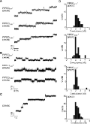
- /DPhPC membranes. Being well aware of the low compatibility of this solvent with proteins, this solvent led to the molecular dissolution of PIPEO. The presence of chloroform in our lipopolymer membranes may also be the reason why we did not observe typical three-step closing of trimeric OmpF channels at



Assembling semiconducting molecules by covalent attachment to a lamellar crystalline polymer substrate
Beilstein J. Nanotechnol. 2016, 7, 784–798, doi:10.3762/bjnano.7.70
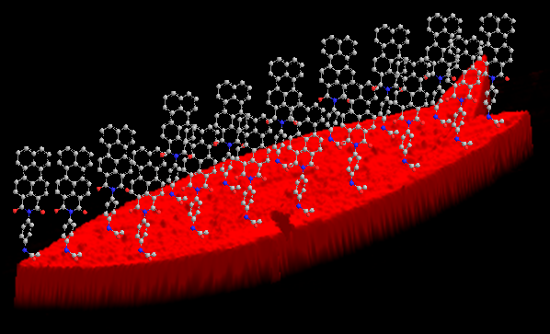
- Langmuir–Schäfer technique to a hydrophobic silicon wafer coated with an octadeclytrichlorsilane (OTS) monolayer. CPE45 crystallization, annealing and functionalization procedure In order to grow single crystals, CPE45 was dissolved in tetrahydrofuran (THF). For the initial dissolution, a combination of


Selective photocatalytic reduction of CO2 to methanol in CuO-loaded NaTaO3 nanocubes in isopropanol
Beilstein J. Nanotechnol. 2016, 7, 776–783, doi:10.3762/bjnano.7.69
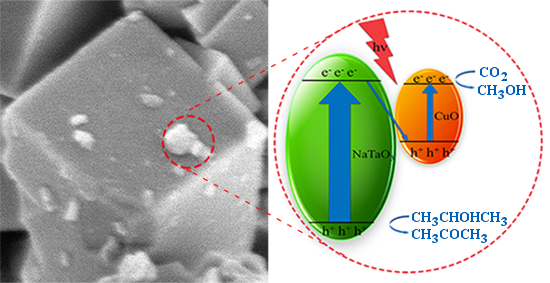
- was increased to 3 mol/L and 4 mol/L, the ideal morphology of the nanocubes was disrupted and fewer nanocubes were observed. Generally, the SEM image of 2M-NaTaO3 presents the best morphology. He et al. [34] reported a hydrothermal synthesis of NaTaO3 with Ta2O5 powder and NaOH followed a dissolution


Facile synthesis of water-soluble carbon nano-onions under alkaline conditions
Beilstein J. Nanotechnol. 2016, 7, 758–766, doi:10.3762/bjnano.7.67
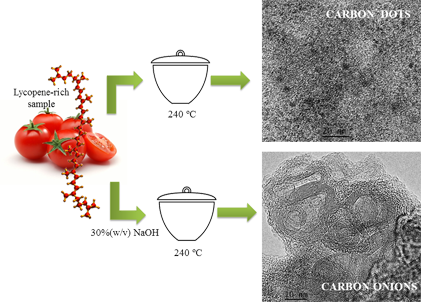
- carbonizing the samples in the presence of NaOH 30%. The color is probably due to the partial oxidation of graphene to graphene oxide during the process [35]. The water-soluble part of the residue was extracted by dissolution in 100 mL deionized water, then filtrated through normal filter papers and followed


Magnetic switching of nanoscale antidot lattices
Beilstein J. Nanotechnol. 2016, 7, 733–750, doi:10.3762/bjnano.7.65
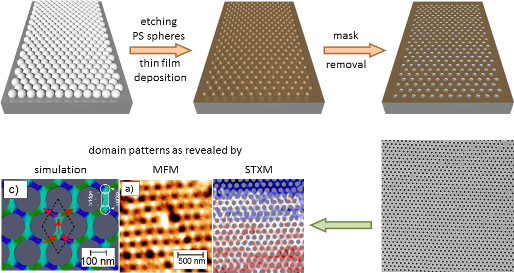
- deposited films is limited to roughly half the antidot diameter, since the acetone-based chemo-mechanical polishing needs a sidewise access to the spheres allowing PS dissolution. Under best conditions, we achieve defect-free antidot lattices of 25 × 25 µm2. Thus, integral measurements like SQUID



Hydration of magnesia cubes: a helium ion microscopy study
Beilstein J. Nanotechnol. 2016, 7, 302–309, doi:10.3762/bjnano.7.28
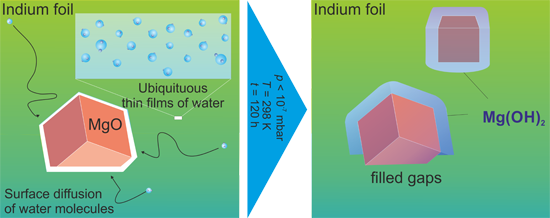
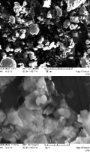
- definition specific to the MgO cubes. Comparison of different regions within one sample before and after exposure to liquid water reveals different transformation processes, such as the formation of Mg(OH)2 shells that act as diffusion barriers for MgO dissolution or the evolution of brucite nanosheets
- morphologically well-defined MgO particle systems was investigated. We observed unexpected transformations ranging from swelling of the metal oxide nanostructure core to dissolution–recrystallization steps that give rise to the formation of hydroxides with entirely different microstructures [21]. Experimental All
- increase factor ≈ 1.35). Of course, the accuracy of the HIM measurement decreases for smaller structures. However, the trend is quite clear. Such observations are in line with previous reports [21] showing that small MgO cubes are subject to faster dissolution as compared to larger ones. Interestingly


Surface coating affects behavior of metallic nanoparticles in a biological environment
Beilstein J. Nanotechnol. 2016, 7, 246–262, doi:10.3762/bjnano.7.23
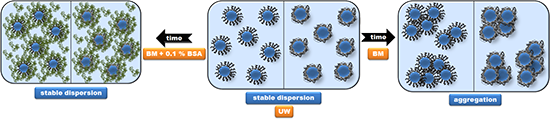
- media like dissolution, adsorption, binding, and aggregation, all influencing biological impacts by affecting reactive oxygen species generation, cellular uptake and NP biodistribution [15][16][17][18]. Metallic NPs usually aggregate in media with high electrolyte content that correspond to biological




Characterisation of thin films of graphene–surfactant composites produced through a novel semi-automated method
Beilstein J. Nanotechnol. 2016, 7, 209–219, doi:10.3762/bjnano.7.19
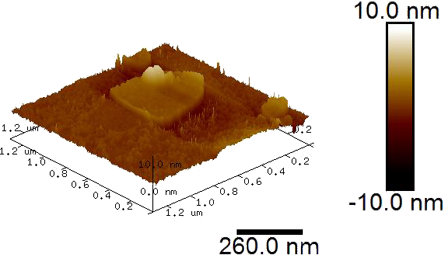
- to a concentration of 462.9 mg·mL−1 while the CTAB solution concentration was made up to 49.7 mg·mL−1. These solutions were prepared and then placed into a water bath heated to 50 °C to aid dissolution. Once dissolved, the surfactant solution was placed into the surfactant reservoir of the




Sonochemical co-deposition of antibacterial nanoparticles and dyes on textiles
Beilstein J. Nanotechnol. 2016, 7, 1–8, doi:10.3762/bjnano.7.1
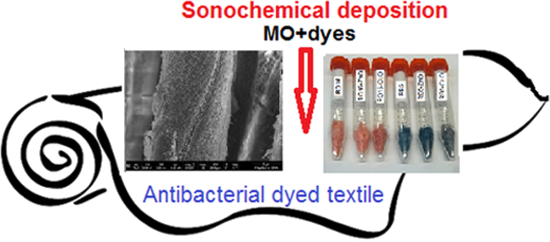
- FEG from FEI (USA). The Cu and Zn concentrations on the fabric surface were determined by inductively coupled plasma optical emission spectroscopy (ICP-OES) analysis (Horiba ULTIMA 2 spectrometer) after their dissolution from the fabric with 0.5 M HNO3. The dyes adsorbed on the cotton were
- the dissolution of the M2+ and O2− ions. As ZnO is more soluble in water, higher percentage of released ions was found for the ZnO coating. To follow the leaching of the dye into water and saline solution the color difference of the textiles before and after leaching experiments was studied by




Selective porous gates made from colloidal silica nanoparticles
Beilstein J. Nanotechnol. 2015, 6, 2105–2112, doi:10.3762/bjnano.6.215
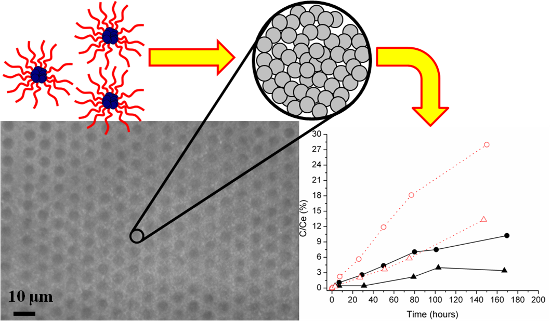
- directing agent. Benzene (≥99.7%, Riedel-de-Haën) was used as a solvent to solubilize the block copolymer. All chemicals were used without further purifications. Copolymer benzene solutions (1 wt %) were prepared and let stirring until complete dissolution of the copolymer. Micellar solutions were obtained


An ISA-TAB-Nano based data collection framework to support data-driven modelling of nanotoxicology
Beilstein J. Nanotechnol. 2015, 6, 1978–1999, doi:10.3762/bjnano.6.202
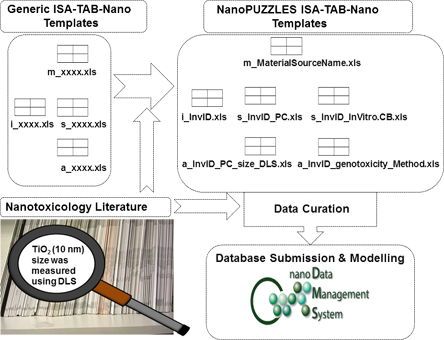
- , e.g., “Parameter Value [analyte role]” (i.e., the dissolved species being measured) for dissolution Assay file templates. No claim is made that the templates developed to date within the NanoPUZZLES project would capture all relevant measurements which might be associated with a given category of



Nanofibers for drug delivery – incorporation and release of model molecules, influence of molecular weight and polymer structure
Beilstein J. Nanotechnol. 2015, 6, 1939–1945, doi:10.3762/bjnano.6.198
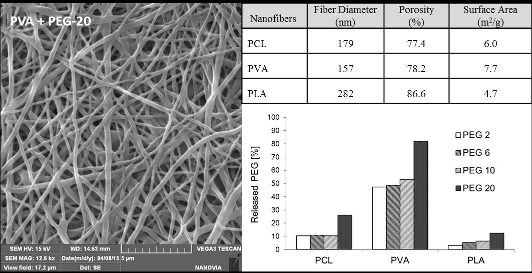
- interweaving of PEG and chains of the polymer matrix during the electrospinning process. Expecting the well interweaving of PEG molecules, their release is primarily influenced by the dissolution rate and consequent transport through the material, i.e., the molecules with lower molecular weight and so higher
- mobile, which allows them to partially penetrate the nanofibers. In this case, the distance from the surface controls the dissolution rate. The longer chains of PEG 20 contain parts of molecules which remain near the surface and are more accessible to water. This effect accelerates the release of longer
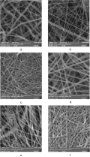
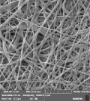
- water molecules may result in such distinct differences between the release rates from PVA. The higher amount of released PEG from PVA brings the question whether it is not related to the dissolution of the fibers in an aqueous environment. Therefore, the SEM images of PVA nanofibers after release



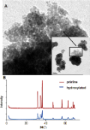
Temperature-dependent breakdown of hydrogen peroxide-treated ZnO and TiO2 nanoparticle agglomerates
Beilstein J. Nanotechnol. 2015, 6, 1897–1903, doi:10.3762/bjnano.6.193
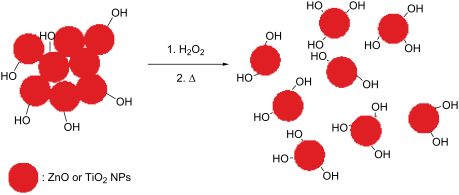
- contaminate the NP suspension, which may limit the applications of the NPs. Their dispersion in aqueous media can also be physically achieved after long ultrasonication processes (up to 60 h [10]). However, the long sonication time may also cause erosion or dissolution and the formation of cavities on the




Nanocuration workflows: Establishing best practices for identifying, inputting, and sharing data to inform decisions on nanomaterials
Beilstein J. Nanotechnol. 2015, 6, 1860–1871, doi:10.3762/bjnano.6.189

- ., dissolution rate at a particular pH and toxicity in a specific organism). These three organizations (caNanoLab, NR, and CEINT-NIKC) differ in sourcing data to be curated (established protocols, literature sources, primarily internal or fully external), the intended users (medical researchers conversant with





