Search results
Search for "electrical conductivity" in Full Text gives 253 result(s) in Beilstein Journal of Nanotechnology. Showing first 200.
Light-induced magnetoresistance in solution-processed planar hybrid devices measured under ambient conditions
Beilstein J. Nanotechnol. 2017, 8, 1502–1507, doi:10.3762/bjnano.8.150
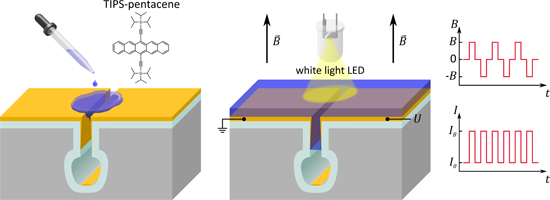
- different contributions to the device degradation. It was also shown by Jurchescu et al. [16] that pentacene single crystals behave differently when the electrical conductivity is measured in ambient or dry air, with and without illumination. It should be mentioned here that previously we found the decrease


Miniemulsion copolymerization of (meth)acrylates in the presence of functionalized multiwalled carbon nanotubes for reinforced coating applications
Beilstein J. Nanotechnol. 2017, 8, 1328–1337, doi:10.3762/bjnano.8.134
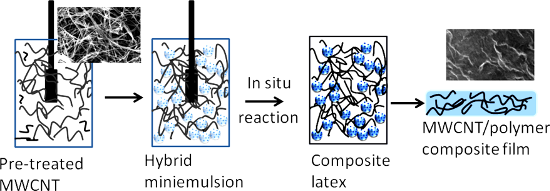
- composites maintained the reinforcement, whereas the blends behaved as a liquid-like material. This suggests the formation of a 3D network, in good agreement with the high content of insoluble polymer in the in situ composites. Keywords: electrical conductivity; hybrid polymers; mechanical properties


Oxidative chemical vapor deposition of polyaniline thin films
Beilstein J. Nanotechnol. 2017, 8, 1266–1276, doi:10.3762/bjnano.8.128
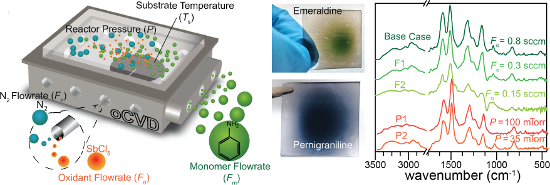
- utility of oCVD in the synthesis of PTh and showed that the polymer conjugation length and electrical conductivity can be tuned by adjusting the oCVD processing conditions [31]. We further deposited ultrathin (4–6 nm) conformal and uniform PTh coatings within porous nanostructures, including anodized
- properties and can be easily processed, and that PANI has many advantages over PEDOT and PTh, including high theoretical capacitance (55% higher than PTh), low monomer cost, better stability, and high electrical conductivity [34][35], the deposition of PANI by oCVD is expected to open up new possibilities
- benzenoid and quinoid groups, which appears as a vivid green (Figure 1b). This emeraldine state is desired from an electrochemical standpoint, because its electrical conductivity is 10 orders of magnitude greater compared with the other two states [36]. Therefore, this work addresses how oCVD can be




Growth, structure and stability of sputter-deposited MoS2 thin films
Beilstein J. Nanotechnol. 2017, 8, 1115–1126, doi:10.3762/bjnano.8.113
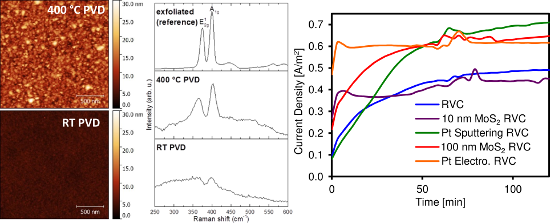
- distance. MoS2 films with vertically aligned layers and thereby maximally exposing edge sites were converted from e-beam evaporated, ultrathin Mo films (≈5 nm thick) by a rapid sulfurization process in a horizontal tube furnace [20]. Furthermore, a maximised electrical conductivity in the MoS2 is desired


Fully scalable one-pot method for the production of phosphonic graphene derivatives
Beilstein J. Nanotechnol. 2017, 8, 1094–1103, doi:10.3762/bjnano.8.111
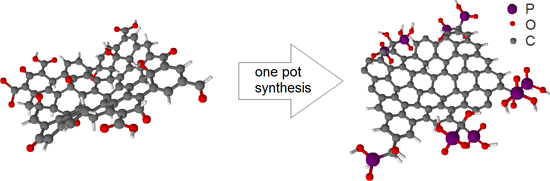
- electrical conductivity (σ) of GO-P was investigated in a temperature range from 25 to 70 °C. The functionalization with simultaneous reduction resulted in a pronounced increase of conductivity compared to pristine GO (Figure 10). As can be seen, the surface conductivity reaches high values (3.4 × 10⁻² S·cm
- applied model and experimental results (R2 ≈ 0.998) indicates that the electrical conductivity at higher temperatures of the analyzed GO-P sample can be well described by an Arrhenius temperature dependence model for semiconductors. The results presented in Figure 10 clearly shows that the phosphonated
- spectroscopy, along with UV–vis and XPS spectroscopy results proved the simultaneous restoration of conjugated double bonds in the graphene plane. The functionalized material revealed an electrical conductivity consistent with values reported for chemically or thermally reduced GO. The conducting graphene


Structural properties and thermal stability of cobalt- and chromium-doped α-MnO2 nanorods
Beilstein J. Nanotechnol. 2017, 8, 1032–1042, doi:10.3762/bjnano.8.104
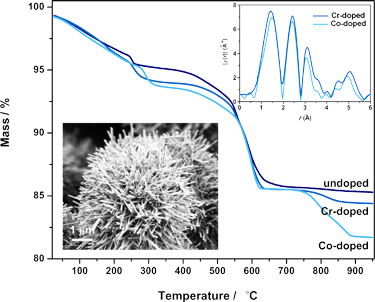
- improved the electrical conductivity, while nanoflakes and the secondary structure increase the specific surface area, leading to improved electrode kinetics by facilitating mass transport [24]. However, there is a lack of detailed structural studies of these materials in order to understand why cobalt as


BTEX detection with composites of ethylenevinyl acetate and nanostructured carbon
Beilstein J. Nanotechnol. 2017, 8, 982–988, doi:10.3762/bjnano.8.100
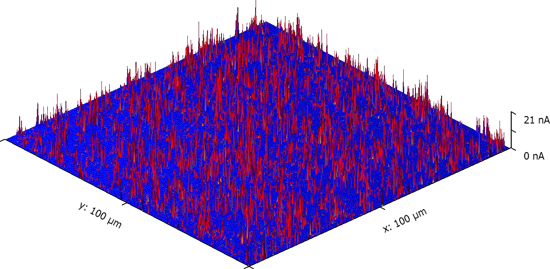
- use of nanocarbons increases the detection range as well as the electrical conductivity of the chemiresistors and decreases the temperature dependence. Hybrid composites were made of poly(dimethyl siloxane) (PDMS) with nanocarbon black (NCB) and carbon nanotubes (CNT) as fillers and these composites
- showed reversible gas-sensing measurements on BTEX. They also point out that the increased electrical conductivity, decreased temperature dependence of conductivity, and stretchability will be useful in stretchable electronics. In our previous works [8][9][20][21][22][23], we determined that the EVA–CB


Synthesis of coaxial nanotubes of polyaniline and poly(hydroxyethyl methacrylate) by oxidative/initiated chemical vapor deposition
Beilstein J. Nanotechnol. 2017, 8, 872–882, doi:10.3762/bjnano.8.89
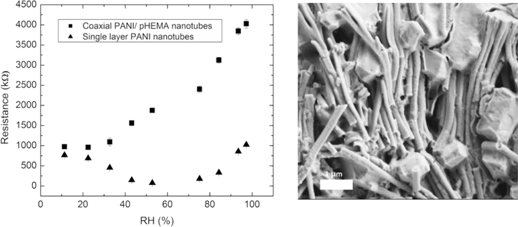
- [18], sensors [23], solar cells [24] and membranes [25] because of its great thermal and environmental stability, ease of synthesis, excellent conductivity, cost-effectiveness and redox-tunability [26][27][28][29]. One of the original aspects of PANI is that its electrical conductivity can be tuned
- has a good conductivity of 1–130 S/cm [30][31]. PANI is a good candidate material for sensor applications due to the change of oxidation/reduction level in response to changes in the environmental conditions, which, in turn, affect the electrical conductivity [32]. However, studies on PANI as humidity
- temperature (25–100 °C), adequate electrical conductivity for a wide range of applications and high-quality conformal CP thin films on various non-planar surfaces [39][40][41]. In this study, the vapor-phase oCVD and iCVD techniques were used to conformally coat the walls of the pores of anodized aluminium


Synthesis of graphene–transition metal oxide hybrid nanoparticles and their application in various fields
Beilstein J. Nanotechnol. 2017, 8, 688–714, doi:10.3762/bjnano.8.74
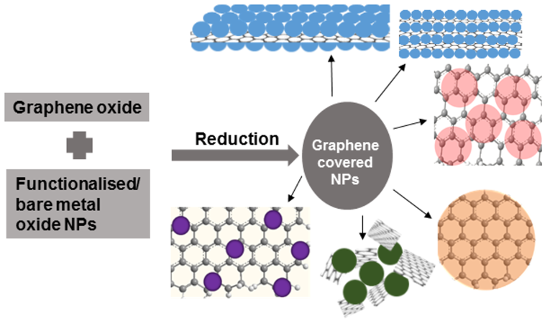
- excellent thermal (≈5000 W·m−1·K−1) [6] and electrical conductivity (up to 6000 S·cm−1) [7] and high theoretical specific surface area (2630 m2·g−1) [8]. Graphene is highly optically transparent (transmittance ≈97.7%) with absorption of <2.3% for visible light [9] and negligible reflectance (<0.1
- surface area of graphene help to maintain the mechanical strength of the hybrid during the Li insertion and extraction process. Graphene is used as a supercapacitor because of its unique properties, such as high surface area, excellent flexibility, chemical inertness and good electrical conductivity [28
- properties, such as high optical transparency, electrical conductivity, and mechanical flexibility. As mentioned before, graphene is an excellent electron-accepting and electron-transporting material. When graphene is integrated with semiconductor materials, it promotes photogenerated electrons through π–π


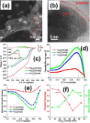


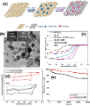


Carbon nanotube-wrapped Fe2O3 anode with improved performance for lithium-ion batteries
Beilstein J. Nanotechnol. 2017, 8, 649–656, doi:10.3762/bjnano.8.69
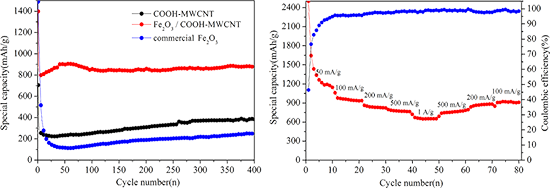
- α-Fe2O3 microspheres was much better than that of commercial graphite (372 mAh·g−1) although further improvement in cyclic stability was needed [20]. An effective method to improve the electrical conductivity of Fe2O3 is to fabricate Fe2O3/carbon nanotube (CNT), Fe2O3/graphene or Fe2O3/graphene/CNT
- Fe2O3/CNT has successfully overcome the shortcoming of low electrical conductivity of Fe2O3. Zhou et al. [27] has fabricated Fe2O3@GS by using a simple spray drying method, which significantly improved the capacity of Fe2O3 albeit with a low cycling performance. Ye et al. [28] applied a solvent-directed
- . Hydrothermal syntheses are frequently used to obtain composite oxides with uniform particle size distribution. The synthesized material can effectively buffer volume change caused by charge and discharge; and improve the electrical conductivity of the electrode [26][29][30][31][32][33][34]. Experimental


Graphene functionalised by laser-ablated V2O5 for a highly sensitive NH3 sensor
Beilstein J. Nanotechnol. 2017, 8, 571–578, doi:10.3762/bjnano.8.61
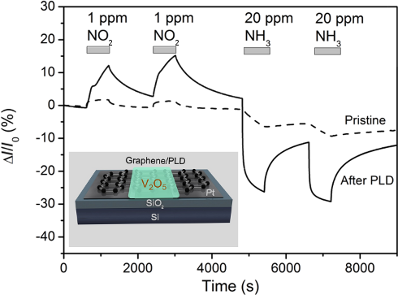
- structures was investigated using Raman spectroscopy. Based on the electrical conductivity modulation, the room temperature gas sensing properties of the manufactured sensor structure towards ammonia (NH3) and (for comparison) nitrogen dioxide (NO2) gases were investigated. Results Figure 1a shows a typical
- concentration of defects to the graphene 2D crystal lattice. These defects decrease the charge carrier mobility in graphene which is reflected in reduced electrical conductivity. As compared to the pristine sensor, the response to both gases is clearly improved after the functionalisation by PLD. The response
- oxidation state of vanadium can modulate the electrical conductivity of a strongly coupled graphene–V2O5 system. Additionally, gas adsorption may be enhanced at the phase boundaries between a very thin nanostructured V2O5 layer and graphene substrate. Experimental Graphene was grown on a commercial 25 µm


Impact of air exposure and annealing on the chemical and electronic properties of the surface of SnO2 nanolayers deposited by rheotaxial growth and vacuum oxidation
Beilstein J. Nanotechnol. 2017, 8, 514–521, doi:10.3762/bjnano.8.55
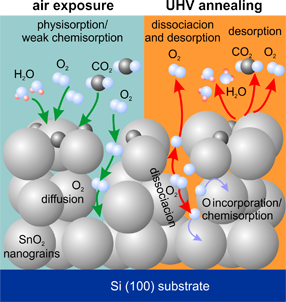
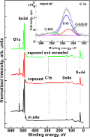
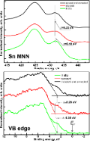
- to its high and variable electrical conductivity in the range of 100 Ω−1·cm−1 to 102 Ω−1·cm−1 due to the existence of free electrons in oxygen vacancies. This effect has been widely applied for the construction of prototypical gas sensors devices with both thick and thin films [3][4][5][6][7][8]. The



Study of the surface properties of ZnO nanocolumns used for thin-film solar cells
Beilstein J. Nanotechnol. 2017, 8, 446–451, doi:10.3762/bjnano.8.48
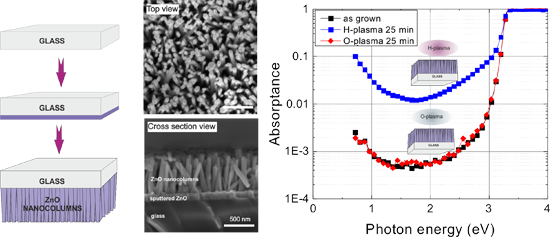
- before the deposition of the active solar-cell layer for directly increasing the electrical conductivity. The employed plasma treatments could significantly influence the concentration of defects and free carriers, reflected in the defect and free-carrier adsorption, and consequently impact the
- free-carrier concentration is reasonably expected to increase the electrical conductivity of the ZnO NCs. Nevertheless, precise measurement of electrical conductivity is a difficult task and we plan to approach it by direct measurement on individual ZnO nanocolumns. The major changes appear within

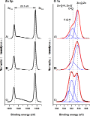


Nanostructured SnO2–ZnO composite gas sensors for selective detection of carbon monoxide
Beilstein J. Nanotechnol. 2016, 7, 2045–2056, doi:10.3762/bjnano.7.195
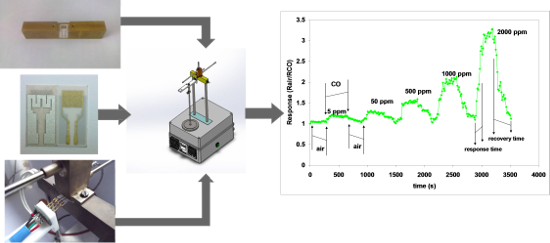
- concept of integration has been the main drive that supported research and development in the domain of smart devices for remote sensing, that is, sensors based on changes in electrical conductivity [1]. The main advantages presented by this category of gas sensors are low cost compared to other sensing




Effect of nanostructured carbon coatings on the electrochemical performance of Li1.4Ni0.5Mn0.5O2+x-based cathode materials
Beilstein J. Nanotechnol. 2016, 7, 1960–1970, doi:10.3762/bjnano.7.187
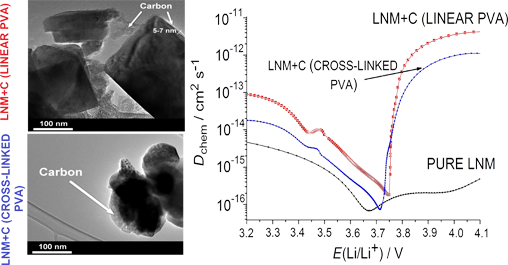
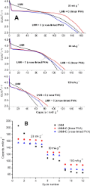
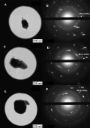
- enhance the electronic conductivity. However, this method of carbon introduction provides the contact only between the external surfaces of cathode materials aggregates, but it does not improve the coherence and hence the electrical conductivity inside the aggregates. Both kinds of problems can be solved



Layered composites of PEDOT/PSS/nanoparticles and PEDOT/PSS/phthalocyanines as electron mediators for sensors and biosensors
Beilstein J. Nanotechnol. 2016, 7, 1948–1959, doi:10.3762/bjnano.7.186
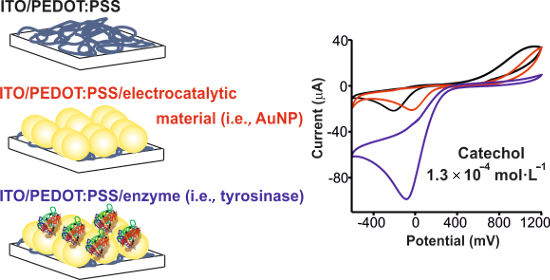
- the electron transfer due to the high electrical conductivity demonstrated in the impedance experiments. In the case of PEDOT/PSS/EM enzymatic biosensors, the main amplification occurred in the cathodic wave. For this reason, the study of the LD was carried out only in the cathodic reduction peak


A new approach to grain boundary engineering for nanocrystalline materials
Beilstein J. Nanotechnol. 2016, 7, 1829–1849, doi:10.3762/bjnano.7.176
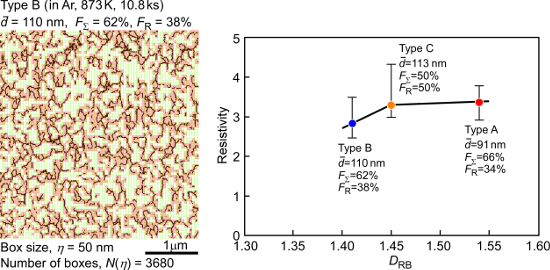
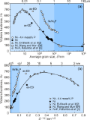
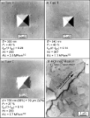
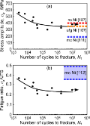
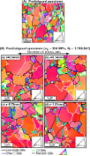
- resistivity manipulated by GBE in nanocrystalline gold thin films The improvement of electrical conductivity or precise control of electrical resistivity is required for the development of high performance electrical and magnetic materials for modern electronic devices such as MEMS and NEMS. It has been
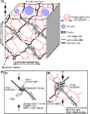
- boundaries, their crystallographic plane, triple junctions and dopants. Accordingly, we expect that GBE based on the control of grain boundary microstructure must be useful for future improvement of electrical conductivity in polycrystalline materials, especially nanocrystalline materials which can be







Monolayer graphene/SiC Schottky barrier diodes with improved barrier height uniformity as a sensing platform for the detection of heavy metals
Beilstein J. Nanotechnol. 2016, 7, 1800–1814, doi:10.3762/bjnano.7.173
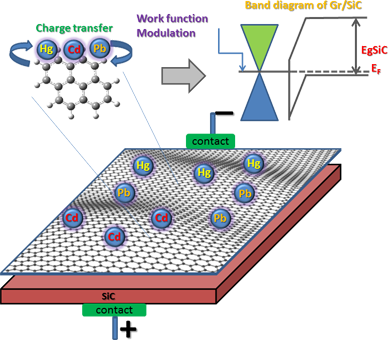
- the HOMO–LUMO gap of the graphene cluster, the electrical conductivity of Pb@graphene is enhanced in comparison with the pristine graphene flake and Hg/Cd@graphene and a better sensitivity towards Pb is expected. Conclusion The results presented herein exhibit the possibility to use a vertical




3D printing of mineral–polymer bone substitutes based on sodium alginate and calcium phosphate
Beilstein J. Nanotechnol. 2016, 7, 1794–1799, doi:10.3762/bjnano.7.172
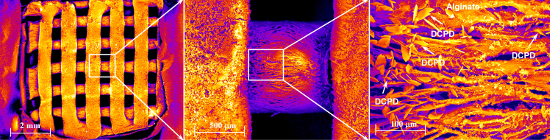
- electron modes, was used for 3D microstructure analysis. The samples were sputter-coated with a 25 nm thick gold layer prior to imaging, imparting electrical conductivity to the surfaces. FTIR spectroscopy (Nicolet Avatar 330, England) was performed after mixing 1 mg of the grinded sample with 300 mg of


Numerical investigation of depth profiling capabilities of helium and neon ions in ion microscopy
Beilstein J. Nanotechnol. 2016, 7, 1749–1760, doi:10.3762/bjnano.7.168
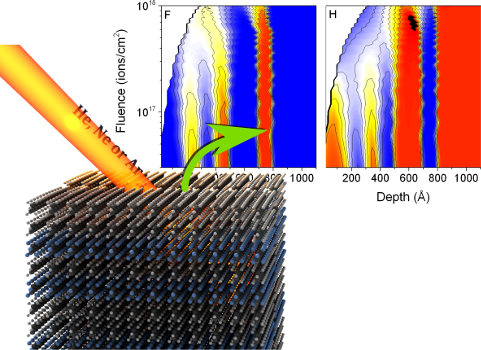
- conductivity of polymers [1]. A reduction of the band gap along with increasing photo- and electrical conductivity is observed for C+ implantation into poly(methyl methacrylate) (PMMA), which is related to the formation of carbon clusters with a polyaromatic structure [2]. Potential applications include


Analysis of self-heating of thermally assisted spin-transfer torque magnetic random access memory
Beilstein J. Nanotechnol. 2016, 7, 1676–1683, doi:10.3762/bjnano.7.160
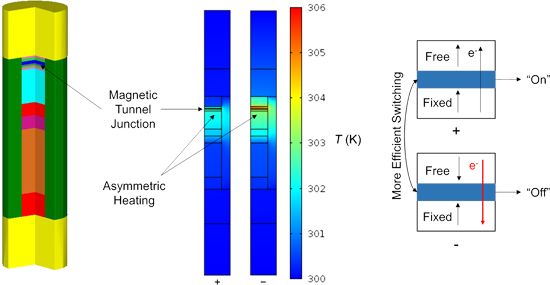
- temperature are obtained by solving the coupled current (Equation 1) and heat (Equation 2) equations: where is the current density, σ is the electrical conductivity, is the electric field, is the external current source used to model the tunnel junction, ρ is the mass density, Cp is the heat capacity, T is





Hydrophilic silver nanoparticles with tunable optical properties: application for the detection of heavy metals in water
Beilstein J. Nanotechnol. 2016, 7, 1654–1661, doi:10.3762/bjnano.7.157
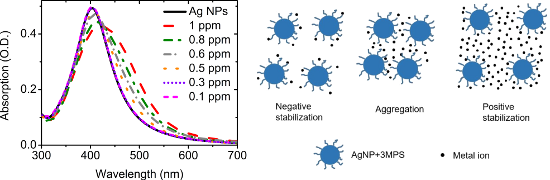
- salt (C3H7S2O3Na, 3MPS, Sigma-Aldrich, 98%) were used as received. Deionized water (electrical conductivity less than 1 μΩ/cm at room temperature) was obtained from a Millipore Milli-Q water purification system. Synthesis a: silver NPs (AgNPs) were prepared at room temperature in a single phase system


Fingerprints of a size-dependent crossover in the dimensionality of electronic conduction in Au-seeded Ge nanowires
Beilstein J. Nanotechnol. 2016, 7, 1574–1578, doi:10.3762/bjnano.7.151
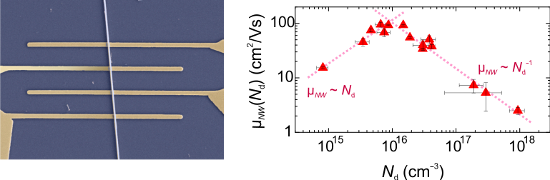
- Ireland 10.3762/bjnano.7.151 Abstract We studied the electrical transport properties of Au-seeded germanium nanowires with radii ranging from 11 to 80 nm at ambient conditions. We found a non-trivial dependence of the electrical conductivity, mobility and carrier density on the radius size. In particular
- measuring the electrical conductivity, σNW, and field effect mobility, μNW, we were able to identify the dominant scattering mechanisms and the R-dependence of the electrostatic screening length. Ge NWs used in this study were synthesized at 400 °C on anodized alumina supports using a Au nanoparticle seeded
- -type charge transport. Inset: four-point current–voltage characteristic of the same NW. Radius-dependent charge transport properties in Ge NWs. (a) Electrical conductivity, (b) mobility and (c) charge carrier density as function of the NW radius R. Dotted lines in (a) and (b) are a guide to the eye


![[Graphic 7]](/bjnano/content/inline/2190-4286-7-151-i9.png?max-width=637&scale=1.18182) and 1D screening length λ(1D) as function of carr...
and 1D screening length λ(1D) as function of carr...
Fabrication and characterization of branched carbon nanostructures
Beilstein J. Nanotechnol. 2016, 7, 1260–1266, doi:10.3762/bjnano.7.116
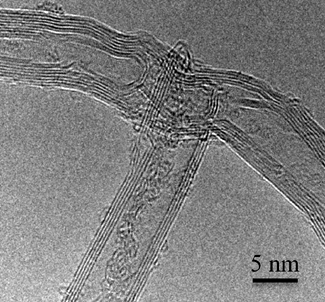
- offer benefits for applications such as transport, energy storage/conversion and bone/tooth replacement. Hence, the mechanical properties of CNTs are utilized in reinforcing polymer composites [1][2][3][4], and their electrical conductivity is utilized for conducting polymers [4][5][6]. Under tensile
- opens promising avenues for the development and manufacturing of nanocarbon composites for a variety of commercial applications. The fabrication and testing of composite materials with branched MWCNTs as well as measurements of electrical conductivity are currently in progress. Experimental The MWCNTs


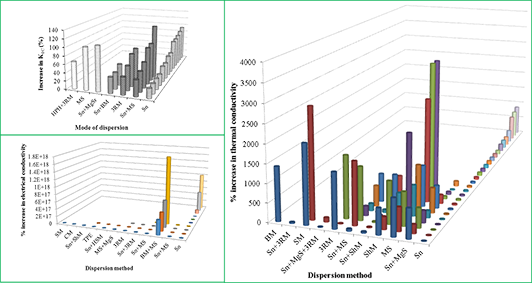
Reasons and remedies for the agglomeration of multilayered graphene and carbon nanotubes in polymers
Beilstein J. Nanotechnol. 2016, 7, 1174–1196, doi:10.3762/bjnano.7.109