Search results
Search for "electrolyte" in Full Text gives 301 result(s) in Beilstein Journal of Nanotechnology. Showing first 200.
Copper atomic-scale transistors
Beilstein J. Nanotechnol. 2017, 8, 530–538, doi:10.3762/bjnano.8.57
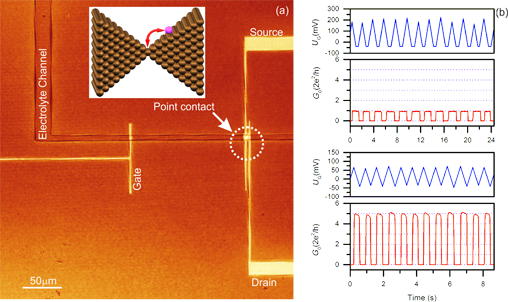
- -scale transistors and confirmed that copper atomic-scale transistors can be fabricated and operated electrochemically in a copper electrolyte (CuSO4 + H2SO4) in bi-distilled water under ambient conditions with three microelectrodes (source, drain and gate). The electrochemical switching-on potential of
- metallization effect in an aqueous electrolyte to reduce mechanical stress during cycling. Silver atomic-scale transistors that operate in an aqueous nitric electrolyte at voltages in the millivolt range were previously demonstrated [18][19][20][21][22]. Here, we report our progress in the development of an
- steps. First, a silicon chip with three microfabricated electrodes – source, drain and gate – and a microchannel for on-chip electrolyte delivery are fabricated using standard photolithography (Figure 1a, Method 1 described in the Experimental section). The electrodes consist of Cr/Au films with a


Template-controlled piezoactivity of ZnO thin films grown via a bioinspired approach
Beilstein J. Nanotechnol. 2017, 8, 296–303, doi:10.3762/bjnano.8.32
- substrate and particles in the solution and therefore, the interaction between both is affected. For example it was found that silica shows a decreasing surface potential if methanol is added to an aqueous electrolyte solution [41][42]. This can be explained by the lower ability of methanol to stabilize


Performance of natural-dye-sensitized solar cells by ZnO nanorod and nanowall enhanced photoelectrodes
Beilstein J. Nanotechnol. 2017, 8, 287–295, doi:10.3762/bjnano.8.31
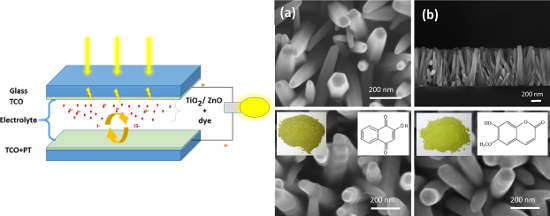
- redox reaction with the electrolyte solution, which constitutes the third main part of the cell [3]. The internal process starts with the excitation of the sensitizer (S) through the absorption of a photon to obtain an excited sensitizer (S*). The latter injects an electron into the conduction band of
- improved by modifying the energy difference between the Fermi level (EF) of the semiconductor potential and redox potential (Eredox) of the electrolyte [10]. Results and Discussion Dye analysis In order to understand the structure of natural dye molecules and to determine the main elements responsible for
- electrolyte (SOLARONIX). The used henna and mallow powders were prepared in-house by drying henna and mallow plants. Afterwards, the dried plants were milled and sieved to obtain the final powder. Current–voltage characteristics and layer conductivity were measured using a computer-controlled Keithley 4200


Phosphorus-doped silicon nanorod anodes for high power lithium-ion batteries
Beilstein J. Nanotechnol. 2017, 8, 222–228, doi:10.3762/bjnano.8.24
- the current collector). To verify the structural transformation of the Si anode after cycling, a battery after 50 cycles at a rate of 2 A/g was disassembled. The Si anode was washed thoroughly with deionized water and ethanol to remove the Li2O and solid electrolyte interphase layer. The morphology of
- characterization. The obtained Si anode was directly used as the work electrode without any conductive additive and binder. Lithium foil and Celgard 2320 were used as the counter electrode and separator membrane, respectively. The electrolyte was 1 M LiPF6 dissolved in ethylene carbonate (EC) and diethyl carbonate


Performance of colloidal CdS sensitized solar cells with ZnO nanorods/nanoparticles
Beilstein J. Nanotechnol. 2017, 8, 210–221, doi:10.3762/bjnano.8.23
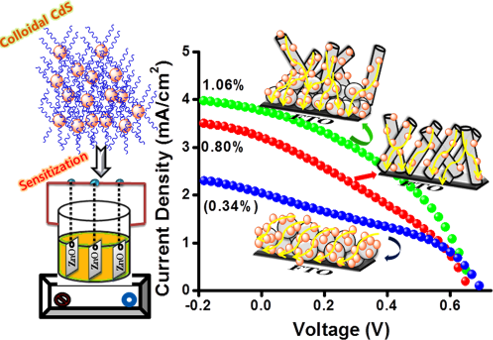
- electrolyte and CuxS counter electrode were used for cell fabrication and testing. An interesting improvement in the performance of the device by imposing nanorods as a scattering layer on a particle layer has been observed. As a consequence, a maximum conversion efficiency of 1.06% with an open-circuit
- technique. Respective efficiencies of 0.87% and 0.72% with VOC of 0.44 V and 0.55 V, have been reported by Zhang et al. and Qi et al., for ZnO nanowires which are noteworthy reports [14][15]. For QDSSCs, a polysulphide electrolyte/Cu2S electrode delivered the best performance instead of the regular I−/I3
- − electrolyte with a costly Pt-based electrode. Reports on the synthesis of nanoscale CdS by using organic capping agents, polymers, surfactants, or enzymes reveal that they are not very user friendly techniques [17][18][19][20][21][22][23]. Therefore, rather taking a conventional path to synthesizing quantum


Sensitive detection of hydrocarbon gases using electrochemically Pd-modified ZnO chemiresistors
Beilstein J. Nanotechnol. 2017, 8, 82–90, doi:10.3762/bjnano.8.9
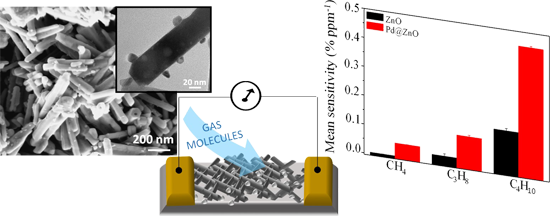
- nanostructures were prepared by SAE as reported in [44], but in this case Pd foils were used as anode (working electrode) to obtain colloidal Pd NPs. Tetraoctylammonium bromide (TOAB) was simultaneously used as electrolyte and stabilizer for Pd NPs, at a concentration of 0.05 M in 5 mL in a solution of


Surface-enhanced Raman scattering of self-assembled thiol monolayers and supported lipid membranes on thin anodic porous alumina
Beilstein J. Nanotechnol. 2017, 8, 74–81, doi:10.3762/bjnano.8.8
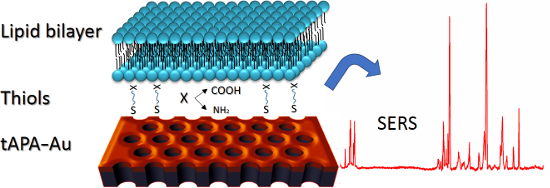
- ; SERS; nanopores; supported lipid bilayers; thiols; Introduction Anodic porous alumina (APA) is a layered material usually obtained in thick form (≈10 µm thickness scale) from electrochemical anodization in the acidic aqueous electrolyte of aluminum (Al) foils [1]. In APA, the control of pore size
- phosphoric acid electrolyte at a bath temperature of ≈15 °C. Post-fabrication etching in the same electrolyte for 20 min at room temperature (RT) plus 15 min at 35 °C allowed to obtain tAPA with ≈160 nm pore size and ≈80 nm wall thickness. After thoroughly rinsing with de-ionized water, blowing dry with



Effect of nanostructured carbon coatings on the electrochemical performance of Li1.4Ni0.5Mn0.5O2+x-based cathode materials
Beilstein J. Nanotechnol. 2016, 7, 1960–1970, doi:10.3762/bjnano.7.187
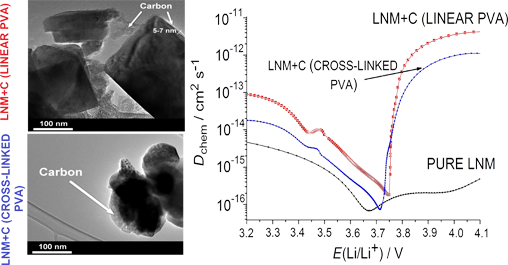
- (Ni,Mn) sublattice with the formation of Li[LixNi0.5−(x/2)Mn0.5−(x/2)]O2−δ [6][7]. The practical application of these materials is limited by the insufficient electronic conductivity of Li1+x(Ni,Mn)O2 materials [8] and their ability to catalyze the organic electrolyte decomposition at high potentials
- and currents [9][10]. The most common way of overcoming this problem is the modification of cathode materials by introducing additives and by depositing coatings that would suppress the interaction of electrolyte and the surface of particles. Various kinds of materials have been tested for surface
- oxidation of the electrolyte upon cycling. Electrochemical impedance (EI) measurements were performed to investigate the details of the lithium insertion-extraction processes in LNM/C nanocomposite cathodes (Figure 5A–D). All the plots are mainly composed of a small intercept at high frequencies, a




Layered composites of PEDOT/PSS/nanoparticles and PEDOT/PSS/phthalocyanines as electron mediators for sensors and biosensors
Beilstein J. Nanotechnol. 2016, 7, 1948–1959, doi:10.3762/bjnano.7.186
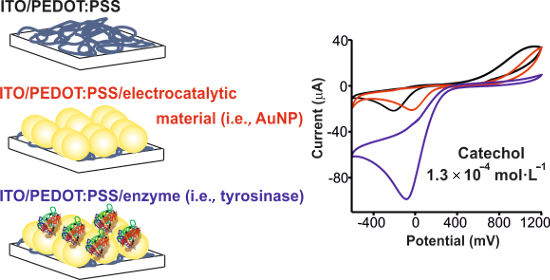
- /PSS/EM electrodes were analyzed using cyclic voltammetry. Voltammograms of PEDOT/PSS, PEDOT/PSS/AuNPs, PEDOT/PSS/CuPc and PEDOT/PSS/LuPc2 electrodes immersed in catechol and hydroquinone 1.5 × 10⁻⁴ mol·L−1 with 0.01 mol·L−1 phosphate buffer as the supporting electrolyte are shown in Figure 2. The
- magnification). Cyclic voltammograms of PEDOT/PSS, PEDOT/PSS/LuPc2, PEDOT/PSS/CoPc and PEDOT/PSS/AuNP sensors in (a) catechol and (b) hydroquinone 1.5 × 10⁻⁴ mol·L−1 with 0.01 mol·L−1 phosphate buffer as the supporting electrolyte. Scan rate 0.1 V·s−1. Nyquist plots collected at −0.5 V using (a) PEDOT/PSS; (b
- ) PEDOT/PSS/CuPc; (c) PEDOT/PSS/LuPc2; and (d) PEDOT/PSS/AuNP. Electrodes were immersed in catechol 10−3 mol·L−1 with 0.01 mol·L−1 phosphate buffer (pH 7.0) as the supporting electrolyte. The frequency was swept logarithmically from 10−2 to 105 Hz. Cyclic voltammograms of (a) PEDOT/PSS/EM-Tyr immersed in


Properties of Ni and Ni–Fe nanowires electrochemically deposited into a porous alumina template
Beilstein J. Nanotechnol. 2016, 7, 1709–1717, doi:10.3762/bjnano.7.163
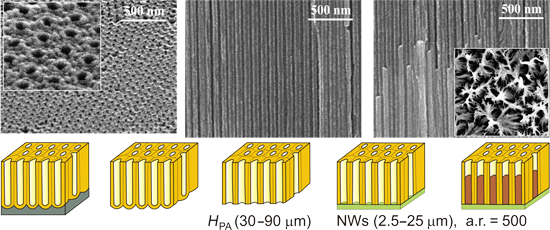
- most common in industrial development. However, the problem of pore blocking during deposition into the high aspect ratio template requires optimization of the deposition conditions (current density, temperature, electrolyte composition) and adjustment of the parameters of the template (diameter, pore
- instruments). Preventers (Na2SO4, CuSO4) were added to decrease corrosion activity of the electrolyte. This is particularly important during long-term deposition experiments. The concentration and pH value of each solution are shown in Table 1. All experiments were performed at room temperature (22 ± 2 °C
- 3a,b). For the alumina template with HPA ≈ 90 μm the filling rate vNi–Fe is about 8.6 μm/h (Figure 3c) at the same current density of 3 mA·cm−2. There are two possible reasons for the lowering of the filling rate: (i) the movement of liquid (electrolyte) in long narrow pores becomes difficult, and


Effect of triple junctions on deformation twinning in a nanostructured Cu–Zn alloy: A statistical study using transmission Kikuchi diffraction
Beilstein J. Nanotechnol. 2016, 7, 1501–1506, doi:10.3762/bjnano.7.143
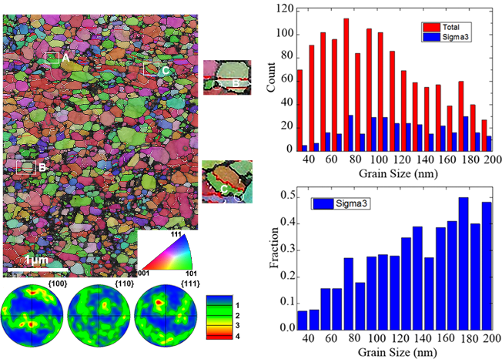
- . All electron-transparent TKD foils were mechanically ground and punched from the outer region of the as-deformed disks, where the greatest degree of grain refinement was achieved. Samples were subsequently electropolished by means of double-jet electropolishing using an electrolyte of 1:1:2 H3PO4



False positives and false negatives measure less than 0.001% in labeling ssDNA with osmium tetroxide 2,2’-bipyridine
Beilstein J. Nanotechnol. 2016, 7, 1434–1446, doi:10.3762/bjnano.7.135
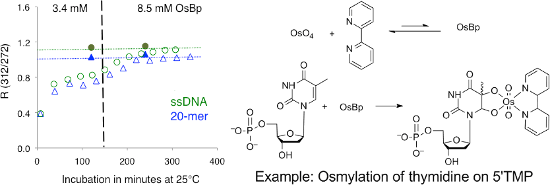
- separates two compartments filled with electrolyte. Influenced by the electric field, the electrolyte ions traverse the pore producing a constant current. Also led by the applied field, a nucleic acid in one compartment moves through the pore to the other compartment and obstructs the current in a sequence
- ascertain a “perfect” match between intact and osmylated, generally speaking “labeled” nucleic acid, so that sequencing of the labeled nucleic acid can accurately reproduce the sequence of the target polymer. These properties, defined elsewhere [26], include: (i) high solubility in water/electrolyte, (ii


Dealloying of gold–copper alloy nanowires: From hillocks to ring-shaped nanopores
Beilstein J. Nanotechnol. 2016, 7, 1361–1367, doi:10.3762/bjnano.7.127
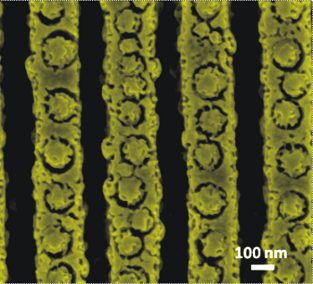
- etching is related to the presence of boundaries between the hillocks and the rest of the nanowire body. They act as a channel promoting the propagation of the electrolyte within the material during the dealloying process. When the electrolyte penetrates through these boundaries, the hillocks become
- completely surrounded by the electrolyte resulting in an increased dissolution of copper from the alloy. As a consequence, ring-shaped pores appear around the hillocks and the diameter of the latter drops from 150 to 115 nm. When increasing the dealloying voltage to 0.4 V, for 18 atom % of gold (Figure 5c
- ) as supporting electrolyte. This condition is selected according to Pourbaix diagram of copper [32]. The contact to the working electrode (i.e., Au–Cu nanowire arrays) was made through a crocodile clip at the tip of a sample injecting the current along the nanowire axes. The treated geometrical




Microwave synthesis of high-quality and uniform 4 nm ZnFe2O4 nanocrystals for application in energy storage and nanomagnetics
Beilstein J. Nanotechnol. 2016, 7, 1350–1360, doi:10.3762/bjnano.7.126
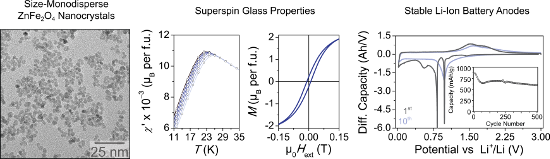
- vacuum at 80 °C for 12 h. The areal loading was 2.4 mgZFO/cm2 on average. Coin-type cells with 600 µm-thick Li metal foil (Rockwood Lithium Inc.) and glass microfiber film separator (Whatman, GF/D grade) were assembled inside an argon-filled glovebox (MBraun) with [O2] and [H2O] < 1 ppm. The electrolyte
- ) indicates that irreversible reactions occurred upon lithiation, including decomposition of surface ligands and formation of a solid electrolyte interface (SEI) on the nanoparticles. However, this relatively large capacity loss (≈30%) was limited to the initial cycle. The electrochemical reaction of ZFO with
- unaffected by the polymer binder, carbon additive, electrolyte and separator residues, the electrodes were used as is, thus ensuring minimal effects from cell disassembly. In the present work, two electrodes of the same batch but at different lithiation states were investigated. The “pristine” electrode was


Improved lithium-ion battery anode capacity with a network of easily fabricated spindle-like carbon nanofibers
Beilstein J. Nanotechnol. 2016, 7, 1289–1295, doi:10.3762/bjnano.7.120
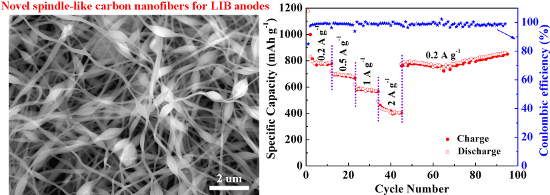
- capacity is 900.1 mAh g−1, leading to a coulombic efficiency of 75.8%. The capacity difference between the initial charge and discharge mainly owes to the electrochemically driven electrolyte degradation, which results in the formation of solid electrolyte interface (SEI) films on the surface of electrode


Mesoporous hollow carbon spheres for lithium–sulfur batteries: distribution of sulfur and electrochemical performance
Beilstein J. Nanotechnol. 2016, 7, 1229–1240, doi:10.3762/bjnano.7.114
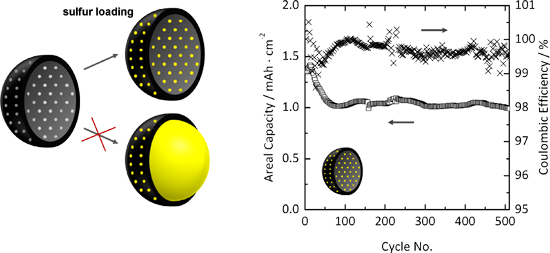
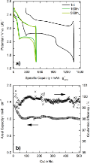
- indicating good reversibility. The measured areal capacities are comparable with those calculated from literature data [24][27][29]. Nevertheless, due to differences in cell type, electrode and electrolyte composition as well as electrolyte/sulfur ratio, a precise comparison is not possible. Even more, as
- necessary information for this comparison like the electrolyte/sulfur ratio and partly also the areal sulfur loading are often not given. Overall, the data in Figure 8 demonstrate that Li–S cells based on HCS/sulfur composite show good cyclability, with moderate specific capacities at C/5 rate. Given that
- inside an argon-filled glovebox from MBraun. The electrolyte used was a solution of lithium bis(trifluoromethanesulfonyl)imide (Aldrich, 99.95%, 8 wt %), lithium nitrate (Merck, 99.995%, 4 wt %), 1,2-dimethoxyethane (Alfa Aesar, >99%, 44 wt %), and 1,3-dioxolane (Acros, 99.8%, 44 wt %). The volume of


In situ characterization of hydrogen absorption in nanoporous palladium produced by dealloying
Beilstein J. Nanotechnol. 2016, 7, 1197–1201, doi:10.3762/bjnano.7.110
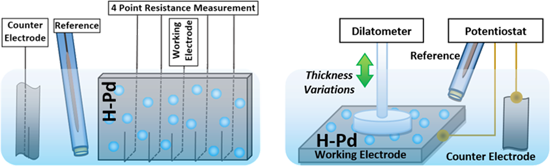
- electrochemical H absorption in an alkaline aqueous electrolyte. Volume and electrical resistance of the sample, two qualities both known to sensitively depend on the H content of Pd [7][8][4][9][10][11], are monitored in situ during electrochemical hydrogenation and compared to literature data. The Co–Pd master
- platelets were cut for dealloying and subsequent charging experiments. The resistometric measurements were set up similar to our work on nanoporous platinum [12][13]. To sum up briefly, the rectangular sample (ca. 12 × 3 mm2) was immersed into the electrolyte hanging on five Pd wires, glued onto the
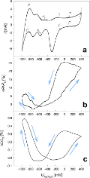
- as the relative sensitivity of actuator response to hydrogen loading of recently investigated nanoporous palladium produced by free corrosion of an Al–Pd master alloy [4]. While the maximum hydrogen solubilities show a strong variation with the charging parameters, such as the chosen electrolyte and

Voltammetric determination of polyphenolic content in pomegranate juice using a poly(gallic acid)/multiwalled carbon nanotube modified electrode
Beilstein J. Nanotechnol. 2016, 7, 1104–1112, doi:10.3762/bjnano.7.103
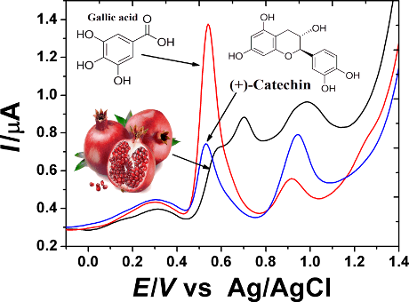
- day of preparation. Pure nitrogen was used for degassing the test solution prior to and throughout the electrochemical measurements. Phosphoric acid solution was used as a supporting electrolyte. Double-distilled water was used for preparation of all solutions. Freshly prepared standard solutions of
- times to remove the electrolyte and the monomer. The electrode was then ready for electrochemical use. The bare and the modified GC electrodes were electrochemically cleaned before the measurements using cyclic voltammetry in a potential range between 0.2 and 1.0 V for 10 cycles at a scan rate of 50 mV


Multiwalled carbon nanotube hybrids as MRI contrast agents
Beilstein J. Nanotechnol. 2016, 7, 1086–1103, doi:10.3762/bjnano.7.102
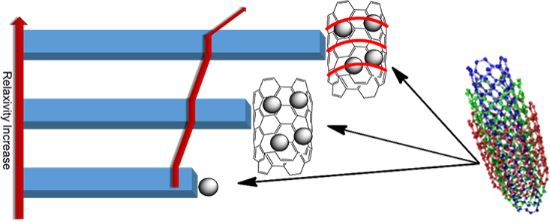
- transformations [18]. Surprising results of the relaxation effects both in vitro and in vivo and depending on a number of parameters, such as content of the residual catalyst, size of the CNTs or "wrapping media" (the electrolyte used to stabilize the dispersions), were also reported [18][19]. We discuss these
- their mobility. According to the classical SBM theory (τR in Equation 3), an elevated relaxivity could be observed. On the other hand, the presence of a strong electrolyte in the buffers (PBS, saline) leads to an additional destabilization of the dispersion by the salting effect. These considerations



Role of solvents in the electronic transport properties of single-molecule junctions
Beilstein J. Nanotechnol. 2016, 7, 1055–1067, doi:10.3762/bjnano.7.99
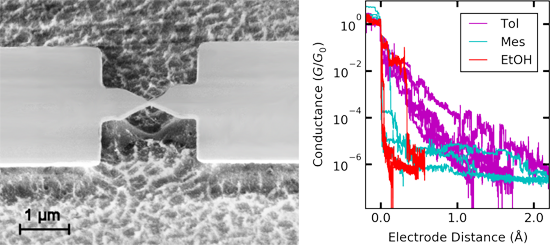
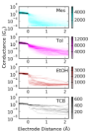
- discussed only very recently [11][12][13][14][15][16][17][18][19][20][21][22]. The most obvious impact may be the change of the work function, because the tunnelling does not take place through vacuum states but through an electrolyte that alters the work function of the electrode and thereby affects the
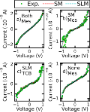
- the molecules under study. However, often the current–voltage (I–V) characteristics of these electrolyte tunnel junctions have shapes that are similar to those found in single-molecule junctions and are therefore not easy to distinguish from each other [11]. In principle this would be possible by
- change rapidly by several angströms due to the sudden release of stress. Furthermore, a Helmholtz double layer builds on the surface of a metal immersed in an electrolyte or a polar solvent, forming a capacitor [23]. When changing the bias this layer may become instable and thus influence the I–Vs. Its






Advanced atomic force microscopy techniques III
Beilstein J. Nanotechnol. 2016, 7, 1052–1054, doi:10.3762/bjnano.7.98

- several transitions in the friction coefficient with increasing load have been found on Au(111) in sulfuric acid electrolyte containing Cu ions by Helmut Baltruschat an co-workers [24] and the stiffness of micron-sized sphere-plate contacts was studied by Diethelm Johannsmann et al. by employing high
Reconstitution of the membrane protein OmpF into biomimetic block copolymer–phospholipid hybrid membranes
Beilstein J. Nanotechnol. 2016, 7, 881–892, doi:10.3762/bjnano.7.80
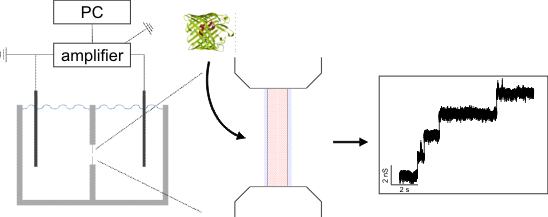
- in parallel, corresponding to an electrolyte–membrane–electrolyte interface [16][56] (Table 2). The membranes formed by PIPEO877/DPhPC, PIPEO1530/DPhPC, PIPEO877 and PIPEO1530 revealed ohmic resistances above 1 GΩ. PIPEO3188 yielded a resistance close to 1 GΩ. In contrast, the mean resistance of
- (Nanion, Munich, Germany). Mixtures based on PIPEO1530 were subjected to an alternating voltage of 10 V at 300 Hz. As electrolyte, a saccharose solution (260 mM) was used. To observe the mixing behavior of the lipopolymer mixtures, one day after vesicle formation, the GUV were observed with confocal
- connected to Ag/AgCl electrodes immersed into the electrolyte compartments on both sides of the formed membranes. Measurements were performed in the range between 1 MHz and 100 mHz at an offset of 0 mV and an amplitude of 10 mV. Data acquisition was performed with the Thales Z-Man 1.18 software package from



Assembling semiconducting molecules by covalent attachment to a lamellar crystalline polymer substrate
Beilstein J. Nanotechnol. 2016, 7, 784–798, doi:10.3762/bjnano.7.70
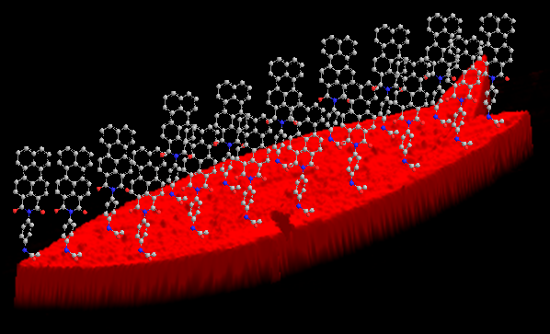
- the barrier against aggregation for CPE45 nanocrystals residing at the air–water interface was highest at pH 11. However, it was suggested in the literature that the addition of an electrolyte to the aqueous subphase aids spreading of nanoparticles from methanol on the aqueous subphase. For charged
- latex particles, it was found that the concentration of the electrolyte should be at least 10 mmol/L [42], corresponding to pH 12 if alkali-hydroxides were used as electrolyte. The aforementioned aqueous/methanolic nanocrystal dispersion was added in a dropwise manner to the water surface. Methanol


First-principles study of the structure of water layers on flat and stepped Pb electrodes
Beilstein J. Nanotechnol. 2016, 7, 533–543, doi:10.3762/bjnano.7.47
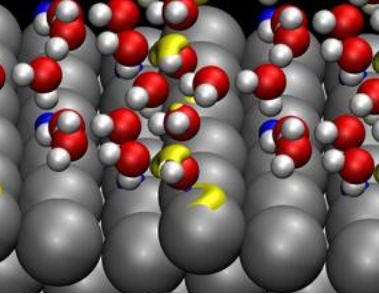
- liquid on properties of the metal [1]. The importance of understanding the electrochemical behavior of electrode and electrolyte near the interfaces is well illustrated by two recent examples. (i) In recent experiments on molecular break junctions it was found that certain molecules (methyl-sulfide
- electrode/electrolyte interfaces based on first-principles electronic structure calculations. As Pb has been used as one of the metallic electrode materials, we have already studied the Pb self-diffusion on flat and stepped Pb surfaces [13] as this controls the growth mechanism of the contacts. The results


Comparison of the interactions of daunorubicin in a free form and attached to single-walled carbon nanotubes with model lipid membranes
Beilstein J. Nanotechnol. 2016, 7, 524–532, doi:10.3762/bjnano.7.46
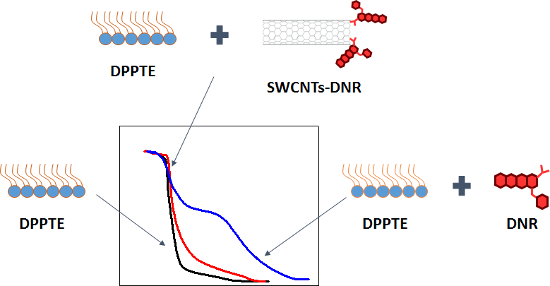
- , Poland) was used as a supporting electrolyte. Results and Discussion Monolayer studies at the air–water interface In order to study the influence of daunorubicin in a free form and attached to carbon nanotubes as potential drug carrier, Langmuir technique has been employed. Drug in a free form was