Search results
Search for "fibers" in Full Text gives 199 result(s) in Beilstein Journal of Nanotechnology.
Experimental techniques for the characterization of carbon nanoparticles – a brief overview
Beilstein J. Nanotechnol. 2014, 5, 1760–1766, doi:10.3762/bjnano.5.186
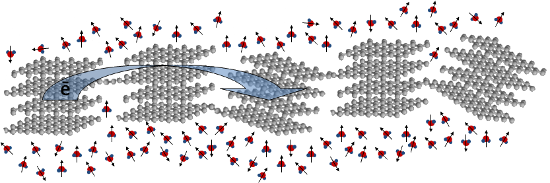
- interaction between them [12]. It is relatively easily to pulverize this material to form CNs. XRD and Raman spectroscopy are suitable methods for crystal size approximation [13][14][15]. To obtain CNs similar to those forming activated carbon fibers described in the next paragraph, crystals of hexagonal
- . Carbon nanoparticle matrix The electric conductivity measurements were performed for activated carbon fibers (ACFs) formed from the quasi-graphitic CNs, which are mechanically connected by carbon chains or graphene fragments [36]. It was shown that the conductivity of such a system depends on the thermal
- different parts of the fibers, that is, areas not accessed by guest molecules, the pore walls and the fiber surface [35][38]. Figure 5 shows that the influence of various adsorbed molecules is varied. For example, water causes a more significant change of the EPR spectrum of the ACFs than CCl4. This effect


Non-covalent and reversible functionalization of carbon nanotubes
Beilstein J. Nanotechnol. 2014, 5, 1675–1690, doi:10.3762/bjnano.5.178
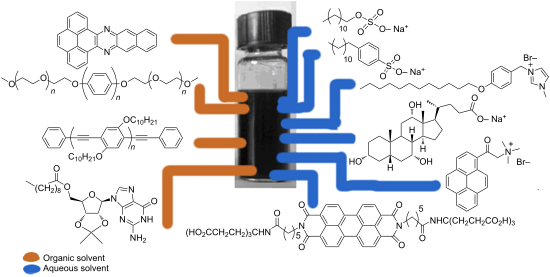
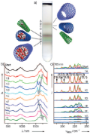
- to self-assemble into ribbon-like supramolecular structures that wrap, although not specifically, around the nanotube. It is interesting to note that the self-aggregation properties of the dispersant are crucial as the tendency of super-aggregate into bigger fibers can favor their desorption from CNT



Ionic liquid-assisted formation of cellulose/calcium phosphate hybrid materials
Beilstein J. Nanotechnol. 2014, 5, 1553–1568, doi:10.3762/bjnano.5.167
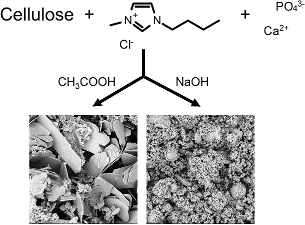
- starch led to a nanoscale hybrid material, the mineralization of cellulose led to cellulose fibers with a high degree of surface mineralization. In spite of this, the cellulose fibers appeared to “imprint” some features of their surface structure on the mineral layers. Venkataramanan et al. synthesized
- cellulose/TiO2 hybrids via a sol–gel reaction in 1-butyl-3-methylimidazolium chloride, [Bmim][Cl] [47]. Ti(OBu)4 was used as TiO2 precursor and a network of TiO2 layered fibers was observed after the sol–gel reaction. Amarasekara and Owereh prepared cellulose carbamate/silica hybrid materials in [Bmim][Cl
- shows representative SEM images of the as-received microcrystalline cellulose and cellulose regenerated from the IL 1-butyl-3-methylimidazolium chloride, [Bmim][Cl]. Neat, untreated microcrystalline cellulose consists of heterogeneous and highly aggregated fibers with sizes in the micrometer to hundreds


In vitro interaction of colloidal nanoparticles with mammalian cells: What have we learned thus far?
Beilstein J. Nanotechnol. 2014, 5, 1477–1490, doi:10.3762/bjnano.5.161
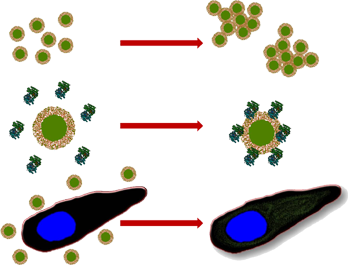
- fibers with high aspect ratios [100]. Flattening of NPs has been used, for example, to reduce NP uptake by cells in a way that flat NPs just adhere to the plasma cell membrane like a “backpack”, without being internalized, in contrast to spherical NPs that are readily incorporated [113][114]. Concerning


Surface topography and contact mechanics of dry and wet human skin
Beilstein J. Nanotechnol. 2014, 5, 1341–1348, doi:10.3762/bjnano.5.147
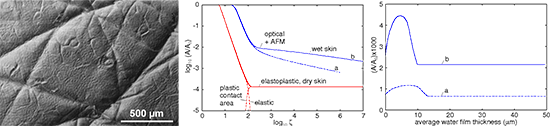
- cellulose fibers. In fact, cellulose fibers exhibit elastoplastic properties very similar to the stratum corneum: Both absorb water strongly and swell by wetting, both have elastic moduli of the order of 10 MPa in the wet state and of the order of 1 GPa in the dry state [11]. The swelling (and elastic


Template-directed synthesis and characterization of microstructured ceramic Ce/ZrO2@SiO2 composite tubes
Beilstein J. Nanotechnol. 2014, 5, 1152–1159, doi:10.3762/bjnano.5.126
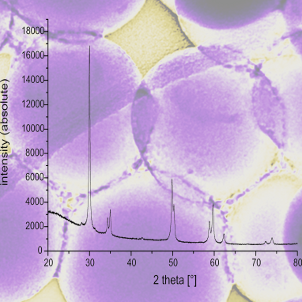
- Jorg J. Schneider Meike Naumann Eduard-Zintl Institut für Anorganische und Physikalische Chemie, Technische Universität Darmstadt, Alarich-Weiss-Str.12, 64287 Darmstadt, Germany 10.3762/bjnano.5.126 Abstract An exo-templating synthesis process using polymeric fibers and inorganic sol particles
- deposited onto structured one-dimensional objects is presented. In particular, CeO2/ZrO2@SiO2 composite tubes were synthesized in a two-step procedure by using electrospun polystyrene fibers as fiber template. First, a sol–gel approach based on an exo-templating technique was employed to obtain polystyrene
- (PS)/SiO2 composite fibers. These composite fibers were subsequently covered by spray-coating with ceria and zirconia sol solutions. After drying and final calcination of the green body composites, the PS polymer template was removed, and composite tubes of the composition CeO2/ZrO2@SiO2 were obtained




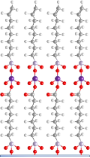
Organic and inorganic–organic thin film structures by molecular layer deposition: A review
Beilstein J. Nanotechnol. 2014, 5, 1104–1136, doi:10.3762/bjnano.5.123




Fibrillar adhesion with no clusterisation: Functional significance of material gradient along adhesive setae of insects
Beilstein J. Nanotechnol. 2014, 5, 837–845, doi:10.3762/bjnano.5.95
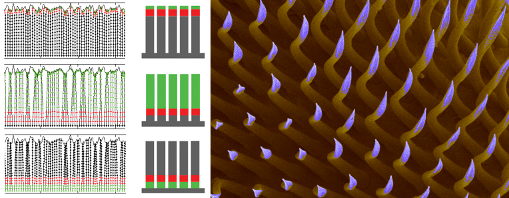
- setae by lateral collapse. The numerical experiment of the present study has clearly demonstrated that gradient-bearing fibers with short soft tips and stiff bases have greater advantage in maximizing adhesion and minimizing clusterisation in multiple attachment–detachment cycles, if compared to the
- fibers with longer soft tips on the stiff bases and fibers with stiff tips on the soft bases. This study not only manifests the crucial role of gradients in material properties along the setae in beetle fibrillar adhesive system, but predicts that similar gradients must have been convergently evolved in
- parallel fibers attached to a hard planar base. Stiffness of the fibers Felastic is continuously varied along their length and can be changed from very soft one to much stiffer or even almost rigid one (but still with some degree of flexibility). Longitudinal and transversal stiffness of the fibers are


The optimal shape of elastomer mushroom-like fibers for high and robust adhesion
Beilstein J. Nanotechnol. 2014, 5, 630–638, doi:10.3762/bjnano.5.74
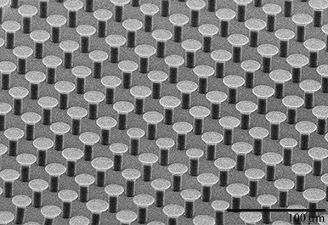
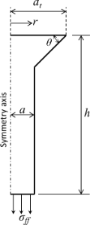
- performance on smooth surfaces matching the adhesive strengths obtained with the natural gecko foot-pads. It is possible to improve the already impressive adhesive performance of mushroom-like fibers provided that the underlying adhesion mechanism is understood. Here, the adhesion mechanism of bio-inspired
- mushroom-like fibers is investigated by implementing the Dugdale–Barenblatt cohesive zone model into finite elements simulations. It is found that the magnitude of pull-off stress depends on the edge angle θ and the ratio of the tip radius to the stalk radius β of the mushroom-like fiber. Pull-off stress
- adhesives. Keywords: gecko; mushroom-like fibers; adhesion; Introduction We need to look no further than nature to find inspiration for many of the technologies we work on today. One such field that observations on natural systems have impacted significantly in the recent years is adhesive technologies



Biocalcite, a multifunctional inorganic polymer: Building block for calcareous sponge spicules and bioseed for the synthesis of calcium phosphate-based bone
Beilstein J. Nanotechnol. 2014, 5, 610–621, doi:10.3762/bjnano.5.72
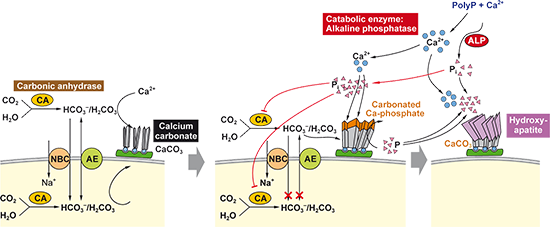
- engineering is that it is accepted by the cells as a suitable 3D platform for their growth, differentiation and mineralization (HA deposition). These requirements can be met by scaffolds made of natural fibers, which correspond in their structure and composition to the extracellular matrix. A suitable



The softening of human bladder cancer cells happens at an early stage of the malignancy process
Beilstein J. Nanotechnol. 2014, 5, 447–457, doi:10.3762/bjnano.5.52
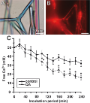
- underline that it is neither the spatial organization of the actin filaments nor the presence of stress fibers, but the overall density and their 3D-organization in a probing volume play the dominant role in controlling the elastic response of the cancerous cell to an external force. Keywords: actin
- cortex and well-formed linear actin bundles (i.e., stress fibers) that span over a whole cell. For softer cells, the actin filaments were less organized. Mostly, short filaments were observed. If F-actin bundles were present, they were shorter and randomly oriented. In particular for ovarian cancer, the
- correlation between the migratory behavior of cells and their stiffness has been demonstrated [21]. In other studies, the larger deformability of the mouse ovarian cells has been correlated with the dysregulation of actin (stress) fibers, which influences both fiber thickness and organization, as shown by


Exploring the complex mechanical properties of xanthan scaffolds by AFM-based force spectroscopy
Beilstein J. Nanotechnol. 2014, 5, 365–373, doi:10.3762/bjnano.5.42
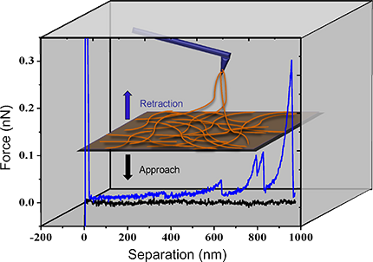
- structures are showed in Figure 1F. The above results confirmed our previous morphological studies on the temperature-enhanced re-organization of xanthan gels into 2D network of fibers. Based on this, we move forward to investigate the mechanical properties of the scaffolds by FS. FS was carried out on the
- of typical force curves after normalization of the separation length indicated that the force curves were measured from identical fibers. The persistence length is 0.35 ± 0.27 nm and contour length is 954 ± 157 nm (n = 92). It should be noted that the measured persistence length exhibits a much


A catechol biosensor based on electrospun carbon nanofibers
Beilstein J. Nanotechnol. 2014, 5, 346–354, doi:10.3762/bjnano.5.39
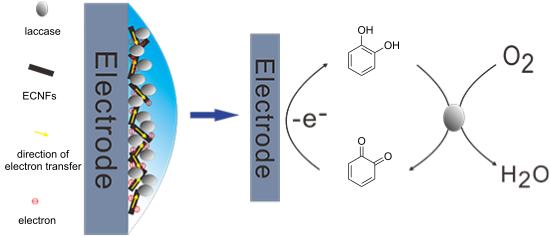
- diameter of about 200 nm. The insert displays the diameter distribution of the ECNFs, which ranges from 50 to 380 nm and mainly focuses on 100 to 200 nm. Notably, many ECNFs were broken up into short fibers because the thermal treatment process enabled the fibers to become fragile. Figure 1b exhibits the
- surface morphology of the laccase–Nafion–ECNFs/GCE. It can be clearly seen that most of the short fibers were embedded into the laccase. Here, the short fibers may play a role of connecting the active center of laccase and the surface of GCE, which may be favorable for the electron transfer. Structure and


Friction behavior of a microstructured polymer surface inspired by snake skin
Beilstein J. Nanotechnol. 2014, 5, 83–97, doi:10.3762/bjnano.5.8
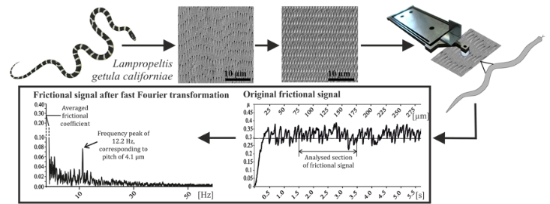
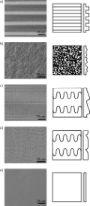
- the skin scales, so called microornamentation [1][4][5][6][7][8][9][10][11][12][13], and specific adaptations of the material architecture of the skin, like highly ordered embedded fibers [14], which can potentially influence material properties [15][16], might contribute to the frictional anisotropy




Dynamic nanoindentation by instrumented nanoindentation and force microscopy: a comparative review
Beilstein J. Nanotechnol. 2013, 4, 815–833, doi:10.3762/bjnano.4.93
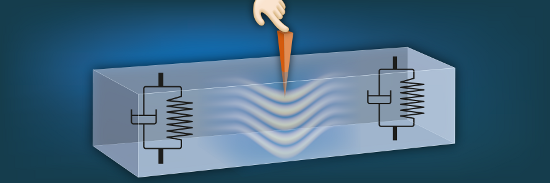
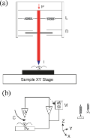
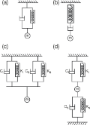
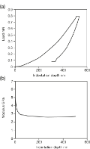
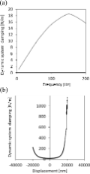
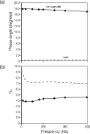
- [100]. This approach is proposed as easy to implement, and allows for the measurement of the dynamic modulus while imaging the sample. This setup provided a quantitative measurement of the viscoelastic properties of PVA fibers. Also here, the instrumental phase response was assessed by a measurement of




A nano-graphite cold cathode for an energy-efficient cathodoluminescent light source
Beilstein J. Nanotechnol. 2013, 4, 493–500, doi:10.3762/bjnano.4.58
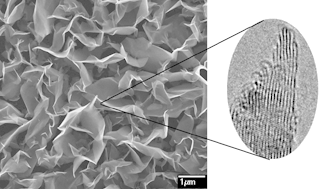
- were observed on the anode screen after these measurements. This demonstrates the process of the deposition of material from the pencil core, degraded under the action of the electric field. These results are quite similar to other materials with a graphitic type of atomic bonding: carbon fibers [9


Photocatalytic antibacterial performance of TiO2 and Ag-doped TiO2 against S. aureus. P. aeruginosa and E. coli
Beilstein J. Nanotechnol. 2013, 4, 345–351, doi:10.3762/bjnano.4.40
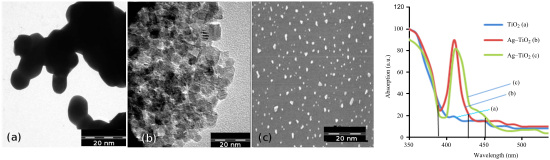
- photocatalytic efficiency [8][9]. However, silver nanoparticles have prospective applications including biosensing, biodiagnostics, optical fibers, and antimicrobial and photocatalytic uses. Silver ions are known to cause denaturation of proteins present in bacterial cell walls and slow down bacterial growth [5


High-resolution nanomechanical analysis of suspended electrospun silk fibers with the torsional harmonic atomic force microscope
Beilstein J. Nanotechnol. 2013, 4, 243–248, doi:10.3762/bjnano.4.25
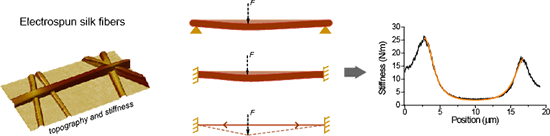
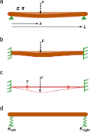
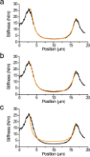
- the influence of tension and bending modulus on the response of the suspended structures. Here we report mechanical measurements on electrospun silk fibers with various treatments that allow discriminating among the different mechanisms that determine the mechanical behavior of these complex
- structures. In particular we were able to identify the role of tension and boundary conditions (pinned versus clamped) in determining the mechanical response of electrospun silk fibers. Our findings show that high-resolution mechanical imaging with torsional harmonic atomic force microscopy provides a
- reliable method to investigate the mechanics of materials with complex geometries. Keywords: atomic force microscopy; nanomechanical characterization; silk fibers; tissue scaffolds; torsional harmonic cantilevers; Introduction Dynamic atomic force microscopy (AFM) methods provide opportunities for high


Electrospinning preparation and electrical and biological properties of ferrocene/poly(vinylpyrrolidone) composite nanofibers
Beilstein J. Nanotechnol. 2013, 4, 189–197, doi:10.3762/bjnano.4.19

- could be controlled through adjusting solvents and Fc concentration. Scanning electron microscopy (SEM) showed that the diameters of the obtained composite fibers were about 30–200 nm at different Fc concentrations. Thermogravimetric analysis (TGA) results confirmed the presence of ferrocene within the
- PVP nanofibers. X-ray diffraction (XRD) results showed that the crystalline structure of Fc in the fibers was amorphous after the electrospinning process. A biological evaluation of the antimicrobial activity of Fc/PVP nanofibers was carried out by using Gram-negative Escherichia coli (E. coli) as
- is a simple and versatile technique for the production of polymers, composites and ceramic fibers [1][2]. Nanofibrous polymer materials produced by electrospinning have gained immense research interest because of their unique properties, such as high surface-area-to-volume and aspect ratios [3], and


Functionalization of vertically aligned carbon nanotubes
Beilstein J. Nanotechnol. 2013, 4, 129–152, doi:10.3762/bjnano.4.14
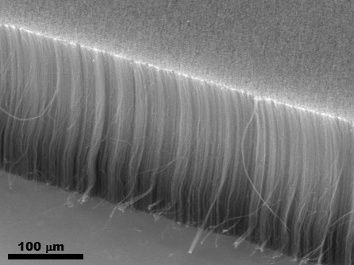
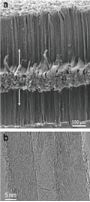
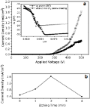
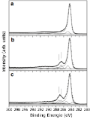
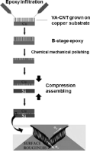
- fibers was solved by Feng et al. who made well-aligned MWCNTs/PANI hybrid materials. The methodology is the following: (i) VA-CNTs are grown on a quartz substrate by catalytic pyrolysis, (ii) the film is immersed in an aniline/HCl solution (0 °C, 12 h), (iii) polymerization on the CNTs surfaces. The








Paper modified with ZnO nanorods – antimicrobial studies
Beilstein J. Nanotechnol. 2012, 3, 684–691, doi:10.3762/bjnano.3.78
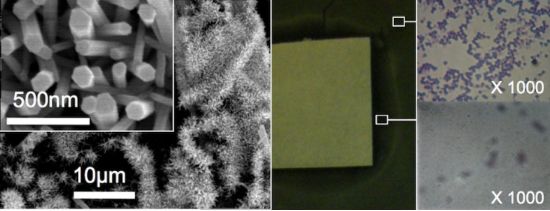
- ]. Cellulose fibers used for papermaking are hygroscopic in nature [9][10] and this property was used to our advantage when developing the antimicrobial paper. The adsorbed moisture can be utilized for the production of hydroxyl radicals (·OH) and/or hydrogen peroxide (H2O2) through photocatalysis. Both ·OH
- . As a result, the ZnO nanoparticles that are used for nucleating the nanorods get attached to the surface without the need for any further surface treatments, such as, for example, the surface treatment of polyethylene fibers with dodecane thiol for attachment of ZnO seed nanoparticles prior to


Nano-FTIR chemical mapping of minerals in biological materials
Beilstein J. Nanotechnol. 2012, 3, 312–323, doi:10.3762/bjnano.3.35
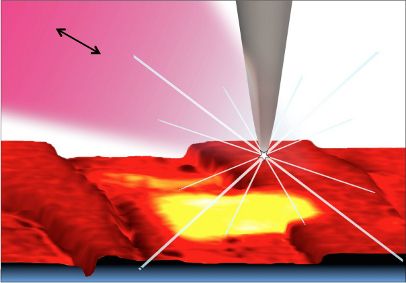
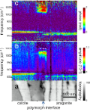
- crystals in an organic matrix [18][19][20], and laminates of calcium phosphate nanoparticle reinforced chitin fibers [21][22]. FTIR spectroscopic microscopy is a well-established method and has been extensively used to study bone biominerals at several micrometers spatial resolution [23][24][25][26][27][28





Self-organizing bioinspired oligothiophene–oligopeptide hybrids
Beilstein J. Nanotechnol. 2011, 2, 525–544, doi:10.3762/bjnano.2.57
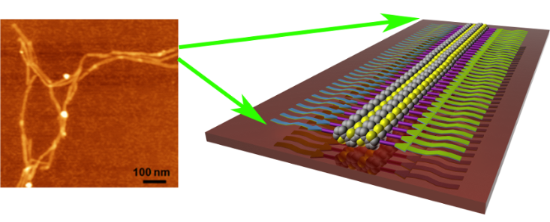
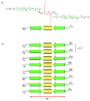
- even greater structural polymorphism than observed in natural amyloid fibers, keeping in mind that synthetic chemistry provides more variability in the structure of the building blocks, including branched molecular topologies [16]. A number of hypothesized self-organized morphologies that may be
- extended into the dynamic domain. Since microcrystals usually only provide the structures of the basic aggregation units, different arrangements of these units into the protofilaments and then fibers may be probed in computer simulations. However, when no initial 3-D structural data is available, the
- twisted short fibers of 1' on the mica substrate. Due to the hybrid nature of 1', two opposing intermolecular interactions could dominate the self-assembly process, namely H-bonding and π–π stacking. Thus, a solvent-guided strategy was employed in order to gain control over the self-assembly process




Determination of object position, vortex shedding frequency and flow velocity using artificial lateral line canals
Beilstein J. Nanotechnol. 2011, 2, 276–283, doi:10.3762/bjnano.2.32
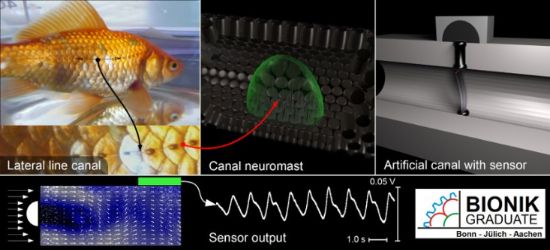
- as well as the vortex shedding frequency of a cylinder can be determined from the responses of primary lateral line afferents [13][14]. Lateral line nerve fibers also alter their discharge rate if an object passes the fish laterally. In this case the discharge pattern reflects both the position