Search results
Search for "film" in Full Text gives 1174 result(s) in Beilstein Journal of Nanotechnology. Showing first 200.
Antimicrobial and mechanical properties of functionalized textile by nanoarchitectured photoinduced Ag@polymer coating
Beilstein J. Nanotechnol. 2023, 14, 95–109, doi:10.3762/bjnano.14.11
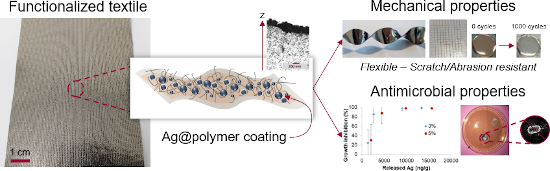
- nanocomposites are prepared via ex situ or in situ approaches, in which MNPs are either synthesized beforehand and subsequently added to a polymer matrix or directly generated inside the polymer film. Ex situ methods include grafting [34], electrostatic [35] or polyol processes [36], but remain relatively
- difficult to implement and tend to cause NP self-aggregation. In situ methods are therefore generally preferred and typically require the polymer film surface to be treated with a metal precursor solution (layer-by-layer [37][38], sol–gel [39]) before undergoing thermal [40] or chemical reduction reactions
- increases with exposure time, which indicates an increase in NP concentration. Since the absorption peak is 426 nm for the Ag@PEG600DA/PETIA coating, the particles are expected to be slightly smaller than those of the Ag@PEG600DA film. This can be explained by the fact that the PETIA comonomer is a



Combining physical vapor deposition structuration with dealloying for the creation of a highly efficient SERS platform
Beilstein J. Nanotechnol. 2023, 14, 83–94, doi:10.3762/bjnano.14.10
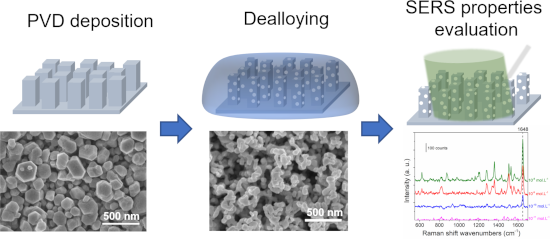
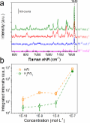
- complexity and the high cost of gold restrict its use in devices. Here, we report on a novel two-step approach that combines the deposition of a silver–aluminum thin film with dealloying to design and fabricate efficient SERS platforms. The magnetron sputtering technique was used for the deposition of the
- alloy thin film to be dealloyed. After dealloying, the resulting silver nanoporous structures revealed two degrees of porosity: macroporosity, associated to the initial alloy morphology, and nanoporosity, related to the dealloying step. The resulting nanoporous columnar structure was finely optimized by
- rhodamine B. Keywords: dealloying; magnetron sputtering; nanoporous thin film; nanostructuring; SERS; Introduction Pollutant residues are strictly regulated in most countries to ensure water and food safety. In this context, there is an increasing demand for pollutant analysis tools with practical and




Upper critical magnetic field in NbRe and NbReN micrometric strips
Beilstein J. Nanotechnol. 2023, 14, 45–51, doi:10.3762/bjnano.14.5

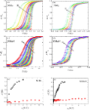
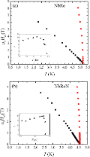
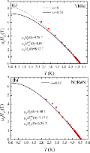
- the electrical resistivity [6]. This feature is related to the polycrystalline or amorphous nature of these materials when deposited in a thin-film form [4][7][8]. In addition to the applicative interest, the study of these materials is relevant from a fundamental point of view. NbxRe1−x (NbRe) for

Gap-directed chemical lift-off lithographic nanoarchitectonics for arbitrary sub-micrometer patterning
Beilstein J. Nanotechnol. 2023, 14, 34–44, doi:10.3762/bjnano.14.4
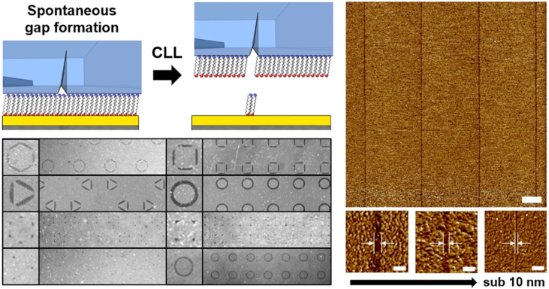
- to etch the exposed underlying Au film. After 30 min of etching, the substrate was rinsed with deionized water and blown dry with nitrogen gas. The transferred metal structures were then characterized by optical microscopy, scanning election microscopy (SEM, JEOL JSM-7600F, Tokyo, Japan) and atomic


The influence of structure and local structural defects on the magnetic properties of cobalt nanofilms
Beilstein J. Nanotechnol. 2023, 14, 23–33, doi:10.3762/bjnano.14.3
- contacts [35], which are successfully implemented in memory and information storage devices. A similar layered heterostructure, but with the addition of a thin platinum film necessary for the generation of spin–orbit bonds, is also described in [36]. Comprehensive research on new promising materials is a
- behavior of the target film heterostructure, the absence of a magnetic field is observed inside the metal, which is predominantly concentrated near the surface. For the reasons previously described, niobium nanofilms were excluded from explicit consideration in numerical experiments to investigate the
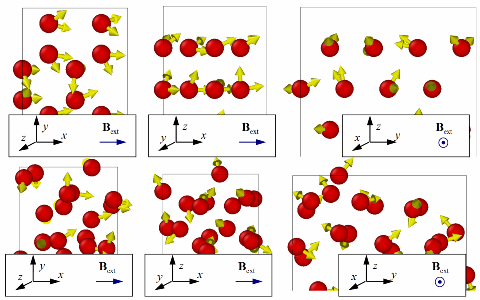
- dimensions as the ideal HCP structure in the first numerical experiment. A group of cobalt atoms with structural defects acquired as a result of film sputtering in an enlarged form is shown in Figure 3b. Henceforward, to simplify the formulation, the nanosystem of cobalt atoms from the numerical experiment


Electrical and optical enhancement of ITO/Mo bilayer thin films via laser annealing
Beilstein J. Nanotechnol. 2022, 13, 1589–1595, doi:10.3762/bjnano.13.133
- to improve the performance of optoelectronic devices. One of these materials is indium tin oxide (ITO), which combines high transparency with high conductivity [7][8]. However, a single layer of as-deposited ITO shows a high resistivity. Consequently, inserting a very thin metal film layer can
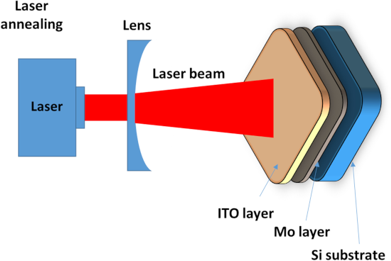
- annealing, a laser beam irradiates the surface layer of the thin film without causing damage. The temperature increases quickly during the process within a short period [24][27]. The laser beam must have a uniform intensity with asymmetrical distribution to obtain surfaces of good morphology with low
- plasma cleaner. In the IM structure, the thickness of ITO was 125 nm while the thickness of Mo was 10 nm. The thickness was controlled by two quartz crystal balances integrated within the chamber. After deposition, the bilayer thin film was treated using a Nd:YAG pulsed laser with a wavelength of 1064 nm


Observation of collective excitation of surface plasmon resonances in large Josephson junction arrays
Beilstein J. Nanotechnol. 2022, 13, 1578–1588, doi:10.3762/bjnano.13.132
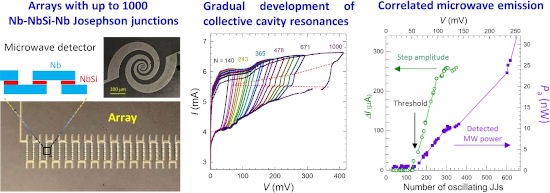
- consists of a log-periodic microwave antenna [39] with a broad frequency range of ca. 15–700 GHz. In the center, there is a nanoscale JJ sensor, shown in Figure 6b. The detector is made of a Nb film (70 nm thick), using a fabrication technique similar to that described in [28]. The antenna is patterned




Single-step extraction of small-diameter single-walled carbon nanotubes in the presence of riboflavin
Beilstein J. Nanotechnol. 2022, 13, 1564–1571, doi:10.3762/bjnano.13.130
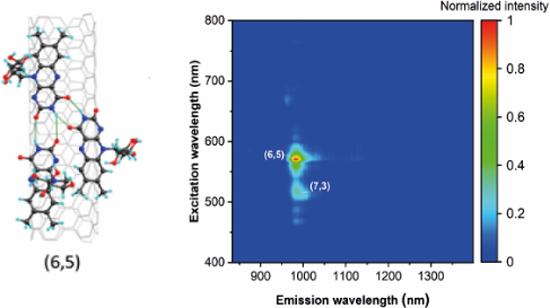
- properties [3][4][5]. Moreover, as-synthesized SWCNTs typically possess a wide range of diameters and chiralities, leading to an inhomogeneous distribution of optical and electronic properties [5]. Nevertheless, most SWCNT applications, including thin-film electronics, require individual constituent parts


Utilizing the surface potential of a solid electrolyte region as the potential reference in Kelvin probe force microscopy
Beilstein J. Nanotechnol. 2022, 13, 1558–1563, doi:10.3762/bjnano.13.129
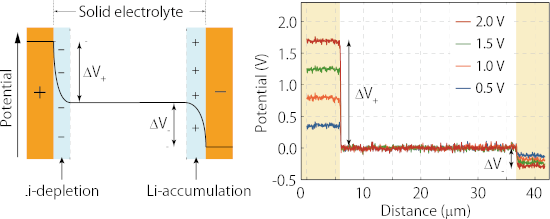
- the reduction of Ti ions in the solid electrolyte owing to direct contact between the Li metal and solid electrolyte, a poly(ethylene oxide)-based polymer electrolyte film (Osaka Soda Co., Ltd.), denoted PEO, was inserted between them. Before the KPFM measurements, the sample was heated at 150 °C for
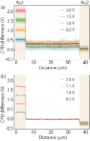
- oxide)-based polymer electrolyte film, denoted PEO, is inserted between the metallic Li and the solid electrolyte to avoid reduction of Ti ions. A DC voltage is applied between the two Au electrodes. The left Au electrode (Au1) potential relative to the metallic Li electrode (vs Li+/Li) is measured
- , shown in Figure 1. Potential of Au1 and Au2 electrodes relative to the Li reference electrode at each applied DC voltage during the KPFM measurements. Acknowledgements We thank Osaka Soda Co., Ltd. for the supply of the polymer electrolyte film. Funding This work was partially supported by the




Induced electric conductivity in organic polymers
Beilstein J. Nanotechnol. 2022, 13, 1551–1557, doi:10.3762/bjnano.13.128
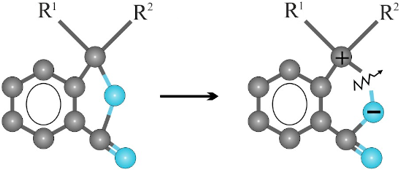
- mechanical stress is applied. In this work, the transport properties of thin-film layered lead–PDP–lead structures were experimentally studied in a wide temperature range. At sufficiently high temperatures, the current voltage characteristics are satisfactorily described in terms of the injection model of
- currents limited by the space charge. At temperatures below ≈8 K, a number of samples exhibit features that can be explained by the effect of induced superconductivity in a thin film of conducting polymer enclosed between two massive superconductors (lead). Keywords: conducting polymer; superconductivity
- ) × 103 without the formation of a gel fraction have been found. A model image of the structural unit of the PDP polymer is shown in Figure 1a. Polymers of this class are soluble in organic solvents and have exceptional film-forming properties [5][6]. According to these results, continuous homogeneous



Orally administered docetaxel-loaded chitosan-decorated cationic PLGA nanoparticles for intestinal tumors: formulation, comprehensive in vitro characterization, and release kinetics
Beilstein J. Nanotechnol. 2022, 13, 1393–1407, doi:10.3762/bjnano.13.115
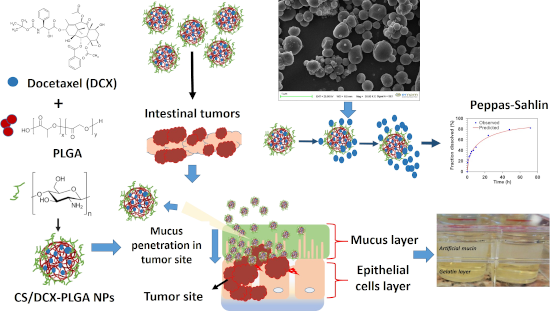
- situation was associated with the fact that the film layer formed on the nanoparticle surface with the CS coating causes a slower release after the burst effect. When both formulations reached the SCoF, they still retained an amount of more than 50% of the drug. The CS-coated PLGA formulation was able to
- models although both formulations have similar dissolution profiles. The main difference between the two formulations is the CS coating. The release profiles were different at the beginning, and a faster release was observed from CS-coated nanoparticles. However, in the following process, the film layer


Dry under water: air retaining properties of large-scale elastomer foils covered with mushroom-shaped surface microstructures
Beilstein J. Nanotechnol. 2022, 13, 1370–1379, doi:10.3762/bjnano.13.113
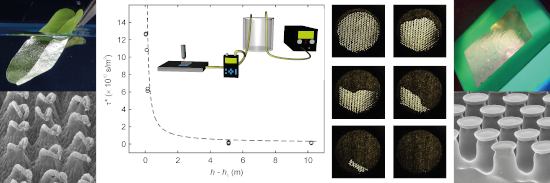
- effective large scale production. Meanwhile, a novel biomimetic surface is commercially available and produced on a large scale: an adhesive elastomeric film with mushroom-shaped surface microstructures that mimic the adhesion system of animals. In this study, we show that these films, which have been


Supramolecular assembly of pentamidine and polymeric cyclodextrin bimetallic core–shell nanoarchitectures
Beilstein J. Nanotechnol. 2022, 13, 1361–1369, doi:10.3762/bjnano.13.112
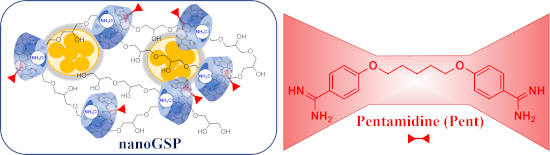
- Pent was prepared at a 1:1 molar ratio using the classical method of organic film hydration (Figure 4A). In our study we employed Pent as a free base [19][26], slightly soluble in water (i.e., ≅30 µg/mL), instead of Pent isethionate salt used in the literature for the preparation of β-CD/Pent inclusion
- organic film of pentamidine (Pent) at [PolyCD]:[Pent] 1:1 molar ratio. The organic film was obtained by slow evaporation of 1.36 mL of Pent ethanolic solution (1 mg/mL). The film was hydrated with nanoGS solution (4 mL) previously heated to 40 °C and the reaction mixture was left stirring at room


Near-infrared photoactive Ag-Zn-Ga-S-Se quantum dots for high-performance quantum dot-sensitized solar cells
Beilstein J. Nanotechnol. 2022, 13, 1337–1344, doi:10.3762/bjnano.13.110
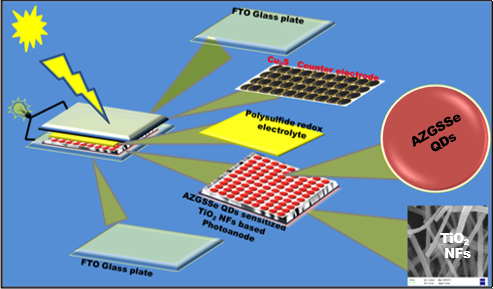
- [16]. Recently, Larsen et al. reported that, due to the appropriate bandgap (1.6–1.8 eV), AgGaSe2 is a wide-range light absorber in thin film solar cells [17]. Tianya Bai et al. [18] examined that ZnS-coated AgGaS2 nanocrystals (AgGaS2/ZnS core–shell nanocrystals) have a tunable bandgap and PL colors


Laser-processed antiadhesive bionic combs for handling nanofibers inspired by nanostructures on the legs of cribellate spiders
Beilstein J. Nanotechnol. 2022, 13, 1268–1283, doi:10.3762/bjnano.13.105
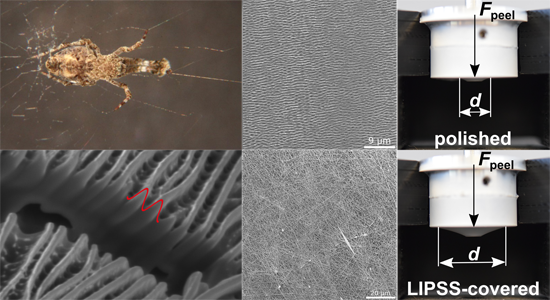
- -covered and polished titanium alloy surfaces after peel-off of an electrospun nonwoven. While the nanofibers could be removed entirely from the LIPSS (a, b), a film of nanofibers remains on the polished surface (c, d). This can be seen macroscopically (left) as well as in the SEM micrographs (right). (a







Studies of probe tip materials by atomic force microscopy: a review
Beilstein J. Nanotechnol. 2022, 13, 1256–1267, doi:10.3762/bjnano.13.104
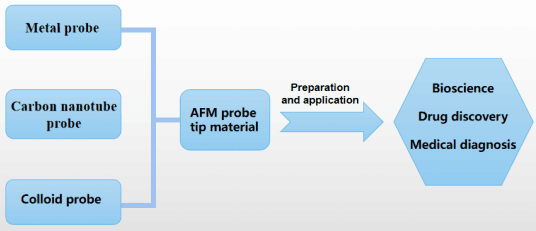
- nanowires is directly coupled to the preparation of the probe, and the traditional method of fiber erosion across the film is more straightforward. The preparation of the probe can be directly used as a scanning near-field optical microscope scanning needle tip. Moreover, the probe prepared by this method
Role of titanium and organic precursors in molecular layer deposition of “titanicone” hybrid materials
Beilstein J. Nanotechnol. 2022, 13, 1240–1255, doi:10.3762/bjnano.13.103
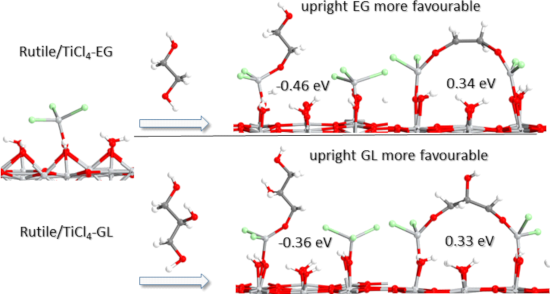
- initial MLD reactions in titanicone film growth using three different surface models: anatase TiO2, rutile TiO2 and Al2O3. Calculated energetics show that while TiCl4 is reactive towards the anatase and rutile TiO2 surfaces, it is not reactive towards the Al2O3 surface. Ti(DMA)4 is reactive towards all
- prefer the flat lying configuration on all surfaces. This work shows that the choice of the surface and the metallic precursor has a major impact on the behaviour of organic species. DFT findings provide motivation to develop a low temperature rutile TiO2/titanicone film suggesting that the desired film
- growth could be achieved. Keywords: density functional theory (DFT) studies; double reactions; surface chemistry; titanicone; Introduction Molecular layer deposition (MLD), a thin film deposition technique, has attracted significant attention in recent years as a suitable approach for the deposition of


Roll-to-roll fabrication of superhydrophobic pads covered with nanofur for the efficient clean-up of oil spills
Beilstein J. Nanotechnol. 2022, 13, 1228–1239, doi:10.3762/bjnano.13.102
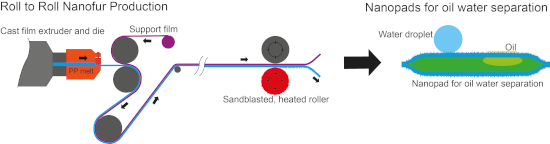
- roll-to-roll process for the fabrication of a thin polymeric film covered with nanofur from polypropylene. Our process enables structuring of large areas of the order of square meters using industry standard machinery. This opens up many possible applications for nanofur that could previously not be
- realized because of the limitations of conventional hot embossing regarding structurable area. The structured film is subsequently processed into an exemplary product, that is, so-called nanopads; polymeric sandwiches of polypropylene film covered with nanofur and filled with an oil-absorbing material
- polymeric nanofur, we developed a continuous roll-to-roll (R2R) process. For that, we combine classical film extrusion with roll-to-roll structuring [2][19][20][21][22]. The overall process relies only on tools frequently used in industry, thereby enabling the cost-effective upscaling of nanofur fabrication




Design of surface nanostructures for chirality sensing based on quartz crystal microbalance
Beilstein J. Nanotechnol. 2022, 13, 1201–1219, doi:10.3762/bjnano.13.100
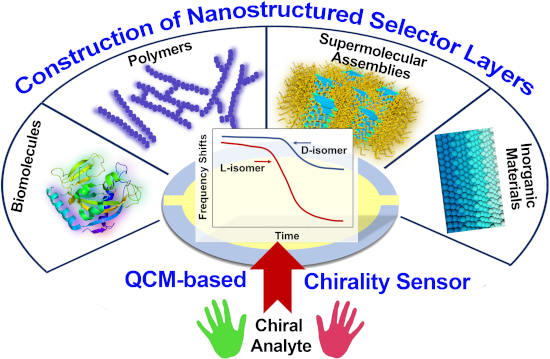
- peptide, insulin, and mandelic acid were examined by QCM. The results indicated that the molecules stereoselectively bound on the films and have a greater affinity toward the nanotubular film than toward the smooth film. This proved that the structural features of the polymer sensor film are also key
- electrodes [45]. After removal of the template by acetic acid–acetonitrile solution, permeable MIP-sensing films with an imprinted cavity could be obtained. The real-time adsorption measurements indicated that this MIP film exhibited specific recognition only for S-propranolol. Luo et al. used the in situ
- bulk polymerization method to fabricate poly(methacrylic acid) (PMAA) MIP films on QCM electrodes for detecting ʟ-tryptophan. The sensor film was highly selective with a detection limit of 0.73 ng/mL and did not respond to the structural analogous of ᴅ-tryptophan and ascorbic acid. The selectivity


Application of nanoarchitectonics in moist-electric generation
Beilstein J. Nanotechnol. 2022, 13, 1185–1200, doi:10.3762/bjnano.13.99
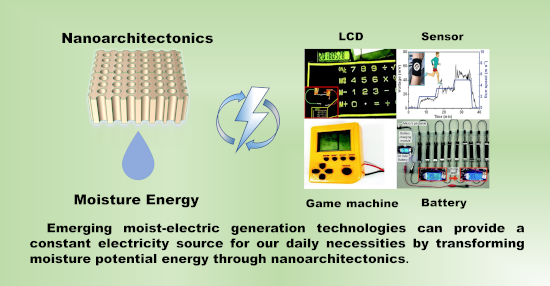
- in hydrogen ion concentration and this difference forms the induced current in the external circuit. The MoS2 film can provide a continuous electrical output of 19 mV and 6.24 μA. The introduction of ion concentration difference is a valuable improvement. This artificially created internal ion
- , there are also some novel innovations in energy-harvesting structures, such as the construction of lateral gradients of nanomaterials, the construction of multilayer structures, and the direct use of ion distribution gradients in liquids. With a PVP thin film of 290 nm thickness as the dielectric layer
- propylene (FEP) film and made it have a nanoscale network structure with rough surface as shown in Figure 6g,h [21]. On a fluctuating water surface, the upper and lower electrodes on the back of the polymer will generate a potential difference, thereby generating current and voltage. Multiple device groups


Microneedle-based ocular drug delivery systems – recent advances and challenges
Beilstein J. Nanotechnol. 2022, 13, 1167–1184, doi:10.3762/bjnano.13.98
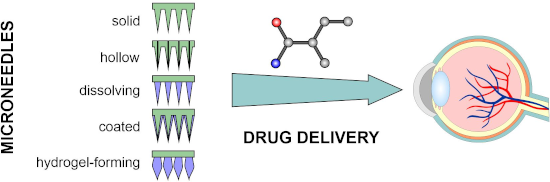
- such as blinking and nasolacrimal drainage, anatomical barriers, efflux pumps, and metabolism in ocular tissues are responsible for drug elimination [38]. It is noteworthy that the tear film is completely replaced with a new one by the tear fluid secreted at a rate of 1.2 mL/min. The eye is also
- the form of inserts. They are mostly solid or semi-solid forms with the appropriate size and shape, intended to be placed in the conjunctival sac. They consist of an active substance reservoir with a matrix structure or a film that regulates the rate of release of the API. Inserts are used less
- a constant controlled rate according to zero-order kinetics [79][80][81]. Drug-loaded soft contact lenses can be classified as non-dissolving implants [82][83]. Satisfactory results are also obtained with in situ gelling liquid implants [84][85] or film forming liquids [86][87][88]. In addition to


Recent advances in green carbon dots (2015–2022): synthesis, metal ion sensing, and biological applications
Beilstein J. Nanotechnol. 2022, 13, 1068–1107, doi:10.3762/bjnano.13.93
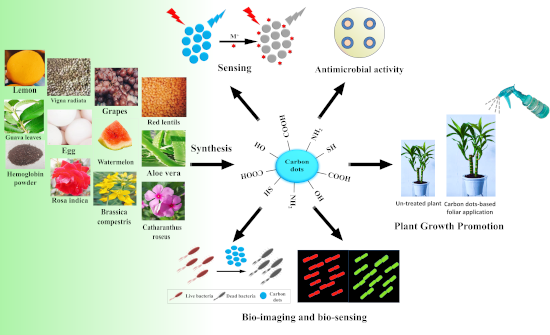
- , patterning, and sensing, as a result of their advantageous characteristics [125]. Han and co-workers extracted cow milk-derived CDs (CM-CDs) from aqueous solution using ethyl acetate to create amphiphilic CM-CDs (ACMCDs). A unique ACMCD-Ag/polymethylmethacrylate antibacterial film was produced utilizing the
- solvent casting process after the ACMCDs were supported by silver nanoparticles, employing them as both a reducing agent and a template. The nanocomposite antibacterial film is anticipated to have a lot of potential applications such as food packaging, water purification, and disinfecting sanitary




Biomimetic chitosan with biocomposite nanomaterials for bone tissue repair and regeneration
Beilstein J. Nanotechnol. 2022, 13, 1051–1067, doi:10.3762/bjnano.13.92
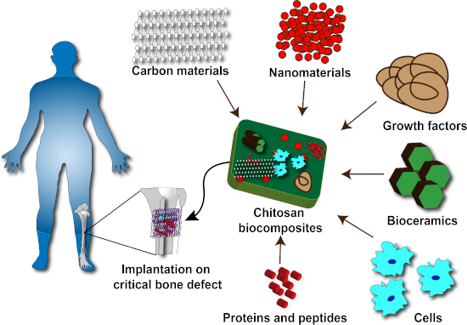
- approach has been used to create a graphene oxide with chitosan and hydroxyapatite nanocomposite film for a possible use in bone tissue regeneration. As per study results, the combined chitosan and hydroxyapatite nanocomposite film provides an excellent substrate for the growth of mouse mesenchymal stem
Electrocatalytic oxygen reduction activity of AgCoCu oxides on reduced graphene oxide in alkaline media
Beilstein J. Nanotechnol. 2022, 13, 1020–1029, doi:10.3762/bjnano.13.89
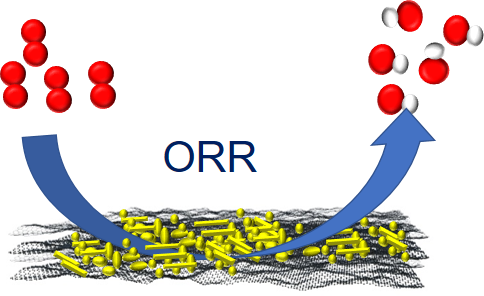
- electrocatalysts [14][18][19]. Oxophilicity, agglomeration, and poor chemical stability of Ag require the amalgamation of Ag with other metals for a better optical and catalytic activity [20]. Chen et al. synthesised Ag nanoscale alloys containing metals such as copper, cobalt, iron, and indium via pulse film


Effects of focused electron beam irradiation parameters on direct nanostructure formation on Ag surfaces
Beilstein J. Nanotechnol. 2022, 13, 1004–1010, doi:10.3762/bjnano.13.87
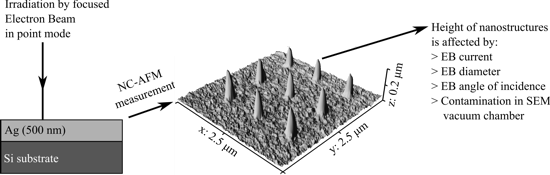
- to be removed from the vacuum chamber during the cleaning procedure since the N plasma cleaning procedure affected the Ag surface, most notably by forming a layer which produces thin film interference. The sample irradiation was repeated 15 min, 30 min, 1 h, and 2 h after the end of the cleaning
- , radiolysis by collisions with electrons seeming like the most obvious one. It should be noted that N plasma treatment in this case also affected the clean Ag surface, turning it into an interfering thin film. We believe that controlled etching with plasma has the potential to explore the structure of metal