


Search results
Search for "formulation" in Full Text gives 202 result(s) in Beilstein Journal of Nanotechnology. Showing first 200.
Nanoparticle shapes by using Wulff constructions and first-principles calculations
Beilstein J. Nanotechnol. 2015, 6, 361–368, doi:10.3762/bjnano.6.35
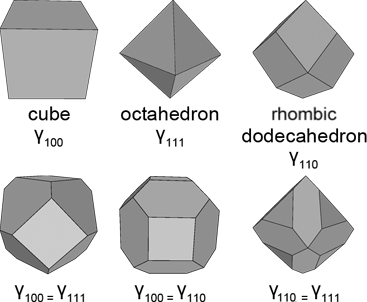
- shape of these nanoparticles. Wulff construction offers a simple method of predicting the equilibrium shape of nanoparticles given the surface energies of the material. Results: We review the mathematical formulation and the main applications of Wulff construction during the last two decades. We then
- calculations of surface energies are routinely employed to explain experimental findings and lead to the design of better materials with tailored properties. In the following, we review the concept of Wulff construction, present its mathematical formulation and limitations, and review modern uses in the



Comparative evaluation of the impact on endothelial cells induced by different nanoparticle structures and functionalization
Beilstein J. Nanotechnol. 2015, 6, 300–312, doi:10.3762/bjnano.6.28
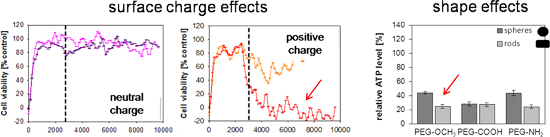
- nanoparticle. Nanoparticles will finally enter the blood system and exhibit specific interactions with the corresponding cellular and serum components. Interactions of nanoparticles with cells will be distinctly influenced by the properties of the respective nanoparticle formulation, caused by its size, shape




Release behaviour and toxicity evaluation of levodopa from carboxylated single-walled carbon nanotubes
Beilstein J. Nanotechnol. 2015, 6, 243–253, doi:10.3762/bjnano.6.23
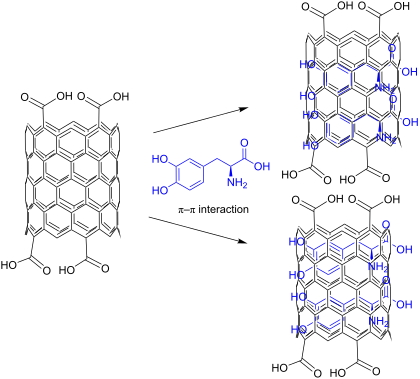
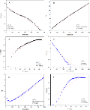
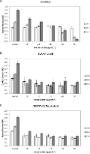
- novelty for further development as a slow, sustained-release formulation. The MTT bioassay results showed a dose-dependent cytotoxicity response from pure LD, whereas SWCNT–COOH and SWCNT–LD did not compromise the viability of PC12 cells, which remained almost constant throughout the experiments. This




The distribution and degradation of radiolabeled superparamagnetic iron oxide nanoparticles and quantum dots in mice
Beilstein J. Nanotechnol. 2015, 6, 111–123, doi:10.3762/bjnano.6.11
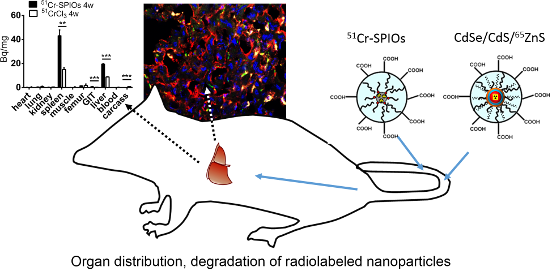
- the specific isotope through feces and urine. After oral administration, the whole body retention after 7–14 d is a well-accepted measure of the intestinal absorption of the isotopes in the respective galenic formulation, because non-absorbed material is completely excreted at that time via the feces
- µm thicknesses were cut from frozen specimens embedded in an optimum cutting temperature formulation solution (Sakura Finetek Europe). Cryosections were mounted on a slide (Superfrost/Plus, Glaswarenfabrik Karl Hecht KG, Sondheim, Germany) and dried overnight before immunostaining. Cell culture J774





Nanoencapsulation of ultra-small superparamagnetic particles of iron oxide into human serum albumin nanoparticles
Beilstein J. Nanotechnol. 2014, 5, 2259–2266, doi:10.3762/bjnano.5.235
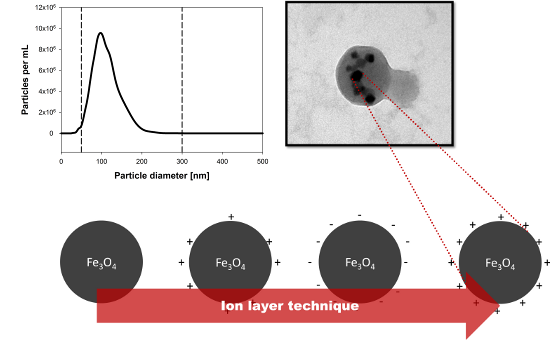
- systemic exposition of patients with the carrier [6]. Human serum albumin (HSA) represents a promising candidate that binds a wide range of compounds with different physicochemical characteristics. In 2007, with Abraxane®, a first polymeric nanoparticle formulation consisting of this material has been
- (TMAH). The positive surface charge of the particles enabled a strong interaction with the negatively charged protein matrix [13] provided by the HSA molecules. Formulation design and characterization of USPIO HSA hybrid particles by dynamic light scattering Nanoparticles were prepared by ethanolic
- drug-loaded nanoparticles earlier [14], these results suggest that the hydrophilic matrix still provides properties identical to those that have been used for drug targeting applications. USPIO load of USPIO HSA hybrid particles After optimization of formulation design, the drug load of USPIO HSA


Spin annihilations of and spin sifters for transverse electric and transverse magnetic waves in co- and counter-rotations
Beilstein J. Nanotechnol. 2014, 5, 1887–1898, doi:10.3762/bjnano.5.199
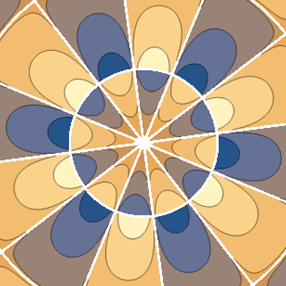
- in [23]. In particular, the photon spins turn out be quite intriguing [15][20][23]. This paper is organized as follows. Section "Formulation and Fundamentals" describes a problem statement and solutions to such formulations. Section "Poynting Vectors and Trajectories" considers Poynting vectors and
- associated trajectories. Section "Angular Momentum and Spins" considers the AM and photon spins, thus coming up with several extraordinary concepts. Section "Discussion" provides additional arguments, followed by "Conclusion" summarizing the principle behind spin sifters and other issues. Results Formulation


![[Graphic 44]](/bjnano/content/inline/2190-4286-5-199-i70.png?max-width=637&scale=1.18182) . (b) The scaled coefficient
. (b) The scaled coefficient ![[Graphic 45]](/bjnano/content/inline/2190-4286-5-199-i71.png?max-width=637&scale=1.18182) of the optical chirality C for the counter-rotatio...
of the optical chirality C for the counter-rotatio...


![[Graphic 104]](/bjnano/content/inline/2190-4286-5-199-i130.png?max-width=637&scale=1.18182) in the (kx,ky)-plane. (a) The co-rotational case. (b) The counter-rotational case ...
in the (kx,ky)-plane. (a) The co-rotational case. (b) The counter-rotational case ...


![[Graphic 125]](/bjnano/content/inline/2190-4286-5-199-i151.png?max-width=637&scale=1.18182) for the counter-rotational case plotted over 0 ≤ ρ ≡ kr ≤ 4 for m = 3, Rρ ≡ kR = 1...
for the counter-rotational case plotted over 0 ≤ ρ ≡ kr ≤ 4 for m = 3, Rρ ≡ kR = 1...

Biocompatibility of cerium dioxide and silicon dioxide nanoparticles with endothelial cells
Beilstein J. Nanotechnol. 2014, 5, 1795–1807, doi:10.3762/bjnano.5.190
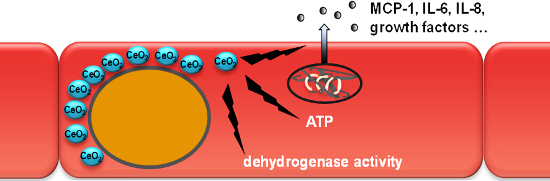
- inclusion of microvascular and primary macrovascular endothelial cells. In particular, we observed distinct effects depending on the cell type (immortalized microvascular vs primary macrovascular endothelial cells), nanoparticle formulation (CeO2, SiO2 nanoparticles), concentration, exposure time and
- indicate significant differences (P ≤ 0.05) between the relative ATP content of cells after treatment with the corresponding nanoparticle concentration and the relative ATP content of 100% (untreated control cells); a, b, c indicate significant differences (P ≤ 0.05) of one nanoparticle formulation among
- different concentrations; *asterisks, which are together with a parenthesis, indicate significant differences (P ≤ 0.05) between time points for a specific concentration of one nanoparticle formulation. Pro-inflammatory impact and ROS generation of CeO2 nanoparticle exposure on endothelial cells. a) MCP-1


Equilibrium states and stability of pre-tensioned adhesive tapes
Beilstein J. Nanotechnol. 2014, 5, 1725–1731, doi:10.3762/bjnano.5.182
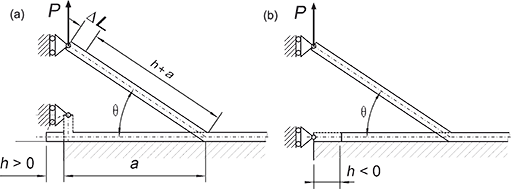
- hairy adhesive systems is pointed out. In this paper, we focus our attention on some yet unclear aspects of the peeling process and, in particular, on the stability of this mechanism in presence of a pre-tension. The peeling process of a thin elastic tape In this section, we extend the formulation given
- in [36], focusing our attention on the stability analysis of the peeling process and on the effect of pre-tension on the mechanism of detachment. The formulation of the problem is developed considering two different initial configurations of an elastic tape with cross section A = bt, as shown in

![[Graphic 5]](/bjnano/content/inline/2190-4286-5-182-i14.png?max-width=637&scale=1.18182) as a function of the peeling angle θeq at equilibrium (a); the tot...
as a function of the peeling angle θeq at equilibrium (a); the tot...


![[Graphic 11]](/bjnano/content/inline/2190-4286-5-182-i20.png?max-width=637&scale=1.18182) as a function of the peeling angle θeq at equilibrium, for differen...
as a function of the peeling angle θeq at equilibrium, for differen...
The cell-type specific uptake of polymer-coated or micelle-embedded QDs and SPIOs does not provoke an acute pro-inflammatory response in the liver
Beilstein J. Nanotechnol. 2014, 5, 1432–1440, doi:10.3762/bjnano.5.155
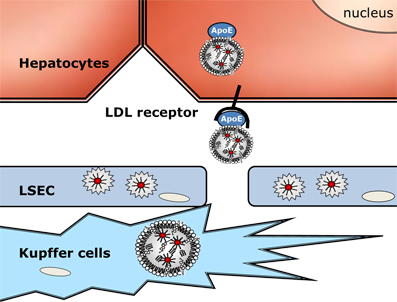
- that the metals within the inorganic core are potentially toxic. Apparently, QDs with a special nano-sized formulation and surface passivation prevent acute toxic effects. Given that only some of the reports found pathological effects in a clinical sense, parameters that are more sensitive such as


PEGylated versus non-PEGylated magnetic nanoparticles as camptothecin delivery system
Beilstein J. Nanotechnol. 2014, 5, 1312–1319, doi:10.3762/bjnano.5.144
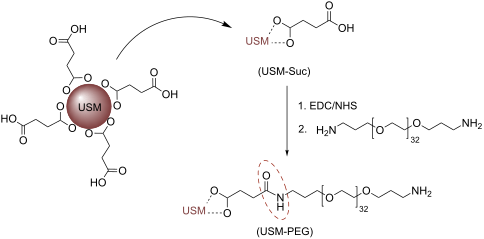
- by means of nano-formulations cover a wide range of organic nanomaterials [11][12][13][14][15][16][17][18][19]. Noticeably, a cyclodextrin-containing polymer–CPT nano-formulation is currently undergoing phase II clinical trials [20]. Superparamagnetic iron oxide nanoparticles (SPION) are particularly
- polyethylene glycol (PEG) as coating polymer in nano-formulations. PEG has been widely used in the formulation of nanoparticles for biomedical applications, both because of its biocompatibility and its effectiveness in camouflaging nanoparticles from opsonins [35]. Recently, it has been described that PEG
- are clearly present in both USM[CPT] and USM-PEG[CPT]. Although taken at a lower resolution, probably due to the lower concentration of CPT loaded in USM[CPT] when compared to USM-PEG[CPT], the USM[CPT] formulation possesses also the characteristic peaks of its CPT load. Differences in intensity and a


Fringe structures and tunable bandgap width of 2D boron nitride nanosheets
Beilstein J. Nanotechnol. 2014, 5, 1186–1192, doi:10.3762/bjnano.5.130
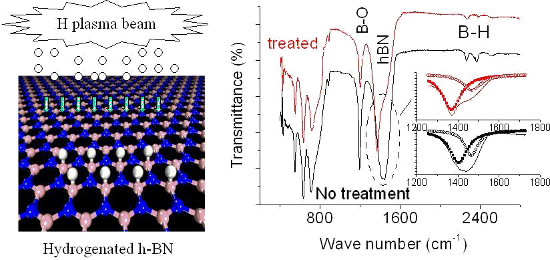
- 2θ ≈ 27.02° to 2θ ≈ 26.92° after the treatment. This indicates that the lattice constant of the BNNS hexagonal structure increases up to 1% according to Bragg formulation of X-ray diffraction. Since the bandgap width or energy normally is inversely proportional to the lattice constant for III–V


Optimizing the synthesis of CdS/ZnS core/shell semiconductor nanocrystals for bioimaging applications
Beilstein J. Nanotechnol. 2014, 5, 919–926, doi:10.3762/bjnano.5.105
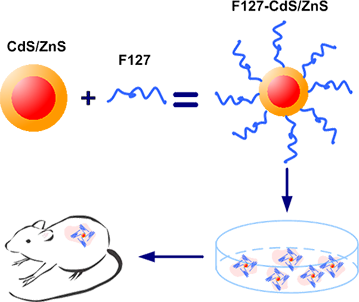
- this equation, we determined that the dispersion in water and the pH value can affect their stability. We used DLS as an accurate approach to monitor the colloidal stability of F127-CdS/ZnS micelles. The DLS samples were diluted in HPLC water (1:30). Then, we investigated the formulation of the micelle


Antimicrobial properties of CuO nanorods and multi-armed nanoparticles against B. anthracis vegetative cells and endospores
Beilstein J. Nanotechnol. 2014, 5, 789–800, doi:10.3762/bjnano.5.91
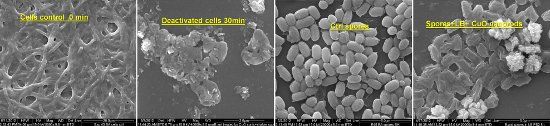
- single germinant plus CuO nanoparticle combined formulation that can be used for decontamination of B. anthracis spores holds a good potential. Our findings regarding the difference between the bactericidal and the sporicidal potential of CuO nanoparticles are in accordance with the existing knowledge


Biocalcite, a multifunctional inorganic polymer: Building block for calcareous sponge spicules and bioseed for the synthesis of calcium phosphate-based bone
Beilstein J. Nanotechnol. 2014, 5, 610–621, doi:10.3762/bjnano.5.72
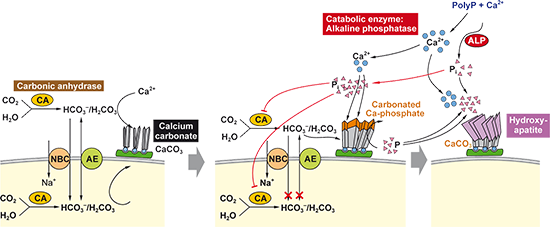
- . We are convinced that this strategy will contribute to a further improvement of the formulation of a suitable artificial scaffold for rapid prototyping 3D bioprinting of organ-like tissue units. Function of biosilica during (A) the formation of siliceous sponge spicules and (B) mammalian bone mineral



In vitro toxicity and bioimaging studies of gold nanorods formulations coated with biofunctional thiol-PEG molecules and Pluronic block copolymers
Beilstein J. Nanotechnol. 2014, 5, 546–553, doi:10.3762/bjnano.5.64
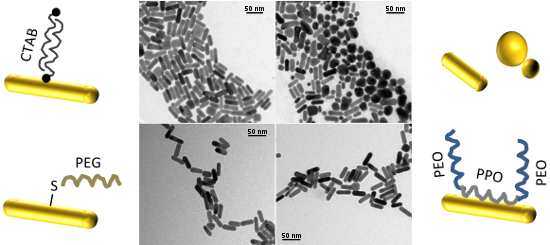
- aspect ratios of rod nanoparticles. This method typically involves the use of cetyltrimethylammonium bromide (CTAB) surfactants as directing agents to grow gold nanorods in the solution phase. The as-synthesized gold nanorods surfaces are terminated with CTAB molecules and this formulation gives rise to
- surface is unfeasible as this will render the gold nanorods structurally unstable, causing the aggregation of particles. Here, we investigate the individual use of thiolated PEG and PEO–PPO–PEO as capping agents to reduce the cytotoxicity of gold nanorods formulation, while maintaining the optical
- gold nanoparticles formulation will be affected and this may impact their applications in sensing, imaging and targeted delivery. Thus, it is essential for the nanoparticle community to understand the effects of functionalizing PEG-SH or PEO–PPO–PEO molecules on the AuNRs surface and their


Near-infrared dye loaded polymeric nanoparticles for cancer imaging and therapy and cellular response after laser-induced heating
Beilstein J. Nanotechnol. 2014, 5, 313–322, doi:10.3762/bjnano.5.35
- endothelial growth factor (VEGF), and poor lymphatic clearance from tumor sites [4]. Because of these advantages, we synthesized a new formulation of polymeric NPs for image-guided therapy based on the polymer poly(glycerol malate co-dodecanedioate) (PGMD) developed in our lab. The work described in this
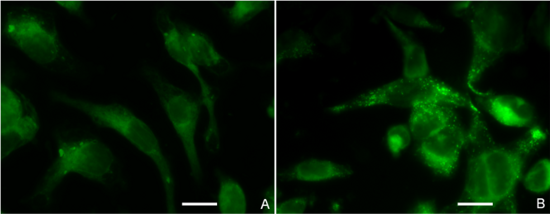
- intracellular proteins such as ligandin [25]. In the case of the NP formulation, IR820 released from the NPs should exhibit identical behavior as free IR820, whereas IR820 still within the NPs is expected to be located in endosomes/lysosomes. Lysotracker Blue was used to identify that PGMD NPs were taken up by
- the cells through an endocytosis pathway (Supporting Information File 1, Figure S5). Calculated image ratio values, R, from the fluorescence microscope images show that the NP formulation produces a higher intracellular fluorescence intensity (R = 3.75 ± 0.54) (mean ± SD) than the free dye (R = 2.89


Static analysis of rectangular nanoplates using trigonometric shear deformation theory based on nonlocal elasticity theory
Beilstein J. Nanotechnol. 2013, 4, 968–973, doi:10.3762/bjnano.4.109
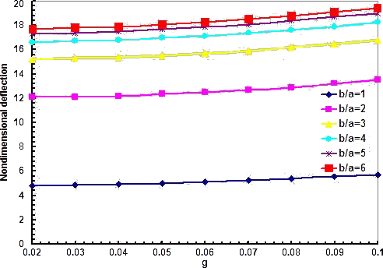
- nanostructures yet. So it may be useful to develop a new model based on one of these new theories for rectangular nanoplates. In this work, the bending analysis of nanoplates based on nonlocal elasticity theory using the trigonometric shear deformation theory is investigated. After validating the formulation and


Synthesis and electrochemical performance of Li2Co1−xMxPO4F (M = Fe, Mn) cathode materials
Beilstein J. Nanotechnol. 2013, 4, 860–867, doi:10.3762/bjnano.4.97
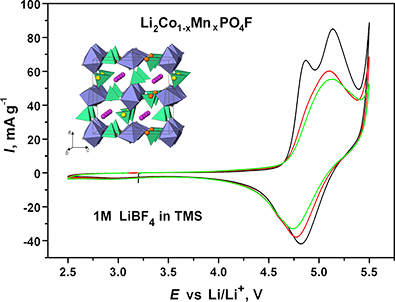
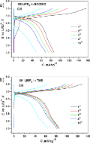
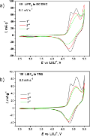
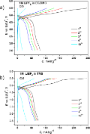
- -substitution on the electrochemical activity of the Li2CoPO4F system. A further optimization in synthesis and formulation of the cathode material (particle investigation and carbon coating) of Mn- and Fe-substituted fluorophosphates will improve their electrochemical performance and, thereby, answer the



Size-dependent characteristics of electrostatically actuated fluid-conveying carbon nanotubes based on modified couple stress theory
Beilstein J. Nanotechnol. 2013, 4, 771–780, doi:10.3762/bjnano.4.88
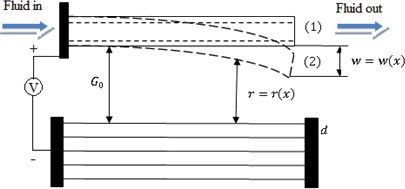
- attracted a lot of scientists and researchers all over the world to study their characteristics as well as their actual and potential applications. A mathematical formulation of the applicability of CNTs in NEMS was conducted by Dequesnes et al. [14]. They applied a model with one degree of freedom in order
- those obtained from molecular dynamics. The main difference between [14] and [15] is the more detailed formulation of vdW force between the CNT and graphene sheets. In the former, the researchers only studied the attractive term whereas in the latter they investigated the repulsive term as well. Ke et


Large-scale atomistic and quantum-mechanical simulations of a Nafion membrane: Morphology, proton solvation and charge transport
Beilstein J. Nanotechnol. 2013, 4, 567–587, doi:10.3762/bjnano.4.65
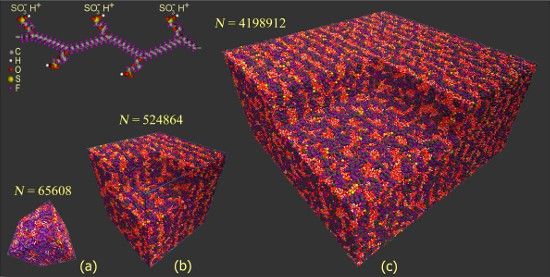
- to increase the size of simulated systems and use rather complex variants of DFT. We used a recently modified version of the code CP2K/Quickstep [85], which is a numerical implementation of the Gaussian and plane waves (GPW) method [90] based on the Kohn–Sham formulation of DFT. The electronic charge


3D nano-structures for laser nano-manipulation
Beilstein J. Nanotechnol. 2013, 4, 534–541, doi:10.3762/bjnano.4.62
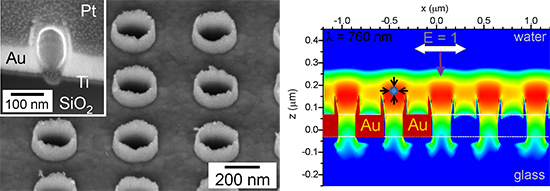
- , and applying the Lorentz force formulation explained in the following section. The source was linearly x-polarized with a bandwidth range from 400 to 1400 nm. The simulations were performed on the swinSTAR supercomputer at Swinburne University with 16-core nodes of 64 GB memory each. Each simulation


Magnetic-Fe/Fe3O4-nanoparticle-bound SN38 as carboxylesterase-cleavable prodrug for the delivery to tumors within monocytes/macrophages
Beilstein J. Nanotechnol. 2012, 3, 444–455, doi:10.3762/bjnano.3.51
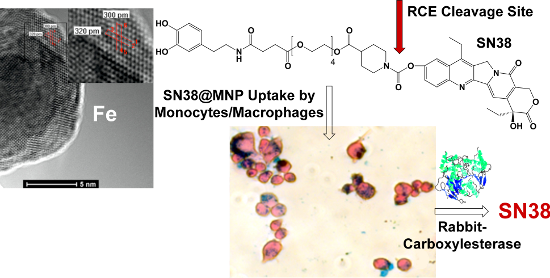
- ][22][23][24][25][26]. SN38-loaded polymeric micelles (NK012) have been used in preclinical and clinical studies against various types of cancer. Specific accumulation of this formulation to the tumor site by the EPR effect (enhanced permeation and retention), and sustained release of SN38 in tumor


Towards a scalable and accurate quantum approach for describing vibrations of molecule–metal interfaces
Beilstein J. Nanotechnol. 2011, 2, 427–447, doi:10.3762/bjnano.2.48
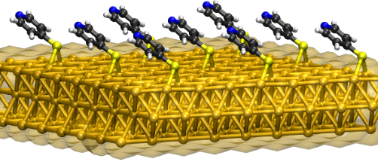
- adsorbed molecules. Results and Discussion Theoretical framework The theoretical description of molecular vibrations is remarkably simple. In its most basic formulation, the harmonic approximation can successfully describe a very large number of observations. This has been shown in the excellent monograph


Charge transfer through single molecule contacts: How reliable are rate descriptions?
Beilstein J. Nanotechnol. 2011, 2, 416–426, doi:10.3762/bjnano.2.47
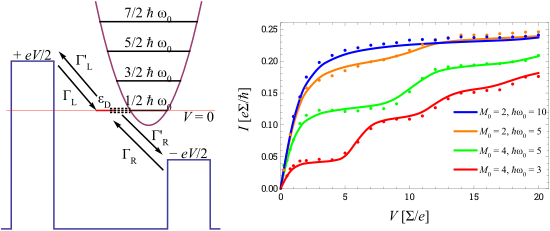
- in comparison with numerically exact solutions is still elusive. Results: We show that a formulation in terms of transfer rates provides a quantitatively accurate description even in domains of parameter space where strictly it is expected to fail, e.g., at lower temperatures. Typically
- ingredients for a perturbative treatment. A formulation which closely follows the P(E) theory for dynamical Coulomb blockade is discussed in subsection 2. Nonequilibrium effects in the stationary phonon distribution are analyzed in subsection 3 based on a dynamical formulation of charge and phonon degrees of
- molecule, i.e., with Single charge tunneling through the device can be formally and exactly captured under weak conditions (e.g., instantaneous equilibration in the leads during charge transfer) within the Meir–Wingreen formulation based on nonequilibrium Green’s functions [14][15]. For the current


![[Graphic 38]](/bjnano/content/inline/2190-4286-2-47-i61.png?max-width=637&scale=1.18182) ω0 and versus the electron–phonon coupling m0.
ω0 and versus the electron–phonon coupling m0.


Simple theoretical analysis of the photoemission from quantum confined effective mass superlattices of optoelectronic materials
Beilstein J. Nanotechnol. 2011, 2, 339–362, doi:10.3762/bjnano.2.40
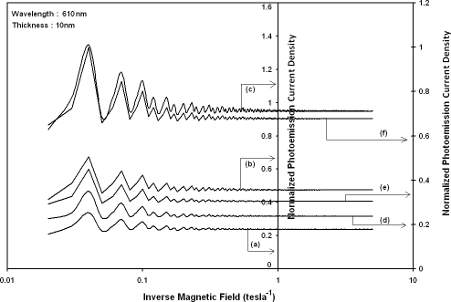
- [39]. It appears then that the formulation of RG is determined by the appropriate derivation of I, which in turn requires the magneto-dispersion relations. By using the appropriate formulas RG can, in general, be investigated. Thus we can summarize the whole theoretical background in the following way
- the said effects for the generalized systems emerge. It is vital that the results of our simple theory get transformed to the well-known formulation of photoemission for wide-gap materials having parabolic energy bands. This indirect test will not only illustrate the mathematical compatibility of our
- formulation but will also show the fact that our simple analysis is a more generalized one, since one can obtain the corresponding results for materials having parabolic energy bands under certain limiting conditions from our present derivation. The experimental results for the verification of the theoretical





