Search results
Search for "gold" in Full Text gives 867 result(s) in Beilstein Journal of Nanotechnology. Showing first 200.
A chemiresistive sensor array based on polyaniline nanocomposites and machine learning classification
Beilstein J. Nanotechnol. 2022, 13, 411–423, doi:10.3762/bjnano.13.34
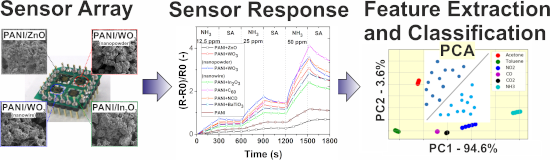
- controlling of individual sensing layers. The heating element can also be used for the desorption of measured gases or heating slightly above the ambient temperature in order to reduce temperature fluctuation. The 18 µm thick Cu interdigitated electrodes were covered with a 12 µm thick gold layer to improve




Electrostatic pull-in application in flexible devices: A review
Beilstein J. Nanotechnol. 2022, 13, 390–403, doi:10.3762/bjnano.13.32
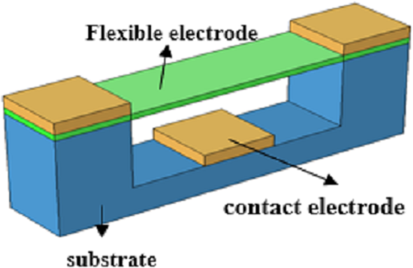
- was 15 µm in length and 3 µm in radius. The initial gap was 3 µm, and the pull-in voltage was over 21 V. In another publication [41], the authors used in the situ technique to glue Ge nanowires to electrochemically etched gold tips to form NEM switches. The pull-in voltage was 40–45 V with an initial
- deposited three gold bands onto a silicon substrate to form a CPW, and then prepared a suspended graphene bridge structure above the CPW with a pull-in voltage of 2 V and a wide operating frequency of 60 GHz. Sharma et al. [56][58] tested the isolation and insertion loss of graphene in microwave and


Alcohol-perturbed self-assembly of the tobacco mosaic virus coat protein
Beilstein J. Nanotechnol. 2022, 13, 355–362, doi:10.3762/bjnano.13.30
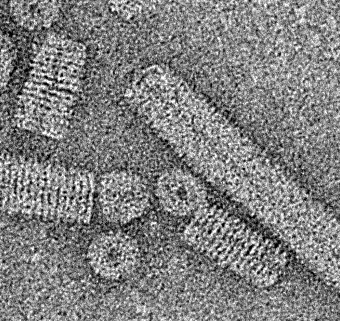
- that is relevant to many TMV-cp mutants. Alcohol-perturbed assembly of TMV-cp shows particular promise in combination with mutants that possess additional functionality, as demonstrated by the use of similar hexagonally packed arrays of disks to template sheets of gold nanorings that show promise in


Systematic studies into uniform synthetic protein nanoparticles
Beilstein J. Nanotechnol. 2022, 13, 274–283, doi:10.3762/bjnano.13.22

- were sputter coated with gold for 40 s using an SPI-Module Carbon/Sputter Coater, which is optimized for monolayer deposition. Typical fields of view (FOV) were 5 μm and pixel sizes were in the range of 2 nm. Collected images were semi-randomized; a random FOV was selected approximately near the center
- with gold prior to evaluation in the SEM system. Care was taken to not overexpose the sample during gold preparation, as evidenced by a lack of melted particles or crevice filling in the final micrographs. The SEM PDI is a polydispersity index derived from image generated data. The method by which it


Investigation of a memory effect in a Au/(Ti–Cu)Ox-gradient thin film/TiAlV structure
Beilstein J. Nanotechnol. 2022, 13, 265–273, doi:10.3762/bjnano.13.21
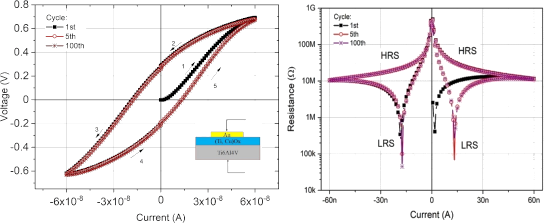
- Lite). Additionally, circular 1 mm gold pads were evaporated on top of the prepared structure to allow for electrical characterization. The average material composition of the gradient thin film was determined using X-ray microanalysis employing an EDAX Genesis energy-dispersive spectrometer (EDS) as



Photothermal ablation of murine melanomas by Fe3O4 nanoparticle clusters
Beilstein J. Nanotechnol. 2022, 13, 255–264, doi:10.3762/bjnano.13.20
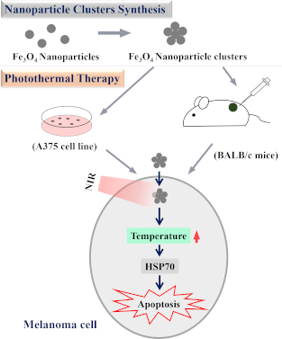
- -based nanoparticles, this method has long been regarded as the gold standard for cell viability and proliferation studies, and thus been applied extensively in studies of metal-containing nanoparticles [18][19][20]. In accordance with our flow cytometry findings, the MTT viability assay showed that in


Effects of drug concentration and PLGA addition on the properties of electrospun ampicillin trihydrate-loaded PLA nanofibers
Beilstein J. Nanotechnol. 2022, 13, 245–254, doi:10.3762/bjnano.13.19
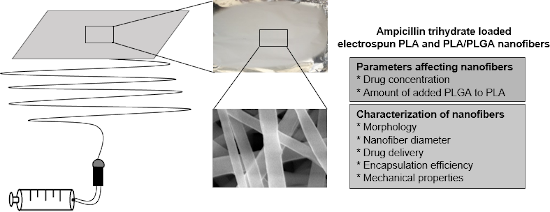
- concentrations by making dilutions from a 200 µg/mL ampicillin trihydrate stock. Absorbance values were measured at a wavelength of 213 nm (y = 0.0309x + 0.0466, r2 = 0.9984). Morphology of electrospun nanofibers Nanofibers were firstly gold-coated and the morphology of the electrospun nanofibers was observed on


Impact of device design on the electronic and optoelectronic properties of integrated Ru-terpyridine complexes
Beilstein J. Nanotechnol. 2022, 13, 219–229, doi:10.3762/bjnano.13.16
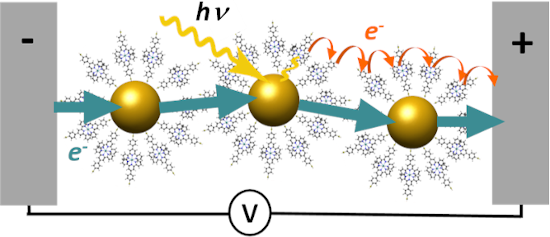
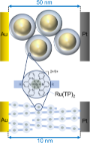
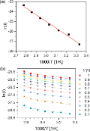
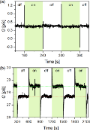
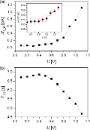
- of gold nanoparticles and contacted by nanoelectrodes. The resulting small-area nanodevices were thoroughly electrically characterized as a function of temperature and light exposure. Differences in the resulting device conductance could be attributed to the device design and the respective transport
- transfer in the Ru-terpyridine complexes used as switching ligands. Finally, our results reveal a superior device performance of nanoparticle-based devices compared to molecular wire devices based on Ru-terpyridine complexes as functional units. Keywords: conductance switching; gold nanoparticles
- the wire-growth protocol developed recently and, thus, to assemble Ru(TP)2-complex wire nanodevices [19]. Additionally, we will use our already successfully applied approach to fabricate nanodevices from ligand-stabilized gold nanoparticles (AuNPs) immobilized between nanoelectrodes [21][22][23][24


Engineered titania nanomaterials in advanced clinical applications
Beilstein J. Nanotechnol. 2022, 13, 201–218, doi:10.3762/bjnano.13.15
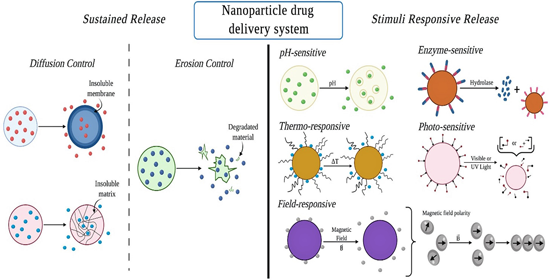
- potential. Thus, the optimized TiO2 nanoparticle concentration of the PCL/5TiO2 sample exhibited improved biological and antibacterial properties for bone tissue engineering, thereby improving the properties of orthopedic devices [60]. Ko et al. found that titanium covered with a double layer of gold nps
- body. In this context, Gomes et al. conjugated gold nps with the antivenomous compound 2-hydroxy-4-methoxy-benzoic acid (HMBA) extracted from the herb Anantamul (H. indicus), which was found to be effective in neutralizing all kinds of toxicity generated by the venom of the deadly Russell’s viper [118


Low-energy electron interaction and focused electron beam-induced deposition of molybdenum hexacarbonyl (Mo(CO)6)
Beilstein J. Nanotechnol. 2022, 13, 182–191, doi:10.3762/bjnano.13.13
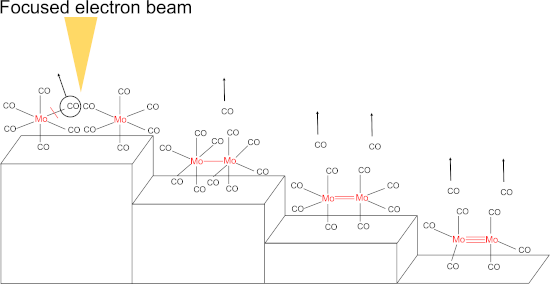
- ®. Energy-dispersive X-ray analyses was done with a ZEISS Crossbeam system with an integrated Oxford EDX detector. Deposits for EDX analysis were prepared on a 100 nm thick polycrystalline gold substrate on a 4 inch silicon wafer, purchased from Georg Albert PVD. The Au-based substrate was chosen because of
- sum of the relative contributions of all Mo-containing fragments. Using this approach, we found that DEA leads to an average weighted CO loss per incident of about 1.2 while DI leads to an average weighted CO loss of 3.7. For comparison FEBID deposits were created on a polycrystalline gold substrate
- loss per DEA incident observed in the gas phase experiments and also higher than the CO loss per DI incident observed in these experiments. This is very different from the observations made by Rosenberg et al. [58] when comparing the CO loss from few monolayers of W(CO)6, adsorbed onto cooled gold


Theoretical understanding of electronic and mechanical properties of 1T′ transition metal dichalcogenide crystals
Beilstein J. Nanotechnol. 2022, 13, 160–171, doi:10.3762/bjnano.13.11
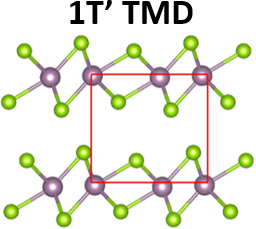
- Seyedeh Alieh Kazemi Sadegh Imani Yengejeh Vei Wang William Wen Yun Wang Centre for Catalysis and Clean Energy, School of Environment and Science, Griffith University, Gold Coast Campus, QLD 4222, Australia Department of Applied Physics, Xi’an University of Technology, Xi’an 710054, China 10.3762



A comprehensive review on electrospun nanohybrid membranes for wastewater treatment
Beilstein J. Nanotechnol. 2022, 13, 137–159, doi:10.3762/bjnano.13.10
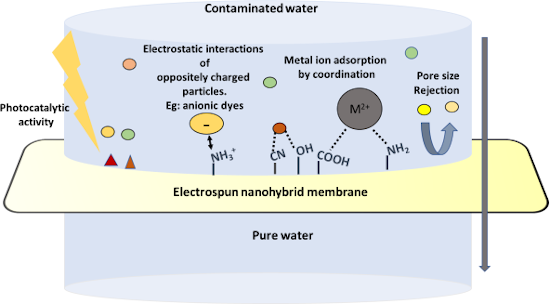
- predominant PEMs [13]. Zhang et al. developed nanohybrid PVDF membranes by incorporating zeolite with enhanced thermal and electrochemical performance for lithium-ion batteries [14]. ENHs have also been used as a heterogeneous catalyst in indole synthesis by Savva et al. by incorporating gold nanoparticles





Bacterial safety study of the production process of hemoglobin-based oxygen carriers
Beilstein J. Nanotechnol. 2022, 13, 114–126, doi:10.3762/bjnano.13.8
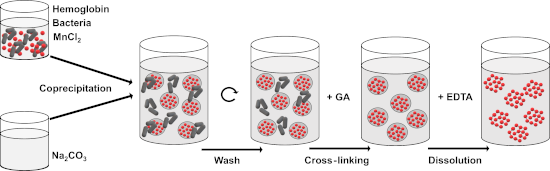
- analysis, one drop of the sample was applied to a glass slide, dried overnight, and sputtered with gold. A Gemini Leo 1550 (Carl Zeiss AG, Oberkochen, Germany) instrument was utilized for the measurements at an operation voltage of 10 kV. The particle size was measured by DLS applying a Zetasizer Nano ZS


Sputtering onto liquids: a critical review
Beilstein J. Nanotechnol. 2022, 13, 10–53, doi:10.3762/bjnano.13.2

- [11]. Afterward, Torimoto et al. used a sputter coater for the synthesis of small gold (Au) NPs by sputtering an Au target onto a thin layer of an ionic liquid (IL) [12]. This paper [12] published in 2006 initiated a series of similar works in several labs which, were focused on the deposition of
- ion impacts. The sputtering yield is influenced by the surface binding energy (Eb) of the target material, here Eb = 7.41, 4.89, and 3.8 eV for carbon, titanium, and gold, respectively. These values are provided by the SRIM code. Atoms leaving the target surface have an average kinetic energy of the






Design aspects of Bi2Sr2CaCu2O8+δ THz sources: optimization of thermal and radiative properties
Beilstein J. Nanotechnol. 2021, 12, 1392–1403, doi:10.3762/bjnano.12.103
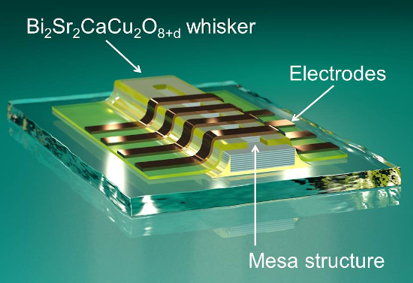
- glue. The crystal is cleaved under ambient conditions. After that the sample is immediately put into a deposition chamber and a protective gold layer of 60–80 nm is deposited to avoid surface passivation. Next, a line pattern of photoresist is written with a length of 100–200 μm and a width of 5–15 μm
- are made for the base temperature T0 = 10 K and for sizes similar to the actual devices, shown in Figure 1: substrate 5 × 5 × 0.3 mm3, crystal 1 × 1 × 0.3 mm3, whisker 300 × 30 × 3 μm3 and mesa 30 × 30 × 0.3 μm3. The thickness of gold electrode is 200 nm. The thickness of epoxy layer, de, depends on
- of the other two materials, namely Bi-2212 and polycrystalline gold electrodes. At low T both have linear κ(T). For Bi-2212 we assume κab(T) = 0.1 T(K) W·K−1·m−1 [45] with an anisotropy κab/κc = 8 [46]. For a polycrystalline gold thin film we use κ(T) = 3 T(K) W·K−1·m−1 [32]. The heat is produced in


Identifying diverse metal oxide nanomaterials with lethal effects on embryonic zebrafish using machine learning
Beilstein J. Nanotechnol. 2021, 12, 1297–1325, doi:10.3762/bjnano.12.97
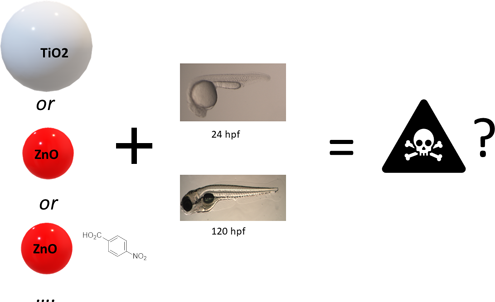
- . This is restrictive, as generalization for nanomaterials with similar but non-identical chemical compositions is not possible. Subsequent studies only developed local models for ENMs with nominally the same core material, for instance, gold or zinc oxide, where only the variation in the chemical


Plasmon-enhanced photoluminescence from TiO2 and TeO2 thin films doped by Eu3+ for optoelectronic applications
Beilstein J. Nanotechnol. 2021, 12, 1271–1278, doi:10.3762/bjnano.12.94
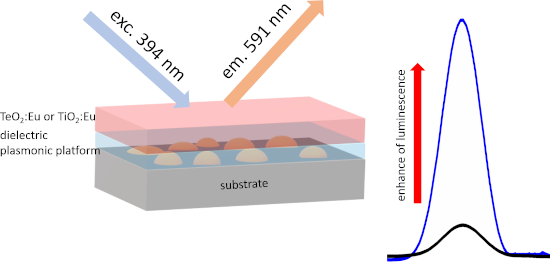
- luminescence properties of europium-doped titanium dioxide and tellurium oxide thin films enhanced by gold plasmonic nanostructures. We propose a new type of plasmon structure with an ultrathin dielectric film between plasmonic platform and luminescent material. Plasmonic platforms were manufactured through
- thermal annealing of the gold thin film. Thermal dewetting of gold film results in spherical gold nanostructures with average dimensions of 50 nm. Both, luminescent TiO2:Eu and TeO2:Eu films were deposited by RF magnetron sputtering from mosaic targets. The morphology of the gold nanostructures was
- candidates as phosphors in white LEDs. Keywords: gold nanostructures; luminescence; plasmon resonance; Introduction The rapid development of optoelectronics leads to challenges in the search for new luminescence materials. Especially the fabrication of white LEDs requires more efficient phosphors


Morphology-driven gas sensing by fabricated fractals: A review
Beilstein J. Nanotechnol. 2021, 12, 1187–1208, doi:10.3762/bjnano.12.88
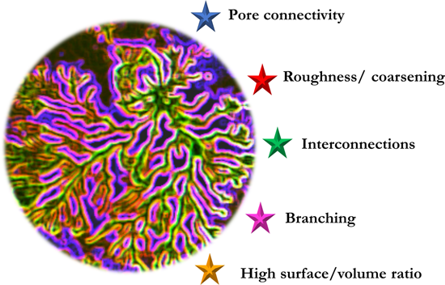
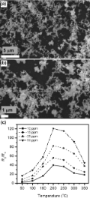
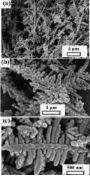
- sample, exhibiting a combination of hillocks and pores, showed the maximum sensitivity (S = 0.29) towards NO2. Another study reported dendritic nanowires (DNWs) of SnO2 on a gold-coated silicon substrate for NO2 sensing [66]. The samples were prepared by evaporation–condensation. Figure 6a and Figure 6b
- plasmonic gold (Au) metasurface for sensing volatile organic compounds (VOCs) [49]. This modification enhanced the plasmonic field and local surface plasmonic resonance (LSPR). The influence of the gold nanodisk diameter and the average thickness of the TiO2 fractal on LSPR sensing of VOCs, specifically
- –Bi2O3 porous fractal structures contained abundant active sites for the adsorption of carbon dioxide and other VOCs. An improvement of the electron density was attributed to gold nanoparticles. The resulting fractal structures showed excellent sensing properties towards VOCs (100 ppm at room temperature










Criteria ruling particle agglomeration
Beilstein J. Nanotechnol. 2021, 12, 1093–1100, doi:10.3762/bjnano.12.81

- not visible in this graph. Application to a realistic example A valid comparison of the different contributions to the free enthalpy needs a realistic example. As it offers the best availability of data, gold was selected to demonstrate the contributions of the different approaches. Basis for these
- , the difference of the surface energy between the original and the agglomerated ensemble was calculated. For the case of van der Waals interaction the selection of the parameters is difficult. As basis, the results of Luo et al. [12] obtained for gold was applied. From these data a value of hi = 10 eV


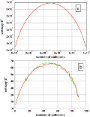
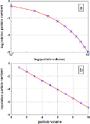


Assessment of the optical and electrical properties of light-emitting diodes containing carbon-based nanostructures and plasmonic nanoparticles: a review
Beilstein J. Nanotechnol. 2021, 12, 1078–1092, doi:10.3762/bjnano.12.80
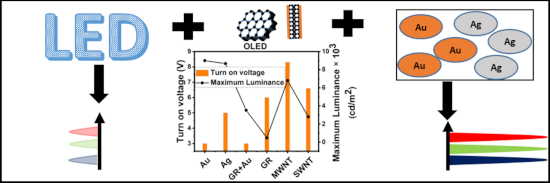
- reference. Figure 4a and Figure 4b were adapted from [45] (“Enhanced optical output power of blue light-emitting diodes with quasi-aligned gold nanoparticles“, © 2014 Y. Jin et al., distributed under the terms of the Creative Commons Attribution 2.0 International License, https://creativecommons.org


Use of nanosystems to improve the anticancer effects of curcumin
Beilstein J. Nanotechnol. 2021, 12, 1047–1062, doi:10.3762/bjnano.12.78

- promising application of gold nanostructures with CUR-loaded alginate microgels, which showed photothermal properties. High CUR retention and preferential toxicity against cancerous cells was also shown. The photoactive agent, wavelength, time of exposure, and distance to the light source are important
- factors that determine the effectiveness of phototherapy against cancer cells [142]. For example, Rahimi-Moghaddam et al. [140] reported a higher cytotoxic effect of a gold–CUR nanosystem used as photothermal therapy against breast cancer cells when exposed to an 808 nm laser (1.5 W/cm2), as compared to a


Progress and innovation of nanostructured sulfur cathodes and metal-free anodes for room-temperature Na–S batteries
Beilstein J. Nanotechnol. 2021, 12, 995–1020, doi:10.3762/bjnano.12.75
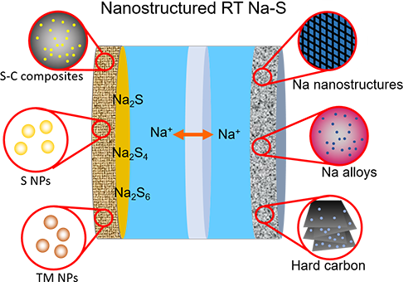
- . Consequently, the electrocatalysts accelerate the reaction kinetics, improving the electrochemical performance of Na–S batteries. Different compounds were shown to have this property such as cobalt nanoparticles [34][45][46], iron nanoclusters [47] and iron disulfide [48], gold nanodots [49], nickel sulfide
- undergo a sodiation process to form Na2S2. Then, the Na2S2 intermediate is converted to Na2S. Another remarkable electrocatalyst are gold nanodots, as reported by Wang et al. [49]. The in situ synchrotron XRD results show that gold can effectively catalyze the transformation of Na2S4 into Na2S in the




A Au/CuNiCoS4/p-Si photodiode: electrical and morphological characterization
Beilstein J. Nanotechnol. 2021, 12, 984–994, doi:10.3762/bjnano.12.74
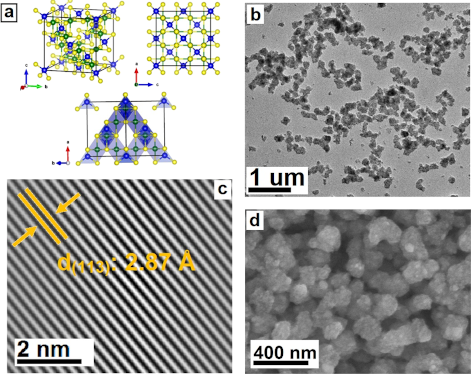
- thermal annealing at 400 °C for 2 min in N2 atmosphere. Top contacts were prepared on the film by evaporating gold with a thickness of 150 nm at 5 × 10⁻⁶ Torr through a metal shadow mask (Au, 99.99% from Kurt J. Lesker). High-purity Al and Au metal contacts were thermally evaporated from a tungsten filament



Uniform arrays of gold nanoelectrodes with tuneable recess depth
Beilstein J. Nanotechnol. 2021, 12, 957–964, doi:10.3762/bjnano.12.72
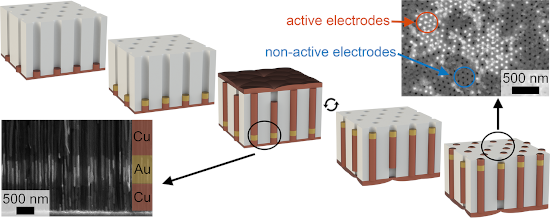
- pathways to further improve the recessed nanoelectrode arrays based on anodic alumina templates are discussed. Keywords: anodic alumina; gold; nanoelectrode array; recessed electrode; templated electrodeposition; Introduction A nanoelectrode array (NEA) is a set of regularly arranged isolated metal
- decreased to 0.64 ± 0.09 µm (Figure 1f). It is worth noting that a decrease in LCu1 value leads to a significant reduction of the absolute length deviation. Segment 2 – gold The high chemical stability of Au makes it an intrinsic material for electrochemical sensors and has motivated the choice of this
- turning the AAO template upside down (Figure 1d). As a result, an array of 28 nm diameter gold electrodes (electrode-to-electrode distance is equal to 101 nm) with 0.6 µm recess depth was obtained. Electrochemical characterization of the prepared NEAs was performed. To estimate the number of electrodes


Self-assembly of Eucalyptus gunnii wax tubules and pure ß-diketone on HOPG and glass
Beilstein J. Nanotechnol. 2021, 12, 939–949, doi:10.3762/bjnano.12.70
- , Hamburg, Germany) and conductive carbon cement (Leit-C, Plano, Wetzlar, Germany) was applied. The samples were sputter coated (108 auto/SE, Cressington, Watford, UK) with gold (t: 60 s, I: 30 mA, p: 0.1 mbar), resulting in a gold layer of approximately 8 nm. Recrystallized structures were then