


Search results
Search for "liquids" in Full Text gives 237 result(s) in Beilstein Journal of Nanotechnology. Showing first 200.
Nanoparticle shapes by using Wulff constructions and first-principles calculations
Beilstein J. Nanotechnol. 2015, 6, 361–368, doi:10.3762/bjnano.6.35
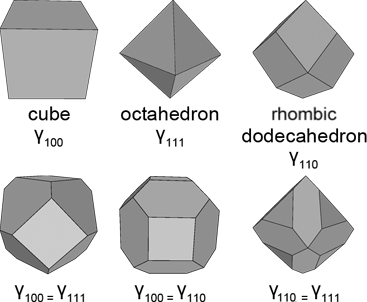
- . The quantity γhkl is the energy required to create a surface of unit area normal to the [hkl] vector, and is the analogous of the surface tension for liquids. This process is repeated for all sets of Miller indexes, (hkl). The space that lies inside all these planes defines the equilibrium shape for


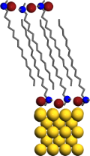

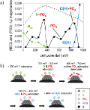
Kelvin probe force microscopy in liquid using electrochemical force microscopy
Beilstein J. Nanotechnol. 2015, 6, 201–214, doi:10.3762/bjnano.6.19
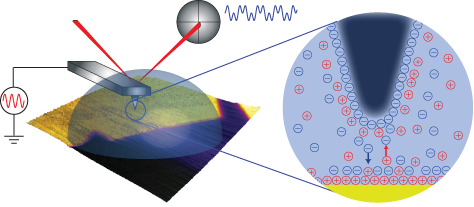
- to biological systems. However, the operation of KPFM implicitly relies on the presence of a linear lossless dielectric in the probe–sample gap, a condition which is violated for ionically-active liquids (e.g., when diffuse charge dynamics are present). Here, electrostatic and electrochemical
- measurements are demonstrated in ionically-active (polar isopropanol, milli-Q water and aqueous NaCl) and ionically-inactive (non-polar decane) liquids by electrochemical force microscopy (EcFM), a multidimensional (i.e., bias- and time-resolved) spectroscopy method. In the absence of mobile charges (ambient
- and non-polar liquids), KPFM and EcFM are both feasible, yielding comparable contact potential difference (CPD) values. In ionically-active liquids, KPFM is not possible and EcFM can be used to measure the dynamic CPD and a rich spectrum of information pertaining to charge screening, ion diffusion


![[Graphic 6]](/bjnano/content/inline/2190-4286-6-19-i11.png?max-width=637&scale=1.18182) response collected 200 nm above a grounded Au electrode in (a, b, c) air, (d, e, f) decane an...
response collected 200 nm above a grounded Au electrode in (a, b, c) air, (d, e, f) decane an...


![[Graphic 22]](/bjnano/content/inline/2190-4286-6-19-i27.png?max-width=637&scale=1.18182) spectra [bias-on] collected 500 nm above HOPG in aqueous solutions of increasing salt concent...
spectra [bias-on] collected 500 nm above HOPG in aqueous solutions of increasing salt concent...

![[Graphic 25]](/bjnano/content/inline/2190-4286-6-19-i30.png?max-width=637&scale=1.18182) spectra [bias-on] collected 500 nm above (a) HOPG and (b) Au in milli-Q water (vertical color...
spectra [bias-on] collected 500 nm above (a) HOPG and (b) Au in milli-Q water (vertical color...

![[Graphic 27]](/bjnano/content/inline/2190-4286-6-19-i32.png?max-width=637&scale=1.18182) spectra [bias-on] recorded 500 nm above a HOPG/Au boundary in milli-Q water. T...
spectra [bias-on] recorded 500 nm above a HOPG/Au boundary in milli-Q water. T...

Materials and characterization techniques for high-temperature polymer electrolyte membrane fuel cells
Beilstein J. Nanotechnol. 2015, 6, 68–83, doi:10.3762/bjnano.6.8
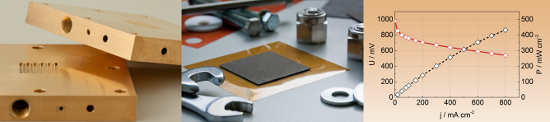
- acid and not intrinsic to HT-PEMFCs. Alternative electrolytes such as ionic liquids or solid acids might solve the problem and accelerate the oxygen reduction reaction kinetics. The benefits of operating the fuel cell at elevated temperatures include improved catalyst activity, higher tolerance to
- temperatures. Very recently, many advances have been made in this field. This came relatively late because material testing at high temperatures is generally very challenging and the presence of corrosive liquids such as phosphoric acid complicates it even further. Many standard test methods and procedures for




High-frequency multimodal atomic force microscopy
Beilstein J. Nanotechnol. 2014, 5, 2459–2467, doi:10.3762/bjnano.5.255
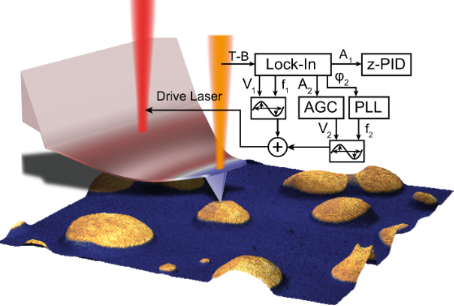
- optical beam deflection (OBD) systems with a sufficiently small focus spot to use small cantilevers [12][19], two key practical aspects have limited the widespread use of AFM imaging at frequencies beyond 2 MHz: cantilever drive and deflection readout. In liquids, traditional piezo-based cantilever


Inorganic Janus particles for biomedical applications
Beilstein J. Nanotechnol. 2014, 5, 2346–2362, doi:10.3762/bjnano.5.244
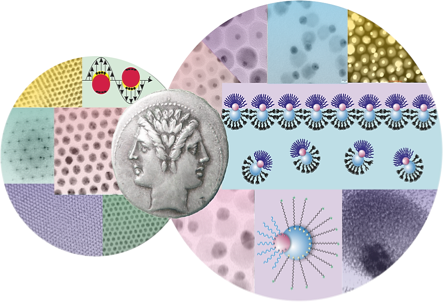
- amphiphilic particle. Kumacheva et al. reported a microfluidic method for fast continuous synthesis of Janus particles as well as three-phase particles with narrow size distribution by emulsification of monomer liquids and in situ photoinitiated polymerization of multiphase droplets (Figure 3e) [27]. Another


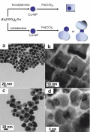




Gas sensing properties of nanocrystalline diamond at room temperature
Beilstein J. Nanotechnol. 2014, 5, 2339–2345, doi:10.3762/bjnano.5.243
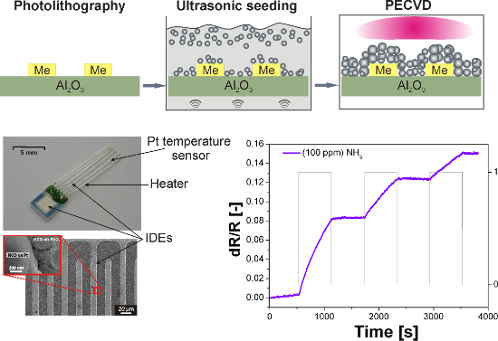
- sensitive to surrounding gases and/or liquids. Our previous works have shown that interdigitated electrodes (IDEs) capped with nanostructured, hydrogen-terminated, nanocrystalline diamond (NCD) were very sensitive and selective, especially towards phosgene gas [9][10]. In addition, we observed that the


Liquid-phase exfoliated graphene: functionalization, characterization, and applications
Beilstein J. Nanotechnol. 2014, 5, 2328–2338, doi:10.3762/bjnano.5.242
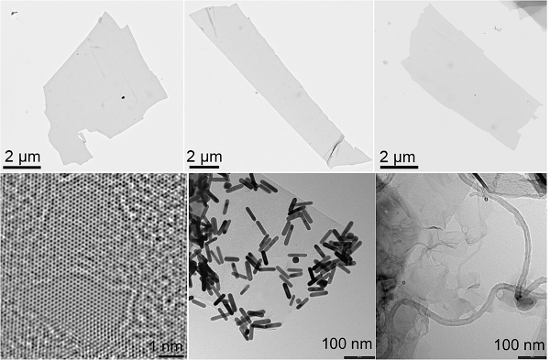
- exfoliation of graphite in water or polar solvents. This procedure yields stable solutions of negatively charged graphene sheets [13]. As charged, intercalating species, ionic liquids are considered a green alternative. The negligible vapour pressure, thermal stability, wide electrochemical potential window
- , good conductivity, recyclability, and the high dielectric constant of ionic liquids induce the exfoliation of graphite by weakening the π–π stacking interactions. Indeed, the use of ionic liquids is considered a highly versatile and industrially scalable method for the preparation of graphene




Biopolymer colloids for controlling and templating inorganic synthesis
Beilstein J. Nanotechnol. 2014, 5, 2129–2138, doi:10.3762/bjnano.5.222
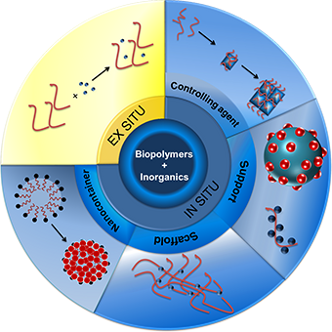
- example of a heterogeneous catalyst was reported by Taubert’s group with gold/cellulose nanocrystal hybrids produced in the presence of ionic liquids [88]. Also for catalytic applications, nanoparticles of silver, gold, and platinum were synthesized by using a cellulose aerogel [89]. Cellulose has been


Carbon nano-onions (multi-layer fullerenes): chemistry and applications
Beilstein J. Nanotechnol. 2014, 5, 1980–1998, doi:10.3762/bjnano.5.207
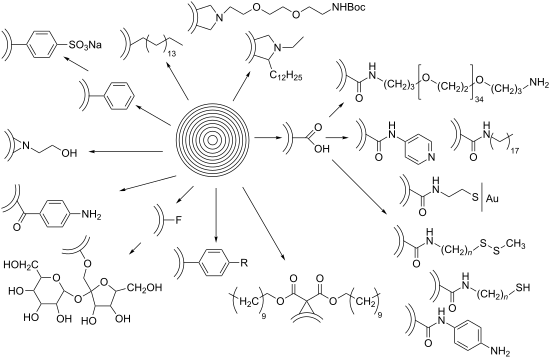
- of graphite in liquids such as liquid nitrogen or water [14][15]. A recent novel method for the preparation of large CNOs (30 nm diameter) includes the use of inorganic starting material, such as CuCl2·2H2O and CaC [16]. Large CNOs with distinct fluorescence emission were produced from wood wool, a


Real-time monitoring of calcium carbonate and cationic peptide deposition on carboxylate-SAM using a microfluidic SAW biosensor
Beilstein J. Nanotechnol. 2014, 5, 1823–1835, doi:10.3762/bjnano.5.193
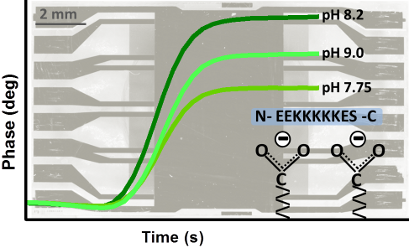
- a buffer system similar to biomineralizing compartments. It can be concluded that multichannel microfluidic SAW sensor systems are highly attractive for biomimetic mineralization studies in liquids and in real-time. It remains subject to further investigations whether this technique will bring the


Experimental techniques for the characterization of carbon nanoparticles – a brief overview
Beilstein J. Nanotechnol. 2014, 5, 1760–1766, doi:10.3762/bjnano.5.186
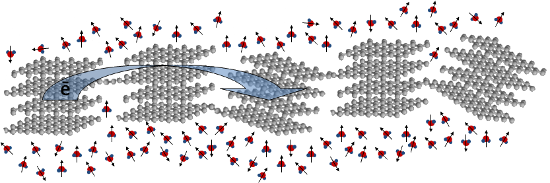
- pure ACFs) to 3.33 Å and 3.30 Å for CCl4- and water-filled fibers, respectively. Such significant changes appear due to the so-called quasi-high pressure effect, which appear in confined liquids (e.g., adsorbed inside small pores). This causes swelling of pores of a certain width due to the decrease of
- the CN size [40][41]. Water seems to cause a slightly larger shrinkage of the CNs than CCl4, probably due to the large difference in wetting of graphitic pore walls by both liquids. The wetting in porous materials is commonly described with the microscopic wetting parameter α [42], which shows the


Quasi-1D physics in metal-organic frameworks: MIL-47(V) from first principles
Beilstein J. Nanotechnol. 2014, 5, 1738–1748, doi:10.3762/bjnano.5.184
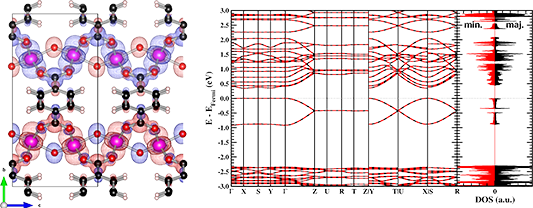
- opportunities with regard to sensing applications. In this family, MIL-47(V) has a somewhat special status, because, unlike most breathing MOFs MIL-47(VIV) does not show breathing under thermal stimuli or after the adsorption of gases or liquids [5][44][50], but only under significant mechanical pressure [45


Influence of surface-modified maghemite nanoparticles on in vitro survival of human stem cells
Beilstein J. Nanotechnol. 2014, 5, 1732–1737, doi:10.3762/bjnano.5.183
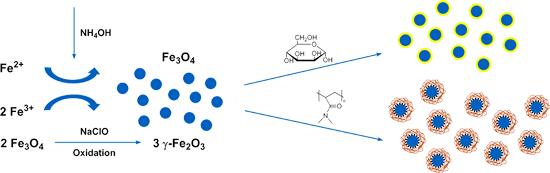
- zero remanent magnetization of the particles, the risk of formation of aggregates in physiological liquids is reduced. MTT assay In order to achieve an efficient cell labeling, the response of intracellular γ-Fe2O3 content on the metabolism of the cells should be taken into account because the


Non-covalent and reversible functionalization of carbon nanotubes
Beilstein J. Nanotechnol. 2014, 5, 1675–1690, doi:10.3762/bjnano.5.178
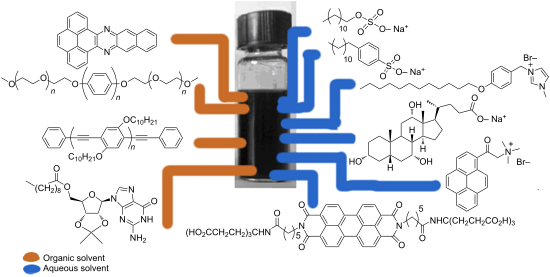
- onto the nanotube sidewalls over self-assembly. Exploiting the excellent capacity of imidazolium-based ionic liquids [78] to disperse CNTs, we conceived an ionic liquid-based surfactant, 1-hexadecyl-3-vinylimidazolium bromide (hvimBr, see Table 3) which demonstrated to be more effective than SDBS at



On the structure of grain/interphase boundaries and interfaces
Beilstein J. Nanotechnol. 2014, 5, 1603–1615, doi:10.3762/bjnano.5.172
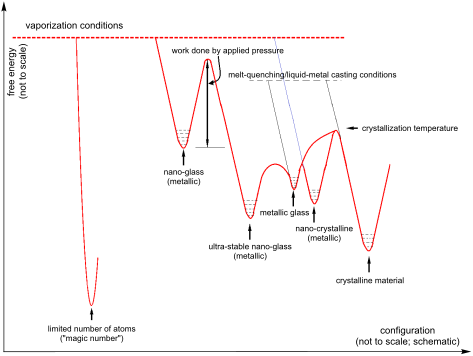
- indicated in the diagram. This brings one to Kauzmann’s entropy crisis [24][25][26], which suggests that if the entropy of many supercooled liquids is extrapolated to low temperature, the amorphous state is predicted to have a lower entropy level than the highly ordered crystal well above absolute zero. In


Ionic liquid-assisted formation of cellulose/calcium phosphate hybrid materials
Beilstein J. Nanotechnol. 2014, 5, 1553–1568, doi:10.3762/bjnano.5.167
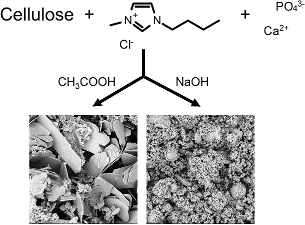
- carbohydrates as single molecules or very small aggregates. At the same time the solvent should enable the growth of calcium phosphate. Ionic liquids (ILs) could provide a viable access for the synthesis of such nanoscale carbohydrate/inorganic hybrids. Some ILs dissolve up to 25 wt % of cellulose [34][35][36


Current state of laser synthesis of metal and alloy nanoparticles as ligand-free reference materials for nano-toxicological assays
Beilstein J. Nanotechnol. 2014, 5, 1523–1541, doi:10.3762/bjnano.5.165
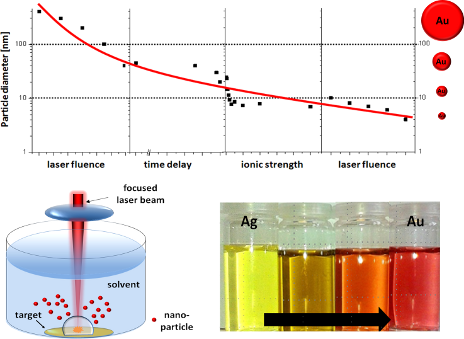
- paragraph of this article highlights the recent progress concerning the synthesis of composition controlled alloy nanoparticles by laser ablation in liquids. Here, binary and ternary alloy nanoparticles with totally homogeneous elemental distribution could be fabricated and the composition of these
- filtration [23]. However, this process is very time consuming and often results in particle aggregation. Hence, pulsed laser ablation in liquids (PLAL) has proven to be a promising alternative for the synthesis of nanoparticles applicable in toxicity assays as it provides totally ligand-free colloidal
- pulsed laser fragmentation in liquids (PLFL), in situ size quenching by electrolytes, delayed conjugation in liquid flow and pulsed laser melting in liquids (PLML). For gold as an exemplary inert noble metal, these methods allow for the tuning of the particle diameters in the range 4–400 nm. However


Hydrophobic interaction governs unspecific adhesion of staphylococci: a single cell force spectroscopy study
Beilstein J. Nanotechnol. 2014, 5, 1501–1512, doi:10.3762/bjnano.5.163
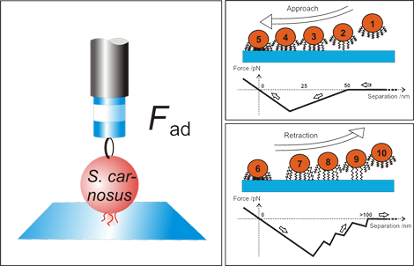
- cantilevers were then carefully rinsed in deionized water to remove unbound dopamine and dried under a laminar flow bench for at least one hour. The poly(dopamine)-covered cantilever was then inserted into the Bioscope Catalyst cantilever holder for measurements in liquids (Bruker, Billerica, MA, USA


Liquid fuel cells
Beilstein J. Nanotechnol. 2014, 5, 1399–1418, doi:10.3762/bjnano.5.153
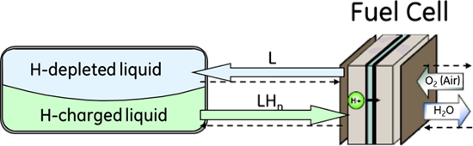
- . Organic compounds that are liquids at ambient conditions can be used both neat and in the form of a solution. However, they are more often used in solution because of their flammability, toxicity and, most importantly, high crossover rates. Solid organic and inorganic compounds, e.g., NaBH4, can be used

Magnesium batteries: Current state of the art, issues and future perspectives
Beilstein J. Nanotechnol. 2014, 5, 1291–1311, doi:10.3762/bjnano.5.143
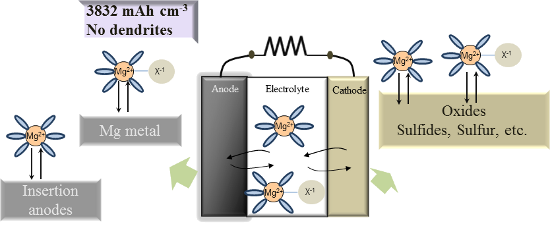
- electrolytes use ethereal solvents which are more or less volatile. An attractive choice for eliminating the safety hazards of ethers would be using ionic liquids due to their very low volatility. Reversible magnesium deposition/ dissolution from phenyl magnesium bromide [39] and alkylmagnesium bromide [40
- salts such magnesium triflate (Mg(CF3SO3)2) in imidazolium-based ionic liquids. However, magnesium metal passivation was reported to take place [39][42]. 2.1.5 On the electroactive species: In the case of typical organohalo-aluminate electrolytes, formed following the reaction between a Grignard reagent


Purification of ethanol for highly sensitive self-assembly experiments
Beilstein J. Nanotechnol. 2014, 5, 1254–1260, doi:10.3762/bjnano.5.139
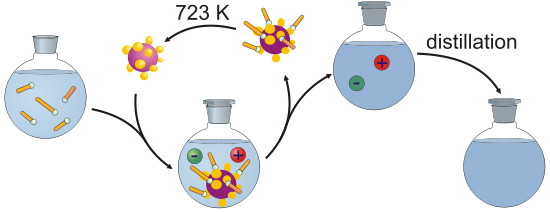
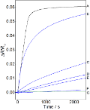
- the liquids at 0 seconds. The successive resistivity change indicates chemisorption of contaminant species (or in case of curve A, deliberately dissolved organothiols) in the ethanol samples onto the gold surface (A: 1 µM hexadecanethiol solution in ethanol of type G (see below); B: ethanol, technical

The study of surface wetting, nanobubbles and boundary slip with an applied voltage: A review
Beilstein J. Nanotechnol. 2014, 5, 1042–1065, doi:10.3762/bjnano.5.117




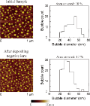
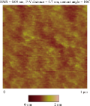


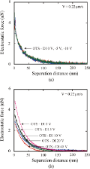
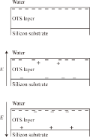




The optimal shape of elastomer mushroom-like fibers for high and robust adhesion
Beilstein J. Nanotechnol. 2014, 5, 630–638, doi:10.3762/bjnano.5.74
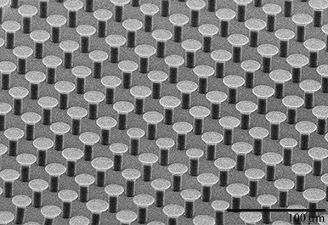
- . While conventional adhesives rely on very soft materials or viscous liquids, nature offers a unique system composed of adhesive elements made of relatively rigid materials. These adhesive elements are comprised of millions of tiny fibers varying in size and geometrical complexity depending on the animal



Hole-mask colloidal nanolithography combined with tilted-angle-rotation evaporation: A versatile method for fabrication of low-cost and large-area complex plasmonic nanostructures and metamaterials
Beilstein J. Nanotechnol. 2014, 5, 577–586, doi:10.3762/bjnano.5.68
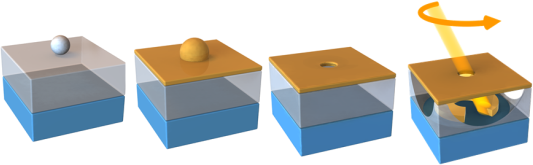
- ). The refractive indices are taken at about 1500 nm. We observe a well-modulated Fano resonance at about 1300 nm for n = 1.0 (black curve) due to the coupling of the bright superradiant and dark subradiant hybridized modes and the expected red-shift of all spectral features upon exposure to the liquids


An ultrasonic technology for production of antibacterial nanomaterials and their coating on textiles
Beilstein J. Nanotechnol. 2014, 5, 532–536, doi:10.3762/bjnano.5.62
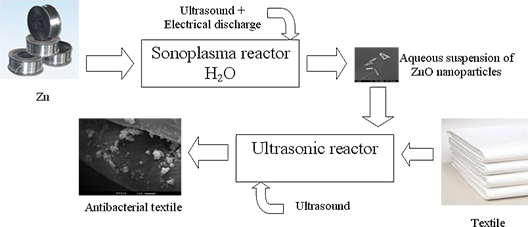
- are widely used in the industry, are the best known type of a stationary plasma discharge in liquids [6]. Currently this discharge is applied in physical and chemical studies and in the synthesis of different materials, but due to small effective volume of the discharge zone the rate of the processes





