Search results
Search for "manipulation" in Full Text gives 230 result(s) in Beilstein Journal of Nanotechnology. Showing first 200.
Patterning a hydrogen-bonded molecular monolayer with a hand-controlled scanning probe microscope
Beilstein J. Nanotechnol. 2014, 5, 1926–1932, doi:10.3762/bjnano.5.203
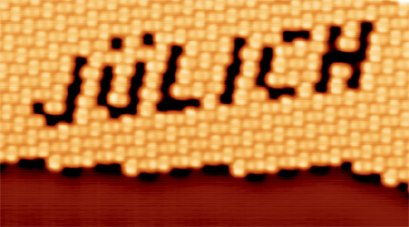
- molecular-scale functional design, which includes arranging molecules into complex structures at will. The first steps towards this goal were made through the invention of the scanning probe microscope (SPM), which put single-atom and single-molecule manipulation into practice for the first time. Extending
- the controlled manipulation to larger molecules is expected to multiply the potential of engineered nanostructures. Here we report an enhancement of the SPM technique that makes the manipulation of large molecular adsorbates much more effective. By using a commercial motion tracking system, we couple
- the movements of an operator's hand to the sub-angstrom precise positioning of an SPM tip. Literally moving the tip by hand we write a nanoscale structure in a monolayer of large molecules, thereby showing that our method allows for the successful execution of complex manipulation protocols even when


Spin annihilations of and spin sifters for transverse electric and transverse magnetic waves in co- and counter-rotations
Beilstein J. Nanotechnol. 2014, 5, 1887–1898, doi:10.3762/bjnano.5.199
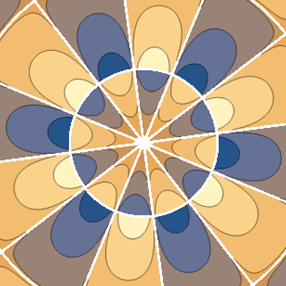
- rings lack a magnetic resonance mode in comparison to split rings. In addition, the enantiomer sorting takes advantage of the optical chirality and helical flows which accompany the photon spins [5][12]. Another important area in which AM-carrying beams prove useful is the manipulation of nanoparticles


![[Graphic 44]](/bjnano/content/inline/2190-4286-5-199-i70.png?max-width=637&scale=1.18182) . (b) The scaled coefficient
. (b) The scaled coefficient ![[Graphic 45]](/bjnano/content/inline/2190-4286-5-199-i71.png?max-width=637&scale=1.18182) of the optical chirality C for the counter-rotatio...
of the optical chirality C for the counter-rotatio...


![[Graphic 104]](/bjnano/content/inline/2190-4286-5-199-i130.png?max-width=637&scale=1.18182) in the (kx,ky)-plane. (a) The co-rotational case. (b) The counter-rotational case ...
in the (kx,ky)-plane. (a) The co-rotational case. (b) The counter-rotational case ...


![[Graphic 125]](/bjnano/content/inline/2190-4286-5-199-i151.png?max-width=637&scale=1.18182) for the counter-rotational case plotted over 0 ≤ ρ ≡ kr ≤ 4 for m = 3, Rρ ≡ kR = 1...
for the counter-rotational case plotted over 0 ≤ ρ ≡ kr ≤ 4 for m = 3, Rρ ≡ kR = 1...

Donor–acceptor graphene-based hybrid materials facilitating photo-induced electron-transfer reactions
Beilstein J. Nanotechnol. 2014, 5, 1580–1589, doi:10.3762/bjnano.5.170
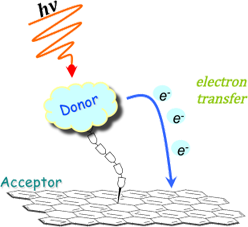
- surfaces [5][6], liquid exfoliation via sonication [7][8], dissolution in superacids such as chlorosulfonic acid [9] and ball milling [10]. However, a major drawback of graphene, likewise of carbon nanotubes, stems from its insolubility in all solvents, which impedes the chemical manipulation toward


Current state of laser synthesis of metal and alloy nanoparticles as ligand-free reference materials for nano-toxicological assays
Beilstein J. Nanotechnol. 2014, 5, 1523–1541, doi:10.3762/bjnano.5.165
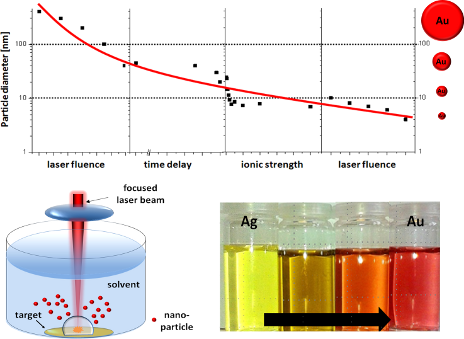
- distributions. Generally, a manipulation of the laser wavelength is only relevant in case it may be reabsorbed by the nanoparticles to induce photofragmentation. This reduces particle sizes and broadens size distributions, which was reported, e.g., during PLAL of gold with green (λ = 523 nm) and UV (λ = 355 nm


Model systems for studying cell adhesion and biomimetic actin networks
Beilstein J. Nanotechnol. 2014, 5, 1193–1202, doi:10.3762/bjnano.5.131
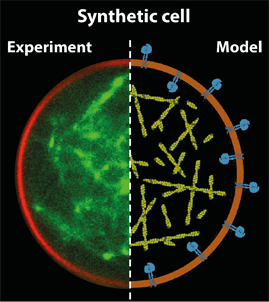
- , talin can also be a useful tool for controlled manipulation of liposome morphology, which can play an important role in the development of synthetic cells. Since the early 2000’s, research on talin reconstituted in lipid bilayers has not been pursued anymore although many fundamental results on cellular


Nanoforging – Innovation in three-dimensional processing and shaping of nanoscaled structures
Beilstein J. Nanotechnol. 2014, 5, 1066–1070, doi:10.3762/bjnano.5.118
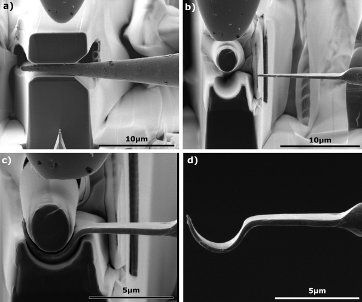
- . Conclusion: Compared with other forming techniques in the reduced scale, nanoforging represents a beneficial approach in forming freestanding metallic structures, due to its simplicity, and supplements other forming techniques. Keywords: forging; manipulation; nanoforging; plastic deformation; tungsten


Molecular biology approaches in bioadhesion research
Beilstein J. Nanotechnol. 2014, 5, 983–993, doi:10.3762/bjnano.5.112
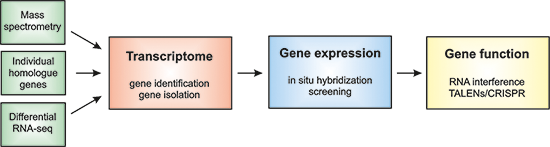
- ) allows for the elucidation of selected genes by their manipulation in vivo. These tools provide highly detailed molecular information about the adhesive-related proteins. This would impact mainly research on permanent adhesives made up of a combination of carbohydrates and proteins. Indeed, even
- achieved by amputation, regeneration, collection of different developmental stages, or manipulation of the cellular (for instance by RNAi, see section 4) or physiological conditions. Successful collection of the starting material completely relies on an in-depth knowledge of the morphology of the adhesive


Optical modeling-assisted characterization of dye-sensitized solar cells using TiO2 nanotube arrays as photoanodes
Beilstein J. Nanotechnol. 2014, 5, 895–902, doi:10.3762/bjnano.5.102
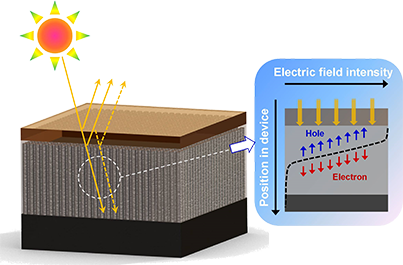
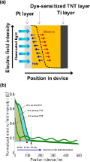
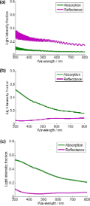
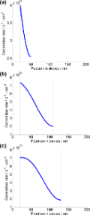
- , the TNT morphology is beneficial to enhance the photovoltaic performances in the DSSCs by facilitating light scattering effects while enabling the manipulation of the tube length to accommodate for larger amounts of dye. For the understanding and characterization of the fundamental photovoltaic


Scale effects of nanomechanical properties and deformation behavior of Au nanoparticle and thin film using depth sensing nanoindentation
Beilstein J. Nanotechnol. 2014, 5, 822–836, doi:10.3762/bjnano.5.94
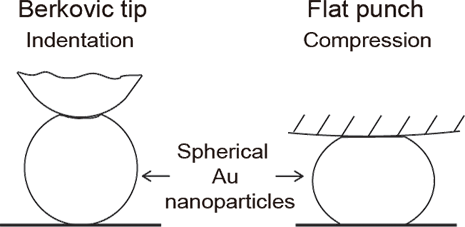
- tribological applications on the macro- to nanoscale and applications requiring controlled manipulation and targeting [25]. In these environments the nanoparticles can be deformed locally or the entire nanoparticle can be compressed. Knowledge of the mechanical properties and deformation mechanisms involved






Manipulation of isolated brain nerve terminals by an external magnetic field using D-mannose-coated γ-Fe2O3 nano-sized particles and assessment of their effects on glutamate transport
Beilstein J. Nanotechnol. 2014, 5, 778–788, doi:10.3762/bjnano.5.90
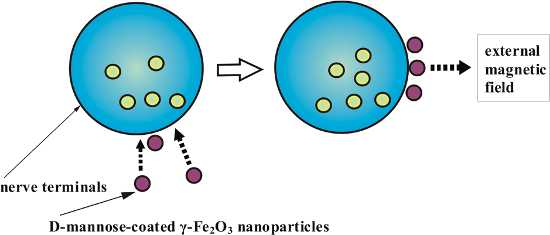
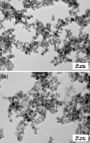
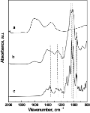
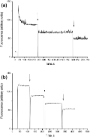
- of Kyiv, 64 Volodymyrska Str, Kiev, Ukraine The Department of Polymer Particles, Institute of Macromolecular Chemistry AS CR, Heyrovsky Sq. 2, 162 06 Prague 6, Czech Republic 10.3762/bjnano.5.90 Abstract The manipulation of brain nerve terminals by an external magnetic field promises breakthroughs
- . The study also focused on the analysis of the potential use of these nanoparticles for manipulation of nerve terminals by an external magnetic field. It was shown that more than 84.3 ± 5.0% of L-[14C]glutamate-loaded synaptosomes (1 mg of protein/mL) incubated for 5 min with D-mannose-coated γ-Fe2O3
- uptake and release; manipulation by an external magnetic field; D-mannose; membrane potential; nanoparticles; rat brain nerve terminals; synaptic vesicle acidification; Introduction Nanoparticles have great biotechnological potential opening a wide range of new applications. Properties of nanomaterials


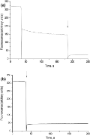

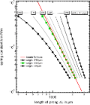
Calibration of quartz tuning fork spring constants for non-contact atomic force microscopy: direct mechanical measurements and simulations
Beilstein J. Nanotechnol. 2014, 5, 507–516, doi:10.3762/bjnano.5.59
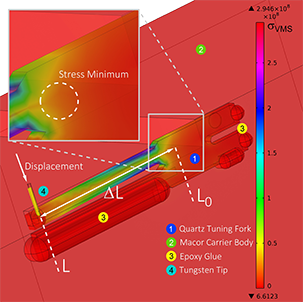
- precision. Recent achievements of this force spectroscopy method manifest in the identification of the chemical identity of single atoms in an alloy [2] or the measurement of the force applied during the controlled manipulation of molecules or atoms on a surface [3][4]. nc-AFM experiments at the atomic




Energy dissipation in multifrequency atomic force microscopy
Beilstein J. Nanotechnol. 2014, 5, 494–500, doi:10.3762/bjnano.5.57
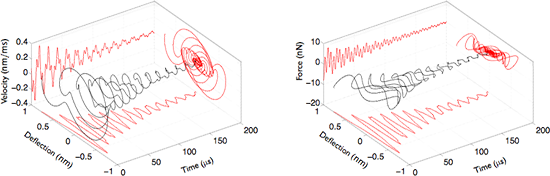
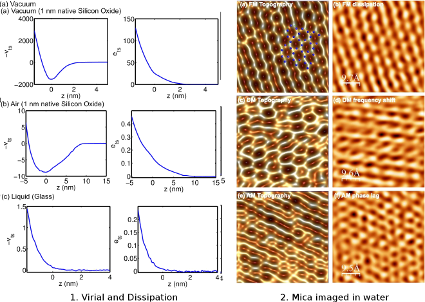
- energy dissipation is a fundamental aspect of the tip–sample interaction, allowing to quantify compositional contrast variations at the nanoscale [2]. The applied forces and the energy delivered to the sample are relevant for the imaging and the manipulation of soft materials in a variety of environments


Plasma-assisted synthesis and high-resolution characterization of anisotropic elemental and bimetallic core–shell magnetic nanoparticles
Beilstein J. Nanotechnol. 2014, 5, 466–475, doi:10.3762/bjnano.5.54
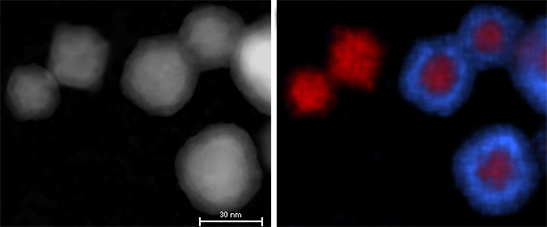
- heterostructured NP in gas condensation processes are discussed. Keywords: bimetallic magnetic nanoparticle; core–shell; magnetron sputtering; plasma gas condensation; Introduction Due to their size, novel physical properties and the possibility of contactless manipulation, magnetic nanoparticles can be employed
- . This impedes any reasonable analytical description of growth processes in the condensation chamber. Our results also clearly highlight the influence of target morphology on particle growth. As was shown in earlier studies, shaping the plasma above the target by manipulation of the magnetic field can


Exploring the complex mechanical properties of xanthan scaffolds by AFM-based force spectroscopy
Beilstein J. Nanotechnol. 2014, 5, 365–373, doi:10.3762/bjnano.5.42
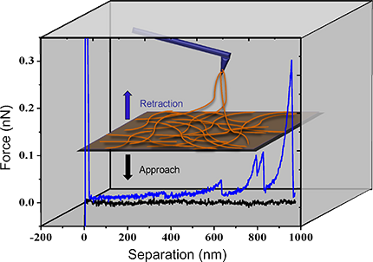
- persistence length were responsible for the macroscopic polymer behavior. Therefore, it is very important to investigate the mechanical response of polymer complexes after manipulation. In this study, the morphologies and mechanical properties of complex xanthan scaffolds, a new nanomaterial, were
- fibril. Double and triple events curves (Figure 2B and Figure 2C) are characterized by two or three independent peaks, which indicate that the AFM tip fished two or three xanthan fibrils at the same time. Multiple events are usually observed during the manipulation at point P1 (Figure 2D), indicating
- the same time during the manipulation. Figure 6A shows a typical double-event force curve composed of two independent single peaks. This kind of force curve was mainly obtained in manipulating the structures P1 and P2. The inset is a proposed model (in Figure 6A), in which two fibrils with different


Noncontact atomic force microscopy II
Beilstein J. Nanotechnol. 2014, 5, 289–290, doi:10.3762/bjnano.5.31

- interatomic forces with unprecedented resolution in three spatial dimensions, while manipulation experiments at both low temperatures and room temperature have demonstrated the capability of the technique to controllably construct atomic-scale structures on surfaces. While initially small, the NC-AFM
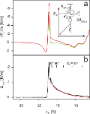
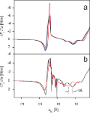
The role of surface corrugation and tip oscillation in single-molecule manipulation with a non-contact atomic force microscope
Beilstein J. Nanotechnol. 2014, 5, 202–209, doi:10.3762/bjnano.5.22
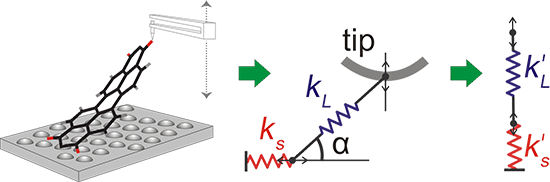
- -molecule manipulation has particularly promising potential to yield new insights. We recently reported experiments, in which 3,4,9,10-perylene-tetracarboxylic-dianhydride (PTCDA) molecules were lifted with a qPlus-sensor and analyzed these experiments by using force-field simulations. Irrespective of the
- good agreement between the experiment and those simulations, systematic inconsistencies remained that we attribute to effects omitted from the initial model. Here we develop a more realistic simulation of single-molecule manipulation by non-contact AFM that includes the atomic surface corrugation, the
- tip elasticity, and the tip oscillation amplitude. In short, we simulate a full tip oscillation cycle at each step of the manipulation process and calculate the frequency shift by solving the equation of motion of the tip. The new model correctly reproduces previously unexplained key features of the

Manipulation of nanoparticles of different shapes inside a scanning electron microscope
Beilstein J. Nanotechnol. 2014, 5, 133–140, doi:10.3762/bjnano.5.13
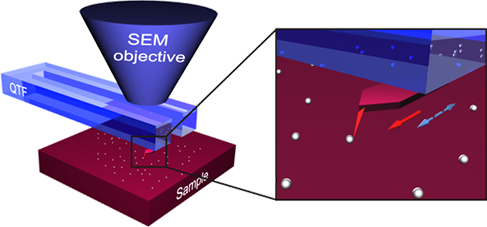
- and compared with the experimentally measured force. The effect of NP morphology on the nanoscale friction is discussed. Keywords: contact mechanics; nanomanipulation; nanoparticles; nanotribology; scanning electron microscopy (SEM); Introduction The manipulation of nanoparticles (NPs) is a powerful
- studied in manipulation experiments based on atomic force microscopy (AFM), either in contact mode or dynamic mode [5][6]. Besides the undoubted advantages of AFM manipulation methods, such as a wide choice of materials (not limited to conductive materials), and high resolution and accuracy, they have
- type of motion (sliding, rolling or rotation) during the manipulation event. It is possible to extract trajectory and motion type data from complete AFM images as it was recently demonstrated in several works [4][7][8][9]. However, such a process is time consuming, since it requires a large amount of


Exploring the retention properties of CaF2 nanoparticles as possible additives for dental care application with tapping-mode atomic force microscope in liquid
Beilstein J. Nanotechnol. 2014, 5, 36–43, doi:10.3762/bjnano.5.4
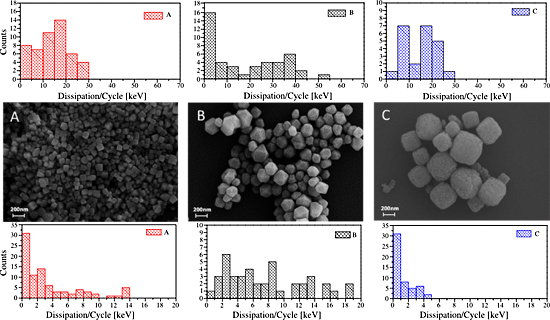
- studies have related the phase contrast, when measuring in liquid in which low Q-factors are found, to two origins: the excitation of higher eigenmodes and the energy dissipation on the sample surface [8][9]. In this work we show that for surface associated manipulation of nanoparticles in liquid, the
- mica and on tooth enamel in liquid. Manipulation experiments of nanoparticles are routinely done by using the AFM in the contact mode [10][11][12]. However some studies have been reported, in which a controlled manipulation of nanoparticles in tapping mode AFM was performed. Sitti et al. used a
- manipulation, i.e., the collision between the probing tip and the particle, the friction between the particles and the substrate, the role of water when measuring in ambient (lubrication, capillary effects, etc.), electrostatics between them, etc. The high surface to volume ratio of nanoparticles makes them


Structural development and energy dissipation in simulated silicon apices
Beilstein J. Nanotechnol. 2013, 4, 941–948, doi:10.3762/bjnano.4.106
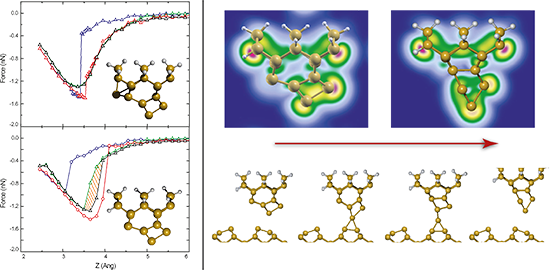
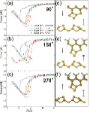
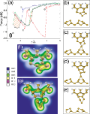
- stability of silicon tip apices by using density functional theory (DFT) calculations. We find that some tip structures - modelled as small, simple clusters - show variations in stability during manipulation dependent on their orientation with respect to the sample surface. Moreover, we observe that
- chemical interactions at the single atom level has driven considerable progress in NC-AFM over the past decade. Through understanding the interactions between the AFM tip and sample surface, the chemical interactions present in AFM images [1][2][3][4][5], manipulation experiments [6][7][8][9][10], and
- comparison with either the COFI method or DFT calculations, however, is usually required to obtain the same level of confidence. Semiconductors with covalent bonds remain one of the most promising systems for the advancement of atom-by-atom manipulation strategies in multiple dimensions and at room


STM tip-assisted engineering of molecular nanostructures: PTCDA islands on Ge(001):H surfaces
Beilstein J. Nanotechnol. 2013, 4, 927–932, doi:10.3762/bjnano.4.104
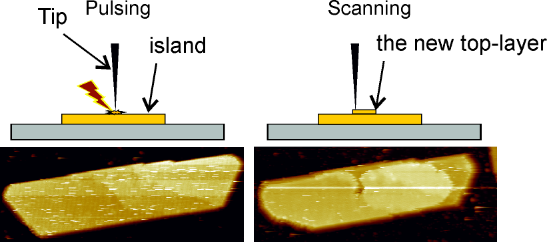
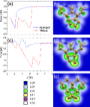
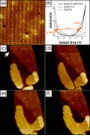
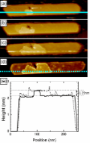
- are a plausible source of molecules for the newly formed top-most layer. The edges observed on the scans are quite often fuzzy and change their shape during the manipulation (Figure 2). Moreover, after the adlayer formation the island considerably decreased its lateral dimension (Figure 2i). In both

Size-dependent characteristics of electrostatically actuated fluid-conveying carbon nanotubes based on modified couple stress theory
Beilstein J. Nanotechnol. 2013, 4, 771–780, doi:10.3762/bjnano.4.88
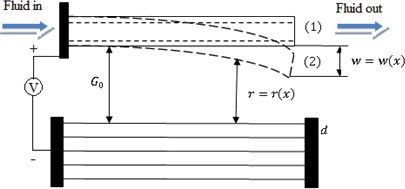
- to study the manipulation of CNTs by using electrostatic actuation and vdW interactions. The results revealed that the vdW force played an important role in the deflection and pull-in behaviors of the CNTs. In electrostatic actuation, a voltage is applied to two electrodes with a gap in-between. In


Controlling the near-field excitation of nano-antennas with phase-change materials
Beilstein J. Nanotechnol. 2013, 4, 632–637, doi:10.3762/bjnano.4.70
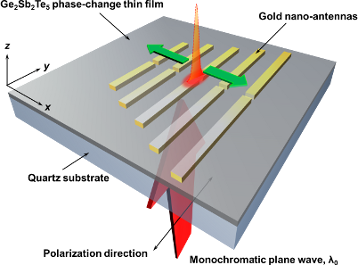
- sophisticated manipulation of the incident light beams. Moreover, it is usually impossible to excite a single desired mode of the nanostructure and subsequently create a nanoscale energy hot-spot which may only exist in a small field of view. Here we demonstrate a novel approach in which the constituent



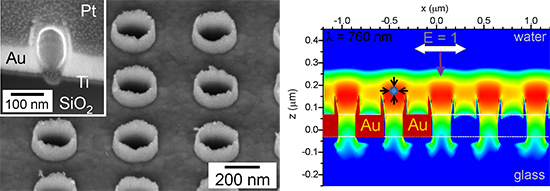
3D nano-structures for laser nano-manipulation
Beilstein J. Nanotechnol. 2013, 4, 534–541, doi:10.3762/bjnano.4.62


Continuous parallel ESI-MS analysis of reactions carried out in a bespoke 3D printed device
Beilstein J. Nanotechnol. 2013, 4, 285–291, doi:10.3762/bjnano.4.31
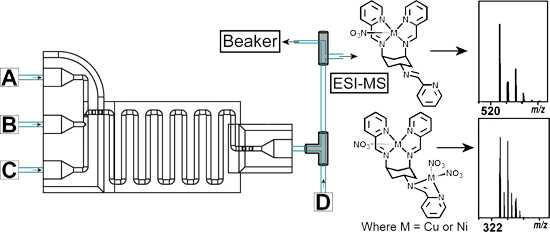
- manipulation of reaction environment results in strict control of the final device and the subsequent reactions carried out. We have previously demonstrated the versatility and configurability of reusable and bespoke reactionware, in which a 3D-printed “reactionware” matrix, with the reagents printed directly


High-resolution dynamic atomic force microscopy in liquids with different feedback architectures
Beilstein J. Nanotechnol. 2013, 4, 153–163, doi:10.3762/bjnano.4.15
- their independent manipulation of amplitude and phase lag. When equilibrium deflection x* is monostable, coexisting of stable oscillation states, a* and are eliminated by the integral regulators, while the stability and transient settling time can be controlled completely by the proportional